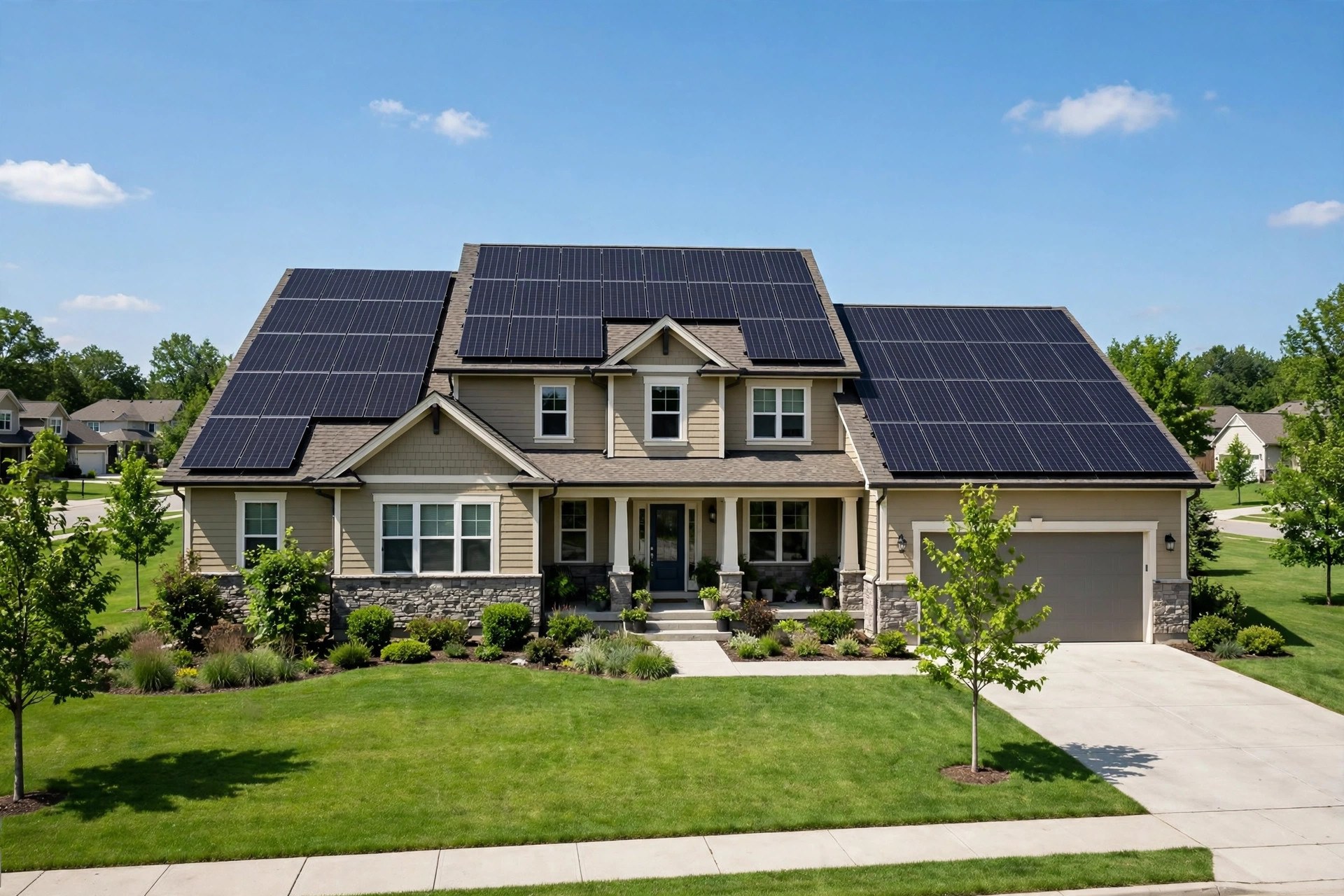
A homeowner fills out a solar quote form on a Tuesday afternoon. By Wednesday morning she has heard from three installers. The first one texted her back in four minutes, booked a site survey while she was still excited, and sent a panel layout mockup the next day. The second called back the following week. The third never called at all. Guess which company installed her 9-kilowatt system. Solar is a strange business: the product lasts 25 years, but the sale is won or lost in the first hour after the lead arrives. Leads are expensive, the sales cycle is long, and the homeowner shops you against two or three competitors at once. This guide builds the complete follow-up system that protects those expensive leads: speed-to-lead automation for the first five minutes, quote follow-up sequences that survive a 30 to 90 day decision window, financing objection handling, reactivation of old quotes and dead leads, and nurture for door-knock and canvass leads. If you sell solar and your follow-up is a rep remembering to call people back, this is the system that replaces it.
The quick answer
- Solar leads are too expensive to chase manually: shared leads run $80 to $150 and exclusive leads $150 to $400, so every lost lead is real money.
- Speed-to-lead decides the sale: contact within 5 minutes massively outperforms contact after an hour, and 78 percent of buyers go with the company that responds first.
- The quote follow-up window is 30 to 90 days: most quotes die from silence, not rejection. A 12-touch sequence across text, call, and email keeps you in the decision.
- Financing kills more deals than price: prepare scripted answers for loans, leases, and savings questions before the rep ever sits at the kitchen table.
- Old quotes are your cheapest pipeline: a 90-day reactivation sequence on dead quotes routinely produces installs at a fraction of new-lead cost.
- Door-knock leads need a nurture track: canvass leads convert later than form fills, so give them a slower, longer sequence with neighborhood proof.
Why solar leads die on the vine
Solar sits at the intersection of two brutal facts. Fact one: the leads are expensive. A shared web lead from a lead aggregator typically costs a solar company $80 to $150, and that lead is sold to three or four other installers at the same time. An exclusive lead costs $150 to $400. Google Ads clicks for solar keywords commonly run $30 to $70 in competitive markets, so a single booked appointment can carry $200 to $500 in acquisition cost before a rep ever drives to the house. Door knocking looks cheap until you price the canvasser’s time, training, and turnover. Fact two: the sales cycle is long. A homeowner does not decide on a $20,000 to $35,000 system the way they decide on a lawn service. The average solar sale takes 30 to 90 days from first contact to signed contract, and most of that time is the homeowner sitting quietly with two or three quotes, doing nothing. Put those facts together and you get the core problem: companies pay hundreds of dollars per lead and then let the follow-up depend on a sales rep’s memory. Research on lead response, including the widely cited XANT (formerly InsideSales) study, found that 78 percent of buyers go with the company that responds first, and that the odds of contacting a lead drop dramatically after the first few minutes. None of that is specific to solar, which is the scary part: solar has more competitors per lead and higher lead costs than most trades, so the penalty for slow follow-up is worse here than almost anywhere else. The companies that win are not the ones with the best panels. They are the ones with the fastest, most persistent, most organized follow-up.
The five-minute speed-to-lead rule
Speed-to-lead is the single highest-impact change a solar company can make. Everything else in this guide compounds it, but nothing substitutes for it. When a form fill lands at 2:14 PM and your system texts the homeowner at 2:15 PM, you enter the conversation before the adrenaline fades. When your rep calls back at 4:30 PM, you are interrupting dinner. When they call the next day, you are one of four installers in a quote comparison spreadsheet.
Why solar punishes slow response harder than any other trade
Three things stack against the slow solar company. First, intent decays fast because the homeowner’s motivation is emotional in the moment of the form fill: the electric bill just arrived, a neighbor’s panels just went up, a news story about rate hikes just aired. An hour later, life has moved on. Second, the lead is rarely yours alone. Shared leads go to multiple installers, and Google searches send the homeowner to three websites in a row. The first company to respond sets the frame for every comparison that follows: their panel count, their financing explanation, their production guarantee becomes the baseline. Third, the ticket size is huge, which means the value of winning the response race is enormous. Responding first to a $25,000 job is worth thousands of expected dollars per lead. There is no other trade where a five-minute text can be worth that much. For more on capturing these calls at the source, see our guide to the AI receptionist for solar companies.
What to automate in the first five minutes
Build a response sequence that fires the instant a lead enters your system, with no human in the loop. Minute zero: an automated text message that uses the homeowner’s name, names your company, and asks one question: “Hi Sarah, this is Mike with Bright Roof Solar. I just got your quote request. Can you chat for 2 minutes now, or should I call you at a better time?” This beats a generic “thanks for your interest” because it demands a tiny decision. Minute one: the lead routes to the on-duty sales rep with a phone notification, a screen pop, or an automated call to the rep. Minute five: if the rep has not claimed the lead, the system escalates to the sales manager. Minute fifteen: if there is still no contact, a second text goes out with a booking link: “No worries if now is bad. Pick a time that works for you:” followed by the calendar link. Every one of these steps should be tracked with timestamps so you can see exactly how long each rep takes. Reps who average under five minutes will close dramatically more than reps who average over an hour, and you want that gap visible on a leaderboard, not buried in anecdotes.

The first conversation sets the frame for every quote that follows, which is why it has to happen in minutes, not days.
The quote follow-up sequence that closes solar deals
Most solar quotes die from silence, not rejection. The homeowner does not call to say no. They just stop replying, and the rep marks the deal “cold” after three voicemails. A structured sequence fixes this. The job of follow-up is not to badger; it is to stay in the conversation while the homeowner moves through research, financing questions, and partner approval. Plan for 10 to 14 touches over 45 days, across text, phone, and email. That number sounds like a lot until you remember the ticket size: $25,000 divided by 14 touches is a very generous pay-per-touch budget.
Days 1 and 2: strike while the design is fresh
Day 1, right after the appointment: text a thank-you plus the promised materials. “Great meeting you today, Sarah. Here is the panel layout and the savings estimate I promised.” Attach the actual design mockup and a one-page summary, not a 40-page proposal. Day 1 evening: email the same materials with a subject line that references their roof, not your company: “Your roof layout + the numbers we discussed.” Day 2 morning: a phone call. This is the only call in the sequence that tries to close, because the appointment energy is still warm. Script: “I wanted to check in while everything is fresh. Any questions about the layout or the financing options?” If they ask for time, ask what specifically they need to figure out, then set a concrete next step: “Fair enough. What if I send you the financing comparison by Thursday, and we talk Friday morning? Does 10 work?” A vague “I will think about it” followed by a vague “sure, call me sometime” is how quotes die. Every touch ends with a specific next step on a specific day.
Days 3 to 14: the persistence window
This is where most reps quit, and it is where most deals are actually won. Alternate channels so you never feel like the same voicemail twice. Day 3: text with one new piece of information, ideally a neighbor or a review: “Two homes on your street went solar this month. Happy to share their savings if it helps.” Day 5: email answering the question they raised at the appointment, with a short video or one-page PDF if possible. Day 7: phone call, different time of day than before. Day 10: text with a soft deadline tied to something real: a utility rate increase, an expiring incentive, your install schedule filling for the month. Day 14: email with a comparison table of their options, including doing nothing, because “do nothing” is the real competitor and your email should price it: “Your utility bill at current rates over 10 years: $24,000. With solar: $13,200. Doing nothing is the most expensive option.” Mix in value, not just check-ins. Every “just following up” message trains the homeowner to ignore you. Every message that teaches them something earns the next one.
Days 15 to 45: the decision window
Slow the cadence but do not stop. Day 21: a short, human text from the rep: “Still thinking it over? Totally fine either way. One thing I hear from a lot of homeowners is the financing piece feels confusing. I can walk you through it in 10 minutes if that would help.” Day 30: email with seasonal or incentive timing: “Install schedules are filling for the summer rush. A site survey now means panels on your roof before the high bills hit.” Day 45: the honest break-up text: “I do not want to keep bothering you. Should I close out your file, or is this just a timing thing?” The break-up text sounds counterintuitive, but it consistently pulls replies out of silent leads because it gives the homeowner permission to say “not now” instead of nothing. Half the “not now” replies turn into “call me in three months” replies, and three months from now is a reactivation goldmine, which the next section covers. After day 45 with no reply, the lead moves to the long-term nurture list: monthly educational content, not sales pushes.

Alternating text, call, and email keeps a 14-touch sequence from feeling like one repeated voicemail.
Handling financing objections
In solar, the price objection is almost always a financing objection wearing a costume. The homeowner is not really saying “$24,000 is too much.” They are saying “I do not understand how I pay for this, I am not sure I trust the savings, and I am afraid of being locked into something I cannot exit.” Every rep needs scripted, honest answers to the five financing objections below. Do not improvise these at the kitchen table. Improvise on rapport; script on money.
The five financing objections you will hear on every quote
Prepare one-page answer sheets your reps can leave behind, because the homeowner will re-read them with a spouse later. The table below gives the shape of each objection and the direction the answer should take. Customize the numbers to your market and your financing partners, but keep the structure: acknowledge, reframe with math, and lower the risk.
| Objection | What the homeowner really means | How to answer |
|---|---|---|
| “I cannot afford $25,000” | I think of this as a cash purchase | Reframe to monthly: “You would not pay cash. Most homeowners go solar for $0 down and a monthly payment below their current electric bill. The question is not $25,000, it is whether $180 a month for panels beats $230 a month to the utility.” |
| “What if I sell my house?” | I am afraid of being trapped | “Owned systems transfer with the home and raise resale value in most markets. Leased systems transfer too, and we handle the transfer paperwork. A home with paid-down solar is a selling point, not a burden.” |
| “I do not trust the savings numbers” | I think you inflated the math | Show conservative math, not best-case math: “Here are your actual bills from the last 12 months, a modest 3 percent annual rate increase, and panel production derated for shade and heat. Even under those numbers, you come out ahead by year 8.” |
| “My credit is not great” | I assume I will be rejected | “We work with several financing partners with different credit requirements, including options for scores in the 600s. The application takes a few minutes and a soft check will not hurt your credit. Let us find out instead of guessing.” |
| “Lease vs. loan vs. cash – which is right?” | I am confused and paralyzed | Leave a one-page comparison: cash wins on total savings, loans win on monthly cash flow with ownership, leases and PPAs win on zero-maintenance simplicity but give up some savings. Match the option to their situation, not your commission. |
What never to do with financing
Three rules keep your financing follow-up honest and legal. First, never quote savings you cannot document. If you tell a homeowner they will save $40,000 and the utility changes its net metering rules next year, that email lives in their inbox forever. Use conservative assumptions and put them in writing. Second, never pressure a financing decision on the first visit. “This loan offer expires tonight” is a lie the homeowner will verify with one phone call, and it poisons every review they might have left. Third, never hide the lien or transfer details. If the financing places a lien on the property, explain it plainly and explain how it clears. Homeowners who discover surprises after signing do not just cancel. They tell the internet.
Reactivating old quotes and dead leads
Every solar company with more than a year of history is sitting on a goldmine it ignores: the dead-quote database. These are homeowners who were qualified, who sat through a presentation, who received a real proposal, and who said “not now.” A percentage of them are now ready. They bought nothing from a competitor, their roof is a year older, the utility raised rates again, and your company is the one name they remember if you reappear with a reason. Reactivation is the cheapest pipeline a solar company can build because the lead cost is already paid. A reactivated install at $25,000 costs you a few cents in texts and emails, compared to $150 to $400 for a fresh exclusive lead.
The 90-day reactivation sequence
Run this against every quote that went cold 90 or more days ago, excluding anyone who asked not to be contacted. Touch 1, a text: “Hi Sarah, Mike with Bright Roof Solar. We put together a design for your home a few months back. A lot has changed since then, including the utility’s new rate increase. Worth a fresh look?” Touch 2, five days later, an email: the original design with one updated number, usually the new utility rate or a new incentive. Subject: “Your solar design, updated for the new rates.” Touch 3, ten days later, a phone call from the original rep if possible, because continuity matters. Touch 4, two weeks later, a text with social proof: “We just installed on two homes in your neighborhood this month. Happy to share their numbers.” Touch 5, one month later, the break-up email: “I will stop reaching out after this. If timing changes, your design is still on file and we can move fast.” Expect 3 to 8 percent of the old-quote list to re-engage, and expect a meaningful share of those to close, because these people already did the research. Run the sequence every quarter against the newly aged-out quotes, and it becomes a permanent, free lead source. When those reactivated homeowners are ready to talk, make sure nothing slips through the cracks at the phones either: our guide to missed-call text-back for solar companies covers the safety net for every call you miss.
Trigger events worth a new touch
Some moments are worth emailing the entire dead-quote list at once, because the news does your selling for you. A utility rate increase or a new rate schedule is the strongest trigger in solar: it changes the math on every old quote in your database, and your reactivation email can show the updated savings side by side with the old numbers. Changes to net metering rules or expiring federal and state incentives are the second strongest trigger, because they create a genuine deadline. Seasonal triggers work too: the first 100-degree week of summer, when air conditioning bills spike, is worth a text to every dead quote from the past year. Keep a calendar of these triggers and prepare the templates in advance. When the rate increase is announced, you want the email out in 48 hours, not three weeks later when a competitor’s email arrives first.
Old quotes are your cheapest pipeline: the lead cost is already paid and the homeowner already did the research.
Nurturing door-knock and canvass leads
Door-knock leads behave differently from form fills, and treating them the same is a common mistake. A form fill raised their hand and asked for a quote. A canvass lead said “sure, someone can stop by” to be polite, or signed up for a free quote to end the conversation. The intent is lower, the timeline is longer, and the trust has to be built from zero. Do not run them through the aggressive 14-touch quote sequence. Give them their own track: slower, longer, heavier on education and neighborhood proof.
The knock-to-booking handoff
The most dangerous moment in canvassing is the gap between the knock and the appointment. The canvasser books a survey for Thursday, and then nobody contacts the homeowner until Thursday morning. Fix the handoff. Within 15 minutes of the knock, the homeowner gets a text from the actual company: “Hi, this is Bright Roof Solar. Jake just spoke with you at your door. Your free roof assessment is booked for Thursday at 4 PM. Reply YES to confirm.” This does three things: it confirms the appointment, it proves the canvasser works for a real company, and it opens a text conversation the company owns even if the canvasser quits next week. The day before the appointment, send a reminder text plus a short intro to the rep who is coming: name, photo-free description, and the van they will arrive in. No-shows on canvass appointments drop sharply when the homeowner has had three friendly texts before the visit instead of zero.
The neighborhood effect: one roof sells the street
Solar is the most socially contagious home improvement there is. Research on solar adoption has repeatedly found that visible installations drive nearby adoption: one set of panels on a street measurably raises the odds of more. Build your canvass nurture around this. When you close a home in a canvassed neighborhood, text every other lead on that street: “Your neighbor at 412 Oak just went solar with us. Here is what their system looks like.” Include a photo of the installed system, not a stock photo. Create a simple referral incentive for the canvass track specifically: $200 to $500 for every neighbor who installs, paid to the referrer. And keep a neighborhood list in your system so that six months later, when the first homeowner’s savings are real, you can go back to the street with real numbers: “The Johnsons’ first summer bill dropped from $280 to $41. Want us to run your numbers?” For broader demand-generation ideas beyond the knock, see our solar company marketing ideas guide.
Building your follow-up stack
You do not need exotic software. You need a system where every lead enters one place, every touch is automatic or scheduled, every response is timestamped, and nothing depends on anyone’s memory. Most solar companies already own the pieces: a CRM, a phone system, a texting tool, an email tool. The problem is that the pieces do not talk to each other, so leads fall in the gaps.
The channel mix: text first, then call, then email
Text is the workhorse of solar follow-up. Open rates on texts run above 90 percent, and homeowners reply to texts while they ignore voicemail. But text cannot close a $25,000 decision, so the sequence has to escalate: text opens the conversation, the phone call builds trust and handles objections, email carries the documents and the math the homeowner re-reads with a spouse. The table below shows how to use each channel.
| Channel | Best job in solar follow-up | Timing | Cost per touch |
|---|---|---|---|
| Text message | Speed-to-lead, appointment booking, reminders, reactivation nudges | First contact within 5 minutes; reminders day-before and day-of | $0.01 to $0.05 per message |
| Phone call | Qualification, objection handling, closing, re-engaging silent quotes | Days 2, 7, and 30 of the quote sequence; vary the time of day | $3 to $8 of rep time per attempt |
| Design mockups, savings math, financing comparisons, monthly nurture | Day 1 after the appointment; then days 5, 14, and monthly | Fractions of a cent per send | |
| Direct mail | Reactivation of year-old quotes, neighborhood saturation after an install | Quarterly to the dead-quote list; post-install to the street | $0.50 to $1.50 per piece |
Cost bands and what to buy
A working follow-up stack for a solar company with 3 to 10 reps typically costs $300 to $800 a month in software. That breaks down roughly as: a CRM with automation at $100 to $300 a month depending on seats, a business texting platform at $50 to $150 a month for the volume a solar shop sends, a phone system with call tracking and recording at $100 to $250 a month, and an email tool at $30 to $100 a month or bundled in the CRM. Set-up runs $1,500 to $5,000 if you hire someone to build the sequences, connect the lead sources, and train the team, or two to four weeks of focused internal time if you build it yourself. Measure the stack against the alternative: one extra closed deal a month pays for the entire system many times over. The expensive mistake is buying software and never building the sequences. The second most expensive mistake is building sequences in a tool that does not connect to your lead sources, so half your leads never enter them.
The mistakes that kill solar follow-up
Letting reps own the leads in their personal phones. When a rep quits, their text threads walk out the door with them. Every conversation must live in the company system, not in a rep’s pocket.
Treating all leads the same. A form fill, a door knock, a referral, and a reactivated old quote are four different animals. One generic sequence underperforms four tailored ones.
Stopping at three touches. Most reps give up after two or three attempts. The data on this is consistent across industries: the majority of conversions need five or more touches. Build the persistence into the system so it does not depend on rep morale.
Sending “just checking in” messages. Every touch should carry information: a number, a neighbor, a deadline, an answer. Empty check-ins train homeowners to ignore you.
No speed-to-lead accountability. If you do not timestamp first response and review it weekly, it will drift to hours and days. What gets measured gets answered in five minutes.
Ignoring the dead-quote database. Companies spend $200 to $500 per new lead while a list of 500 qualified old quotes sits untouched. Reactivation is the highest-ROI campaign in the building.
Letting financing stay a mystery. If your reps cannot explain loan versus lease versus cash in plain language, the homeowner will find an installer whose reps can.
Your 30-day rollout plan
Build it in this order: response first, persistence second, reactivation third.
- 1Connect every lead source to one CRM. Web forms, lead aggregators, Google Ads, canvass apps, and referral entries all flow into one place. No lead lives in a spreadsheet or a rep’s phone.
- 2Build the five-minute response automation. Instant text, rep notification, manager escalation at five minutes, booking-link text at fifteen. Test it with fake leads before it goes live.
- 3Write the 14-touch quote sequence. Day-by-day scripts for text, call, and email across 45 days, each touch carrying information, never just a check-in.
- 4Script the financing answers. One-page answer sheets for the five standard objections, with your real numbers, left behind after every appointment.
- 5Build the appointment confirmation flow. Instant text confirmation, day-before reminder, day-of reminder with the rep’s name. Cut no-shows before they happen.
- 6Set up the canvass nurture track. Slower cadence, neighborhood proof, and a 15-minute knock-to-booking text handoff for every canvasser.
- 7Build the 90-day reactivation sequence. Five touches against every quote that went cold 90 days ago, rerun quarterly against newly aged-out quotes.
- 8Create the trigger-event templates. Pre-written emails for utility rate increases, incentive changes, and the first heat wave, ready to send in 48 hours.
- 9Put the numbers on a dashboard. First-response time, contact rate, touches per quote, quote-to-close rate, and reactivation closes, reviewed every Monday.
- 10Train and score the team. Role-play the financing objections, score reps on response time and sequence completion, and tie a bonus to contact rate, not just closes.
Frequently asked questions
How fast should a solar company respond to a new lead?
Within five minutes. Research across industries shows that 78 percent of buyers go with the company that responds first, and contact rates fall sharply after the first few minutes. In solar, where a shared lead goes to multiple installers, the first responder sets the frame for every comparison that follows.
How many times should I follow up on a solar quote?
Plan for 10 to 14 touches over 45 days, alternating text, phone, and email. Most reps quit after three attempts, but most conversions need five or more touches. Every touch should carry information: a number, a neighbor’s story, a deadline, or an answer. Empty check-ins train homeowners to ignore you.
What is the average cost of a solar lead?
Shared web leads typically run $80 to $150, and each lead is sold to several installers. Exclusive leads run $150 to $400. Google Ads clicks for solar keywords commonly cost $30 to $70 in competitive markets, which can put a single booked appointment at $200 to $500 in acquisition cost.
How long is the average solar sales cycle?
Thirty to 90 days from first contact to signed contract is typical for residential solar. Most of that time is the homeowner quietly comparing quotes and researching financing. A follow-up system has to stay active across that whole window, not just the first week.
How do you handle the “I need to think about it” response?
Ask what specifically they need to figure out, then set a concrete next step on a specific day: “Fair enough. If I send the financing comparison by Thursday, can we talk Friday at 10?” A vague objection plus a vague follow-up is how quotes die. Pin down the real question and the real date.
What is the best way to reactivate old solar quotes?
Run a five-touch sequence against every quote that went cold 90 or more days ago: a text referencing the old design, an email with updated numbers, a call from the original rep, a text with neighborhood proof, and a break-up message. Expect 3 to 8 percent to re-engage, and run it quarterly against newly aged-out quotes.
Should door-knock leads get the same follow-up as web leads?
No. Canvass leads have lower intent and longer timelines, so they need a slower, longer nurture track with more education and neighborhood proof. The critical piece is the 15-minute knock-to-booking text handoff: confirm the appointment by text while the canvasser is still on the street.
How do you follow up on financing objections?
Prepare scripted, honest answers to the five standard objections: affordability, selling the house, trust in the savings math, credit concerns, and lease versus loan confusion. Leave one-page answer sheets behind after the appointment, because the homeowner re-reads them with a spouse. Never pressure a financing decision on the first visit.
What software does a solar company need for follow-up automation?
A CRM with automation as the hub, a business texting platform, a phone system with call tracking and recording, and email, usually bundled in the CRM. For a 3 to 10 rep shop, expect $300 to $800 a month in software. The sequences matter more than the tools: buy the software only if your lead sources connect to it.
How do you measure whether follow-up is working?
Track first-response time, contact rate, touches per quote, quote-to-close rate, and reactivation closes, reviewed every Monday. If first-response time is under five minutes and touches per quote are above ten, the close rate almost always follows. Score reps on response time and sequence completion, not just closes.
Stop losing the leads you already paid for
Digital Hayder builds lead follow-up automation for solar companies: speed-to-lead texting, 14-touch quote sequences, financing objection scripts, and old-quote reactivation that runs on autopilot. Tell us about your lead flow and we will design the system around it.
Contact Us