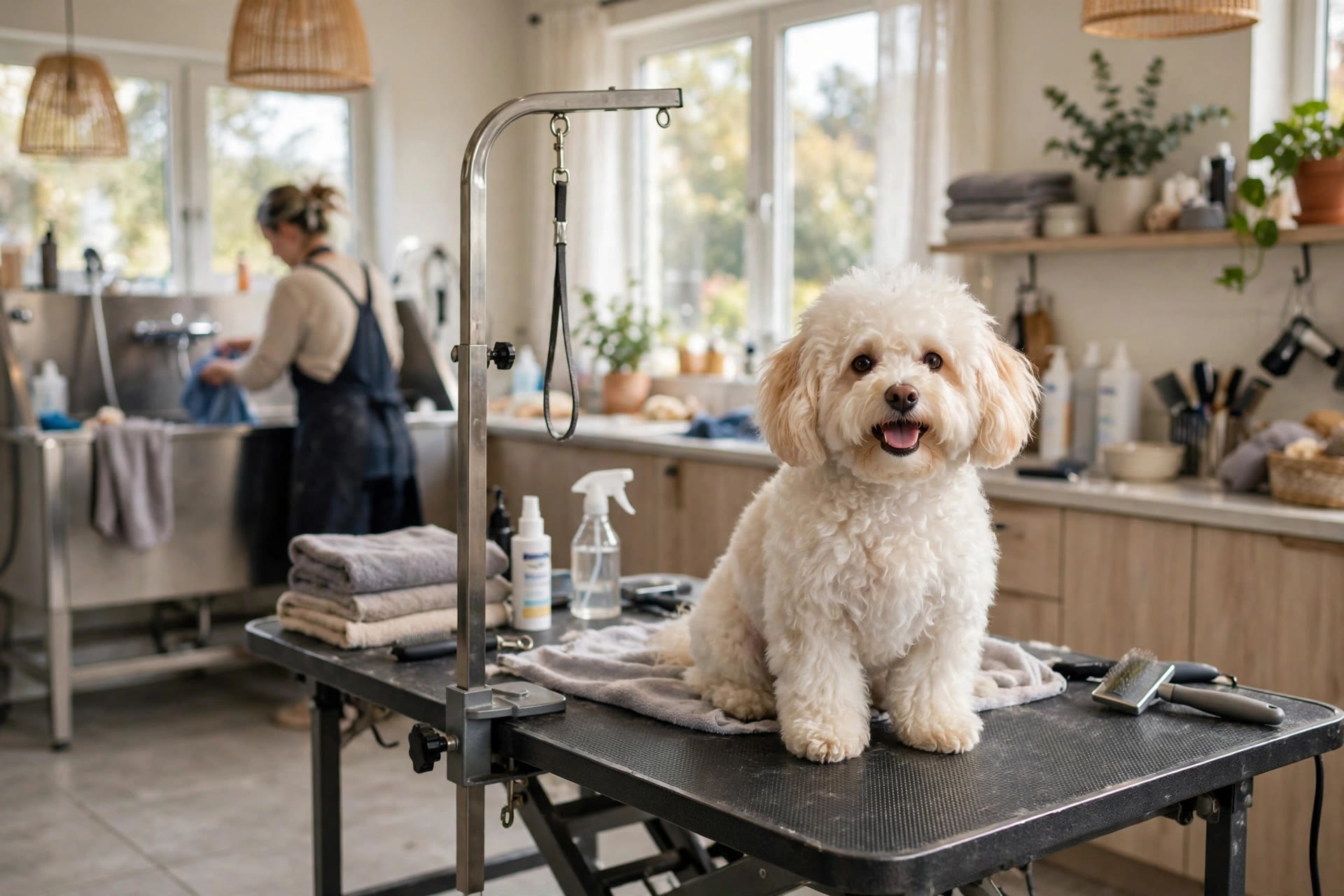
A pet grooming salon is a rebooking business. The dogs on your table need grooming every four to eight weeks, forever. The salon that wins is not the one with the flashiest decor; it is the one whose clients actually come back on schedule. SMS marketing for pet groomers is the simplest way to make that happen. A short text at pickup books the next visit before the customer leaves. A slow Tuesday fills with one offer to the right list. A birthday text for the dog turns a customer into a fan who tells the dog park. This guide covers the messages that work, how often to send them, the opt-in rules that keep you legal, what the software costs, and the math on what regular-cycle bookings are worth.
The quick answer
- Rebooking texts win the game: asking for the next appointment at pickup, by text, is the single highest-ROI message a salon can send.
- Texts get read in minutes: SMS open rates sit above 90 percent, far beyond email, and most messages are read within the first few minutes.
- Four messages carry the program: rebooking at pickup, slow-day fill offers, pet birthday texts, and post-visit review requests.
- Cadence is weekly at most: one to four marketing texts a month per customer, plus transactional reminders, keeps opt-outs near zero.
- Consent is non-negotiable: collect written opt-in at booking, label who is texting, and honor every STOP request immediately.
- Costs are tiny against returns: software runs $25 to $150 a month, while one extra week of rebooked clients can cover the year.
Why pet grooming is a rebooking business
Grooming is not a one-time purchase. A poodle mix needs a full groom every six weeks. A doodle with a thick coat needs it every four. A double-coated breed needs de-shedding every two months. Every dog on your table represents six to twelve visits a year, year after year. A salon with 200 active clients on a regular cycle is a fundamentally different business from a salon with 200 one-time visitors: the first has a predictable schedule and stable revenue, the second starts every month from zero.
The gap between those two salons is almost entirely rebooking. Most clients intend to come back; they just do not schedule it. Life gets busy, the dog still looks fine at week five, and by week nine the customer books wherever is convenient. Studies of service businesses consistently show that a large share of first-time customers never make a second visit, not because they were unhappy, but because nobody asked them to come back. In grooming, where the need is recurring and automatic, that lost second visit is pure waste.
SMS fits this business better than any other channel. Pet owners check texts constantly, appointment reminders by text are already the norm, and a short message with a booking link removes every bit of friction. Email sits unopened. Phone calls go to voicemail. A text at the right moment, the day the dog looks great and the owner is happy, converts at rates no other channel touches. If your salon also takes bookings online, pair the texts with a smooth flow, as covered in our guide to online booking systems for pet groomers.
What SMS marketing does for a grooming salon
SMS marketing for pet groomers means sending short, useful text messages to customers who agreed to receive them, with the goal of filling the schedule and keeping clients on a regular cycle. It is not blasting coupons to strangers. Every message goes to someone who already trusts you with their dog, and every message should earn that trust a little more.
The job breaks into two kinds of texts. Transactional texts are the ones customers expect: appointment confirmations, day-before reminders, and “we are running 15 minutes behind” updates. Marketing texts are the ones that grow the business: rebooking prompts, slow-day offers, birthday messages, new-service announcements, and review requests. Most SMS platforms handle both, and the compliance rules differ between them, which is why the opt-in section later in this guide matters.
What makes SMS special is the read rate. Industry data consistently puts SMS open rates around 95 percent or higher, with most messages read within minutes of arrival. Email open rates for local service businesses sit in the 20 to 30 percent range. That gap means a text about an open Tuesday slot reaches nearly everyone on the list in time to matter, while the same offer by email reaches a fraction of the list after the slot is gone. For time-sensitive offers, nothing else competes.
The four texts that make the money
You do not need a complicated program. Four message types, sent on a steady rhythm, cover nearly all the revenue SMS can add to a grooming salon. Master these before you add anything fancy.
1. Rebooking at pickup
The highest-ROI text in grooming. When the customer picks up a clean, happy dog, they are at peak satisfaction. A text within the hour, “Biscuit looks great! He is due again in 6 weeks. Want me to hold Thursday the 12th or Saturday the 14th? Reply 1 or 2,” converts that moment into a booked visit. Details on getting this one right are in the next section.
2. Slow-day fill offers
Every salon has dead days: rainy Tuesdays, the week after a holiday, mid-January. One text to the right segment fills them: “We have a few open spots this Tuesday and Wednesday. $10 off a full groom if you book by tomorrow night. Reply YES and we will set it up.” The section on slow days covers how to do this without training customers to wait for discounts.
3. Pet birthday texts
A short birthday message for the dog, with a small treat attached, generates replies, photos, and loyalty far beyond its cost. “Happy 3rd birthday, Biscuit! Stop by this week for a free birthday bandana and a $10 birthday groom discount. Reply BDAY to book.” Customers show these texts to other dog owners. It is the closest thing to free advertising a salon can buy.
4. Review requests
A text the evening after the appointment, with a direct link to the Google review page: “Thanks for bringing Biscuit in today! If you were happy with his groom, a quick review would mean the world to us: (link).” Reviews compound. A salon with 150 recent reviews gets the call over the salon with 12, every time.
Rebooking texts at pickup: the highest-ROI message
The rebooking text works because of timing and ease. The customer just saw the result, the dog smells good, and the groomer mentioned the dog is due again in a certain number of weeks. The text arrives while that goodwill is fresh, and replying “1” is easier than remembering to call in five weeks.
The message formula is short and specific: name the dog, name the interval, offer two concrete options. “Biscuit looks great! He is due again in 6 weeks. Want me to hold Thursday the 12th at 10 AM or Saturday the 14th at 2 PM? Reply 1 or 2.” Two options beat an open question like “when do you want to come back,” because choosing between two times is easy and answering an open question takes thought. If the customer replies with a different day, book it; the point is the booking, not the options.
Automate the follow-up, not the first ask. The pickup text can go out automatically an hour after checkout, which guarantees it never gets forgotten on a busy day. If there is no reply in 48 hours, one follow-up: “Still holding those two spots for Biscuit if you want one. Reply 1, 2, or LATER.” No reply after that means the customer goes into the lapsed-client sequence, not into a nagging loop. Salons that run this consistently report rebooking rates climbing from under half of clients to 65 to 75 percent, which is where the money math in this guide comes from.
One more detail: rebook at the right interval per dog, not per salon. A doodle on a four-week cycle and a short-haired beagle on an eight-week cycle should get different due dates in their texts. Your booking software knows the breed and the last service; the SMS platform should read that data. Generic “see you in six weeks” texts to every dog train sharp customers to notice you are not paying attention.
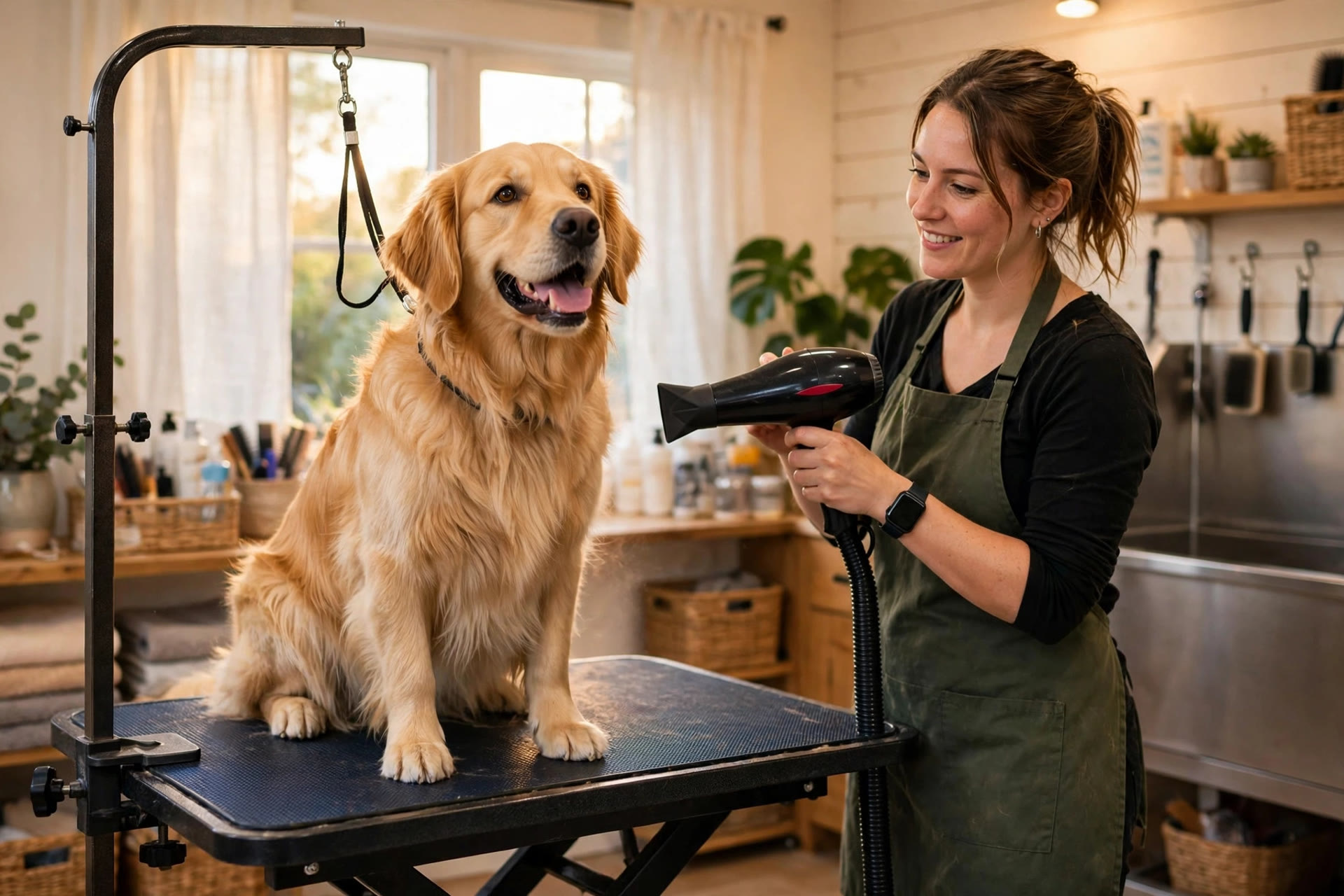
The pickup moment is when satisfaction is highest, which is why the rebooking text sent within the hour converts better than any reminder sent weeks later.
Filling slow days without discounting yourself broke
Slow-day offers work, but they need rules. The danger is training customers to wait for the discount text instead of booking at full price. The salons that do this well follow three principles.
First, target the offer, not the whole list. Send the Tuesday fill text to clients who have not booked in 8 to 12 weeks, or to the specific breeds you want on slow days, not to your loyal regulars who already pay full price on Saturdays. Your regulars should never learn that waiting gets them $10 off.
Second, keep the discount modest and the window tight. “$10 off a full groom, this Tuesday and Wednesday only, book by tomorrow night” creates urgency without cutting deep. A 24 to 48 hour booking window keeps the offer from floating around for weeks. Avoid percentage discounts above 15 percent for fill offers; they anchor the price too low.
Third, cap the frequency. One fill offer a month is plenty. More than that and customers start to expect it. The goal is to rescue genuinely dead days, not to run a permanent sale by text. Track which customers book fill offers and make sure your full-price regulars are not migrating to discount days.
A good fill text reads like an insider tip, not an ad: “Hi, this is Pampered Paws. We had two cancellations open up this Wednesday. First two replies get $10 off a full groom. Reply YES and tell me morning or afternoon.” Short, specific, human. The reply goes to a person or a bot that can book instantly; a fill offer that requires calling during business hours loses half its power.
Pet birthday texts: the message customers love
The birthday text is the cheapest loyalty program in grooming. You already collect the dog’s birth date on the intake form. Once a year, the system sends: “Happy 4th birthday, Biscuit! We have a birthday bandana waiting for him. $10 off his birthday groom this week, reply BDAY to book.” The cost is a bandana and a small discount. The return is a customer who feels known, a photo of the dog in the bandana posted online, and a booking in a week that might otherwise have slipped.
Make it personal and make it easy. Use the dog’s name and age, sign it from the salon, and give a one-word reply that books the visit. Some salons add a photo of the dog from a previous visit to the message; if your platform supports picture messages, that small touch gets replies like nothing else. Keep the offer window to the birthday week so it feels special instead of open-ended.
Birthdays also pull lapsed clients back. A customer who drifted away nine months ago is far more likely to respond to a birthday text for their dog than to a generic “we miss you” message. The birthday gives them a reason that is about the dog, not about your schedule. Route every birthday reply, even a “thanks!”, into a booking conversation: “You are welcome! Want me to grab Biscuit’s usual Thursday slot while we are chatting?”
Review requests that build your Google profile
Reviews decide which salon a new dog owner calls. When someone moves to town or gets their first puppy, they search, they skim star ratings, and they read the recent reviews. A salon with a steady stream of fresh five-star reviews wins that comparison before the customer ever visits the website.
The post-visit text is the best review generator a salon has. Send it the evening of the appointment, while the customer is still happy and the dog still smells good: “Thanks for bringing Biscuit in today! If you loved his groom, a quick Google review would mean a lot to us: (direct link).” The direct link matters. Every extra tap between the text and the review form costs you reviews. Most platforms can insert each customer’s name and a one-tap review link automatically.
Ask every customer, not just the happy-looking ones. Cherry-picking who gets the review text skews the profile and misses the quiet customers who would have left five stars. If a customer had a problem, the text often surfaces it first, which gives you a chance to fix it before it becomes a public review. Set a rule: any reply that sounds unhappy gets a personal call within the hour, no exceptions.
A salon that sends review texts after every visit typically adds 10 to 30 reviews a month. Within six months, that is a profile with triple-digit reviews and a recency signal Google rewards in local search. That profile then feeds every other marketing you do, including your website, which is why it is worth sizing the investment properly with our guide to how much a pet grooming website costs.
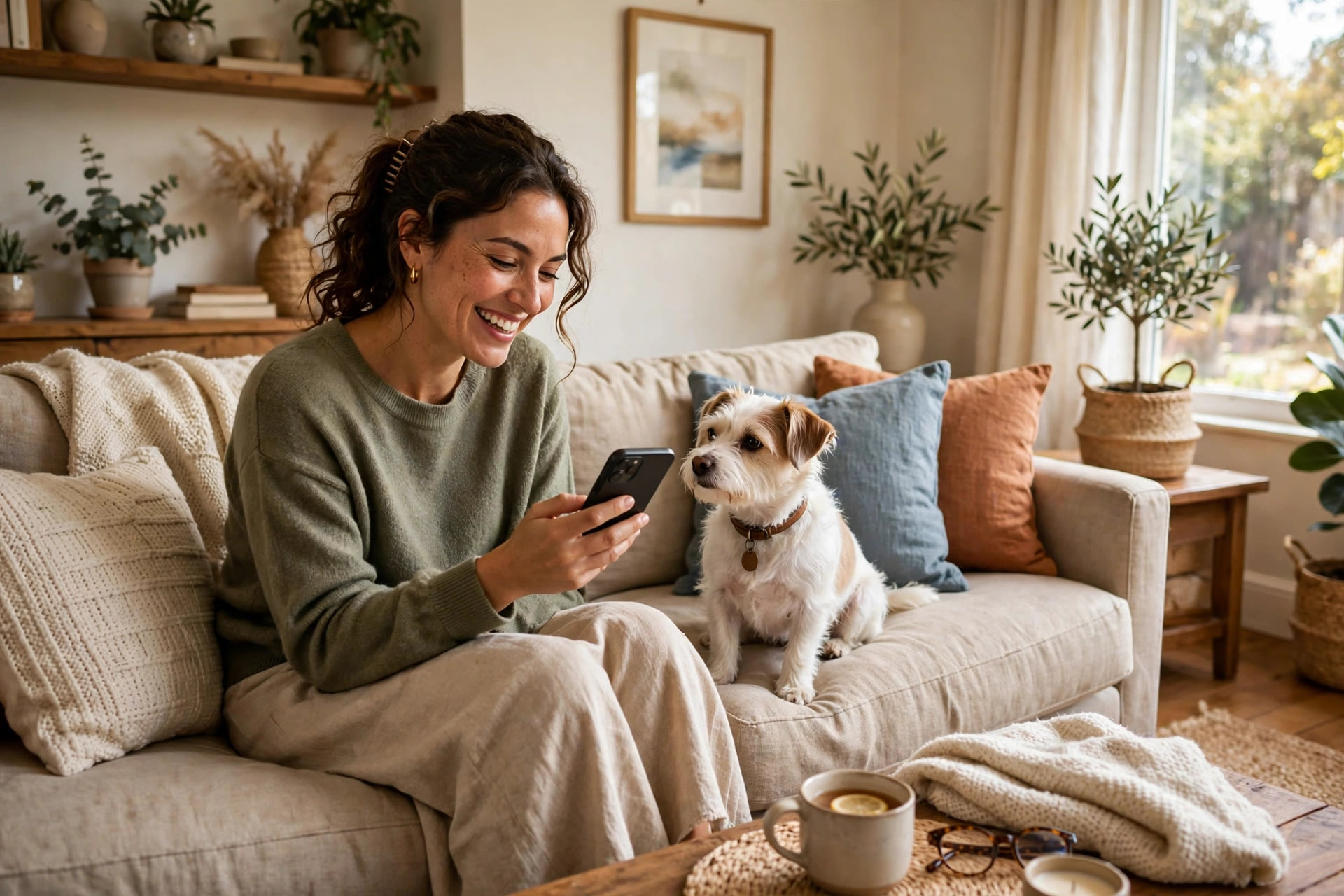
A short text with a one-tap booking or review link removes every bit of friction, which is why SMS converts where email sits unopened.
Cadence and opt-in: how often and the rules
Frequency is where SMS programs live or die. Text too often and customers opt out; text too rarely and the list goes cold. The table below is a safe starting cadence for a grooming salon.
| Message type | How often | When it goes out | Notes |
|---|---|---|---|
| Appointment confirmation | Per booking | Immediately after booking | Transactional; customers expect it |
| Appointment reminder | Per visit | 24 to 48 hours before | Include reply-to-confirm or reschedule link; see our guide to appointment reminders for pet groomers |
| Rebooking prompt | Per visit | Within one hour of pickup | The highest-ROI text; never skip it |
| Review request | Per visit | Evening of the appointment | Direct Google review link, one tap |
| Slow-day fill offer | Max once a month | 24 to 72 hours before the slow day | Target lapsed or off-peak clients only |
| Pet birthday text | Once a year per dog | Morning of the birthday | Name, age, small offer, one-word reply |
| Lapsed client win-back | Quarterly | To clients quiet 4+ months | Personal tone, easy booking link |
| New service announcement | A few times a year | At launch | Teeth cleaning, de-shedding packages, retail |
The rule of thumb: transactional texts are unlimited because customers want them, marketing texts stay at one to four a month per customer. A customer who gets a confirmation, a reminder, a rebooking prompt, and a review request around one visit will not feel spammed, because each message was useful. The opt-outs start when the messages feel like ads instead of service.
Opt-in is the legal foundation. In the US, marketing texts require express written consent, and the rules are enforced with real fines. The safe setup collects consent in writing at booking: a checkbox on the intake form or booking page that says “I agree to receive appointment reminders and occasional offers by text from (salon name). Reply STOP to cancel.” Keep a record of every consent. Every marketing text must identify the sender and include opt-out instructions, and every STOP reply must be honored immediately, which any proper platform does automatically. One complaint-driven fine costs more than a decade of SMS software, so treat consent as seriously as the schedule.
| Opt-in moment | How to collect it | What to say |
|---|---|---|
| Online booking | Checkbox, unchecked by default | “Text me appointment reminders and occasional offers from (salon). Reply STOP to cancel.” |
| In-salon intake form | Signed checkbox on the form | Same wording as online; keep the signed form on file |
| At pickup | Verbal ask plus logged confirmation | “Can we text you Biscuit’s pickup updates and reminders?” Log the yes in the system |
| Website popup | Phone number field with consent text | Offer first-visit discount in exchange; consent text beside the button |
What SMS marketing software costs
SMS pricing is simple: a monthly platform fee plus a per-message cost. Most grooming salons send a few thousand messages a month, so the total stays small.
| Cost layer | Typical price band | What it covers |
|---|---|---|
| Platform fee | $25 to $100 per month | Contact list, campaigns, automations, opt-out handling, reporting |
| Per-message cost | $0.01 to $0.03 per segment | Each 160-character chunk; a typical salon text is one segment |
| Picture messages (MMS) | $0.02 to $0.05 each | Birthday texts with the dog’s photo, before-and-after shots |
| Dedicated number | $2 to $15 per month | Your own texting number; some plans include it |
| Setup help | $0 to $500 one time | List import, automation building, template writing |
Starter: basic texting
For a solo groomer or small salon. Bulk texting, appointment reminders, and a simple keyword opt-in. You write the messages and send campaigns manually. Enough to run rebooking prompts and reminders well.
- Up to a few thousand texts a month included
- Reminder and confirmation templates
- Automatic STOP handling
Growth: automation included
The sweet spot for most salons. Automated rebooking texts after checkout, birthday texts, lapsed-client sequences, and review requests that fire on their own. Connects to common booking software so messages use the dog’s name and due date.
- Checkout-triggered rebooking texts
- Birthday and win-back automations
- Booking software integration
Full CRM with SMS built in
For multi-groomer salons and small chains. SMS plus email, pipeline tracking, review management, and reporting in one system, so texts, reminders, and follow-ups run from the customer record. Our comparison of the best SMS marketing software for small business breaks down which platforms fit at each size.
- SMS, email, and reviews in one dashboard
- Per-groomer and per-location reporting
- Advanced segmentation for fill offers
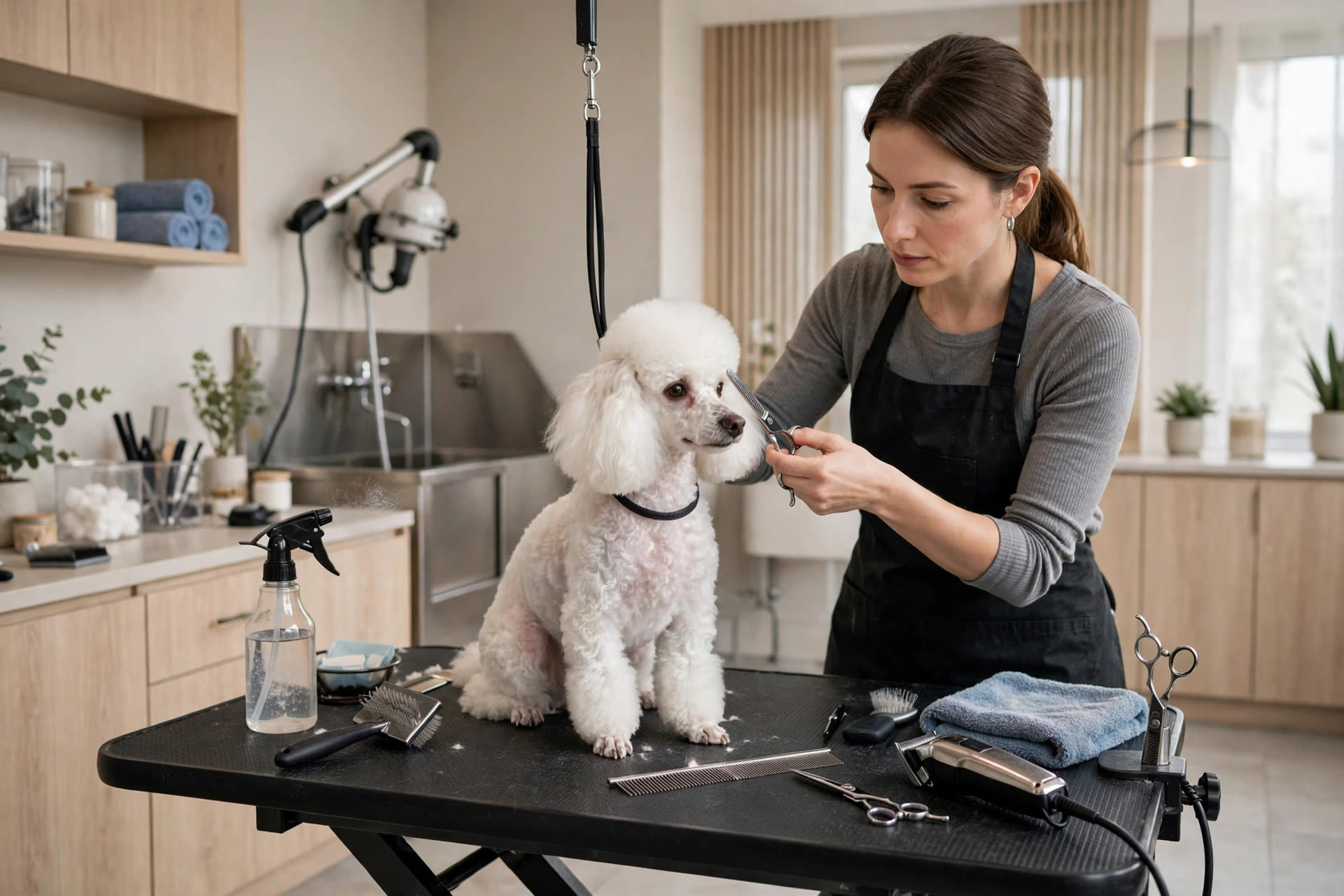
When the schedule stays full on a regular cycle, the salon stops depending on walk-ins and starts running on predictable, repeat revenue.
Setting it up: from zero to first campaign
A grooming SMS program is a one-week project. Start with the list and the rebooking text; add the rest over the following month.
Day 1: pick the platform and the number. Choose software that connects to your booking system. Get a dedicated texting number with your area code; customers trust local numbers and reply to them more.
Day 2: import and clean the list. Import customer phone numbers from your booking software. Separate customers with written consent from those without; only the consent list gets marketing texts. The rest get transactional messages only until they opt in.
Day 3: write the core templates. Confirmation, reminder, rebooking prompt, review request. Keep each under 160 characters where possible so it sends as one segment. Personalize with the dog’s name and the appointment details.
Day 4: build the automations. Rebooking text one hour after checkout. Reminder 24 hours before. Review request the evening of the visit. Birthday text on the birth date. Test each one on your own phone first.
Day 5: train the team. Show groomers and front staff what goes out automatically, how to log verbal opt-ins at pickup, and what to do when a customer replies with a question. Agree that unhappy replies get a personal call within the hour.
Day 6 to 7: soft launch. Turn on the transactional messages and the rebooking text first. Watch the replies for a few days. Then add the review request, and schedule the first slow-day fill offer for the next genuinely slow day.
Mistakes that get you blocked or fined
Texting without consent. Buying a list of local phone numbers and blasting offers is illegal for marketing texts in the US and a fast path to fines. Only text people who agreed, and keep the proof.
Hiding who you are. Every marketing text must name the salon. Mystery texts get deleted, and some carriers filter them. Sign every message.
Ignoring STOP replies. Platforms handle this automatically, but if you ever text manually, honor opt-outs the same day. A customer who asked to stop and keeps getting texts will report you.
Texting at bad hours. Keep marketing texts between 9 AM and 8 PM in the customer’s timezone. A 6 AM “we miss Biscuit” text creates enemies. Most platforms let you set quiet hours; use them.
Blasting the whole list weekly. Weekly blasts train customers to ignore you and drive opt-outs. The cadence table above exists for a reason: useful beats frequent.
Generic messages with no names. “Time for a groom! Book now” performs poorly next to “Biscuit is due for his groom next week.” Personalization is the whole advantage of texting your own list; use the data you have.
No reply path. A text that says “call us to book” wastes the channel. Every message should let the customer reply or tap a link to complete the action in under a minute.
Your rollout checklist
Work through these in order. Each one builds on the last.
- 1Pick the platform. SMS software that connects to your booking system, with automation and automatic STOP handling.
- 2Get a local texting number. Your area code, registered properly, so customers recognize and trust it.
- 3Import and segment the list. Consent list for marketing, everyone else transactional only until they opt in.
- 4Write the four core templates. Confirmation, reminder, rebooking prompt, review request, each personalized with the dog’s name.
- 5Build the checkout automation. Rebooking text one hour after pickup with two specific time options.
- 6Build the reminder automation. 24-hour reminder with reply-to-confirm or one-tap reschedule.
- 7Set up birthdays and win-backs. Annual birthday text per dog, quarterly win-back to clients quiet four months or more.
- 8Add opt-in everywhere. Booking page checkbox, intake form, verbal ask at pickup, website popup.
- 9Train the team. What sends automatically, how to log opt-ins, and the one-hour rule for unhappy replies.
- 10Launch and watch the first month. Track rebooking rate, opt-outs, fill-offer bookings, and reviews gained, then tune.
Frequently asked questions
Is SMS marketing legal for my grooming salon?
Yes, with proper consent. Marketing texts in the US require express written consent, which you collect with a checkbox at booking or a signed intake form. Every message must identify your salon and include opt-out instructions, and STOP requests must be honored immediately. Keep consent records on file.
How much does SMS marketing cost for a pet groomer?
Most salons pay $25 to $100 a month for the platform plus $0.01 to $0.03 per text. A salon sending 2,000 texts a month lands around $50 to $90 all-in. Full CRM systems with SMS built in run $100 to $300 a month for larger salons.
How often should I text my grooming clients?
Transactional texts, confirmations, reminders, rebooking prompts, are unlimited because customers expect them. Marketing texts should stay at one to four a month per customer: a fill offer here, a birthday text there. Useful beats frequent.
What is a good rebooking rate for a grooming salon?
Salons without a rebooking system often sit below 50 percent of clients on a regular cycle. With pickup rebooking texts and reminders, 65 to 75 percent is a realistic target. Track it monthly: clients booked for their next visit before leaving, divided by total visits.
Will customers get annoyed by grooming texts?
Not if the texts are useful and infrequent. Confirmations, reminders, and a rebooking prompt around a visit feel like service, not marketing. Annoyance comes from weekly blasts and irrelevant offers. Keep marketing texts rare, personal, and easy to act on.
Can I automate the birthday texts?
Yes. Collect the dog’s birth date on the intake form, and the platform sends the birthday message automatically each year with the dog’s name and age filled in. Add a small offer and a one-word reply that books the visit.
What should I do when someone replies STOP?
Nothing, the platform removes them from marketing texts automatically and you must not text them again for marketing. They can still receive purely transactional messages about existing appointments where allowed, but the safest practice is to confirm preferences before any further text.
Do SMS reminders really cut no-shows?
Yes. A 24-hour text reminder with a reply-to-confirm option consistently cuts grooming no-shows, because it catches the customer who forgot and the one whose plans changed. The reschedule link turns a would-be no-show into a moved booking instead of an empty table.
Should I send picture messages too?
For birthdays and before-and-after shots, yes; they get strong replies. They cost two to five cents each instead of one to three, so reserve them for high-value moments rather than everyday reminders. Always get consent for picture messages the same way as regular texts.
How do I measure whether SMS is working?
Track five numbers monthly: rebooking rate, no-show rate, fill-offer bookings, reviews gained from review texts, and opt-out rate. Compare against the months before launch. Rebooking rate usually moves first, within 30 to 60 days.
Fill your tables with clients on a regular cycle
Digital Hayder builds SMS and CRM automation for pet grooming salons: rebooking texts at pickup, slow-day fill offers, birthday texts for the dogs, review requests that grow your Google profile, and reminders that cut no-shows. Tell us about your salon and we will design the system around it.
Contact Us