
There are dozens of SMS marketing tools, and they all claim the same things: high open rates, easy campaigns, happy customers. The differences that matter for a small business hide in the details: how much you pay per text, whether compliance is handled for you, how painful list building is, and whether the automations you actually need are included or locked behind a higher tier. This guide compares the best SMS marketing software for small businesses on the criteria that decide real-world results, with typical price ranges for each, so you can pick the right tool the first time instead of migrating twice.
The quick answer
- Best all-around for small business: SimpleTexting, easy to learn, strong automations, typical plans from about $39 a month.
- Best budget pick: Textedly, straightforward pricing with plans starting near $29 a month for low volume.
- Best for ecommerce: Klaviyo or Attentive, deep store integrations with SMS plus email in one flow, higher cost per message.
- Best for developers and custom builds: Twilio, pay-as-you-go from fractions of a cent per message, but you build the interface yourself.
- Best for local service teams: Podium or an all-in-one platform with a shared inbox, reviews, and texting together.
- What to budget: most small businesses spend $30 to $300 a month all in, depending on list size and message volume.
How to judge SMS software (before the feature lists)
Forget the marketing pages for a minute. The right SMS tool for a small business comes down to six practical questions. Run every option below through them.
1. True cost at your volume
Most SMS tools price by credits or message tiers, and the headline price rarely tells the full story. A “starts at $29” plan might include 500 messages, with overages billed per segment, and MMS billed at two to four times the SMS rate. Map the pricing to your real plan: how many contacts, how many messages per contact per month, and how many of those include images. Then add carrier fees and any 10DLC registration charges. The cheapest headline plan often loses once you price your actual volume.
2. Compliance handling
US business texting requires 10DLC number registration, express consent records, and working opt-outs. Good platforms handle registration inside signup, store consent automatically, append opt-out language, and process STOP replies for you. Weak ones leave it to you. Given the fines involved, compliance tooling is not a nice extra; it is a core feature.
3. List building tools
Your list is the asset. The software should make growing it easy: text-to-join keywords, web signup forms and popups, QR codes, and integrations that capture consent at checkout or booking. If list building is an afterthought in the product, your list will stay small.
4. Automations you will actually use
The campaigns that make SMS profitable are automated: welcome series for new subscribers, abandoned cart recovery, appointment reminders, post-purchase follow-ups, win-back flows for quiet customers. Check that the workflows you need exist on the plan you can afford, not just on the enterprise tier.
5. Integrations
SMS works best connected to the rest of your stack: your ecommerce platform, booking system, CRM, or point of sale. Native integrations beat Zapier workarounds for reliability, especially for triggered messages like order updates and reminders.
6. Usability for non-marketers
In a small business, the person sending texts is also answering phones and running the shop. If the interface needs training videos to send a broadcast, it will not get used. Favor tools your team can learn in an afternoon.

Price your real message volume before committing: headline plans rarely tell the full story.
The best SMS marketing software for small business
Prices below are typical ranges based on publicly listed plans. Vendors change pricing often, so confirm current rates on a free trial before you commit.
SimpleTexting: best all-around for small business
SimpleTexting earns the top spot because it balances everything a small business needs: an interface a non-marketer learns fast, text-to-join keywords, scheduled campaigns, autoresponders, polls, and integrations with common CRMs and ecommerce tools. Compliance is handled well, with 10DLC registration built into onboarding. It suits retailers, restaurants, salons, and service businesses that want one tool for broadcasts plus basic automation without hiring a marketer to run it.
- Strengths: easy to learn, solid automation for the price, good keyword and list-building tools, MMS support.
- Watch out for: advanced ecommerce flows are thinner than Klaviyo or Attentive; heavy MMS users should price overages carefully.
Textedly: best budget pick
Textedly keeps things simple and cheap, which is exactly what many small businesses want. Plans start low, the interface is plain but functional, and it covers the essentials: mass texting, scheduled messages, keywords, and basic autoresponders. It is a strong fit for businesses sending a few broadcasts a month to a modest list, like a restaurant announcing weekly specials or a shop running monthly promos.
- Strengths: low entry price, no-nonsense interface, quick setup.
- Watch out for: automation and integrations are basic compared with pricier tools; growing businesses may outgrow it.
EZ Texting: best for straightforward mass texting
EZ Texting is built around one job: getting a message to a list fast. Its campaign builder is among the simplest in the category, with templates, scheduling, polls, and text-to-join keywords. It fits organizations that send regular announcements to a known list: churches, schools, clubs, local retailers, and franchises that need multiple locations under one account.
- Strengths: very fast campaign setup, multi-location support, reliable delivery.
- Watch out for: automation depth is limited; it is a broadcaster first, not a lifecycle marketing tool.
SlickText: best for list growth
SlickText puts unusual effort into growing your list: high-converting signup forms, QR codes, text-to-join, and referral tools that reward subscribers for inviting friends. Its automation covers welcome series and drip campaigns well. It suits businesses starting from zero subscribers who need the list-building machinery, like new restaurants, fitness studios, and local retailers.
- Strengths: best-in-class signup tools, clean automation builder, good analytics.
- Watch out for: per-message overage costs add up fast if your list grows quicker than your plan.
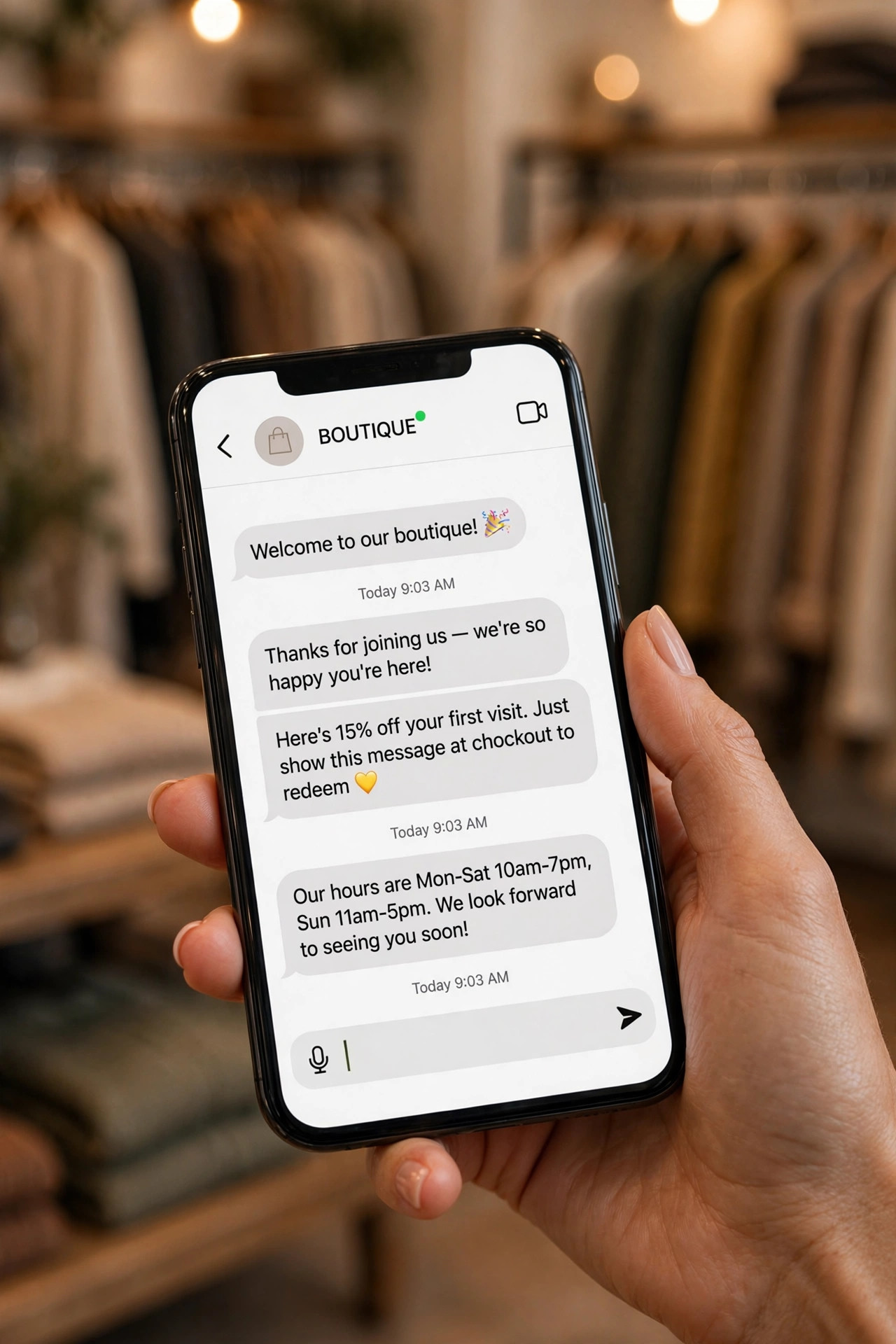
Automated welcome and follow-up flows do the repeat work that makes SMS profitable.
Klaviyo: best for ecommerce SMS plus email
If you run an online store, Klaviyo is the default shortlist. It combines email and SMS in one platform with deep integrations for major ecommerce platforms, and its flows are the category standard: abandoned cart, browse abandonment, post-purchase, win-back, and price-drop alerts, all mixing email and text by customer behavior. Pricing is usage-based, so costs scale with your list and send volume, which rewards clean, engaged lists and punishes bloated ones.
- Strengths: unmatched ecommerce integrations and flow library, unified email plus SMS reporting.
- Watch out for: costs climb with list size and message volume; overkill if you do not sell online.
Attentive: best for serious ecommerce texting programs
Attentive is the premium ecommerce SMS platform: two-tap signup, advanced segmentation, AI-assisted copy, and a managed onboarding team that builds your first campaigns with you. Brands that treat SMS as a major revenue channel use Attentive because the signup and list-growth technology converts better than basic forms. The tradeoff is cost and contract structure: it is priced for businesses doing real ecommerce volume, not for a shop sending one promo a month.
- Strengths: highest-converting signup units in ecommerce, strong deliverability team, hands-on onboarding.
- Watch out for: premium pricing and longer commitments; small stores should start with Klaviyo or a simpler tool.
Twilio: best for custom builds
Twilio is not really SMS marketing software; it is the infrastructure most of it runs on. If you have a developer, Twilio lets you build exactly the texting workflow your business needs: appointment reminders from your booking system, order updates from your warehouse software, two-way support texting. The per-message cost is among the lowest available. The catch is total: you are building and maintaining software, handling 10DLC registration yourself, and writing your own compliance logic. Worth it for custom needs, overkill for standard campaigns.
- Strengths: lowest per-message cost, total flexibility, massive scale.
- Watch out for: no marketing interface out of the box; you build everything, including compliance safeguards.
Podium: best for local businesses that live on reviews and chat
Podium bundles texting with review requests, webchat, and payments, which matches how many local businesses actually operate: the same conversation that books the job also collects the review and takes payment. It is pricier than pure SMS tools because it replaces several tools at once. Best fit for home services, dental and medical practices, and dealerships where reviews directly drive revenue.
- Strengths: texting plus reviews plus payments in one thread, strong local business focus.
- Watch out for: higher price point; pure marketing automation is thinner than dedicated SMS platforms.
Side-by-side comparison
| Tool | Typical starting cost | Best for | Automation depth |
|---|---|---|---|
| SimpleTexting | About $39/mo | All-around small business | Strong |
| Textedly | About $29/mo | Budget mass texting | Basic |
| EZ Texting | About $29/mo | Simple broadcasts, multi-location | Basic |
| SlickText | About $29/mo | Growing a list from zero | Good |
| Klaviyo | About $20/mo plus usage | Ecommerce email plus SMS | Excellent |
| Attentive | Custom quotes | High-volume ecommerce SMS | Excellent |
| Twilio | Pay per message | Custom and developer-built flows | Build it yourself |
| Podium | About $300/mo bundled | Local services, reviews plus texting | Moderate |
Typical ranges based on publicly listed pricing. Confirm current plans and overage rates on a trial; SMS vendors adjust pricing regularly.
How much should a small business budget for SMS?
Work it from your list, not from the plan tiers. A business with 1,000 subscribers sending four messages a month uses about 4,000 message segments (more if messages run long or include images). At typical small-business rates, that lands around $60 to $160 a month in message costs, plus the platform subscription of $30 to $100. All in, most small businesses spend $75 to $250 a month once the program is running.
The costs people forget: MMS segments billed at multiples of SMS rates, carrier and 10DLC fees of a few dollars a month, keyword rentals on some platforms, and overage charges when a campaign outperforms the plan. Price two scenarios before you sign: your expected volume and double that volume. Pick the tool where the double scenario still looks sane.

Budget from your list size and send frequency, then price the double-volume scenario too.
How to choose: match the tool to your situation
- 1Local shop, restaurant, or salon sending promos and reminders: start with SimpleTexting or Textedly. You need broadcasts, keywords, and basic automation, and you need the staff to actually use it.
- 2Online store doing real revenue: shortlist Klaviyo first. The abandoned cart and post-purchase flows pay for the platform many times over. Consider Attentive when SMS becomes a major channel.
- 3Contractor or clinic living on appointments and reviews: look at Podium-style bundled tools or any platform with a shared team inbox, review automation, and reminder flows.
- 4Unusual workflow or existing custom software: price Twilio with developer time. It wins whenever off-the-shelf tools cannot match your process.
- 5Nonprofit, school, or club sending announcements: EZ Texting or Textedly. You need reliable mass delivery and simple signup, not marketing automation.
Frequently asked questions
How much does SMS marketing software cost?
Most small businesses pay $30 to $300 a month all in: a platform subscription plus per-message charges of roughly $0.01 to $0.05 per SMS segment. A 1,000-subscriber list getting four messages a month typically costs $75 to $250 total. Ecommerce platforms with heavy automation and premium tools sit at the higher end.
What is the cheapest SMS marketing software?
Textedly and EZ Texting have among the lowest entry prices, with plans starting near $29 a month. For very low volume or custom needs, Twilio’s pay-as-you-go pricing (roughly a cent per message) can be cheapest, but you need a developer to build the interface.
Do I need 10DLC registration?
Yes, for US business texting from standard long-code numbers. Carriers filter or block unregistered business traffic. Reputable platforms handle registration during signup; approval usually takes a few days to a couple of weeks, with small one-time and monthly carrier fees.
Can I switch SMS providers later?
Yes. You can usually port your texting number and export your subscriber list with consent records. The painful part is rebuilding automations and integrations, which is why choosing carefully now matters more than saving $10 a month on the wrong tool.
Is SMS or email marketing better for small business?
They do different jobs. SMS wins for anything time-sensitive: reminders, confirmations, flash offers, and cart recovery, with open rates near 90%. Email wins for longer content: newsletters, lookbooks, and detailed announcements, at far lower cost per message. Most healthy small businesses run both, with SMS reserved for messages that deserve instant attention.
Want SMS marketing set up right the first time?
Digital Hayder helps small businesses pick and configure SMS platforms: compliant list setup, 10DLC registration, automated welcome series, reminders, review requests, and campaigns connected to your CRM or store. Tell us about your business and we will recommend the right tool and build it out.
Contact Us