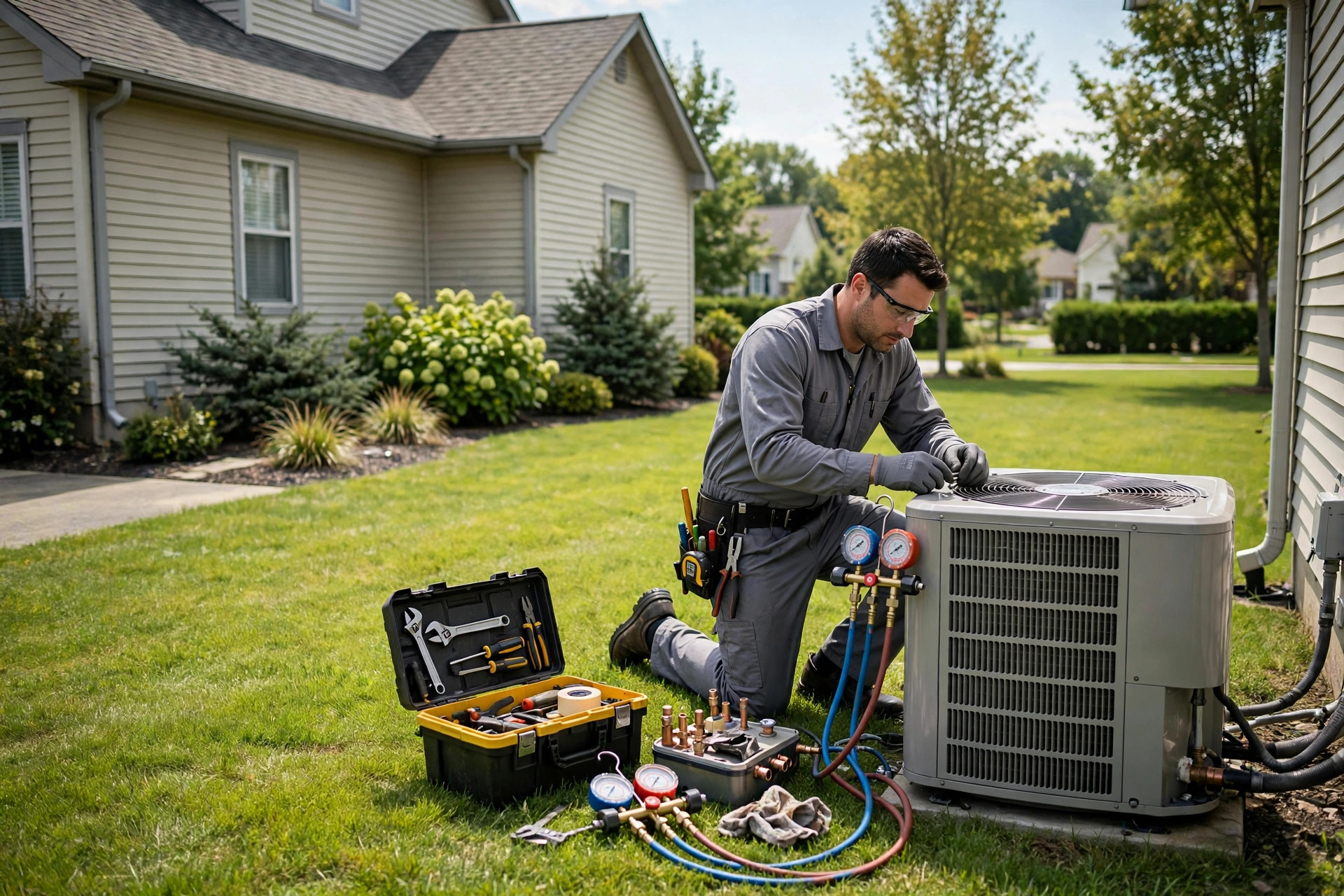
July buries you in no-cool calls. October is dead quiet. Then January hits with furnace failures and you are drowning again. That feast-or-famine cycle is the real problem most hvac marketing ideas ignore. They chase more leads during peak season, when you already have too many, and do nothing for the shoulder months when techs sit idle. This playbook is built around smoothing the year out: seasonal campaigns that book tune-ups before the rush, maintenance plans that lock in recurring revenue, reviews and Local Services Ads that capture emergency demand, and email and SMS win-back that turns your old customer list into shoulder-season jobs.
The quick answer
- Seasonal campaigns: sell AC tune-ups in spring and furnace checks in fall, before demand (and ad prices) spike.
- Maintenance plans: the closest thing HVAC has to recurring revenue; members call you first and replace through you.
- Local Services Ads: typically $30 to $80 per lead, pay-per-lead with the Google Guarantee badge.
- Reviews: 54% of HVAC leads come from organic search and reviews contribute to 27%, so your Google profile is a lead channel.
- Email: returns an estimated $36 to $42 per $1 spent for HVAC, the highest ROI of any channel in the trade.
- SMS: reported 98% open rates; use it for dispatch updates, reminders, and review requests.
The seasonality problem (and the marketing calendar that fixes it)
HVAC demand follows the weather, and your marketing should run ahead of it, not behind it. The pattern that works: market cooling in March through May, sell hard through the summer peak, pivot to heating tune-ups in September and October, ride the winter breakdown season, then use February for win-back and maintenance plan pushes when the phones go quiet. Shops that only advertise during peaks pay the highest ad prices for the jobs they would have gotten anyway, then starve in the valleys. Budget the year in advance and shift spend toward the shoulders, where each dollar buys more attention and each booked tune-up prevents an emergency call you would have lost to a competitor.
HVAC marketing ideas that fill the schedule year round
1. Turn your Google Business Profile into a lead channel
Industry data puts 54% of HVAC leads coming from organic search, with online reviews contributing to 27% (HVAC marketing statistics). Your Google Business Profile is where most of that happens. Complete every service entry (AC repair, furnace installation, duct cleaning, thermostat setup, indoor air quality), list all service areas, keep hours accurate, and upload real job photos monthly. Then run the review ask on every completed job: a text with a direct link within the hour. The broader consumer data backs this up, with 97% of consumers reading reviews before choosing a local business (review survey summary).
2. Run Local Services Ads for emergency demand
When the AC dies at midnight, the homeowner taps the top result. Local Services Ads sit above everything, carry the Google Guarantee badge, and charge per lead instead of per click. Published trade pricing guides put HVAC leads at roughly $30 to $80 each. Your ad ranking depends on review count, rating, responsiveness, and proximity, so the review engine from idea 1 feeds this channel directly. Dispute invalid leads (wrong area, wrong service, spam) to keep your effective cost down, and answer within minutes: Google tracks responsiveness and rewards the shops that pick up.
3. Run seasonal tune-up campaigns on schedule
Do not wait for the first heat wave. In March, email and text your entire customer list with a spring AC tune-up offer; in September, do the same for furnace checks. Pair the message with a fixed price and a booking link so there is no friction. One contractor example widely cited in the trade: a $150 email send to 2,000 past customers generated $4,845 in service calls, a 32x return (HVAC email benchmarks). Run the same campaign on Facebook and Instagram to your service-area zip codes, and put yard signs at completed tune-up jobs. The goal is a booked-solid April and October, which are otherwise your thinnest months.
4. Sell maintenance plans like your business depends on it
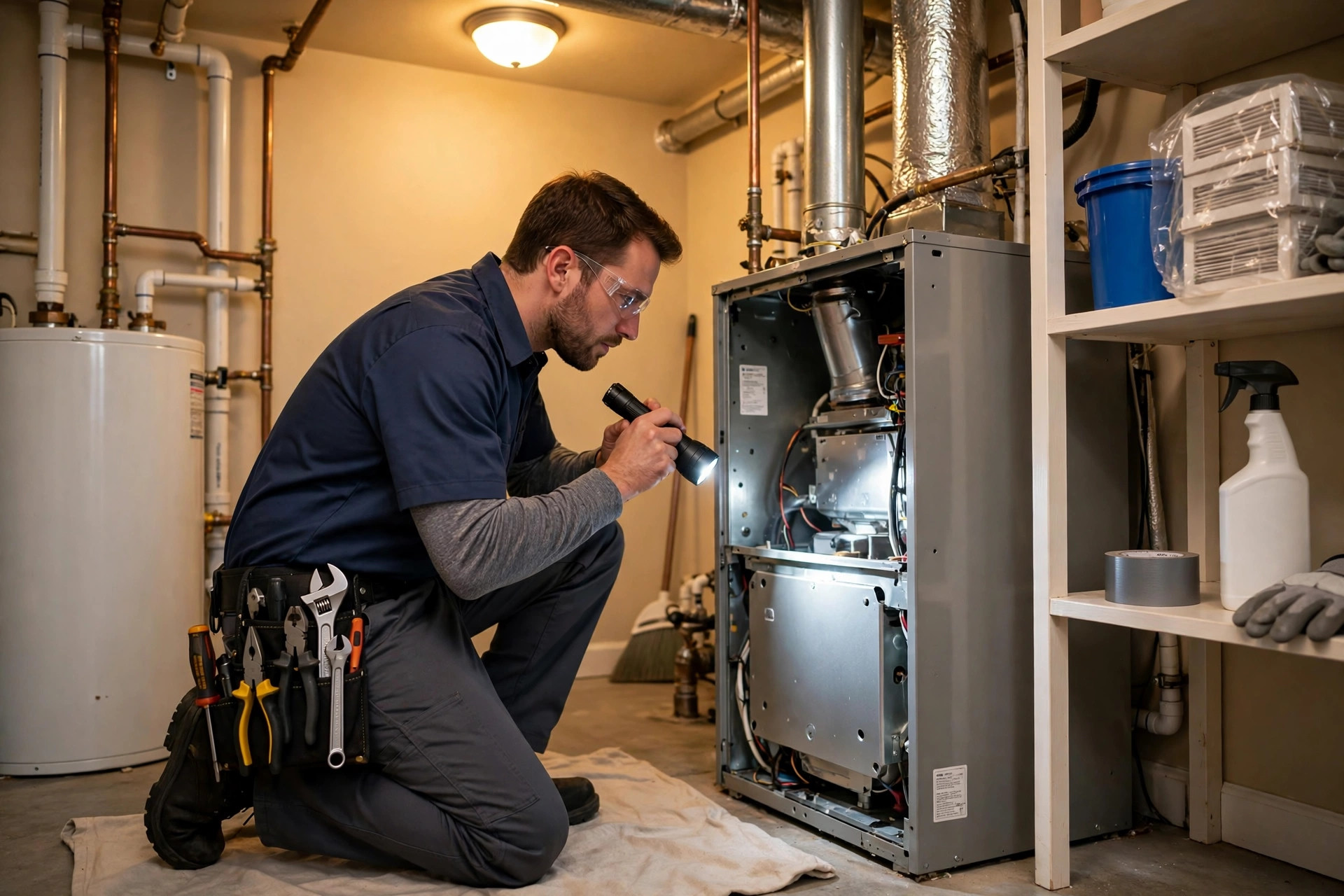
A maintenance plan turns one-time customers into members: two tune-ups a year, priority scheduling, a repair discount, all for a monthly or annual fee. Members call you first when something breaks, they replace equipment through you instead of shopping around, and their lifetime value dwarfs a one-and-done customer. Pitch the plan at the end of every tune-up and every repair visit, when the value is fresh in the customer’s mind. Print it on the invoice, put it in the follow-up text, and train techs on a one-sentence pitch. Even a few hundred members creates a baseline of recurring visits that smooths out the slow months.

HVAC marketing ideas for win-back: email and SMS
Your customer list is the most underused asset in your business. Acquiring a new HVAC customer costs an estimated $289 on average (HVAC marketing statistics); emailing a past one costs pennies. The shops that win the shoulder seasons are the ones that work their list.
5. Email: the highest-ROI channel in the trade
HVAC email marketing is estimated to return $36 to $42 for every $1 spent, outperforming paid search, social ads, and direct mail, with home-service lists seeing 28 to 35% open rates and monthly platform costs of just $50 to $300 on tools like Mailchimp or ActiveCampaign (HVAC email benchmarks). What to send: seasonal tune-up reminders, filter-change reminders, maintenance plan renewals, and “your system is 12 years old” replacement nudges. Set up automated drip sequences for unsold estimates, which reportedly convert at 2.8 times the rate of one-off blasts. Segment by equipment age and last service date so a customer with a new system gets maintenance content, not replacement pitches. Our lead follow-up guide covers the same automation structure in detail.
6. SMS for dispatch, reminders, and review asks
Text messages reportedly see 98% open rates with 37% response rates in HVAC (HVAC marketing statistics). Use SMS where immediacy matters: “Tech Mike is 30 minutes away,” appointment confirmations, tune-up reminders, and the review request link right after the job. Keep marketing texts to one or two a month so the channel stays trusted; appointment and service messages can be unlimited because customers want them. Our SMS marketing guide walks through compliant list-building and message templates that transfer directly to the trades.

7. Win back dormant customers every February
Pull every customer who has not booked in 18 months and run a dedicated campaign: a “we miss you” tune-up offer by email, followed by a text a week later. These customers already trust you; they just forgot. Even a 5 to 10% response rate on a list of a few thousand is dozens of booked visits at near-zero cost. Do the same for unsold replacement quotes from the past year: equipment does not get younger, and the customer who said “next year” last spring is deciding right now.
Referrals, partnerships, and reputation
8. Build a referral program techs can explain in ten seconds
“Refer a neighbor, you both get $50 toward your next service.” Print it on the invoice, put it on a card the tech hands over, and text it a week after the job. Pay rewards as account credit so the value returns as future work. Referred customers close faster and complain less; they are the cheapest leads in the business.
9. Partner with realtors, inspectors, and property managers
Home inspectors flag aging systems on every other report. Realtors need a trusted HVAC contact for pre-sale repairs. Property managers oversee dozens of units with constant turnover. Introduce yourself to ten of each in your market this quarter with a simple offer: priority scheduling for their clients and a direct line that skips your queue. One property manager relationship can produce more annual revenue than a month of ads.
10. Own the “second opinion” search
When a competitor quotes $9,000 for a system replacement, a share of homeowners search for a second opinion. Create a page and a Google Business post offering free second opinions on replacement quotes, and run a small Google Ads campaign on “HVAC second opinion” terms in your market. These are high-intent, high-ticket shoppers, and you enter the conversation as the honest alternative.
What do these HVAC marketing ideas cost?
Healthy HVAC shops typically invest 7 to 12% of revenue in marketing, weighted toward the shoulder seasons. Typical ranges:
| Channel | Typical cost | What you get |
|---|---|---|
| Local Services Ads | $30 to $80 per lead | Pay-per-lead emergency calls at the top of Google |
| Google Ads (search) | About $4.50 per click; $1,000 to $3,000/mo budgets | High-intent searches like system replacement |
| Email marketing | $50 to $300/mo | Highest reported ROI in the trade; works your existing list |
| SMS platform | $50 to $200/mo | Dispatch updates, reminders, review asks |
| Review software | $100 to $300/mo | Automated review requests and monitoring |
| Direct mail | $500 to $2,000/mo | Seasonal postcards to homeowner lists |
| SEO / website | $1,000 to $3,000/mo | Compounds over 12 to 18 months; 54% of leads start with search |
Planning ranges compiled from published trade pricing data, not fixed prices. Your market and close rate move the real numbers.
Your 12-month HVAC marketing calendar
- 1March to May: spring tune-up campaign to the full list by email and SMS; launch Local Services Ads if not running; start the review ask on every job.
- 2June to August: capture peak demand; keep ad budgets funded; pitch maintenance plans on every visit; collect reviews aggressively while job volume is high.
- 3September to October: fall furnace check campaign; second-opinion ads for aging systems; partner outreach to realtors and inspectors before winter.
- 4November to January: ride breakdown season; keep dispatch SMS running; ask every happy customer for a review while gratitude is fresh.
- 5February: dormant-customer win-back campaign; maintenance plan renewal push; audit the year’s call tracking data and shift budget to what booked jobs.
Frequently asked questions
What is the most effective marketing for HVAC companies?
The combination of Local Services Ads for emergency demand, a review engine feeding your Google profile, and email/SMS to your past customer list. Organic search drives over half of HVAC leads, so visibility on Google plus systematic follow-up beats any single ad channel.
How much should an HVAC company spend on marketing?
A common planning range is 7 to 12% of revenue. A small shop might spend $1,000 to $3,000 a month across Local Services Ads, email, and review software; larger operations run $5,000 to $15,000 including Google Ads, direct mail, and SEO.
How do HVAC companies get leads in slow months?
Seasonal tune-up campaigns to the existing customer list, maintenance plan memberships that schedule visits automatically, dormant-customer win-back offers, and second-opinion campaigns on replacement quotes. The list you already own is the cheapest source of shoulder-season work.
Are maintenance plans worth the effort to sell?
Yes. Members generate recurring tune-up visits, call you first for repairs, and buy replacements from you instead of shopping around. Even a few hundred members creates a revenue baseline that carries the business through slow months.
Does email marketing work for HVAC?
It is the highest-ROI channel in the trade by most published benchmarks, returning an estimated $36 to $42 per dollar spent. It works because you are marketing to people who already bought from you, with timely reminders they actually want, like tune-ups and filter changes.
Want a marketing system that smooths out your seasons?
Digital Hayder builds lead generation for home service businesses: Local Services Ads management, review engines, seasonal email and SMS campaigns, and follow-up automation that turns your customer list into booked tune-ups. Tell us about your shop and we will map the year.
Contact Us