Friday is packed, Tuesday is empty, and the delivery apps take a cut of every order while keeping the customer relationship for themselves. Most restaurant marketing ideas treat the symptom: a discount here, a boosted post there. The deeper problem is that too many restaurants rent their customers instead of owning the relationship. This playbook flips that: Google Business Profile and reviews to capture local search, Instagram and TikTok to make your food famous, an email list and loyalty program that bring diners back on your terms, and slow-night promos that fill tables instead of discounting the ones already coming.
The quick answer
- Google Business Profile: complete menu, 50+ food photos, accurate hours, weekly posts, and a review ask at every table.
- Reviews: 97% of consumers read reviews before choosing a local business; your star rating is your storefront.
- Short-form video: one great dish video a week on Instagram Reels and TikTok beats a month of static posts.
- Email list: the only audience you own; email returns an estimated $36 for every $1 spent.
- Loyalty program: members visit about 20% more often and spend more per visit; programs report 4.8x to 5.3x ROI.
- Slow nights: themed events and prix fixe menus fill Tuesdays; blanket discounts just train customers to wait.
The real problem: you rent your customers
Every order through a delivery app comes with two costs: the commission taken off the top, and the fact that the app owns the customer data, not you. You cannot email those diners, you cannot invite them back, and you pay full commission again the next time they order. Social media followers are rented too: organic reach on a Facebook page is a fraction of a percent, so most followers never see your posts. The restaurant marketing ideas below all point one direction: move the relationship onto channels you control. Your Google listing, your email list, your loyalty members, your regulars. Rented attention is for discovery; owned relationships are for revenue.
Restaurant marketing ideas for Google: own local search
“Best Italian near me,” “ramen open late,” “brunch downtown”: these searches decide where people eat tonight, and Google answers them before any website loads. Your Google Business Profile is the most valuable free marketing you have.
1. Build a profile that makes people hungry
- Menu: upload the full menu with prices, not a blurry photo of a paper menu. Google shows menu items directly in search results.
- Photos: 50 or more, and lead with food. Bright, close-up dish shots outperform interior photos for clicks. Add new dishes the week they launch.
- Hours: accurate to the day, including holiday hours. Nothing loses a customer faster than showing up to a “closed” sign Google said was open.
- Attributes: outdoor seating, vegetarian options, wheelchair accessible, good for groups. Diners filter on these.
- Posts: one a week: the weekend special, a new dish, an event night. It keeps the listing fresh and gives regulars a reason to check back.
- Booking and ordering links: add your reservation link and your own online ordering, so Google sends diners to you, not to an app that takes a cut.
2. Run a review engine at every table
Consumer research keeps finding the same thing: 97% of consumers read reviews, and the average diner checks multiple sites before choosing where to eat (review survey summary). Make the ask part of service: when the server clears a table and the guests are happy, a small table card with a QR code linking straight to your Google review page. Train staff on one line: “If you enjoyed everything, a quick review means the world to us.” Respond to every review within a day or two. A thoughtful reply to a complaint has convinced more future diners than any ad: it shows there is a human being running the place. Our guide to getting more Google reviews covers the same ask-and-respond system step by step.
Restaurant marketing ideas for social: make your food famous
Nobody ever chose a restaurant because of a stock photo of a salad. They chose it because a 15-second video of cheese being pulled apart made them hungry at 11pm. Social media is a discovery channel: its job is to put your best dishes in front of people who have never heard of you.
3. Post one great dish video every week
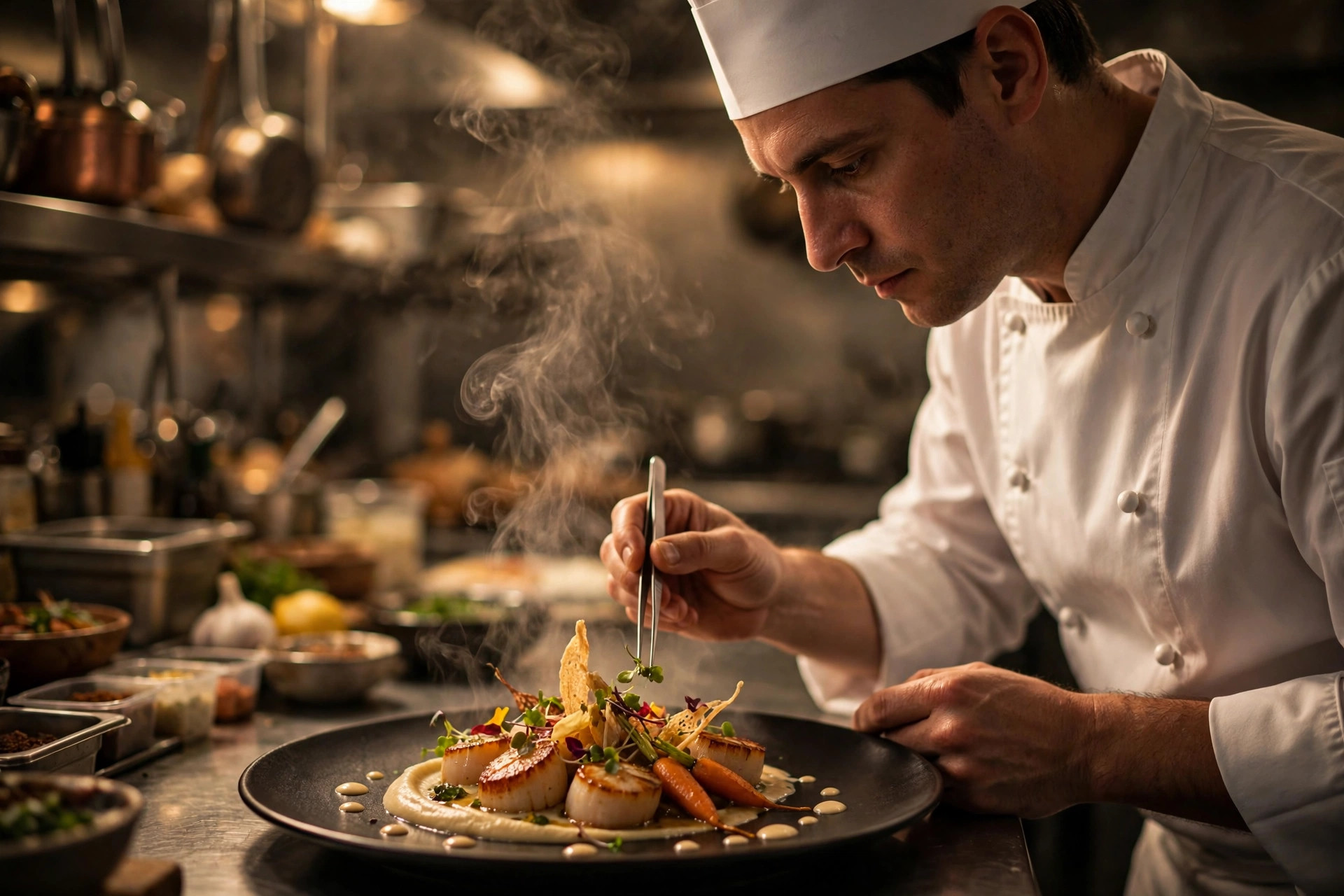
You do not need a production crew. A phone, good light, and the dish doing something interesting: the pour, the pull, the sizzle, the cross-section. Film the making of one signature dish, the plating in slow motion, the chef’s hands at work. Post it as a Reel and a TikTok with the dish name, your neighborhood, and your cuisine in the caption so local food searches find it. One strong video a week outperforms a month of static “come visit us” posts, because the algorithm rewards watch time and food videos get watched.
4. Turn diners into your content team
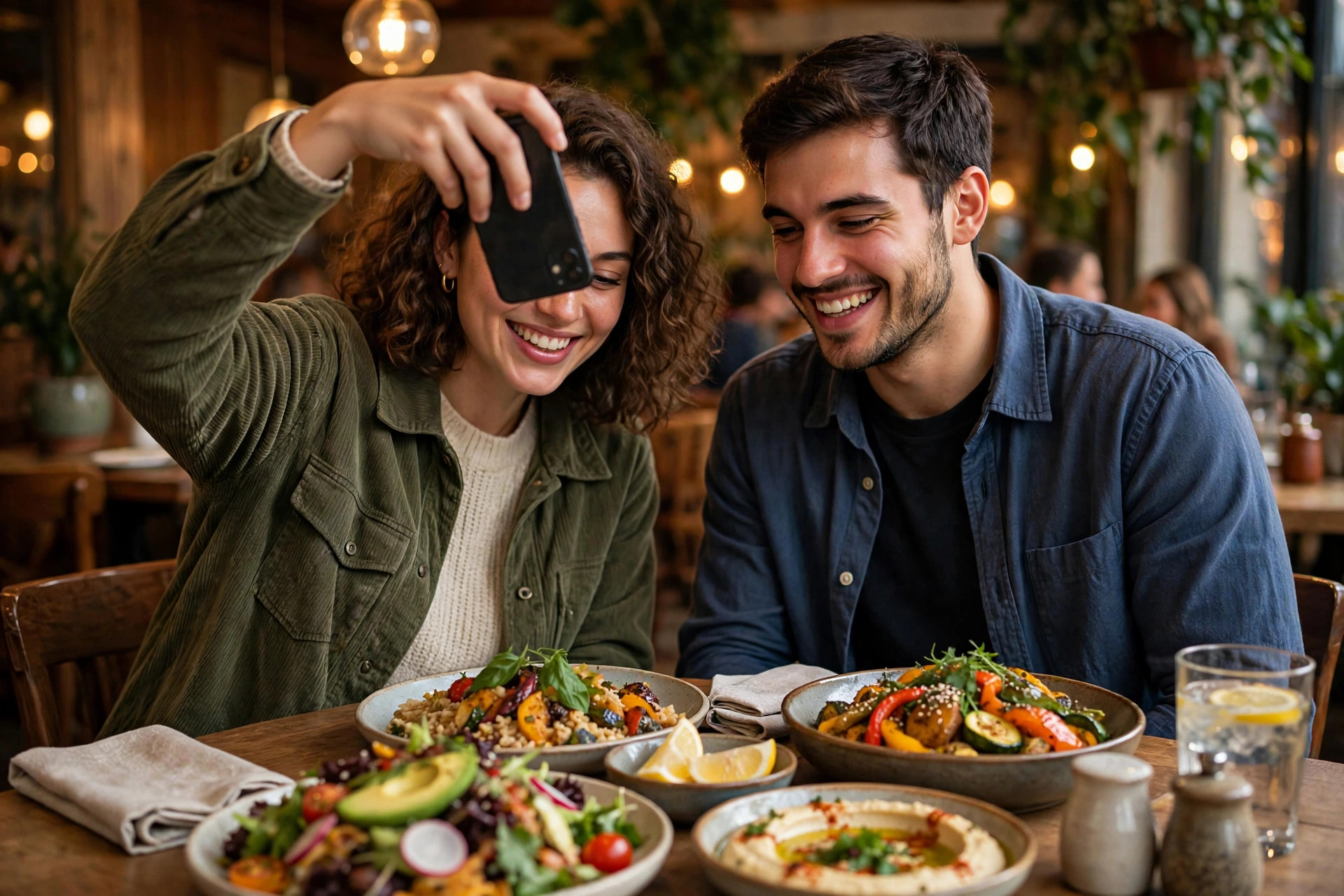
The most persuasive food content is shot by customers. Make your restaurant photogenic on purpose: one signature dish designed to be photographed, good lighting at the tables, a small neon sign or mural wall that begs for a selfie. Then invite the posts: a table card (“Tag us for a chance to win dinner for two”), a branded hashtag on the menu, and reposting customer photos to your stories every week. When diners post, their friends see a recommendation from someone they trust, which no ad can match.
5. Work with local food creators, not celebrities
A food blogger with 8,000 local followers drives more covers than an influencer with a million followers three states away. Invite two or three local creators a month for a complimentary tasting; most will post honestly and tag you. Look for creators who actually eat in your neighborhood and whose audience matches your price point. One genuine “this place is incredible” from a trusted local voice fills tables for weeks.
Build the email list: the only audience you own
Social algorithms change, delivery apps raise commissions, but an email list is yours. A past diner’s email address is a direct line to a proven customer, and using it costs almost nothing.
6. Collect emails at every touchpoint
- WiFi login: free WiFi in exchange for an email address. This alone can add dozens of addresses a week.
- Reservation confirmations: your booking system already collects emails; make sure they flow into your list with consent.
- Receipt QR codes: “Get $5 off your next visit, join our list” printed on the receipt or a table tent.
- Online ordering: your own ordering page should capture the email, unlike the apps that keep it.
- Events and waitlists: wine dinners, cooking classes, and busy-night waitlists are all natural signup moments.
Get clear consent at signup and send a welcome email immediately with the promised offer. That first email typically gets the highest open rate of anything you will ever send.
7. Send emails people actually open
Email marketing averages an estimated $36 return for every $1 spent, one of the highest returns of any channel (email marketing statistics). The cadence that works for restaurants: one email a week, sometimes two around events. What to send: the weekend special, a new menu launch, an event invitation, a birthday offer, a “we miss you” note to diners who have not visited in 90 days. Segment the list when you can: regulars get early access, lapsed diners get win-back offers, event attendees get the next event first. Keep every email to one dish photo, a few lines, and one clear call to action. Our SMS marketing guide covers the text-message version of the same playbook for time-sensitive offers like tonight-only specials.
Loyalty: turn first-time diners into regulars
8. Launch a loyalty program people join in ten seconds
The best restaurant loyalty programs are dead simple: points per dollar, a free item after a set number of visits, a birthday reward. Signup must take seconds at the register or via a QR code, because every extra step loses half the signups. Then make the first reward arrive fast: a free appetizer on the second visit gives members a reason to come back within the month, which is when the habit forms. Industry benchmarks show loyalty members visit about 20% more often, spend more per visit, and that 90% or more of programs report positive ROI (restaurant loyalty ROI benchmarks).
9. Personalize it
Generic “10% off” blasts train customers to wait for discounts. Personalized offers bring them back sooner: the diner who always orders the salmon gets early word of the new seafood special; the family that comes for birthdays gets a birthday dessert offer. Research from Square found 69% of consumers say personalized programs with exclusive discounts matter to them (QSR Magazine on restaurant loyalty). Your POS and loyalty data already know what each guest orders; use it.
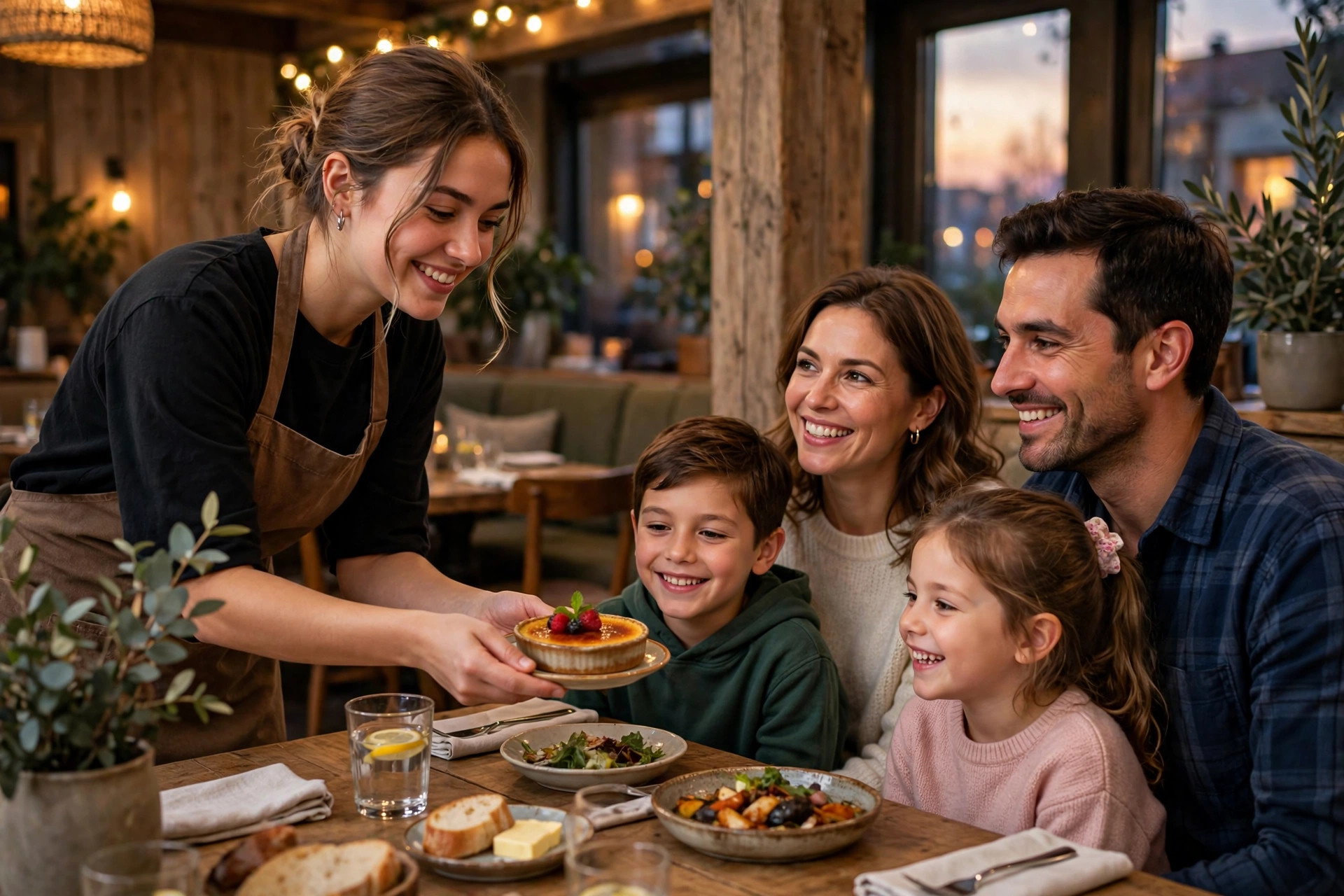
10. Win back lapsed diners automatically
Every loyalty member who has not visited in 60 to 90 days should get an automatic nudge: “We miss you, here is a free appetizer this week.” These are warm customers who already like your food; they just fell out of the habit. Win-back offers consistently outperform acquisition ads because there is no trust to build. Set the automation once and let it run: it quietly fills tables every week without you thinking about it. The same follow-up logic in our lead follow-up guide applies here, just with diners instead of leads.
Slow-night promos that fill tables without killing margins
11. Give Tuesday a reason to exist
The mistake is discounting your way to a busy Tuesday and teaching customers that full price is for suckers. Instead, give slow nights an identity: trivia night, live acoustic music, a chef’s tasting menu only available Tuesdays, a prix fixe date-night menu. The event is the draw, not the discount, so your regulars keep paying full price on weekends. Promote each slow-night concept for a month before judging it; habits take a few weeks to form.
12. Partner with the neighborhood
The brewery two doors down, the theater around the corner, the hotel that needs dinner recommendations: these are marketing channels that cost nothing. Offer the theater a “dinner and a show” package, leave menus at the hotel front desk with a small commission for referrals, host the brewery’s tap takeover. Local partnerships put your name in front of people who are already out spending money within walking distance of your door.
What do these restaurant marketing ideas cost?
Most independent restaurants invest 3 to 6% of revenue in marketing. Typical ranges for the tactics above:
| Tactic | Typical cost | Notes |
|---|---|---|
| Google Business Profile + reviews | $0 to $200/mo (tools) | Free to manage; review software and posting tools cost extra |
| Social media content | $0 to $800/mo | DIY with a phone is free; a part-time creator costs more |
| Email platform | $30 to $150/mo | Scales with list size; highest ROI channel |
| SMS platform | $50 to $200/mo | For tonight-only offers and reservation reminders |
| Loyalty program | $50 to $300/mo | POS-integrated apps; free options exist to start |
| Local creator tastings | Cost of food only | Two to three creators a month |
| Paid social ads | $300 to $1,000/mo | Boost best-performing videos to local zip codes |
Planning ranges compiled from published pricing guides, not fixed prices. Your market and concept move the real numbers.
Your 90-day restaurant marketing plan
- 1Days 1 to 14: rebuild your Google Business Profile: full menu, 50+ food photos, accurate hours, booking link, weekly posts. Put review QR cards on every table and train staff on the ask.
- 2Days 15 to 30: set up email capture (WiFi, receipts, reservations) and send your first email. Film and post your first dish video. Invite your first local food creator.
- 3Days 31 to 60: launch the loyalty program with a fast first reward. Start the weekly email rhythm. Launch one slow-night concept and promote it for a full month.
- 4Days 61 to 90: turn on lapsed-diner win-back automation, start two neighborhood partnerships, and review what filled tables. Double down on the two tactics that moved covers.
Frequently asked questions
What is the most effective marketing for a restaurant?
The combination of a strong Google Business Profile with reviews, short-form food video on Instagram and TikTok, and an email list with a loyalty program. Google and social handle discovery; email and loyalty turn first-time diners into regulars, which is where the profit is.
How do restaurants get customers on slow nights?
Give the night an identity instead of a discount: trivia, live music, a Tuesday-only tasting menu, or a prix fixe date night. Promote it consistently for a month so the habit forms. Blanket discounts fill one Tuesday and train customers to never pay full price.
Is email marketing worth it for restaurants?
Yes. Email averages an estimated $36 return per dollar spent, and a restaurant list is especially responsive because the offer is immediate: tonight’s special, this weekend’s event. One email a week to past diners is the cheapest repeat business you will ever get.
How much should a restaurant spend on marketing?
A common planning range is 3 to 6% of revenue for independents. Much of the highest-impact work (Google profile, review asks, phone-shot video, email) costs time more than money; paid spend goes furthest boosting proven content to local audiences.
Do loyalty programs actually work for small restaurants?
Industry data says yes: members visit more often, spend more per visit, and the large majority of programs report positive ROI. The keys are signup in seconds and a fast first reward so the habit forms within the first month.
Want a marketing system that fills tables every night?
Digital Hayder builds lead and retention systems for local businesses: Google Business Profile optimization, review engines, email and SMS campaigns, and loyalty follow-up that turns first-time diners into regulars. Tell us about your restaurant and we will map the plan.
Contact Us