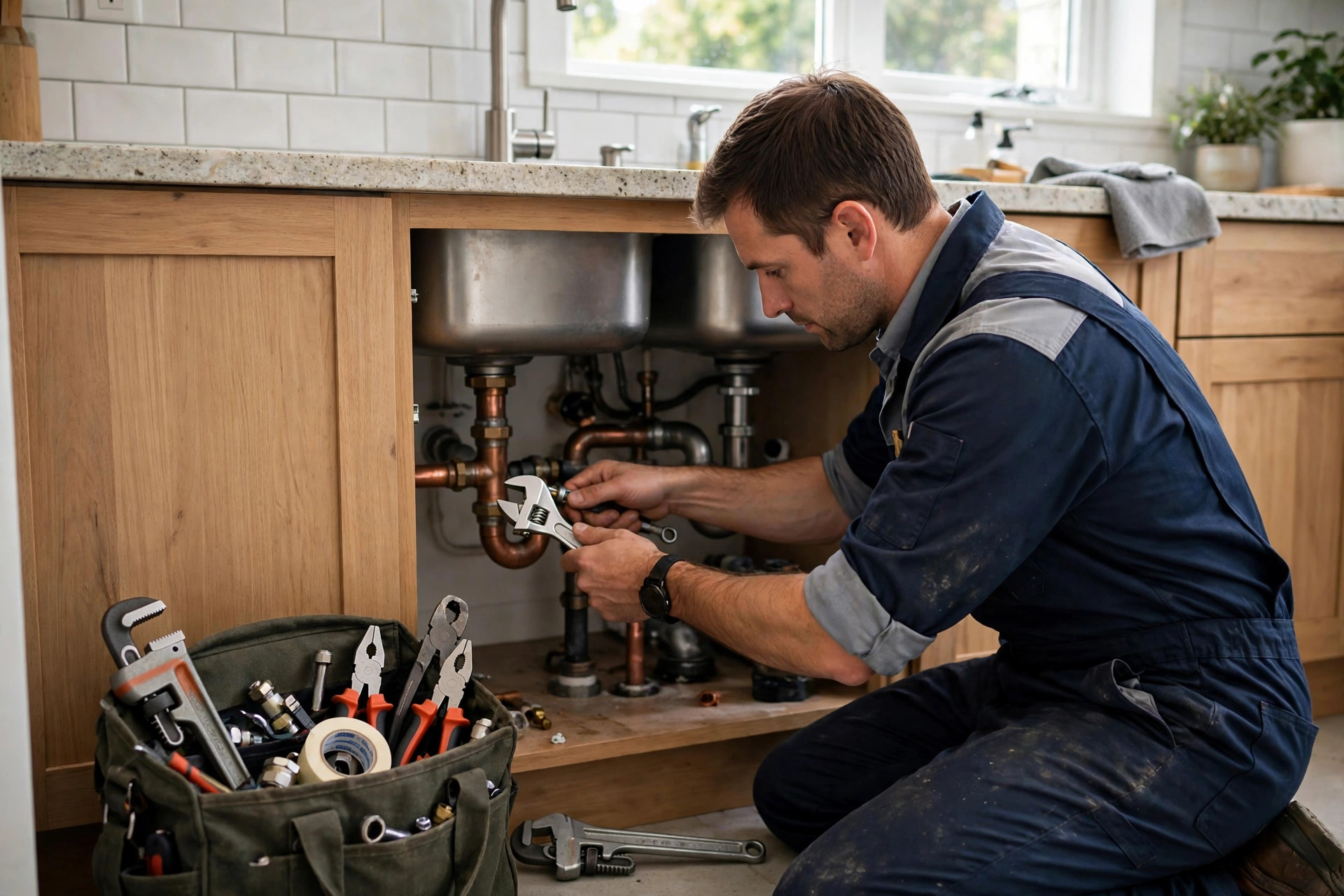
A homeowner discovers a burst pipe at 9pm. Water is spreading across the kitchen floor. They call the first plumber on Google: no answer. They call the second: voicemail. The third plumber’s phone is also unanswered, but thirty seconds later the homeowner gets a text: “Sorry we missed your call. Is water actively leaking right now? Reply YES and we will call you back immediately.” That plumber gets the job, and it was a $600 emergency call-out. Missed-call text-back for plumbers wins exactly these moments: the emergency jobs where the first business to respond gets the work. This guide covers emergency vs routine triage, the one-question text-back that routes burst pipes first, copy-paste templates, and a simple CRM setup for plumbing companies.
The quick answer
- What it is: when your plumbing company misses a call, the caller gets an automatic text within a minute, triaging emergency vs routine work.
- The one question: “Is water actively leaking or flooding right now?” routes burst pipes to the front of the line and quotes to the normal queue.
- Why it matters: plumbing emergencies are first-responder wins; the first company to respond usually gets the job.
- Emergency jobs: average $400 to $800 per call-out, often more for after-hours work.
- Templates included: emergency triage, after-hours, routine quote request, and repeat customer, all copy-paste ready.
- Typical cost: $97 to $297 a month for the CRM plus per-text messaging costs.
Plumbing is a speed business
Plumbing differs from most trades in one decisive way: the customer’s urgency decides everything. A burst pipe, a sewage backup, a water heater flooding the garage: these callers are not shopping for the best quote. They are looking for the first competent plumber who picks up. The company that responds in two minutes beats the cheaper company that calls back in two hours, every single time. If your phones miss these calls, you are not losing leads. You are handing emergency jobs directly to competitors.
And plumbing companies miss a lot of calls. Your techs are under sinks, in crawl spaces, and on roofs where phones stay in the truck. The office (if you have one) is busy scheduling the day’s jobs. After hours, nights, and weekends are when a disproportionate share of emergencies happen, and those calls roll to voicemail by default. Studies of consumer calling behavior show that most callers who reach voicemail do not leave a message and do not call back; they dial the next number. In plumbing, the next number is your competitor.
Then there is the other half of your call volume: the routine work. The slow drain, the dripping faucet, the quote for a bathroom remodel. These callers are patient, but they are still shopping. A fast, professional text response tells them you are organized and attentive, which is exactly what a homeowner wants from someone they will let into their house. Missed-call text-back handles both types, but it must treat them very differently.
Emergency vs routine: why the split matters
Treating every missed call the same is the fastest way to waste the system. An emergency caller needs a human within minutes. A routine caller needs acknowledgment and a booking path. If your text-back sends the same message to both, the emergency caller feels ignored and the routine caller gets over-promised. The whole design below rests on one question, asked in the first text, that sorts the two: Is water actively leaking or flooding right now?
That single question does the triage your dispatcher would do. A YES reply triggers the emergency flow: instant alert to your on-call tech, priority callback, same-day scheduling. A NO reply triggers the routine flow: a booking link, a quote path, a next-morning callback promise. One question, two pipelines, zero confusion. Emergency call-outs average $400 to $800, with after-hours premiums pushing higher, so every emergency correctly routed to the front of the line is real money.
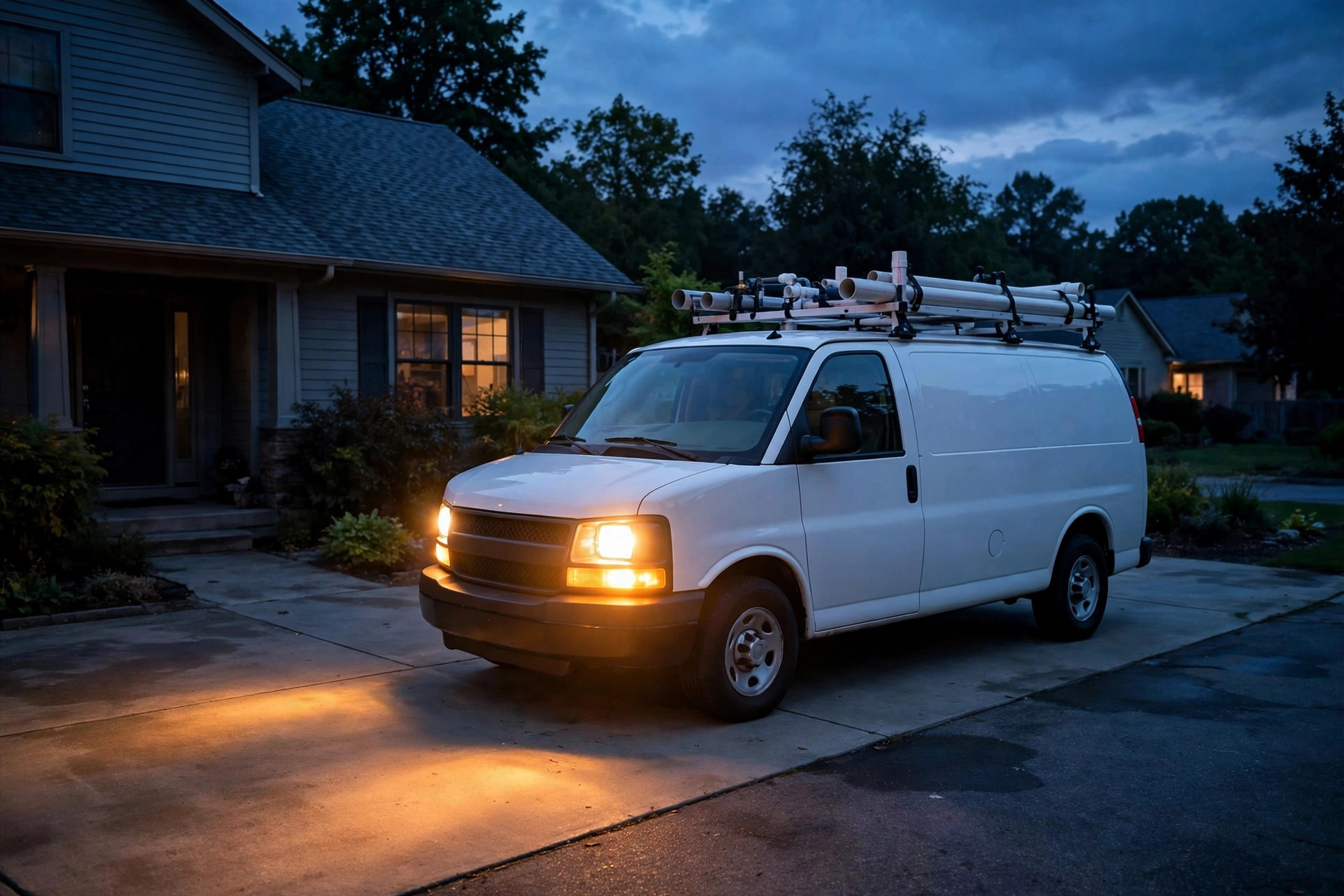
Your techs are under sinks, not at phones. The text-back answers the calls they cannot.
How missed-call text-back works for a plumbing company
The mechanism is straightforward. Your business number runs through a CRM with call tracking. When a call goes unanswered, gets declined, or hits voicemail, the system texts the caller within seconds. The reply lands in a shared inbox your office, dispatcher, or on-call tech can see from a phone or computer. Our general guide to missed-call text-back covers the concept; here is the plumbing-specific version.
Plumbing companies usually run the trigger around the clock, because emergencies do not respect business hours. During the day, the text-back catches overflow: the second call while the first is being handled, the lunch gap, the moments the dispatcher is on another line. After hours, it becomes your entire front line. You can run different messages for each, and you should, because a caller at 10am on a weekday and a caller at 2am on a Sunday are in very different situations.
Where the calls actually come from
It helps to know which missed calls matter most. In a typical plumbing company, missed calls cluster in four windows: the morning rush when techs are being dispatched, lunch hours, the last hour of the day when the office is winding down, and after hours. After-hours calls skew heavily toward emergencies, which is why your after-hours template should lead with triage, not booking. Daytime missed calls are a mix, which is why the one-question triage text works so well: it sorts them without your staff lifting a finger.
Copy-paste text-back templates for plumbers
Four templates cover nearly every missed call a plumbing company gets. Keep each message under 300 characters, always include your company name, and write like a dispatcher, not a marketer. Short, direct, and useful wins here.
Template 1: the one-question emergency triage
This is the most important message in the system. Send it on every missed call, day or night, and let the caller’s answer route the job.
Hi, this is Apex Plumbing. Sorry we missed your call. Quick question so we can help fast: is water actively leaking or flooding right now? Reply YES or NO.
YES replies trigger the emergency flow: an immediate alert to your on-call tech or dispatcher, and a priority callback. NO replies get the routine follow-up below. Do not skip the triage question even during business hours; it is the cheapest dispatcher you will ever hire.
Template 2: after-hours emergency confirmation
When the triage answer is YES after hours, the caller needs to know a human is coming. This message buys you the callback window.
Thanks, we are treating this as urgent. Our on-call tech will call you back within 15 minutes. If water is spreading, turn off your main shutoff valve now if you can do it safely. This is Apex Plumbing.
The shutoff-valve line does two things: it genuinely helps the homeowner limit damage, and it signals that you know what you are doing. That builds trust before you even arrive. Set a real internal target behind this message: the on-call tech calls back within 15 minutes, no exceptions.
Template 3: routine quote and booking request
When the triage answer is NO, the caller has a non-urgent problem. Slow them down gently and give them an easy next step.
Thanks. This sounds like routine work, which is good news. Tell us briefly what you need (drain, faucet, water heater, remodel, other) and we will get you a quote and the soonest slot. Or book online anytime: [booking link]
The keyword trick here is asking them to name the job type in their reply. That one word (drain, water heater, remodel) lets your office pre-quote, pre-schedule the right tech, and avoid the back-and-forth. Pair this with text message marketing for contractors later if you want to follow up on unscheduled quotes, which is one of the highest-ROI activities in the trades.
Template 4: repeat customer
Match incoming numbers against your customer list. A repeat caller should never get the generic triage question first; they already trust you, and the message should show it.
Hi [First Name], this is Apex Plumbing. Sorry we missed you. What do you need help with? Reply here and we will get you sorted. If it is urgent, reply URGENT.
Repeat customers are your most profitable work: no marketing cost, faster booking, higher close rates. The text-back should make them feel recognized, not processed. If you run an AI answering service for plumbers alongside text-back, route repeat customers to the agent by name for an even warmer handoff.
Emergency jobs go to whoever responds first. One text is often all it takes.
Routing rules: burst pipes first, quotes later
Templates start the conversation; routing rules finish it. Three rules keep the system honest.
Rule 1: YES answers page a human immediately. Do not let emergency triage answers sit in an inbox. The CRM should text or call the on-call tech the moment a YES arrives, with the caller’s number and their exact reply. Define your on-call rotation in writing: who carries it, what hours, and who is the backup.
Rule 2: routine answers go to the office queue. NO answers, quote requests, and booking questions land in the shared inbox for the office to work through in order. Set a target: every routine text-back reply answered within one business hour. That is fast enough to impress and realistic enough to sustain.
Rule 3: no-reply follow-ups run twice, then stop. If a caller never answers the triage question, send one follow-up after 30 minutes (“Still need help? Reply and we will get you sorted”) and a final one the next morning for daytime misses. After that, stop. More messages become spam, and spam undoes the goodwill.
One more routing point: gas smells and sewage backups deserve special handling. If a reply mentions gas, the template should tell the caller to leave the property and call the gas utility or emergency services first, then you. Put that wording in writing, train your team on it, and never let automation handle a gas call alone.
The simple CRM setup for plumbing companies
You need four things: a business number that logs missed calls, SMS capability, a shared inbox, and basic automation. Most small-business CRMs bundle all of it for $97 to $297 a month plus pennies per text. Here is the setup order that works for plumbing companies.
- 1Route your business number through the CRM. Port your existing number or forward it so every missed, declined, and after-hours call is logged with the caller’s number.
- 2Build the missed-call trigger. Missed call, wait 30 seconds, send the one-question triage text. Run it 24/7, with an after-hours variant that mentions your emergency line.
- 3Load the four templates. Emergency triage, after-hours confirmation, routine quote request, repeat customer. Under 300 characters each, company name in every message.
- 4Set up the on-call alert. YES answers and URGENT keywords text the on-call tech directly, not just the inbox. Test the alert at night before you go live.
- 5Create the shared inbox and owners. Office staff own routine replies; the on-call tech owns emergencies. Tag every conversation so nothing falls through.
- 6Connect your booking link. Routine callers should be able to book a diagnostic visit or request a quote without calling back. Make sure it works on phones.
- 7Test with real phones. Call from a personal number, hang up, verify the triage text arrives, reply YES, and confirm the on-call alert fires. Then reply NO and confirm the routine flow.
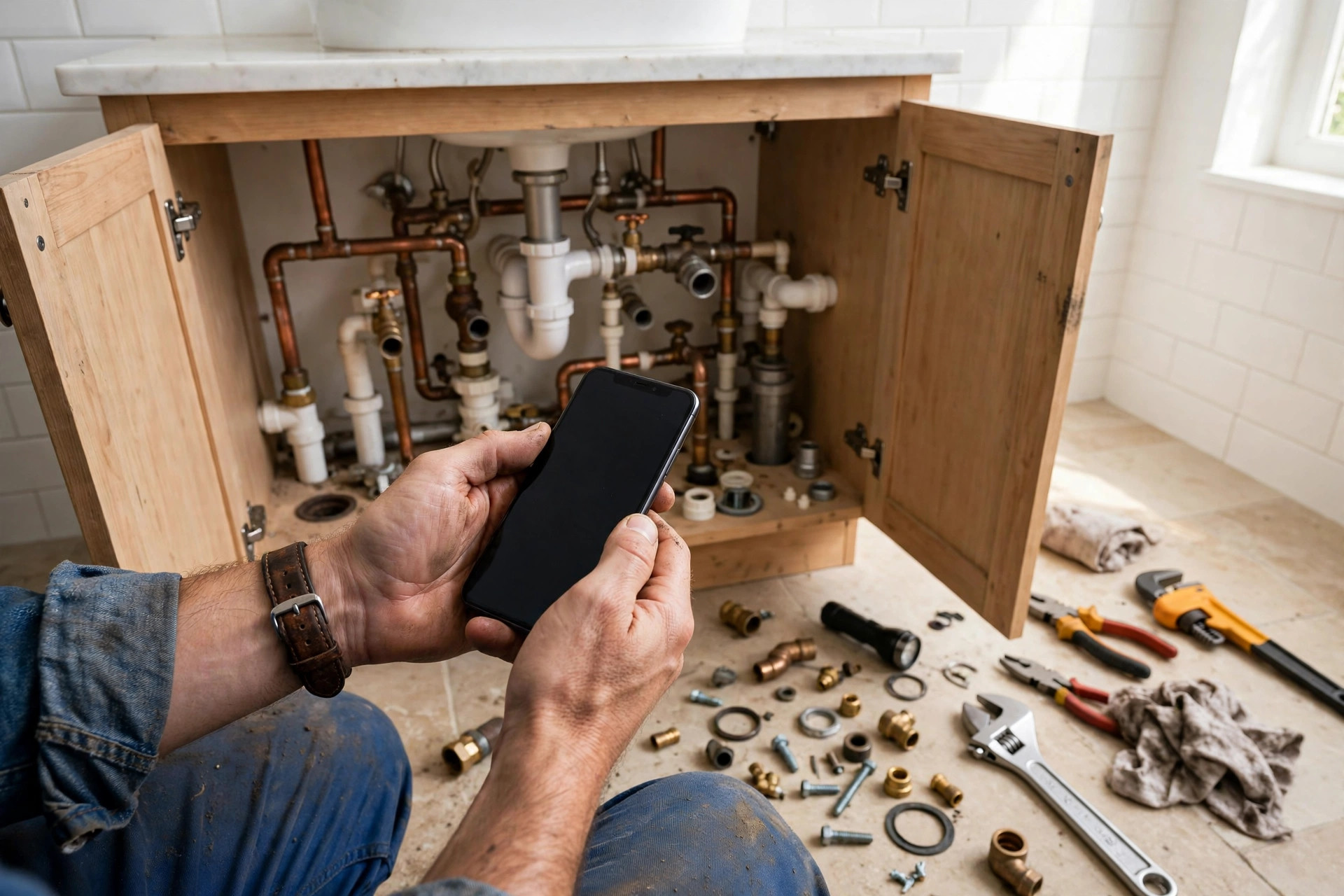
The inbox goes where your team goes. Replies are handled from any phone, on any job site.
What it costs vs what it recovers
The cost side is simple: $97 to $297 a month for the CRM, plus a fraction of a cent to a few cents per text depending on your provider. A plumbing company doing 50 missed calls a month might spend $20 to $40 on messaging. Total outlay: well under $400 a month.
The recovery side is where the math gets fun. One emergency call-out averages $400 to $800, and after-hours jobs command premiums on top. If the text-back wins you two emergency jobs a month that would have gone to voicemail, that is $800 to $1,600 in recovered revenue against a $400 cost. Routine work adds up too: a water heater replacement ($1,500 to $3,000) or a bathroom rough-in quote won from a text-back reply can cover the system for a year in a single job. Track it honestly for 60 days: tag every job that originated from a text-back, add up the invoices, and compare. Most plumbing companies find the system pays for itself in the first month.
| Job type | Typical value | Text-back’s role |
|---|---|---|
| Emergency call-out (burst pipe, backup) | $400 to $800+ | Triage YES routes to on-call tech in minutes; first responder wins |
| After-hours emergency premium | 1.5x to 2x normal rate | After-hours template captures what voicemail loses |
| Water heater replacement | $1,500 to $3,000 | Routine flow books the estimate; quote follow-up closes it |
| Drain cleaning / routine service | $150 to $400 | Booking link converts patient shoppers without a callback |
| Remodel / repipe quote | $3,000+ | Fast professional reply wins the bid conversation |
Mistakes plumbing companies make with text-back
The biggest mistake is sending the same message for emergencies and routine calls. A homeowner with water pouring through the ceiling who gets “book online anytime” will call someone else, and a routine caller who gets an urgent callback promise will be annoyed when nobody treats their dripping faucet like a crisis. The triage question exists to prevent both failures; use it. The second mistake is slow human follow-up on YES answers. An automatic text followed by a 45-minute wait is theater, not service. If your on-call rotation cannot hit 15 minutes, fix the rotation before you launch. The third mistake is forgetting the gas rule: any mention of gas smell should immediately tell the caller to leave and call emergency services, and a human must take over. The fourth is letting the inbox go stale. Check it like you check your schedule: every reply answered, every conversation tagged, inbox at zero by end of day. A text-back system with a neglected inbox is just a fancier voicemail box.
Frequently asked questions
How quickly should the text-back go out after a missed plumbing call?
Within one minute, 30 seconds is the target. Emergency callers are dialing your competitors in parallel, so every minute of delay costs you jobs. The automation handles the first text; your on-call tech should call back YES answers within 15 minutes.
What is the best first text for a plumbing company?
The one-question triage: “Is water actively leaking or flooding right now? Reply YES or NO.” It sorts emergencies from routine work in a single exchange and routes each to the right flow.
Should the text-back run after hours?
Yes, that is when it earns the most. A large share of plumbing emergencies happen at night and on weekends. Use an after-hours variant that leads with triage and mentions your emergency line, and make sure the on-call alert actually reaches a human.
How much does missed-call text-back cost for a plumbing company?
The CRM typically runs $97 to $297 a month, plus pennies per text. One recovered emergency call-out, averaging $400 to $800, usually covers the monthly cost on its own.
Can it replace my dispatcher or answering service?
No. It replaces the missed calls and the voicemail box, not your people. Your dispatcher still schedules the day, and your on-call tech still takes the emergency calls. The text-back makes sure those calls reach them instead of dying in voicemail.
Win the emergency jobs your competitors miss
Digital Hayder sets up missed-call text-back for plumbing companies: the one-question emergency triage, after-hours routing to your on-call tech, and a shared inbox your office will actually use. Tell us how many calls you miss on a typical week, and we will show you what they are worth.
Contact Us