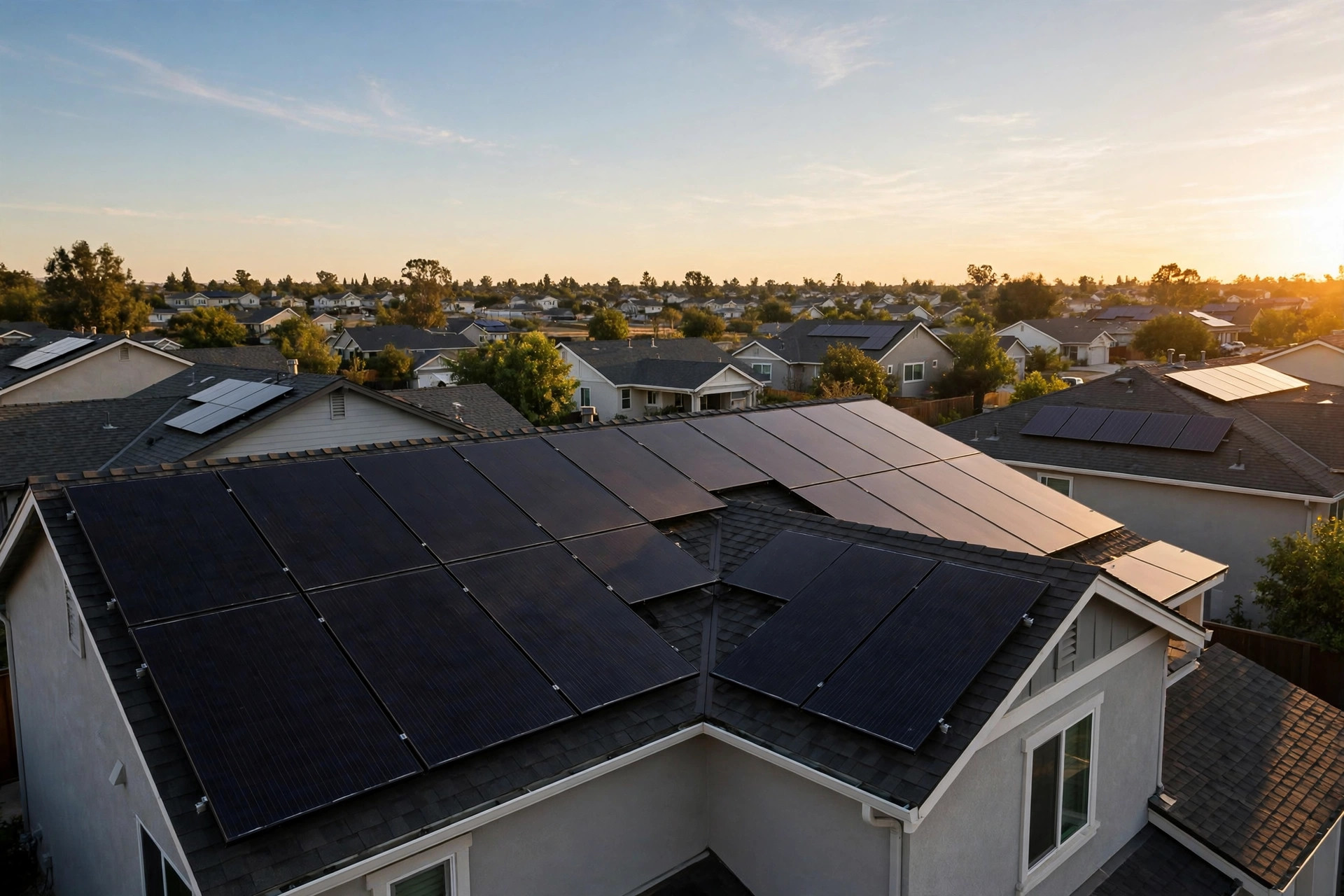
It is 8pm and a homeowner has just opened an electric bill for $380, the third high one in a row. He has been thinking about solar for a year, and tonight he finally calls the company with the best reviews in his area. The call goes to voicemail. He hangs up and calls the next company, where an AI receptionist answers on the first ring. In three minutes it confirms he owns the home, asks about the roof’s age and condition, learns his average bill, and books him for a Saturday consultation with a text confirmation before he puts the phone down. That consultation is worth thousands in potential revenue, and it was decided by which company answered the phone. This is the economics of solar in one scene: every lead costs real money to generate, every caller arrives with high intent, and a missed call is a burned marketing budget. An AI receptionist for solar companies answers every call instantly, qualifies the caller with the questions that matter, and books the consultation while the intent is hot. This guide shows how solar call qualification works, how the receptionist handles ad surges, what the pricing models look like, and how few booked consultations it takes to pay for the whole thing.
The quick answer
- The core job: answer every solar inquiry on the first ring, qualify the caller in minutes, and book consultations onto the real calendar.
- The three qualification questions: homeowner or renter, roof age and condition, and average utility bill size. Renters and bad roofs get filtered early.
- Consultation booking: qualified callers get a real appointment slot with a confirmation text, plus a reminder sequence that cuts no-shows.
- Ad-surge overflow: when campaigns spike call volume, the receptionist handles every simultaneous call instead of sending the extras to voicemail.
- Per-minute vs flat pricing: per-minute suits variable lead flow; flat plans suit steady high volume. Most solar companies land on flat or tiered plans.
- The payback: two to three booked consultations a month typically cover the entire cost, given average solar deal values.
Solar leads are expensive, so speed is everything
Solar is one of the most expensive lead markets in home services. Between paid ads, lead vendors, and door-to-door or canvassing costs, a single qualified solar lead commonly costs $50 to $100 or more to generate, and premium exclusive leads run higher. That cost is spent before the phone rings. When the call then hits voicemail, the company has paid full price for a lead it never spoke to. Research on lead response has found that 78 percent of buyers go with the company that responds first, and solar shoppers are comparison shoppers by nature: they will call the next installer on the list without a second thought.
Intent timing makes it sharper. A homeowner calling about solar has usually already researched panels, incentives, and financing. They are not browsing; they are deciding who gets the consultation. The window between that decision and a booked appointment is minutes, not days. An AI receptionist captures the call at peak intent, qualifies it before your sales team spends time on it, and books the consultation while the homeowner is still motivated. For the chat side of solar lead handling, our AI SDR for small business guide covers automated prospecting; this guide covers the voice calls that decide the sale.
How the receptionist qualifies and books solar calls
Solar qualification is fast and decisive. Three questions determine whether the call is worth a consultation, and the receptionist asks them naturally in the first minutes of the call.
The three qualification questions
First, homeowner or renter. Renters cannot authorize a rooftop installation, so the receptionist handles them politely with whatever your policy is, usually a brief explanation and no consultation booking, instead of burning a sales appointment. Second, roof age and condition. A roof that needs replacing changes the conversation entirely, and the receptionist asks about age, material, and any known issues, flagging roof concerns for the consultant. Third, average utility bill size. The bill determines whether solar makes financial sense and sizes the system conversation; a $90 bill and a $400 bill are different consultations. Callers who pass all three get booked. Callers who do not get a clear, respectful explanation and, where appropriate, a future follow-up instead of a wasted appointment. Your sales team stops driving to consultations that were never going to close.
Consultation appointment setting
Qualified callers get a consultation booked before the call ends. The receptionist offers real slots from the consultant calendar, confirms the property address, and sends a text confirmation with the appointment time and what to expect. A reminder sequence follows: a confirmation right away, a reminder the day before, and a same-day nudge, each with a one-tap reschedule link. Solar consultations have real no-show rates, and each missed one wastes a consultant’s drive time plus the lead cost. The receptionist also collects the pre-visit details that make consultations productive: the utility provider, the average bill, and roof access notes. The consultant arrives knowing the numbers instead of spending the first twenty minutes gathering them.
Call overflow during ad surges
Solar marketing runs in campaigns, and campaigns create call spikes. A new ad launch, a rate-hike news cycle, or an incentive deadline can multiply call volume for days, and human teams cannot scale that fast. The receptionist handles unlimited simultaneous calls: every caller gets answered on the first ring, qualified, and booked or filtered, no matter how many call at once. There is no busy signal, no voicemail pile, and no temp staff to train. When the surge ends, the system scales back down with nothing to unwind. This is also the moment to check your concurrent-call capacity in the plan terms, because a per-line limit during a surge defeats the purpose. The general overflow strategy is covered in our AI phone agent for home services guide.

Every call is qualified before it books: homeowner status, roof condition, and bill size, in the first minutes.
Per-minute vs flat pricing for solar companies
Solar call volume swings with campaigns, which makes the pricing choice less obvious than it looks. Working ranges below.
| Pricing model | How you pay | Typical range | Best for |
|---|---|---|---|
| Flat monthly | One fixed fee for a set or unlimited number of calls | About $300 to $800 per month | Steady lead flow from always-on ads or multiple lead sources |
| Per-minute | Charged on talk time, no or low base fee | About $0.15 to $0.40 per minute | Campaign-driven volume with quiet months in between |
| Tiered flat | Fixed fee per call-volume band | About $200 to $700 per month across tiers | Growing installers whose volume steps up with ad spend |
| Per-booked-consultation | A fee for each qualified consultation booked | About $25 to $75 per booking | Companies that want cost tied directly to sales pipeline |
How to choose with campaign swings in mind
Map your call volume against your ad calendar, not just the monthly average. A company averaging 400 minutes a month but spiking to 1,500 during campaign launches will overpay on flat during quiet months and get crushed on per-minute during surges. Tiered plans often fit this pattern best, stepping up and down with volume. The per-booked-consultation model is worth a hard look in solar specifically, because your unit economics are strong enough to support it and it aligns the vendor’s incentive with yours: they only get paid when your pipeline grows. Whatever model you pick, confirm the qualification standard in writing. A “booked consultation” should mean a qualified homeowner with a real slot, not a renter with a callback number.
How many booked consultations pay for the service
This is the shortest payback math in the batch, because solar deal values are large. Work through it with your own numbers.
| Scenario | Consultations booked per month | Close rate | Result |
|---|---|---|---|
| Conservative | 10 extra qualified consultations | 20 percent close | 2 installs from receptionist-booked calls |
| Typical | 20 extra qualified consultations | 25 percent close | 5 installs from receptionist-booked calls |
| Strong ad months | 40 extra qualified consultations | 25 percent close | 10 installs from receptionist-booked calls |
With average residential solar installs commonly valued in the tens of thousands, even the conservative scenario, two extra installs a month, represents revenue that dwarfs a $500 to $800 monthly receptionist cost. The honest version of the math: the receptionist does not need to transform your close rate. It needs to capture the qualified calls you were already paying to generate and losing to voicemail, and book them before the homeowner calls your competitor. Most solar companies find the system pays for itself within the first month of full operation. For local visibility that feeds more of these calls, see our Google Business Profile optimization guide for contractors.

High-intent callers have usually compared panels and incentives already. They should never reach a voicemail.
Your rollout checklist
Roll this out in order. The qualification questions get locked before anything else, because they decide which calls become consultations.
- 1Lock the three qualification questions. Homeowner versus renter, roof age and condition, and bill-size thresholds, with the exact wording and the pass-fail rules for booking.
- 2Define the disqualification paths. Renters, bad roofs, and out-of-area callers get a polite, consistent response and a future follow-up option, never a dead end or a wasted appointment.
- 3Connect the consultant calendar. Real consultation slots with property details, bill info, and roof notes attached, and automatic updates when your team moves an appointment.
- 4Build the reminder sequence. Instant confirmation, day-before reminder, and same-day nudge, each with a one-tap reschedule link to protect consultant drive time.
- 5Train the incentive and financing answers. Current incentives and financing options stated accurately and locked, with anything uncertain routed to the consultant.
- 6Confirm surge capacity. The plan must handle many simultaneous calls during ad launches and incentive deadlines, with no per-line bottleneck.
- 7Set the CRM and lead-source logging. Every call logged with qualification outcome and source, so you can trace installs back to the calls the receptionist handled.
- 8Review calls weekly for the first month. Tighten the qualification wording and booking rules from real conversations, then move to a monthly review tied to your campaign calendar.
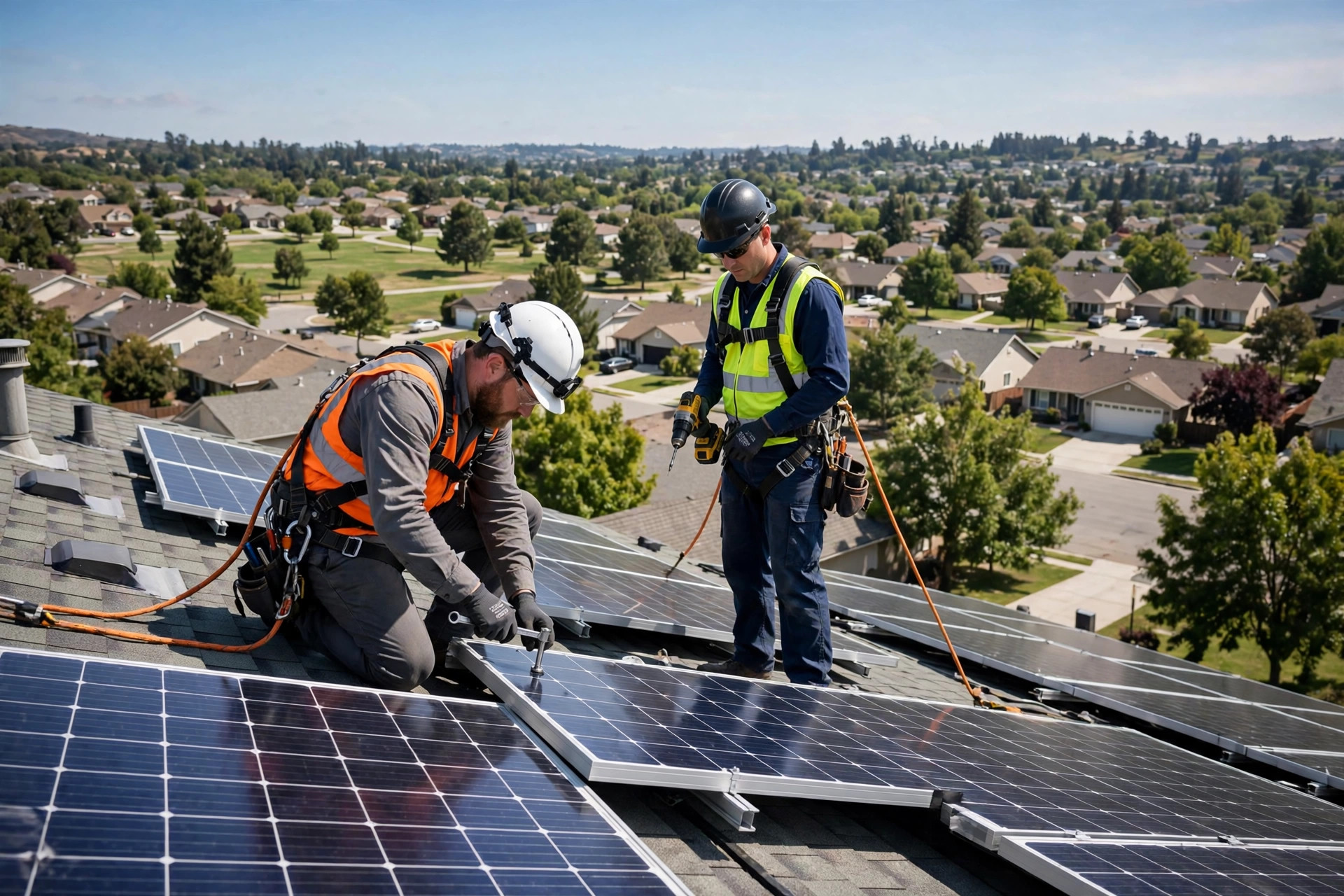
Two or three booked consultations a month can cover the entire receptionist. The rest is pipeline.
Frequently asked questions
How does the receptionist know if a caller is qualified?
Through the three locked qualification questions: homeowner or renter, roof age and condition, and average utility bill size. The pass-fail rules are yours, set during onboarding. Qualified callers get booked; everyone else gets a polite, consistent response with a future follow-up option where appropriate.
What stops it from booking consultations with renters?
The homeowner question comes first in the flow, and a renter answer routes to the disqualification path instead of the calendar. You define what that path says: a brief explanation, and optionally a note for future follow-up if your policy covers renters differently.
Can it answer questions about incentives and financing?
Yes, from trained and locked answers that you review. Incentives and financing change, so these answers need a quarterly review at minimum, and anything the receptionist is unsure about routes to the consultant with the question noted. It never improvises on money or policy.
What happens during a big ad surge?
Every simultaneous call gets answered, qualified, and booked or filtered. There is no busy signal and no voicemail pile. Confirm your plan’s concurrent-call capacity before the surge, because a per-line limit would quietly recreate the exact problem you bought the system to solve.
How is per-booked-consultation pricing different from per-minute?
Per-minute charges for talk time regardless of outcome. Per-booked-consultation charges only when a qualified consultation lands on the calendar, which ties the vendor’s incentive to your pipeline. Get the qualification standard in writing so a “booking” means a real qualified appointment.
Will this replace our inside sales team?
No. It replaces the missed calls, not the closers. Your sales team stops wasting drive time on unqualified appointments and voicemail tag, and spends it on qualified consultations the receptionist booked. Most teams find their close rate rises simply because the appointment quality rises.
Stop burning expensive solar leads on voicemail
Digital Hayder builds AI receptionists for solar companies that answer every call on the first ring, qualify homeowners in minutes, book consultations onto the real calendar, and absorb ad-surge volume without breaking. Tell us about your lead flow and we will train the receptionist on your qualification rules.
Contact Us