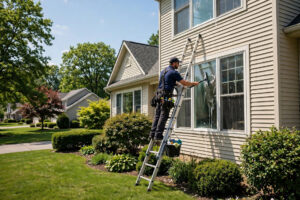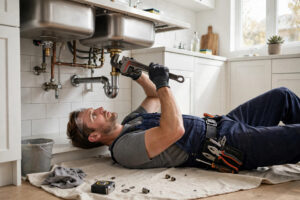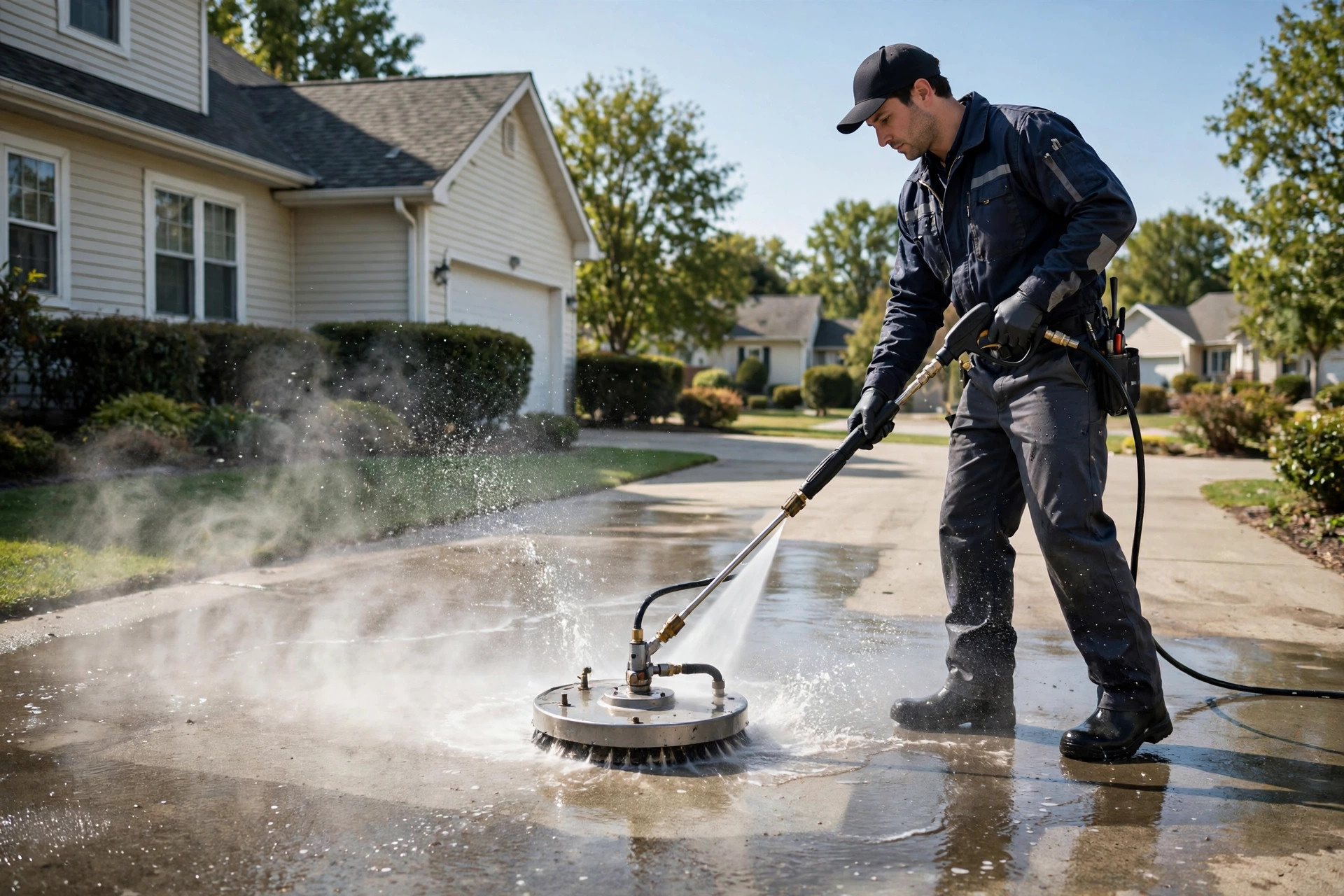
Pressure washing sits in a sweet spot on Google Ads: the clicks are cheap, the demand is visual and seasonal, and a single booked job often pays for a week of ad spend. Residential pressure washing keywords typically cost $3 to $12 per click, a fraction of what roofers, plumbers, and tree companies pay for theirs. That low entry price tempts a lot of owners into sloppy accounts, and sloppy accounts waste even cheap clicks. The companies that win treat pressure washing ads like a seasonal retail business: tight keyword control, before and after creative that stops the scroll, landing pages built for driveway jobs, and budgets that follow the weather. This guide covers what pressure washing companies actually pay for Google Ads: click costs by keyword, seasonal budgets, Local Services Ads versus search ads, a sample monthly budget, and the cost per booked driveway job.
The quick answer
- Clicks are affordable: residential pressure washing keywords run $3 to $12 per click, with commercial terms at $8 to $20.
- Spend follows the season: most companies run $800 to $3,000 a month in peak season and pull back 50 to 70 percent in winter.
- Before and after wins: ads and landing pages with real before and after photos convert far better than stock images or text-only ads.
- Run search ads plus Local Services Ads: search gives control over keywords and copy, Local Services Ads add Google Guaranteed trust placement.
- Cost per booked job: well-run pressure washing accounts book driveway jobs at $25 to $60 in ad cost each, against jobs worth $200 to $500.
- Live in about a week: a focused pressure washing account needs fewer keywords than most trades, so the build is fast and the learning period is short.
Why pressure washing clicks cost less than most home services
Click prices on Google Ads reflect two things: how much the job is worth and how many companies are bidding. Pressure washing scores modestly on both, which keeps clicks cheap. The average residential job runs $200 to $500, so advertisers cannot bid like a roofer chasing a $12,000 replacement. And while competition is real, the auction in most markets has fewer sophisticated bidders than plumbing or HVAC, where big franchises run professional ad operations year round. Many pressure washing competitors are one-truck operators running a single broad campaign, which leaves room for a well-built account to win good positions at reasonable prices.
Cheap clicks are an opportunity, not a guarantee. A $5 click that never books is more expensive than a $30 click that books every time. Pressure washing has a specific conversion challenge: the service feels optional. A burst pipe demands action today; a dirty driveway can wait until next month. That means your ads and landing pages have to create urgency that the search itself may not carry. Seasonal angles work well here: spring cleaning, pre-sale curb appeal, holiday hosting prep. The companies that connect the click to a reason to act now convert at rates that make $5 clicks wildly profitable.
There is also a job-size trap to avoid. Because clicks are cheap, it is tempting to bid on every related term, including low-value ones like “pressure washing prices” or single-item jobs that barely cover the ad cost. A $4 click that books a $99 single-item job is a loss after labor and drive time. Your keyword strategy should favor terms that signal whole-property or multi-surface jobs: “house and driveway pressure washing,” “full exterior cleaning,” “driveway and patio cleaning.” Bigger jobs absorb the ad cost easily; tiny jobs do not.
Pressure washing also pairs naturally with neighboring exterior services. If you already sell roof cleaning, gutter cleaning, or window cleaning, your Google Ads account should cross-sell them, because the marginal cost of adding a service to a booked job is near zero. Our roofer Google Ads cost guide covers the roof-cleaning crossover in detail, and the tree service Google Ads cost breakdown shows how another seasonal exterior trade structures its budgets.
Residential keyword costs: what each click runs
Pressure washing keywords cluster into a few clear groups. Whole-property and house washing terms cost the most because they signal the biggest jobs. Driveway and concrete terms sit in the middle with the highest volume. Add-on services like deck, fence, and roof cleaning cost less per click but book smaller jobs. Commercial terms cost more and convert slower. The table below shows typical US ranges.
| Keyword group | Example searches | Typical CPC | Buyer intent |
|---|---|---|---|
| House washing | house pressure washing, house washing service near me | $5 to $14 | High: whole-home job, $300 to $600 typical |
| Driveway and concrete cleaning | driveway pressure washing, concrete cleaning service | $4 to $10 | High: the core residential job |
| Deck, patio, and fence | deck pressure washing, fence cleaning service | $3 to $9 | Medium: smaller jobs, great upsells |
| Roof and soft washing | roof soft washing, roof cleaning service | $6 to $15 | High: premium service, $400 to $800 typical |
| Commercial pressure washing | commercial pressure washing, parking lot cleaning | $8 to $20 | High value, longer sales cycle |
| Price and informational terms | pressure washing cost, how much to pressure wash a driveway | $2 to $6 | Low: researching, shops on price |
Three things to notice. First, the spread between the cheapest and most expensive clicks is narrow compared with trades like tree service or roofing. That means keyword selection matters less for cost control and more for job quality: you pick keywords to attract the right jobs, not just cheap clicks. Second, “near me” versions of these terms cost slightly more but convert better, because they signal immediate local intent; they are worth the premium. Third, commercial terms deserve their own campaign with its own budget and landing page, because a facilities manager booking quarterly parking lot cleaning is a completely different buyer from a homeowner with a dirty patio.
As with any trade, exact match keywords keep costs tighter than broad match, and the search terms report is where you catch the waste. Common money leaks in pressure washing accounts: “pressure washer rental” (they want to DIY), “pressure washing jobs” (job seekers), “used pressure washer for sale” (shoppers, not buyers), and “free pressure washing” (not your customer). Add these as negatives in week one and keep reviewing weekly.
Seasonal budgets: when to spend and when to pull back
Pressure washing is one of the most seasonal trades in home services, and your budget should breathe with the calendar. In most US markets, demand builds in March, peaks from April through June, stays strong through September, and falls off a cliff from November through February. Southern markets get a longer season; northern markets get a shorter, more intense one. Spending the same amount every month ignores this reality and wastes money in both directions: too little in May when every click could book a job, too much in January when nobody is searching.
A practical seasonal budget model uses a peak-season base and winter pullback. If your peak monthly spend is $2,500, plan on $800 to $1,200 in the deep winter months, just enough to keep campaigns warm and catch the occasional commercial or pre-spring inquiry. Ramp up in March, run full budgets April through September, and taper in October. Never pause entirely: a fully paused account loses its learning history, and the spring restart costs you two to three weeks of expensive relearning right when demand is highest.
Weather creates micro-seasons inside the calendar. A warm spell in February can trigger a week of searches; a rainy May can stall demand for ten days. Watch your search impression share and cost per lead weekly during shoulder months, and be ready to shift budget forward or back by a few weeks. The companies that treat the budget as a living plan instead of a fixed number capture demand their competitors miss. Winter is also the time to spend on things that do not depend on search volume: rebuilding landing pages, shooting new before and after content, gathering reviews, and setting up the AI chatbot for pressure washing companies that will catch after-hours inquiries when spring traffic arrives.
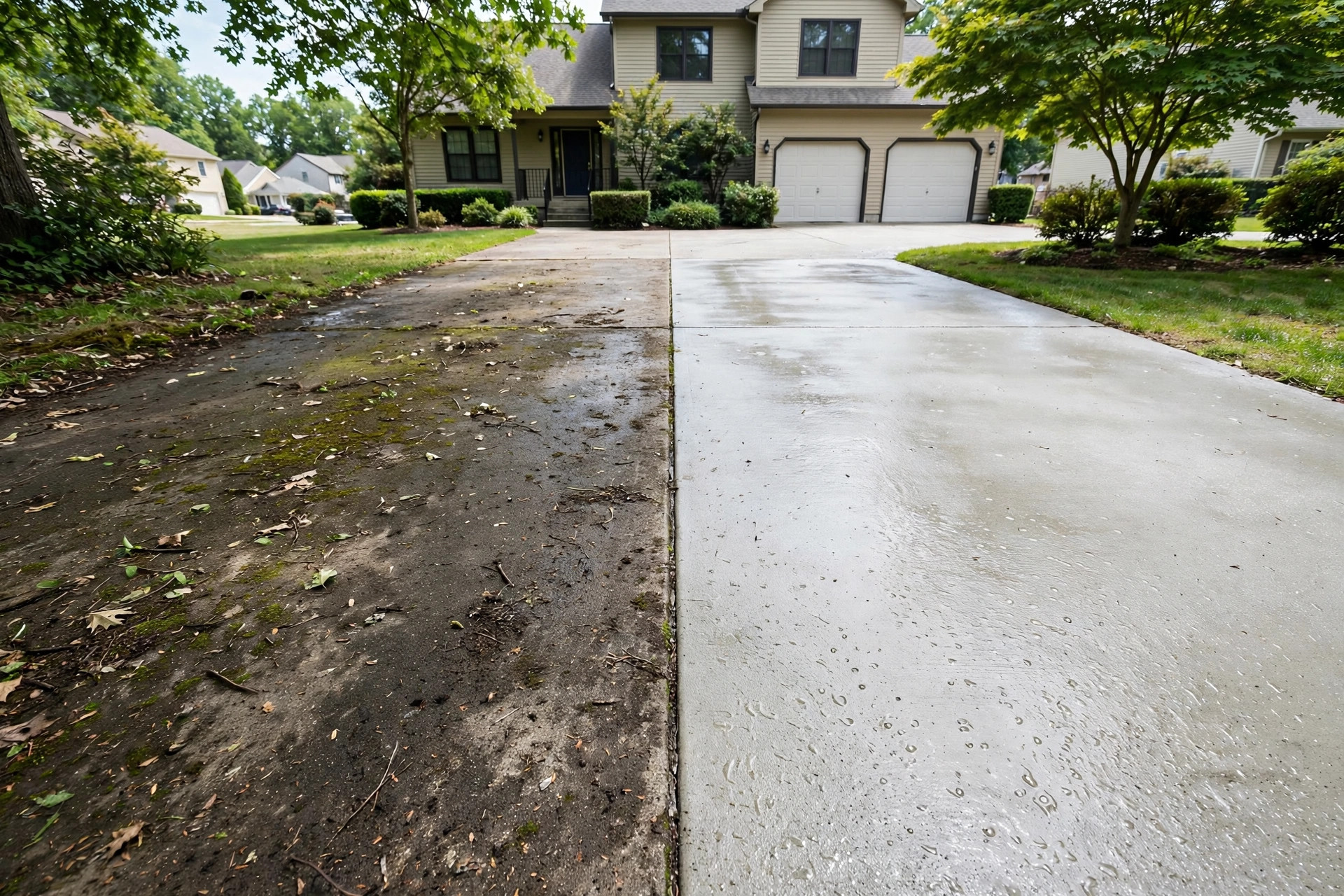
The before and after contrast is the strongest selling tool in pressure washing. Put it in your ads, your landing pages, and your review requests.
Before and after ad creatives that win the click
Pressure washing is the most visual home service there is, and your ads should act like it. The single highest-performing creative asset in this trade is the before and after photo: a filthy driveway on the left, bright clean concrete on the right, one unmistakable line between them. It communicates the entire value proposition in one glance, and it works everywhere: in Google image extensions, on landing pages, in Local Services Ads profiles, and in the review follow-ups that generate your next round of jobs.
On Google Search ads, use image assets and sitelinks to get visual. Upload your best before and after shots as image assets so they can appear alongside your text ads. Write ad copy that names the transformation: “Driveway Looks New Again,” “House Washing That Brings Back the Color,” “See the Difference in One Visit.” Include the service area in the copy or location assets, because pressure washing is hyper-local and searchers skim for their town. Add call assets with tap-to-call on mobile, since a large share of driveway searches happen from the driveway itself, with the homeowner staring at the stains.
Shoot your own content; do not use stock. Homeowners can spot stock photos, and a before and after from someone else’s driveway does not prove you can clean theirs. Build a simple habit: every crew takes a before photo on arrival and an after photo before leaving, from the same angle. In one season you will have a library of hundreds of real transformations. Get written permission in your service agreement to use job photos in marketing, so there is never a question later.
Video is the next level. A 15-second clip of a surface cleaner gliding across a filthy driveway, posted to your Google Business Profile and used in Performance Max asset groups, outperforms static images for engagement. You do not need a production crew; a phone on a tripod and good daylight is enough. The grime coming off in real time is the most persuasive sales pitch this trade has.
Local Services Ads vs Google Search ads for pressure washers
Local Services Ads are available to pressure washing companies in many markets, and the format fits this trade well: the buyer wants a trusted local operator, the job is easy to describe, and the Google Guaranteed badge answers the trust question instantly. But as with every trade, the pay-per-lead model trades control for convenience. Here is how the two compare for pressure washing specifically.
| Factor | Local Services Ads | Google Search ads |
|---|---|---|
| Pricing model | Pay per lead, typically $15 to $35 for pressure washing | Pay per click, typically $3 to $12 for residential terms |
| Placement | Very top of results with Google Guaranteed badge | Just below Local Services Ads, above organic results |
| Keyword control | None: Google matches you to categories | Full: exact keywords, negatives, match types |
| Ad creative | Profile only: photos, reviews, hours | Full control: headlines, images, before and after assets |
| Best for | Steady baseline of trusted local leads | Scaling seasonally, promoting packages and upsells |
| Watch out for | Lead quality disputes, limited category options | Needs weekly management to stay efficient |
The recommended setup is both, with clear roles. Get verified for Local Services Ads and treat the profile like a storefront: complete every field, upload your best before and after photos, collect reviews aggressively, and dispute unqualified leads the same week they arrive. That channel becomes your always-on baseline. Then run search ads as the growth lever: seasonal budget swings, package promotions, commercial terms, and service-specific campaigns for roof washing or deck restoration that Local Services Ads may not categorize well.
One caution on Local Services Ads budgets: the weekly budget cap is real, and in peak season you will hit it. When the cap binds, search ads pick up the overflow. Plan the two budgets together rather than setting each in isolation, or you will either leave demand on the table in May or overspend in January.
A sample monthly budget, line by line
Abstract ranges are useful; a concrete example is better. Below is a sample peak-season monthly budget for a residential pressure washing company in a mid-size suburban market. Adjust the totals to your market, but keep the structure: separate campaigns by service, protect the high-value terms, and keep a test budget for experiments.
| Campaign | Monthly budget | Share | Notes |
|---|---|---|---|
| House washing | $700 | 28% | Highest job values; exact match core terms |
| Driveway and concrete | $600 | 24% | Highest volume; add “near me” variants |
| Deck, patio, and fence | $300 | 12% | Smaller jobs; feed upsells to house washing |
| Roof and soft washing | $400 | 16% | Premium pricing; dedicated landing page |
| Commercial | $250 | 10% | Separate landing page; longer sales cycle |
| Brand and test | $250 | 10% | Your business name plus new keyword tests |
| Total search ads | $2,500 | 100% | Peak season; scale down 50 to 70% in winter |
On top of the $2,500 in search spend, budget $400 to $800 a month for Local Services Ads leads in peak season, and $300 to $600 a month if you use an agency or freelancer for management. All in, a serious peak-season program runs $3,200 to $3,900 a month before you count the winter pullback. At 12 percent click-to-call and a 45 percent close rate, the $2,500 in search spend buys roughly 415 clicks at $6 average, producing about 50 calls and 22 booked jobs. That is the math the next section works through in full.
Landing pages that book driveway jobs
Pressure washing landing pages have one job: make the homeowner picture their own property clean, then make calling effortless. The formula is proven. A headline that names the service and the area: “Driveway and House Pressure Washing in [Town].” A hero image showing a dramatic before and after, not a generic pressure washer. A click-to-call button and a short quote form above the fold on mobile. Trust signals: review stars with count, licensed and insured, satisfaction guarantee. Then a gallery of real local before and after photos, a simple three-step process, the service area list, and a final call to action.
Build one page per major service, not one page for everything. House washing, driveway cleaning, and roof washing attract different searches and different buyers; a combined page converts worse for all three. Each page should match its ad copy word for word on the headline, because message match between ad and page is one of the strongest conversion levers you have. A searcher who clicked “Roof Soft Washing” and lands on a page headlined “Pressure Washing Services” feels a small disconnect, and small disconnects cost conversions.
Pricing transparency helps more in pressure washing than in most trades, because shoppers compare on price. You do not need fixed prices, but ranges build trust: “Most driveways: $200 to $350. Most full house washes: $300 to $550. Final quote confirmed on site or from photos.” Ranges pre-qualify buyers, cut down on price-shock cancellations, and reduce the tire-kickers who were never going to book at your rates. Pair the ranges with package options, which the next section covers.
Speed and mobile matter enormously. Most pressure washing searches happen on phones, often from the property itself. A page that loads in under three seconds with a thumb-sized call button converts; a slow page with a tiny phone number does not. Test every page on a real phone over cellular data, and compress those beautiful before and after photos so they load fast without losing their punch.
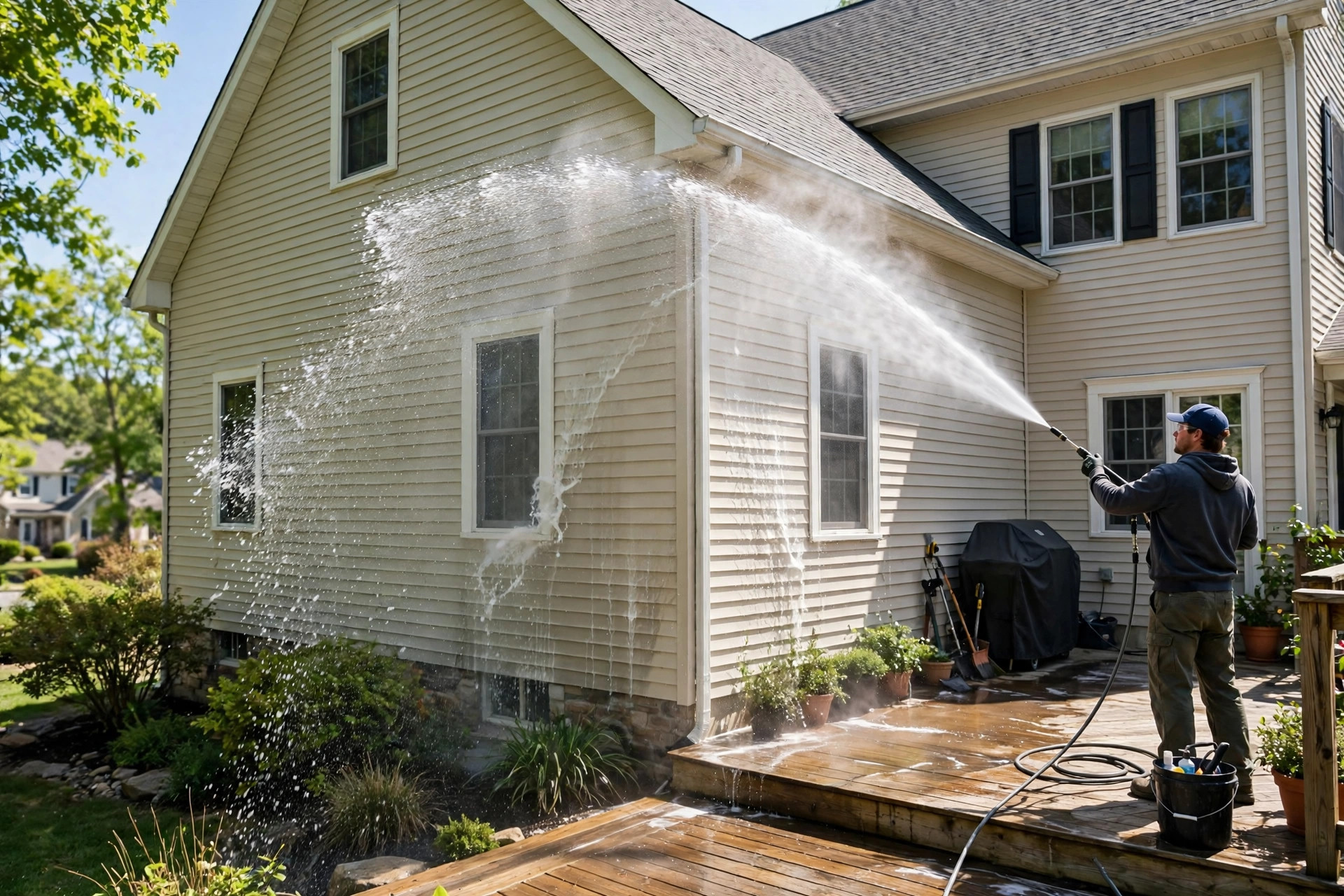
One landing page per service converts better than a single catch-all page. Match the page headline to the ad the visitor clicked.
Packages and upsells that raise the average job
The fastest way to improve your Google Ads math is not cheaper clicks; it is bigger jobs. A $40 cost per booked job is a problem on a $150 job and a non-issue on a $450 job. Packages and upsells raise the average ticket without raising ad spend, and pressure washing is ideal for them because the crew is already on site with the equipment running.
Build three packages for residential work. A basic package covers one surface, like the driveway alone. A popular package bundles the two most requested services, typically house wash plus driveway, at a small discount versus buying separately. A premium package adds the patio, walkways, and fence. Present all three on the landing page and in the quote process, with the middle package highlighted as the most popular. Most buyers choose the middle, and your average ticket climbs 30 to 50 percent versus single-surface quotes.
Train the upsell into the job flow. When the crew arrives for a driveway job, the tech notes the dirty siding or the mossy patio and offers to add it while the equipment is set up, at a bundle price that beats a separate visit. Even a 20 percent attach rate on a $150 add-on lifts the average job meaningfully across hundreds of jobs a year. Track attach rate per tech; the best upsellers are made, not born, and a small spiff for add-on sales pays for itself many times over.
Recurring plans are the advanced move. Offer an annual exterior maintenance plan: house wash each spring, driveway touch-up each fall, priority scheduling, locked pricing. Even a modest base of 100 plan members at $500 a year is $50,000 in recurring revenue that needs zero ad spend to rebook. Advertise the plan on your landing pages and mention it in every quote; the ad spend that won the first job keeps paying through the renewals.
Tracking calls and forms back to keywords
Pressure washing lives on phone calls, so call tracking is the foundation of measurement. Put a tracked number on your ads and landing pages, log every call with its keyword source, and record calls for quality review. Set a minimum call duration for conversions, 45 to 60 seconds works, to filter out misdials and instant hang-ups. Without this, you cannot tell a $4 keyword that books from a $4 keyword that wastes.
Go one step further and track booked jobs, not just calls. A simple process works: the person who books the job tags the source in your scheduling software or CRM, and each month you reconcile spend by campaign against booked revenue. When you know that house washing campaigns produce $420 average jobs at a $55 cost per booking while deck campaigns produce $180 jobs at a $40 cost per booking, budget decisions make themselves. Feed booked-job data back into Google Ads as offline conversions if your setup allows it; the bidding algorithm gets dramatically smarter when it optimizes for revenue instead of raw calls.
Review the search terms report every week without exception. Pressure washing accounts attract a steady drip of irrelevant searches: equipment rentals, DIY how-to queries, job seekers, and people looking for free services. Each one costs a few dollars, and they add up to 15 to 20 percent of spend in unmanaged accounts. Negative keywords are free to add and permanent in their savings; this is the highest-return maintenance task in the account.
Mistakes that drain pressure washing ad accounts
One campaign for all services. House washing and fence cleaning have different click costs, job values, and buyers. Combined campaigns force one budget across all of them, and the high-volume cheap terms eat the budget that the high-value terms need. Split by service from day one.
Broad match without guardrails. Broad match on “pressure washing” matches to rentals, jobs, DIY guides, and equipment sales. Either use exact and phrase match for control, or run broad match only with a tight negative list and weekly search term reviews. Most owners do better starting with exact and phrase.
Stock photos everywhere. Generic pressure washer images do not sell. Real before and after photos from your own jobs outperform stock on every metric that matters. If your gallery is thin, make photo capture part of every job until it is not.
No pricing ranges. Shoppers who cannot find any price signal bounce to a competitor who gives them one. Ranges pre-qualify and build trust; hiding all pricing just filters for the most price-sensitive callers who will grind you on the phone.
Ignoring the winter. Pausing everything from November to March throws away learning history and restarts the expensive learning period each spring. Keep a maintenance budget running, catch the off-season commercial work, and arrive in March with a trained account.
Slow follow-up. Pressure washing leads go cold fast because the job feels optional. A quote request answered in five minutes books at multiples of the rate of one answered tomorrow. Use instant text-back on form fills and an AI chatbot for pressure washing companies or answering service for after-hours calls.
No review engine. Reviews are the conversion multiplier on every ad dollar. A company with 200 reviews at 4.9 stars converts paid clicks at a meaningfully higher rate than an identical company with 20 reviews. Ask after every job, make it a one-tap process, and respond to every review.
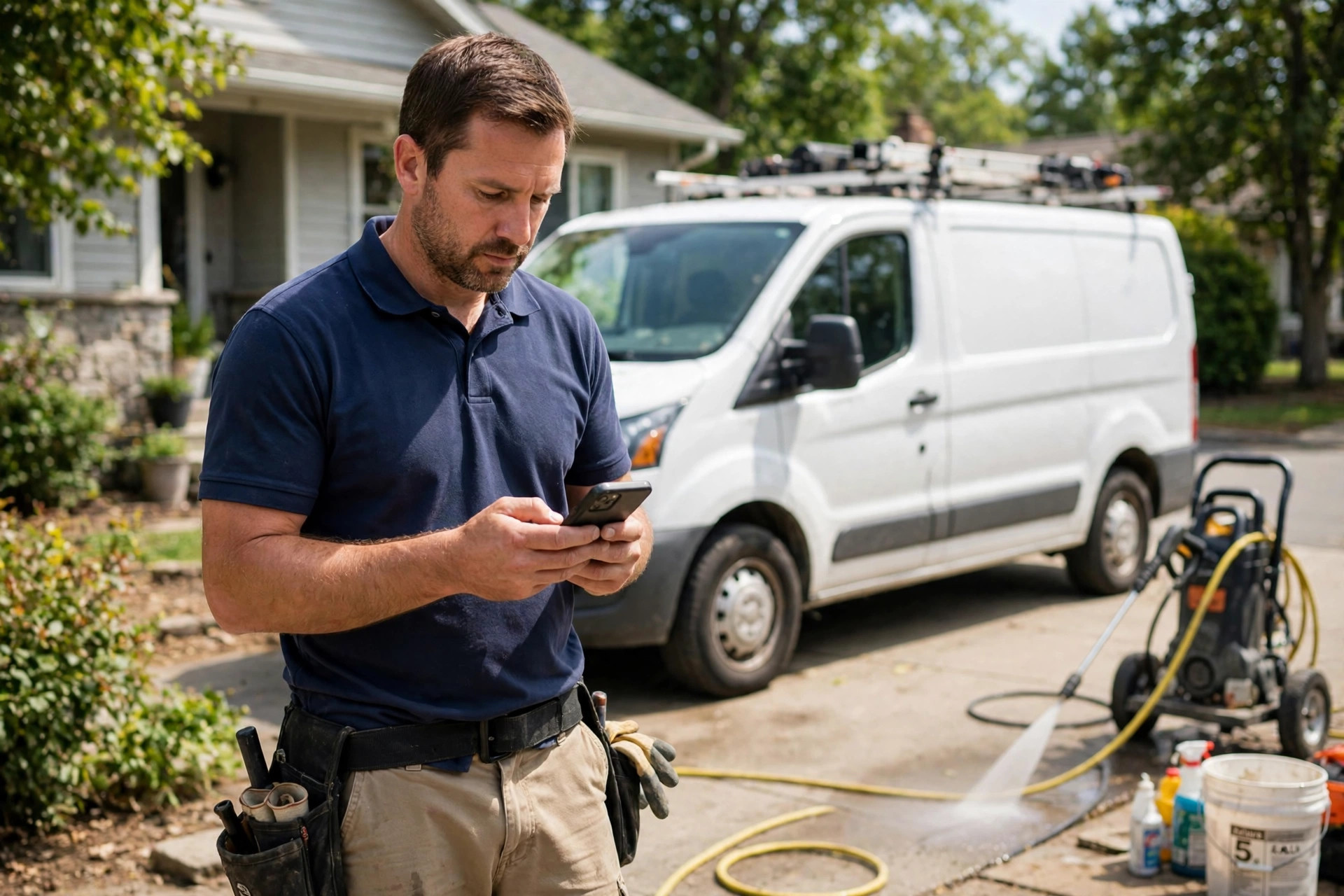
When every call is tracked to its keyword, the weekly budget review takes minutes and the waste has nowhere to hide.
Your rollout checklist
Work through these in order. Each one builds on the last.
- 1Split campaigns by service. House washing, driveway and concrete, deck and fence, roof washing, and commercial each get their own campaign and budget.
- 2Install call tracking. Tracked numbers on ads and pages, 45 to 60 second minimum call duration as a conversion, call recording on.
- 3Build the negative keyword list. Rentals, DIY, job seekers, equipment sales, and free-service terms blocked from day one.
- 4Shoot before and after content. Before and after photos on every job from the same angle, plus written permission in the service agreement.
- 5Build one landing page per service. Matching headline, before and after hero image, click-to-call above the fold, pricing ranges, three-field quote form.
- 6Set up Local Services Ads. Complete the profile, upload your best photos, start collecting reviews, and dispute bad leads weekly.
- 7Build the three packages. Basic, popular bundle, and premium, with the middle package highlighted on every page and quote.
- 8Set up instant follow-up. Text-back within minutes on every form fill and missed call, plus after-hours coverage for peak season.
- 9Launch at 70 percent of peak budget. Let the account learn for two to three weeks, review search terms weekly, then scale into the season.
- 10Start the review engine. One-tap review requests after every job, responses to every review, and review count featured on ads and pages.
Frequently asked questions
How much does Google Ads cost per month for a pressure washing company?
Most residential pressure washing companies spend $800 to $3,000 a month on ad spend in peak season, plus $400 to $800 for Local Services Ads leads and $300 to $600 for management if outsourced. Winter budgets typically drop 50 to 70 percent. A mid-size suburban market running a full program lands around $2,500 in search spend during the April to September peak.
What is the average cost per click for pressure washing keywords?
Residential terms run $3 to $12 per click: house washing $5 to $14, driveway and concrete $4 to $10, deck and fence $3 to $9, roof washing $6 to $15. Commercial terms run $8 to $20. Informational and price-shopping terms are cheapest at $2 to $6 but convert at lower rates.
Are Local Services Ads or search ads better for pressure washing?
Run both. Local Services Ads give you the Google Guaranteed badge and top placement at $15 to $35 per lead, which is excellent for baseline trust. Search ads give you control over keywords, ad copy, seasonal budgets, and package promotions. Together they cover more of the results page than either one alone.
How long until pressure washing Google Ads produce booked jobs?
Calls usually start within days of launch. Give the account two to three weeks of learning before judging cost per lead, and expect stable, predictable numbers by week six. Pressure washing accounts learn faster than most trades because the keyword sets are smaller and the conversion path is short.
What is a good cost per booked job for pressure washing ads?
Target $25 to $60 in ad cost per booked residential job. Against average tickets of $200 to $500 for single services, and $350 to $500 with packages and upsells, that leaves a strong margin. If your cost per booking runs above $80, the fix is usually landing pages, follow-up speed, or packages, not cheaper clicks.
Should I advertise pressure washing in winter?
Keep a maintenance budget running but cut 50 to 70 percent from peak. Never pause entirely, or you lose the account’s learning history and pay for relearning each spring. Winter spend catches commercial work and early planners, and it keeps you visible while competitors go dark.
Do before and after photos really matter in the ads?
Yes, more than any other creative factor in this trade. Before and after images in ad assets, landing pages, and Local Services Ads profiles consistently lift click-through and conversion rates. Shoot your own on every job, from the same angle, and build the library over one season.
How do I stop wasting money on DIY and rental searches?
Add negative keywords for rentals, DIY terms, job seekers, and equipment sales in week one, then review the search terms report every week. Unmanaged pressure washing accounts typically waste 15 to 20 percent of spend on these searches; a weekly fifteen-minute review keeps it under control.
Can I run Google Ads myself for my pressure washing business?
Yes, if you commit to weekly search term reviews and monthly landing page checks. The keyword sets are smaller than most trades, so the learning curve is manageable. Many owners hire a specialist for the initial build and first 60 days, then take over maintenance once the account is stable and the negative keyword list is mature.
How do packages improve my Google Ads results?
Packages raise the average ticket without raising ad spend, which improves every ratio in the account. A $40 cost per booking is painful on a $180 job and comfortable on a $420 bundled job. Three-tier packages with a highlighted middle option typically lift average tickets 30 to 50 percent, and that flows straight to return on ad spend.
Book more driveways without raising your ad spend
Digital Hayder builds and manages Google Ads for pressure washing companies: seasonal budgets, before and after creative, dedicated landing pages, Local Services Ads setup, and call tracking down to the keyword. Tell us about your market and we will map the peak-season plan that books jobs at $25 to $60 apiece.
Contact Us