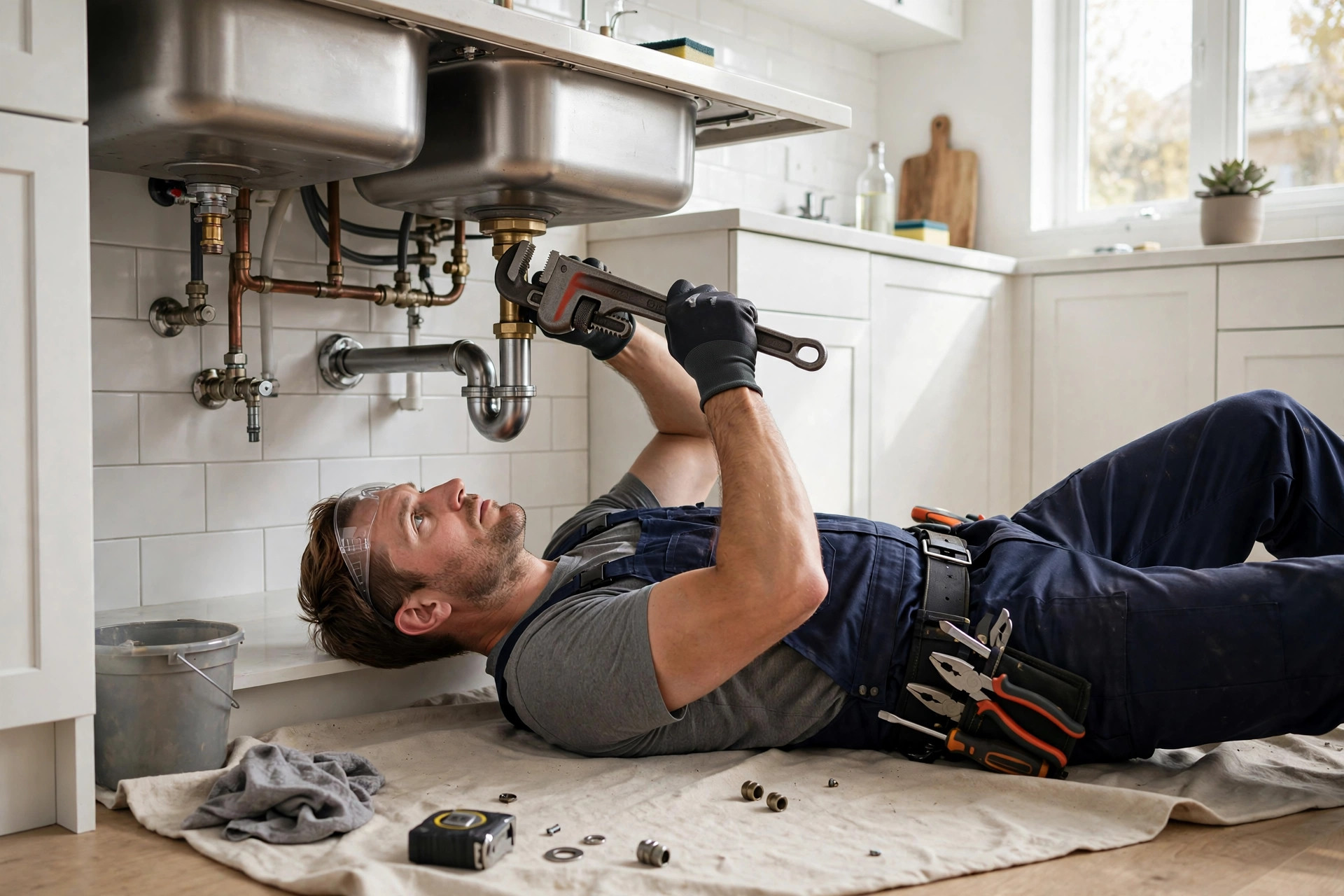
It is 11:40 at night and a homeowner is standing in an inch of water, phone in hand, typing “emergency plumber near me.” Three plumbing companies are bidding on that exact search. The one whose ad shows up, whose phone gets answered by a human in under 20 seconds, wins a $600 emergency call. The other two paid for the click and got nothing. That is the whole story of Google Ads for plumbers: the click costs are real, the tickets justify them, and the phone handling decides whether the math works. This guide covers the CPC reality for emergency versus routine plumbing keywords, how to structure campaigns by job type, what a plumber should budget per month, and the phone-handling factor that changes your cost per booked job more than any bidding trick.
The quick answer
- Emergency keywords are expensive: $15 to $30+ per click, because the ticket is high and every plumber bids on them.
- Routine keywords are cheaper: $5 to $15 per click for drain cleaning, installs, and remodel terms.
- Cost per lead runs $40 to $150: depending on keyword mix, market, and how well the campaign is built.
- Structure by job type: separate campaigns for emergency, routine service, and installs, each with its own budget and landing page.
- Budget $2,000 to $8,000 a month: most competitive markets need this range to show up consistently; smaller markets need less.
- Answering the phone is the ROI lever: live answer versus voicemail can halve or double your cost per booked job.
CPC reality: emergency vs routine plumbing keywords
Plumbing keywords split into two economies. Emergency terms are a bidding war because the caller needs someone now and the ticket runs $400 to $1,000+. Routine terms are calmer water: lower tickets, longer consideration, cheaper clicks. Knowing which economy each keyword lives in is the foundation of the budget.
| Keyword type | Example searches | Typical CPC band | Typical ticket |
|---|---|---|---|
| Emergency | “emergency plumber near me” | $15 to $30+ | $400 to $1,000+ |
| Burst pipe / flooding | “burst pipe repair” | $18 to $32 | $500 to $1,500+ |
| Water heater | “water heater replacement” | $10 to $22 | $1,400 to $2,400 |
| Drain cleaning | “drain cleaning service” | $8 to $18 | $150 to $400 |
| General plumber | “plumber near me” | $8 to $20 | Varies widely |
| Install / remodel | “bathroom plumbing install” | $5 to $12 | $500 to $3,000+ |
| Informational | “how to unclog a drain” | $2 to $6 | Rarely converts |
Why emergency clicks cost what they do
The auction prices intent. A homeowner searching “emergency plumber near me” at midnight will hire someone within the hour, so every plumber in the market bids aggressively for that click. The CPC looks scary until you divide by the ticket: a $25 click that produces a $700 emergency call is cheap customer acquisition. The keywords that should scare you are the cheap informational ones that eat budget without producing jobs. Bid for buyers, not browsers.
Campaign structure by job type
One campaign for everything is the most common and most expensive mistake in plumbing Google Ads. Different job types need different budgets, different ads, and different landing pages, because the customer, the ticket, and the urgency are all different.
The three-campaign setup
Campaign one is emergency: burst pipes, major leaks, flooding, no water. It runs 24/7, bids highest, and lands on an emergency page with a big phone number and a promise of fast response. Campaign two is routine service: drain cleaning, leak repairs, fixture fixes. It runs during business hours plus a shoulder, bids moderately, and lands on a service page with online booking. Campaign three is installs and replacements: water heaters, repipes, remodel rough-ins. It bids lowest per click, runs on a longer sales cycle, and lands on a page with financing info and a quote form. Separate budgets keep the emergency campaign from eating the install budget, and separate landing pages lift conversion rates across the board. Add a negative keyword list from day one: DIY, jobs, salary, free, and parts suppliers.

The click is only half the purchase. What happens in the next 20 seconds decides the ROI.
What a plumber should budget per month
Budget follows market competition and ambition. The ranges below assume the three-campaign structure with dedicated landing pages and proper tracking. Spending less than these floors usually means showing up inconsistently, which trains Google’s algorithm on thin data and produces the worst of both worlds: spend without learning.
| Market type | Typical monthly ad spend | Expected lead volume | Notes |
|---|---|---|---|
| Small / rural market | $1,000 to $2,500 | 15 to 40 leads | Lower CPCs; emergency campaign can dominate |
| Mid-size market | $2,500 to $6,000 | 40 to 120 leads | The sweet spot for most independent shops |
| Large competitive metro | $6,000 to $12,000+ | 100 to 250+ leads | Emergency CPCs at the top of the band; structure matters most here |
How to think about the budget math
Work backward from the ticket. If your average job is $450 and you close 40 percent of leads, each lead is worth $180 in expected revenue. Paying $60 to $90 per lead leaves healthy margin; paying $150 means the campaign needs either cheaper keywords or better close rates to survive. Set a target cost per booked job, not just cost per lead, and review it monthly. And keep 10 to 15 percent of the budget flexible for seasonal spikes, like frozen-pipe season in cold climates, when emergency demand and CPCs both jump.
The phone-handling factor
This is the section most Google Ads guides skip, and it matters more than bidding strategy. A plumbing lead is a phone call, and what happens on that call decides your true cost per booked job. Industry call-tracking data keeps showing the same pattern: a large share of home-service calls go unanswered or hit voicemail, especially after hours, and callers who hit voicemail usually call the next company on the list.
Answering live vs voicemail: the math
Run the numbers. You buy 100 leads at $70 each: $7,000. If your team answers 90 percent of calls live and books 50 percent of answered calls, that is 45 booked jobs at $156 per booked job. If instead 40 percent of calls hit voicemail and most of those callers never call back, you book 30 jobs at $233 per booked job. Same ad spend, same leads, a 50 percent higher cost per job, decided entirely by who picks up the phone. After hours, the gap is even wider: the emergency caller at 2am does not leave voicemails. They call the next plumber. This is why phone handling belongs in a Google Ads guide: it is the single most powerful variable in the whole system.

Every unanswered call is ad spend donated to a competitor. The phone is part of the campaign.
Cover the calls you cannot staff
No shop answers every call live around the clock without help. The practical stack: a dispatcher or CSR during business hours, an AI answering service for plumbers or AI phone agent after hours and during overflow, and missed-call text-back as the safety net for anything that still slips through. Measure answer rate and booking rate weekly, not just lead volume. A campaign generating 100 leads with a 50 percent answer rate is worse than one generating 70 leads with a 95 percent answer rate, and the dashboard will not tell you that unless you track it.
Your rollout checklist
Structure, tracking, phones, then budget. In that order.
- 1Build the three campaigns. Emergency, routine service, and installs, each with its own budget, ads, and landing page.
- 2Set match types and negatives. Phrase and exact match on money keywords; a real negative list from day one.
- 3Build dedicated landing pages. Emergency page with a big phone number; service page with online booking; install page with financing and a quote form.
- 4Install call tracking. Record calls, track which keyword produced each call, and score booking outcomes weekly.
- 5Fix the phones before scaling. Live answer during hours, AI coverage after hours, missed-call text-back as the net. Measure answer rate.
- 6Set a target cost per booked job. Work backward from average ticket and close rate. Review monthly, not daily.
- 7Start at your market’s floor. Prove the cost per booked job on a smaller budget, then scale the campaigns that earn it.
- 8Keep a seasonal reserve. 10 to 15 percent of budget flexible for freeze season and other demand spikes.
The booked job is the only metric that pays the ad bill. Everything else is a leading indicator.
Frequently asked questions
How much do Google Ads cost for plumbers?
Most plumbers spend $1,000 to $12,000+ per month depending on market size. Cost per click runs $5 to $30+ by keyword type, and cost per lead typically lands between $40 and $150. Emergency keywords cost the most; install and remodel keywords cost the least.
What is a good cost per lead for a plumbing company?
$40 to $90 per lead is strong in most markets. But cost per booked job is the number that matters: divide ad spend by jobs actually booked, and compare that against your average ticket and close rate to judge the campaign honestly.
Should I bid on “plumber near me”?
Yes, but in its own ad group with a tight radius and strong negatives, because the intent is mixed. It produces volume at moderate CPCs. Pair it with a fast-loading page and a prominent click-to-call button, since most of these searches happen on phones.
Why do my plumbing Google Ads get clicks but no calls?
The usual suspects: a landing page without a prominent phone number, slow page load on mobile, calls going to voicemail, or broad match attracting researchers. Check the phone handling first, since unanswered calls look exactly like a conversion problem in the dashboard.
How much should a small plumbing shop budget for Google Ads?
$1,000 to $2,500 a month is a workable starting point in a smaller market. Start with the emergency campaign, prove the cost per booked job, then expand into routine service and install campaigns as the numbers justify it.
Do Google Ads work for plumbers at night?
Emergency campaigns work best at night, when intent is highest and some competitors pause their ads. But night clicks are wasted if nobody answers the phone. Run after-hours ads only with live answer coverage or an AI answering service in place.
Is it better to answer calls live or use an answering service?
Live answer by your own team converts best during business hours. After hours and during overflow, an AI answering service beats voicemail by a wide margin. The worst option is voicemail: emergency callers do not leave messages, they call the next plumber.
Stop paying for clicks that never become jobs
Digital Hayder builds Google Ads systems for plumbing companies: tight campaign structure, call tracking, and the phone coverage, AI answering plus missed-call text-back, that turns expensive clicks into booked jobs. Tell us about your market and we will map the budget to your goals.
Contact Us