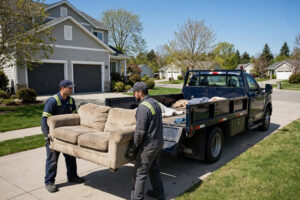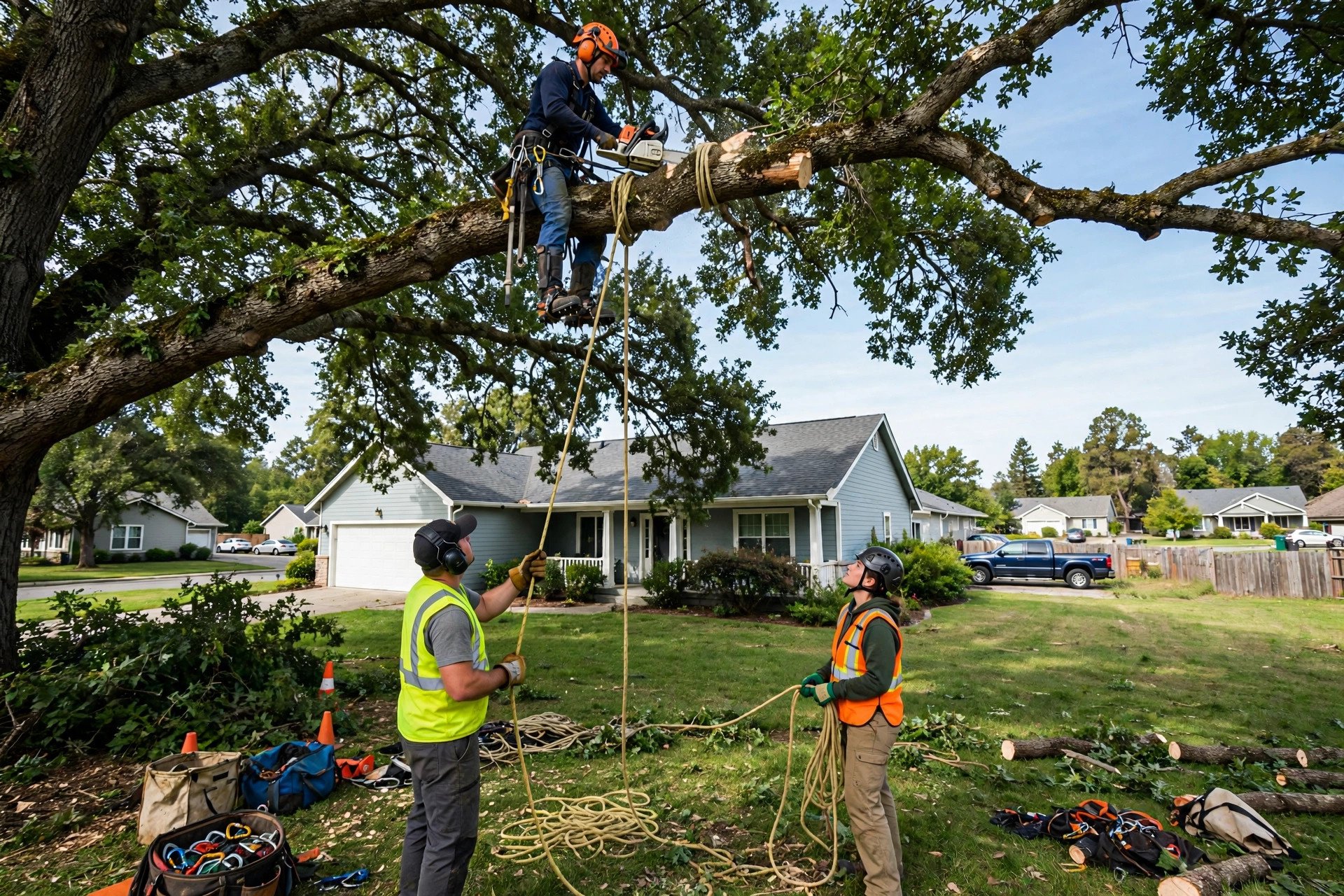
Tree work is the most frightening purchase a homeowner makes: strangers with chainsaws and ropes over your roof, your fence, and your play set, at ticket prices that run from hundreds to thousands of dollars. Nobody books that blind. They read Google reviews first, and they read them closely, looking for words like careful, clean, on time, and fair price. This guide shows tree service owners how to collect those reviews systematically: when to ask so the timing feels natural, what your crew should say, how to get reviews after storm work when customers are most relieved, how to earn reviews from commercial clients, and the money math that makes the whole system worth running.
The quick answer
- Ask at the relief moment: when the tree is down, the yard is clean, and the danger is gone, the customer feels grateful. Ask then.
- Tree reviews decide at high ticket: for jobs costing $1,000 to $5,000, most customers read ten or more reviews before they call anyone.
- Name the crew in the ask: reviews that mention your techs by name build a brand competitors cannot copy and show up in search results.
- Storm work is review gold: emergency jobs produce the most emotional reviews, so run a dedicated follow-up sequence for every storm customer.
- Follow up three times: same day, next day with photos, one week later. That sequence captures nearly every review you will get.
- Cheap to run, huge payback: a review tool costs $50 to $150 a month, and one extra tree job a month pays for the entire year of it.
Why reviews matter more for tree service than for most trades
Most home services sell convenience: cleaning, lawn care, pest control. Tree service sells the removal of fear. A dying oak leaning toward the house, a cracked limb hanging over the driveway, a pine that dropped branches in the last storm. The customer is worried, the job involves real risk to their property, and the price is high enough that a bad choice hurts. Consumer research on local services consistently shows that review reading rises with ticket price and perceived risk, and tree work sits at the top of both. Customers compare reviews line by line, looking for proof that your crew will not crush their fence.
That scrutiny shows up in how reviews get read. For a $40 lawn mow, a 4.6 rating is fine. For a $3,500 removal, customers scroll past the stars and read the words: did the crew clean up the yard, did they show up when promised, did the final price match the quote, how did they treat the property. Detailed reviews that answer those questions are what win tree jobs, which means your review strategy has to produce not just stars but stories. A review that says “removed two dead pines, stump ground, yard left spotless, price matched the estimate” is worth ten reviews that say “great service.”
The second reason reviews matter more here is seasonality and storms. Tree companies get flooded with calls after every major storm, and so does every competitor. When fifty homeowners need a tree off their house this week, they pick from the map pack in minutes. The company with 250 recent reviews at 4.9 stars gets the call; the company with 30 reviews at 4.5 does not, even if it has better equipment. Reviews are your storm-season inventory, and you stockpile them during the quiet months so they are there when demand spikes. Our guide to tree service marketing ideas covers how reviews fit into the full seasonal plan.
The relief moment: when to ask after storm cleanup
Storm work creates the strongest review moment in all of home services. A tree has fallen on the house or blocked the driveway, the homeowner is stressed, your crew arrives fast, and within hours the danger is gone and the yard is clean. The relief the customer feels is real, and it lasts about a day. Asking for a review in that window feels natural to the customer because gratitude is the dominant emotion.
The process starts when the job is done, not after. The crew lead does a final walkthrough with the homeowner: the tree is gone, the debris is hauled, the stump area is marked, the yard is raked clean. Point at the specific things the crew did well, especially cleanup, because cleanup is what storm customers worry about most. “We got every branch, the lawn is raked, and the fence line is clear.” Then the ask: “We know today was stressful. If our crew made it easier, would you share that on Google? It helps neighbors find us the next time a storm hits.”
For planned work, removals and trimming scheduled in advance, the moment is the same: the final walkthrough when the yard looks better and safer than before. The emotional register is lower than storm work, so the ask should name the specific outcome: “The oak is down and the view from the kitchen is back. Would you leave us a review about the job?” One caution: on storm jobs, never ask a customer whose home took major damage and who is still dealing with insurance. Read the room. If the family is standing in a damaged house, express care, do the work, and let the follow-up text a week later do the asking.
What your crew should say: word-for-word scripts
Tree crews are not natural salespeople, and asking for reviews can feel strange after physical work. Scripts fix that. The principle: keep it short, name the company, and tie the review to helping neighbors, which is the motive that works best for tree customers.
The planned-job ask after the walkthrough. “Everything is finished and the yard is clean. Would you mind leaving us a Google review? It takes about a minute, and it is how neighbors find a crew they can trust with work like this.” Hold out the phone with the review link open.
The storm-job ask. “Glad we could get that off your house today. If the crew did right by you, a quick Google review would mean a lot to us. It is what gets us called first the next time a storm comes through.” Storm customers respond to the community framing because they know their neighbors will need the same help.
When they say they will do it later. “Totally fine. I will text you the link so you have it.” Then send it before you leave the property. Do not trust memory; trust the text message.
The crew-name prompt. “If you mention me and the team by name in the review, that helps us out personally.” Reviews that name technicians are trusted more by readers and they motivate the crew, because public praise by name is the best kind.
The commercial version for property managers and HOAs. “The scope is complete and the common areas are clear. Would you leave a review mentioning this was HOA work? We would also be glad to send a completion summary you can share with the board.” Like residential storm work, community framing works: boards hire the company other boards praise.
Train the crew that the review ask is part of the job description, not an extra. The walkthrough has four steps: inspect the work, walk the customer through it, ask for the review, ask for photo permission. In that order, every time.
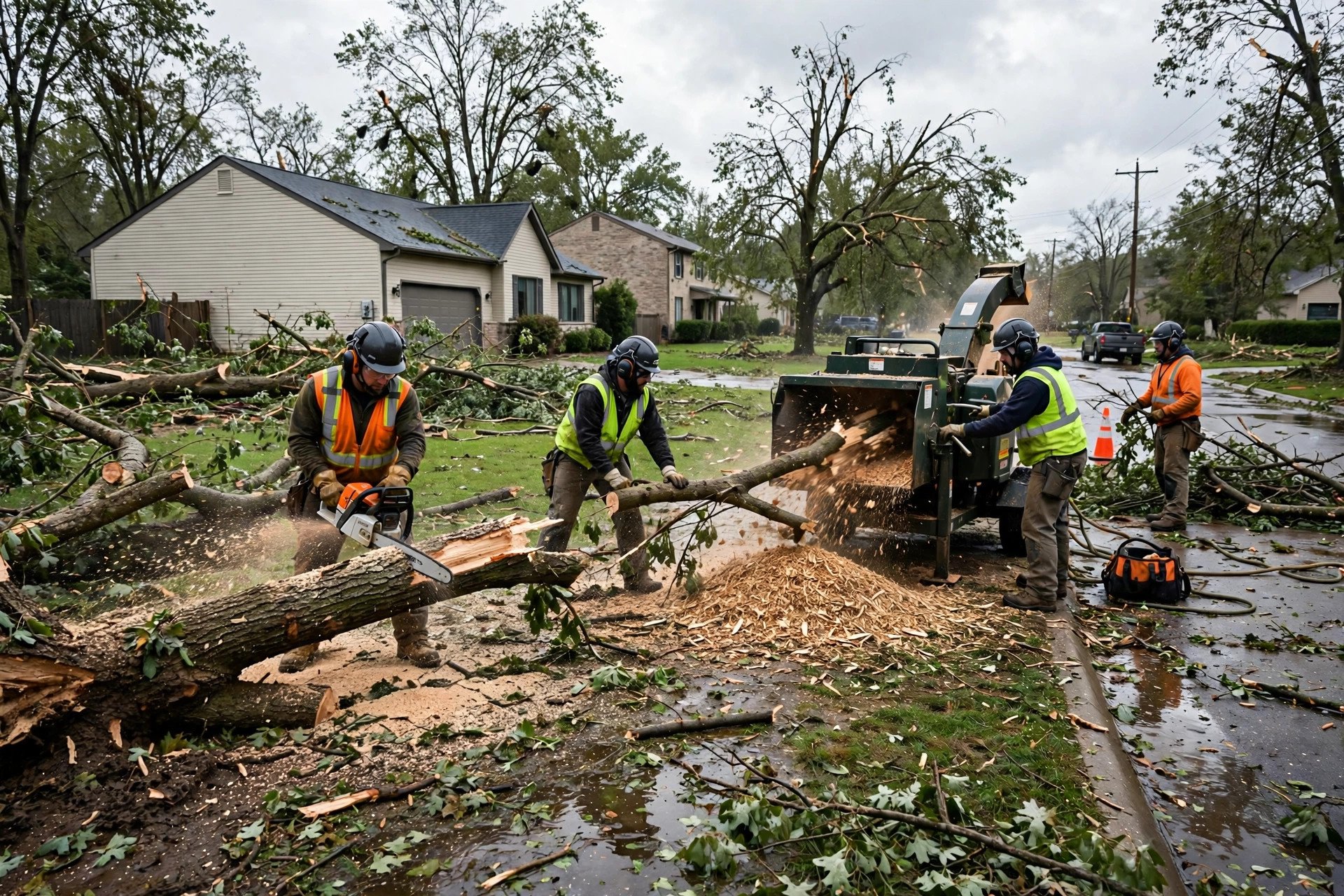
Storm cleanup produces the most emotional reviews. Ask while the relief is fresh, right after the final walkthrough.
Before and after photos that write the review for the customer
Tree work has the most dramatic before and after photos of any trade: a massive leaning tree, then a clean open yard. Most customers do not know what to write, so they write short reviews. Photos solve both problems. When you text the before and after photos with the review link, the customer sees the transformation again and writes a longer, more specific review, and they often attach your photos to it.
Build photography into the job ticket. The crew takes three photos on arrival: the tree from the street, the problem area close up, and the yard overall. They take the same three when finished. Same angles, same three shots, every job. This takes ninety seconds and it is the raw material for reviews, your website gallery, and social posts. Store them with the customer record so the office can find them for the follow-up text.
The follow-up text leads with the photos: “Hi Mark, this is Jake from Summit Tree. Here are the before and after shots of the oak removal today. If you are happy with how it turned out, would you post a Google review? Here is the link.” For crane removals and large jobs, a short video clip of the final piece coming down, sent the next day with the review link, gets opened almost every time and forwarded to family. Ask permission before using any customer photos in ads or on your website, and keep a simple photo release in your job paperwork so you do not have to chase permission later.
The follow-up sequence that captures storm and planned jobs
Tree customers are busy and storm customers are distracted. The crew’s on-site ask will get you some reviews, but the follow-up sequence gets you most of them. Run the same three-touch sequence for both job types, with storm customers getting a slightly longer second touch that acknowledges the situation.
| Touch | Timing | Message | Notes |
|---|---|---|---|
| 1 | Same day, after the crew leaves | “Hi {name}, this is {tech} from {company}. Thanks for trusting us with the tree today. If you have a minute, here is our Google review link: {link}” | Catches the customers who said yes on site but did not finish. |
| 2 | Next day, morning | “Morning {name}. Here are your before and after photos from yesterday. If the yard looks good to you, a Google review with these photos would help us a lot: {link}” | For storm jobs add one line: “Hope the rest of the cleanup is going smoothly.” |
| 3 | One week later | “Hi {name}, checking in: how is everything looking a week out? If you have 60 seconds, this review link helps our crew more than anything: {link}” | The check-in catches any small issue before it becomes a bad review. |
Stop the sequence the moment a review posts. Track clicks and completions so nobody gets a third text after reviewing. Send from a local number so replies come back to you, and read every reply, because storm customers sometimes reply with a new problem: a missed branch, a rut in the lawn. A fast response to that reply saves the review and often earns a better one. If your company also runs paid ads during storm season, compare the cost of those clicks against the free jobs reviews bring; our breakdown of Google Ads costs for tree service companies lays out the numbers.
Review tools compared: what fits a tree service company
Tree companies run fewer jobs per month than pressure washers, but each job is worth far more, so even a handful of extra reviews a month moves the needle. Doing the follow-up by hand works up to about 20 jobs a month. Beyond that, texts slip and reviews dry up. A tool automates the sequence and shows which crew’s jobs produce reviews.
| Tool type | Typical cost | Best for | Watch out for |
|---|---|---|---|
| Simple SMS review tool | $50 to $100 per month | Owner-operators and small crews doing under 25 jobs a month | Confirm it triggers texts automatically when the job is marked complete |
| Reputation platform | $100 to $300 per month | Companies with multiple crews that want per-tech tracking and review alerts across Google, Facebook, and Yelp | Avoid annual contracts at first; start month to month |
| CRM with review automation built in | $100 to $300 per month | Companies that want estimates, scheduling, and reviews in one system | Review features vary; test the review link and sequence options first |
| DIY with your phone | Free | New companies with under 10 jobs a month where the owner texts every customer personally | Stops working the first busy storm week; upgrade before storm season |
The must-have feature is automatic triggering from your job system. The second must-have is review monitoring with alerts, because a bad review on a $4,000 job deserves a same-day reply. Tie a crew bonus to reviews that name the tech: $10 per named review, paid monthly. At tree service ticket prices, one extra booked job pays for a year of bonuses.
Getting reviews from commercial clients and HOAs
Commercial tree work, HOA common areas, apartment complexes, office parks, municipal contracts, pays the best and repeats on a schedule. The reviews from these clients read differently: “removed 14 dead trees across the property,” “annual trimming for 200-unit complex.” Those specifics attract more of the same work, because the next property manager searching sees proof you handle properties like theirs.
Get the direct mobile number of the decision-maker on the work order, because a generic property email never produces a review. After the job, send one package: completion photos, a short summary of what was done, the invoice, and the review link. Ask the review to mention the property type: “Would you mention this was for the HOA common areas? It helps other boards find us.” Property managers and board members care about justifying their vendor choice, so frame the review as documentation of a good decision.
One review per commercial client per year is enough, timed after their largest job. If you trim an office park quarterly, ask after the spring cleanup when the transformation is biggest. Mention at renewal time that their review helped you win a similar property nearby; clients who feel like partners review again and refer. Never ask a municipal contact to review on a public listing if their procurement rules restrict it; ask what form of testimonial they allow and use that instead.
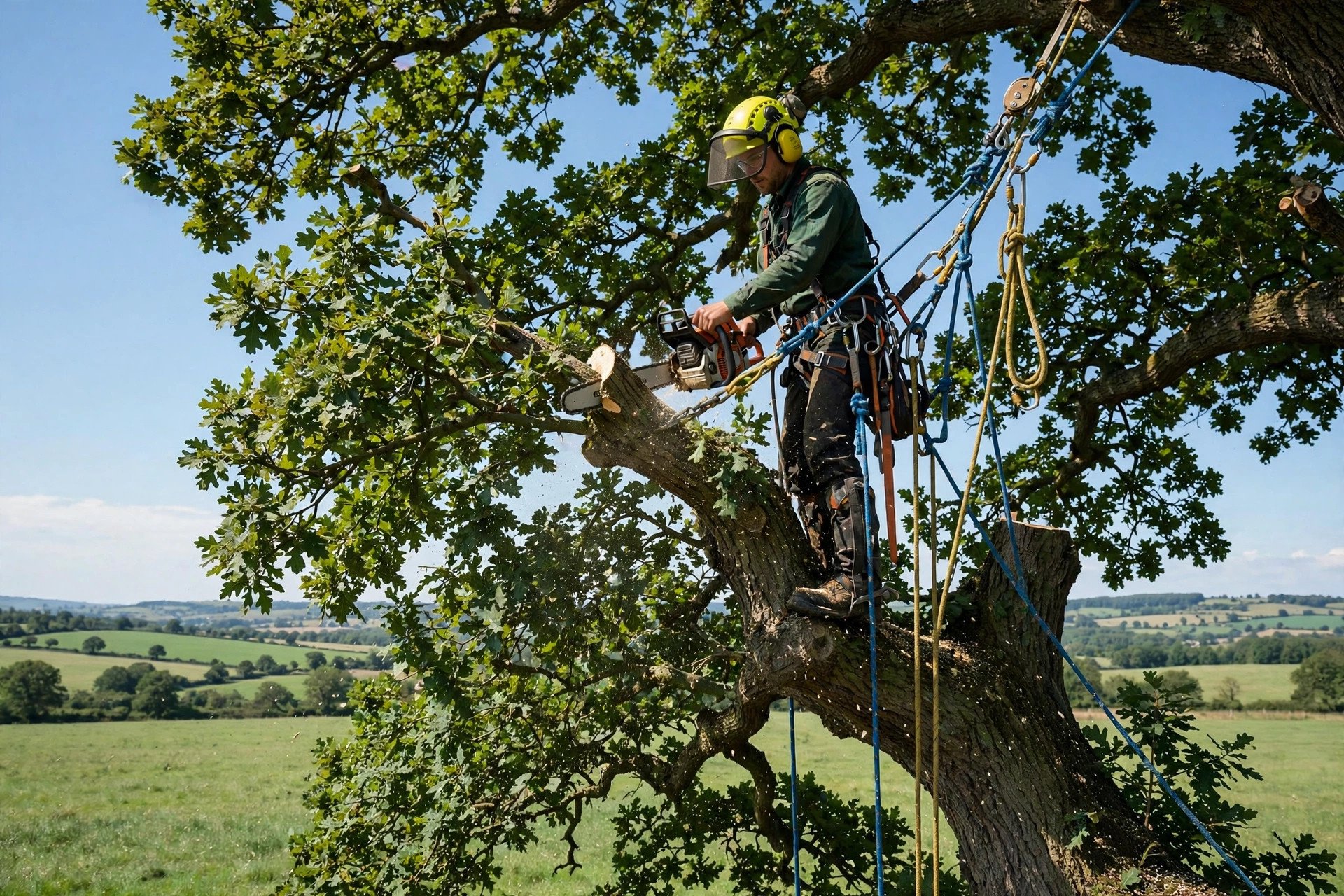
Professional crews with proper safety gear photograph well, and customers mention careful work in reviews when they see it.
How to respond to reviews, especially the hard ones
Reply to every review. For five-star reviews, personalize with a name and a detail: “Thanks, Diane, glad the backyard feels safe again for the grandkids.” Thirty seconds each, and future customers see a company that pays attention. For four-star reviews, thank them and ask what would have made it five; the answer is often a small thing you can fix next time.
Tree work draws tougher bad reviews than most trades, because something usually went wrong enough to motivate the customer: a rut in the lawn from the truck, a branch that nicked the gutter, a stump grind that left a mess. Respond within 24 hours with the calm template: acknowledge the specific complaint, take responsibility for their experience, move it to a phone call. “Hi Robert, I am sorry about the ruts in the side yard. This is Sam, the owner. Please call me at this number so I can come see it and make it right.” Never argue in the reply, never mention what the job cost, and never blame the crew by name. Readers judge you on the reply, and a graceful response to a two-star review about lawn damage wins more future business than the review costs.
Then fix the actual problem, fast. In tree work, a fixed complaint frequently becomes an updated four-star review that says the company came back and made it right. That updated review is more persuasive than a perfect score, because high-ticket buyers are skeptical of perfection. For fake or competitor reviews, flag them in your Google Business Profile and reply once with a factual line: “We have no record of this job. Please contact us with your work order number.” Most fakes get removed when you can show no business relationship.
Mistakes that starve your review count
Only asking on storm jobs. Storm reviews are gold, but storms are seasonal. Planned trimming and removals run year-round; ask on every job and you stockpile reviews for storm season.
Asking by email only. Email requests get buried, especially for storm customers dealing with insurance. Text the review link every time.
Linking to your profile instead of the review form. Use the direct “write a review” link from your Google Business Profile so the customer lands on the review form, not a page where they have to hunt for it.
Offering anything for a review. Discounts, gift cards, or entries for good reviews violate Google’s policy and get reviews removed. Reward your crew for asking; never reward the customer for reviewing.
Skipping the photo text. The before and after photo text is the highest-converting touch in the whole sequence. Skipping it costs you the longest, most persuasive reviews.
Not reading replies. Storm customers reply to your texts with new problems. Unread replies become one-star reviews. Route review-text replies to someone who checks them daily.
Letting one bad review sit. A single unanswered one-star review on a thin profile can cost you jobs for months. Reply fast, fix the problem, and ask for an update.
Turning reviews into marketing that keeps working
Every review is raw material. The companies that get the most from reviews reuse them everywhere. Build a reviews page on your website that pairs your Google reviews with your best before and after photos, and put that proof next to your estimate request form. Share standout reviews on your social pages with the job photo attached. When a review mentions your town or neighborhood by name, it helps you rank for searches in that area and it hits neighbors with direct social proof.
Video testimonials from your three best commercial clients are worth their weight. Ask for a 60-second phone video after a big job; two out of three will agree. Those clips go on your website, your Google Business Profile, and your social pages. Also use reviews in your estimates: when you email a quote, include two or three recent reviews about similar jobs. The customer is deciding whether to trust you with a $2,000 job; seeing that a neighbor trusted you with theirs tips the decision. Pool companies face a similar high-trust purchase and run a nearly identical review playbook, as our guide to getting more Google reviews for pool companies shows. Pressure washing companies collect reviews with the same timing and scripts, covered in our guide to getting more Google reviews for pressure washing companies.
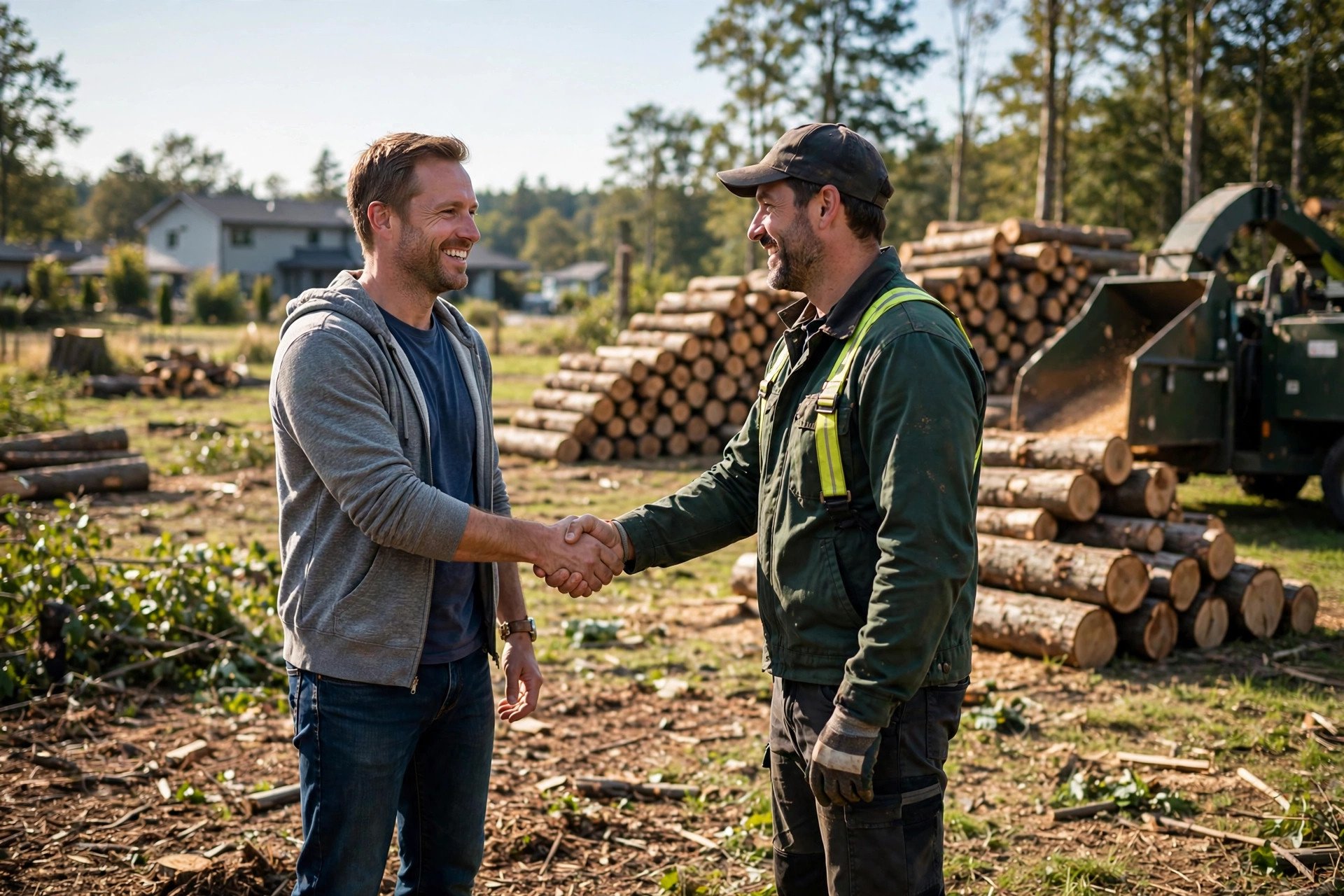
The handshake after the yard is clean is the review moment. Capture the goodwill before the crew packs up.
Your rollout checklist
Work through these in order. Each one builds on the last.
- 1Claim and complete your Google Business Profile. Correct hours, service area, services list, and 20 or more real job photos before asking for reviews.
- 2Generate your direct review link. Use the “write a review” link from your profile and save it where every crew lead can reach it in two taps.
- 3Write the crew scripts. The planned-job ask, the storm-job ask, the later fallback, the crew-name prompt, and the commercial version.
- 4Train every crew lead. Role-play the walkthrough and the ask until it sounds natural, and tie the named-review bonus to it.
- 5Add photos to the job ticket. Three before, three after, same angles, stored with the customer record every time.
- 6Set up the three-touch follow-up. Same day, next day with photos, one week later, all by text, stopping when a review posts.
- 7Create the storm-customer variant. Acknowledge the situation in the second touch and give storm customers a longer window before the third touch.
- 8Start the reply routine. Owner replies to every new review within 24 hours, with a personal detail in each reply.
- 9Put reviews on your website. A reviews page with embedded Google reviews and before and after photos next to the estimate form.
- 10Review the numbers monthly. Reviews per crew, named reviews, average rating, map pack position, and estimate requests from Google.
Frequently asked questions
How many Google reviews does a tree service company need?
Enough to beat whoever ranks above you. In most markets that means 150 to 250 reviews at 4.8 stars or higher. High-ticket buyers read reviews closely, so review quality matters as much as count: detailed reviews that mention cleanup, punctuality, and price accuracy win jobs.
When is the best time to ask for a review?
Right after the final walkthrough, when the tree is gone and the yard is clean. For storm work, ask while the relief is fresh, the same day. If the customer faced major property damage, wait and let the one-week follow-up text do the asking.
Should I offer a discount for a Google review?
No. Google prohibits reviews in exchange for incentives, and paid reviews can be removed with penalties to your listing. Thank customers, send a direct review link by text, and reward your crew for asking, not the customer for reviewing.
How do I handle a review about lawn damage or a mess left behind?
Respond within 24 hours, acknowledge the specific complaint, and move it to a phone call with the owner’s direct number. Then fix the problem fast and in person. A fixed complaint often becomes an updated four-star review about great service recovery, which high-ticket buyers trust more than a perfect score.
How do I get reviews from HOAs and commercial clients?
Ask the specific decision-maker, not a generic email. Send completion photos and a project summary with the review link in one package, and ask them to mention the property type. One review per client per year, after their biggest job, is enough.
What if a customer posts a fake or competitor review?
Flag it in your Google Business Profile and reply once with a factual line noting you have no record of the job. Google removes reviews it finds violate its policies. Never accuse anyone publicly; keep the reply short and professional.
How long until reviews improve my ranking?
Most tree companies see movement within two to three months of collecting 10 to 15 reviews a month. Because storm season compresses demand into weeks, stockpile reviews during quiet months so the profile is strong when everyone searches at once.
Should the crew ask, or should the office send the request?
Both. The crew asks on site because the personal ask converts best, and the office runs the text follow-up sequence for everyone the crew missed. Track reviews per crew so you know which teams ask consistently.
Do before and after photos really increase reviews?
Yes. Photo texts are the highest-converting touch in the sequence. They remind the customer of the transformation, prompt longer and more specific reviews, and customers often attach your photos, which makes the reviews more convincing to future buyers.
Can reviews help me charge more than cheaper competitors?
Within reason, yes. Tree customers pay for certainty that the job will be done carefully and the price will hold. A profile full of detailed five-star reviews about cleanup, punctuality, and honest pricing lets you win jobs at 10 to 15 percent above the cheapest quote, because it answers the trust question price cannot.
Turn every finished job into new jobs
Digital Hayder builds review and follow-up systems for tree service companies: automatic review requests after every job, storm-customer sequences, per-crew tracking, and the messaging setup that keeps the reviews coming. Tell us about your crews and we will design the system around them.
Contact Us