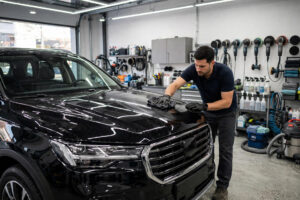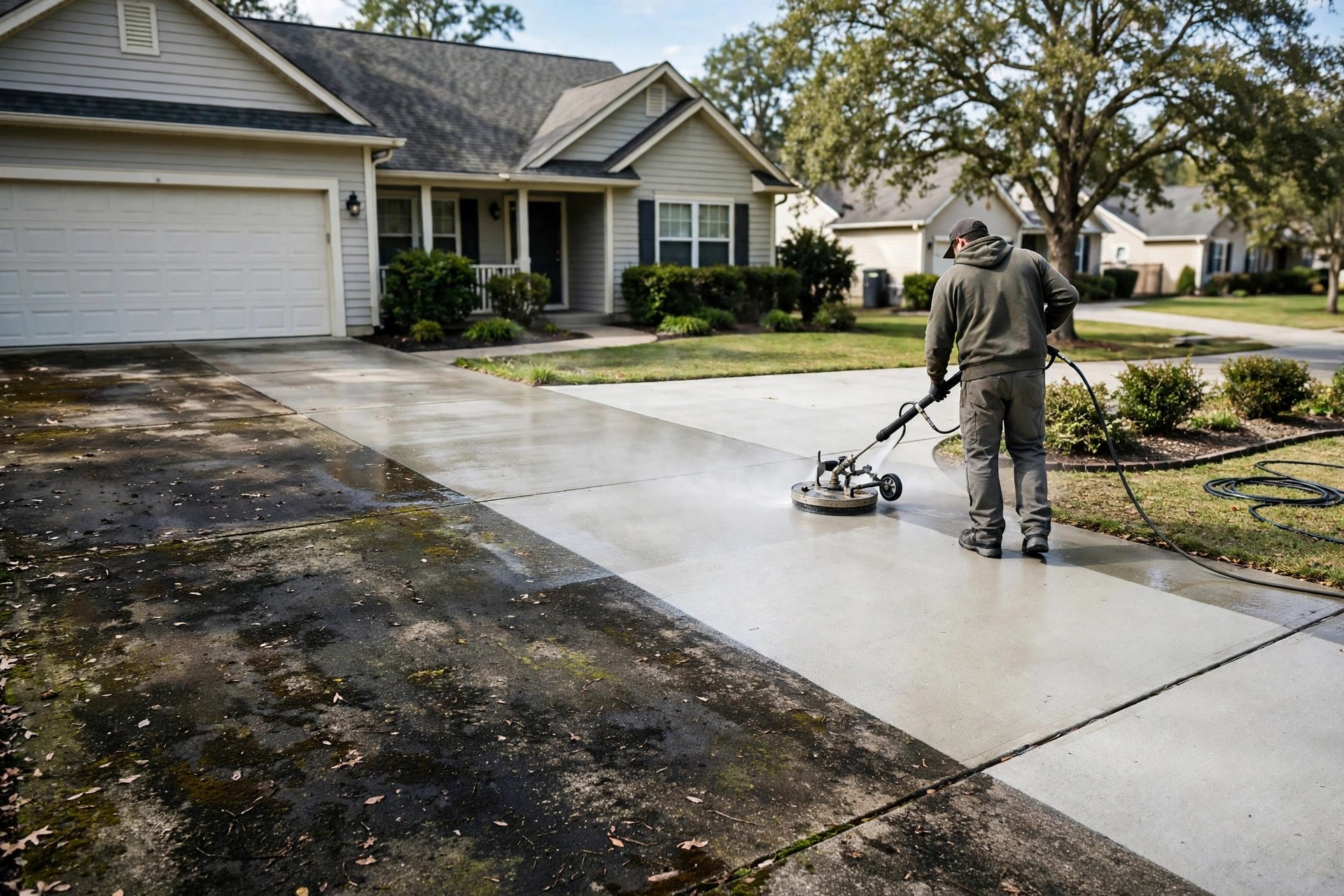
Pressure washing is a quote driven business. Homeowners look at a green driveway, a dirty fence, or a stained patio, pull out their phone, and ask the same question everywhere: how much to clean this? The company that answers that question first usually gets the job. The problem is that most pressure washing owners are on a truck, on a ladder, or under a house when those inquiries arrive. Calls go to voicemail, website forms sit unanswered until evening, and the customer has already booked with whoever picked up. An AI chatbot for pressure washing companies fixes the timing problem. It answers in seconds, turns customer photos into instant ballpark quotes, books the job on your real calendar, and follows up on quotes that went cold. This guide covers what the chatbot does day to day, what it costs, how to set it up in two weeks, and the exact money math behind it.
The quick answer
- Instant quotes from photos: customers send a photo of the driveway, house, or deck, and the chatbot gives a ballpark price in under a minute, which is what price shoppers want before they commit.
- After hours booking: the bot answers at 9 PM and on Sundays, checks your real availability, and books the job while competitors are unreachable.
- Quote follow up on autopilot: open estimates get friendly check in messages at day 2 and day 7, which recovers jobs that would otherwise die in the inbox.
- Seasonal reactivation: past customers get a spring message when pollen season hits and a fall message before the holidays, filling the schedule with zero ad spend.
- Costs are modest: chatbot software runs $50 to $400 a month depending on how much is done for you, plus a one time setup.
- Live in about two weeks: connect the calendar, build the quote flow, train it on your prices and service area, then launch.
Why pressure washing customers message instead of calling
The pressure washing buyer is usually a homeowner standing in their yard, annoyed at what they see. They want one thing: a price. Calling feels like a commitment, so most people research first. They browse at night after the kids are asleep, they compare three companies on their phone during lunch, and they hate playing phone tag. Surveys of home service shoppers consistently show that a majority prefer to message a business first, and that they will move on to the next company if they do not get a fast answer.
The timing mismatch is the whole game. A large share of quote requests arrives outside working hours: evenings, weekends, and early mornings before the crew rolls out. The owner is pressure washing a commercial lot or quoting another job when the phone rings. One study of home service businesses found that most calls during work hours are missed, and after hours almost all of them are. Each missed inquiry is a homeowner who will message the next company on the list within minutes. Speed to lead is not a slogan in this trade. It is the difference between a booked week and an empty one.
There is also a price transparency angle. Customers ask the same five questions: how much for a driveway, how much for a whole house, is soft washing safe for my roof, will this kill my plants, how long does it take. Answering these in chat, instantly, builds trust before a human ever speaks. Companies that publish clear ballpark ranges convert more inquiries than companies that guard every number behind a phone call.
What an AI chatbot does for your pressure washing company
An AI chatbot is an automated assistant that holds conversations with your customers on your website, on Facebook Messenger, or over SMS. Customers type or tap, and the bot replies instantly with answers, price ranges, and booking options. When a conversation needs a human, for example a tricky stain or a commercial bid, it hands off to you with the full chat history attached. Think of it as an estimator who never sleeps, never keeps a customer waiting, and handles the repetitive quoting work in seconds.
Turns photos into instant ballpark quotes
This is the feature that matters most in pressure washing. A homeowner sends a photo of their driveway, house wash, deck, or fence. The bot asks a few quick questions, surface type, approximate size, visible stains like oil or rust, and your service area, then replies with a price range from your own pricing sheet. The customer gets the answer they wanted in under a minute. You get a qualified lead with a photo, a size estimate, and contact details, so the in person visit is a formality instead of a discovery session.
Books jobs on your real calendar
The bot shows your actual open days, takes the customer’s pick, and confirms the appointment with prep instructions: move cars off the driveway, close windows, open the gate for the crew. It collects a deposit if you require one and sends a reminder the day before. Rainy day? The bot can offer rescheduling in one tap instead of you making twenty calls.
Follows up on quotes that went cold
Most pressure washing quotes die from silence, not from price. The homeowner meant to reply, got busy, and booked whoever followed up. The chatbot sends a short check in two days after the quote and another at day seven, both with a one tap booking link. Owners who run this consistently report that follow up alone recovers a meaningful share of open estimates every month.
Collects reviews while the concrete is still wet
The best time to ask for a review is right after the job, when the customer is staring at a driveway that looks new. The bot sends a thank you message with a direct review link an hour after the scheduled finish time. Steady reviews lift your Google ranking and make every future ad dollar work harder.
The instant photo quote flow that wins jobs
A chatbot that books pressure washing jobs lives or dies on the quote flow. Keep it short, give price ranges honestly, and never ask a question the customer cannot answer from their couch. Below is a proven flow. Adapt the prices to your own rates.
Step 1, the greeting. “Hi, this is ClearJet Pressure Washing. Want a quick price for your driveway, house, deck, or fence? Just send a photo and I will give you a ballpark in about a minute.”
Step 2, the photo and the surface. The customer sends a photo. The bot asks: “Thanks. Is this a driveway, house wash, deck, patio, fence, or roof? Reply with the number.” Numbered choices keep it fast on a phone.
Step 3, the size. “Roughly how big? For a driveway, is it a single car, double car, or larger? For a house, one story or two?” The bot maps the answer to your square footage bands instead of asking the customer to measure.
Step 4, the condition. “Anything unusual: oil stains, rust, heavy moss, or peeling paint nearby?” This sets expectations and protects you from underquoting a nightmare job.
Step 5, the range. “Based on the photo, a driveway like that usually runs $175 to $275 with our standard cleaning. Want me to lock in a firm quote with a free 10 minute visit, or book the cleaning directly?” The range is the hook; the firm quote or the booking is the close.
Step 6, the booking. “We have Thursday and Saturday open. Which works for you?” Name, address, and phone are collected one question at a time, then confirmed.
The honest range is what makes this work. Customers accept that a photo quote is a ballpark; what they do not accept is a company that refuses to give any number at all. Below are typical US price bands the bot can quote from. Set your own numbers, but publish ranges somewhere in the flow.
| Service | Typical size | Ballpark range the bot can quote |
|---|---|---|
| Driveway cleaning | 400 to 800 sq ft | $150 to $300 |
| House soft wash | 1,500 to 2,500 sq ft home | $250 to $500 |
| Deck or patio | 300 to 600 sq ft | $175 to $350 |
| Fence cleaning | 100 to 200 linear ft | $150 to $350 |
| Roof soft wash | 1,500 to 2,500 sq ft roof | $300 to $600 |
| House plus driveway bundle | Common package | $350 to $650 |
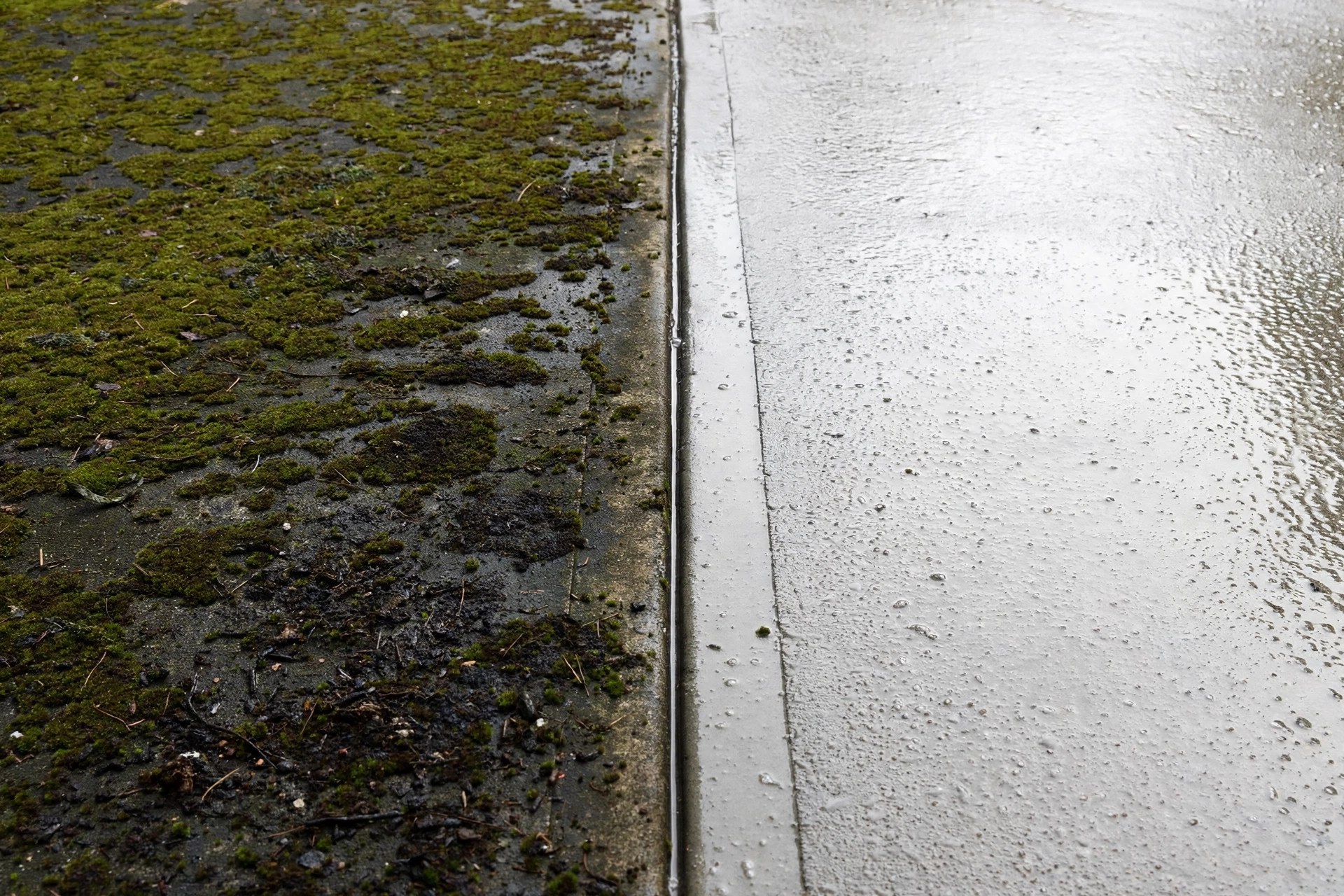
Photo quotes work because the customer can see their own dirt in the picture, and the bot answers with a number in about a minute.
After hours booking without a single missed call
Your best leads arrive when you cannot answer. A homeowner notices the green siding at 8 PM on a Sunday, messages three companies, and books with the one that responds. The chatbot is that response. It greets the customer, runs the photo quote flow, checks your live calendar, and books the job with a confirmation text. You wake up to a booked morning instead of a voicemail graveyard.
Pair the chatbot with a missed call safety net for the phone side. When someone calls and you are on a ladder, an automatic text goes out: “Sorry we missed you. Want a quick pressure washing quote? Reply with a photo of the area.” That message turns a dead call into a chat conversation the bot can finish. Companies running both sides report that after hours inquiries stop being a source of stress and start being a source of jobs.
One practical detail matters: the bot must know your real schedule. Connect it to the same calendar you use for the crew. A bot that offers Thursday when Thursday is full will cost you a review. Real availability, real confirmation, or do not launch the booking feature.
Seasonal campaigns that keep trucks busy year round
Pressure washing has seasons. Spring is the rush: pollen, winter grime, and everyone wanting the house clean before summer. Summer stays busy with decks and patios. Fall brings leaf stains and pre holiday cleanups. Winter slows down in most markets. A chatbot turns your past customer list into a year round asset with two or three campaigns a year.
The spring message is simple: “Hi Mark, this is ClearJet. Pollen season is here, and driveways are turning green again. Want us to freshen yours up like last spring? Reply YES for a quick quote.” The fall message targets the holidays: “Hi Lisa, we cleaned your patio in May. Want the driveway and walkway looking sharp before the holidays? We have openings next week.” No discount needed for most customers; the reminder does the work. For slow winter months in warmer markets, offer the bundle: house wash plus driveway at a package price, sent to everyone who bought only one service last year.
These campaigns work because the list is warm. These people already paid you once. A personal feeling message in a chat app gets read, while the same offer in an email newsletter gets ignored. Home service businesses in other trades run the same playbook; our breakdown of AI chatbots for HVAC companies shows how seasonal reminders drive repeat bookings there too.
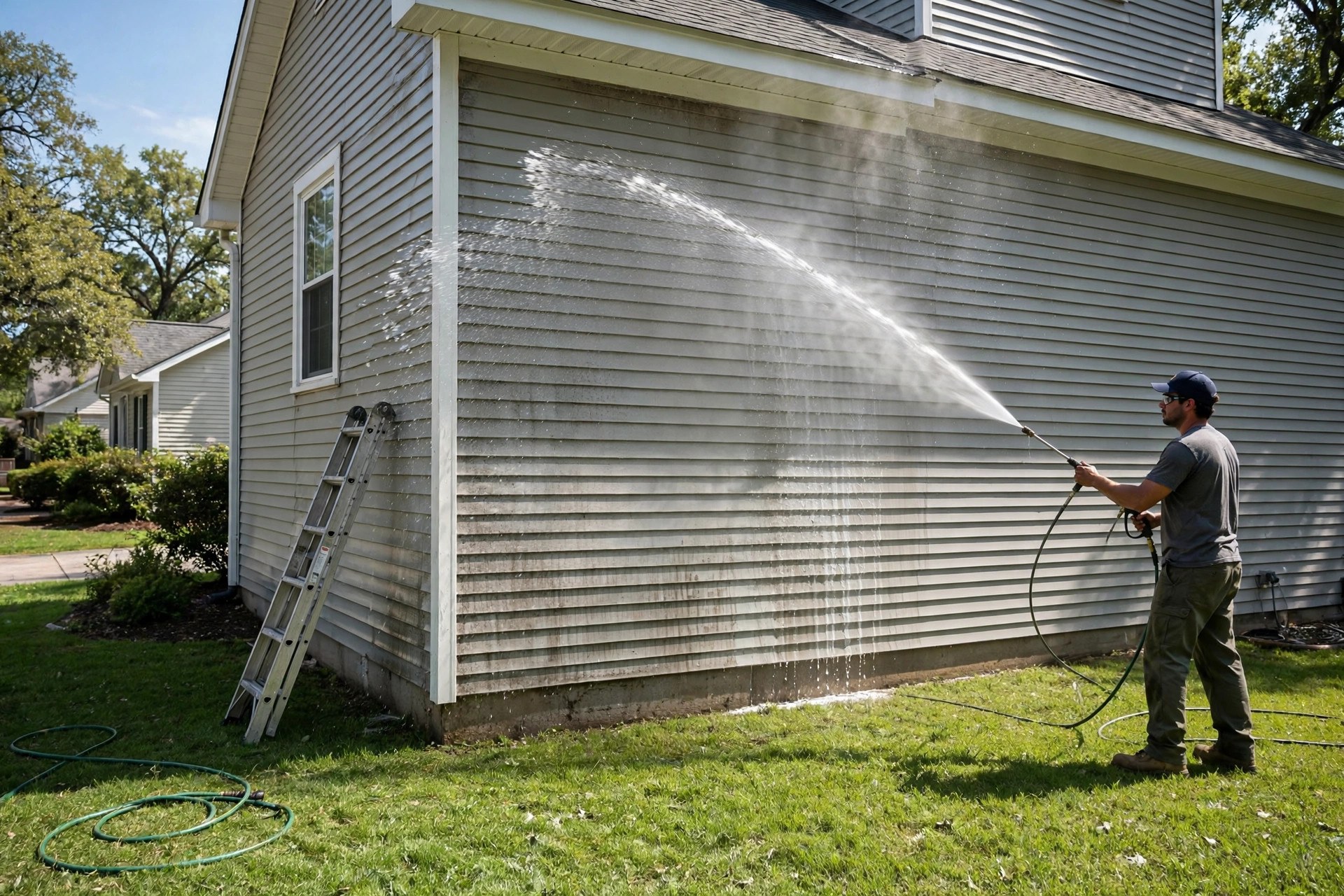
Spring and fall campaigns to past customers fill the schedule with zero ad spend, because these buyers already trust your work.
Chatbot vs phone vs contact form
Most pressure washing companies run on some mix of phone calls and a website contact form. The chatbot does not replace the phone. It takes the jobs it does best and leaves the rest. The comparison below shows where each channel wins.
| Task | AI chatbot | Phone call | Contact form |
|---|---|---|---|
| After hours quote requests | Answered instantly, books directly | Voicemail, callback next day | Waits until someone reads it |
| Photo based ballpark quotes | Photo in, price range out, in one minute | Customer must describe the job verbally | Photo attached, reply comes hours later |
| Speed of response | Seconds, any hour | Only when you pick up | Minutes to days |
| Quote follow up | Automatic at day 2 and day 7 | Manual calls most owners skip | Manual email most owners skip |
| Complex or commercial bids | Hands off to you with full history | Best: walk the site together | Thin details, back and forth |
| Cost per inquiry handled | Pennies after setup | Your time on the truck | Your time at the desk |
The practical setup is all three working together: the chatbot for quotes, booking, and follow up; the phone for commercial bids, tricky stains, and anyone who prefers to talk; the contact form as a backup that feeds into the same chat system. The handoff is what makes the mix work, because a conversation that starts with the bot moves to you with the photo, the size estimate, and the price range already attached.
What an AI chatbot costs for a pressure washing company
Pricing has three common setups. The DIY route is cheapest but you build and maintain the flows. The managed route gives you the software plus done for you setup and tuning. The agency route adds marketing style campaign management on top.
| Setup | Typical monthly cost | Setup fee | Best for |
|---|---|---|---|
| DIY chatbot builder | $50 to $150 per month | $0 to $500 | Tech comfortable owners with time to build flows |
| Managed AI chatbot platform | $150 to $400 per month | $500 to $1,500 | Most pressure washing companies: done for you, tuned monthly |
| Agency plus AI receptionist | $400 to $900 per month | $1,000 to $3,000 | Multi truck operations wanting calls, chat, and campaigns handled |
DIY chatbot builder
A flow builder you set up yourself on your website and Facebook page. Good if you enjoy tinkering and have slow evenings to build the quote flow.
- Visual flow builder and templates
- Website and Messenger widget
- Basic calendar booking link
- You write every message and fix every dead end
Managed AI chatbot
The sweet spot for most pressure washing companies. The provider builds your quote flow, connects your calendar, and tunes the conversations monthly.
- Photo quote flow built on your pricing
- Calendar, deposit, and reminder integration
- Quote follow up sequences included
- Monthly review of conversations and tuning
Agency plus AI receptionist
For companies running two or more trucks. Chat, missed call text back, review requests, and seasonal campaigns run as one managed system.
- Everything in the managed tier
- Missed call text back on the business line
- Seasonal reactivation campaigns managed for you
- Monthly reporting on quotes, bookings, and recovered revenue
A realistic budget for a single truck owner operator: about $1,000 one time setup plus $250 a month managed. That is less than the profit on one average house wash per month. Before you spend anything on advertising, it is worth checking what Google Ads costs for pressure washing companies, because the chatbot makes every ad click convert better by answering the quote question instantly.
A managed chatbot costs less than one house wash a month and answers every inquiry in seconds, including the ones that arrive at 9 PM.
From zero to live in two weeks
A pressure washing chatbot is a two week project. The companies that stall are the ones that try to automate commercial bids and HOA contracts on day one. Start with residential quotes and booking, add the rest later.
Week 1, days 1 to 2: pricing and service area. Write down your ballpark ranges for each service, your service area zip codes, and your scheduling rules: how far out you book, minimum job size, deposit policy. This document becomes the bot’s brain.
Week 1, days 3 to 5: the flows. Build the photo quote flow, the booking flow, and the FAQ answers: pricing, soft wash safety, plant protection, how long jobs take, rain policy. Connect your real calendar so the bot sees true availability. Cleaning companies face the same quoting questions, and our guide to AI chatbots for cleaning companies covers flow ideas you can borrow.
Week 2, days 6 to 8: testing. Run every flow from a personal phone. Send blurry photos, ask weird questions, request dates you know are full, try to book outside the service area. Fix every dead end. Test the handoff: when the bot gives up, do you get notified with the full chat history?
Week 2, days 9 to 10: the website and the number. Put the chat widget on the pages that get quote traffic: homepage, pricing, service pages, contact. If you use missed call text back, connect the business line so missed calls turn into chat conversations.
Week 2, days 11 to 14: soft launch. Turn the bot on for new inquiries first. Watch the first 50 conversations closely and tune the wording where customers get confused. Then add the day 2 and day 7 quote follow up, then the review request after completed jobs.
Mistakes that cost pressure washers real jobs
Quoting exact numbers from a photo. A photo cannot show water access, steep slopes, or delicate garden beds. Quote ranges, then confirm a firm price on site or on a quick video call. Exact photo quotes lead to awkward price changes at the door.
No escape hatch to a human. Every automated conversation needs “Reply 0 to talk to us” at every step. A customer with a rust stained pool deck who cannot reach a person will message your competitor, not your bot.
Booking without checking the calendar. A bot that offers days you are already booked is worse than no bot. The calendar integration is not optional; it is the feature the whole system depends on.
Ignoring the service area. If you drive 25 minutes each way for a $150 driveway, you lose money. Teach the bot your zip codes and let it politely decline or refer out of area requests with a minimum job size.
Skipping the follow up. The day 2 and day 7 quote check ins are where a large share of the return comes from. Launching the bot without them is like quoting jobs and never calling back.
Setting it and forgetting it. Review the conversation logs monthly. You will find questions the bot fumbled, price ranges that need updating, and new FAQs from real customers. Fifteen minutes a month keeps it sharp.
Your rollout checklist
Work through these in order. Each one builds on the last.
- 1Write your price ranges. Ballpark bands for driveway, house wash, deck, fence, and roof, plus your minimum job size and deposit policy.
- 2Define the service area. Zip codes you serve, areas you decline, and the minimum ticket that makes a long drive worth it.
- 3Pick the channels. Website chat plus Facebook Messenger covers most inquiries; add SMS if customers text your business line.
- 4Build the photo quote flow. Six steps or fewer: photo, surface, size, condition, range, booking. Honest ranges, never exact photo quotes.
- 5Connect the real calendar. The bot sees true crew availability, with rain day and travel buffers your schedulers trust.
- 6Write the FAQ answers. Pricing, soft wash safety, plant protection, job duration, rain policy, and payment methods.
- 7Build the follow up sequences. Day 2 and day 7 quote check ins with one tap booking links, plus the post job review request.
- 8Set the human handoff. Who gets notified, how fast you reply, and what the customer sees while they wait.
- 9Test with real phones. Blurry photos, full calendars, out of area requests, weird questions. Fix every dead end before launch.
- 10Soft launch, then add campaigns. New inquiries first, then follow up, then the spring and fall reactivation messages to past customers.
Frequently asked questions
Can a chatbot really quote pressure washing from a photo?
It can give a ballpark range, which is what customers want before they commit. The bot reads the surface type, estimates the size band, asks about stains, and replies with your own price range. The firm quote still happens on site or on a quick call, but the range is what wins the inquiry.
How much does an AI chatbot cost for a pressure washing company?
DIY builders run $50 to $150 a month, managed platforms run $150 to $400 a month, and agency managed setups with campaigns run $400 to $900 a month. Most single truck companies land on a managed setup around $250 a month after a one time setup of $500 to $1,500.
Will customers actually use it, or do they prefer calling?
Most quote shoppers prefer messaging first, especially after hours. The bot does not remove the phone; it catches the people who would never have called. Every flow includes an escape hatch to reach you directly, so callers can still call.
What happens when the bot cannot answer a question?
It hands the conversation to you with the full chat history, the customer photo, and the price range already discussed, so you pick up mid conversation instead of starting over. You set how fast you reply to handoffs.
Can it book jobs on my calendar?
Yes, when connected to your scheduling calendar. It shows real open days, takes the customer’s pick, collects the details, and sends confirmation and reminder messages. Rain day rescheduling can be offered in one tap.
How does the quote follow up work?
When a quote does not book, the bot sends a friendly check in after two days and another after seven days, each with a one tap booking link. You can pause the sequence for any customer, and it stops automatically when they book.
Will it work for commercial pressure washing bids?
Not for the bid itself. Commercial jobs need a site walk. The bot qualifies the lead, collects the property details and photos, and books the walkthrough with you, which saves the back and forth and shows up with the basics already handled.
How long does setup take?
About two weeks for the photo quote flow, booking, FAQs, and follow up. The pricing sheet and calendar connection are the longest steps. Reactivation campaigns to past customers can be added in week three.
Do I need to be technical to run it?
No, on a managed setup. The provider builds the flows, connects the calendar, and tunes the conversations monthly. You review a short report and approve wording changes. DIY builders need a few evenings of your time.
How do I know if it is working?
Track five numbers monthly: quote requests captured, photo quotes completed, after hours bookings, quote to job close rate, and reviews collected. Compare against the two months before launch. Most companies see the after hours bookings and close rate move first.
Stop losing quote requests to voicemail
Digital Hayder builds AI chatbots and booking systems for pressure washing companies: instant photo quotes, after hours booking, quote follow up, and seasonal campaigns that run on your real schedule. Tell us about your routes and we will design the system around them.
Contact Us