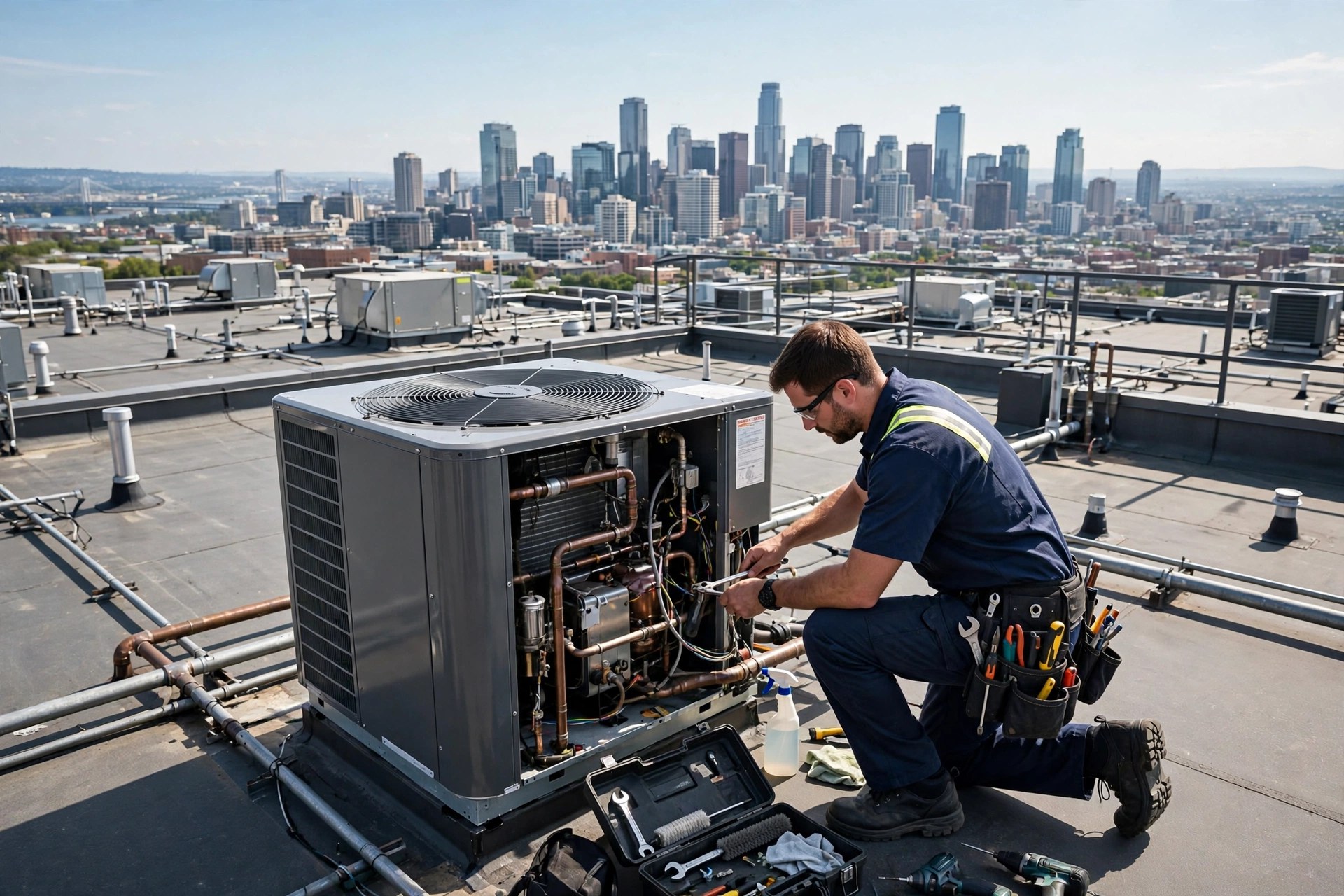
The first 100-degree week of summer hits, and every air conditioner in town starts failing at once. An HVAC company with five trucks and good techs should be drowning in calls. Instead, the owner watches a competitor’s phone ring off the hook while his own stays quiet. The difference is not equipment or pricing. It is the row of Google Guaranteed listings at the very top of the search results, and his company is not in it. For HVAC, Local Services Ads are the closest thing to owning the top of Google during the two seasons that pay for the whole year. You pay per lead instead of per click, the badge pre-sells trust to panicking homeowners, and the format is built for exactly the calls HVAC companies want: no-cool emergencies, dead furnaces, and system replacements. This guide covers eligibility and screening for HVAC categories, profile optimization with photos and hours and emergency flags, review velocity tactics that move your ranking, and honest cost-per-lead benchmarks against standard Google Ads.
The quick answer
- Top-of-page placement: LSA sits above standard ads and the map pack, with the Google Guaranteed badge that panicking homeowners tap first.
- Pay per lead: HVAC leads typically cost $30 to $75, and you pay only when a customer contacts you, not for clicks.
- Screening takes 1 to 3 weeks: license verification, background checks, and insurance proof before you go live.
- Reviews are the ranking engine: review count, rating, and recency decide your position more than anything else you control.
- Flag emergency services: no-cool and no-heat calls are the highest-converting LSA queries in HVAC. Mark them explicitly.
- Scale with the seasons: raise budgets for summer and winter peaks, trim during shoulder seasons, and pause when the board is full.
Why Local Services Ads fit HVAC so well
HVAC demand is spiky, urgent, and trust-driven, which is exactly the combination LSA was built for. When the AC dies in July or the furnace quits in January, the homeowner is not comparison shopping for an hour; they are tapping the first credible option. The Google Guaranteed badge answers the credibility question instantly, and the pay-per-lead model means you are buying conversations, not clicks from researchers. Typical HVAC cost per lead runs $30 to $75 depending on market and job type, with emergency and replacement leads at the higher end. Compare that with standard Google Ads, where “ac repair near me” clicks routinely cost $20 to $50 and convert to leads at 10 to 15 percent, putting the effective cost per lead in the same range or higher, with more management work. LSA will not replace a well-run search campaign for high-ticket system replacements, but as the always-on baseline for service calls, it is the most efficient top-of-funnel placement most HVAC companies can buy. For the full marketing picture, see our HVAC marketing ideas guide.
Eligibility and screening for HVAC categories
Google offers LSA in several HVAC-related categories, and picking the right ones shapes the leads you receive. The screening process is the price of the badge, so treat it like a project, not a form.
Choose your categories deliberately
Typical categories include air conditioning repair, heating system repair, and HVAC installation or replacement. Select only the work you want: a company focused on residential service should think twice before adding commercial categories that bring leads it cannot serve well. Each category you add expands your reach but also your exposure to leads outside your sweet spot. Start with your core two or three, prove the economics, then expand. Set service areas to the zip codes you will genuinely drive to for a service call; proximity is a major ranking factor, so honest geography beats aspirational geography.
Licenses, background checks, and insurance
Expect license verification for HVAC work, background checks for owners and field staff through Google’s screening partner, and proof of general liability insurance meeting your market’s minimums. Gather government IDs, license numbers, and insurance certificates before you start the application; mismatched names and expired documents are the two most common delays. Most companies go live in one to three weeks when the paperwork is ready on day one. Keep digital copies of everything in one folder, because re-verification requests happen and they always arrive at the worst time.
Profile optimization: photos, hours, and emergency services
Your LSA profile is judged in seconds by someone whose house is too hot or too cold. Make those seconds count.
Photos, bio, and the trust details
Upload 8 to 10 real photos: uniformed techs, branded vans, clean installs, and thermostats or equipment you service. Write the bio in plain language: years serving the area, licensed and insured, upfront pricing, and same-day service if you offer it. List your actual services in detail, from tune-ups to full system replacements, so Google matches you to the right queries. Accurate hours matter more than generous hours; a profile that says “open now” and answers immediately will outrank a competitor that claims 24/7 and sends callers to voicemail.
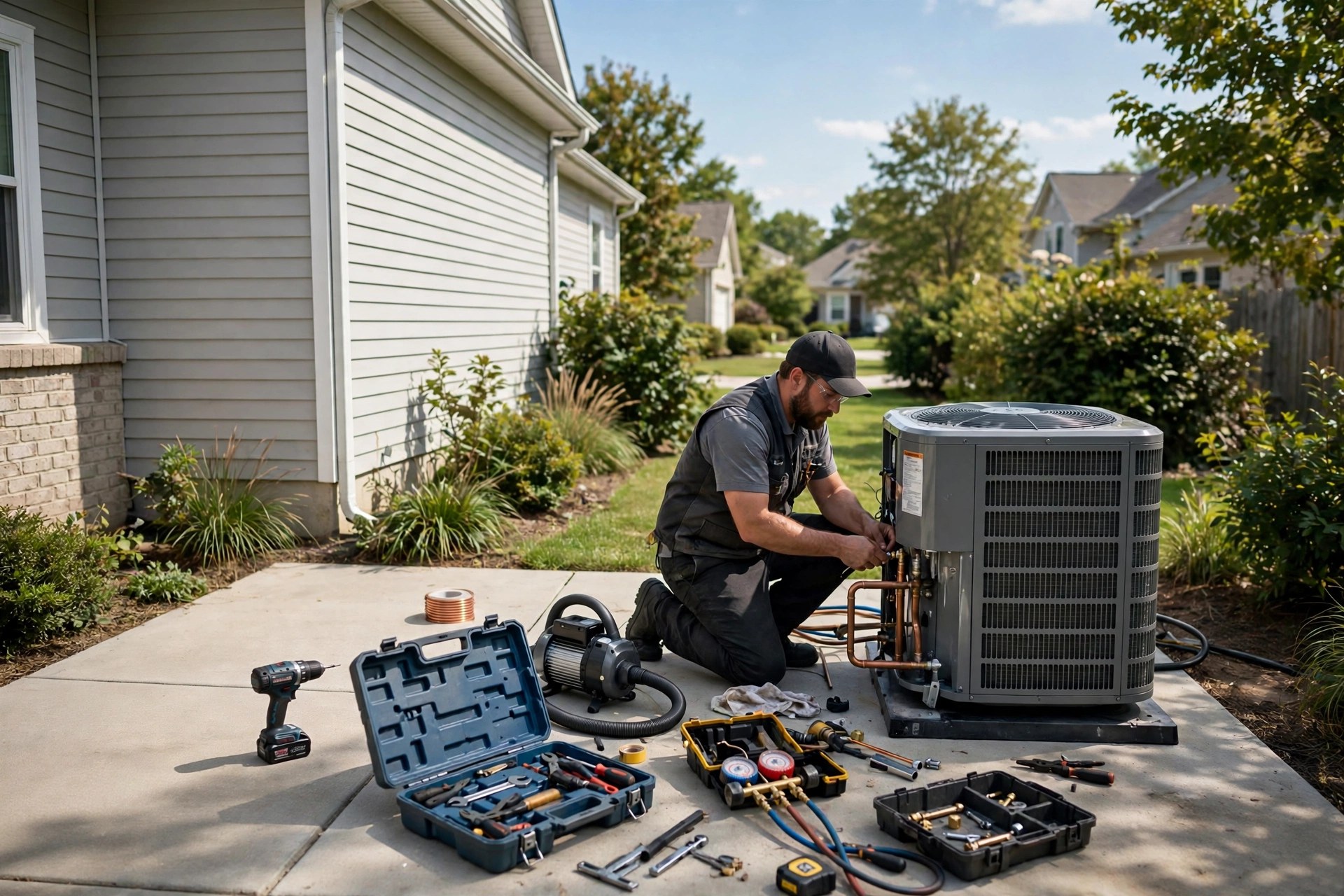
Real install photos on the profile show searchers exactly the work you do.
Flag emergency services explicitly
No-cool and no-heat calls are the highest-converting queries in HVAC LSA, and the emergency flag helps you match them. Only flag emergencies if you truly answer around the clock during peak season; the responsiveness metric behind the ranking will punish a flagged profile that misses night calls. During summer and winter peaks, consider a dedicated on-call rotation or an answering service so the flag earns its keep. Our guide to AI chatbots for HVAC companies covers after-hours capture options, and missed-call text-back for HVAC companies covers the safety net for the calls that slip through.
Review velocity tactics
LSA ranking weighs review count, average rating, and recency heavily, alongside proximity and responsiveness. Reviews are the one ranking factor entirely in your hands, and most HVAC companies underinvest in them badly. A competitor with 200 recent reviews will sit above you indefinitely until you close the gap.
The systematic ask
Ask after every completed job, at the door, while the relief is fresh: “If the new system is running well, a review on our Google profile helps our local company more than anything.” Then automate the backup: a text within 24 hours with a direct link to your LSA review page, one tap, no searching. Target 8 to 12 new LSA reviews per month; velocity matters as much as total count because Google favors profiles with recent activity. Note that LSA reviews are separate from your Google Business Profile reviews, so build both: see how to get more Google reviews for your HVAC company.
Seasonal review pushes
Your busiest weeks are your best review opportunities. During the first heat wave and the first cold snap, job volume spikes and customer gratitude peaks; make sure the ask system is airtight before the season starts, not during it. A single strong summer can add 40 to 60 reviews, which compounds your ranking for the rest of the year. Respond to every review within 48 hours: thank happy customers by name, and answer negative reviews with calm professionalism that shows future readers how you handle problems.

Peak-season jobs are peak review opportunities. Make the ask airtight before the rush.
Cost-per-lead benchmarks vs. standard Google Ads
Both formats can work for HVAC, but they buy different things at different prices. The honest comparison below uses typical US bands; your market will vary with competition and season.
| Factor | Local Services Ads | Standard Google Ads |
|---|---|---|
| Pricing model | Pay per lead, $30 to $75 typical for HVAC | Pay per click, $20 to $50 for core HVAC terms |
| Effective cost per lead | $30 to $75, minus dispute credits | $130 to $400 at typical 10 to 15 percent click-to-lead rates |
| Placement | Very top, Google Guaranteed badge | Below LSA, standard ad format |
| Best job types | Service calls, no-cool and no-heat emergencies, tune-ups | System replacements, high-efficiency installs, commercial |
| Control | Google matches queries; you set budget and categories | Full keyword, bid, ad, and landing page control |
| Management effort | Weekly lead review and disputes | Ongoing keyword, bid, and negative keyword management |
| Seasonality handling | Raise or lower weekly budget, pause anytime | Adjust budgets and bids by campaign |
Read the table correctly
LSA usually wins on raw cost per service lead, and it wins big on simplicity. Standard search ads earn their keep on system replacements: a $10,000 install justifies precise keyword targeting, dedicated landing pages, and remarketing that LSA cannot do. The shops that grow fastest run both: LSA as the always-on service-call engine, search ads aimed deliberately at replacements and high-efficiency upgrades. Judge each channel on cost per booked job by job type, not on blended averages, and reallocate seasonally.
What to do when LSA leads cost too much
If your cost per qualified lead creeps above $75 to $90, work the levers in order before raising the budget. First, tighten categories: drop any job type producing leads you do not want, because every unwanted lead raises your average. Second, attack reviews: a profile climbing from 20 to 100 reviews typically sees better placement at the same spend, which lowers the effective cost per lead without touching the budget. Third, get ruthless with disputes: unfiled credits are a silent tax, and the weekly review takes fifteen minutes. Fourth, check responsiveness: missed calls and slow replies drag down the ranking signals, which means you pay more for worse placement. Only after those four are handled should you consider that your market is simply expensive, in which case shift budget toward the job types with the best booked-job economics and let standard search ads carry the rest.
Budget and seasonal strategy
HVAC is the most seasonal trade in home services, and your LSA budget should breathe with the weather. A flat year-round budget either starves the peaks or wastes money in the shoulder seasons.
Weekly budgets that flex
Start at $400 to $1,000 a week during your first peak season, which at typical lead costs buys 8 to 25 leads weekly. Watch close rate and cost per booked job for a month before adjusting. When the schedule fills, lower the budget or pause rather than paying for leads you cannot serve; missed calls damage the responsiveness signals behind your ranking. In shoulder seasons, drop to a maintenance budget that keeps the profile active and the reviews coming, and shift spend toward tune-up campaigns and maintenance plan signups.
Dispute invalid leads every week
Review the lead inbox weekly and dispute spam, wrong numbers, out-of-area callers, and job types you did not select. Google credits valid disputes, and most HVAC companies recover 5 to 15 percent of lead spend this way. Track cost per qualified lead after credits; that is the number your ROI math should use, not the raw spend.
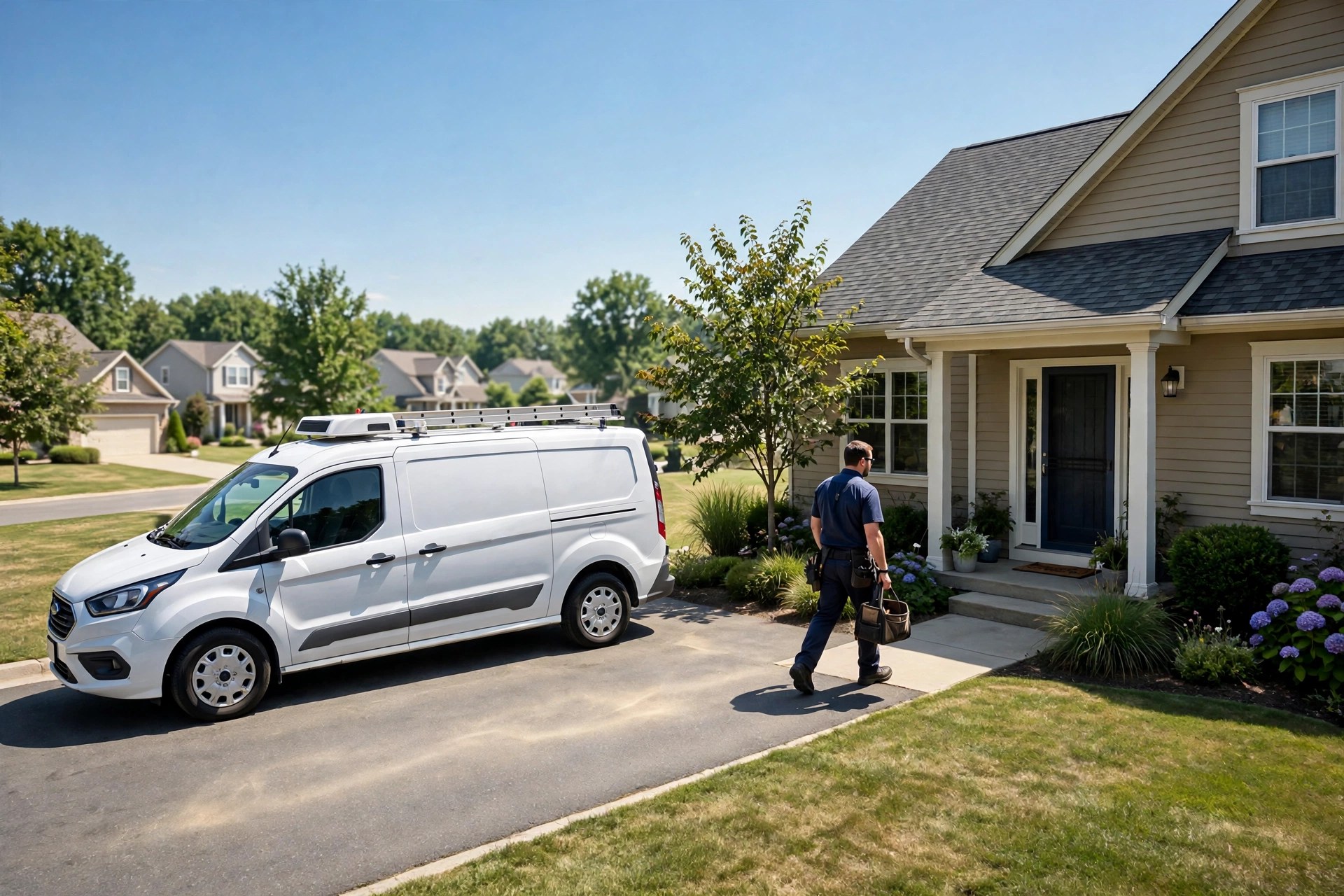
Peak season is when LSA earns its keep. Scale the budget with the temperature.
Your rollout checklist
Paperwork first, then profile, then reviews, then seasonal scale.
- 1Confirm category availability. Check HVAC categories are live in your market and pick only the work you want to book.
- 2Gather screening documents. Licenses, IDs for owners and field staff, and insurance certificates ready before applying.
- 3Set honest service areas. Zip codes you will actually drive to. Proximity is a major ranking factor.
- 4Build the profile. 8 to 10 real photos, plain-language bio, accurate hours, and the emergency flag only if you truly answer.
- 5Launch the review system. Ask at the door after every job plus an automated 24-hour text with a direct LSA review link.
- 6Set a seasonal budget plan. Full spend for summer and winter peaks, maintenance budget for shoulder seasons, pause when the board is full.
- 7Dispute invalid leads weekly. Spam, wrong numbers, out-of-area, and unselected job types get credited back.
- 8Track cost per booked job by job type. Reallocate between LSA and search ads based on which channel books replacements profitably.
Frequently asked questions
How much do Local Services Ads cost for HVAC companies?
Most HVAC companies pay $30 to $75 per lead, depending on market and job type, with emergency and replacement leads at the higher end. You set a weekly budget and pay only when a customer contacts you. Disputing invalid leads for credit lowers the true cost per qualified lead.
Which HVAC categories can I advertise on Local Services Ads?
Typical categories include air conditioning repair, heating system repair, and HVAC installation or replacement, with availability varying by market. Start with your core two or three categories, prove the economics, then expand into others.
How long does HVAC LSA approval take?
Plan on one to three weeks, mostly waiting on license verification, background checks, and insurance review. Having all documents ready before you apply shortens it considerably.
Is LSA cheaper than Google Ads for HVAC?
For service calls, usually yes: $30 to $75 per LSA lead versus an effective $130 to $400 per lead from standard search ads at typical click prices and conversion rates. For system replacements, standard search ads often earn their keep through precise targeting that LSA cannot match. Most growing shops run both.
Should I flag emergency services on my HVAC LSA profile?
Yes, if you truly answer around the clock during peak season. No-cool and no-heat queries are the highest-converting LSA searches, but the responsiveness signals behind your ranking will punish a flagged profile that misses night calls.
How many reviews do I need to rank on LSA?
There is no fixed number; you are ranked relative to competitors in your market. Review count, rating, and recency all matter, so aim for a steady 8 to 12 new reviews per month rather than a one-time push. A strong summer of systematic asking can transform your position for the year.
Why did my HVAC LSA leads drop off?
Common causes: competitors pulling ahead on reviews, slower response times hurting your ranking signals, a budget too small for peak-season competition, or seasonal demand shifts. Check reviews and responsiveness first, then budget, then seasonality.
Book more calls from the top of Google
Digital Hayder sets up and manages Local Services Ads for HVAC companies: screening paperwork, profile optimization, review velocity systems, seasonal budget strategy, and lead dispute management. Tell us about your market and we will get your badge booking peak-season calls.
Contact Us