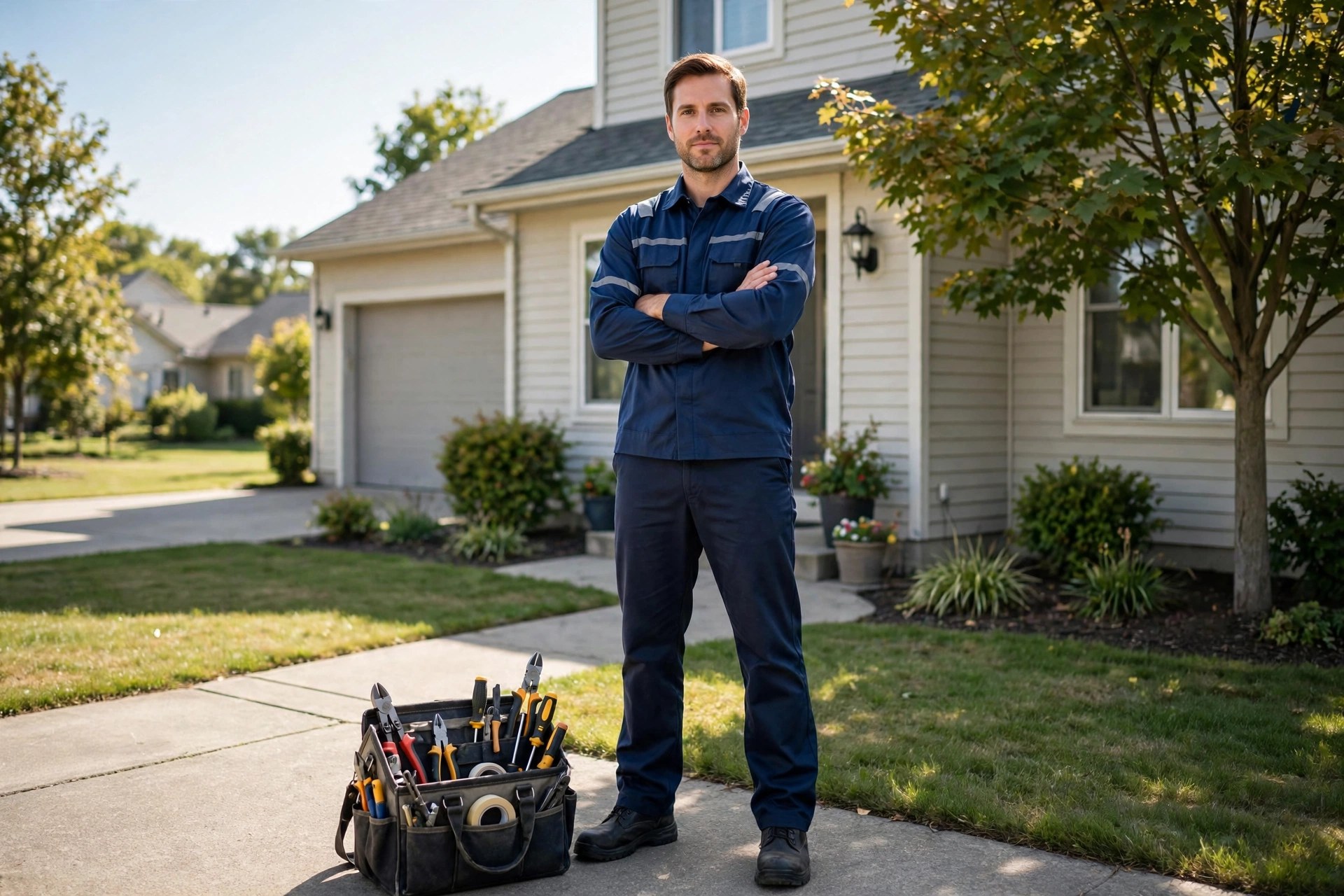
Search “electrician near me” in almost any city and the very first results are not ads in the usual sense. They are a row of local companies with photos, star ratings, and a small green checkmark: Google Guaranteed. Homeowners tap those listings first because Google has already vetted the company behind them. For electricians, that top-of-page placement is Local Services Ads, and it works differently from everything else in Google Ads: you pay per lead, not per click, and the badge does a large part of the selling before you ever pick up the phone. Many electrical companies either ignore LSA entirely or set it up halfway and wonder why the leads never come. This guide is the full walkthrough: eligibility and screening, background checks and paperwork, service areas and job types, profile optimization with photos and hours, review generation for the LSA profile, budget controls and lead disputes, and an honest comparison of when LSA beats standard search ads for electricians.
The quick answer
- Pay per lead, not per click: LSA charges only when a customer actually contacts you, typically $25 to $65 per lead for electricians.
- The badge wins trust: the Google Guaranteed checkmark puts you above standard ads and pre-sells credibility to homeowners.
- Screening is the price of admission: expect license verification, background checks, and proof of insurance before you go live.
- Reviews drive your ranking: LSA profiles with more high-rated reviews show up first. Review velocity is the main lever you control.
- Dispute bad leads: wrong numbers, spam, and out-of-area callers can be credited back. Review every lead weekly.
- Run it alongside search ads: LSA for steady call flow, standard Google Ads for high-value job types you want to control.
What Local Services Ads are and why they fit electricians
Local Services Ads sit at the very top of Google search results for service queries, above both standard text ads and the map pack. Instead of bidding on keywords, you list the job types you perform and the areas you serve, and Google matches you with nearby searchers. You pay only when someone calls, messages, or books through the ad: a lead, not a click. For electricians, the fit is natural. Electrical work is high-trust and often urgent, and the Google Guaranteed badge answers the homeowner’s first question, “is this company legitimate,” before the conversation starts. Typical cost per lead for electricians runs $25 to $65 depending on market and job type, which compares favorably with standard search ads where a single click can cost that much and convert at a fraction of the rate. The trade-off is control: Google decides when your ad shows and what each lead costs, within the weekly budget you set. For broader context on how LSA fits a full marketing plan, see our electrician marketing ideas guide, and for the plumber’s version of this playbook, see Local Services Ads for plumbers.
The setup walkthrough
Getting on LSA takes more paperwork than launching a search campaign, and that friction is exactly why the badge means something. Plan on one to three weeks from application to going live, most of it waiting on verification.
Eligibility and screening
Start by checking that the electrician category is available in your market and that your business type qualifies. Google requires a valid business license where your area mandates one for electrical work, and most states do. You will submit your business details, service areas by zip code or city, the job types you want leads for (panel upgrades, lighting, EV chargers, emergency work, and similar), and your business hours. Be precise with job types: selecting everything dilutes your relevance and invites leads you do not want. Pick the work you actually want to book.
Background checks and insurance paperwork
Every owner and every field employee who will enter customer homes typically goes through a background check run by Google’s screening partner. This is the step that stalls most applications: gather government IDs early, make sure names match your business records exactly, and respond to the screening emails the same day they arrive. You will also upload proof of general liability insurance meeting Google’s minimums for your market, and your electrical license documentation. Keep digital copies of all of it in one folder, because you will need them again at renewal or if Google requests re-verification. Companies that treat this like a tax filing, everything ready before starting, go live in days. Companies that hunt for documents between steps wait weeks.
Service areas and hours
Set service areas to the zip codes you will genuinely drive to, not your entire metro. LSA ranking weighs proximity heavily, so a tight, honest service area outperforms a wide, aspirational one. Set your hours to reflect reality, including whether you take emergency calls after hours; marking yourself available 24/7 when nobody answers at 2 AM will tank your responsiveness metrics and your ranking. You can pause the ads anytime, which is the right move for vacations, fully booked weeks, or staffing gaps. A paused profile beats a profile that misses calls.
Profile optimization: photos, hours, and emergency services
Your LSA profile is a mini-website that most searchers will judge in about five seconds. The businesses that win take it as seriously as their homepage.
Photos that sell trust
Upload real photos: your techs in clean uniforms, branded vans, and tidy work in progress, like a new panel or a finished lighting install. Skip stock photos; homeowners can spot them and they undermine the entire point of the badge. Aim for at least 8 to 10 images covering the team, the trucks, and the work. Profiles with genuine photos get tapped more often, and every extra tap at the same budget is a free improvement in lead flow.
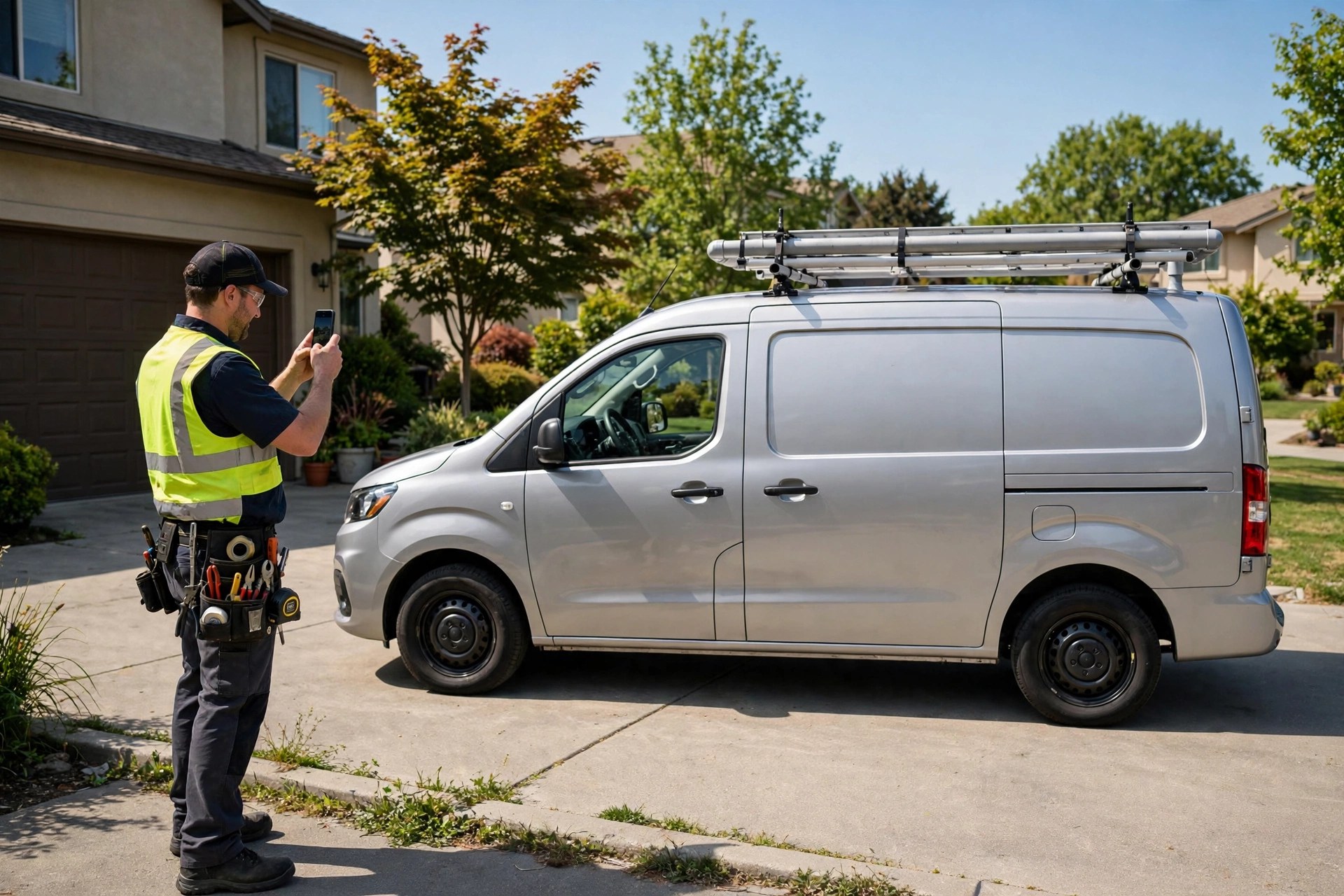
Real photos of your team and trucks outperform stock images on the LSA profile.
Hours, services, and the emergency flag
Write your business bio in plain language: what you do, how long you have served the area, and what makes the experience easy (upfront pricing, licensed and insured, same-day service). List emergency services explicitly if you offer them; emergency searches are some of the highest-converting LSA queries, and the flag helps you match them. Keep hours accurate to the season and update them before holidays. Small accuracy details compound: a profile that says “open now” and answers immediately will outrank a shinier profile that sends callers to voicemail.
Review generation for the LSA profile
LSA reviews live on your LSA profile, separate from your Google Business Profile reviews, and they are the single biggest ranking factor you control. Google’s ordering weighs review count and rating heavily, alongside proximity and responsiveness. A new LSA profile with 5 reviews will sit below an established competitor with 150, even if everything else is equal. The fix is systematic asking, not hoping.
The review ask system
Ask after every completed job, while the customer is happiest. The best moment is at the door, when the tech finishes: “If the work looks good, a Google review on our profile helps our small company more than anything.” Then automate the backup: a text or email within 24 hours with a direct link to your LSA review page. Make the link one tap, no searching, no friction. Aim for a steady 5 to 10 new LSA reviews a month; velocity matters as much as total count, because Google favors profiles with recent activity. Never buy reviews or review-gate by only asking happy customers in a deceptive way; ask everyone and let the work speak.
Respond to every LSA review
Reply to each review within 48 hours, positive or negative. Thank the happy customers by name and mention the work done; it shows future searchers that real jobs happened. For negative reviews, respond publicly with calm professionalism, acknowledge the experience, and take the resolution offline. A thoughtful response to a bad review often impresses readers more than a page of five-star praise. For the exact playbook, see our guide to getting more Google reviews for electricians; the same habits apply to the LSA profile.
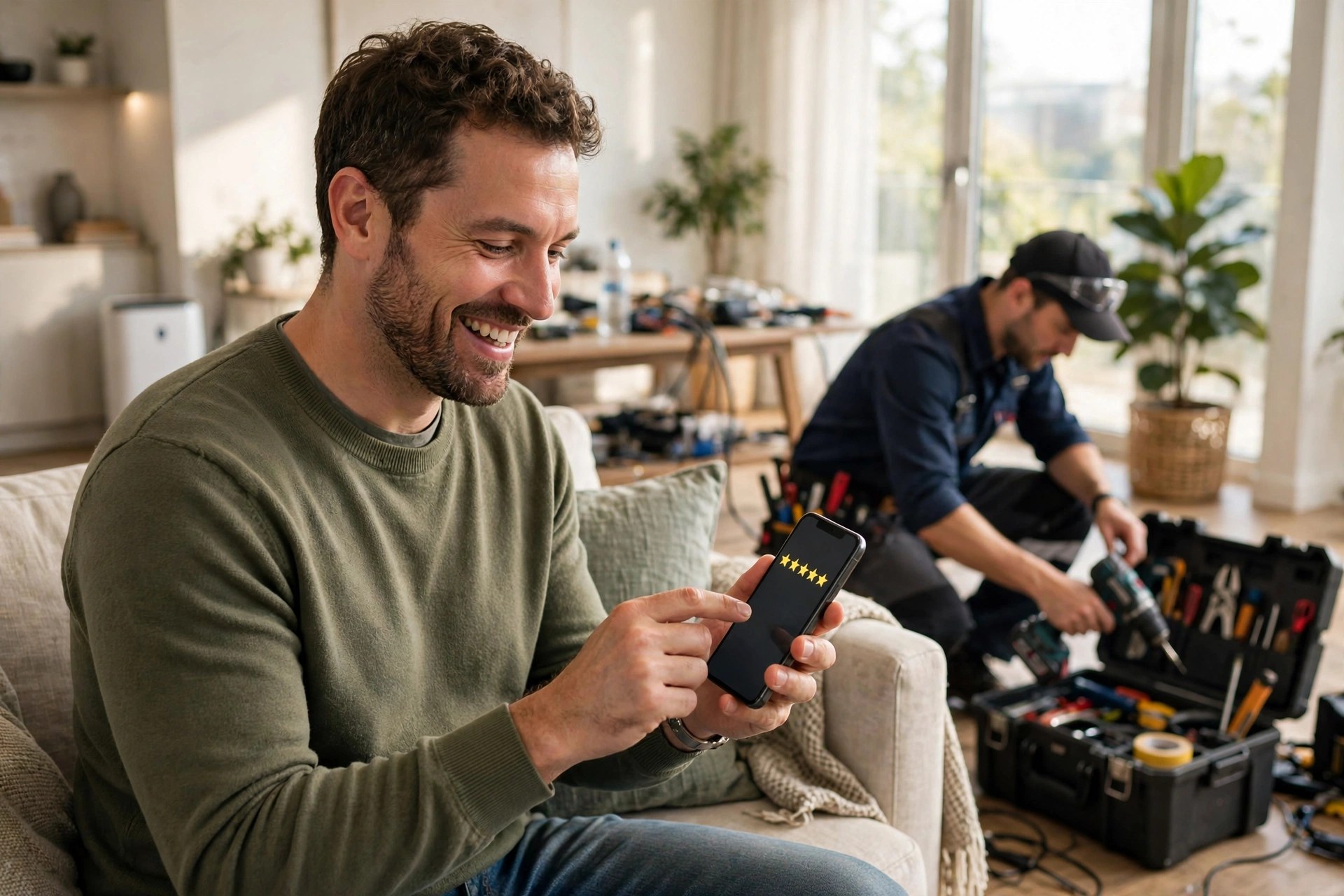
Review count and rating are the biggest LSA ranking factors you control. Ask after every job.
Budget controls and lead management
LSA billing is simpler than standard Google Ads but has its own discipline. You set a weekly budget, Google spends toward it based on available lead volume, and you can pause or adjust anytime. There is no keyword bidding to manage, which is the appeal and the limitation.
Setting the weekly budget
Start with a weekly budget that matches your capacity, not your ambition: roughly $300 to $800 a week for most electrical shops, which at $25 to $65 per lead buys 5 to 20 leads weekly. Watch the first month before scaling; lead quality varies by market, and you want data before committing more. Raise the budget when you are converting leads profitably and have capacity to take more work. Lower it or pause when the schedule is full; paying for leads you cannot serve promptly just feeds your responsiveness metrics to competitors.
Dispute bad leads for credit
Not every lead is billable, and Google knows it. Dispute leads that are spam, wrong numbers, callers outside your service area, or requests for job types you did not select. Review the lead inbox weekly and file disputes promptly; Google credits valid disputes back to your account. Most electricians recover 5 to 15 percent of lead spend this way, which is a meaningful discount for fifteen minutes of weekly admin. Track your true cost per qualified lead after credits, not the raw number, because that is the figure your ROI math should use.

LSA leads convert on speed. Answer fast or pause the ads until you can.
When LSA beats standard search ads for electricians
Neither format wins everywhere. The right choice depends on your market, your margins, and how much control you want. The comparison below lays out the practical differences.
| Factor | Local Services Ads | Standard Google Ads |
|---|---|---|
| Pricing model | Pay per lead ($25 to $65 typical for electricians) | Pay per click ($15 to $60 typical for electrician terms) |
| Placement | Very top of results, with Google Guaranteed badge | Below LSA, standard text ad format |
| Trust signal | Badge pre-sells credibility | Depends on your ad copy and reviews |
| Control | Google matches queries; you set budget and job types | Full control of keywords, bids, ads, landing pages |
| Best for | Steady residential call flow, emergency and routine jobs | High-value job types: panels, EV chargers, commercial |
| Setup effort | 1 to 3 weeks with screening and paperwork | Live in a day, weeks to optimize |
| Lead disputes | Credit process for invalid leads | No credits; you pay for every click |
The practical answer: run both, with different jobs
Most successful electrical companies run LSA as the always-on baseline for residential call flow, especially emergency and routine work where the badge and the per-lead pricing shine. They run standard search ads in parallel for the high-value job types where control matters: panel upgrades, EV charger installs, and commercial work, with dedicated landing pages and tight keyword control. LSA wins on simplicity and trust; search ads win on precision and scale. If you can only do one, start with LSA: it is cheaper to test, the leads arrive pre-trusted, and the weekly budget cap keeps the risk contained. Add search ads once the LSA profile is generating steady work and you want to aim deliberately at bigger tickets. When the calls come in from either channel, the follow-up discipline is the same: answer fast, text back every miss (see missed-call text-back for electricians), and follow up every quote.
Your rollout checklist
Paperwork first, then profile, then reviews, then scale.
- 1Confirm eligibility. Check the electrician category is live in your market and your licensing meets Google’s requirements.
- 2Gather screening documents. Government IDs for owners and field staff, insurance certificates, and electrical licenses in one folder before applying.
- 3Select job types and service areas. Only the work you want to book, only the zip codes you will drive to. Tight and honest beats wide.
- 4Build the profile. 8 to 10 real photos, plain-language bio, accurate hours, and the emergency services flag if you offer them.
- 5Launch the review system. Ask at the door after every job plus an automated 24-hour follow-up with a direct LSA review link.
- 6Set the weekly budget. Start at $300 to $800 a week matched to capacity. Scale only on profitable, converted leads.
- 7Dispute invalid leads weekly. Spam, wrong numbers, out-of-area, and unselected job types get credited back. Fifteen minutes a week.
- 8Answer like your ranking depends on it. Because it does. Live answer, instant text-back on misses, and pause the ads when you cannot keep up.
Frequently asked questions
How much do Local Services Ads cost for electricians?
Most electricians pay $25 to $65 per lead, depending on market and job type. You set a weekly budget (many shops start at $300 to $800 a week) and pay only when a customer contacts you. Invalid leads can be disputed for credit, which lowers the true cost per qualified lead.
What is the Google Guaranteed badge?
It is the checkmark Google places on Local Services Ads after a business passes screening: license verification, background checks, and proof of insurance. For home services like electrical work, it appears as Google Guaranteed and tells searchers Google has vetted the company.
How long does LSA approval take for an electrician?
Plan on one to three weeks. The application itself is quick; most of the time goes to background checks and document verification. Having IDs, licenses, and insurance certificates ready before you apply shortens it considerably.
Do LSA reviews affect my Google Business Profile rating?
No. LSA reviews live on your Local Services profile and are separate from your Google Business Profile reviews. Both matter: LSA reviews drive your ad ranking, while Business Profile reviews drive map pack visibility. Build both systematically.
Can I dispute a bad Local Services lead?
Yes. Leads that are spam, wrong numbers, outside your service area, or for job types you did not select can be disputed for credit. Review your lead inbox weekly and file disputes promptly. Most electricians recover 5 to 15 percent of lead spend this way.
Should electricians use LSA or regular Google Ads?
Many successful shops use both: LSA as the always-on baseline for residential and emergency call flow, standard search ads for high-value job types like panel upgrades and EV chargers where keyword and landing page control pay off. If you can only start with one, LSA is the cheaper, simpler test.
Why am I not getting leads from Local Services Ads?
The usual causes: too few reviews relative to competitors, inaccurate hours or service areas, slow response to the leads you do get, or a weekly budget too small for your market. Fix reviews and responsiveness first; they are the main ranking levers you control.
Get the Google Guaranteed badge working for you
Digital Hayder sets up and manages Local Services Ads for electrical companies: screening paperwork, profile optimization, review generation systems, budget controls, and lead dispute management. Tell us about your service area and we will get your badge earning its keep.
Contact Us