Most electricians do not have a marketing problem. They have a timing problem. The jobs are out there: dead panels, aging wiring, EV chargers, remodels, and the emergency calls that arrive at the worst possible hour. The question is who gets the call when the homeowner finally picks up the phone. This guide lays out electrician marketing ideas that actually bring in jobs, from fast wins you can set up this week to trust-building tactics that keep your schedule full for years. Every idea is tagged with a cost and an effort level, so you can pick what fits your budget and your calendar.
The quick answer
- The fastest wins: a fully built Google Business Profile, Google Local Services Ads, and a review system that runs on every job.
- Trust wins the high-ticket jobs: before and after photos of panels and installs, safety education content, and real reviews that name the work.
- Never miss a call after hours: most emergency work goes to the first business that picks up, so your phone coverage is a marketing investment.
- Repeat business comes from maintenance plans: annual inspection emails and safety checkups keep your name in front of past customers.
- Cost range: several of the best ideas cost almost nothing (reviews, photos, referral asks) while paid ads run from a few hundred to a few thousand a month.
- The 80/20 rule: for most electrical shops, profile, reviews, local ads, and missed-call coverage produce the majority of new jobs.
Start with the math: what an electrical job is worth
Before you spend a dollar on marketing, know what a customer is worth to your shop. Electricians have one of the best economics of any home service trade: emergency and high-ticket jobs make paid marketing easy to justify, and every satisfied customer is a future source of referrals. The table below shows typical ranges. Your numbers will vary by market, but the pattern holds: even a modest marketing spend pays for itself with a handful of extra jobs.
| Job type | Typical ticket range | Why it matters for marketing |
|---|---|---|
| Troubleshooting and service calls | $150 to $400 | High volume; the entry point that leads to bigger work |
| Outlet, switch, and lighting installs | $200 to $600 | Common searches; fast to book and easy to upsell from |
| EV charger installation | $800 to $2,000 | Growing demand; buyers research heavily before choosing |
| Panel upgrade | $2,000 to $4,500 | High trust purchase; reviews and photos decide the winner |
| Whole-home rewire | $8,000 to $20,000+ | Rare but huge; one job can fund a quarter of marketing |
| Commercial and property work | Varies widely | Repeat and contract work; worth direct outreach |
The takeaway is simple. If your average job is worth $500 and you close one extra job a week, that is about $2,000 a month in revenue. Marketing that costs $300 a month and produces those two extra jobs is a seven-to-one return. Keep this math in front of you when you evaluate every idea below: the question is never “does this cost money,” it is “does this cost less than the jobs it brings in.”
Fast wins: get found by people searching right now
Most electrical jobs start with a search: “electrician near me,” “panel upgrade cost,” “EV charger installer near me.” These searchers are not browsing. They have a problem and a budget, and they will call whoever looks trustworthy and answers first. These three fast wins put you in front of them.
Your Google Business Profile is your storefront
For local service searches, your Google Business Profile (the listing with the map, reviews, and call button) is more important than your website. It is what shows up in the map pack, which gets the majority of taps on mobile. Build it completely: the right service categories, every service you offer listed individually, your real service area, current hours including emergency hours, and photos of your team, your vans, and your finished work. Posts to your profile every week or two (a finished job photo with a short description) keep it looking active. Our full walkthrough of Google Business Profile optimization for contractors covers the whole checklist. Cost: free. Effort: one focused afternoon to set up, then an hour a month to maintain.
Google Local Services Ads for emergency and high-ticket jobs
Local Services Ads are the “Google Guaranteed” listings that appear above everything else for searches like “emergency electrician near me.” You pay per lead, not per click, which means you only pay when a customer actually contacts you. For electricians, these ads are strong because emergency searches have high intent and the Google Guarantee badge answers the trust question instantly. The catch: you need enough reviews to rank well in the ad unit, which is another reason the review engine below matters. Start with a modest weekly budget, track which job types the leads become, and scale the budget on the winners. Our breakdown of Local Services Ads for plumbers explains the setup and lead math in a trade that works almost identically to electrical. Cost: a few hundred to a couple thousand a month, pay per lead. Effort: a few hours to set up, then weekly budget checks.
A review engine that runs on every job
Reviews are the currency of electrical marketing. A panel upgrade is a $3,000 decision a homeowner makes once; they will not make it with the shop that has 14 reviews. Build a system, not a campaign: the tech asks verbally while taking payment, leaves a card with a QR code that opens your review page directly, and the office sends a short text the next morning. Respond to every review within a day, including the five-star ones, because future customers read your responses. When a bad review lands (it will), answer calmly and move it offline; our guide to responding to negative Google reviews walks through the exact playbook. Aim for 2 to 5 new reviews a week and a 4.5 star average or better. Cost: a stack of printed cards. Effort: five minutes of texting a day.
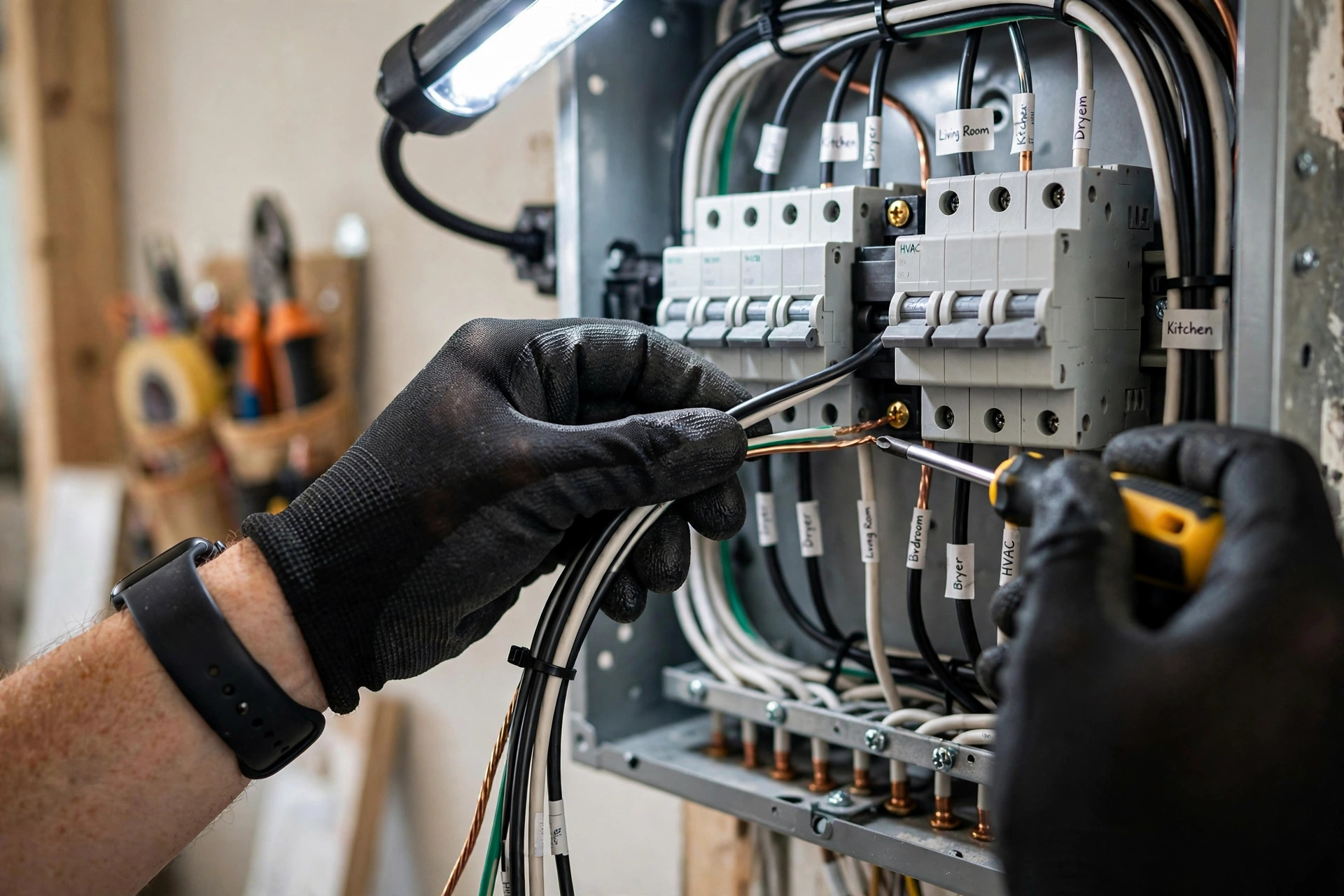
Neat panel work photographs well and builds trust before you ever quote the job.
Trust-builders: marketing that proves you are the safe choice
Electrical work is invisible until it fails, which makes homeowners nervous. They are letting a stranger into their home to work on the thing that can burn it down. Every piece of marketing you produce should answer one question: “Can I trust this person in my house?” These trust-builders do that better than any ad.
Before and after photos of panels and installs
A photo of a burned, tangled old panel next to the clean, labeled new one you installed is worth a thousand words of ad copy. It shows craftsmanship a homeowner can see, and it proves you have done this exact job before. Take photos on every job (with permission), and post the best pairs to your Google Business Profile, your website’s project gallery, and social media. Over a year, you build a library of proof that sells the next panel upgrade while you sleep. Add a one-line caption naming the job: “200-amp panel upgrade, whole home surge protection.” Cost: free. Effort: two minutes per job for the photos, ten minutes a week to post.
Safety and education content homeowners share
Content marketing for electricians does not mean blogging about your company. It means answering the questions homeowners are already asking: why breakers trip, whether aluminum wiring is dangerous, what a panel upgrade costs, how to spot an overloaded circuit. Short videos (60 to 90 seconds) of you explaining one thing, filmed on a phone at a real job, outperform polished ads because they show a real expert. Post them to your Google profile, Facebook, and YouTube. One good video a week is plenty. Homeowners share safety content with neighbors, and every share is a free introduction. Cost: free. Effort: one hour a week to film and post.
Maintenance plan emails that book the next visit
Past customers are your cheapest source of new jobs, but only if they remember you exist. A simple email program keeps you in front of them: an annual electrical safety inspection reminder, a spring checkup offer for outdoor lighting and panels, a holiday-season note about overloaded circuits and space heaters. Each email is short, useful, and ends with a booking link. Segment the list by job type so panel customers get panel-related follow-ups. A customer who paid $3,000 for a panel upgrade is the perfect candidate for a whole-home surge protector a year later. Cost: an email tool at $20 to $50 a month. Effort: one afternoon to write the sequence, then it runs itself.
Never miss the call: your after-hours system
Here is a hard truth about electrical marketing: a large share of your highest-value calls come when you are not working. Power outages, dead panels, and burning smells do not wait for business hours. Studies of local consumer behavior keep finding the same pattern: most callers who reach voicemail hang up and call the next listing. Every marketing dollar you spend is wasted if the call it produces goes to voicemail.
You have two good options. An AI answering service for electricians can pick up every call around the clock, capture the job details, and book or dispatch the urgent ones, so the 9pm panel emergency becomes a booked job instead of a lost lead. Pair it with a missed-call text back: anyone who calls while you are on another job gets an instant text (“Sorry we missed you, how can we help?”), which saves the jobs that would otherwise go to a competitor. Together, these two systems mean your marketing never produces a lead you cannot catch. Cost: a modest monthly subscription, far less than one lost emergency job. Effort: an hour or two to set up, then it runs on its own.
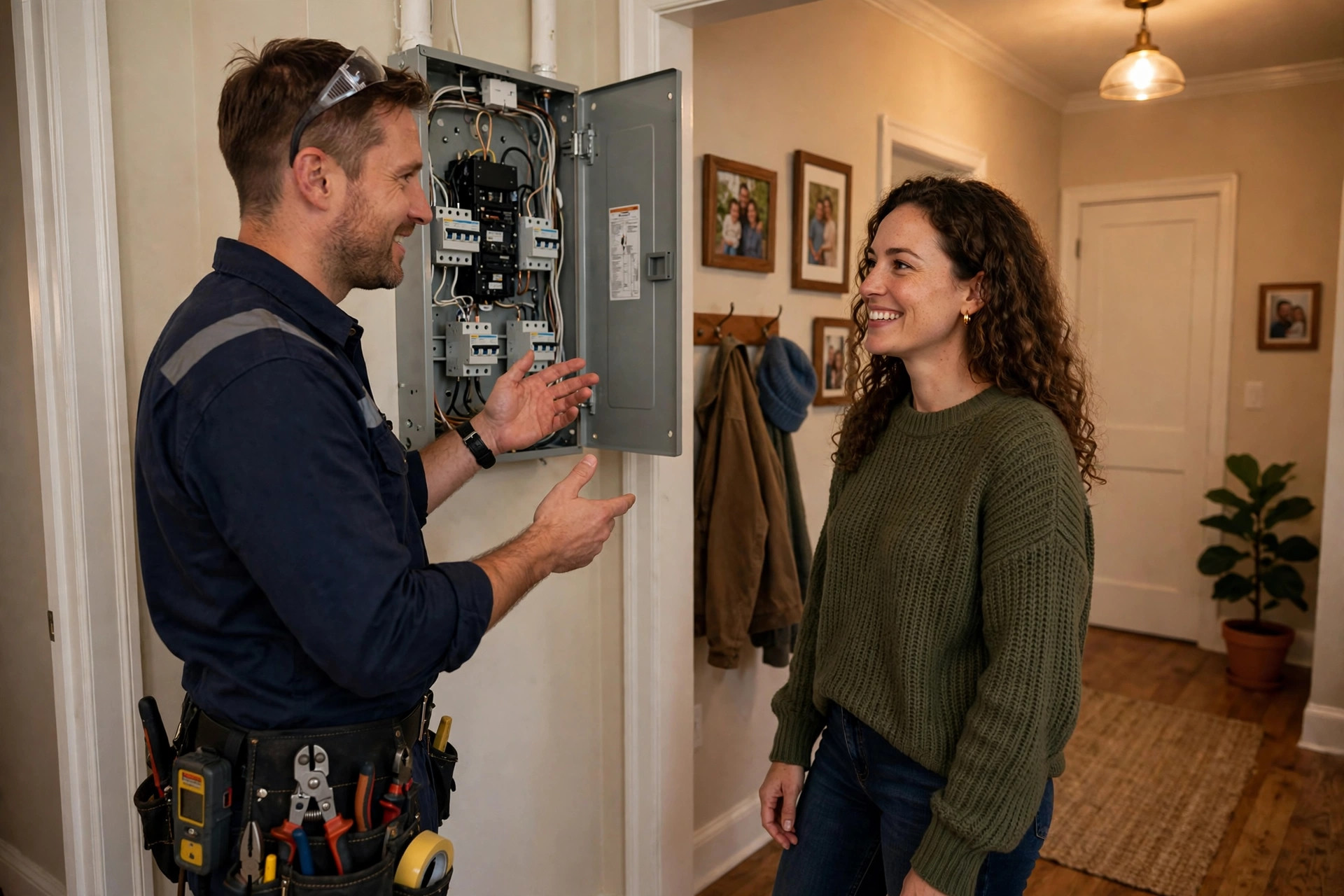
The walkthrough at the end of the job is your best marketing moment. Ask for the review while you are there.
Field and community tactics that still work
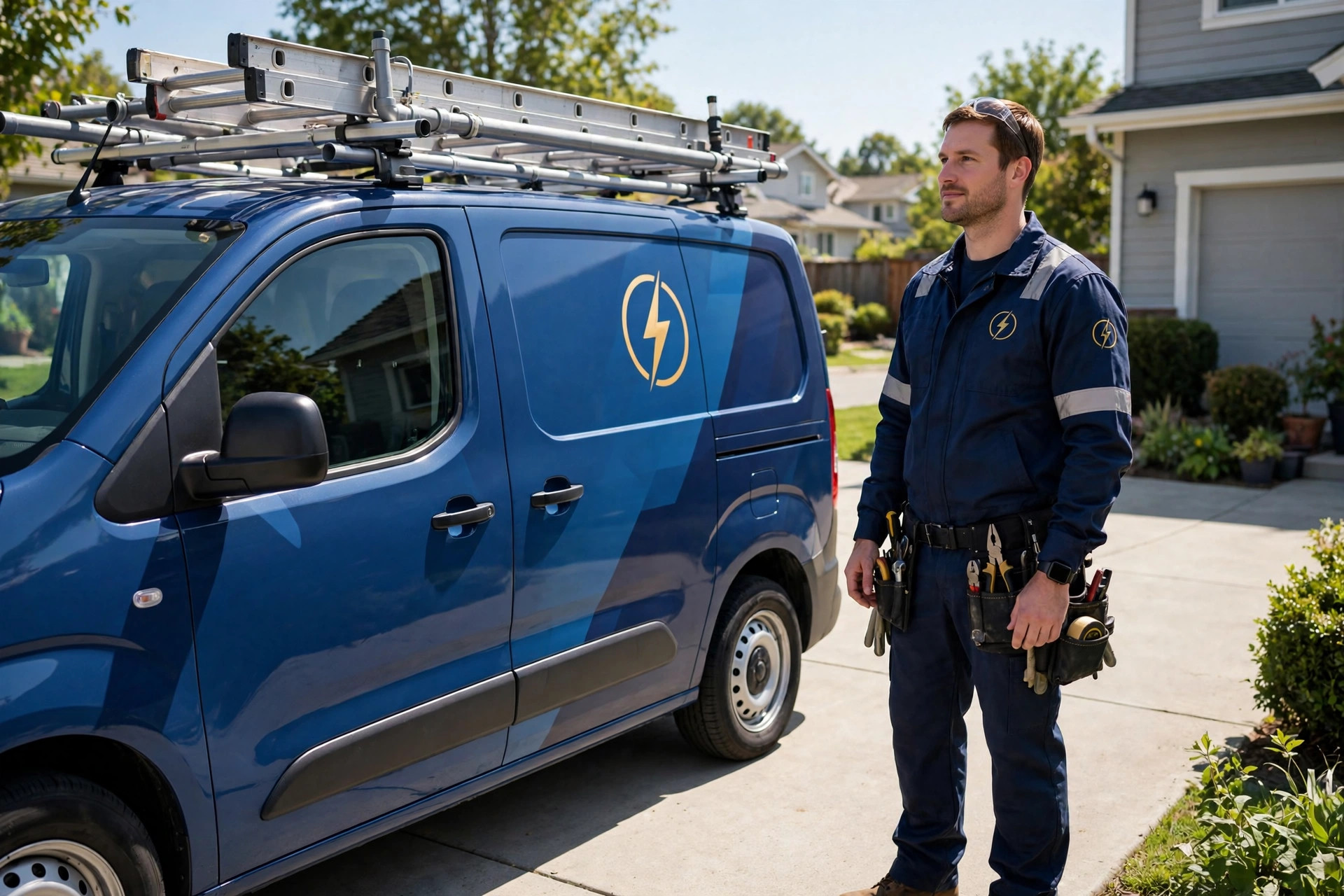
Not everything happens on a screen. Electricians win neighborhoods, and neighborhoods are won in person. Wrap your vans with your name, phone number, and a short list of services; a wrapped van parked in a driveway is a billboard your neighbors did not have to pay for. Leave door hangers on the ten houses around every job (“We just upgraded the panel at your neighbor’s home”), which converts at a surprisingly high rate because the social proof is immediate. Sponsor one youth sports team or community event a year and put the logo where parents gather. Join your local chamber or a business networking group, because property managers, realtors, and general contractors all need an electrician they can recommend. Cost: van wrap is a one-time few thousand; door hangers are pennies each; sponsorships run a few hundred a year. Effort: low, mostly setup.
Every idea tagged with cost and effort
Here is the full playbook in one view. Start at the top of the low-cost column and work down as your budget allows.
| Marketing idea | Cost | Effort | Best for |
|---|---|---|---|
| Google Business Profile build-out | Free | One afternoon, then 1 hr/month | Every shop; do this first |
| Review engine (ask, card, next-day text) | Near free | 5 min/day | Winning high-ticket trust decisions |
| Before and after job photos | Free | 2 min/job | Panel upgrades, rewires, EV chargers |
| Safety and education videos | Free | 1 hr/week | Long-term trust and shares |
| Door hangers around each job | Pennies each | 10 min/job | Winning the immediate neighborhood |
| Maintenance plan emails | $20 to $50/month | One afternoon to write | Repeat business from past customers |
| Missed-call text back | Modest monthly fee | 1 hr setup | Saving leads when you are on a job |
| AI answering service | Modest monthly fee | 1 to 2 hrs setup | After-hours emergency calls |
| Google Local Services Ads | $500 to $2,000+/month | Weekly budget checks | Emergency and high-intent searches |
| Van wrap | One-time few thousand | One-time | Neighborhood visibility for years |
| Local sponsorships and networking | A few hundred/year | A few hours a month | Referrals from realtors and contractors |
Your 30-day implementation checklist
Do these in order. By day 30 you will have the core system running.
- 1Claim and complete your Google Business Profile. Categories, services, service area, hours, and at least 20 photos of real work.
- 2Set up your review system. Print the QR cards, write the verbal ask script, and save the next-day text template.
- 3Start photographing every job. Before and after, with permission. Build the library from day one.
- 4Set up missed-call text back. No inquiry should go unanswered because you were on a ladder.
- 5Add after-hours call coverage. An answering service or a clear on-call rotation for emergencies.
- 6Launch Local Services Ads. Start with a modest budget on your highest-value services.
- 7Write your first three maintenance emails. Annual inspection, spring checkup, holiday safety note. Load them into your email tool.
- 8Order door hangers. Leave them on the ten houses around every job starting this week.
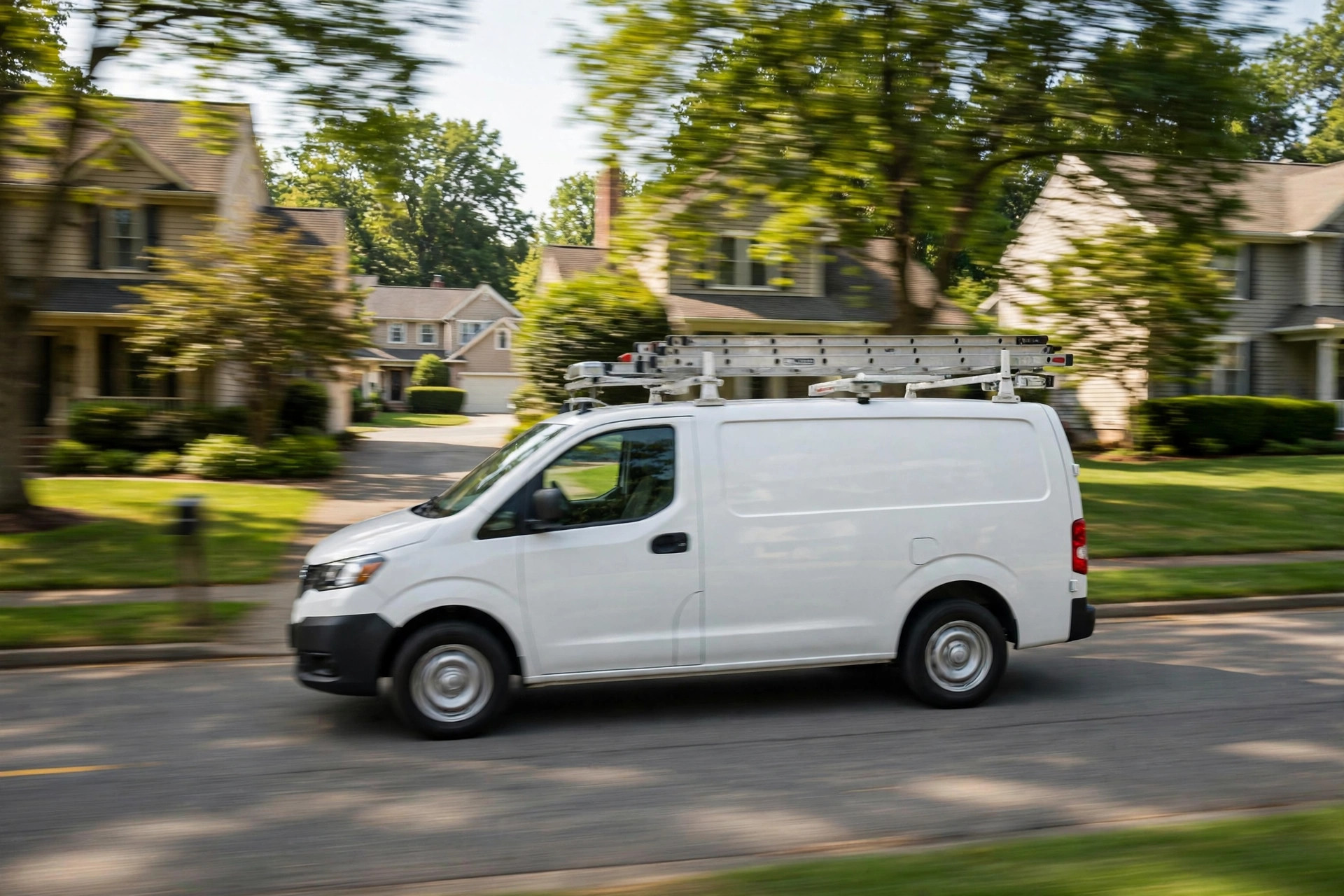
A wrapped van in the neighborhood is a billboard you only pay for once.
Frequently asked questions
What is the best marketing for a small electrical business?
A complete Google Business Profile, a review system that runs on every job, and a way to catch missed and after-hours calls. Those three cost almost nothing and produce the majority of new jobs for most small shops. Add Local Services Ads once the review base is strong.
How much should an electrician spend on marketing?
A common benchmark is 5 to 10 percent of revenue, but start with the free systems (profile, reviews, photos) before spending on ads. With average tickets of $500 or more, even a few hundred a month in Local Services Ads pays for itself with a handful of extra jobs.
Do electricians need social media marketing?
Not as a primary channel. Short safety and education videos on Facebook and YouTube build trust and get shared locally, but they support the main system (profile, reviews, ads) rather than replacing it. One video a week is plenty.
How do I get more emergency electrical calls?
Rank in Local Services Ads and the map pack for “emergency electrician near me,” list emergency hours on your profile, and make sure every after-hours call is answered or texted back within minutes. Most emergency callers contact the first business that responds.
Are before and after photos really effective for electricians?
Yes, especially for panel upgrades and rewires. A clean new panel next to the old tangled one proves craftsmanship instantly and answers the trust question better than any ad. Collect photos on every job and post the best pairs to your profile and website.
How long before electrical marketing starts working?
The fast wins (profile completion, review system, call coverage) can produce results within weeks. Paid ads produce leads as soon as they launch. Trust content and SEO compound over months. Give the full system 90 days before judging it.
Stop losing jobs to competitors who answer first
Digital Hayder builds marketing systems for electrical businesses: Google Business Profile optimization, review engines, Local Services Ads management, and AI answering that catches every after-hours call. Tell us about your shop and we will map the fastest path to a full schedule.
Contact Us