
An electrician’s phone rings for two very different reasons. Reason one: the power is out, something is sparking, and the caller needs a licensed electrician right now. Reason two: the homeowner is planning a panel upgrade, an EV charger, or a kitchen remodel, and they are comparing electricians over the next two weeks. Local SEO has to win both moments. The first is won in the map pack with a complete profile, strong reviews, and emergency keyword coverage. The second is won in organic results with service pages, cost guides, and trust content that proves you are the safe choice. This guide covers the full local SEO playbook for electricians: the profile, the review system, service pages built around how electrical searches actually work, commercial SEO, citations, website conversion, and the content that turns researchers into callers.
The quick answer
- Two intents, two battlegrounds: emergency searches are won in the map pack, planned jobs like panel upgrades are won in organic results. You need both.
- Profile with license signals: license number in the description, emergency services listed, and real job photos build the trust electrical customers demand.
- Service pages per job type: panel upgrades, EV chargers, generators, rewiring, and lighting each need a dedicated page with local detail.
- Reviews that name the work: reviews mentioning “panel upgrade” or “EV charger install” reinforce exactly what you want to rank for.
- Commercial needs its own track: office, retail, and restaurant electrical buyers search differently and convert through estimates, not panic calls.
- Measure booked jobs: track calls per channel and jobs per channel. Rankings without calls are a vanity metric.
What local SEO means for an electrical business
Local SEO for electricians has a shape that other trades do not. The emergency side is more urgent than almost any trade except locksmiths, because electrical failures feel dangerous. The planned side is more technical than most trades, because panel upgrades, EV chargers, and generators involve permits, load calculations, and real money. And the trust bar is higher than most trades, because bad electrical work burns houses down. Your local SEO has to clear all three bars: be visible in the panic moment, be convincing in the research moment, and look licensed and professional everywhere you appear.
The surfaces that matter: the map pack for “electrician near me” and “emergency electrician,” local organic results for service and cost searches, and your review presence across Google and the major platforms. Most electricians invest in exactly one of these and wonder why the phone is quiet. The sections below build the whole system, starting with the profile, because that is where the emergency calls come from.
Your Google Business Profile, the emergency call engine
For electricians, the profile is the single highest-value marketing asset you own. Emergency searchers call from it without ever visiting your website. Treat it like a storefront, not a directory listing.
Categories, services, and emergency coverage
Set the primary category to “Electrician” exactly, with “Electrical contractor” and “Lighting contractor” as secondaries. Build the services list around real job types: 24-hour emergency electrical repair, electrical troubleshooting, panel upgrades and replacements, whole-home rewiring, EV charger installation, standby generator installation, lighting installation and design, ceiling fan installation, outlet and switch installation, smoke detector installation, surge protection, and electrical safety inspections. Each service gets a plain description. Cover emergency phrases in the description and posts: “emergency electrician,” “24 hour electrician,” “power outage repair.” These are the highest-intent searches in the trade.
License signals and photos
Put your license number in the business description. Electrical customers filter on trust, and a visible license number separates you from every profile that hides behind generic text. Mention insured status in posts and in your seeded Q and A. Upload real job photos monthly: panels, EV charger installs, lighting projects, uniformed techs, clean vans. Name files descriptively before upload. Two to four posts a month keeps the profile active: completed jobs, seasonal reminders, offers, and trust builders, each with a real photo.

Upfront written estimates, shown clearly on your site and profile, answer the pricing fear before it forms.
Reviews that mention the work
Reviews do two jobs for electricians: they rank you higher in the map pack, and they convince the panicked homeowner to tap your listing instead of the one next to it. Volume, recency, and specificity all matter. A profile with 150 recent reviews mentioning panel upgrades, EV chargers, and emergency calls will beat a profile with 40 generic five-star reviews, even at the same rating.
The ask system for electrical jobs
Ask in person, right after the work is done and tested. The tech’s script names the job: “Your new 200-amp panel is tested and labeled. If you are happy, would you mention the panel upgrade in a Google review? I can text you the link right now.” Text the link within the hour, follow up once the next day with a thank-you text. Emergency jobs get the ask after the crisis is resolved and the customer is calm, not while they are still stressed. For the full scripts, timing per job type, and response templates, see our guide on how to get more Google reviews for electricians.
Respond like a professional, especially to price complaints
Electrical work draws price complaints because customers cannot see what they paid for: permits, parts, and expertise are invisible. Answer calmly and factually, naming the work: “We replaced the failed main breaker, pulled the permit, and brought the panel up to code. We provide upfront written pricing on every job and are sorry the cost surprised you.” Future customers reading that exchange learn you are transparent, which is exactly what wins the next call. Never argue, never get defensive, and never offer discounts in a public response.
Service pages built for how electrical searches work
Your website needs a dedicated page for each major service, written for the homeowner and structured for Google. One “Services” page listing everything ranks for nothing. The pages that win are specific and local.
The five pages that matter most
For most residential electricians, these five pages produce the bulk of organic leads: panel upgrades, EV charger installation, standby generators, whole-home rewiring, and lighting installation. Each page needs a headline naming the service and the city, a click-to-call number visible on mobile without scrolling, a plain description of the work, signs the homeowner needs it, your process, honest pricing ranges, real job photos, reviews about that specific service, and an FAQ. Add local detail: permit requirements in your area, common local issues like aging Federal Pacific panels or aluminum wiring in older neighborhoods, and utility rebate programs for EV chargers where they exist.
Cost pages win the researchers
Planned-job customers search costs first: “panel upgrade cost,” “EV charger installation cost,” “whole house rewiring cost,” “generator installation cost.” A cost page with real ranges, the factors that move the price, and your quote process will outrank vague competitors and pre-sell the caller. Be honest about the ranges; a page that says “panel upgrades typically run $1,500 to $4,000 depending on amperage, panel location, and permit requirements” builds more trust than one that hides the numbers. Every cost page should link to the matching service page, and every service page should link to its cost guide.
| Service | Typical search intent | Page strategy |
|---|---|---|
| Emergency repair | Panic, call now | Profile plus a concise emergency page with click-to-call above the fold |
| Panel upgrade | Research then compare | Service page plus cost guide, permit and safety detail |
| EV charger installation | Research, rebate-aware | Service page covering charger types, amperage, and local rebates |
| Standby generator | Seasonal research | Service page plus seasonal posts timed to outage season |
| Whole-home rewiring | Long research, big ticket | Deep service page with process, timeline, and cost ranges |
| Lighting and ceiling fans | Browsing, inspiration-led | Photo-heavy page with project gallery |
| Troubleshooting | Problem diagnosis | Guide-style page: symptoms, causes, when to call |
| Commercial electrical | B2B comparison | Separate commercial page with estimate process, not a call-now pitch |
Commercial electrical SEO: a separate game
Residential SEO is about panic and trust. Commercial SEO is about competence and process. Property managers, restaurant owners, and office managers search differently: “commercial electrician,” “office lighting retrofit,” “restaurant electrical contractor.” They compare websites, read about capabilities, and request estimates through forms, not phone calls at midnight. If commercial work matters to your business, it needs its own track.
What the commercial track includes
Build a dedicated commercial page, separate from residential, that speaks the buyer’s language: tenant improvements, lighting retrofits and LED upgrades, dedicated circuits for equipment, panel and service upgrades for buildings, maintenance plans, and compliance work. Include proof commercial buyers care about: project photos, the types of facilities you serve, your license and insurance stated plainly, and a clear estimate process with response times. Commercial pages should rank for “commercial electrician [city]” and related terms, and they should convert through a detailed quote form, not just a phone number. Reviews from commercial clients, even a few, carry outsized weight because so few electrical companies have them.
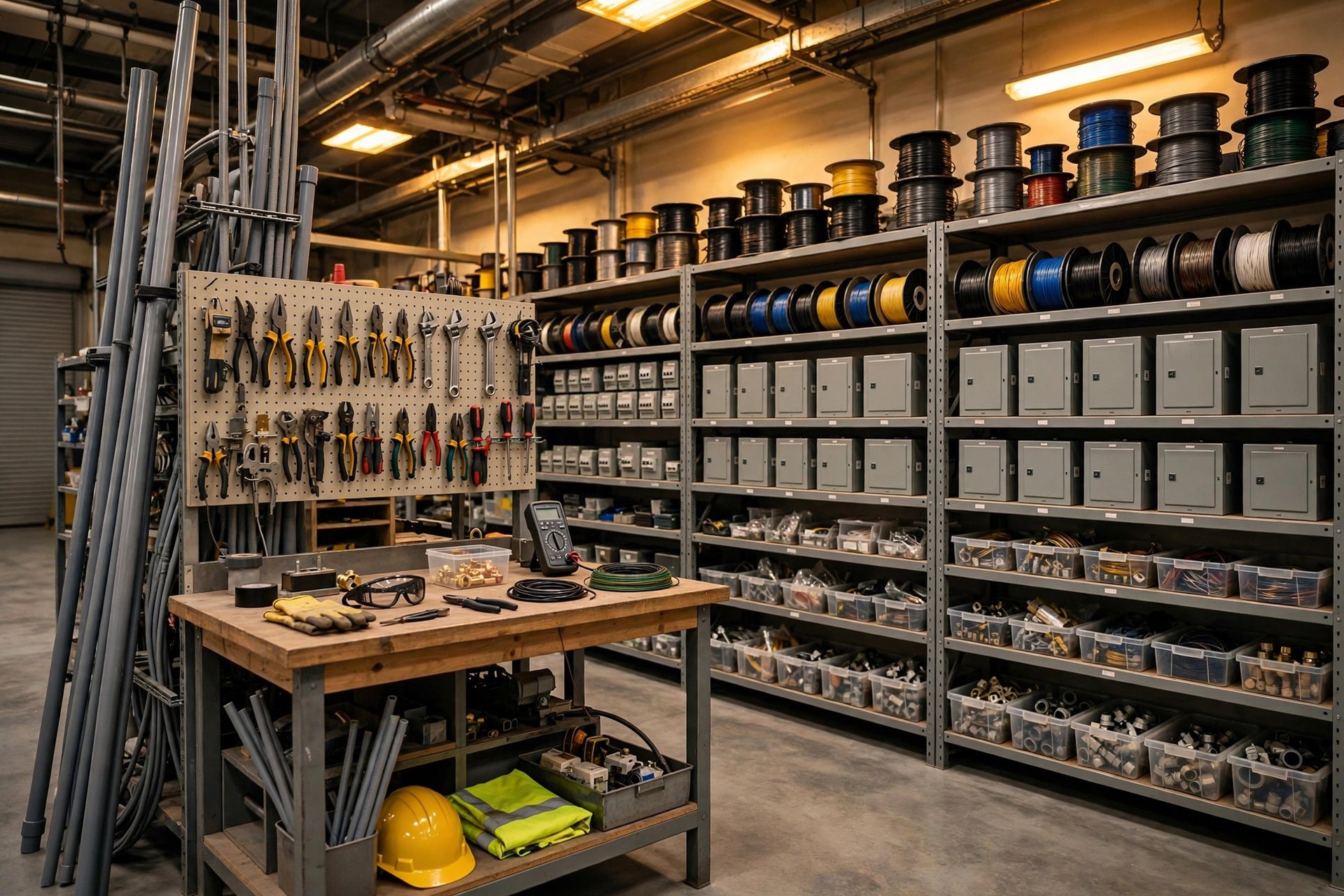
An organized operation behind the scenes supports every trust claim your marketing makes.
Citations, NAP, and license listings
Citations are mentions of your business name, address, and phone across directories: Yelp, Angi, HomeAdvisor, Thumbtack, BBB, Apple Maps, Bing Places, Facebook, and trade directories. Inconsistent citations quietly drag rankings down, so pick one exact format for name, address, and phone and match it everywhere, character for character.
Where electricians should be listed
Start with the majors: Google Business Profile, Apple Maps, Bing Places, Facebook, Yelp, and the BBB. Then the home-service marketplaces: Angi, HomeAdvisor, Thumbtack, Porch, and Nextdoor. Then the electrician-specific layer: your state licensing board’s contractor lookup, trade association directories, and manufacturer programs like EV charger installer networks or generator dealer listings, which double as trust signals and citation sources. Audit once a year for duplicates, old phone numbers, and stale addresses. Duplicate listings are common after rebrands or number changes; merge or remove them.
Website conversion for electricians
Rankings produce visitors. The website turns visitors into callers. Most electrical searches happen on phones, so the site has one job: make calling easy and make the company look licensed and professional in under ten seconds.
Speed, layout, and click-to-call
Keep mobile load times under 3 seconds: compress images, cut unused scripts, and test on a real phone over cellular data. Put the phone number in the header on every page and add a sticky call button on mobile. Beside it, offer an estimate request form for the planners who prefer not to call. The license number belongs in the footer of every page. Real tech photos beat stock everywhere; a photo of your actual crew next to a panel they installed does more than any headline.
Trust elements that answer the real fears
Electrical customers are afraid of three things: unlicensed workers, surprise pricing, and strangers in their home. Answer all three above the fold: license number visible, “upfront written pricing” stated plainly, and uniformed, background-checked techs mentioned with a real team photo. Add guarantees you actually honor, stated specifically: on-time arrival windows, clean-up promises, workmanship warranties with real terms. Vague “satisfaction guaranteed” badges mean little; specific promises with your license number behind them mean everything.
Content that turns researchers into callers
Service pages capture existing demand. Content earns the links that lift the whole site and captures the researchers before they pick a competitor. For electricians, the content that works is practical, safety-aware, and honest about money.
Safety content and cost guides
Safety topics earn attention and links: signs your panel needs replacing, why breakers trip, what to do in a power outage, aluminum wiring risks in older homes. Write them plainly, answer the question in the first paragraph, and end each with a clear next step. Cost guides work the same way for the planners: real ranges for panel upgrades, EV chargers, rewiring, and generators, with the factors that move each price. Each guide links to its service page; each service page links back. Over a year, a small library of ten to fifteen strong guides becomes a real competitive moat, because competitors rarely invest in content at all.
Seasonal and local angles
Time content to the trade’s calendar: generator content before storm and outage season, panel safety checks in summer when AC loads trip old breakers, holiday lighting installation in late fall, EV charger content tied to local rebate programs. Local angles beat generic ones every time: a guide to “EV charger rebates in [state]” or “permit requirements for panel upgrades in [city]” ranks where national content cannot, because national sites never get that specific. If you run paid ads alongside this content work, our breakdown of electrician Google Ads costs helps you budget the two channels against each other.
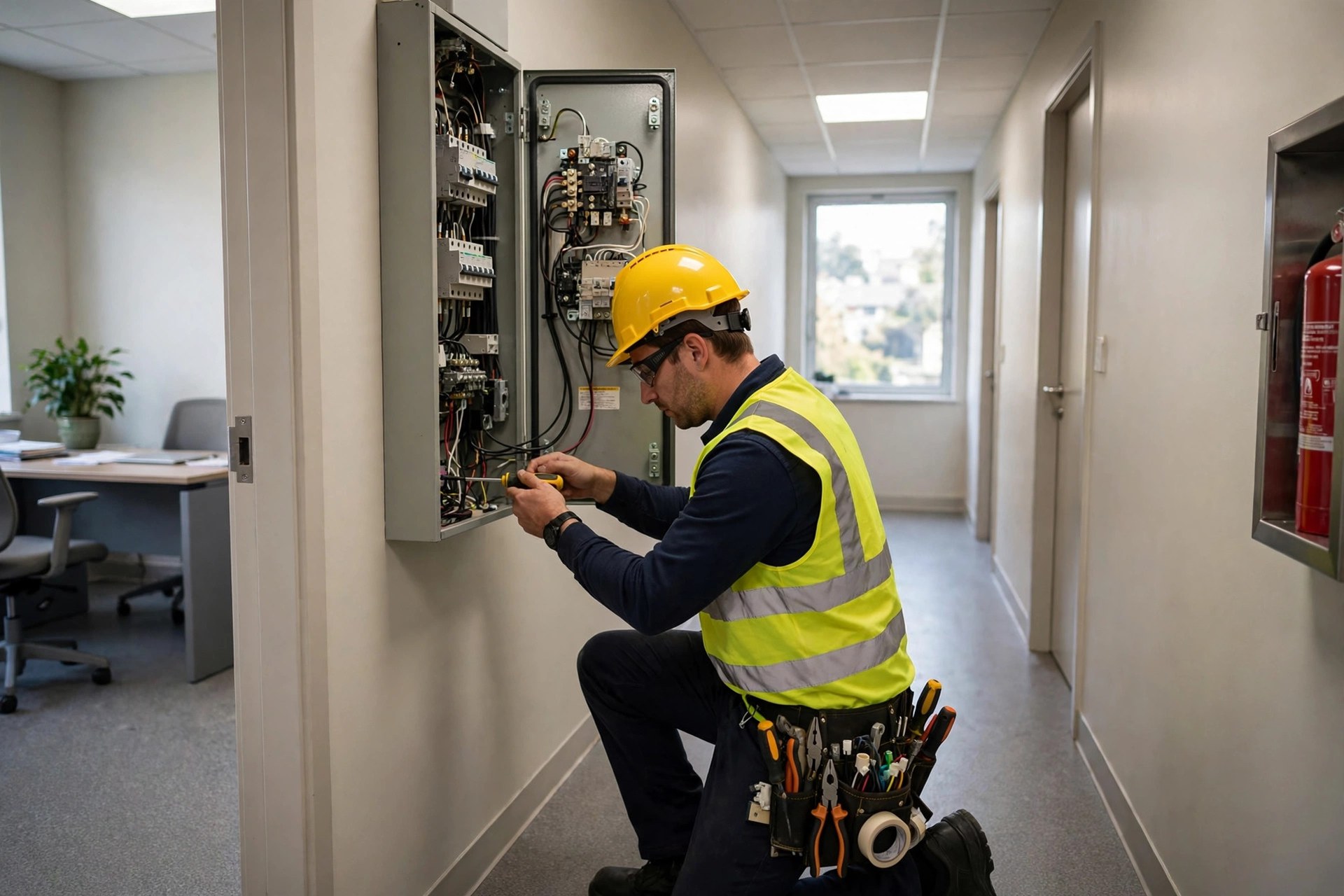
Commercial work needs its own photos, pages, and review strategy. Do not mix it into residential content.
Costs, timelines, and DIY vs hiring an agency
Local SEO costs time or money. Here are the real bands so you can choose with open eyes.
The DIY path
Doing it yourself costs nothing but time: roughly 20 to 30 hours for the initial build across the profile, service pages, and citation cleanup, then 5 to 7 hours a month for reviews, posts, photos, content, and tracking. The DIY path works if you are consistent and willing to learn the basics of on-page SEO. It fails when the work stops after month one, which is the most common outcome. Assign the monthly tasks to a named person with a calendar reminder, or they will not happen.
What agencies charge electricians
Agencies and freelancers serving electricians typically charge $750 to $2,500 a month for ongoing local SEO, with one-time setup projects at $1,000 to $3,000. At the low end you get profile management and citation cleanup. At the high end you get content, link building, review systems, and reporting tied to calls. Red flags: guaranteed rankings, secret methods, long contracts with no performance clauses, and reports showing rankings but never calls. Ask how they track phone calls, what they did for their last three electrical clients, and what you keep if you cancel. For broader channel ideas to pair with SEO, see our electrician marketing ideas guide.
A realistic timeline
Profile and citation fixes can move the needle in 30 to 60 days. Review velocity changes listing strength within 60 to 90 days of launching the ask system. New service pages typically need 60 to 120 days to rank for competitive terms, and content-driven link building compounds over 6 to 12 months. Realistic expectation: noticeable call growth in 3 to 6 months, with the planned-job side compounding longer. Emergency terms often move faster because fewer competitors cover them well.
| Local SEO task | DIY time | Typical agency cost |
|---|---|---|
| Profile setup and optimization | 8 to 12 hours once | $300 to $1,500 one-time |
| Review system setup | 3 to 5 hours once | Included in monthly plans |
| Citation building and cleanup | 6 to 10 hours once | $300 to $800 one-time |
| Core service pages (5 pages) | 20 to 30 hours once | $1,500 to $4,000 one-time |
| Ongoing profile management | 2 to 3 hours a month | $300 to $800 a month |
| Content (2 guides a month) | 8 to 12 hours a month | $600 to $1,500 a month |
| Full ongoing program | 5 to 7 hours a month | $750 to $2,500 a month |
Common mistakes electricians make
One “Services” page for everything. A single page listing all services ranks for none. Split panel upgrades, EV chargers, generators, and rewiring into dedicated pages.
Keyword-stuffed business names. “Smith Electric 24 Hour Emergency Electrician” risks suspension. Real name only.
Hidden license number. It is on the truck and the invoice but not on the profile or website, where strangers judge you.
Mixing residential and commercial. One page trying to serve panicked homeowners and facility managers serves neither. Separate tracks.
Stock photos. Customers spot them instantly. Real job photos only, uploaded monthly.
No cost content. Researchers search costs first. Hiding prices sends them to the competitor who publishes ranges.
Ignoring commercial reviews. A few commercial reviews carry outsized weight because almost no electrical companies have them.
Slow mobile site. Emergency visitors bounce in seconds. Sub-3-second loads or lost calls.
Tracking rankings but not calls. Rankings without call data are entertainment. Set up call tracking first.
Stopping after month one. Local SEO compounds. The companies that quit at 60 days hand their progress to competitors who keep going.
Your rollout checklist
Work in order. Each step makes the next one stronger.
- 1Complete the profile. Real name, correct categories, full services list, tight service areas, license number in the description.
- 2Upload 12 real photos. Panels, EV chargers, lighting, techs, vans. Name files descriptively.
- 3Seed Q and A. Licensing, estimates, emergency process, and pricing questions answered from the business account.
- 4Launch the review system. Job-specific ask on every job, text the link within the hour, one follow-up.
- 5Fix NAP consistency. One exact name, address, and phone format across every directory.
- 6Build the five core service pages. Panel upgrades, EV chargers, generators, rewiring, lighting, each with local detail.
- 7Build the commercial track. Separate commercial page with estimate process, proof, and its own photos.
- 8Publish two cost guides. Real ranges for panel upgrades and EV chargers, with local factors.
- 9Fix mobile conversion. Sub-3-second load, sticky call button, estimate form, license in the footer.
- 10Track calls monthly. Separate numbers per channel, booked jobs per channel, reviews, and map pack positions.
Frequently asked questions
How long does local SEO take for an electrician?
Profile and citation fixes can show movement in 30 to 60 days. Review velocity changes listing strength within 60 to 90 days. New service pages typically take 60 to 120 days to rank. Expect noticeable call growth in 3 to 6 months of consistent work, with planned-job content compounding longer.
What is the most important ranking factor for electricians?
The Google Business Profile plus reviews, for emergency searches. For planned jobs like panel upgrades, the service page and its content matter most. No single factor wins both; the system does.
Should I put my license number on my website too?
Yes. Put it in the footer of every page, on the about page, and in your profile description. It is the fastest trust signal in the trade, and commercial buyers specifically look for it.
Do electricians need separate pages for residential and commercial?
Yes, if you pursue both. Residential buyers call in a panic or compare quickly; commercial buyers compare capabilities and request estimates. One page cannot serve both intents well.
How many reviews does an electrician need?
More than the top competitor in each town, growing every month. For most markets, 100-plus reviews at 4.6 stars or better is a competitive position, with a steady stream of new ones. Reviews naming specific services help the most.
What does local SEO cost for an electrical company?
DIY costs time: 20 to 30 hours for setup, 5 to 7 hours monthly. Agencies charge $750 to $2,500 a month plus $1,000 to $3,000 for setup. Compare against ad costs: emergency electrician clicks often run $20 to $50 each.
Can I rank for “emergency electrician near me” without ads?
Yes. List emergency services explicitly, use emergency phrases naturally in the description and posts, keep hours reflecting emergency availability, build reviews mentioning emergency work, and answer the phone fast. Fewer competitors cover these terms well, so they often move faster than planned-job terms.
What content should an electrician publish?
Cost guides for your highest-ticket services, safety content like panel warning signs, seasonal content tied to outage season and AC loads, and local guides like rebate programs or permit requirements. Ten to fifteen strong guides beat fifty thin posts.
How do I track whether local SEO is working?
Call tracking with separate numbers for the profile, website, and ads; booked jobs attributed per channel; review count and rating; and map pack positions for your top terms, checked weekly. Judge everything by jobs, not just rankings.
What is the biggest local SEO mistake electricians make?
Treating it as a one-time project. The profile gets built, the site gets launched, and then nothing happens for a year while competitors keep adding reviews, photos, and content. Local SEO compounds for whoever keeps going.
Get found when homeowners need an electrician
Digital Hayder helps electrical companies win local search with Google Business Profile optimization, review systems, service pages that convert, and websites built to turn searches into booked jobs. Tell us about your service area and we will show you exactly where competitors are beating you.
Contact Us