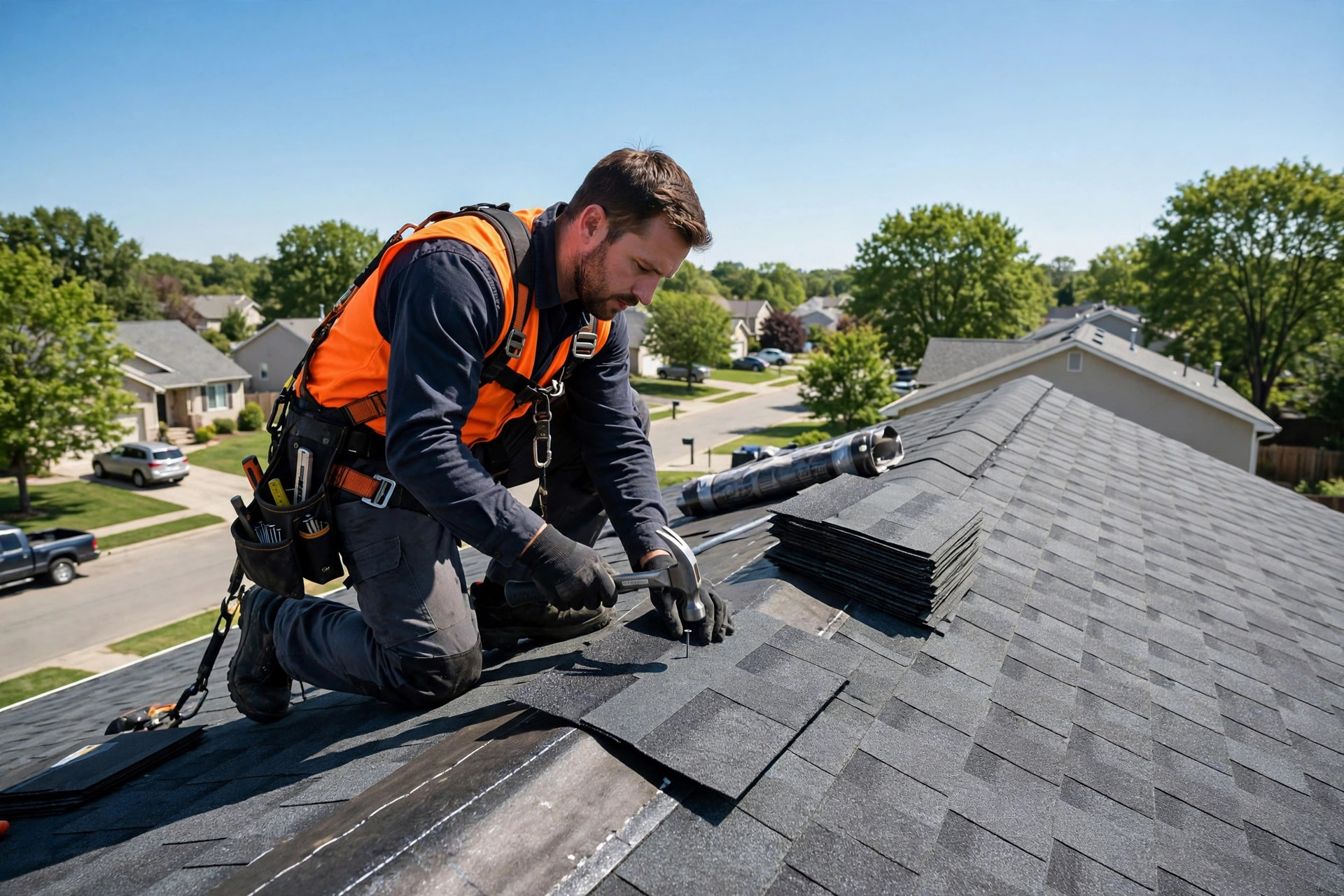
A hailstorm rolls through on a Tuesday night. By Wednesday morning, fifty homeowners are calling roofers, and every one of them will hire whoever answers first. Your crew is on a roof, your estimator is on another, and your office manager is trying to answer between everything else. Half those calls go to voicemail, and voicemail callers do not wait. They call the next roofer. An AI answering service for roofing companies answers every call, triages emergencies like active leaks, captures estimate requests with the details your estimator needs, and coordinates with your crew schedule. This guide covers what these systems do for roofers, the dispatcher style questions the AI should ask, what to demand before you buy, and the storm season math that makes this one of the highest return investments a roofing company can make.
The quick answer
- What it does: answers every roofing call around the clock, triages emergency leaks, captures estimate requests with property details, books inspections into your calendar, and routes urgent jobs to your on call crew.
- Why roofers buy it: research finds leads contacted within five minutes are 21 times more likely to convert than those reached after thirty minutes, and 78 percent of customers hire the first company that responds.
- Storm season math: one industry scorecard modeled a roofer with 75 leads a month and found the gap between voicemail after hours and answering in sixty seconds was worth roughly $8,500 to $21,000 a month in net profit.
- After hours share: roofing lead data suggests around 40 percent of potential customers call after hours, and about 62 percent of a residential roofer’s leads can arrive outside business hours.
- Typical cost: roughly $200 to $500 a month for a roofing company, against $3,000 to $5,000 a month fully loaded for an office hire.
- Setup time: one to three weeks, most of it spent on emergency triage rules and estimate intake questions.
Why roofing companies lose jobs to the phone
Roofing has the most unforgiving phone dynamics of any home service trade. The work happens on roofs, far from any phone. The office, if there is one, is usually one person doing dispatch, paperwork, and phones at the same time. And demand arrives in spikes: a storm hits, and a month of call volume lands in forty eight hours. The companies that answer win the storm. The companies that do not answer watch competitors’ trucks drive past their voicemail.
Storm season call spikes
Normal weeks are manageable. Storm weeks are not. After hail or high winds, every affected homeowner calls at once, and they call three or four roofers each. The first roofer to answer and book the inspection usually gets the job, because the homeowner’s anxiety drops the moment someone competent is scheduled to come look. Industry lead data suggests roofing companies can lose around 40 percent of potential customers who call after hours or abandon requests during phone tag, and automated booking data shows about 42 percent of roofing leads convert after hours.
The spike problem is really a capacity problem. No office team, no matter how good, can answer fifty simultaneous calls. An AI answering service can. It takes every call, triages the emergencies, books the inspections in priority order, and gives your estimator a clean sorted list instead of a full voicemail box and a stack of callback notes. For more on turning that demand into booked work, see our roofing marketing ideas guide.
The speed to lead gap
Even in normal weeks, roofing suffers from the speed problem. Research from MIT and InsideSales found that leads contacted within five minutes of their inquiry are 21 times more likely to convert than those reached after thirty minutes, that responding within one minute can lift conversion by as much as 391 percent, and that 78 percent of customers end up hiring the first company to respond. Meanwhile the average business waits about 42 hours to respond.
Most roofing offices route a web form to an inbox someone checks between jobs. By the time a callback happens, the homeowner has already spoken to two competitors and started forming a decision. An AI answering service collapses that gap to seconds: the call is answered on the second ring, the estimate request is captured with full details, and the inspection is booked while the homeowner is still motivated. Same leads, same crew, same pricing. Different way of answering the phone.
What an AI answering service for roofing companies actually does
An AI answering service is a voice system that answers your business line with natural spoken conversation and works like a dispatcher: it figures out what the caller needs, asks the right questions, and gets the job into your pipeline. Here is the day to day work it takes off your office.
Emergency leak triage
The highest value job the AI does is sorting emergencies from routine requests. A homeowner calling about water coming through the ceiling needs a different response than a homeowner asking about a roof replacement quote for next spring. The AI asks dispatcher style questions to make that sort: Is water actively coming in right now. Where is the leak showing inside the house. When did you first notice it. Was there a recent storm. Is there visible damage you can see from the ground, like missing shingles.
Based on the answers, the AI follows your triage rules. Active interior water gets routed to your on call number immediately, with the caller’s details and address attached. Storm damage with no active leak gets booked into your next available inspection slot with a priority flag. Routine estimate requests go into the standard booking flow. The key is that the rules are yours: you define what counts as an emergency, what the AI says to the caller, and exactly where each category routes. Test the triage with real storm scenarios during the trial, not just the happy path.
Estimate request capture
Most roofing calls are estimate requests, and the quality of the intake determines how productive the inspection visit is. The AI collects the details your estimator wishes every caller provided: property address, type of property, approximate roof age if known, what prompted the call, insurance claim status, how the caller heard about you, and the best callback number. It also asks the qualifying questions that save your estimator wasted trips: Is this your home or a rental. Are you the decision maker. Is there an active insurance claim or are you paying out of pocket. When are you hoping to have the work done.
Good intake also sets expectations honestly. The AI should explain your process in your words: free inspection, written estimate within a set timeframe, how scheduling works. It must never quote prices for a roof it has not seen. A caller who hears a firm price on the phone and a different price at the inspection becomes a lost job and a bad review. The AI’s job is to get the estimator to the door with full context, not to close the sale.
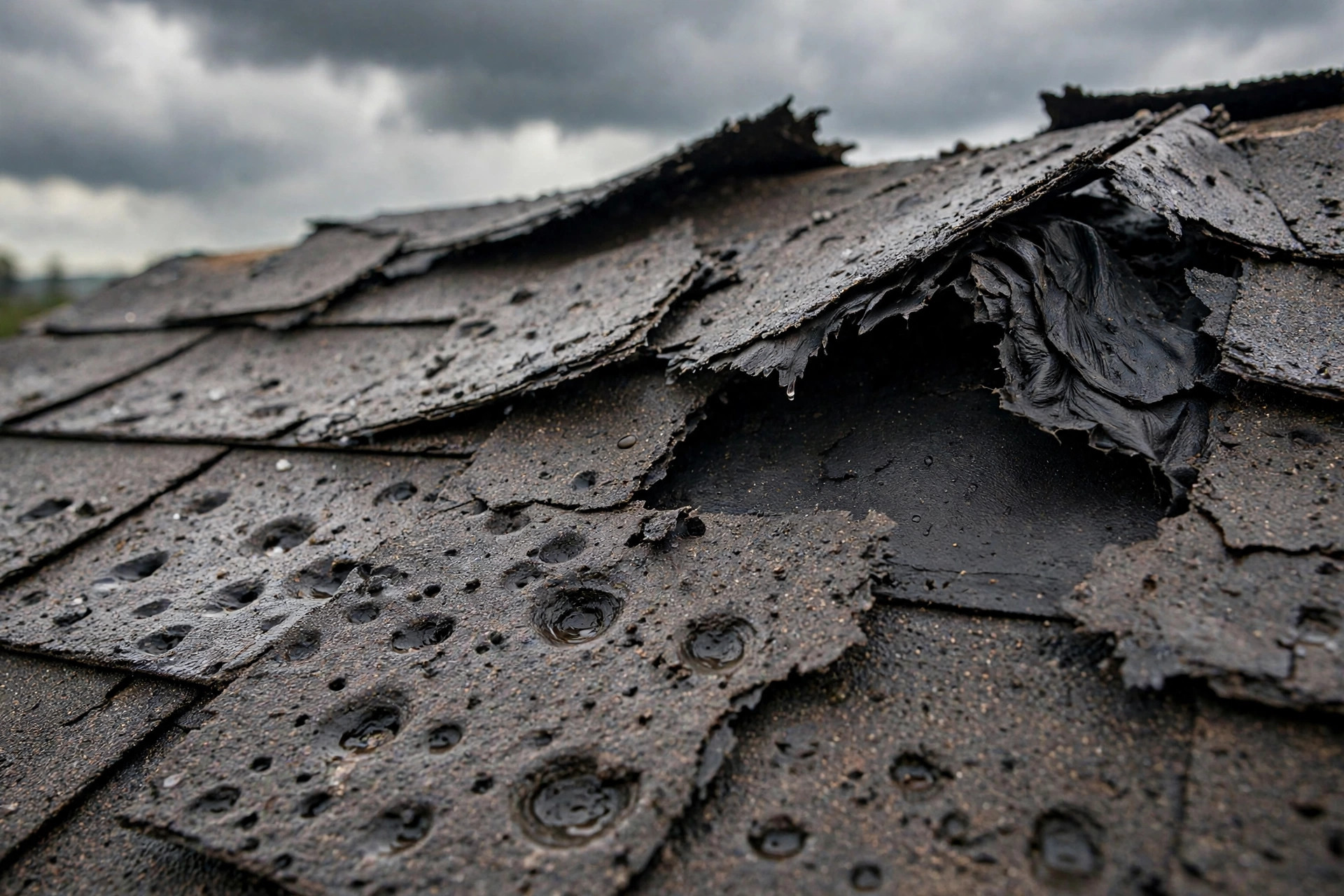
After a storm, every damaged roof calls at once. The AI triages emergencies first and books inspections in priority order.
Crew dispatch coordination
The third job is keeping the day’s work connected to the phones. When an existing customer calls about a crew that is running late, a material question, or a problem at the job site, the AI identifies the job, checks the schedule, and either answers from your approved scripts or routes to the right person with full context. It can also handle the routine outbound side: confirming tomorrow’s start time with the homeowner, reminding them about driveway access and pets, and following up after job completion for the review request.
This only works if the AI can see your job schedule. Name your scheduling or CRM system during the trial and demand a live test. A dispatcher that cannot see the board is just a message taker, and message takers are what you are trying to replace.
The dispatcher style questions your AI should ask
The difference between a generic answering service and one built for roofing is the question set. A generic service takes a name and number. A roofing dispatcher qualifies the job. Here are the questions your AI should be asking, grouped the way a good dispatcher thinks.
For every caller
Name, callback number, property address, and how they heard about you. These four are non negotiable. Without the property address, your estimator cannot plan the route or pull satellite measurements before the visit. Without the referral source, your marketing attribution stays blind. The AI should confirm the address back by reading it aloud, because a wrong address sends your estimator to the wrong house.
For emergency and leak calls
Is water actively coming in. Where is it showing inside. When did it start. Was there a storm, and when. Can you see damage from the ground. Is anyone able to place a bucket or tarp safely, or should they stay clear of the area. The last question matters: the AI should give safe, simple guidance and must never tell a homeowner to climb on the roof. Safety instructions come from your approved script, word for word.
For estimate and replacement calls
What prompted the call: age of roof, visible issues, storm, selling the home, or just planning ahead. Approximate roof age. Single story or two story. Any prior leaks or repairs. Insurance claim filed or planned, or out of pocket. Timeline for the work. Decision maker status. These answers let your estimator arrive prepared: with satellite measurements pulled, the right material samples, and a sense of whether this is a repair visit or a full replacement consultation.
For existing customers and job status calls
Which property or job this is about. What the question or issue is. Whether it is urgent or can wait for the crew lead’s callback. The AI should never guess about job status. If it cannot see the answer in the schedule, it routes to a human with the notes attached.
The estimator arrives prepared when intake is done right: address confirmed, situation documented, insurance status known.
What to look for before you buy
Most vendors will show you a polished demo with a calm caller requesting a routine estimate. Real roofing calls are messier: panicked homeowners, bad cell connections from a windy yard, insurance jargon, and Spanish speaking callers. Judge every option against the five points below.
Emergency triage quality
Ask the vendor to configure your triage rules during the trial, not after you sign. Then test them with the hard scenarios: water pouring through a ceiling at 11pm, a missing shingle with no leak, a caller who is not sure whether it is an emergency. Each scenario should route exactly where your rules say. The wrong answer is a panicked caller being offered the next available inspection in two weeks. If the vendor cannot demo triage with your actual rules, keep shopping.
Estimate intake depth
Listen to a full test call and count what the AI collects. Name and number is a message taker. Name, number, property address confirmed aloud, roof situation, insurance status, timeline, and decision maker is a dispatcher. Ask the vendor to show you the summary your estimator receives after the call. It should read like notes from your best office manager, not a phone log.
Schedule and CRM integration
The AI must book inspections into your real calendar and push job details into your CRM or job management system. Name your tools during the trial and test a full cycle: call, inspection booked, confirmation text to the homeowner, job record created, notification to your estimator. If any step needs manual copying, the system will slowly stop being used, and a system nobody uses is the most expensive kind.
Storm mode and call volume handling
Ask the vendor directly: what happens when fifty calls arrive in an hour. A system built for roofing should handle unlimited simultaneous calls without busy signals or degraded quality, and should let you switch on a storm mode with adjusted greetings, priority triage, and extended booking windows. If the vendor has never thought about storm volume, the product was not built for your trade.
Human handoff that actually works
Test the words a frustrated caller would say: “I want to talk to a person,” “this is an emergency,” “your system is not helping.” The handoff should be immediate, with the conversation notes going to whoever picks it up. After hours, escalation should reach your on call path, not a dead end. Also ask what happens when the AI does not understand a caller after two tries. The right answer is a handoff, not a third guess.
| Question to ask the vendor | Why it matters | A good answer sounds like |
|---|---|---|
| Can you configure my emergency triage rules in the trial? | Shows whether it dispatches or just takes messages | “Yes, give us your rules and we will demo all three scenarios this week.” |
| What details does my estimator receive after a call? | Thin notes waste the inspection visit | A sample summary with address, situation, insurance status, and timeline |
| What happens when fifty calls arrive in one hour? | Storms do not schedule their demand | “Unlimited simultaneous calls, plus a storm mode you can switch on.” |
| Which scheduling and CRM tools do you integrate with? | Manual copying kills adoption | Your tools named specifically, with a tested booking from start to finish |
| Does it confirm the property address aloud? | A wrong address sends your estimator to the wrong house | “Yes, every address is read back and confirmed before booking.” |
| Will it ever quote a price for a roof it has not seen? | Phone quotes become lost jobs and bad reviews | “No. It explains your inspection process and books the visit.” |
| How does after hours emergency routing work? | Active leaks cannot wait for morning | A live demo of the on call page with caller details attached |
| How do I review call transcripts? | You need to catch triage mistakes before jobs do | A review screen with editable notes and weekly summaries |
What it costs
Roofing AI answering services price by call volume and integration depth. Typical market ranges:
| Setup | Typical cost | What you get |
|---|---|---|
| Starter, single crew | $150 to $300/mo | Call answering around the clock, estimate intake, inspection booking, text confirmations |
| Standard, with integrations | $250 to $500/mo | Everything above plus CRM sync, emergency triage rules, storm mode, crew schedule visibility |
| Multi crew operation | $400 to $750/mo | Everything above plus per crew routing, centralized reporting, high volume storm handling |
Setup fees typically run $0 to $750, covering triage rule configuration, intake question building, and schedule connections. For a sense of what the website side costs to pair with it, see our guide to how much a roofing website costs.
Rolling it out without disrupting the operation
The roofing companies that get value from an AI answering service treat the first month as a tuning period, not a launch event. This order keeps risk low:
- 1Write your triage rules first. Define what counts as an emergency, what the AI says to the caller, and exactly where each category routes. Include the safety script: never tell a homeowner to climb on the roof.
- 2Write your estimate intake questions. Every detail your estimator wants: address confirmed aloud, roof situation, insurance status, timeline, decision maker. Cut anything that does not change what happens next.
- 3Connect the schedule and CRM. Test a full cycle: call, inspection booked, confirmation text, job record created, estimator notified. Fix anything that needs manual copying.
- 4Run forty test calls. Include the hard ones: an 11pm active leak, a caller who is not sure it is an emergency, a Spanish speaking caller, a bad connection, “I want a human,” and a price shopper. Fix every wrong answer.
- 5Start with after hours and overflow. Let the AI cover nights, weekends, and simultaneous daytime calls for two weeks. Review every transcript, tune the triage, then expand.
- 6Review transcripts weekly for a month. Look for misrouted emergencies, thin estimator notes, and wrong addresses. Tune the scripts, then move to a monthly review.
Good intake means the first visit counts. The homeowner feels heard and the estimator knows the job before arriving.
Mistakes roofing companies make with AI answering services
The most expensive mistake is vague triage rules. If “emergency” is not defined precisely, urgent callers get routine bookings and routine callers get paged to your on call phone at midnight. Write the rules down, test every trigger, and review the edge cases monthly. The second mistake is letting the AI quote prices. A phone quote for an unseen roof is a promise you cannot keep; it becomes a lost job when the real number lands, or a bad review when the homeowner feels misled. The AI books inspections. Your estimator quotes roofs. The third is skipping the address confirmation. One wrong address sends your estimator across town to the wrong house, burns half a morning, and looks unprofessional. The fourth is hiding the human handoff. A homeowner with water coming through the ceiling who cannot reach a person will remember that helpless feeling when the review request arrives. The fifth is treating launch day as the finish line. Service areas change, crew schedules change, and storm seasons teach new lessons every year. A system nobody reviews for a year slowly drifts into wrong answers. Finally, do not buy on demo charm. The vendor that configures your actual triage rules and connects your actual schedule in the trial is showing you the product. The vendor that plays you a recording is showing you marketing.
Frequently asked questions
How much does an AI answering service for roofing companies cost?
Roofing companies typically pay $150 to $300 a month for a starter setup with call answering and inspection booking, $250 to $500 a month with CRM integration and emergency triage, and $400 to $750 a month for multi crew operations. Setup fees usually run $0 to $750. Compare that to $3,000 to $5,000 a month fully loaded for an office hire, who still sleeps and takes days off.
Can it handle a storm season call spike?
The ones built for roofing can. Ask the vendor directly what happens when fifty calls arrive in an hour: you want unlimited simultaneous calls with no busy signals, plus a storm mode with adjusted greetings and priority triage. If the vendor has never thought about storm volume, the product was not built for your trade.
Will the AI quote prices for roofing jobs?
It must not, and you should configure it so it never does. The AI explains your inspection process, captures the details your estimator needs, and books the visit. Quoting an unseen roof on the phone creates lost jobs and bad reviews. Test this with a price fishing caller during the trial.
How does emergency leak triage work?
You define the rules: what the AI asks, what it says to the caller, and where each category routes. Active interior water pages your on call number immediately with caller details attached. Test every trigger phrase yourself during the trial, including the after hours path.
What is the difference between an AI answering service and a regular answering service for roofers?
A regular answering service takes a message and passes it along, usually hours later. An AI answering service holds a real conversation: it triages the call, captures full estimate details, books the inspection into your calendar, and routes emergencies immediately. One is a message taker. The other is a dispatcher that never sleeps.
Win the storm before your competitors wake up
Digital Hayder builds AI answering services for roofing companies with emergency triage, dispatcher grade estimate intake, real schedule booking, and storm mode that handles the spike. Tell us your triage rules and we will map your call flows before you pay anything.
Contact Us