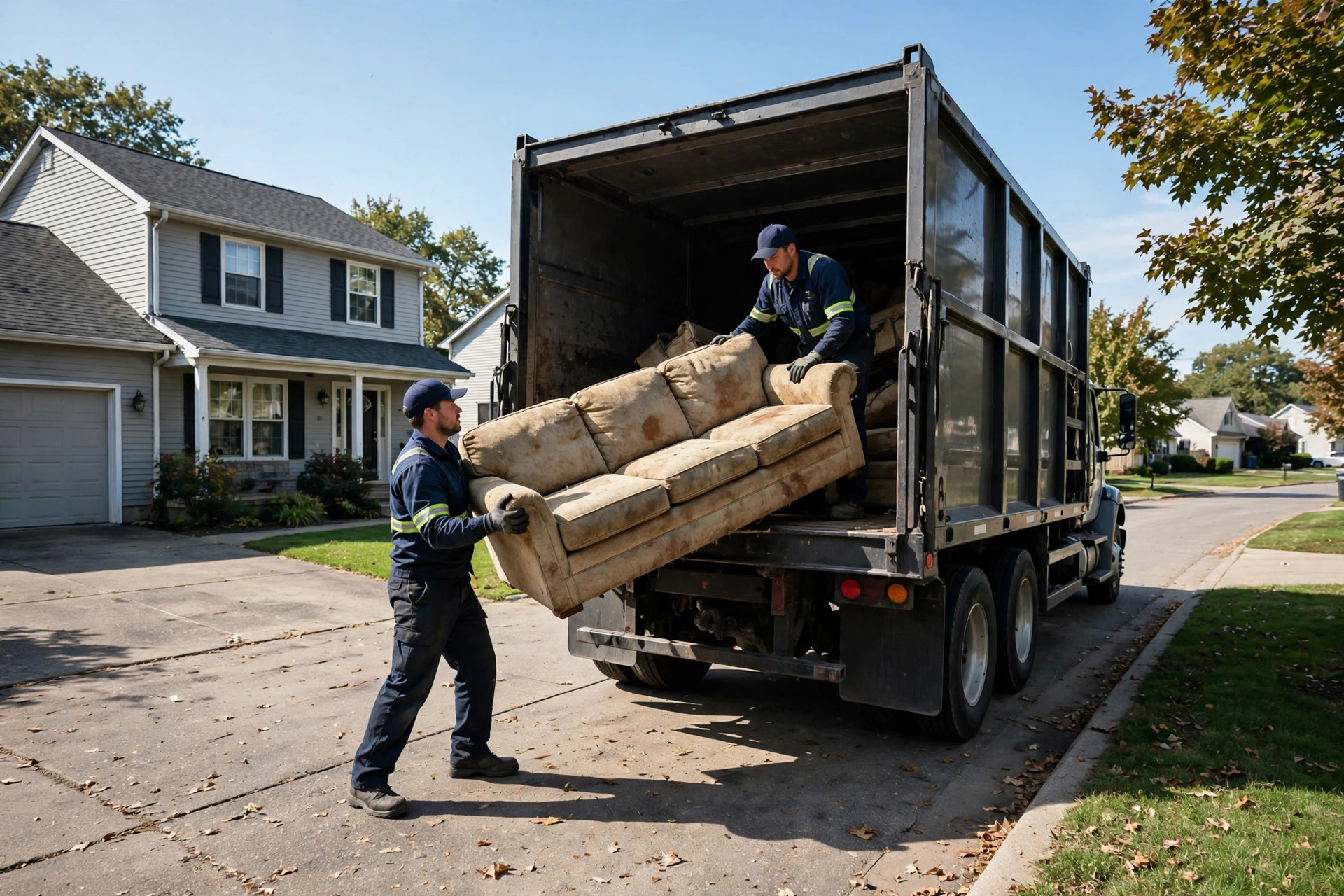
Junk removal is a perfect fit for Google Local Services Ads, and most haulers underuse them. The customer has a garage full of junk, a couch on the curb, or a rental that needs clearing by Friday. They search, they see a short list of screened local companies with star ratings and a Google-backed guarantee, and they call the first one that picks up. That is Local Services Ads in a nutshell: you pay per lead, not per click, and your profile sits at the very top of the results. This guide explains how LSA works for junk removal companies, what leads actually cost, how to get approved, how the ranking works, and how LSA compares with regular Google Ads for hauling work.
The quick answer
- Pay per lead, not per click: you only pay when a customer calls or messages you directly through the ad. Junk removal leads typically cost $35 to $90 each depending on the market.
- Top-of-page placement: LSA profiles appear above regular Google Ads and organic results, with your rating, review count, and a Google guarantee badge.
- Approval takes one to three weeks: business verification, insurance documents, and background checks for the owner and field staff.
- Reviews decide your rank: more reviews and faster responses push you higher. The companies at the top treat every lead like an emergency.
- Bad leads can be disputed: wrong service, wrong area, or spam calls can be challenged for credit through the LSA app.
- Pair it with instant response: LSA leads go cold in minutes. An AI chatbot for junk removal companies or a fast call-back process captures the ones you cannot answer live.
How Local Services Ads work for junk removal
Local Services Ads are Google’s pay-per-lead ad format for local service businesses. When someone searches “junk removal near me” or “haul away old furniture,” Google shows a row of verified local companies at the very top of the page, above the regular ads. Each listing shows the company name, star rating, number of reviews, hours, and a badge showing the business passed Google’s screening. The customer taps to call or message, and that contact becomes a lead you pay for.
The model fits hauling work unusually well. Junk removal is an impulse purchase with a short decision window. Nobody researches haulers for three weeks; they want the stuff gone this week, often today. The LSA format matches that behavior: a short list of trusted-looking options, one tap to call, no website visit required. For the hauler, the economics are simple too. There is no click fraud risk like pay-per-click, no keyword list to manage, and no landing page to build before you can start. You set a weekly budget, pick your service types and service area, and leads start coming in once you are approved and ranked.
One thing to understand early: LSA is a lead marketplace, not a magic tap. Google sends you the call, but you still have to win it. The companies that thrive on LSA answer fast, quote clearly, show up on time, and ask for reviews after every job. The companies that treat LSA leads like website form fills, answered tomorrow, reviewed never, wonder why the channel “does not work.” The difference is almost never the ad format. It is the response.
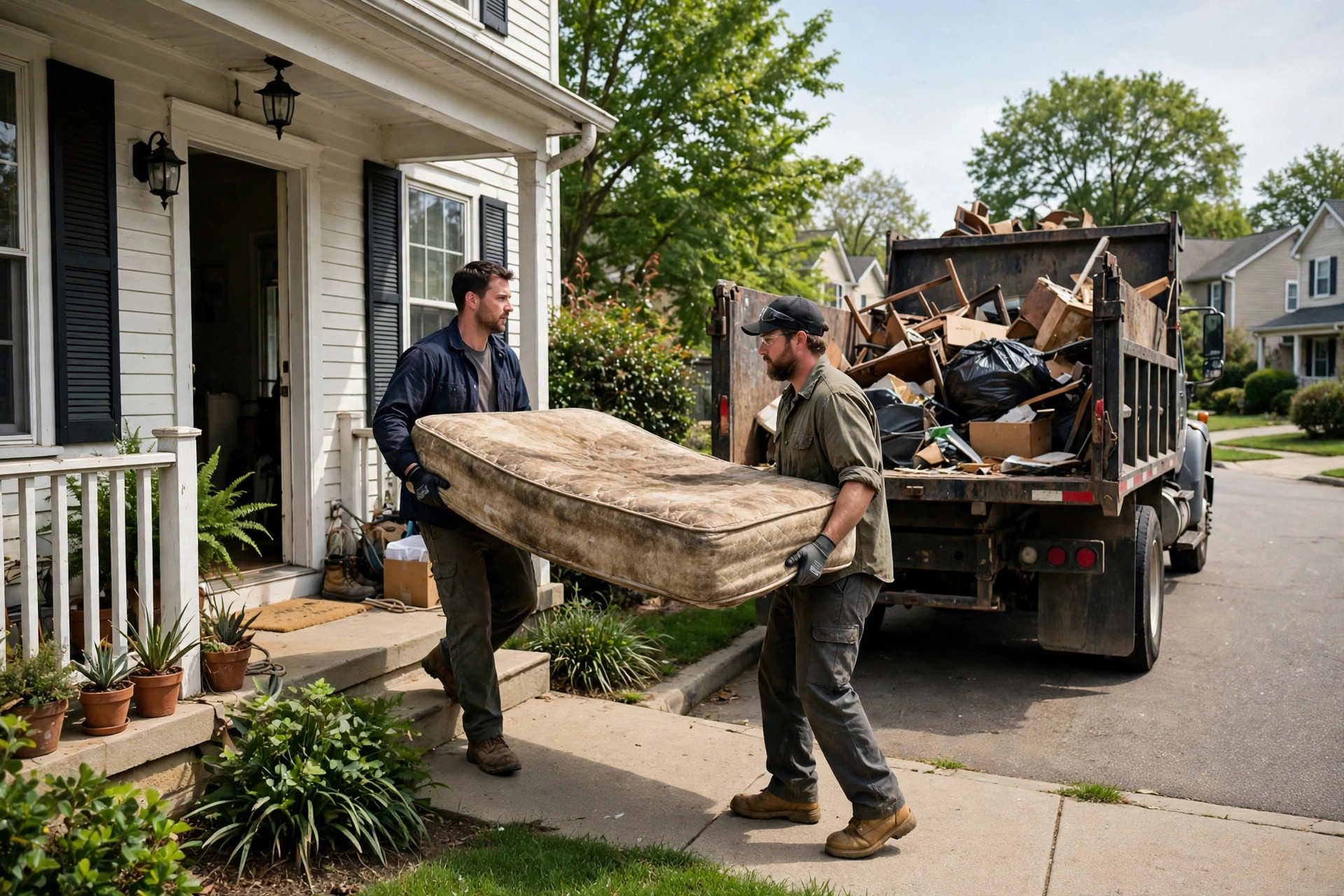
Junk removal customers decide fast. LSA puts your company in front of them at the exact moment they are ready to book.
What junk removal leads cost on LSA
Lead cost is the number every hauler asks about first, and the honest answer is that it varies by market, service type, and competition. In most US markets, junk removal leads on LSA land between $35 and $90 each. Smaller markets and general cleanout work sit at the lower end; large metros and specialty work like estate cleanouts or construction debris sit higher. Google sets the per-lead price for your market and service type, and you see it before you commit.
You control spending with a weekly budget. If your budget is $500 a week and leads cost $50, Google will send you roughly ten leads a week, then pause until the next week. There is no surprise bill: when the budget is spent, the ads stop. New accounts often start with a modest budget while they learn their close rate, then scale once the math proves out. The table below shows typical lead cost bands by job type.
| Service type on LSA | Typical cost per lead | Notes |
|---|---|---|
| General junk removal | $35 to $65 | The most common category; highest volume, moderate competition |
| Furniture removal | $30 to $55 | High intent, quick jobs; strong close rates for fast responders |
| Appliance removal | $30 to $60 | Often paired with delivery or remodel work; good repeat potential |
| Garage and basement cleanout | $45 to $75 | Larger average tickets; customers compare two or three quotes |
| Estate and eviction cleanout | $50 to $90 | Biggest tickets but longest sales cycles; landlords and agents shop around |
| Construction debris removal | $45 to $85 | Contractor customers; repeat business if your pricing and timing are sharp |
| Yard debris removal | $30 to $55 | Seasonal spikes; pairs well with storm cleanup demand |
Treat these as starting points, not promises. Your actual cost depends on your metro, how many competitors are bidding for the same leads, and how Google prices your specific service mix. Check the lead prices shown in your own LSA account setup; Google displays them for your market before you go live.
Getting your LSA profile approved
Approval is the gate that keeps LSA trustworthy, and it is also the step where most haulers stall. Google verifies that you are a real, insured, background-checked business before your profile goes live. The process takes one to three weeks if your paperwork is in order, and much longer if it is not. Getting it right the first time is worth real money in leads you would otherwise miss.
Start with the business basics: your legal business name, address, phone number, website, hours of operation, and the service types and areas you want to cover. The name and address must match your other public listings; mismatches are a common cause of verification delays. Next comes insurance. Google requires proof of general liability insurance, and the coverage minimums vary by market. Have your certificate of insurance ready as a PDF before you start the application, and confirm with your agent that the coverage meets Google’s requirements for your area.
Then come the background checks, covered in detail in the next section. While those run, build out your profile: upload real photos of your trucks, your crew, and finished jobs, write a plain-language business description, and list your services accurately. Profiles with real photos convert noticeably better than profiles with none, because the customer is choosing between three similar listings and the one that looks like a real crew wins. Set your weekly budget conservatively for the first two weeks while you learn your lead flow, and make sure someone is ready to answer the phone before you flip the switch.
Reviews, ratings, and the Google guarantee badge
The badge next to your name is doing quiet, heavy work. Depending on your market, LSA shows a “Google Guaranteed” or “Google Screened” badge, which tells the customer that Google verified your business and backs the booking up to a coverage limit. For a customer inviting strangers to haul junk out of their home, that badge removes a real layer of fear. It is one of the biggest advantages LSA has over regular ads, and you cannot buy it anywhere else.
Reviews are the other half of the trust equation and the single biggest ranking factor you control. LSA pulls your Google reviews into the profile, showing your star rating and review count right in the ad. A 4.8 with 120 reviews beats a 5.0 with 6 reviews, because volume signals a real, active business. Build a review habit into every job: when the truck is loaded and the customer is happy, ask for the review on the spot and send the link by text before you leave the driveway. Crews that ask consistently can add dozens of reviews a month.
Respond to every review, including the bad ones, in a calm and professional tone. A thoughtful reply to a complaint reassures the next hundred customers who read it far more than the complaint worries them. And keep your hours accurate. Nothing burns a lead faster than an LSA profile that says open while the phone goes to voicemail. If you cannot answer after hours, say so in your hours and use a backup: an answering service, a call-back promise on your voicemail, or an AI chatbot for junk removal companies that captures the details and books the callback.
Background checks for owners and crews
Every owner and every employee who enters customer homes must pass a background check through Google’s screening partner. This surprises some haulers, especially those who hire day labor or rotate helpers. Plan for it. The check covers identity verification and criminal history, and anyone who will be on jobs needs to clear it before your profile goes live.
The practical advice is simple: run the checks early and know your roster. Submit the owner and your core crew first so approval is not held up by one part-time helper. If you use temporary help, understand that they cannot go on LSA-booked jobs until screened, which means your scheduling has to match screened staff to LSA work. Some owners keep one screened crew dedicated to LSA jobs during the ramp-up phase. Also note that checks expire and must be renewed; put the renewal dates on your calendar the day you pass, because a lapsed check pauses your ads without warning.
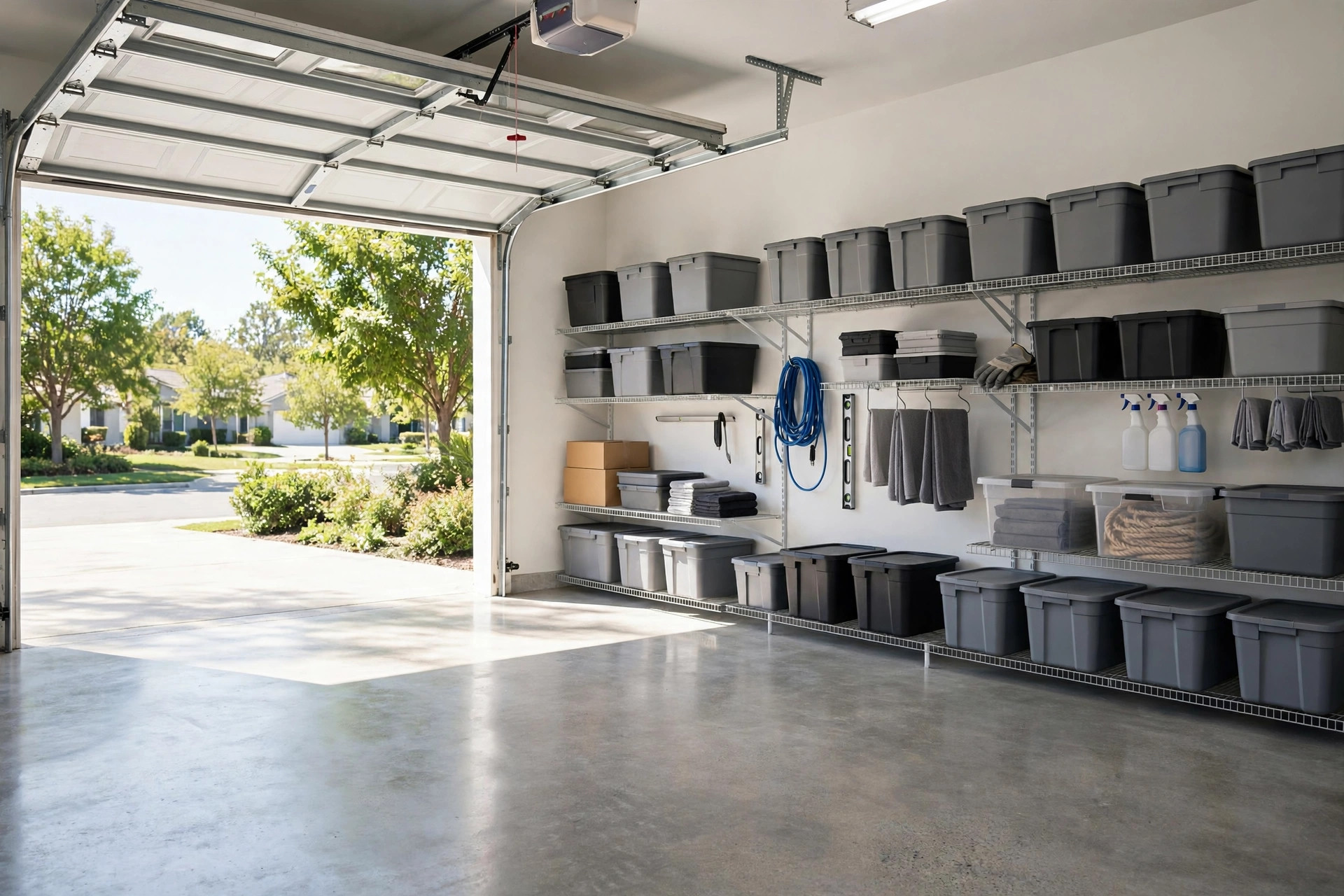
The finished job is your best ad. Photos of clean results feed your profile, your reviews, and your repeat business.
How LSA decides who shows up first
When a customer searches, Google ranks the eligible LSA profiles and shows the top few. The ranking is not an auction: you cannot simply outbid competitors for the top spot. Google weighs a handful of factors, and understanding them tells you exactly where to invest your effort.
Proximity and relevance come first. Google matches the customer’s location and service need against your service area and service types, so a tight, honest service area beats a sprawling one. Do not claim towns you will not drive to; leads from areas you cannot serve become disputes and bad reviews. Next is your review score and review count, which is why the review habit from the previous section matters so much. Then comes responsiveness: how fast you answer calls, how quickly you respond to messages, and whether you mark leads as booked in the app. Google rewards businesses that treat its leads well, because that is what keeps customers trusting the format.
Your budget plays a supporting role. A higher weekly budget tells Google you can handle more leads, which can improve your visibility, but budget alone will not outrank a competitor with twice your reviews and a faster answer time. Profile completeness helps at the margins: real photos, a full service list, accurate hours. The winning formula is unglamorous: stay close to your customers, collect reviews relentlessly, answer in minutes, and mark your bookings. Do that consistently for ninety days and most competitors in a mid-size market will be looking up at you.
Local Services Ads vs Google Ads for junk removal
Most haulers eventually run both, but they solve different problems. LSA is the simpler, lower-maintenance channel: pay per lead, top placement, no keywords, no landing pages. Regular Google Ads gives you more control and more reach, but it demands real management: keyword research, negative keywords, ad copy, landing pages, and constant defense against junk clicks. Our full breakdown of Google Ads cost for junk removal companies covers the click-based side in detail, including what haulers typically pay per click by keyword.
| Factor | Local Services Ads | Google Ads (pay per click) |
|---|---|---|
| You pay for | Each lead: a call or message from a customer | Each click, whether or not it becomes a lead |
| Typical cost | $35 to $90 per lead for junk removal | $4 to $15 per click; 10 to 20 clicks often needed per lead |
| Placement | Very top of results, above regular ads | Below LSA, above organic results |
| Trust signals | Star rating, review count, and Google guarantee badge built in | You build trust yourself with ad copy and landing pages |
| Setup effort | Low: profile, verification, budget | High: keywords, ads, landing pages, tracking |
| Ongoing management | Low: reviews, responsiveness, disputes | High: weekly optimization, search term review, bid changes |
| Control | Limited: Google decides ranking and lead price | Full: you pick keywords, bids, ads, and pages |
| Best for | Steady lead flow with minimal management | Scaling up, targeting specific job types, filling slow weeks |
The practical play for most junk removal companies is to start with LSA, prove the economics, then add Google Ads when you want more volume or want to target specific high-value job types like estate cleanouts. The two channels also share one dependency: a website that converts the traffic. If your site looks dated, price a refresh alongside the ad spend; our guide to how much a tree service website costs shows the same build-type pricing bands that apply to hauling company sites. HVAC companies run the same LSA playbook with different numbers, and our Local Services Ads guide for HVAC companies is a useful cross-trade comparison.
Keeping your cost per booked job under control
Cost per lead is only half the equation. What matters is cost per booked job: total LSA spend divided by jobs actually completed. Two haulers can pay the same $55 per lead while one books at $150 a job and the other at $300, and the entire difference is what happens after the phone rings.
Speed is the biggest lever. LSA customers call two or three companies and book the first competent one that answers. Data across home services consistently shows that answering within five minutes multiplies booking rates compared with calling back in an hour. If you are on a job when leads come in, you need a system: a second line, an answering service, or an automated responder that texts the caller immediately with “we got your request, we will call you in 15 minutes” and then actually calls. Every unanswered LSA call is money you already spent.
Quoting discipline is the second lever. Junk removal pricing is part art, part math, and LSA customers compare. Train whoever answers the phone to give clear ranges, explain what drives the final price (volume, access, heavy items), and offer the next available slot before hanging up. Track your numbers weekly: leads received, leads contacted, quotes given, jobs booked. If your contact rate is low, fix answering. If your quote-to-book rate is low, fix the quote. Dispute bad leads promptly through the LSA app: wrong service type, outside your area, spam, or duplicate contacts can be challenged for credit, and the credits add up over a quarter.

The booking process decides your true cost per job. Fast answers and clear quotes turn the same leads into twice the work.
Why junk removal LSA accounts stall
When a hauler says LSA “stopped working,” the cause is usually one of five things, and four of them are fixable in a week. First, review velocity dried up. You launched with 40 reviews, stopped asking, and competitors passed you. The fix is the crew review habit: ask on every job, text the link before you leave. Second, responsiveness slipped. Missed calls and slow message replies quietly drag your ranking down. Check your response stats in the LSA app; they are brutally honest.
Third, the service area is wrong. Claiming a huge radius dilutes your relevance and fills your week with far-flung leads you cannot profitably serve. Tighten the area to where your trucks actually go, and watch lead quality rise. Fourth, the budget is too small to learn. At $150 a week in a $60-per-lead market, you get two or three leads a week, which is not enough data to judge anything. Either commit to a test budget that buys real volume for a month or pause until you can.
Fifth, and most common: nobody owns the follow-up. LSA leads arrive at all hours, and the owner is on the truck. Without a defined process, half the leads never get a real attempt. Assign one person to own LSA response, set a five-minute answer target during business hours, and build the after-hours backup before you need it. The accounts that grow on LSA are not lucky; they are operated.
Your rollout checklist
Work through these in order. Each one builds on the last.
- 1Confirm LSA covers junk removal in your market. Check availability in the LSA app for your metro before investing time in paperwork.
- 2Gather your documents. Business license, certificate of insurance meeting Google’s minimums, and matching name and address across listings.
- 3List your screened crew. Decide which owner and staff will take LSA jobs and submit them for background checks first.
- 4Build the profile. Real truck, crew, and job photos; plain-language description; accurate service types and a tight service area.
- 5Set a test budget. Enough weekly spend to buy real lead volume for four weeks, so you can judge results on data, not guesses.
- 6Build the response system. Five-minute answer target, a backup for when you are on jobs, and an after-hours capture plan.
- 7Launch the review habit. Ask on every job and text the review link before leaving the driveway, starting day one.
- 8Track every lead weekly. Log leads, contacts, quotes, and bookings. Know your contact rate and quote-to-book rate by heart.
- 9Dispute bad leads. Challenge wrong-service, wrong-area, spam, and duplicate leads in the app for credit.
- 10Review and scale at 90 days. Compare cost per booked job against your target, tighten what is weak, then raise the budget.
Frequently asked questions
How much do Local Services Ads cost for junk removal?
Most junk removal leads cost $35 to $90 each depending on your market and service type. You set a weekly budget cap, and Google stops sending leads when it is spent. There are no click charges and no management fees to Google beyond the per-lead price.
How long does LSA approval take for a junk removal company?
One to three weeks when your paperwork is ready: business verification, insurance documents, and background checks for the owner and crew. Mismatched business names or missing insurance certificates are the most common delays, so prepare those before applying.
Do my employees really need background checks?
Yes. Everyone who enters customer homes on LSA-booked jobs must pass Google’s background check. Plan your roster around screened staff, and note that checks expire and must be renewed; a lapsed check pauses your ads.
Can I get credit for bad LSA leads?
Yes. Leads for the wrong service, outside your service area, spam or solicitation calls, and duplicates can be disputed through the LSA app for credit. Review your leads weekly and dispute promptly; credits add up over a quarter.
Is LSA better than Google Ads for junk removal?
They serve different needs. LSA is simpler and shows at the very top with a trust badge, which suits steady lead flow with minimal management. Google Ads offers more control and targeting for scaling or specific job types. Most growing haulers eventually run both.
How many reviews do I need to rank well on LSA?
There is no fixed number, but review count and rating are major ranking factors. Aim to pass your local competitors in both count and rating, and keep new reviews coming every week. A steady stream of recent reviews beats a large but stale total.
What happens if I miss an LSA call?
You still pay for the lead, and missed calls hurt your responsiveness ranking. Build a backup before you need one: an answering service, a second line, or an automated text that promises a fast callback. Speed of response is one of the biggest booking levers.
Can I pause Local Services Ads when I am fully booked?
Yes. You can pause anytime from the app, which is useful during fully booked weeks or crew shortages. Many haulers pause during vacations and resume without losing their review history or ranking progress.
Does LSA work in small towns?
It depends on search volume and whether Google offers the category in your area. In smaller markets, lead volume may be modest but competition and lead prices are usually lower. Check availability and lead prices in the LSA app for your specific area before deciding.
Do I need a website to run Local Services Ads?
A website is not strictly required to run LSA, since customers call straight from the ad. But a solid site helps you win the customers who check you out before calling, and it powers your other marketing. Most serious haulers invest in both.
Turn more LSA leads into booked jobs
Digital Hayder helps junk removal companies get more from Local Services Ads: profile setup that passes approval fast, review systems your crews will actually use, after-hours lead capture, and tracking that shows your true cost per booked job. Tell us about your market and we will map out the plan.
Contact Us