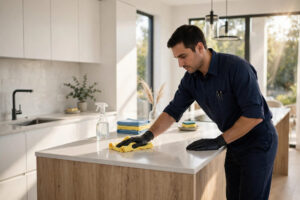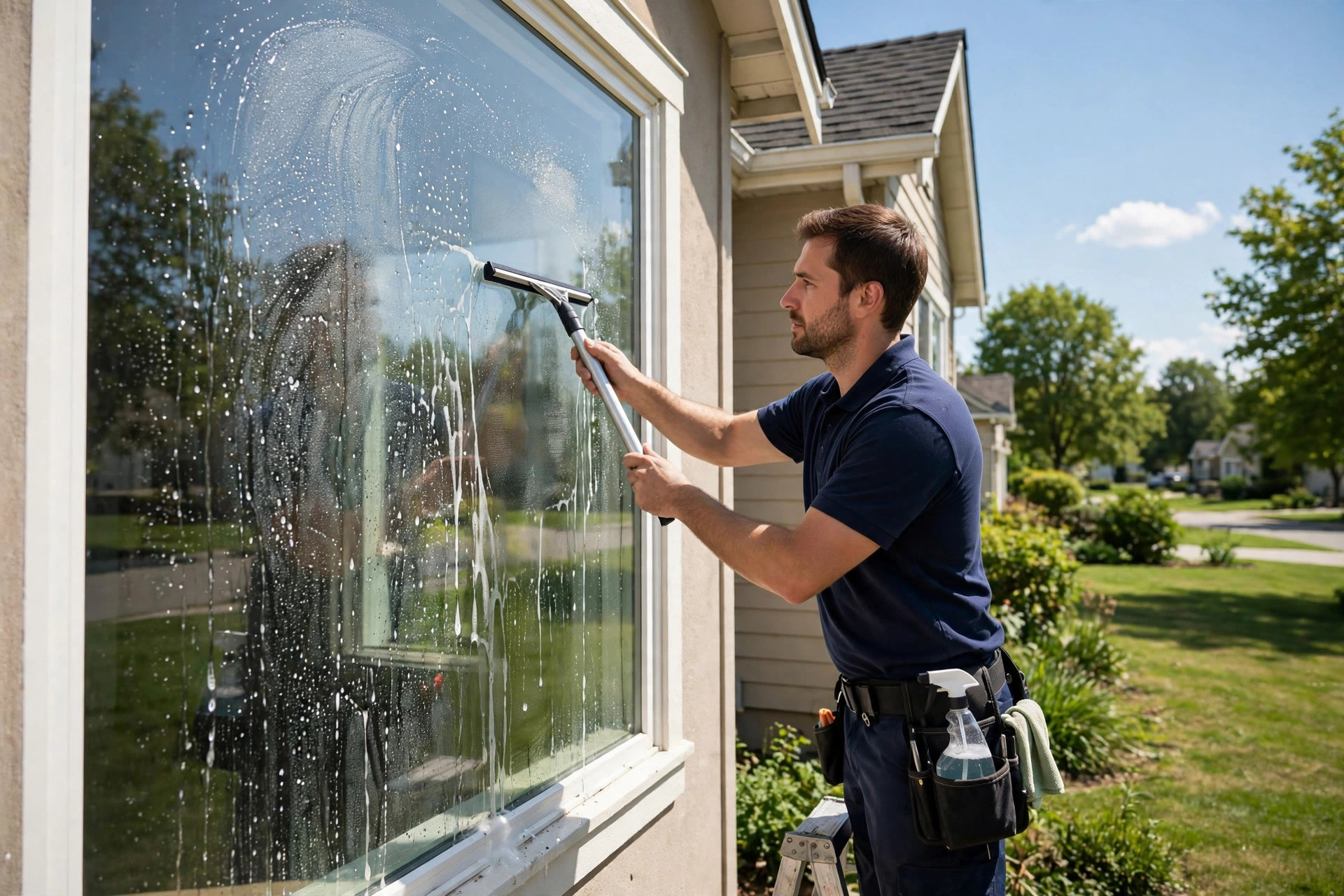
Most window cleaning businesses grow the same slow way: one happy customer tells a neighbor, and the schedule fills a little more each year. Word of mouth works, but it caps your growth at the speed of conversation. The owners who break past that ceiling do something different. They build a residential route that markets itself street by street, they hunt commercial contracts that pay every month, and they turn every sparkling pane into social proof that books the next job. This guide lays out the window cleaning marketing ideas that actually move the needle for owner operators and small crews: what to do first, what each idea costs in time and money, and the simple math that shows why one commercial contract can be worth more than a year of one-off houses.
The quick answer
- Routes beat one-offs: marketing one street at a time with door hangers and neighbor referrals fills your schedule with clustered jobs that cut drive time and raise daily revenue.
- Commercial contracts are the real prize: a single storefront route or office building on a monthly plan can out-earn dozens of one-time residential cleans.
- Before and after photos sell for free: consistent photo and short video proof on social media and Google outperforms paid ads for most local window cleaners.
- Seasonal promos fill the gaps: spring pollen, pre-holiday, and post-storm cleanings give past customers a reason to book again right on schedule.
- Reviews are your storefront: a steady flow of fresh Google reviews decides who gets the call when a homeowner searches, so build asking into every finished job.
- Start with what is cheap and fast: door hangers, review requests, and referral offers cost almost nothing and book jobs this week, while ads and SEO compound over months.
Why window cleaning marketing works differently
Window cleaning is a trust business with a visibility problem. Nobody thinks about their windows until the dirt is impossible to ignore, and when they finally do, they search, they ask a neighbor, or they call the number on the van they keep seeing. There is no long research phase. The buying decision is fast, local, and emotional: clean glass just feels better, and the homeowner wants it handled by someone they trust around their home.
That shapes everything about how you should market. Broad national advertising is a waste. What wins is density: being the obvious choice on a specific set of streets, in a specific set of commercial districts, with proof everywhere a local buyer looks. A window cleaner with 80 five-star reviews in one zip code will beat a bigger company with 300 reviews spread across a whole metro area, because the local reviews signal “this is the company my neighbors use.”
The economics favor repeat and recurring work. A one-time residential clean might bring $200 to $400. A homeowner on a twice-a-year plan is worth $400 to $800 a year with zero new marketing cost after the first booking. A storefront on a monthly route might be $40 to $80 a month, small per visit, but it pays twelve times a year and the jobs cluster so tightly you can clean six storefronts before lunch. Marketing that chases one-off jobs keeps you on a treadmill. Marketing that builds routes and contracts builds a business that grows while you sleep.
The ideas below are ordered the way a smart owner would roll them out: the cheap, fast wins first, then the compounding systems, then the paid channels that only make sense once the foundation is solid.
Own the route: residential marketing that compounds
The most profitable residential marketing in window cleaning is not a tactic. It is a geography strategy. Pick two or three neighborhoods where the homes fit your ideal job: two-story houses with plenty of glass, homeowners rather than renters, and streets where houses sit close together. Then concentrate every marketing effort there until you own those streets.
Start with door hangers, not flyers. A door hanger on the knob gets noticed; a flyer in a mailbox gets recycled. Hang 200 to 300 in the neighborhood on the same day you are already working there, so the hanger says “we are cleaning homes on your street this week.” That one line changes the psychology completely. You are not a stranger asking for work. You are the crew the neighbors already hired. Include a simple offer: $25 off a full exterior clean booked within 14 days, plus your phone number in large print. No website visit required, no form to fill. The best residential window cleaning leads come from a hanger in the hand, not a landing page.
Then work the street while you are there. When you finish a house, knock on the two doors on each side and the three across the street. Keep it short: “Hi, we just finished the Smiths place at number 42. We are here today and can do your exterior windows for $149 while the ladders are up.” While-the-ladders-are-up pricing is the oldest trick in the trade because it works. The marginal cost of one more house on the same street is tiny, so you can offer a real discount and still make your best hourly rate of the week.
Build the route list like an asset. Every customer goes into a simple list with their street, last service date, and service type. Twice a year, that list becomes a rebooking campaign: a text or postcard that says “it has been six months, your windows are due.” If you also sell add-on services like gutter cleaning or pressure washing, our guide to cleaning business marketing ideas covers how to cross-sell them to the same route list without sounding pushy.
Yard signs earn their keep on residential streets. A clean, professional sign in the front yard while you work, with the company name and phone number large enough to read from a passing car, turns every job into a half-day billboard. Ask permission, leave it for 48 hours, and pick it up on your next pass. Neighbors notice the sign, then notice the sparkling windows, and the connection forms on its own.
Hunt commercial contracts instead of chasing one-offs
One commercial contract can replace a month of residential hustle. Storefronts, restaurants, offices, car dealerships, and medical buildings all need their glass cleaned on a schedule, and once you win the contract, the revenue repeats without new marketing. The pitch is simple arithmetic for the business owner: clean glass brings in foot traffic, and a monthly plan costs less than one lost walk-in customer a day.
Start with storefront routes, the entry point of commercial window cleaning. Walk a commercial strip with a clipboard, a price sheet, and photos of your work. Offer a simple monthly plan: exterior glass cleaned once a month for a flat fee, typically $40 to $80 for a standard storefront. The magic of a route is density. Ten storefronts on one block, each paying $50 a month, is $500 a month for about three hours of work on one morning. Add the next block and the math keeps improving, because drive time between jobs drops to zero.
Property managers are the multiplier. One manager often controls five, ten, or twenty buildings, and they are always looking for reliable vendors who show up without being chased. Find them through commercial real estate listings, local business associations, and plain door knocking at management offices. Your pitch to a manager is not about price. It is about reliability: scheduled service, photo confirmation after every visit, and one invoice for all properties. Managers pay a premium to vendors who make their life easy.
Restaurants and dealerships deserve special attention. Restaurants need clean glass because diners judge everything they see, and dealerships need it because the whole building is a showroom. Both tend to pay faster and complain less than average, and both refer you to other locations. When you land one, ask for the district manager’s name. A good job at one location is the warmest possible introduction to ten more.
Price commercial work for the relationship, not the visit. A storefront that pays $50 a month is worth $600 a year and often stays for years. Resist the urge to discount the monthly rate to win the job; instead, offer the first clean at a discount and hold the recurring rate firm. The lifetime value is what matters, and steady contracts let you plan hiring and equipment with confidence.
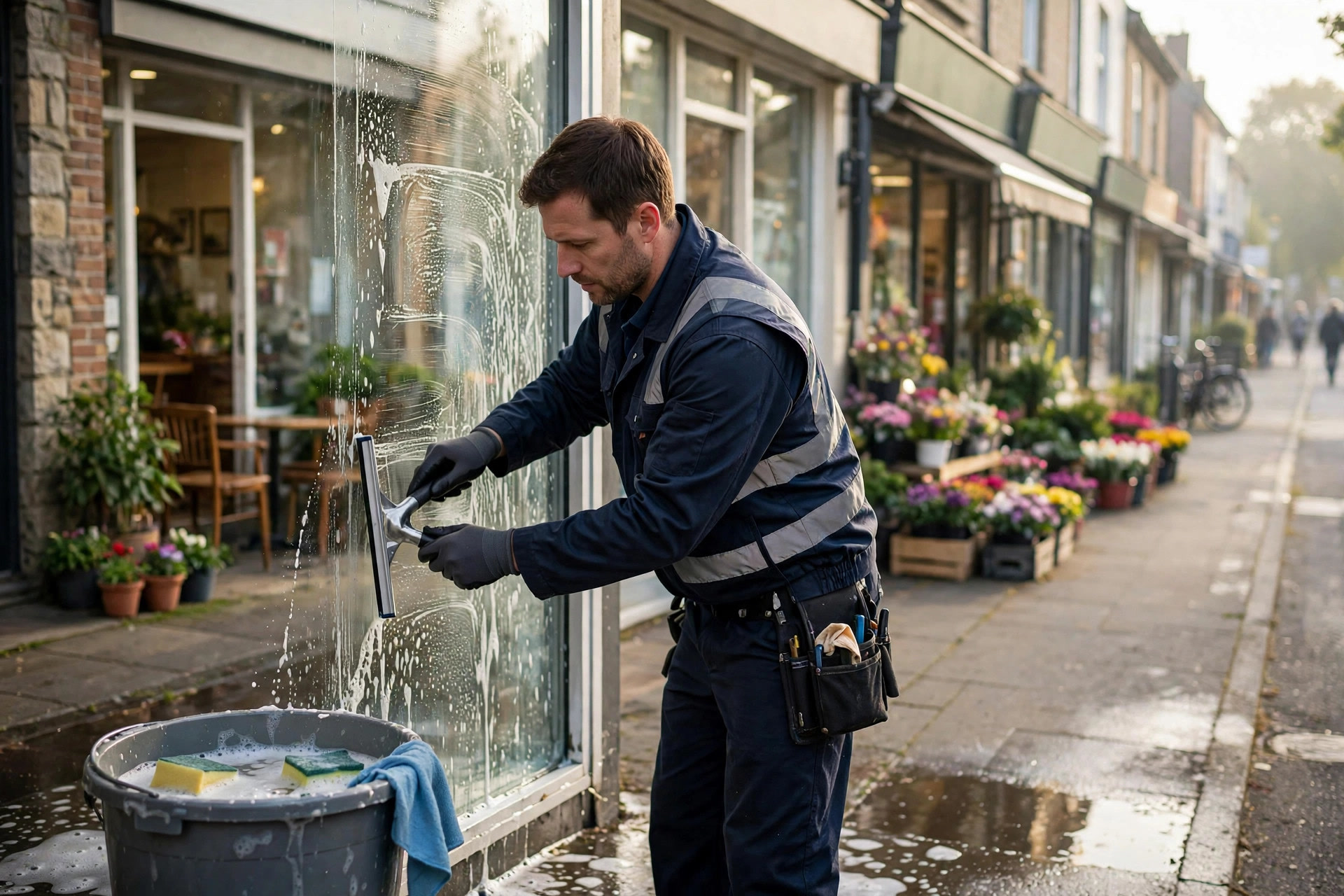
A tight storefront route turns a few morning hours into reliable monthly revenue with almost no drive time between stops.
Before and after proof: the cheapest ad you will ever run
Window cleaning has the best visual proof of any home service. The before photo is grimy and gray. The after photo is invisible glass and sunlight. Nobody needs to be convinced by copy when the pictures do the talking. Yet most window cleaners post sporadically, with bad lighting and no consistency, and leave the easiest marketing on the table.
Make photo proof a job step, not a marketing afterthought. Before you start, take a quick photo of the dirtiest window from inside the house looking out. After you finish, take the same shot from the same spot. Same angle, same framing, thirty seconds of work. Do this on every job for a month and you will have a library of proof that most competitors never build. Ask the homeowner’s permission to share, which almost everyone grants when they are happy with the result.
Post the pairs everywhere a local buyer looks: Google Business Profile photos, Facebook, Instagram, and Nextdoor. Short video beats still photos. A fifteen-second clip of a squeegee pulling a clean stripe through soapy glass is oddly satisfying to watch, and that kind of content gets shared by people who have never hired a window cleaner. Post two to three times a week. Consistency matters more than production quality; a phone video posted regularly outperforms a professional shoot posted once.
Use the proof in your quotes too. When you send a residential estimate by text or email, include two or three before and after pairs from similar homes in the same neighborhood. The homeowner sees their neighbor’s house looking amazing and the price suddenly feels like a bargain. Proof attached to a quote shortens the decision from days to hours.
Collect video testimonials at the moment of maximum happiness: right after the final walkthrough, while the homeowner is looking at their own sparkling windows. Thirty seconds, phone camera, one question: “What do you think of the windows?” Genuine, unscripted, and far more persuasive than any written review for social media. Save the written reviews for Google, where they drive search rankings.
Seasonal promotions that fill the slow weeks
Window cleaning demand moves with the seasons, and smart owners market into the rhythm instead of fighting it. Each season gives you a natural reason to contact past customers and a natural hook for new ones. The goal is simple: never let the schedule have a dead month.
Spring is your Super Bowl. Pollen coats everything, daylight returns, and homeowners suddenly notice how filthy their windows got over winter. Start marketing in late winter, before the rush: email and text your past customer list with a spring booking window, and run door hangers in your target neighborhoods with a spring cleanup offer. Book the route solid for eight to ten weeks, because spring revenue carries many window cleaners through the slower summer.
Summer is the maintenance season. The angle shifts to screens, tracks, and second cleanings for the pollen-sensitive. Offer a mid-year touch-up at a reduced rate to spring customers: “keep the spring shine through summer.” It is also the best season for commercial prospecting, because you can walk strips and pitch managers in good weather, building the routes that will pay through winter.
Fall brings the pre-holiday push. Homeowners want the house looking its best for gatherings, and it is your last comfortable working weather in many regions. Market a holiday-ready package: interior and exterior windows plus mirrors and glass doors, positioned as the finishing touch before guests arrive. Real estate agents are a strong fall channel too; a pre-listing window clean photographs beautifully and agents will refer you for every listing if you make their photos look better.
Winter is where most window cleaners lose money and the smart ones pull ahead. Interior-only packages keep crews working: interior windows, mirrors, chandeliers, and glass shower doors. Post-storm cleanups after wind and rain events give you a reason to call the whole list. And commercial routes are your winter backbone: storefronts need cleaning year round, and a solid book of monthly contracts means January still pays. If you have downtime, spend it on the marketing that compounds: refreshing your Google profile, filming content, and rebuilding the website pages that will rank by spring.
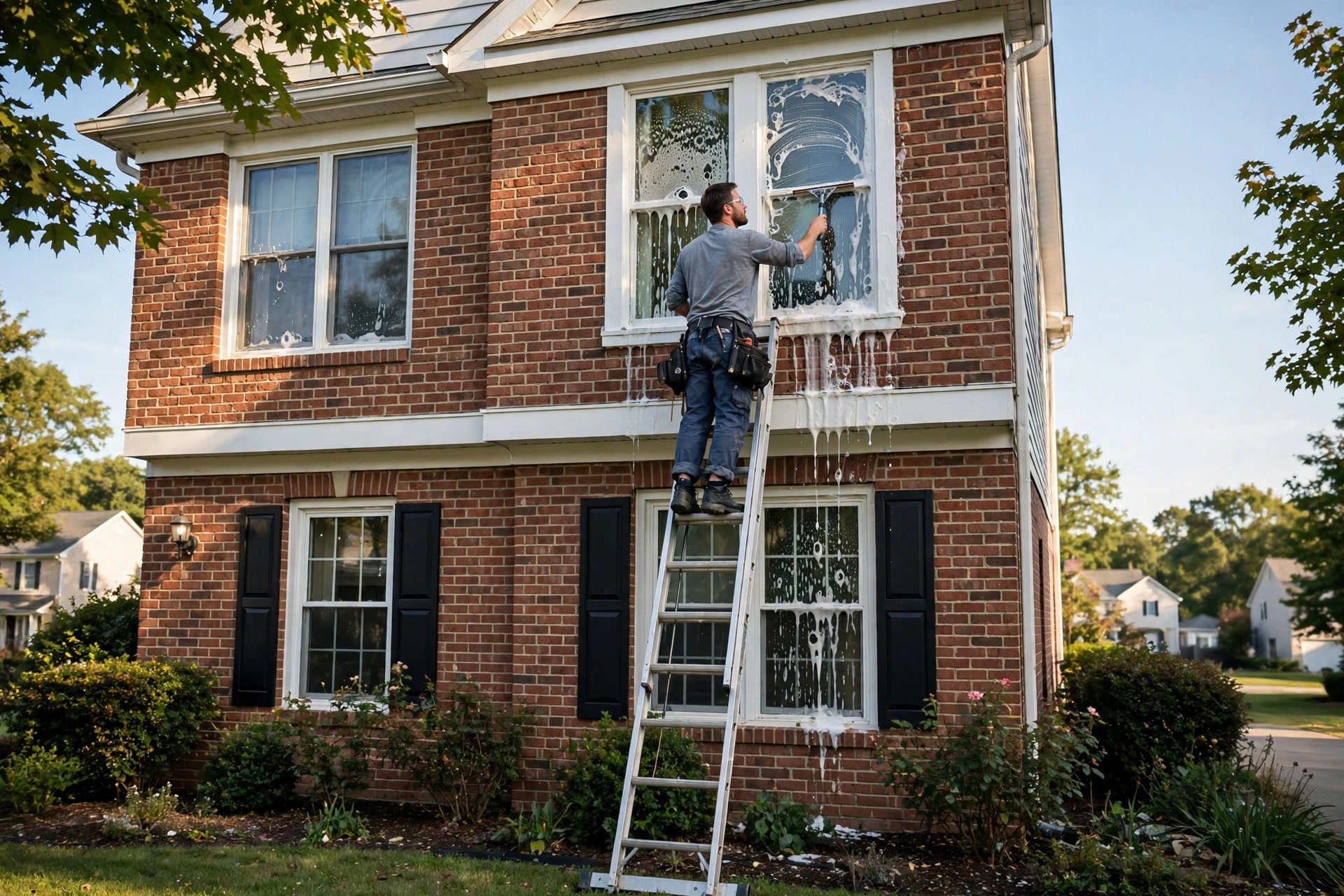
Seasonal demand peaks in spring and fall, so marketing ahead of each rush keeps the schedule full instead of feast or famine.
Referral loops and the review engine
Referrals are the highest-converting leads in window cleaning, and reviews are what turn a referral into a booking. A neighbor says “call my window guy,” the homeowner searches your name, sees 120 glowing reviews, and calls with their mind already made up. The referral opens the door; the reviews close it. You need both running as systems, not accidents.
Build the referral ask into the finished job. After the walkthrough, when the homeowner is happy, say it plainly: “If you know anyone on the street whose windows could use this, I will give you both $25 off.” Hand them two referral cards with your number. The double-sided reward matters: people refer more when their friend benefits too. Track it simply, a note in the customer list, and honor the discount instantly. A referral program that pays slowly dies quietly.
Reviews need the same discipline. The best time to ask is the same moment: right after the walkthrough, phone in hand. “Would you mind leaving us a Google review? It takes about a minute and it really helps our small business.” Then text them the direct review link before you drive away. Asking in person plus a texted link converts dramatically better than an email three days later. Aim for a steady flow, five to ten new reviews a month, rather than bursts. Google rewards consistency, and a profile with fresh reviews outranks a stale one with a higher total.
Respond to every review, good and bad. Thank the happy customers by name and mention the service: “Glad the second-story windows came out great, Sarah.” For bad reviews, respond calmly, take responsibility where it is due, and move the conversation to a phone call. Future customers read your responses as closely as the reviews themselves, and a professional reply to a complaint can win more trust than ten five-star ratings. For a deeper playbook on review generation, see our guide to getting more Google reviews for window cleaning companies.
Partner referrals multiply the effect. Real estate agents, property managers, house cleaners, and lawn care crews all meet homeowners at the exact moment window cleaning is relevant. Offer them a simple deal: a referral fee or reciprocal referrals, and make it effortless with a one-page partner sheet they can hand to clients. Five active partners sending one job a month each is a meaningful revenue stream that costs you nothing until it pays.
The marketing ideas scorecard
Not every idea deserves the same effort. The table below scores the core window cleaning marketing ideas on cost, effort, and how fast they produce bookings, so you can pick the right mix for where your business is today.
| Marketing idea | Best for | Cost | Effort | Speed of results |
|---|---|---|---|---|
| Door hangers on target streets | Filling residential routes fast | Low ($50 to $150 per 500) | Medium (design, print, hang) | Days |
| Neighbor knock while on the job | Same-day add-on bookings | Near zero | Low (a short script) | Same day |
| Storefront route prospecting | Recurring monthly revenue | Near zero | Medium (walking and pitching) | Weeks |
| Google review system | Winning local search long term | Near zero | Low (ask on every job) | Months (compounds) |
| Before and after social content | Free proof that books jobs | Near zero | Medium (consistent posting) | Weeks |
| Referral rewards program | High-converting warm leads | Low (discounts only on converted jobs) | Low | Weeks |
| Seasonal rebooking campaigns | Bringing past customers back | Low (text and email) | Low | Days |
| Google Ads for local searches | Capturing ready-to-buy searches | Medium ($500+ a month) | Medium (setup and tuning) | Days (once live) |
| Partner referrals (agents, cleaners) | Steady warm introductions | Near zero | Medium (relationship building) | Months |
| Yard signs at job sites | Neighborhood visibility | Low (one-time sign cost) | Low | Days |
The pattern is clear: the cheapest ideas are also the fastest. Door hangers, neighbor knocks, review requests, and rebooking texts cost almost nothing and book jobs this week. Paid ads and SEO are worth adding once those are running, because they capture demand your free efforts create. Many owners make the mistake of starting with ads; start with the street instead.
What to spend: three marketing budgets
Marketing spend should match the stage of the business. A solo operator does not need an agency; a five-truck company cannot live on door hangers alone. Here is how to think about it at three stages.
The DIY route builder
For solo operators and new businesses. You are the marketing department, and your budget buys materials while your time does the work.
- Door hanger printing and yard signs
- A simple review link tool or QR cards
- Postcards or texts for seasonal rebooking
- Your time: 4 to 6 hours a week on hangers, content, and follow-up
The growth engine
For established crews ready to fill a second truck. Systems replace hustle, and paid channels start pulling their weight.
- Everything in the DIY tier, systematized
- Google Ads on high-intent local searches
- A CRM with automated review requests and rebooking reminders
- Part-time help or a freelancer for content and ad management
The market owner
For multi-crew companies defending a territory. Marketing becomes a managed operation with clear targets per channel.
- Full-funnel Google and social ads with tracked cost per booking
- SEO content targeting every service and neighborhood
- Dedicated commercial sales effort for contracts and property managers
- Automated referral, review, and rebooking systems across the whole customer base
Whichever tier you are in, the discipline is the same: track where each booking came from, even if it is just a question at payment (“how did you hear about us?”), and put more behind what works. Most window cleaners are surprised to learn their best channel costs them almost nothing.
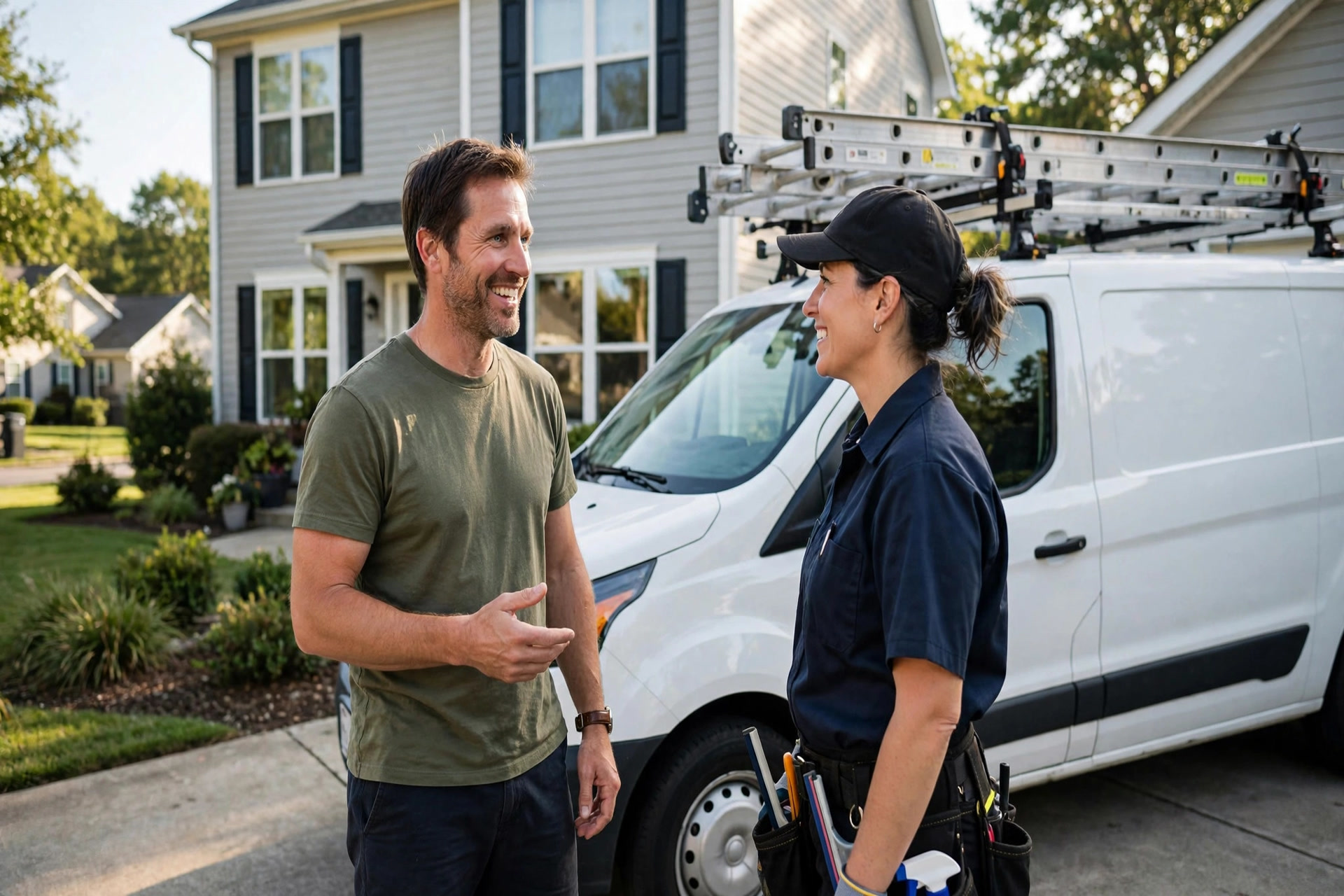
Every finished job is a marketing asset: a review, a referral, a yard sign, and a neighbor who just saw the result.
Your rollout checklist
Work through these in order. Each one builds on the last.
- 1Pick your target neighborhoods. Choose two or three areas with the right homes and commit to owning those streets before expanding.
- 2Print door hangers and yard signs. Professional design, large phone number, one clear offer, and signs readable from a passing car.
- 3Set up your review link. Create the direct Google review link, save it on your phone, and prepare the text you will send after every job.
- 4Build the customer route list. Every past customer with street, last service date, and service type, ready for rebooking campaigns.
- 5Start the photo habit. Before and after shots on every job, same angle, and post two to three times a week without fail.
- 6Launch the referral offer. Double-sided discount, referral cards in hand, and a simple tracking note so rewards pay out fast.
- 7Walk your first commercial strip. Price sheet and photos ready, pitch ten storefronts, and follow up with every maybe within a week.
- 8Run the seasonal rebooking campaign. Text and email the route list ahead of the next seasonal peak with a clear booking window.
- 9Recruit five partner referrers. Real estate agents, house cleaners, and lawn care crews with a simple one-page partner offer.
- 10Track every booking source. Ask how each customer found you, double down on the winners, and cut what does not book.
Frequently asked questions
What is the best marketing for a new window cleaning business?
Door hangers and neighbor knocking on streets where you are already working. They cost almost nothing, they book jobs within days, and they build the dense routes that make the business profitable. Add Google review requests from day one so your profile compounds while you work.
How much should a window cleaning company spend on marketing?
A solo operator can grow on $100 to $300 a month in materials plus consistent effort. Established crews typically spend $500 to $1,500 a month adding paid search and automation. Multi-crew companies invest $2,000 to $5,000 a month across ads, SEO, and commercial sales. Spend should follow booked revenue, not lead it.
How do I get commercial window cleaning contracts?
Walk commercial strips with a price sheet and photos, and pitch a simple monthly plan. Then target property managers, who control multiple buildings each, with a reliability pitch: scheduled service, photo confirmation, one invoice. Restaurants and car dealerships are strong first targets because clean glass matters visibly to their business.
Do Google Ads work for window cleaners?
Yes, for high-intent searches like “window cleaning near me,” because the buyer is ready to book. They work best once your Google profile has strong reviews, since ad clicks land on your profile and reviews decide the call. Start with a tight service area and a clear offer, and track cost per booked job, not cost per click.
How fast should I follow up on a window cleaning quote?
Within minutes, not days. Send the quote with before and after photos from similar homes, then follow up the next day by text if there is no reply. Most lost quotes are not lost on price; they are lost to delay. Roofing companies run the same estimate chase at higher ticket sizes, and our breakdown of lead follow-up automation for roofing companies shows how a structured sequence recovers them.
How many Google reviews does a window cleaner need?
There is no magic number, but the pattern is clear: a steady flow of recent reviews beats a large stale total. Aim for five to ten new reviews a month, every month. In most local markets, 80 to 150 reviews with recent activity makes you the obvious choice when a homeowner compares options.
What should I post on social media as a window cleaner?
Before and after photos and short squeegee videos, two to three times a week. Same angle before and after, real jobs, no stock photos. Satisfying cleaning clips get shared far beyond your followers, and every post should make it easy to contact you: phone number in the profile and a clear call to action on offers.
How do I market window cleaning in winter?
Sell interior-only packages (windows, mirrors, glass shower doors), run post-storm cleanup offers after wind and rain, and lean on commercial routes, which need year-round service. Use slow weeks for compounding work: refreshing your Google profile, filming content, and improving the website pages that will rank by spring.
Should I offer discounts to get new customers?
Use discounts strategically, not desperately. A first-clean discount that converts to a full-price recurring plan is smart. A neighbor discount while your ladders are already up is smart, because the marginal cost is tiny. Blanket discounting that trains customers to wait for deals is not. Protect the recurring rate on commercial contracts especially.
How do I get repeat customers for window cleaning?
Keep the route list and contact it on schedule: a text or postcard every six months saying their windows are due. Offer a maintenance plan at the first booking, not later, when enthusiasm is highest. Seasonal campaigns give past customers a reason to book now rather than someday, and each repeat visit costs you nothing in new marketing.
Turn your best streets into booked routes
Digital Hayder builds marketing systems for window cleaning companies: review engines, rebooking campaigns, commercial prospecting pages, and automated follow-up that turns quotes into scheduled jobs. Tell us about your routes and we will design the system around them.
Contact Us