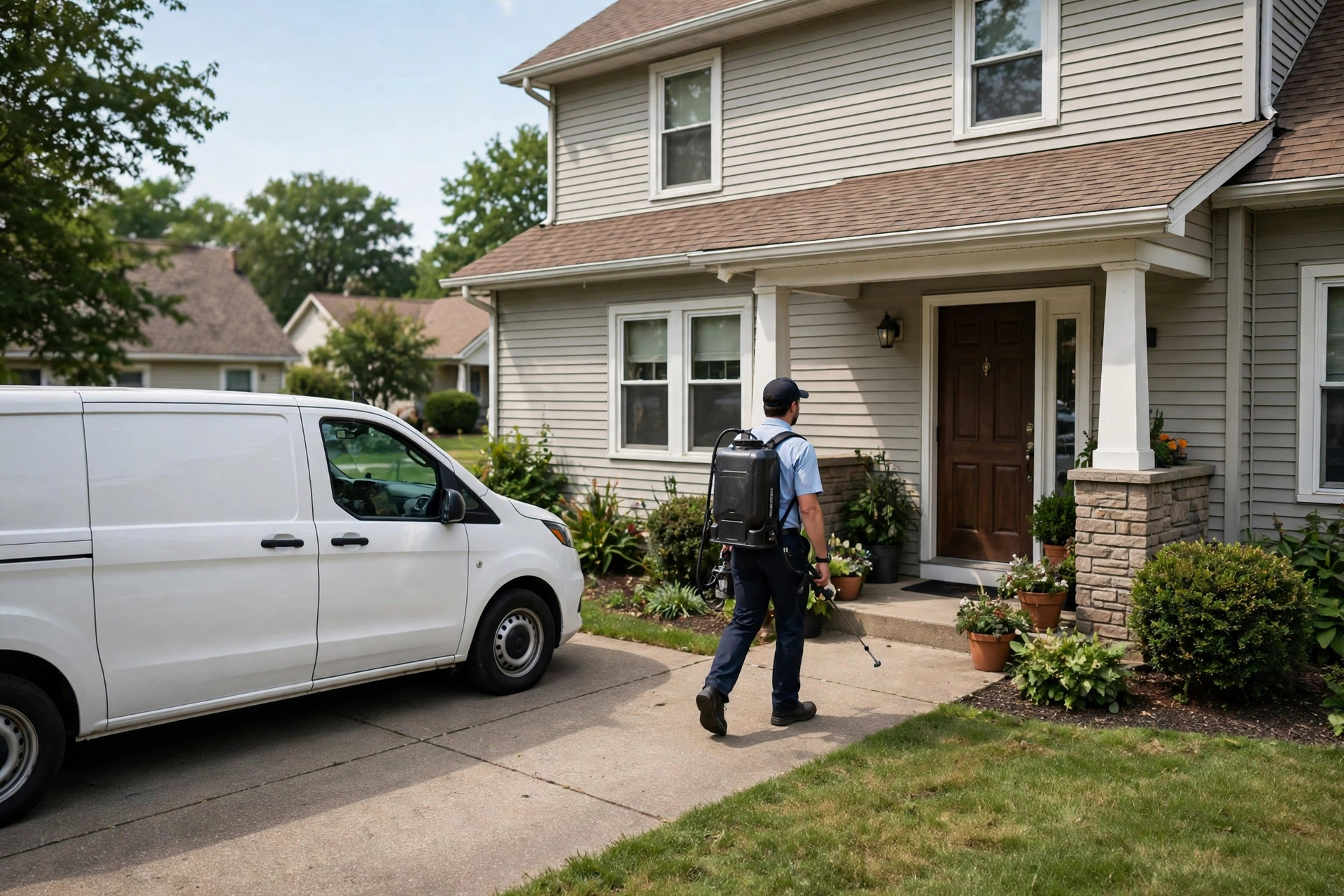
A homeowner finds wasps pouring out of the eaves at 6pm. She calls the first pest control company on Google. Nobody answers. She does not leave a voicemail, she does not wait, she calls the second company. That is how pest control works: the caller is not browsing, they are panicking, and they will hire whoever picks up first. Your technicians are on roofs and in crawl spaces all day, so your phone misses calls during exactly the hours panicked homeowners call. Missed call text back is built for this reality. The moment a call goes unanswered, the caller gets a text that says you are on it, asks what they are dealing with, and gets them scheduled. This guide covers the urgency-driven version of the system: emergency keyword detection, seasonal spike handling, the simple CRM setup, and copy-paste templates for every pest scenario.
The quick answer
- What it is: an automatic text to anyone whose call your pest control company misses, sent within a minute from your business number.
- Why pest control needs it: callers are dealing with an active problem and will hire the first company that responds. Voicemail loses nearly every one of them.
- The money math: recovering 5 missed calls a month, at a $350 average first service plus recurring plans, adds roughly $21,000 a year in first-year revenue.
- The core setup: instant text-back, emergency keyword detection (wasps, termites, bed bugs), pest-type routing, and same-day scheduling.
- Typical cost: $15 to $50 a month standalone, or $30 to $100 a month inside a CRM with pipelines and review requests.
- Setup time: one afternoon for the basic flow; a second day for keyword routing and seasonal templates.
The panic caller: why pest control is different
Most service businesses get callers who are shopping. Pest control gets callers who are scared. There are wasps in the wall, termite wings on the windowsill, a mouse in the kitchen at midnight, bed bugs before out-of-town guests arrive. These callers are not comparing three quotes over a week. They want someone at their house today, and the first company that answers the phone usually gets the job. Industry experience across home services puts the first-responder win rate at well over half of all emergency calls. Speed is not a nice touch in pest control. Speed is the product.
This urgency creates a brutal pattern for small pest control companies. Your technicians are in the field from morning to evening, which is when the calls come. The office, if you have one, is one person doing dispatch, billing, and callbacks. During swarm season or after a storm, call volume can triple in a week while your capacity to answer stays flat. Every missed call in that window is a customer hiring your competitor, and pest control customers are sticky: whoever handles the emergency usually wins the quarterly plan too. One missed call can cost you the $350 first service plus $400 to $600 a year in recurring treatments.
There is a second pattern worth understanding: the embarrassment factor. People feel ashamed about pest problems. They do not want to leave a detailed voicemail describing the roaches in their kitchen. Texting feels private and low-pressure, which is why panicked callers often prefer it once offered. A text that arrives a minute after the missed call gives them an easy, discreet way to say “wasps in the eaves, can someone come today” without saying it out loud to a machine.
The good news is that pest control questions are highly predictable. The same ten pests drive the large majority of calls: ants, wasps, termites, bed bugs, mice, roaches, spiders, mosquitoes, fleas, and wildlife. That predictability lets you build keyword routing that sorts callers automatically and reply templates that answer the real question in each case. A wasp caller needs same-day service. A mosquito caller needs a quote for the season. Different pests, different replies, and the system can tell them apart.
How the pest control text-back flow works
The flow starts like every text-back system: missed call, automatic text within 60 seconds, caller replies, you schedule. The pest control version adds one layer on top: keyword detection that reads the caller’s reply and routes them by urgency before a human even looks at the inbox.
Here is the practical version. The first text asks: “Sorry we missed your call. What pest problem are you dealing with?” The caller replies in plain words: “wasps in the wall,” “think we have termites,” “ants in kitchen.” Your CRM scans the reply for your keyword list and tags the conversation: emergency, same-day, or standard. Emergency tags trigger an instant alert to the owner’s or dispatcher’s phone. Same-day tags go to the top of the scheduling queue. Standard tags get the normal reply flow. The human still writes the actual reply, but the system has already told them which fire to fight first.
The keyword list is short and you will build it from your own call history. Emergencies: wasp, hornet, bees in house, termite swarm, bed bug, bat in house, snake. Same-day: mouse, rat, roach, fleas. Standard: ant, spider, mosquito, preventative, quote, quarterly plan. Review and update the list each season, because what counts as urgent shifts: mosquitoes are standard in spring and same-day in peak summer when they are unbearable.
Routing by pest: the table your team actually needs
Different pests need different promises. Telling a wasp caller “we can come next week” is the same as telling them to call someone else. Telling a mosquito caller “we will be there in an hour” sets an expectation you cannot keep across a full route. The table below gives your team the right promise for each common call.
| Pest type | Caller urgency | Your reply promise | Scheduling target |
|---|---|---|---|
| Wasps, hornets, bees in structure | Emergency: sting risk, often with kids or pets | “We treat wasp emergencies same day.” | Today, technician dispatched between route stops |
| Termites, swarmers | High: fear of structural damage | “We will get an inspector out for a free termite inspection.” | Within 24 to 48 hours, free inspection first |
| Bed bugs | High: panic, embarrassment, urgency | “We handle this discreetly. A tech can inspect as early as [day].” | Within 24 hours, unmarked vehicle if requested |
| Mice, rats, roaches | Same-day: active infestation in living space | “We can get a tech out [today/tomorrow] for an initial treatment.” | Same day or next day |
| Ants, spiders | Standard: annoying but not urgent | “We can knock that out. Our next opening is [day].” | Within 2 to 3 days, bundle into existing route |
| Mosquitoes, preventative, quotes | Standard: shopping or seasonal | “I can quote that right now. What is the rough size of the yard?” | Quote by text, schedule at convenience |
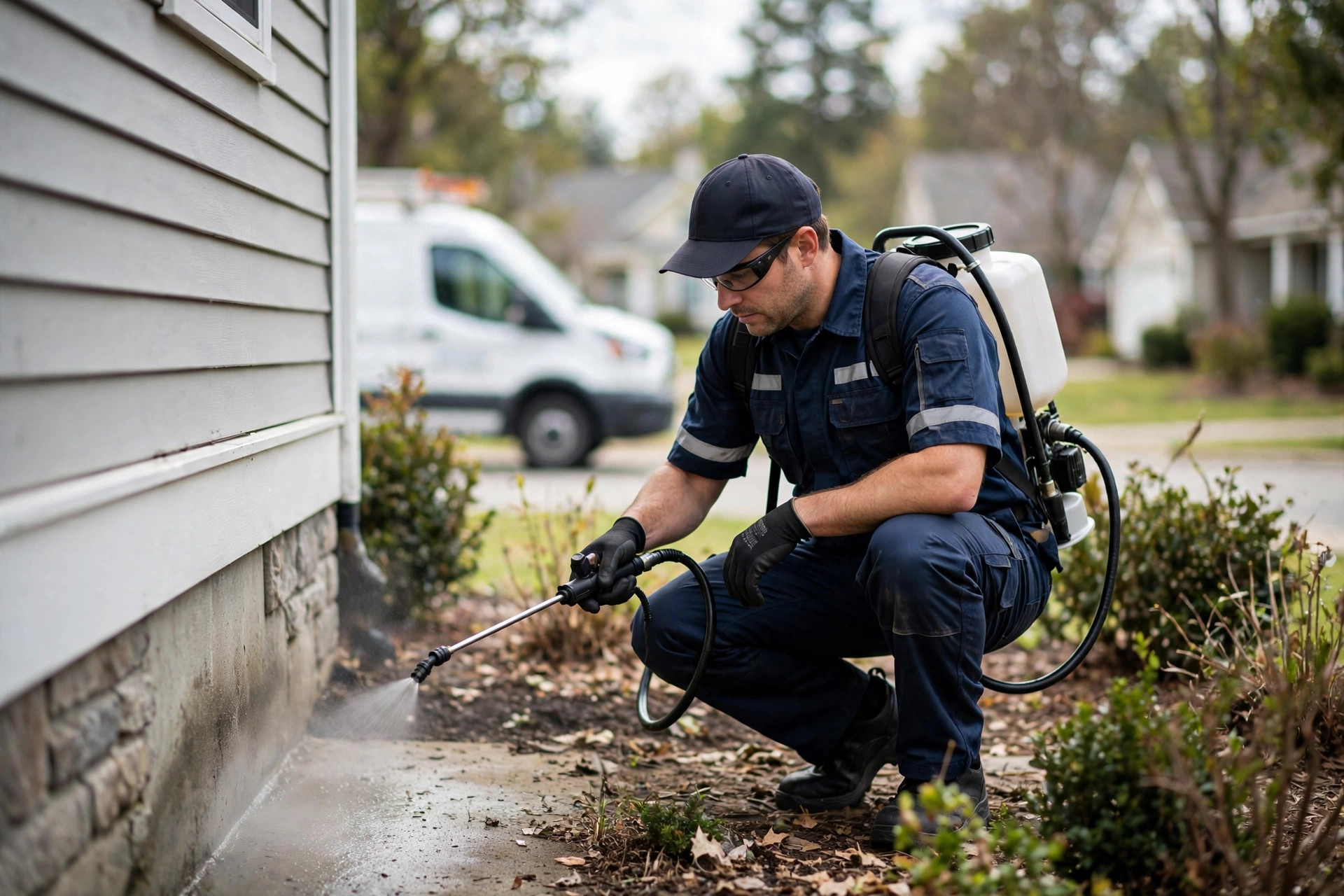
The reply promise depends on the pest. Wasps get same-day, ants get the next route opening.
Copy-paste templates for every pest scenario
These templates cover the calls that make up the bulk of a pest control company’s missed calls. Save them by pest type so whoever is on inbox duty can reply in under a minute.
The initial text-back
“Hi, this is [Company Name]. Sorry we missed your call, our techs are out on jobs right now. What pest problem are you dealing with?” This is the only automatic text. Everything after this is routed by the caller’s answer.
The emergency reply (wasps, hornets, stinging insects)
“That is exactly what we handle. We do same-day wasp treatments. Are you at [address area]? I can get a tech out today between [window]. Is anyone in the house allergic to stings?” The allergy question does two things: it shows you take the danger seriously, and it gives you triage information for the technician. Always give a time window, not a vague “soon.”
The termite reply
“Termites are stressful, but this is fixable. We do free termite inspections, and most treatments are straightforward once we see the extent. I can get an inspector out [day]. What is the property address?” Termite callers need calm confidence and a free inspection. Never quote treatment prices over text. The inspection is the product at this stage.
The bed bug reply
“We deal with this all the time, and it is more common than people think. We can inspect as early as [day], and our vehicles are unmarked if you prefer discretion. How many rooms are affected?” Normalizing the problem gets past the embarrassment. Offering discretion unprompted shows you understand the caller’s real worry.
The general pest reply (ants, spiders, mice, roaches)
“We can take care of that. Our initial treatment is [price] and covers [scope]. After that most customers go on our quarterly plan at [price] per visit, which keeps them from coming back. I have [day] open. Want me to book it?” This template sells the plan, not just the visit. The recurring plan is where pest control profit lives, so every first-visit conversation should mention it.
The quote shopper reply (mosquitoes, preventative)
“Happy to quote that. Mosquito treatments run [range] per visit for a typical yard, or [range] for the season. How big is the yard, roughly?” Quote shoppers are not emergencies, so take the time to get the detail that makes the quote accurate. A fast rough quote by text beats a callback tomorrow.
The next-morning follow-up
Send automatically to stalled conversations: “Hi, this is [Company Name] checking back. We still have [today/tomorrow] open for your [pest] problem. Reply YES and I will lock in a time.” For emergency keywords, have a human check the thread before the automation sends, in case the situation changed overnight.
Handling seasonal spikes without hiring
Pest control has seasons, and each season breaks the phone in a different way. Spring brings termite swarmers and ants. Summer brings wasps, mosquitoes, and fleas. Fall brings mice and rats looking for warmth. After heavy rain or storms, everything spikes at once. Your text-back system needs a seasonal mode, because the replies that work in February will not survive August.
The practical approach is a seasonal template pack. Four times a year, spend 30 minutes updating three things: the keyword urgency list, the reply templates for the season’s top three pests, and the scheduling promise. In wasp season, the initial text can name it: “Wasp season is here and we are running same-day treatments. What are you dealing with?” That one line tells the caller you already understand their problem, which builds instant confidence.
Capacity is the harder part. When calls triple, same-day promises break. The fix is honest triage in the text flow. Emergencies keep the same-day promise. Everything else gets a realistic window: “We are slammed this week with wasp calls. I can get you [day]. Want me to hold it?” Callers accept a wait when you are honest about why. They do not accept silence. Also use the spike to sell plans: “Our quarterly customers get priority scheduling during busy weeks” turns a capacity problem into a plan upgrade.
Storms deserve their own playbook. After a major storm, mosquitoes and wildlife calls surge for two weeks. Prepare a storm template in advance and activate it the day after: “After the storm we are seeing a lot of [pest] calls. We are adding extra route days. Reply with your address and I will get you on the schedule.” Being first with a plan after a storm wins a wave of customers at once.
The simple CRM setup
You do not need an enterprise system. A small pest control company needs a CRM that does five things: sends the automatic text on a missed call, detects keywords, holds reply templates, shows a pipeline of conversations by urgency, and sends review requests after the job. That is the whole requirement list.
- 1Connect your business number. Port or forward your main number into the texting system so texts come from the number callers dialed. Test with a real missed call and time the text. Under 60 seconds.
- 2Build the keyword list. Enter your emergency, same-day, and standard keywords. Set emergency matches to page the owner or dispatcher instantly. Test each keyword with a sample reply.
- 3Load templates by pest. Save the seven templates above, tagged by pest type and urgency. Whoever covers the inbox picks the template, fills the brackets, and sends.
- 4Set up the urgency pipeline. Three columns: Emergency, Same-day, Standard. Conversations land in columns automatically by keyword. The team works the Emergency column first, always.
- 5Add the follow-up automation. Next-morning nudge for stalled chats. Day-before reminder for scheduled visits. Review request text after the job is marked complete.
- 6Write the dispatcher routine. Morning: clear overnight texts oldest first, emergencies first. Midday: check the inbox between dispatches. Evening: set the after-hours message and confirm tomorrow’s route.
- 7Track five numbers weekly. Missed calls, texts sent, replies, jobs booked, plans sold. If jobs are high but plans are low, the plan pitch needs work. If texts are low, the trigger is broken.
Every missed call is a customer hiring someone else unless a text goes out within the minute.
What it costs and what it earns
A standalone text-back tool costs $15 to $50 a month. A CRM with keyword routing, pipelines, and automations costs $30 to $100 a month. A done-for-you setup runs $300 to $1,000 one-time. Against pest control unit economics, the payback is fast. The average first service runs $150 to $400, and a quarterly plan adds $400 to $600 a year. Recovering five missed calls a month, with half becoming customers and half of those taking plans, adds roughly $21,000 in first-year revenue against a few hundred dollars in software.
| Setup option | Monthly cost | Best for | Watch out for |
|---|---|---|---|
| Standalone text-back tool | $15 to $50 | One-truck operations that just need the missed call text | No keyword routing; someone must triage every reply manually |
| CRM with keyword routing | $30 to $100 | Companies with 2 or more techs that need urgency sorting | Build the keyword list from real calls, not guesses |
| Done-for-you setup | $300 to $1,000 one-time plus monthly | Owners who live in the field and never touch software | Make sure the seasonal template updates are included |
Mistakes pest control companies make
The deadliest mistake is the slow emergency reply. The automation sends the first text, the wasp caller replies “wasps in the wall,” and nobody reads it for two hours. Keyword alerts exist to prevent exactly this. If your emergency replies take longer than 15 minutes, the system is decoration. The second mistake is quoting termite treatments over text. Termite jobs vary too much to price blind, and a wrong number either scares the caller or traps you. Quote the free inspection, not the treatment. The third is the vague scheduling promise: “we will fit you in soon” means nothing to a panicked caller. Name the day and the window. The fourth is ignoring the plan pitch. Every first-visit conversation should mention the quarterly plan, because recurring revenue is the business and one-time sprays are just the entry point. The fifth is running the same templates all year. Update the keyword list and the seasonal templates quarterly, or August will break a system built for February.
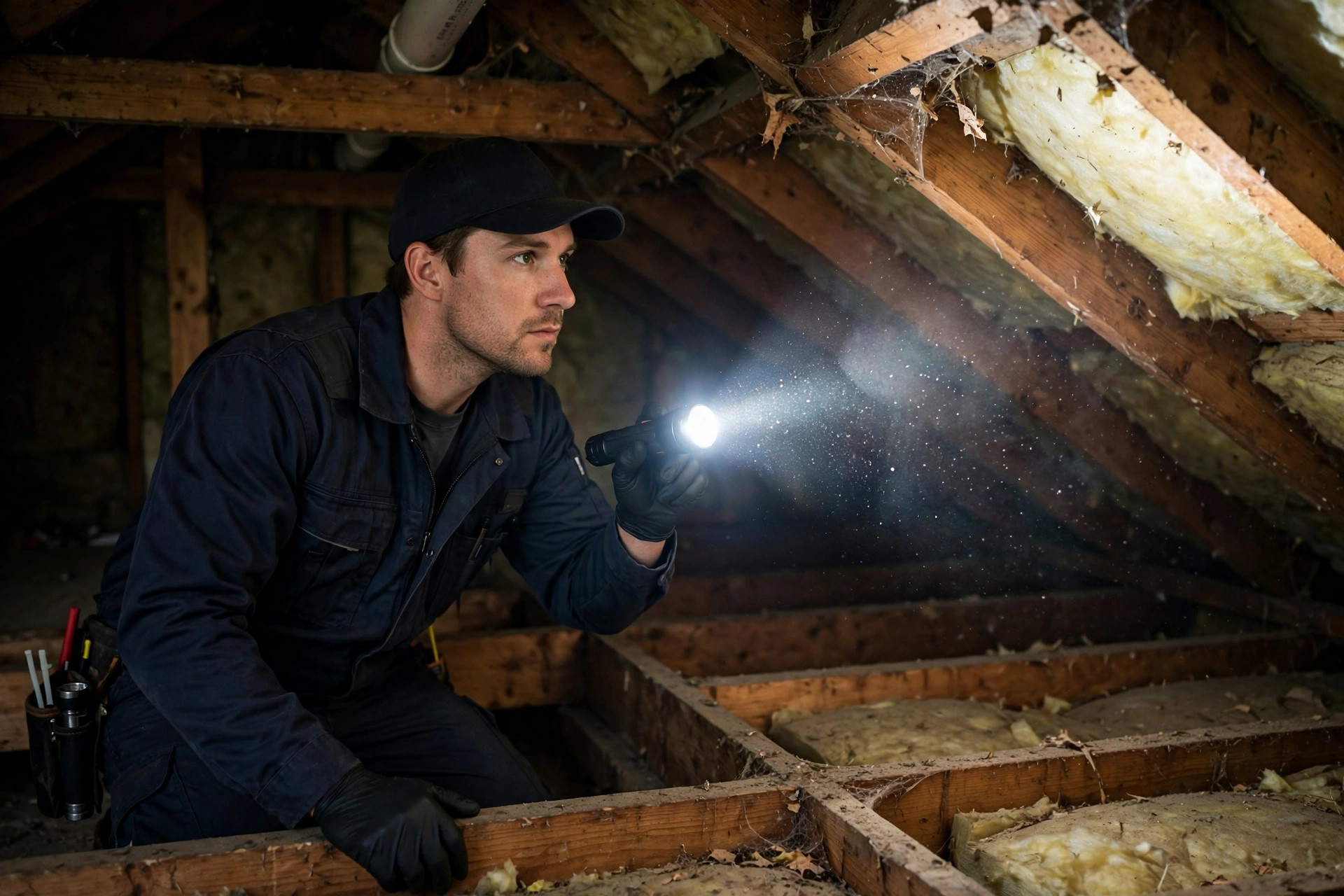
Free inspections convert termite fear into scheduled visits. Quote the inspection, never the treatment, over text.
The pest control text-back playbook in one page
Every missed call gets a text within 60 seconds asking what pest they are dealing with. Keyword detection sorts replies into emergency, same-day, and standard. Emergencies page a human instantly and get a same-day promise with a time window. Termite callers get calm confidence and a free inspection, never a price. Bed bug callers get normalization and discretion. General pest callers get the initial treatment price plus the quarterly plan pitch. Quote shoppers get a fast rough quote by text. Stalled chats get one nudge the next morning. Seasonal template packs go live four times a year, and storm templates activate the day after bad weather. Every job ends with a review request text. Count the five numbers weekly. Run this and the panicked caller who would have dialed your competitor becomes your customer, and then your quarterly plan member.
The same urgency logic applies to other home services. Our guide to missed call text back for plumbers covers emergency callers with water pouring through ceilings, and missed call text back for HVAC companies handles the no-heat, no-cooling version of the panic caller. If you want calls answered by voice instead of just texted back, see how an AI answering service for pest control companies covers the phones around the clock.
Frequently asked questions
How fast do we need to reply to an emergency text?
Within 15 minutes, and faster is better. The automatic text buys the first minute, but a wasp or bed bug caller who waits an hour for a human reply will call someone else. Set keyword alerts to page the owner or dispatcher instantly.
Should we quote prices over text?
Quote standard treatments like general pest control and mosquito sprays, where prices are predictable. Never quote termite treatments or bed bug jobs blind. For those, sell the free inspection and price the job in person.
What happens during seasonal spikes when we cannot keep same-day promises?
Triage honestly. Emergencies keep the same-day promise. Everything else gets a realistic window and an honest explanation: “We are slammed with wasp calls this week. I can get you Thursday.” Callers accept a wait. They do not accept silence.
Do we need a full CRM or just a text-back tool?
A one-truck operation can start with a standalone text-back tool. Once you have two or more techs, keyword routing and an urgency pipeline pay for themselves by sorting the inbox automatically. The review request automation alone is worth the upgrade.
How do we handle after-hours emergency calls?
Use an after-hours template that names your morning opening time and invites a text reply. In the morning, answer overnight texts oldest first with emergencies first. If you offer true 24-hour emergency service, say so in the text and route those replies to the on-call phone.
Catch the panic caller before they dial your competitor
Digital Hayder sets up missed call text back for pest control companies: keyword-based urgency routing, templates for every pest, seasonal playbooks, and the dispatcher routine that keeps emergency replies under 15 minutes. Tell us about your top three pests and we will map your setup before you pay anything.
Contact Us