Missed calls are the quietest way a tree service loses money. The phone rings while the crew is forty feet up a pine, the chipper is screaming, and nobody is anywhere near the office. The caller hears voicemail, hangs up, and dials the next company on the list. Missed call text back for tree service companies fixes that exact moment: the instant a call goes unanswered, the caller automatically gets a text asking what they need, and the conversation starts while they are still holding the phone. This guide covers how it works, why instant replies win tree jobs, the exact message scripts that book work, the storm season playbook, setup steps, and the revenue math on captured jobs.
The quick answer
- It texts every missed caller in under a minute: an automatic text goes out the moment a call goes unanswered, asking what the caller needs.
- Built for crews that cannot answer: climbers aloft, running saws, and storm chaos mean tree companies miss more calls than most trades.
- Speed wins the job: storm callers hire the first company that responds, so a 60-second text beats a callback three hours later.
- Scripts do the heavy lifting: short texts for estimates, storm emergencies, after-hours calls, and quote follow-ups, all written out below.
- Costs very little: most systems run $50 to $200 a month plus a few cents per text, against jobs worth $800 to $3,000 each.
- Live in about a week: connect the business number, load the scripts, set the timing, test with staff phones, then turn it on.
The missed call problem in tree work
Every trade misses calls. Tree service misses more than most, and the reasons are built into the work itself. Your crew spends the day in places phones cannot go: aloft in a canopy with both hands on a saw, on a roofline guiding a limb, or next to a chipper running at full noise. The office, if there is one, is empty from the first job to the last. The owner answers between stops and stops answering entirely when the day gets busy. This is normal in tree work, and it is brutally expensive.
Put numbers on it. Home service businesses routinely miss 25 to 40 percent of incoming calls during working hours, and tree companies sit at the high end of that range because the whole team works outdoors around loud equipment. After hours the miss rate is effectively 100 percent. Now the painful part: industry call tracking consistently shows that most callers who reach voicemail do not leave a message. They hang up and call the next company. A few will try once more later. The rest are gone, and you never learn their names.
Storm season multiplies the damage. A wind event can push a week of calls into a single morning. You are already booked on emergency work from the first callers, so callers four through forty hit voicemail in a row. Each one is a homeowner with a tree on the driveway and a list of three companies to try. The company that answers, or texts back instantly, gets the work. The other two get voicemail. This is not a marketing problem. Your advertising worked. The caller found you and dialed. The sale died in the sixty seconds after the fourth ring.
The standard advice, hire someone to answer the phones, helps but does not solve it. A part-time office person still misses the 6 AM storm calls, the Saturday calls, and the evening calls. An answering service takes messages but cannot triage, cannot book, and costs $1 to $2 per call before you have even spoken to the customer. Missed call text back is cheaper than both and faster than either, because it reaches the caller in the minute they are most ready to hire.
How missed call text back works
The mechanics are simple, which is the point. Your business number connects to a system that watches for unanswered calls. When a call rings out, goes to voicemail, or hits a busy line, the system sends a text to the caller’s number within a minute, often within seconds. The text is short, personal, and asks one question: what do you need. When the caller replies, you get an instant notification, and the conversation continues by text until someone books the estimate or a human takes over.
The timing matters more than the wording. A text that arrives 45 seconds after the missed call feels like a company that cares. The caller is still holding the phone, still thinking about the tree. A text that arrives the next morning feels like spam. Set the delay to one minute or less, and never let it drift. This is the single most important setting in the whole system.
After-hours calls get their own version. A 9 PM missed call should not get the same text as a 10 AM one. The evening text acknowledges the hour, promises a first-thing response, and asks for the details now so the morning starts with a booked estimate instead of a game of phone tag. Storm nights get a third version, covered in the storm playbook below.
It works on the number customers already call. This is not a new number to advertise. The system sits on your existing business line, whether that is a landline, a VoIP number, or the cell you have used for ten years. Customers keep dialing the number on your trucks and your Google profile. Nothing changes for them. Everything changes for you, because no call ends in silence anymore.
Replies land where your team can act on them. The text conversation should live in your CRM or a shared inbox, not on one person’s personal phone. Every reply creates or updates a lead record with the caller’s number, the time of the missed call, and the full text thread. Your estimator sees it, the office sees it, and nothing depends on one person remembering to check their messages. If you want the full conversation handled automatically, not just started, pair this with an AI chatbot for tree service companies that can run the triage and booking by itself.
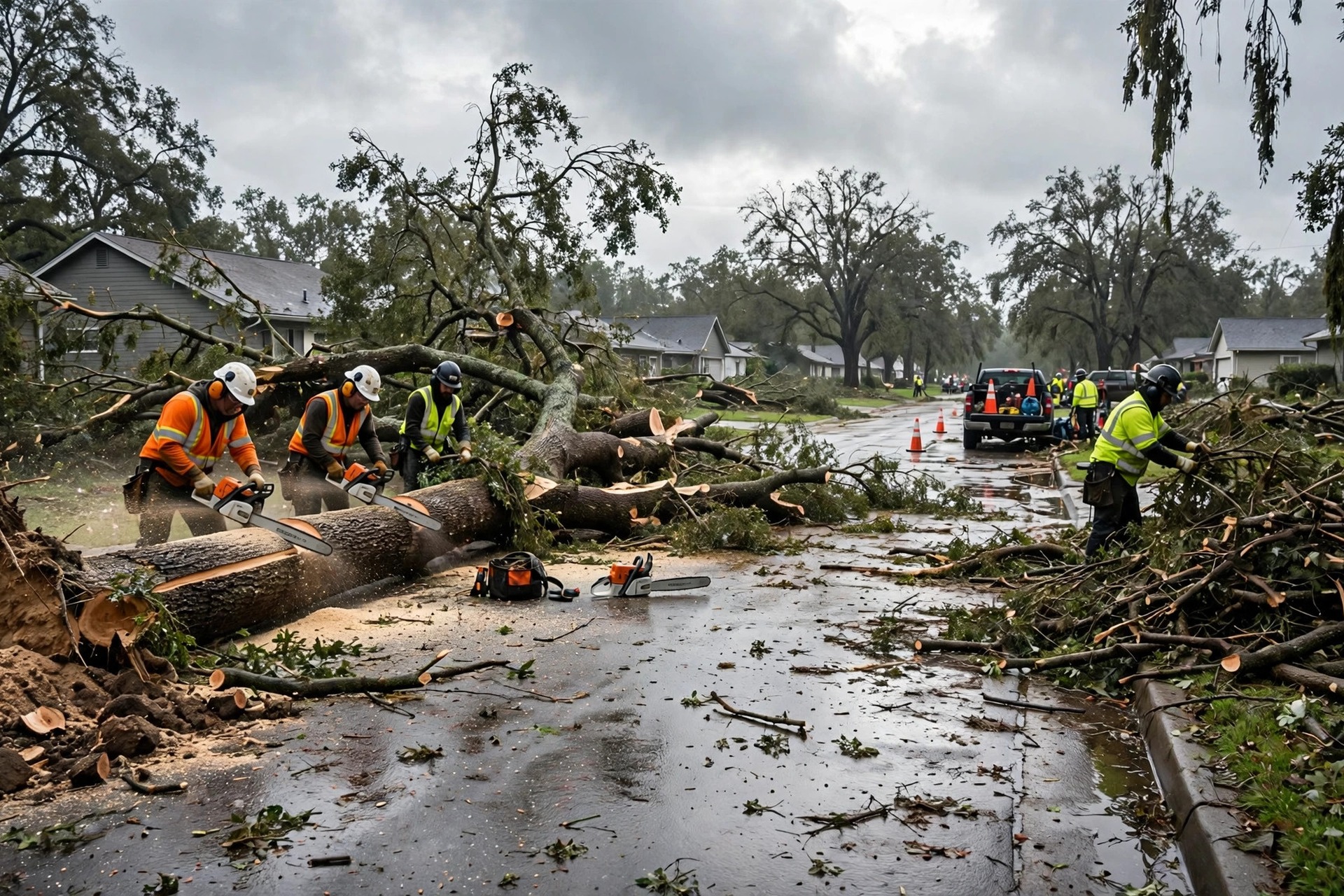
After a storm, dozens of callers hit voicemail in a row. An instant text turns those missed calls into booked work.
Why instant replies win tree jobs
Tree work is an urgency business wearing a routine business costume. Half your calls are routine trims the homeowner will book next week. The other half are problems that feel like emergencies to the caller, and emergencies do not wait for callbacks. The company that responds first wins a share of jobs far out of proportion to its size or its reviews, because the caller stops shopping the moment someone competent answers.
The research on response speed is consistent across home services. Lead response studies repeatedly find that contacting a lead within five minutes produces dramatically higher conversion than waiting even thirty minutes, and that the first company to respond wins the job most of the time. In tree work the effect is stronger, because the caller’s need is visual and stressful: a tree leaning toward the house does not feel like a project, it feels like a threat. A text that arrives in under a minute says “we are on it” at the exact moment the caller needs to hear it.
Compare the three outcomes for a missed 7 AM storm call. Outcome one, voicemail only: the caller hangs up and dials the next company. You have lost the job before your day starts. Outcome two, you call back at lunch: the caller already booked someone else at 8 AM, and your callback is an annoyance. Outcome three, instant text back: the caller describes the tree by text at 7:02, sends photos at 7:05, and your estimator calls at 7:30 with a plan. Same caller, same morning, completely different result. The only variable is speed.
The table below shows how reply time maps to typical outcomes for tree service leads. These are directional numbers drawn from home service lead data, not promises, but the pattern holds across every market.
| First response time | Typical caller behavior | What it means for you |
|---|---|---|
| Under 1 minute (auto text) | Caller replies with details and photos while still engaged | Highest conversion; you are effectively first to respond every time |
| 5 to 15 minutes (fast callback) | Caller may still be shopping but has not booked yet | Strong conversion on routine work; storm callers often already gone |
| 1 to 3 hours (lunch callback) | Most callers have contacted two or three competitors | You are competing on price against companies that already quoted |
| Next day | Caller booked someone else or solved it another way | Near zero conversion on storm work; weak on routine work |
| Voicemail only, no follow-up | Caller never hears from you | The job, the review, and the referral all go to a competitor |
The exact texts that book tree work
Good missed call texts share three traits: they arrive fast, they sound like a person, and they ask one clear question. Bad ones read like corporate apologies and ask for nothing. Below are the scripts that work for tree companies, situation by situation. Adapt the company name and tone, but keep the structure.
The standard missed estimate call. “Hi, this is Mike with Summit Tree Service. Sorry we missed your call, our crew is up in the trees right now. What tree work do you need help with?” Short, human, explains the miss in a way every caller understands, and ends with an open question. The reply tells you whether this is a trim, a removal, or an emergency, and you take it from there.
The storm or emergency call. “Hi, this is Mike with Summit Tree Service. Sorry we missed your call. If a tree is down or causing damage, reply with your address and a photo and we will get you scheduled today.” This one moves fast on purpose. Storm callers do not want small talk. Address plus photo lets your estimator triage in minutes.
The after-hours call. “Hi, this is Mike with Summit Tree Service. Thanks for calling, we are done for the day. Tell me what you need and I will have an estimate time for you first thing in the morning.” It sets the expectation, morning response, and collects the details tonight so the morning starts with answers instead of questions.
The second nudge. If the caller does not reply to the first text within 30 minutes, one follow-up is worth sending: “Just checking you saw our message. If you still need tree work, reply here and we will take care of it.” One nudge, not three. Persistence past that point turns helpful into pushy.
The quote follow-up. Two or three days after an estimate goes quiet: “Hi, this is Mike with Summit Tree Service. Wanted to check if you had questions about the estimate for the oak removal. Happy to adjust the scope or timing if needed.” Revived quotes are pure profit, and tree tickets are large enough that one save a month matters.
The table below puts the full script set in one place for easy copying into your system.
| Situation | First text | Follow-up |
|---|---|---|
| Missed call, business hours | Hi, this is [Name] with [Company]. Sorry we missed your call, our crew is up in the trees right now. What tree work do you need help with? | After 30 minutes of silence: one short check-in asking if they still need help. |
| Missed call, storm or emergency | Hi, this is [Name] with [Company]. Sorry we missed your call. If a tree is down or causing damage, reply with your address and a photo and we will get you scheduled today. | If no photo after 20 minutes: ask for the address alone so the estimator can plan the route. |
| Missed call, after hours | Hi, this is [Name] with [Company]. Thanks for calling, we are done for the day. Tell me what you need and I will have an estimate time for you first thing in the morning. | Next morning by 8 AM: a personal reply with the estimate window, referencing their details. |
| Missed call, weekend | Hi, this is [Name] with [Company]. Sorry we missed you, we are on weekend jobs. What do you need? I will reply between stops. | Same day: a real reply from whoever is on call, even if brief. |
| Quiet estimate, 2 to 3 days old | Hi, this is [Name] with [Company]. Checking if you had questions about the estimate for [job]. Happy to adjust scope or timing. | After 5 days: a final check-in offering to close the file, which often prompts a decision. |
| Job finished, review request | Hi, this is [Name] with [Company]. Glad we could take care of the [job] today. If you were happy with the work, a Google review would mean a lot: [link]. | No follow-up needed. One ask, sent the same day while the yard looks great. |
Two copy rules keep these working. First, sign every text with a name. “This is Mike” beats “Summit Tree Service” because people reply to people. Second, never send a text that ends without a question or a next step. A dead-end message, “Sorry we missed your call,” gives the caller nothing to do. A question keeps the conversation alive, and the conversation is the sale.
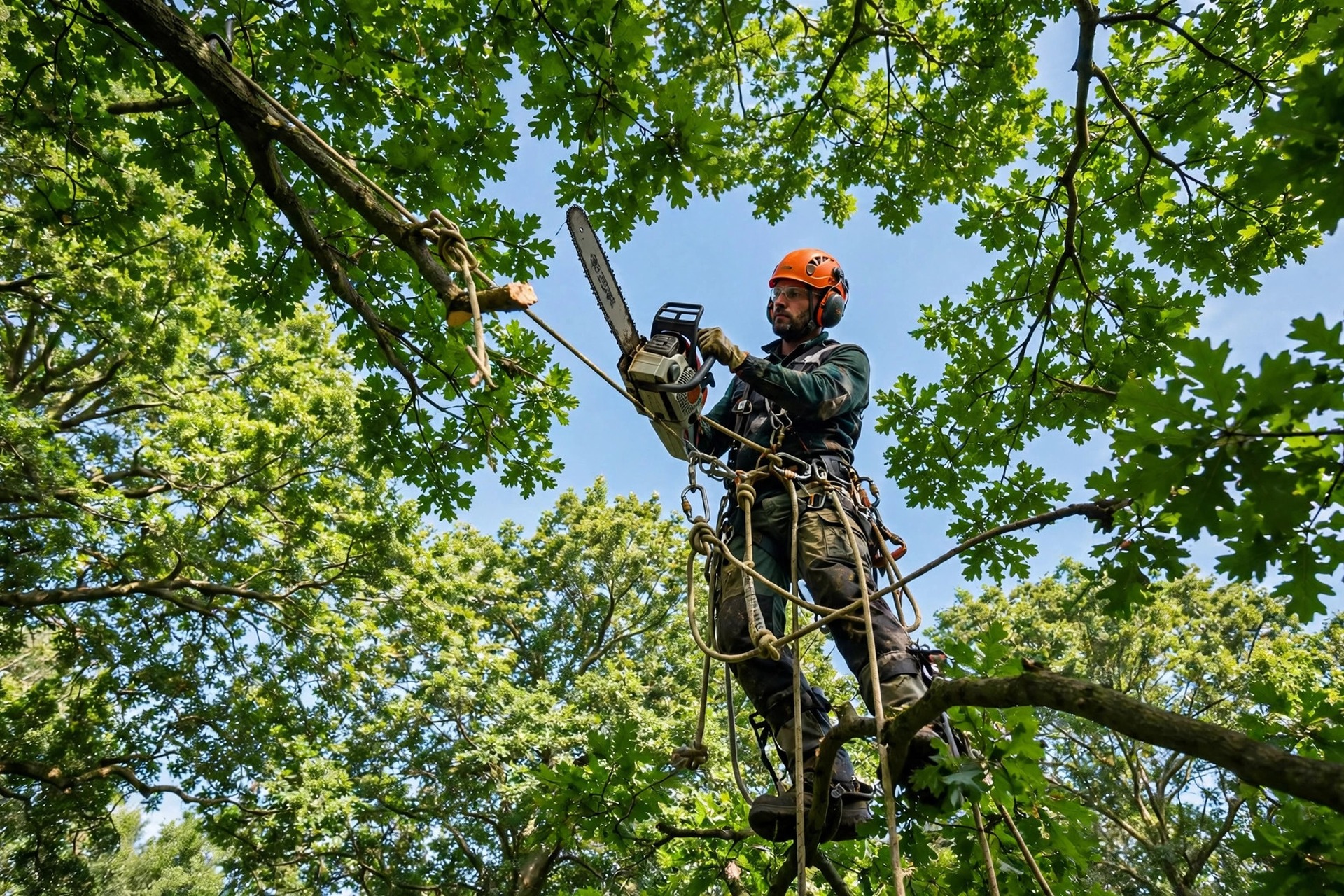
Nobody expects the climber to answer the phone. The auto text covers the call so the crew keeps working.
Setting it up in one week
Missed call text back is one of the simplest automations a tree company can install. No new hardware, no staff hiring, no behavior change for customers. Here is the one-week rollout.
Days 1 to 2: connect the number. Pick the system, most tree companies run this inside their CRM, and point it at your main business line. Test that unanswered calls trigger the text: have a staff member call from a personal phone and let it ring out. Confirm the text arrives within a minute and that replies route to the shared inbox, not to one person’s cell.
Days 3 to 4: load the scripts. Write the five core texts from the table above in your own voice: business hours, storm, after hours, weekend, and the second nudge. Add the quote follow-up and the review request as separate automations tied to your job stages. Keep each text under 320 characters so it sends as a single message on every carrier.
Day 5: set the rules. Define what counts as a missed call: ring-out, busy, and after-hours calls all trigger it. Decide the quiet hours, texts should not fire at 3 AM unless you have a storm mode, covered below. Set who gets notified on each reply: the estimator for new leads, the office for existing customers, you for anything tagged emergency.
Day 6: test like a customer. Call from three different phones at different times: morning, lunch, evening. Reply to the texts the way a customer would, including a photo. Check that the lead records build correctly, that notifications reach the right people, and that nothing looks automated or awkward. Fix the wording that feels stiff.
Day 7: turn it on and tell the team. Show everyone where replies land and who answers what. Agree on response targets: new lead texts answered within 15 minutes during the day, storm texts faster. The system only works if humans finish what it starts.
The storm season playbook
Storm mode is missed call text back at full intensity, and it needs its own setup before the season starts, not during the first storm. When a wind event hits, three things change: call volume jumps tenfold, every caller is urgent, and your crew is already committed. The playbook handles all three.
Switch the scripts. The moment a storm is forecast, flip the system to the storm text for all missed calls: address plus photo, scheduled today. The routine estimate script can wait. Every caller during a storm believes their situation is the emergency, and the photo sorts that out faster than any phone conversation.
Triage by photo, not by call order. As replies come in, sort by what the photos show: trees on structures first, blocked access second, leaning trees third, routine cleanup last. This is the opposite of first-come-first-served, and it is the right call, because the $4,000 emergency removal should not wait behind six fence-line trims that called earlier.
Set honest expectations by text. When the schedule fills, the text changes: “We are booked on storm work through Thursday. We can get to you Friday morning. Reply YES to hold the slot.” Callers accept a wait when it is stated clearly. They do not accept silence. Every caller who gets a straight answer stays your lead, even the ones you cannot reach this week.
Staff the replies. Storm days need a human watching the inbox, even if that human is you between jobs or a family member with a laptop. The auto text starts every conversation, but a person should clear the queue every hour: confirming slots, answering the “are you insured” questions, and flagging the true emergencies. One person on texts during a storm can protect tens of thousands in revenue.
Stand down cleanly. When the surge passes, switch the scripts back and send one closing text to anyone still waiting: “Storm work is caught up. We have estimate slots open this week if you still need us.” That single message converts leftover storm leads into routine work instead of letting them go cold.
Mistakes that kill reply rates
The apology with no question. “Sorry we missed your call!” is a dead end. The caller has nothing to reply to, so most do not. Every text must end with a question or a clear next step.
Sounding like a robot. “This is an automated message from Summit Tree Service LLC. Please state the nature of your inquiry.” Nobody replies to that. Write the way you talk, sign with a first name, and keep it under three sentences.
Texting too late. A next-day text about yesterday’s missed call feels like an afterthought and reads as spam. If the system cannot text within minutes, fix the system before worrying about the wording.
No follow-up on silence. About half of callers reply to the first text. A single polite nudge 30 minutes later catches a meaningful share of the rest. Skipping it leaves easy jobs on the table.
Asking for everything at once. Name, address, photos, insurance details, and preferred times in one text overwhelms people. One question per message, let the conversation breathe, and collect details across two or three exchanges.
Replies going to one person’s pocket. When texts land on the owner’s personal phone, they die on busy days. Route replies to a shared inbox or CRM where the estimator and the office both see them, with notifications that cannot be missed.
Forgetting the review ask. The job is done, the yard looks great, the customer is happy, and nobody asks for the review. Automate it same-day. Review volume drives local rankings, and local rankings drive the calls this whole system is built to catch. For more ways to turn finished jobs into new ones, see our tree service marketing ideas.
Where the texts live: your CRM pipeline
Texts without a system behind them become chaos during a storm. Every reply should create or update a lead record automatically, tagged by source: missed call, storm, after hours, or follow-up. From there a simple pipeline keeps the work organized: new text lead, estimate scheduled, quote sent, follow-up, won, lost. Your estimator works the pipeline instead of digging through a phone.
Tagging pays off twice. First, it tells you which texts produce jobs, so you can tune the scripts with data instead of guesses. If storm texts convert at triple the rate of routine ones, that tells you where to invest. Second, it builds your list. Every missed caller who did not book this time is a homeowner with trees who already knows your name. A quarterly check-in text to that list, timed before storm season, books estimates from people who would otherwise have forgotten you.
You do not need an expensive CRM to start. The requirement is simple: one shared place where texts, calls, and job stages live together, visible to everyone who touches a customer. As volume grows, add the automations in this order: instant text back first, then quote follow-up, then review requests, then reactivation campaigns. Each layer compounds the last. Tree companies in other emergency trades run the same playbook; the missed call text back setup for locksmiths is a useful parallel, since locksmiths live on the same urgency curve.
Every reply lands in one shared inbox, so the estimator and the office see the same conversation.
Your rollout checklist
Work through these in order. Each one builds on the last.
- 1Connect the business number. Point the system at the main line customers already call, and confirm missed calls trigger the text.
- 2Write the five core scripts. Business hours, storm, after hours, weekend, and the second nudge, in your own voice with a real name.
- 3Set the send timing. One minute or less after the missed call, and define quiet hours for non-storm nights.
- 4Build the storm mode. A one-tap script switch for storm days, with the photo-first triage text ready before the season.
- 5Route the replies. Every text lands in a shared inbox or CRM, with notifications to the estimator and the office.
- 6Tag every lead. Missed call, storm, after hours, or follow-up, so you can measure which texts produce jobs.
- 7Add quote follow-up. The two-touch sequence for quiet estimates, tied to your quote stage.
- 8Add the review request. Same-day text after job completion with your Google review link.
- 9Test with staff phones. Morning, lunch, and evening calls, real replies with photos, and check every notification.
- 10Review reply rates weekly. Track texts sent, replies, estimates booked, and jobs won, then tune the weakest script.
Frequently asked questions
Is missed call text back legal?
Texting someone who just called your business about a job is generally treated as a conversational reply, not marketing, but rules vary by state and carrier policies change. Keep texts conversational, never add missed callers to bulk marketing lists without clear consent, include your business name in every text, and check the current rules with your own advisor if you are unsure.
How fast does the text go out?
Within a minute of the missed call on a proper setup, often within seconds. That speed is the entire value of the system, so test it with staff phones before launch and re-test monthly. If texts start arriving late, treat it as an outage, not a minor issue.
What if the caller has a real emergency, like a tree on the house?
The storm script asks for the address and a photo immediately, and flags the reply for urgent human attention. Set up notifications so emergency-tagged replies alert you at once, day or night. The text starts the conversation in seconds; a person still makes the judgment call.
Will it work with my personal cell or do I need a business line?
It works on any number you control, including the cell you have used for years. Most owners keep their long-standing number and add the system on top of it. What matters is that customers keep dialing the number they know, on your trucks and your Google profile.
What does missed call text back cost per month?
Most systems run $50 to $200 a month for the software plus a few cents per text sent. A tree company missing 50 calls a month might spend $150 all-in. Against even one captured job at $800 to $3,000, the cost is trivial.
How is this different from voicemail?
Voicemail waits for the caller to leave a message, and most callers do not. Text back reaches out first, within a minute, and starts a two-way conversation the caller can reply to with details and photos. Callback rates from voicemail are a fraction of reply rates from instant texts.
Can it book the estimate itself or just start the conversation?
The basic version starts the conversation and alerts your team to finish it. Connected to a CRM with calendar access, it can offer real estimate slots and book them by text. For fully automatic triage and booking, pair it with an AI chatbot that handles the whole conversation.
What if twenty people text at once during a storm?
That is exactly what the system is built for. Every caller gets the storm text instantly, replies queue in the shared inbox tagged by urgency, and photos let you triage without calling anyone back. One person watching the inbox can manage a surge that would drown any phone system.
Do I need a CRM for this to work?
Not on day one. The minimum is a shared inbox where the whole team sees the replies. A CRM becomes worth it quickly though, because it tags leads, tracks which texts produce jobs, and runs the quote follow-up and review requests automatically. Most tree companies outgrow the inbox within a few months.
How do I measure whether it is working?
Track four numbers weekly: texts sent, reply rate, estimates booked from text conversations, and jobs won. Compare booked work against the months before launch. Most companies see the estimate count move within the first two weeks, and storm months make the case on their own.
Turn missed calls into booked tree work
Digital Hayder sets up missed call text back and AI follow-up for tree service companies: instant texts on every missed call, storm mode scripts, quote follow-up, and review requests, all running on the number your customers already dial. Tell us about your crews and we will build it around them.
Contact Us