
A new patient fills out the contact form on your website at 8:47 PM. Nobody replies until 9:15 the next morning. By then she has already booked with the practice across town that answered her message at 9:02 PM. This happens every day in dental offices, and it is the most expensive silent leak in the business. Lead follow-up automation for dental offices fixes it: every inquiry gets an instant response, a planned sequence of follow-ups over the next two weeks, no-show rescue when a patient misses, and steady follow-up on treatment plans that were presented but never scheduled. This guide lays out the exact sequences, the timing, the message scripts, and the math on what converted inquiries are worth.
The quick answer
- Speed wins the patient: responding to a new inquiry within 5 minutes dramatically raises the odds of booking compared with replying the next morning.
- Most offices stop too early: a 6-touch sequence over 14 days converts far more inquiries than a single callback and one voicemail.
- No-shows are recoverable: a same-day rescue message plus a rebooking link saves a large share of missed appointments.
- Treatment plans need chasing: presented-but-unscheduled treatment is often your largest pool of unbilled production, and a 30-day follow-up sequence closes it.
- Automation carries the routine: texts, emails, and task reminders fire on schedule so no lead depends on someone remembering to call.
- Expect 15 to 30 percent more bookings: offices that install structured follow-up commonly convert 15 to 30 percent more of the same inquiry volume.
Why dental inquiries go cold
Most dental offices do not have a lead problem; they have a follow-up problem. The inquiry arrives through the website form, a Google ad click, a Facebook message, or a phone call that goes to voicemail. Then it enters a black hole. The front desk is checking in patients, answering the phones, verifying insurance, and handling the schedule. Following up with yesterday’s website inquiry sits at the bottom of the list, and it slides to tomorrow, then to never.
The data on response speed is brutal. Studies of lead response across service businesses consistently show that contacting an inquiry within the first few minutes makes conversion several times more likely than waiting even 30 minutes. Dental is no exception. A person searching for a dentist at 9 PM is usually ready to book tonight. If your office replies tomorrow morning, you are not competing with the office that replied at 9:05 PM; you are competing with the fact that she already booked there.
Then there is the persistence gap. Sales research across industries shows that most conversions happen between the fifth and twelfth contact, yet most businesses give up after one or two attempts. Dental offices are classic one-and-done followers: one callback, one voicemail, maybe one text, then silence. The patient reads this as disinterest, even when the office is simply busy. Automation closes both gaps at once: instant first response, then a disciplined sequence that keeps going after the humans would have stopped.
The third leak is the no-show. A patient books, something comes up, she misses, and nobody reaches out. She feels embarrassed, the office feels annoyed, and the relationship quietly ends. A simple same-day rescue message fixes most of this. And the fourth leak is the presented treatment plan that never gets scheduled: the crown, the implant, the orthodontics case. The patient said “let me think about it” and the office took that as a no. It was a maybe, and maybes need follow-up.
The 5-minute rule
Everything in follow-up automation starts with one standard: every new inquiry gets a personal-feeling response within 5 minutes, day or night. Not a generic “thanks for contacting us, we will be in touch.” A message that answers the question and offers the next step: “Hi, this is Riverside Dental. Thanks for reaching out. Are you looking to book a cleaning, or is something bothering you? I can check openings for this week right now.”
Hitting 5 minutes manually is nearly impossible for a busy office, which is exactly why this gets automated. The automation watches every entry point, the website form, the chat widget, the ad landing page, the missed call, and fires the first text the moment the inquiry lands. It also creates a task for the front desk to call within business hours, because the automated text opens the conversation and the human call closes it. The two work together: speed from the system, warmth from the team.
After-hours inquiries deserve special emphasis. Industry tracking of dental call data regularly shows that 40 to 50 percent of new-patient inquiries arrive outside office hours. An automated 9 PM text that offers morning slots will book patients that a next-morning callback never meets. If your website also takes bookings, make sure the form and the chat share one calendar; our breakdown of AI chatbots for dental websites explains how the website capture side should work.
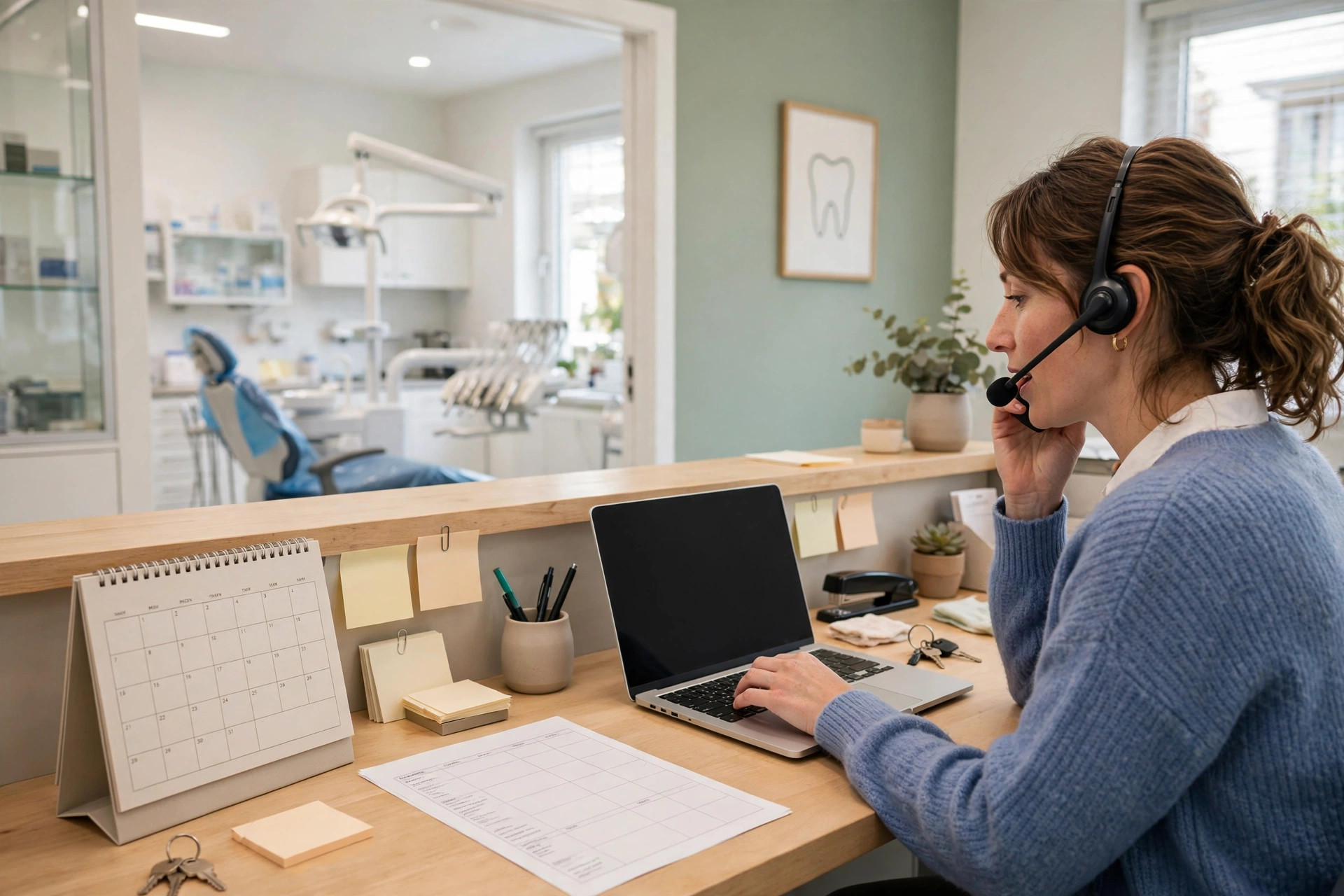
Automation handles the speed and the schedule. The human call that follows closes the booking the text opened.
The new-patient inquiry sequence
The inquiry sequence is the heart of the system. It runs for 14 days, mixes texts, emails, and one human call, and stops the moment the patient books. Every touch has a job: the early touches catch the ready-to-book patient, the middle touches answer the common hesitations, and the late touches keep you first in mind when she is ready.
| Touch | Timing | Channel | Purpose |
|---|---|---|---|
| 1: instant reply | Within 5 minutes | Text | Acknowledge, ask what they need, offer this week’s openings |
| 2: human call | Within 2 business hours | Phone | Personal call from the front desk; voicemail plus text if unanswered |
| 3: helpful follow-up | Day 2 | Text | Answer the top hesitation: insurance accepted, new-patient offer, or first-visit details |
| 4: social proof | Day 5 | Short patient story or review, plus a booking link and office photos | |
| 5: direct check-in | Day 8 | Text | “Still looking for a dentist? I held two openings this week.” Scarcity, gently applied |
| 6: the breakup | Day 14 | Email or text | “Should I close your file?” Gives permission to say no, and no often turns into not yet |
The sequence adapts to behavior. If the patient opens the booking link but does not book, the system sends a same-day text offering help with the form. If she replies with a question about insurance, the automation pauses and a human takes over with the full thread in view. If she books, everything stops and she moves into the confirmation and reminder flow. The cardinal rule: no lead ever receives a touch that ignores what she already told you.
One detail that matters more than it should: the “from” name. Messages that come from “Riverside Dental” get opened. Messages from a person get answered. Use “Hi, this is Maria from Riverside Dental” in the first text. Patients reply to people, and the reply rate difference is real.
Message scripts for each touch
Write every message the way your best front-desk person talks: short, warm, and ending with a question or a next step. Avoid anything that sounds like a blast. The patient should feel like one person noticed her inquiry.
Touch 1, instant text: “Hi, this is Maria from Riverside Dental. Thanks for getting in touch. Are you looking to book a cleaning and checkup, or is something bothering you? I can check our openings for this week right now.” If no reply in 30 minutes: “No rush at all. Here is our online booking if it is easier: [link]. I am here until 6 if you would rather text.”
Touch 2, voicemail plus text: Voicemail: “Hi, this is Maria from Riverside Dental. I saw your message about booking a visit. I have a couple of openings this week I wanted to mention before they fill. My number is [number], or just reply to my text.” Follow-up text: “Just left you a quick voicemail. Two openings left this week: Thursday 10:15 and Friday 2:30. Want one of them?”
Touch 3, day 2 text: “Hi, Maria from Riverside Dental again. Quick question: do you have dental insurance? We take most major plans, and I can check your coverage before your visit so there are no surprises. Want me to look into it?” This touch works because insurance confusion is the number one reason people stall.
Touch 4, day 5 email: Subject: “What new patients say about their first visit.” Two or three short reviews, one photo of the office, one line about the new-patient exam including what it covers and costs, and a booking button. Keep it under 150 words. Nobody reads a long email from a dentist they have not met.
Touch 5, day 8 text: “Hi, it is Maria from Riverside Dental. Just checking in. I held Thursday 10:15 and Friday 2:30 this week in case you still want to come in. Should I keep one for you?” The held slots create gentle urgency without pressure.
Touch 6, day 14: “Hi, Maria here. I do not want to keep bothering you, so I will close your file for now. If you ever need us, just reply to this text and I will pick it right back up.” The breakup message routinely pulls replies from people who were silently still interested, because it gives them an easy, low-pressure way back in.
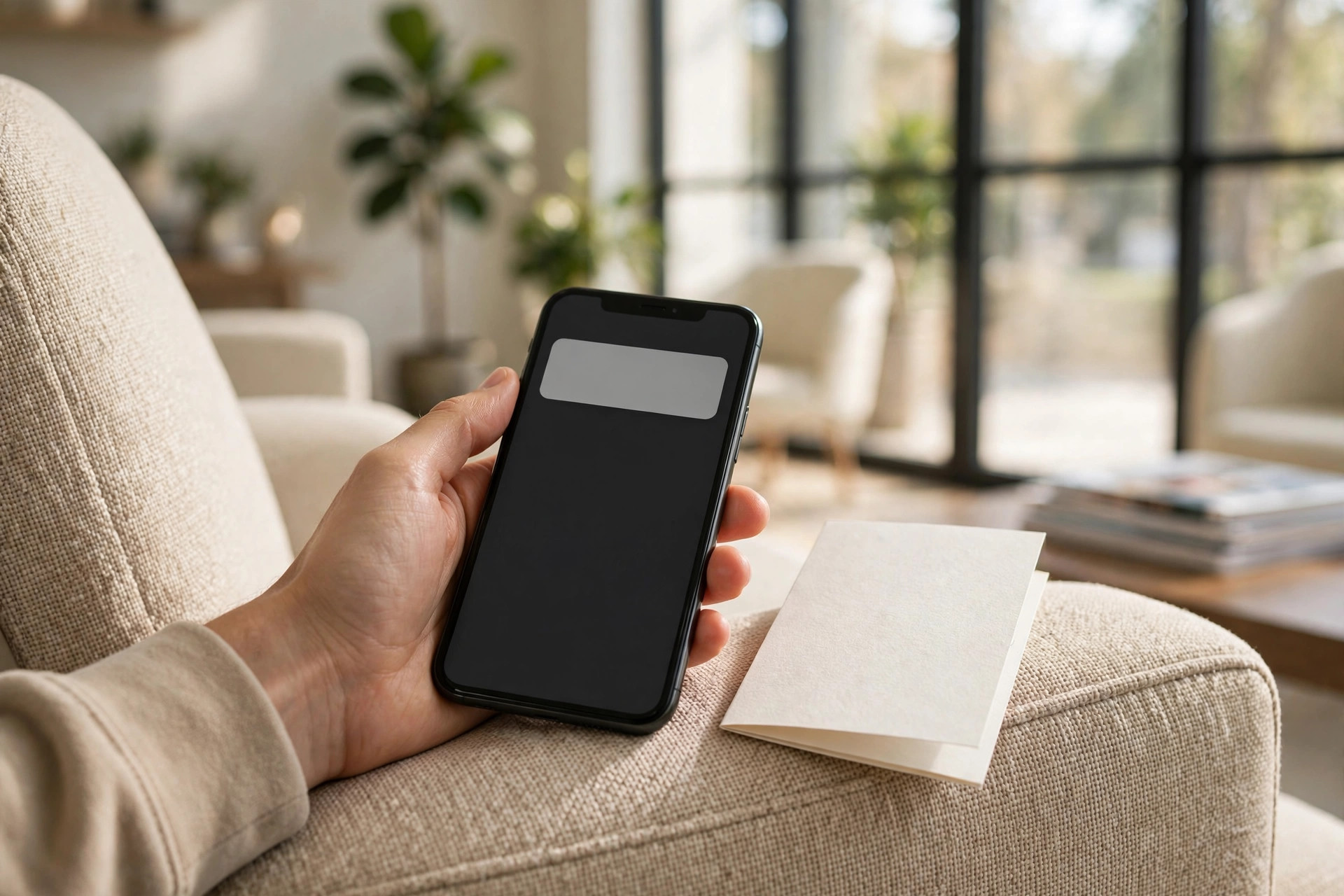
Short, personal texts that end with a question get answered. Every touch moves the patient one step closer to the chair.
No-show rescue: saving the missed appointment
A missed appointment is not a lost patient; it is a patient who needs a nudge. The rescue sequence starts the same day, while the appointment is still fresh in her mind. Speed matters here almost as much as with new inquiries, because embarrassment grows with time. A patient who misses on Monday and hears nothing assumes the office is annoyed. A patient who gets a kind text at 3 PM rebooks.
Same day, within 2 hours of the missed visit: “Hi, this is Maria from Riverside Dental. We missed you today at 2:30. Everything okay? I can get you back in this week: Thursday 11:00 or Friday 9:30. Which works?” Note the tone: concern first, rebooking second, zero guilt.
Day 2, if no reply: “Just checking in. Your cleaning is important, and I want to make sure we get you rescheduled before the schedule fills up. Want me to hold Thursday 11:00?”
Day 7, if still no reply: a short email or text: “We saved your spot in our system. Whenever you are ready, reply here or book online: [link]. No need to call.” The low-friction close matters because some patients avoid rebooking specifically because they dread the awkward phone call.
Track your rescue rate monthly: of all no-shows, what share rebooked within 14 days? Offices running this sequence commonly rebook half or more of their no-shows, compared with a small fraction when nobody follows up. Also track repeat no-shows separately. A patient who misses three times needs a different conversation, possibly a deposit policy for future bookings, not a fourth rescue text.
Treatment-plan follow-up: your biggest unbilled asset
Walk into any dental office and ask for the value of presented-but-unscheduled treatment sitting in the system. The number is usually shocking: tens or even hundreds of thousands of dollars in crowns, implants, aligners, and perio treatment that patients agreed they needed and then never scheduled. This is not rejection. It is inertia, sticker shock, insurance confusion, and life getting in the way. A 30-day follow-up sequence turns a meaningful share of it into scheduled production.
| Touch | Timing | Channel | Purpose |
|---|---|---|---|
| 1: the summary | Same day as presentation | Written summary of the treatment plan, costs, insurance estimate, and payment options | |
| 2: the check-in | Day 3 | Text | “Any questions about the plan Dr. Lee outlined? I can walk through the costs or the timing.” |
| 3: the financing angle | Day 10 | Text or call | Payment plans and phased treatment: “We can split this into two phases if that helps.” |
| 4: the health nudge | Day 21 | What happens if treatment waits: honest, non-alarmist education about the specific condition | |
| 5: the close | Day 30 | Call | Human call from the treatment coordinator: questions, scheduling, final offer of help |
The same-day written summary is the most underused tool in dentistry. Patients retain a fraction of what they hear in the chair, especially when numbers are involved. An email that lists the treatment, the fee, the estimated insurance coverage, the out-of-pocket amount, and the payment options gives the patient something to review with a spouse and something to say yes to. Offices that add the written summary consistently report higher case acceptance before any other follow-up even happens.
Segment the follow-up by case value. A $400 filling needs one text. A $4,000 implant case deserves the full sequence plus a coordinator call. And always give the patient a dignified way to say the timing is wrong: “If now is not the right time, tell me when to check back and I will.” A patient who says “check back in three months” is not lost; she just told you exactly when to win her.

Presented treatment that never gets scheduled is unbilled production. A steady 30-day follow-up turns maybes into booked cases.
The channel mix: call, text, and email in the right order
Each channel has a job. Text is the workhorse: instant, personal, and opened within minutes. Use it for the first touch, the quick check-ins, and anything time-sensitive. The human call is the closer: nothing beats a real voice for answering insurance questions and booking the hesitant patient. Use it once early in the sequence and once at the end for high-value cases. Email is the document channel: treatment summaries, social proof, and anything the patient needs to read carefully or share with family.
The order matters. Text first for speed, call second for warmth, email for depth, then back to text for the nudge. A sequence that is all email feels easy to ignore. A sequence that is all calls feels aggressive. The mix feels like a real office paying attention. And every channel must respect consent: collect clear permission for texts at the first contact, include opt-out in campaign-style messages, and honor every stop request immediately.
For a broader look at keeping patients engaged between visits, see our guide to dental patient reactivation, which covers winning back patients who drifted away entirely. The system described here keeps them from drifting in the first place. Med spa owners will find the same principles adapted to their treatments in our guide to client reactivation for med spas.
Mistakes that break follow-up systems
Automating the first touch but nothing after. The instant reply is the most visible part and the least valuable alone. The money is in touches 3 through 6, where persistence beats the offices that gave up.
Sending from a no-reply number. If patients cannot reply to your texts, you have built a notification system, not a conversation system. Every text must be replyable, and replies must reach a human fast.
No stop rule when the patient books. The fastest way to annoy a new patient is to keep sending “still looking for a dentist?” after she booked. Every sequence must end the moment a booking lands in the schedule.
Generic messages that ignore context. A patient who asked about Invisalign should not get the new-patient cleaning script. Tag inquiries by interest at capture and route them into the right sequence.
Letting replies sit. Automation opens conversations; humans close them. If a patient replies “yes, Thursday works” and nobody confirms for six hours, the slot may be gone and the trust with it. Set a reply target of 15 minutes during business hours.
Measuring nothing. Track response time to first touch, booking rate per sequence, no-show rescue rate, and treatment-plan close rate monthly. Without the numbers, the system slowly decays and nobody notices.
Setting it up: the practical build
A working follow-up system has four pieces: capture, sequences, handoff, and measurement. Capture means every inquiry source feeds one place: website forms, chat, ad landing pages, missed calls, and walk-ins who did not book all land in the same list with the source tagged. If inquiries live in five different inboxes, no sequence can follow all of them. Consolidate first.
Sequences are the message flows described above: the 6-touch inquiry sequence, the 3-touch no-show rescue, and the 5-touch treatment-plan follow-up. Build them in your CRM or marketing automation tool with the timing, the channel, and the stop rules for each touch. Write the scripts in your office’s voice, not a template’s voice, and have your best front-desk person read every message aloud before it goes live. If it sounds odd spoken, it will read odd on a phone.
Handoff is the human part. Define exactly what happens when a patient replies: who sees it, who answers, and how fast. A shared inbox that the front desk monitors during business hours works for most offices. After hours, the automation acknowledges the reply and promises a morning response, and the morning team clears the queue first thing. Measurement is the monthly review: response time, booking rate, rescue rate, treatment-plan close rate. One hour a month keeps the system honest.
For offices comparing this with a broader lead system, our guide to dental lead follow-up systems covers the full picture including lead sources. And if missed calls are part of your leak, pair this system with the phone-side safety net in any solid dental marketing plan.
Your rollout checklist
Work through these in order. Each one builds on the last.
- 1Map every inquiry source. List website forms, chat, ads, social messages, and missed calls. Route them all into one list with the source tagged.
- 2Set the 5-minute standard. Automate the instant first text for every source, day and night, with the sender named as a person from your office.
- 3Build the 6-touch inquiry sequence. 14 days, mixed channels, with stop rules that end the sequence the moment the patient books.
- 4Write the scripts in your voice. Short, warm, ending in a question or next step. Have your best front-desk person read each one aloud.
- 5Build the no-show rescue flow. Same-day kind text, day-2 nudge, day-7 low-friction close. Track the rescue rate.
- 6Build the treatment-plan follow-up. Same-day written summary plus the 30-day sequence, segmented by case value.
- 7Define the human handoff. Who answers replies, the 15-minute response target, and the after-hours acknowledgment message.
- 8Connect the booking link. Every message with a next step opens a working scheduler. Test it on a real phone.
- 9Train the team. Show the front desk the sequences, the shared inbox, and the escalation rules. Run practice replies.
- 10Review the numbers monthly. Response time, booking rate, rescue rate, treatment-plan close rate. Tune the weakest one first.
Frequently asked questions
How fast should a dental office respond to a new inquiry?
Within 5 minutes. Data across service businesses shows that first-minute responses convert several times better than replies delayed by even 30 minutes. Automate the first text so the standard holds nights, weekends, and lunch breaks, then have the team call during business hours.
How many follow-up touches does it take to book a patient?
Plan for six touches over 14 days. Most offices quit after one or two attempts, yet most conversions happen between the fifth and twelfth contact. A disciplined sequence converts 15 to 30 percent more of the same inquiry volume.
Will patients find automated follow-up annoying?
Not when it is personal, spaced out, and stops the moment they book. Patients find silence annoying; they read a quick personal text as good service. Keep messages conversational, replyable, and free of hard selling, and complaints stay near zero.
What is the difference between follow-up automation and an AI receptionist?
Follow-up automation is the CRM sequence: timed texts, emails, and task reminders that nurture inquiries, rescue no-shows, and chase treatment plans over days and weeks. An AI receptionist answers inbound calls and chats in real time. They solve different problems and work best together.
How do I rescue a patient who no-showed?
Text within 2 hours with concern first and a rebooking offer second, nudge on day 2, and send a low-friction booking link on day 7. Offices running this sequence commonly rebook half or more of no-shows within 14 days.
How should I follow up on treatment plans patients did not schedule?
Send a written summary with costs and payment options the same day, then follow up on day 3, day 10 with financing options, day 21 with honest education about waiting, and a coordinator call on day 30. Segment by case value so big cases get the full sequence.
Do I still need my front desk to make follow-up calls?
Yes. Automation handles speed and persistence; humans handle questions, insurance checks, and closing. The winning setup is an automated first touch plus a human call within 2 business hours, with the team answering every reply within 15 minutes.
What software runs dental follow-up automation?
Any CRM or marketing automation tool with texting, email, and task reminders can run these sequences. The critical features are multi-source capture, timing rules, reply handling with human handoff, and stop rules that end a sequence when the patient books. Pick the tool your team will actually use daily.
Is it legal to text dental patients automatically?
Yes, with consent. Collect clear permission to text at the first contact, include opt-out instructions in campaign-style messages, and honor stop requests immediately. Check the current rules for your state with your own advisor, and keep clinical details minimal in automated texts.
How do I measure whether follow-up automation is working?
Track four numbers monthly: response time to first touch, inquiry-to-booking rate, no-show rescue rate, and treatment-plan close rate. Compare against the two months before launch. Most offices see the booking rate move first, usually within 60 days.
Stop losing inquiries your marketing already paid for
Digital Hayder builds follow-up automation for dental offices: 5-minute instant responses, 14-day inquiry sequences, no-show rescue, and treatment-plan follow-up tied to your real schedule. Tell us about your office and we will design the system around it.
Contact Us