Every med spa sits on a gold mine it ignores: the client list of people who already trusted you once, paid for a treatment, and then quietly disappeared. You spent real money to win each of those clients through ads, social media, and referrals. When they drift away, most med spas simply spend more to replace them with strangers instead of spending almost nothing to bring back the people who already know the way to the door. Client reactivation for med spas is the practice of reaching back out to those lapsed clients with the right message, on the right channel, at the right time. This guide shows you how to segment your list by treatment type, what to say in each message, when to send it, and how the numbers work out when a $0.03 text brings back a $600 laser client.
The quick answer
- Reactivation is your cheapest growth channel: winning back a past client costs far less than acquiring a new one, and the client already trusts your work.
- Segment by treatment, not by calendar: a lapsed Botox client and a lapsed laser client need completely different messages, offers, and timing.
- Timing beats discounts: message Botox clients around the 90-day mark and laser clients when a new series makes sense, before you reach for price cuts.
- Expect 5 to 12 percent to book: well-run reactivation campaigns across med spa lists typically bring back 5 to 12 percent of lapsed clients per round.
- Send a 4-message sequence: a friendly check-in, a treatment reminder, a gentle nudge with an easy booking link, and one last soft close is the proven structure.
- Launch in about a week: pull your lapsed list, split it into segments, load the message templates, and run the first campaign to your warmest group.
Why med spa clients drift away
Before you write a single message, you need to understand why clients left. In almost every med spa, the reasons are boring and fixable, not angry and final. Life got busy. The kids’ school year started. A big project at work ate their evenings. The client moved across town and the drive feels longer than it is. She meant to rebook the Botox but forgot, and the longer she waits, the more awkward the return feels. Almost nobody leaves because they hated the treatment; they leave because nobody asked them to come back.
There is a second category worth naming: the treatment cycle ended without a plan. A client finishes a package of six laser sessions, gets great results, and nobody books her maintenance visits or explains what happens next. From her point of view, the job is done. From your point of view, she was a client who should have been coming back every quarter for years. This is the easiest group to win back, because all you have to do is give them the plan they were never given.
A smaller group leaves over price or an experience issue. Maybe the wait ran long twice. Maybe the result was fine but the consult felt rushed. Maybe a competitor opened closer to her office with an intro deal. These clients need a different message, usually one that acknowledges the gap and offers a concrete reason to try again, like a complimentary consultation with your lead provider or a free skin analysis. You will not win all of them, and that is fine. Reactivation is a numbers game played with warm leads, and you only need the quiet majority, the drifters, to make it pay.
One more thing to understand: reactivation works best when the memory of the experience is still good. The longer someone is gone, the weaker the pull of your name. A client who has been away for 5 months needs a gentle nudge. A client who has been away for 3 years needs a real reason. That is why the segments below are organized by both treatment type and time away, so the message always matches the moment.
Segment your lapsed list by treatment first
The single biggest mistake in med spa reactivation is sending one generic “we miss you” message to everyone. A client who came in for injectables thinks about her face in a completely different way than a client who came in for a laser hair removal package. The injectables client is watching her Botox wear off in the mirror every morning; she needs a reminder of timing. The laser client finished a series and wonders whether she needs maintenance; she needs education. The facial client loved the experience but saw it as a treat; she needs an occasion. One message cannot speak to all three.
Start by pulling your client records and sorting lapsed clients into five groups: injectables (Botox, fillers), laser treatments (hair removal, resurfacing, IPL), facials and skin treatments, body treatments (sculpting, cellulite), and consults who never booked. Then sort each group by time away: 3 to 6 months, 6 to 12 months, and over 12 months. This gives you roughly fifteen small lists, and each one gets its own message. Small lists are the whole point. A message that speaks to “laser clients who finished a package 8 months ago” will always beat a blast to everyone.
While you are segmenting, clean the data. Remove anyone with an unresolved complaint or an outstanding balance dispute; reactivation is for drifters, not for people who left angry. Remove anyone who asked not to be contacted. Flag VIP clients and high spenders in a separate tier, because they deserve a personal message from the provider, not an automated text. If your records do not show last treatment type clearly, sort by revenue tier instead, but make treatment type the goal for the next round of campaigns.
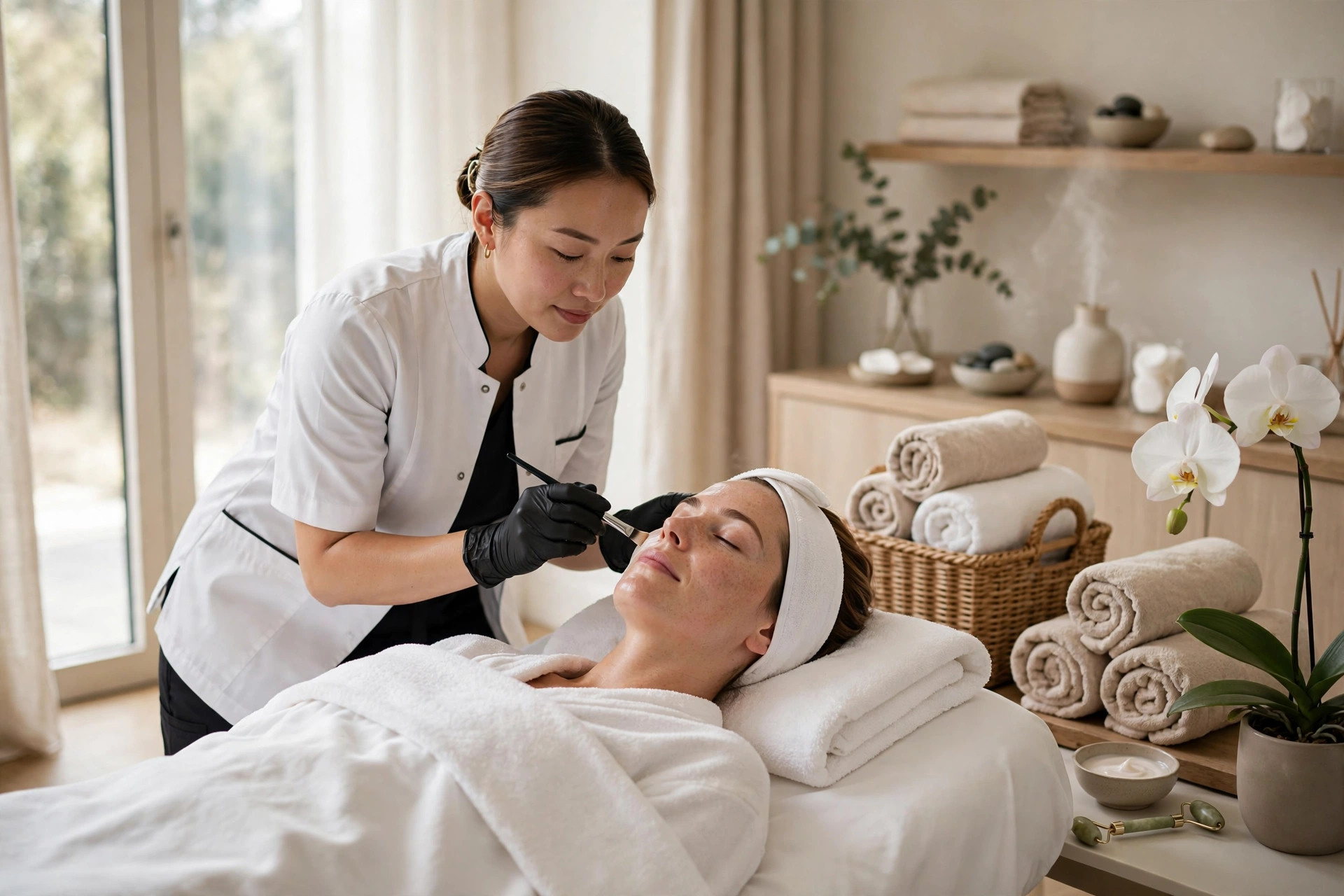
Clients come back for the experience they remember. Segment your messages so the right treatment reminder reaches the right client.
The reactivation sequence and timing
Reactivation is not one message; it is a short sequence. One message is easy to miss. Two feels like a reminder. Three starts to feel like a real invitation. Four is the natural end before you risk annoying people. Below is the timing structure that works across med spa treatments, with the treatment-specific tweaks in the right column.
| Message | When to send | Channel | Treatment tweak |
|---|---|---|---|
| Message 1: the check-in | Day 0, mid-morning Tuesday to Thursday | SMS or WhatsApp | Injectables: mention the timing of her last visit. Laser: congratulate results and ask about maintenance. Facials: reference the treatment she loved. |
| Message 2: the reason to return | Day 4 | SMS or WhatsApp | Injectables: explain what happens as product wears off and the best rebooking window. Laser: one education point about maintenance sessions. Facials: suggest a seasonal treatment angle. |
| Message 3: the easy booking link | Day 9 | SMS with booking link | Include a direct link to your online booking with her preferred provider pre-selected if your system allows it. |
| Message 4: the soft close | Day 16 | A longer, warmer message. For high-value segments, a small incentive belongs here and only here. |
The gaps between messages matter as much as the messages. Four messages in four days feels like a sales funnel and gets you blocked. Spreading them over 16 days feels like a business that noticed your absence. Always send mid-morning on a weekday; Tuesday through Thursday gets the best reply rates because Monday is chaos and Friday minds are already at the weekend. Never send reactivation messages on weekends or holidays unless your brand is specifically built around weekend appointments.
For the over-12-months group, add one extra pre-step a week before the sequence: a value message with no ask at all. A short tip about summer sun care for laser clients, or a note about a new treatment you added for injectables clients. It warms up the relationship before the ask arrives. For the VIP tier, skip automation for the first touch entirely and have the provider send a personal voice note or a short personal text. High spenders can tell the difference, and one personal touch can recover thousands.
Message scripts that get replies
Scripts work when they sound like they came from a person who remembers the client, not from a marketing platform. Keep every message under 160 characters where possible, use the client’s first name, and end with a question or a clear next step. A message that ends with a statement gets read; a message that ends with a question gets answered.
Injectables, message 1: “Hi Anna, this is Glow Med Spa. It has been about 4 months since your last Botox visit. Most clients book their next session right around now. Want me to check this week’s openings?” Message 2: “Quick note from Dr. Reed: as Botox wears off, lines start to return gradually, and coming back on schedule keeps results looking natural. Would you like to pop in for a quick touch-up consult?”
Laser, message 1: “Hi Anna, this is Glow Med Spa. You finished your laser series 8 months ago and your results looked fantastic. Most clients do one maintenance session a year to keep it that way. Want to see how your skin is doing?” Message 2: “Maintenance sessions are shorter than the original series, and clients tell us the results keep improving. I can book you in for a quick skin check next week if you like.”
Facials, message 1: “Hi Anna, this is Glow Med Spa. You loved the hydrafacial last time. We just added a new glow treatment for the season that clients are raving about. Want to try it?” Message 2: “Your skin tends to need extra hydration around this time of year. A 45-minute session fits easily into a lunch break. Shall I hold a spot for you?”
Consult no-shows and never-booked, message 1: “Hi Anna, this is Glow Med Spa. You came in for a consultation a while back but we never got you booked. A lot has changed since then, including some new treatment options. Would a quick call with Dr. Reed help you decide?” These messages need the softest tone, because the client never experienced your service. Do not assume interest; invite it.
Notice what none of these messages do: none lead with a discount, none are longer than three short sentences, and none make the client do any work. The booking link in message 3 should open the scheduler with as much pre-filled as possible. Every extra tap between “yes” and “booked” loses people. If your website booking flow is clunky, fix it before you run the campaign; our guide on how much a med spa website costs covers what a proper booking setup looks like.
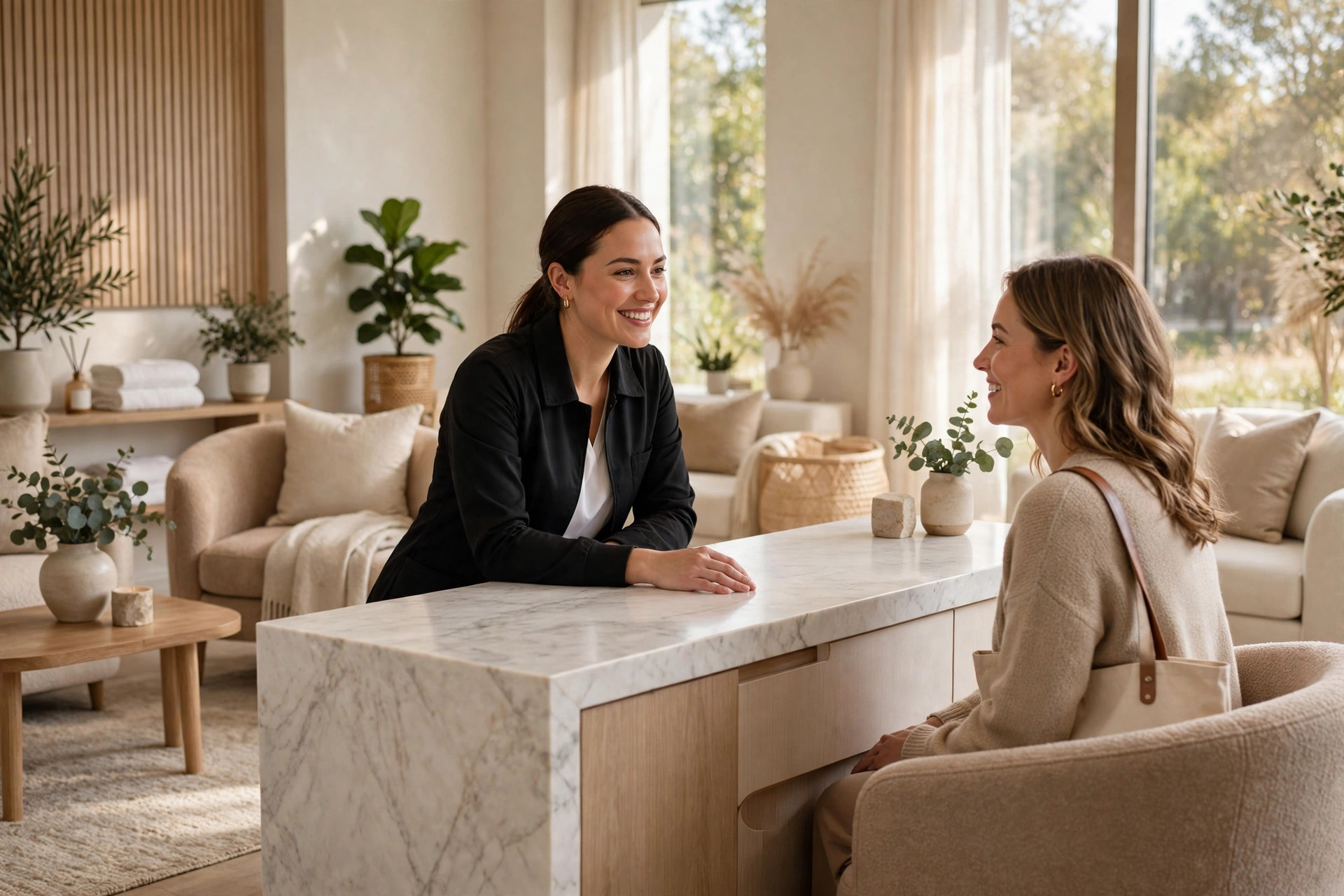
Short personal messages sent mid-morning get the replies. The booking link should be one tap away, not a maze.
Choosing your channels: SMS, WhatsApp, and email
Reactivation messages need to be seen, and seen fast. That rules out relying on email alone for the first three touches. Email open rates for promotional messages in the beauty and wellness space hover around 20 to 30 percent, and most opens happen hours after sending. SMS open rates sit above 90 percent, usually within minutes. For a campaign whose whole point is a quick personal nudge, SMS wins the first three messages and email closes with a longer, warmer message 4.
| Channel | Open rate | Best use in reactivation | Watch out for |
|---|---|---|---|
| SMS | 90 percent or higher | Messages 1 to 3: short, personal, with a booking link | Carrier rules require clear consent; keep messages conversational, not promotional |
| Very high, similar to SMS | Rich messages with before-and-after photos, short videos, voice notes from providers | Works best where your clients already use it daily; get explicit opt-in | |
| 20 to 30 percent | Message 4: the longer soft close, plus monthly value emails to keep the list warm | Do not rely on it for time-sensitive nudges; inboxes are crowded |
WhatsApp deserves special attention for med spas because your clients live on it and it handles rich media. A short video from the provider saying “we have missed you” beats any text. A before-and-after photo of a treatment the client was considering can restart a conversation that went cold a year ago. If you want to build this channel properly, our guide to WhatsApp chatbots for med spas covers automated booking and reminder flows that pair with reactivation. The rule across every channel is the same: every campaign message must include a clear way to stop, and your list must only include clients who agreed to be contacted.
One channel to avoid for first-touch reactivation: phone calls from an unknown staff member. Calls interrupt, and a cold call from the spa feels like a sales call even when it is not. Save calls for the VIP tier, where a personal call from the provider is a sign of respect, and for clients who reply to a text asking to talk. Let the quiet channels do the quiet work.
Offers that pull clients back without cheapening your brand
Med spas fear, correctly, that discounts train clients to wait for sales. The good news is that most lapsed clients do not need a discount at all. They need a reason and a reminder. Reserve your incentives for the oldest segments and the highest-value treatments, and design them so they protect your price image.
For the 3-to-6-month group, use no incentive. These clients are simply overdue. A friendly reminder plus easy booking recovers most of them. Adding a discount here teaches clients who were coming back anyway to expect one next time.
For the 6-to-12-month group, use a value-add, not a price cut. “Book your Botox session this month and receive a complimentary skin analysis” adds something without touching your price list. A free add-on service, a product sample kit, or a priority booking slot all work. The client feels special; your prices stay intact.
For the over-12-months group, use a limited welcome-back offer. This is the one place a real discount is acceptable, because these clients are effectively cold again. Frame it as a reintroduction: “We would love to welcome you back. Your next facial is 20 percent off when you book this month.” Keep it time-limited, one per client, and never stack it with other promotions.
For injectables, use treatment logic instead of discounts. “Book your next two Botox sessions now and lock in today’s pricing” sells a package without a sale sign. Pre-paid packages and memberships are the med spa industry’s best retention tool precisely because they turn reactivation into a non-event: the client already paid, so she shows up. Every reactivation campaign is also a chance to move a returning client onto a package or membership so you never have to reactivate her again.

The best reactivation offer is a reason to return, not a race to the bottom on price. Protect your pricing with value-adds.
Mistakes that kill reactivation campaigns
Blasting one message to everyone. Covered above, but it bears repeating: the generic “we miss you, come back for 10 percent off” message performs worse than a segmented reminder with no discount. Segmentation is the whole game.
Running reactivation once and stopping. Reactivation is not a campaign; it is a system. Every month, a new group of clients crosses into the 3-month-lapsed window. Set the sequence to run automatically for each client when they hit the window, and the campaign never ends.
Messaging clients who should be suppressed. Anyone with an unresolved complaint, an unpaid balance in dispute, or an opt-out request must be excluded. One message to the wrong person undoes the goodwill of a hundred good ones.
Sending too many messages. Four touches over 16 days is the structure. Adding a fifth, sixth, and seventh touch does not add bookings; it adds blocks and complaints. When the sequence ends, the client goes back to your regular monthly value emails, not another sequence.
No booking link, or a broken one. Every message 3 must open a working scheduler. Test the link on a real phone before every campaign run. A client who taps through and hits a dead page will not try again.
Forgetting the front desk. When replies come in, someone has to answer fast. Tell the team a campaign is running, give them the scripts, and set a reply target of under 15 minutes during business hours. A reply that sits until tomorrow loses the momentum the message created.
Automating the system so it runs itself
The real power of reactivation shows up when it stops being a project and becomes a background process. Modern med spa software and CRM tools can watch your client list and trigger the sequence automatically when a client crosses the lapsed threshold. Client hits 90 days without a visit, the injectables sequence starts. Client finishes a laser package plus 6 months with no maintenance booked, the laser sequence starts. Nobody has to remember, and nobody has to build a list by hand each quarter.
The automation needs three connections to work: your booking or practice software as the source of truth for visit dates, a messaging tool for SMS or WhatsApp, and your email system for message 4 and the monthly value emails. When a client books from a reactivation message, the sequence must stop immediately; nothing annoys a client more than receiving “we miss you” the day after she booked. When a client replies with a question, the automation hands off to a human with the conversation history attached.
This is the same kind of follow-up automation that drives growth in other appointment businesses. Dental practices run nearly identical systems for new-patient inquiries and no-show rescue, as our guide to lead follow-up automation for dental offices explains. And if you want the broader picture of keeping clients engaged between visits, our email marketing guide for med spas covers the monthly value emails that keep your list warm so reactivation messages land on friendly ground. Build the automated sequence once, review the reply logs monthly, refresh the scripts quarterly, and the system quietly recovers revenue every single month.
Your rollout checklist
Work through these in order. Each one builds on the last.
- 1Export your lapsed client list. Pull every client with no visit in the last 90 days, including name, phone, email, last treatment, and last visit date.
- 2Clean and suppress. Remove unresolved complaints, disputed balances, and anyone who opted out. Flag VIPs for personal outreach.
- 3Segment by treatment and time away. Build the five treatment groups, each split into 3 to 6, 6 to 12, and over 12 months.
- 4Confirm consent. Make sure every number on the list agreed to receive messages. Collect missing opt-ins at the front desk starting now.
- 5Write the message scripts. Four messages per segment, personalized with names and treatment details, each ending in a question or a booking link.
- 6Connect the booking link. Test the scheduler on a real phone. Pre-select the provider where your system allows it.
- 7Pick your channels. SMS or WhatsApp for messages 1 to 3, email for message 4, and decide who handles replies.
- 8Run the first campaign to the warmest group. Start with the 3-to-6-month injectables segment, measure bookings, then expand.
- 9Brief the front desk. Share the scripts, set a 15-minute reply target during business hours, and define the handoff for questions.
- 10Automate the trigger. Connect your booking software so the sequence starts automatically when a client crosses the lapsed threshold, and stops the moment she books.
Frequently asked questions
How many lapsed clients can I expect to win back?
Well-run med spa reactivation campaigns typically bring back 5 to 12 percent of the messaged list per round, with the warmest segments (3 to 6 months away) at the high end and the coldest (over 12 months) at the low end. Injectables clients usually respond best because their treatment has a built-in clock.
Do I need to offer a discount to get clients back?
Usually not. The 3-to-6-month group responds to reminders alone, and the 6-to-12-month group responds to value-adds like a free skin analysis. Reserve real discounts for the over-12-months group, where clients are effectively cold again, and keep every offer time-limited.
Is it legal to text past clients about coming back?
In most cases, yes, if they consented to receive messages from your business, which most clients do on intake forms. Keep a clear opt-out in every campaign message, honor requests immediately, and check the current rules for your state or country with your own advisor before you start.
How often should I run reactivation campaigns?
Ideally, continuously. Set up an automated trigger so each client enters the sequence when they cross your lapsed threshold, rather than running one big blast per quarter. For manual campaigns, once per quarter per segment is a safe rhythm.
What if a client replies angrily or asks to be removed?
Remove them immediately, apologize briefly, and suppress them from all future campaigns. One bad experience costs more than the campaign earns. Review your suppression list before every run to make sure opt-outs stay opted out.
Should reactivation messages come from the provider or the spa?
For standard segments, from the spa with the provider named in the message is fine. For VIP clients and high spenders, a personal message from the provider herself wins noticeably more bookings and protects the relationship.
Can I use email alone for reactivation?
You can, but expect weaker results. Email open rates for this kind of message run 20 to 30 percent, while SMS and WhatsApp open rates run above 90 percent. Use email for the longer fourth message and for monthly value emails, not for the time-sensitive nudges.
What is the best day and time to send reactivation messages?
Mid-morning, Tuesday through Thursday. Monday inboxes are chaotic and Friday minds are on the weekend. Avoid weekends, holidays, and evenings unless your brand specifically books around those times.
How do I reactivate clients if my records are messy?
Start with what you have: phone numbers and last visit dates are enough for a first campaign. Segment by time away only, and add a question in the first message that helps you classify them, such as asking which treatment they had. Then fix the data going forward so the next round can segment by treatment.
How do I stop reactivation messages from annoying loyal clients?
Only clients who cross the lapsed threshold enter the sequence, so active clients never see it. When a client books, the sequence stops the same day. Cap the sequence at four messages, then return the client to your normal monthly emails. Respect those rules and complaints stay near zero.
Turn your quiet client list into booked appointments
Digital Hayder builds reactivation systems for med spas: segmented client lists, message sequences that sound like you, automated triggers from your booking software, and booking links that convert replies into visits. Tell us about your spa and we will design the reactivation system around it.
Contact Us