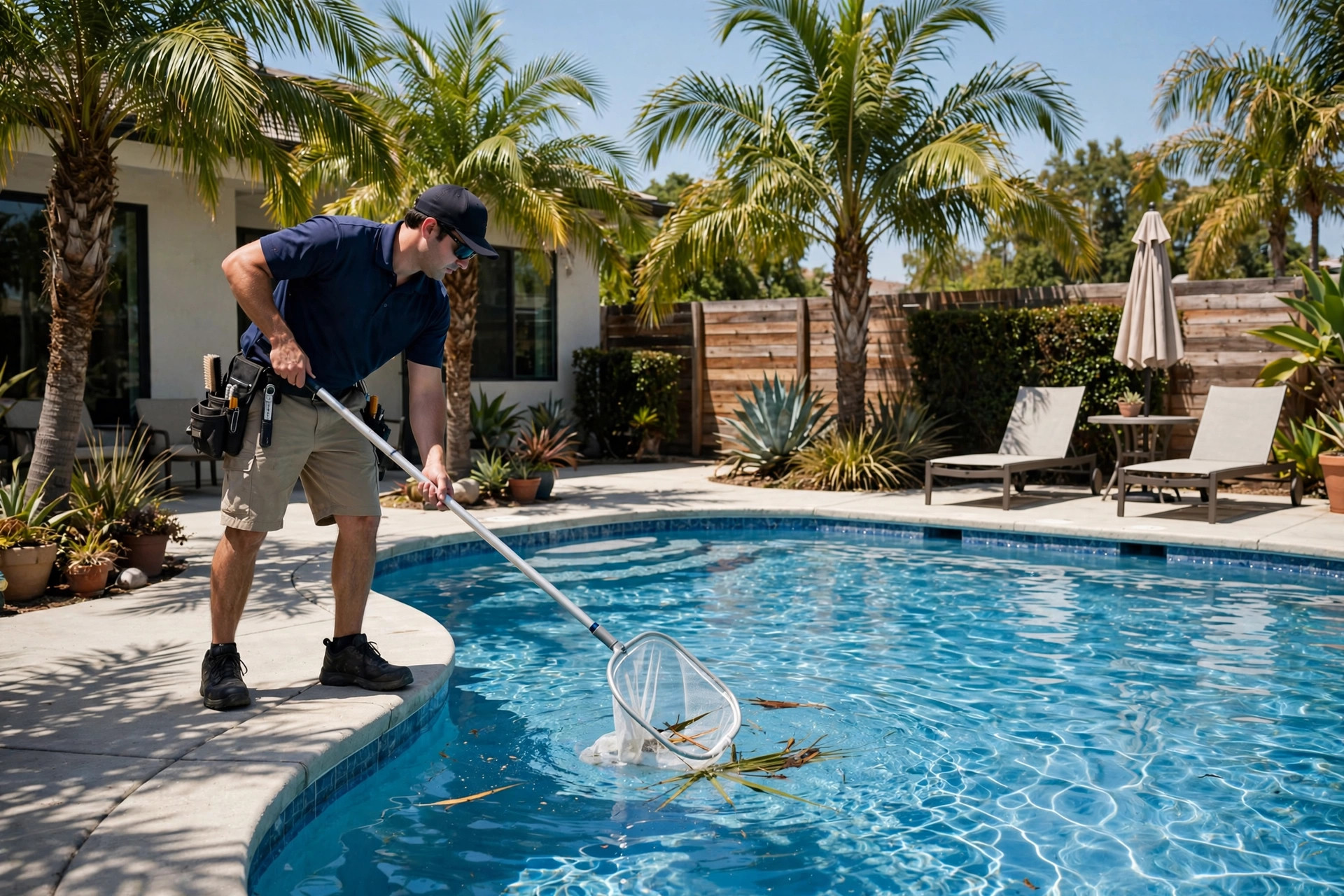
It is the first hot Saturday of spring. Your techs are running twelve stops each, the office phone is ringing off the hook, and half the calls go to voicemail. One caller has a green pool and a party next weekend. Another wants a quote on a new build. A third is a weekly service customer whose pump just died. All three call the next pool company on Google, because a pool problem feels urgent and nobody waits on hold for a contractor. Pool companies miss calls at the worst possible moments: on route between stops, during spring opening season, and in the middle of a heat wave when every pump in town seems to fail at once. A missed-call text-back catches every one of those callers with an automatic text within a minute, captures the service request or build inquiry, qualifies it into the right bucket (weekly service, repair, or new build), and drops it into a follow-up sequence built for that category. This guide covers how the system works for pool routes and builders, how to handle the seasonal open and close surges without drowning, message templates for the most common pool inquiries, and the revenue math that makes this the cheapest hire you will ever make.
The quick answer
- Techs cannot answer on route: the automatic text replies within a minute, so the caller talks to your company instead of your competitor.
- Qualify into three buckets: weekly service, repair, or new build. Each one gets its own questions and its own follow-up sequence.
- Spring surge needs its own plan: openings and cleanups flood the phones for six to eight weeks. The text-back triages the rush.
- Templates beat improvising: green pool, dead pump, weekly service quote, and new build inquiry each get a ready-made reply.
- The math is simple: one recovered weekly route or one repair job a month dwarfs the $50 to $300 monthly cost.
- Every conversation is logged: texts land in one shared inbox tied to the customer record, never on a tech’s personal phone.
Why pool companies miss calls at the worst moments
Pool service is a windshield business. Your techs spend their days driving between stops, skimming, testing chemicals, and backwashing filters, with phones in cupholders and hands wet. The office, if there is one, is often one person juggling scheduling, billing, and parts orders. Calls pile up exactly when demand peaks: the spring opening rush, the first heat wave, and Monday mornings after a weekend of pool problems. Industry data on home services keeps telling the same story: a large share of calls go unanswered during work hours, and most of those callers never call back. They call the next company.
For pool companies the cost of a missed call varies wildly, which is why qualification matters so much. A missed weekly service inquiry might be worth $2,400 to $3,600 a year in recurring revenue. A missed equipment repair might be an $800 pump replacement. A missed new build inquiry might be a $60,000 project. Treating all three the same is the mistake. The text-back system qualifies first, then routes each caller down the right path, so the $60,000 build inquiry gets the owner’s personal attention while the weekly service inquiry gets a clean quote and a start date.
How the text-back captures and qualifies pool inquiries
When a call goes unanswered, the system sends a text from your business number within about a minute. The message names a person, notes the miss, and asks the one question that sorts the caller: “Are you looking for weekly service, a repair, or a new pool build?” The caller’s answer decides everything that follows. Each category has its own qualifying questions and its own follow-up sequence, because a green pool needs a tech tomorrow and a new build needs a design consultation next week.
The three buckets and what each one needs
Weekly service inquiries need a fast quote and a start date. The qualifying questions are simple: pool size, location, and whether they want full service or chemical-only. Repair inquiries need triage: what is wrong, how urgent is it, and is the equipment under warranty. Photos of the equipment pad help enormously. New build inquiries need a consultation, not a quote: budget range, timeline, and yard photos to prepare for the design meeting. The text-back asks the first question for each bucket and hands the conversation to the right person or automation from there.
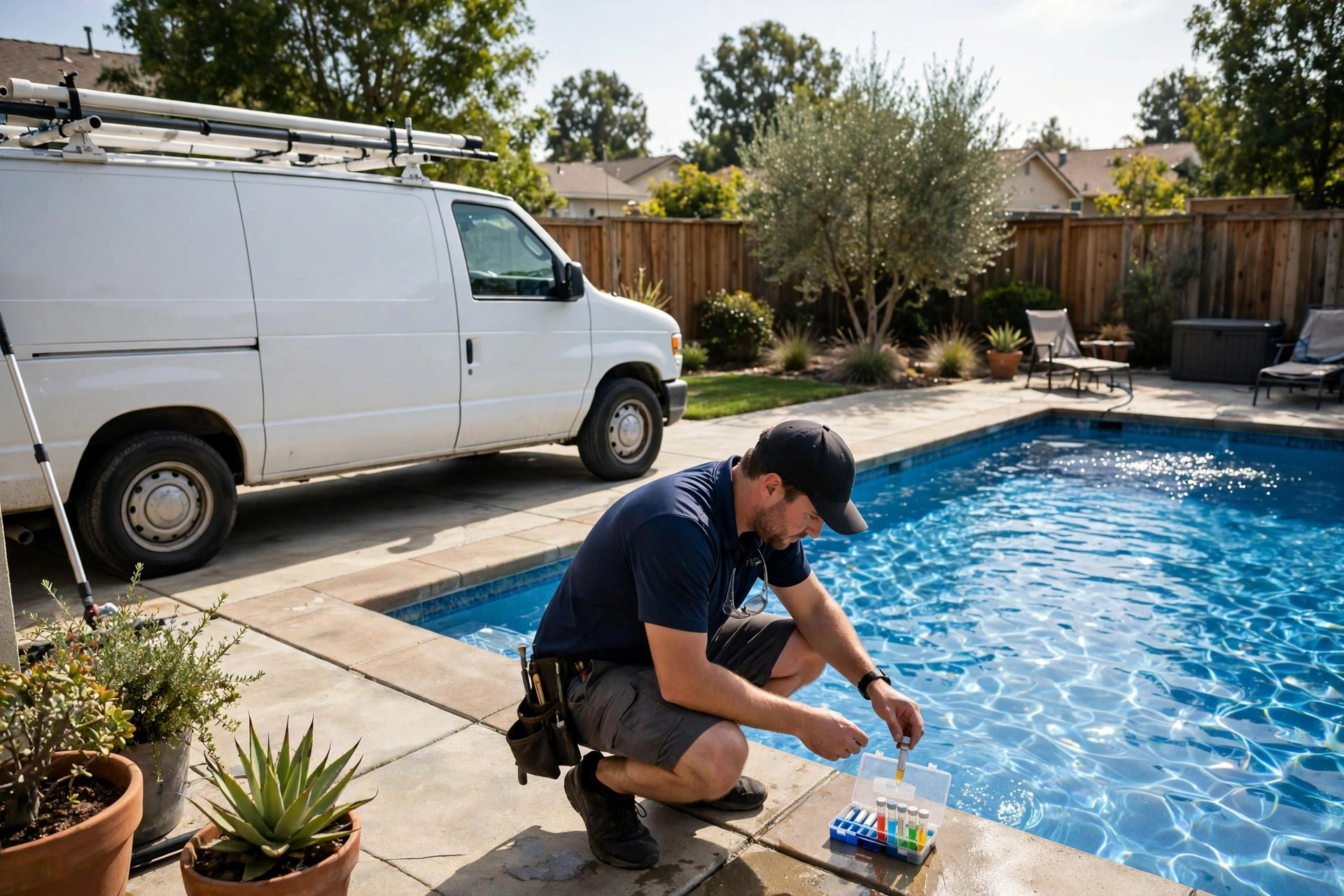
Techs stay on route while the text-back qualifies the caller. Nobody has to choose between the job in front of them and the phone.
Message templates for the most common pool inquiries
Pool callers tend to fall into familiar patterns, and each pattern has a reply that moves things forward. Keep the templates in your system so whoever is on text duty, owner, office manager, or automation, sounds consistent and professional.
| Inquiry | First text-back | Qualifying question |
|---|---|---|
| Green pool emergency | Hi, this is [Name] with [Company]. Sorry we missed your call, our techs are on route. A green pool is fixable, how soon do you need it swimmable? | Can you text a photo of the pool? That tells us whether it needs a cleanup visit or a full drain and acid wash. |
| Weekly service quote | Hi, this is [Name] with [Company]. Sorry we missed you. Are you looking for full weekly service or chemical-only visits? | What size is the pool and what is the address? I will get you our weekly rate and our next available start day. |
| Equipment repair | Hi, this is [Name] with [Company]. Sorry we missed your call. Is this the pump, the filter, the heater, or something else acting up? | A photo of the equipment pad helps a lot. Is the equipment still under warranty, if you know? |
| New pool build | Hi, this is [Name] with [Company]. Thanks for calling about a new build. Are you early in planning or do you have a design in mind already? | What is your rough timeline and budget range? That helps us book the right kind of design consultation. |
| Opening or closing | Hi, this is [Name] with [Company]. Sorry we missed you. Are you booking a spring opening or a fall closing? | Openings book up fast in spring. What week works for you and we will hold a slot while we confirm details. |
| Existing customer issue | Hi, this is [Name] with [Company]. Sorry we missed your call. Are you on one of our weekly routes? | Tell me what is going on and I will get it to your tech today or schedule a repair visit, whichever it needs. |
Surviving the seasonal open and close surges
Spring opening season is the Super Bowl for pool companies. Six to eight weeks of nonstop calls: openings, cleanups, equipment that sat all winter and now will not start, and new customers who decided this is the year they stop doing it themselves. Your phones cannot handle it with humans alone, and this is where the text-back earns its keep several times over.
During surge weeks, change the text-back to triage mode. The first message should acknowledge the rush honestly and set expectations: “Spring openings are booking about two weeks out right now. Reply OPENING and your preferred week and we will hold your place in line.” That single message does the work of ten phone calls. It captures the caller’s intent, gives them a concrete next step, and buys your office breathing room. Run a separate list for cleanup and repair requests so urgent problems do not get buried under routine openings. In fall, flip the same system to closings: “Fall closings are scheduling now through October. Reply with your preferred week.” The surge becomes a scheduled pipeline instead of a daily fire drill. For the economics of the website that feeds these calls, see our pool company website cost guide.

Spring surge callers are ready to book. The text-back turns the flood into an orderly schedule.
Follow-up sequences per category
Not every text conversation closes on day one. Each bucket gets a short sequence matched to its buying speed. Weekly service prospects decide fast, so the sequence is tight: the text-back, a next-morning bump with the quoted rate and start date, and a day-five close offering to hold their start slot one more week. Repair prospects are motivated by the broken thing, so the sequence focuses on scheduling: text-back with triage, next-day message with the diagnostic visit options, and a day-four check asking if the equipment is still down. New build prospects move slowly and need nurturing: text-back, a consultation booking link, a day-seven message with a recent project photo, and a day-fourteen check-in. The build sequence can run longer because the prize is bigger, but keep every message useful and easy to ignore gracefully.
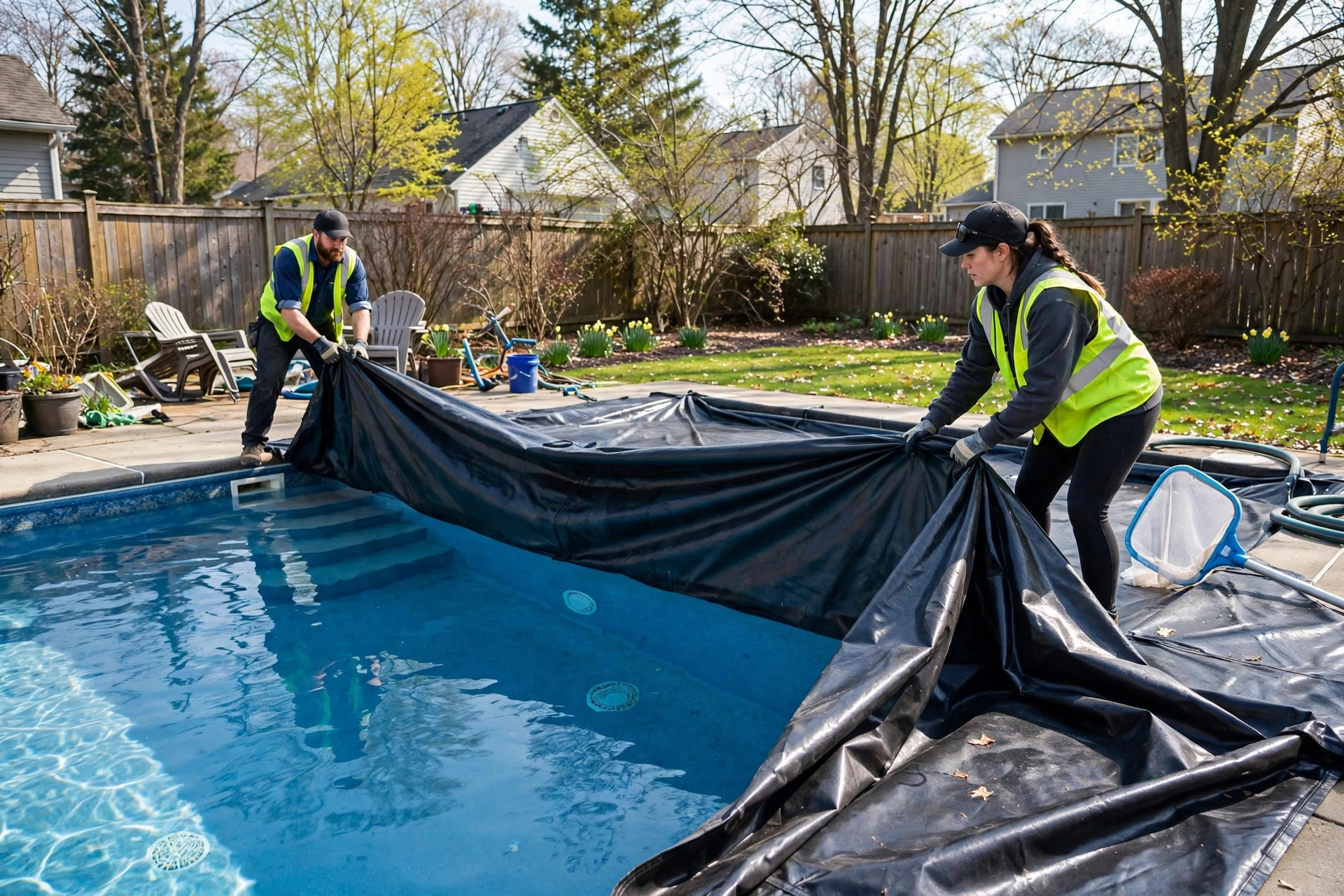
Openings, cleanups, and repairs all start as phone calls. The text-back makes sure the busy season books fully.
Your rollout checklist
Set it up before the spring rush, not during it.
- 1Connect the text-back to your main number. Every unanswered call triggers a text within a minute. Test it from your own phone during a route.
- 2Build the three-bucket qualifier. The first question sorts every caller into weekly service, repair, or new build.
- 3Load the six inquiry templates. Green pool, weekly quote, equipment repair, new build, opening or closing, and existing customer, each with its qualifying question.
- 4Write the surge-mode message. A spring version that quotes current lead times and a fall version for closings, ready to switch on.
- 5Set the three follow-up sequences. Tight for service, scheduling-focused for repair, longer nurture for new builds.
- 6Route everything to one shared inbox. Owner, office staff, and lead tech all see every conversation tied to the customer record.
- 7Define the repair triage rules. Who decides what is urgent, how photos get to the right tech, and the response-time target for emergencies.
- 8Track recovered revenue by bucket. Tag every job that started as a missed-call text so you know exactly what the system earns.
Frequently asked questions
What is missed-call text-back for a pool company?
It is an automatic text sent within about a minute of any unanswered call. It acknowledges the miss, asks whether the caller needs weekly service, a repair, or a new build, and starts a text conversation your team can convert into a booked visit or consultation.
How much does it cost?
Standalone text-back tools run $50 to $150 a month, and the feature is usually included in a pool service CRM at $100 to $300 a month. One recovered weekly route customer, worth $2,400 to $3,600 a year, pays for the system many times over.
Can it handle the spring opening rush?
That is its best use case. Switch to a surge message that states current lead times and asks callers to reply with their preferred week. It turns a flood of calls into an orderly booking queue instead of a week of missed voicemails.
How do you qualify a new build inquiry by text?
Ask about timeline and budget range, and request yard photos. Do not try to quote a build by text. The goal is a booked design consultation with the owner, and the text conversation should end with that appointment on the calendar.
What about existing customers with problems?
Give them their own template that asks if they are on a weekly route and what is wrong. Route their replies to the office or their tech the same day. Existing customers who cannot reach you are the fastest churn risk in the business.
Will techs have to answer texts from the field?
No. Replies go to a shared inbox, not personal phones. The office handles quoting and scheduling, and only true repair triage gets forwarded to a tech, with photos attached so they can assess without a phone call.
How do I know it is working?
Tag every job that started as a missed-call text and review monthly: texts sent, reply rate, visits booked, and revenue by bucket (service, repair, build). Compare against the same months last year to see the lift.
Catch every call from the pool deck
Digital Hayder builds missed-call text-back systems for pool companies: instant replies, three-bucket qualification for service, repair, and builds, surge-mode messaging for opening season, and follow-up sequences per category. Tell us about your routes and we will set up the system around your team, your season, and your service area.
Contact Us