Most pest control companies still win work the way they always have: referrals, trucks with a phone number on the side, and a website built years ago that nobody has touched since. That used to be enough. Now a homeowner who hears scratching in the walls at midnight types the pest plus their town into Google and picks from the first few sites they see. Your website has one job that matters more than any other: turn that worried visitor into a booked visit or a recurring plan signup. This guide breaks down what a pest control website costs in clear price bands, which features are worth paying for, what you can safely skip, and how to tell whether a quote is fair.
The quick answer
- Typical range: most pest control companies pay $1,500 to $5,000 for a solid custom site; polished template setups run $800 to $2,000; high-end builds pass $10,000.
- The recurring plan factor: plan signup pages are the feature that pays the site back fastest, because each signup is worth hundreds per year, not just one visit.
- Features add up: service-area pages, pest library articles, quote forms, and review widgets each add $200 to $1,500 depending on who builds them.
- Ongoing care: budget $50 to $250 a month for hosting, updates, backups, and small content changes after launch.
- Cheap is not always cheaper: a $400 site that visitors cannot book from costs more in lost jobs than a $3,000 site that converts.
- Fast payback: at $450 a year per recurring plan, ten extra plan signups from the site cover a $4,000 build in well under a year.
Why a pest control website plays by different rules
A pest control website is not a brochure. It is a booking machine for a business where the customer is often stressed, searching on a phone, and making a decision in minutes. Someone who just found mouse droppings in the pantry does not read your company history. They want to know three things: do you handle this pest, do you serve my town, and can I get someone out fast. If your site answers those three questions in the first screen, you win the job. If it makes the visitor dig, the competitor with the clearer site wins it instead.
The second difference is the business model. Pest control runs on recurring plans: quarterly visits, monthly mosquito treatments, termite monitoring. A single customer on a quarterly plan paying $115 per visit is worth $460 a year, and many stay for several years. That changes the math of the website completely. A page that converts ten extra visitors a month into plan signups does not produce ten jobs; it produces ten revenue streams. No other common feature on the site, not the blog, not the photo gallery, comes close to that return, which is why plan signup pages deserve the most design attention on the whole site.
The third difference is trust. You are sending a technician into someone’s home, often when only one family member is there. Visitors scan for signals that you are a real, professional company: genuine reviews, real photos of real technicians, clear pricing language, a physical service area, and licensing information. Stock photos of smiling families in front of houses do not build that trust. Real photos of your trucks, your techs in clean uniforms, and the neighborhoods you serve do. This is also why review widgets and your Google review rating belong on the homepage, not buried on a contact page. For more on turning that trust into booked work, see our pest control marketing ideas guide.
Finally, geography matters more here than in most trades. People search “ant control Springfield” or “bed bug treatment near me,” not just “pest control.” A site with one generic service page will lose to a competitor with a page for each town they serve. That makes service-area pages one of the most important line items in any quote, and it is the main reason template sites often underperform for pest control: they ship with one page, and nobody ever builds the other twenty.
Pest control website cost by build type
Quotes for the same “pest control website” can range from $400 to $15,000, and the range is not a scam: it reflects genuinely different products. The table below shows what each tier usually includes and who it suits.
| Build type | Typical cost | What you usually get | Best for |
|---|---|---|---|
| DIY website builder | $300 to $800 setup, plus $20 to $50 a month | Template design, basic pages, contact form; you write all the copy and add every page yourself | Brand-new companies with more time than budget |
| Template plus freelancer polish | $800 to $2,000 | Template base with custom colors and fonts, rewritten homepage copy, basic SEO setup, Google Business Profile linked | Small operators ready for a real lead flow |
| Custom agency build | $2,000 to $6,000 | Original design, full pest library, service-area pages for your towns, online quote forms, review widgets, speed optimization | Growing companies chasing recurring plan signups |
| High-end or multi-location | $7,000 to $15,000 and up | Multi-branch location pages, booking and payment integrations, custom quote calculators, heavy content and photography | Regional companies with several offices |
Most established single-location pest control companies land in the custom agency band. That is the first tier where the site is built around how pest control customers actually search and buy: pest-specific pages, town-specific pages, and quote forms that capture after-hours visitors. Below that band you get a nice-looking site that functions mostly as a digital business card. Above it you are paying for scale, integrations, and content volume that a small company does not need yet.
One number to treat carefully: “free website with our marketing package” offers. Some agencies bundle a site into a monthly retainer. The site itself can be fine, but read the ownership terms. If you cancel the retainer and the site disappears with it, you rented a website, you did not buy one. For most owners, owning the site and the domain outright is worth paying for.
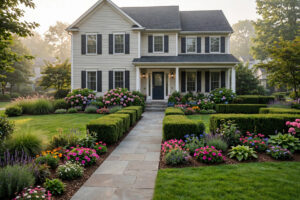
Recurring plan signups are the most valuable action a visitor can take, so the signup pages deserve the best design on the site.
What moves a quote up or down
Two owners can ask for a “pest control website” and get quotes that differ by $4,000, because the details decide the price. The biggest cost drivers are page count, copywriting, photography, and integrations.
Page count is first. A five-page site (home, services, about, reviews, contact) is a few days of work. A twenty-five-page site with a page for each pest and each town is a few weeks. Every additional page needs design, copy, and SEO setup, so ask any quote to spell out how many pages are included and what an extra page costs. A useful rule of thumb: pest library pages and service-area pages are where the money goes, because that is where the search traffic lives.
Copywriting is second. “You provide the text” sounds like a discount until you try to write twenty-five pages of pest content yourself. Professional copywriting usually adds $500 to $2,000 to a build, and for pest control it is often worth it: the pages need to sound knowledgeable about specific pests, and thin copy will not rank on Google. If the quote excludes copywriting, budget for it separately or plan to write it yourself.
Photography is third. Real photos of your techs, trucks, and equipment beat stock photos for trust, but they cost money: either a half-day shoot ($300 to $800) or your own time gathering decent shots. A good middle path is to supply your own photos from the field and let the designer edit and place them well.
Integrations are fourth. A simple quote form is cheap. Two-way booking that syncs with your scheduling software, online payment for plan signups, or a chat widget that answers after-hours questions each add cost and complexity. Add them where they earn their keep, booking and payments for plans, and skip the rest until the site is paying for itself. Pricing for similar service businesses follows the same logic; our breakdown of cleaning company website cost shows how recurring-service features stack up across trades.
Feature and add-on costs that matter for pest control
Not every feature earns its place on a pest control website. The table below prices the add-ons owners ask about most, and flags which ones actually pay back.
| Feature or add-on | Typical add-on cost | Worth it? |
|---|---|---|
| Recurring plan signup pages | $300 to $800 | Yes. The highest-ROI pages on the site; each signup is worth hundreds per year. |
| Service-area pages (per town) | $100 to $300 each, often bundled | Yes. This is how you show up for “pest control + town” searches. |
| Pest library content pages | $150 to $400 per pest page with copywriting | Yes for your top 6 to 10 pests. Skip the rare ones until the site earns. |
| Online quote or booking form | $200 to $600 | Yes. After-hours visitors who cannot request service will call the next company. |
| Review widgets (Google reviews feed) | $100 to $300 | Yes. Trust signal that lifts conversion on every page it appears on. |
| Online payment for plans | $300 to $800 plus processor fees | Yes once plan volume justifies it; fine to add in phase two. |
| Live chat widget | $0 to $50 a month for software, plus setup | Maybe. Useful if someone answers it; a dead chat box hurts more than it helps. |
| Photo gallery of real work | $200 to $500 for layout and editing | Yes if you have real photos. Skip stock-photo galleries; visitors see through them. |
| Blog with monthly articles | $200 to $600 a month for writing | Later. Build the money pages first, add the blog when the site pays for it. |
The pattern is simple: pay first for the features that capture demand (plan pages, town pages, quote forms), and postpone the features that build demand slowly (blogging, advanced chat). A pest control site with ten strong plan and town pages will outperform a fifty-page site with weak conversion pages every time, because pest control buyers decide fast and book fast.
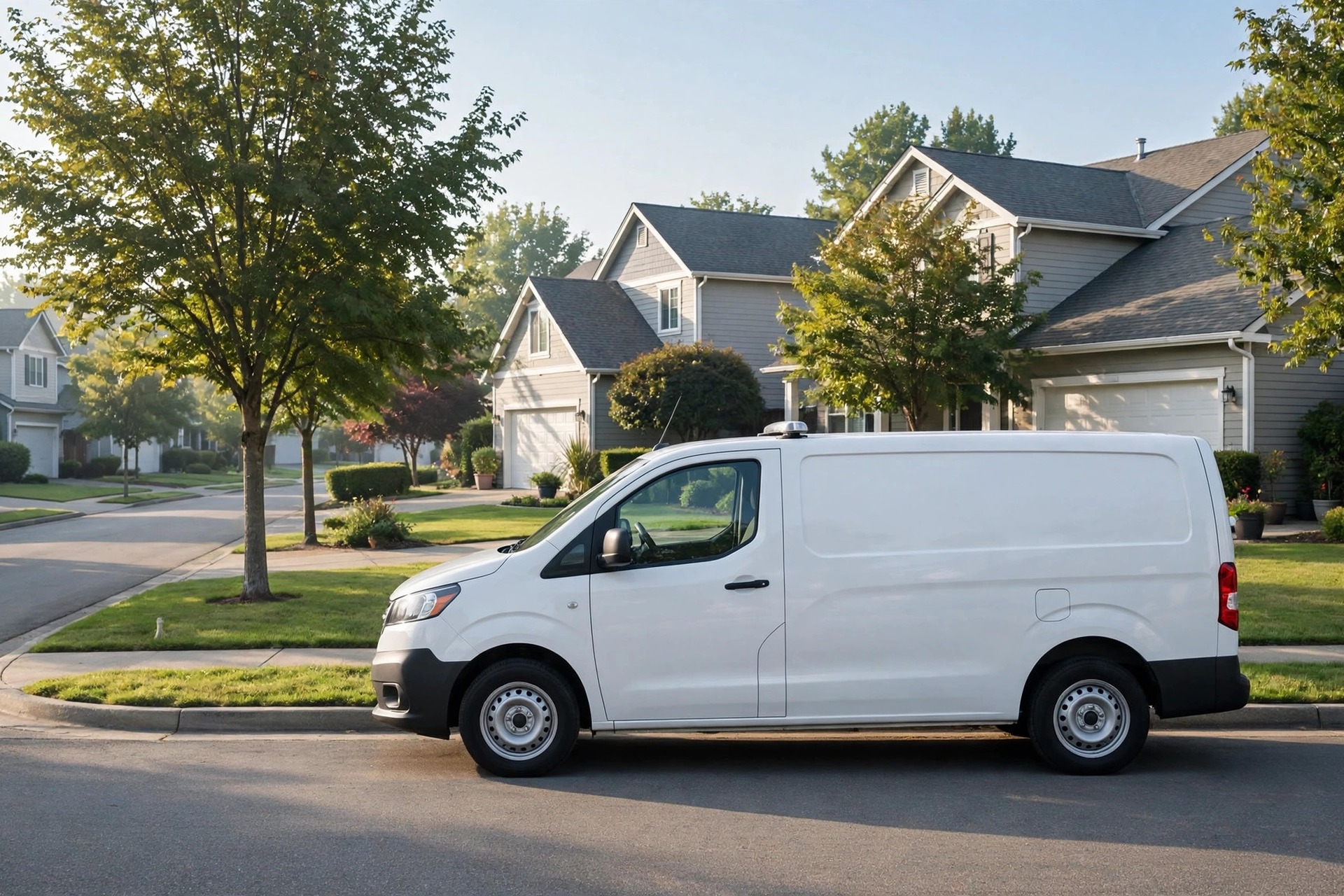
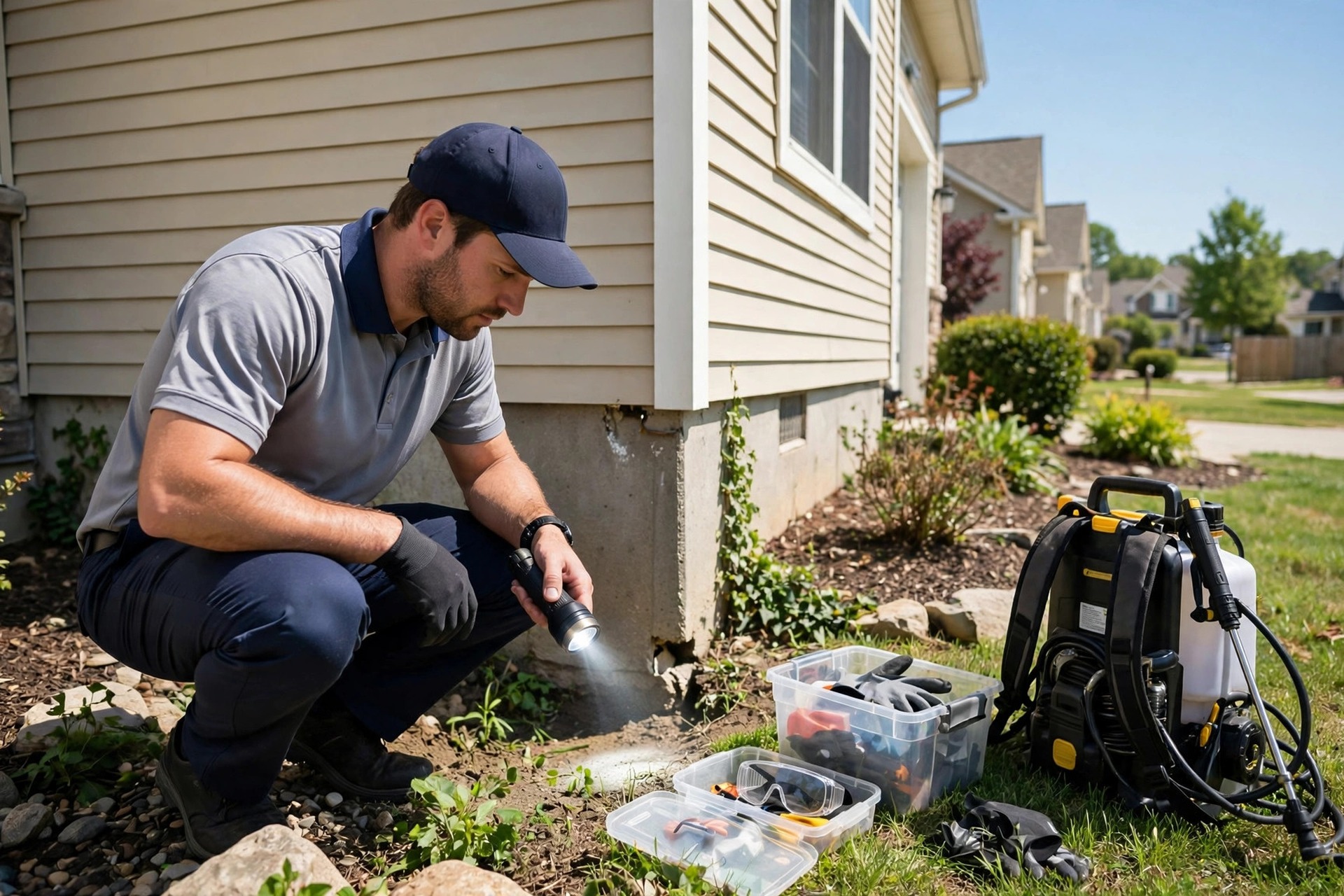
Real photos of your trucks and technicians build the trust that stock images cannot, especially when strangers enter a home.
DIY, freelancer, or agency: who should build it
The right builder depends on where your company stands right now, not on which option sounds most impressive.
DIY website builder
Best when you are just starting and every dollar counts.
- You pick a template, add your pages, write your own copy.
- Works as a credible online presence and a place to send referrals.
- Plan to rebuild or hire help within a year or two as you grow.
- Biggest risk: the site never gets its service-area pages, so Google never sends much traffic.
Freelancer build
Best for small operators who want a professional site without agency pricing.
- A single designer builds on a proven template and customizes it to your brand.
- Usually includes basic SEO setup, review widgets, and a working quote form.
- Ask who writes the copy and who adds the town pages, that is where freelancer builds vary most.
- Biggest risk: no ongoing support, so updates depend on one person’s availability.
Custom agency build
Best for growing companies that want the site to actively win plans.
- Original design built around your services, towns, and plan offers.
- Pest library, service-area pages, booking, and conversion copy all included.
- Usually comes with a care plan for updates, backups, and small changes.
- Biggest risk: paying agency prices for a template in disguise, so ask to see the design process.
Whichever route you take, own your domain name and your website files outright. That one ownership detail matters more than any design choice, because it is what lets you switch builders, change hosts, or sell the company without losing your online presence. The same ownership question comes up in other trades; our roofing website cost guide covers how to read it in a contract.
Ongoing costs after the site launches
A website is not a one-time purchase; it has running costs. The good news is that they are small next to one recurring plan.
Hosting and the domain run $10 to $40 a month for a typical pest control site, or $120 to $480 a year. A care plan from your builder or host, covering software updates, backups, security checks, and small content tweaks, usually costs $50 to $200 a month. That plan is worth buying: an out-of-date site that gets hacked or goes down during mosquito season will cost you far more in lost calls than the plan ever will.
Beyond that, budget for growth, not just upkeep. Adding a new town page when you expand ($100 to $300), refreshing the homepage copy once a year, and publishing a few pest library articles per quarter ($200 to $600 a month if outsourced) are the expenses that compound. A site that grows a little every quarter keeps climbing in Google; a site that never changes slowly slides. None of this needs to happen on day one. Launch with the money pages, then reinvest a slice of the revenue the site brings in.

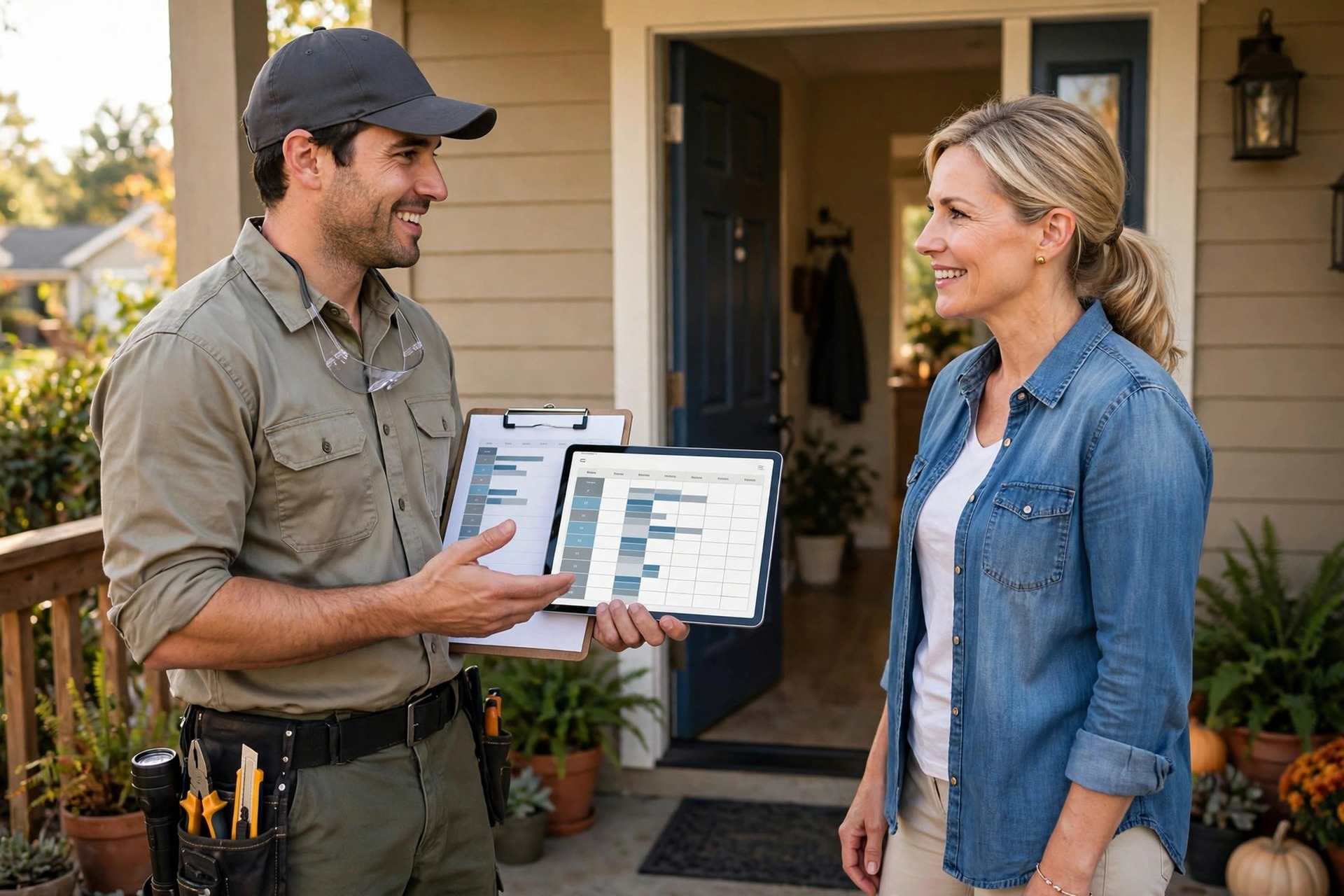
Most quote requests arrive after hours, so a form that captures the visitor beats a phone number nobody answers.
Red flags in a website quote
Most bad website deals follow the same few patterns. Learn them once and you will spot them in any quote.
No page list. A quote that says “website: $3,500” without listing the pages is a blank check. You should see every page named: home, each service page, each town page, plan pages, about, reviews, contact. If the town pages are not listed, they are not included, and adding them later will cost extra.
You do not own the site. Some builders keep the site on their own platform and charge a monthly fee forever. If you stop paying, the site vanishes. This is fine only if you understand it going in and the math works for you; it is a trap if you assumed you were buying a website.
Copywriting is “your responsibility” with no help. Shifting all the writing to you is the most common way cheap quotes stay cheap. Writing twenty pest pages yourself will take weeks, and most owners never finish, which is how sites launch with three pages and stay that way.
No conversion plan. If the quote talks only about design and never about quote forms, plan signup pages, call buttons on mobile, or review placement, the builder is selling art, not a lead machine. Pest control sites live or die on conversion.
Guaranteed Google rankings. Nobody can promise the top spot on Google; anyone who does is selling something they cannot deliver. A good builder will talk about the pages and content that earn rankings, not guarantees.
How recurring plan signups pay for the site
This is the part most owners skip, and it is the whole reason a good pest control website is cheap at twice the price. A one-time ant treatment might bring in $180. A quarterly plan at $115 per visit brings in $460 a year, and the average plan customer stays for more than two years. So one plan signup from your website is worth roughly $900 to $1,000 in lifetime revenue, compared with $180 for a one-time job. Every design decision on the site should push visitors toward the plan, because the plan is where the money is.
That math also sets your budget. If a $4,000 site brings in just one extra plan signup a week, that is about 50 plans a year, worth roughly $23,000 in first-year revenue alone. Even at a quarter of that pace, one plan every two weeks, the site pays for itself in about four months. Compare that with paid ads, where each click costs money whether or not the visitor books. The website is the one marketing asset you buy once that keeps producing plan signups for years, which is why owners who track it treat the site as equipment, not decoration. A similar payback logic applies across home services; our handyman website cost guide shows how booked jobs cover a build in the same way.
How long a pest control website takes to build
Timeline matters because pest season does not wait. A DIY template site can be live in a weekend if you already have your copy and photos. A freelancer build usually takes two to four weeks, with most of the time spent on copy revisions and your feedback rounds. A custom agency build takes four to eight weeks: design, pest library writing, town pages, forms, review integration, and testing.
The part owners underestimate is their own homework. The builder needs your service list, your prices or price ranges, your service-area towns, your reviews, and your photos. Gathering those takes most owners a week of evenings. Start that homework before you sign, not after, and the project will move twice as fast. If mosquito season starts in eight weeks and you need the site live before it, tell the builder on day one so the schedule is built around it.
One more timing note: Google needs weeks to notice and rank new pages. A site launched today will not be at full strength for two to three months. That lag is another reason to start before peak season, not during it.
Your rollout checklist
Work through these in order. Each one builds on the last.
- 1List your money pages. Write down every pest you treat and every town you serve; those become your plan pages, pest pages, and town pages.
- 2Pick your build tier. Match the builder to your stage: DIY under $1,000, freelancer to $2,000, agency to $6,000 for a conversion-focused site.
- 3Gather proof assets. Collect 20 real photos (techs, trucks, equipment), your best 10 reviews, and your license numbers before design starts.
- 4Demand a page list in the quote. Every page named, every town page counted, copywriting responsibility spelled out in writing.
- 5Confirm you own everything. Domain, site files, and content in your name; get the login details on handover day.
- 6Build the plan signup path first. Plan pages, pricing language, and the signup or quote form get designed before anything decorative.
- 7Put reviews where visitors decide. Google review widgets on the homepage, plan pages, and every town page.
- 8Test booking on a phone. Submit the quote form from your own phone at night; if anything is hard, fix it before launch.
- 9Set up a care plan. Hosting, updates, backups, and a contact for small changes, so the site never goes stale or dark.
- 10Review monthly for 90 days. Track quote requests, plan signups, and which town pages get traffic; add pages for the winners.
Frequently asked questions
How much does a basic pest control website cost?
A basic five-page template site costs $300 to $800 to set up, plus $20 to $50 a month for the builder platform. That gets you a credible online presence with a contact form. It will not include pest library pages or service-area pages for each town, which are the pages that bring in search traffic.
Can I build my own pest control website with a template?
Yes, and many owners do for their first site. Website builders make it possible to launch in a weekend. The trade-off is time and traffic: you write all the copy, build every town page yourself, and template sites rarely get the SEO structure that ranks for pest plus town searches. Treat it as a starter, not the final site.
Why do pest control website quotes vary so much?
Because “website” means different products. A $800 quote is usually a template with your logo on it; a $4,000 quote usually includes original design, copywriting, pest library pages, town pages, and booking forms. Always compare the page list and who writes the copy, not just the bottom line.
How much do recurring plan signup pages cost to add?
Plan signup pages typically add $300 to $800 to a build, depending on whether they include online payment. They are the highest-ROI pages on a pest control site because each signup is worth hundreds per year in recurring revenue.
Do I need a service-area page for every town?
You need one for every town you genuinely want calls from. People search with their town name, and a dedicated page for that town will beat a generic page every time. Most companies start with their 5 to 10 best towns and add more as the site earns.
How much is ongoing maintenance for a pest control website?
Plan on $50 to $250 a month total: $10 to $40 for hosting and the domain, plus $50 to $200 for a care plan covering updates, backups, security checks, and small content changes. Sites without a care plan tend to go stale, slow, or hacked.
Will a new website help my Google rankings?
A well-built site helps a lot, but not by magic. Rankings come from having the right pages (pest pages, town pages), solid copy, fast loading, and reviews. The new site gives you the structure; the pages and content do the ranking work over the following two to three months.
Should the site include online booking and payments?
A quote or booking form, yes, from day one. Online payment for plan signups is worth adding once plan volume justifies the setup cost, typically $300 to $800 plus processor fees. Start with the form; add payments in phase two.
How long does a pest control website take to build?
A DIY template can go live in a weekend. A freelancer build takes two to four weeks. A custom agency build takes four to eight weeks. Your own homework, service list, towns, photos, reviews, is usually the slowest part, so start gathering it before you sign.
What should I watch out for in cheap website offers?
Three things: you may not own the site (it disappears if you stop paying the monthly fee), copywriting may be entirely your job, and the page list may exclude the town and pest pages that bring traffic. A cheap site that nobody finds or books from is the most expensive option of all.
Get a pest control website that books plans, not just looks good
Digital Hayder builds conversion-focused websites for pest control companies: plan signup pages, service-area pages for every town you serve, online quote forms, and review widgets that turn worried visitors into recurring revenue. Tell us about your service area and we will scope the build around it.
Contact Us