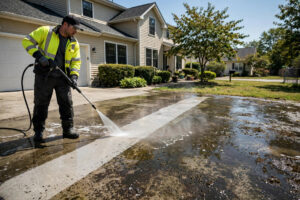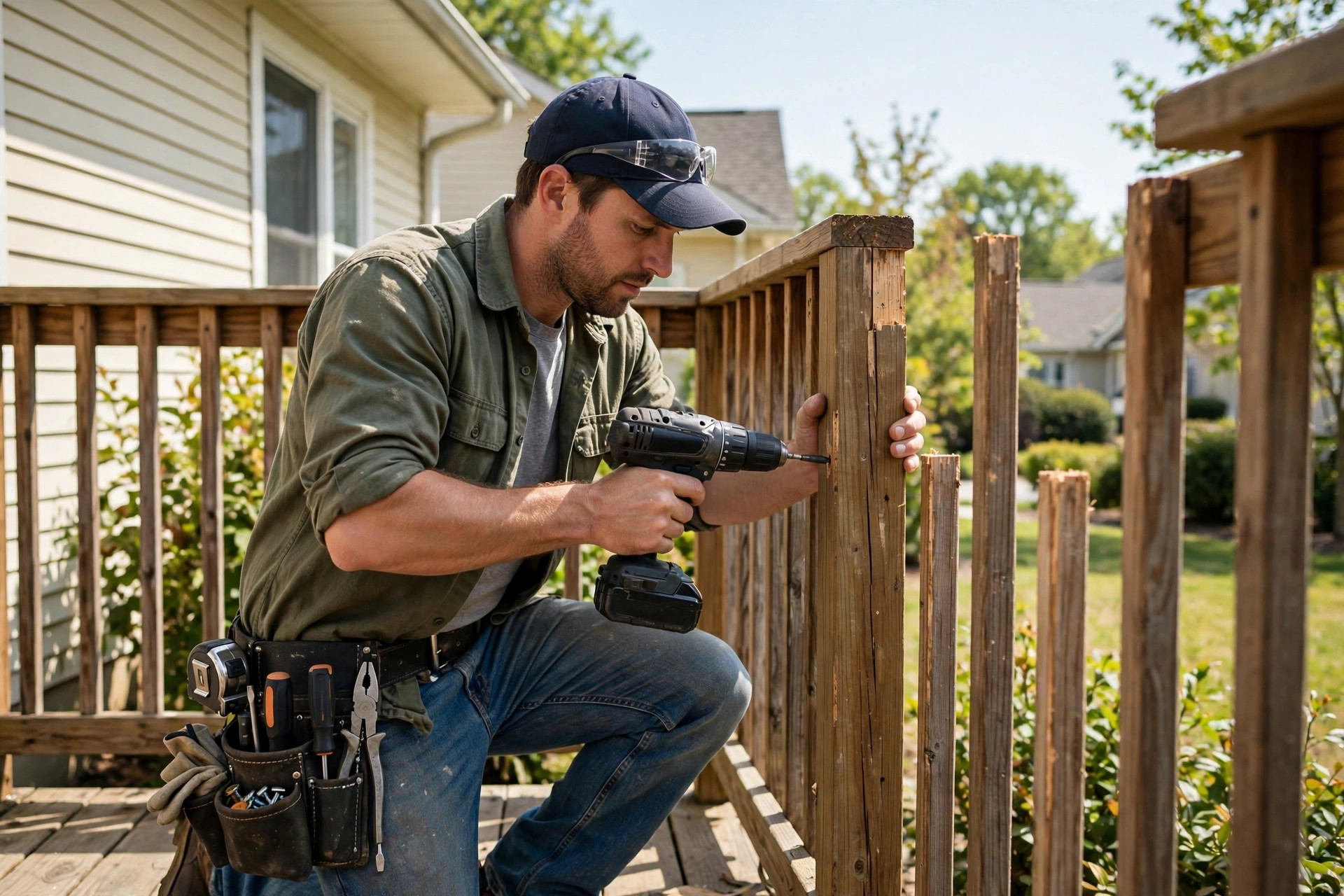
A handyman business lives or dies on a full schedule. When the week has gaps, the bills do not pause, and when the phone only rings for small jobs, the good money goes to whoever shows up first on Google. Most handymen get work from word of mouth and repeat customers, which is great until the referrals slow down. A website built for the way handyman customers actually search, “drywall repair near me,” “fence fix Springfield,” “furniture assembly,” turns those searches into booked jobs. This guide lays out what a handyman website costs in clear price bands, which features fill your schedule fastest, what to skip, and how to judge a quote before you sign it.
The quick answer
- Typical range: most handyman businesses pay $1,200 to $4,500 for a solid site; polished template setups run $600 to $1,500; larger builds with booking pass $8,000.
- The schedule math: one extra booked job a week at $350 covers a $3,000 site in about two months; everything after that is profit.
- Features add up: job-type pages, photo galleries, online booking, and review widgets each add $200 to $1,200 depending on who builds them.
- Ongoing care: budget $40 to $200 a month for hosting, updates, backups, and small content changes.
- Photos sell the work: a handyman site with real before-and-after photos converts far better than one with stock images, whatever it costs.
- Cheap is not always cheaper: a $300 site that cannot take a booking request costs more in lost jobs than a $2,500 site that fills the week.
Why a handyman website wins on variety
A handyman does not sell one service. Drywall repair, painting touch-ups, fence fixes, deck staining, furniture assembly, door hardware, caulking, small plumbing fixes, TV mounting, gutter cleaning: the list runs long, and that variety is your website’s biggest advantage. Every job type is a search term. A homeowner with a broken fence does not search “handyman”; they search “fence repair near me.” A site with a dedicated page for each job type catches all of those searches. A site with one generic “services” page catches almost none of them.
This is the main way handyman websites differ from other trade sites. A plumber’s site can live on a handful of pages because the work clusters around a few big jobs. A handyman needs breadth: ten to twenty job-type pages, each one answering the visitor’s real question (what it costs, how long it takes, whether you do that exact thing) and ending in a booking request. Quotes that price “a website” without counting those pages will always surprise you later, so get the page count in writing.
The second difference is trust through proof. Nobody hires a stranger for home repairs without seeing the work first. Before-and-after photos, short job stories, and Google reviews are what turn a visitor into a caller. A handyman site without a photo gallery is like a restaurant with no menu: people leave. Collecting those photos costs you nothing but the habit of taking them, a quick phone photo before and after each job, and it is the highest-return content investment you can make. Real proof beats clever design every time.
The third difference is the phone. Most handyman jobs get booked by call or text, often the same day the customer searches. Your site has to make contacting you effortless on a phone: tap-to-call buttons, a short request form, and your service area stated plainly. If a visitor on a phone has to pinch and scroll to find your number, they will hit the back button and call the next result. Mobile booking ease is not a nice extra for handymen; it is the whole point.
Handyman website cost by build type
For the same request, quotes can run from $300 to $8,000. The spread reflects real differences in what gets built. The table below shows the tiers, what each includes, and who it fits.
| Build type | Typical cost | What you usually get | Best for |
|---|---|---|---|
| DIY website builder | $250 to $700 setup, plus $20 to $50 a month | Template design, basic pages, simple contact form; you write the copy and add every page yourself | Solo handymen starting out with more time than budget |
| Template plus freelancer polish | $600 to $1,500 | Template base with your branding, rewritten homepage copy, photo gallery, review widgets, basic SEO | Established solo operators ready for steady leads |
| Custom agency build | $1,500 to $4,500 | Original design, job-type pages for your services, town pages, online booking, conversion copy, speed work | Growing businesses that want the site to fill the schedule |
| Booking-heavy or multi-crew | $5,000 to $8,000 and up | Full online booking with crew calendars, quote calculators, customer accounts, review automation | Multi-crew operations taking high daily volume |
Most one-to-three-person handyman businesses land in the freelancer or custom agency bands. That is the first level where the site is built around how your customers actually search: job-type pages, town pages, and a booking path that works on a phone. Below that you get a digital business card that looks fine and books little. Above it you are paying for booking systems and scale that a small crew does not need yet.
Watch out for “free website with our ad package” deals. Some marketing sellers bundle a site into a monthly fee, but the site lives on their platform and disappears if you cancel. Renting a website can make sense as a short-term test; buying one you own outright is what protects you long term. The same ownership warning applies across home services, as our plumbing website cost guide explains.
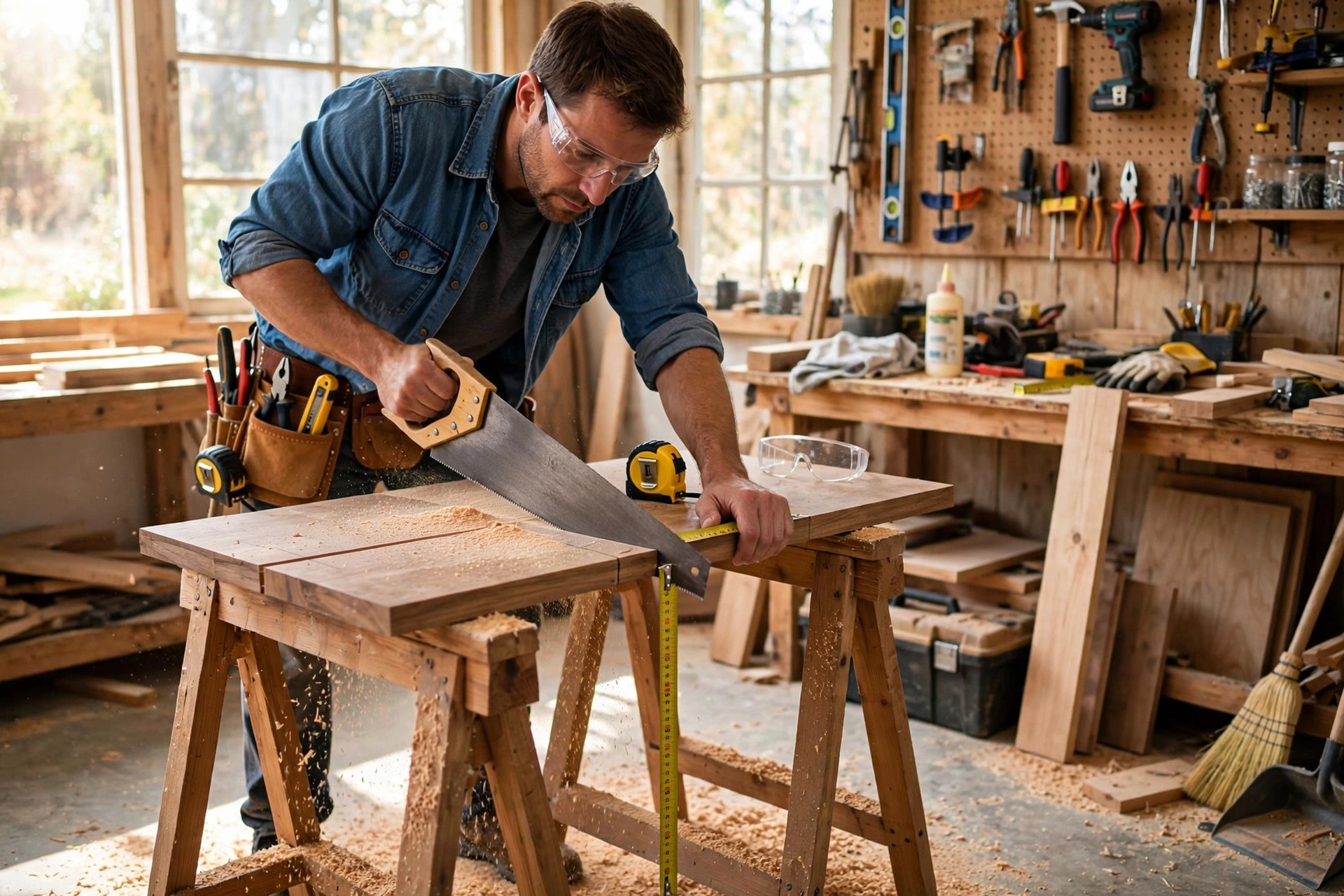
Real photos of real work are the highest-return content on a handyman site; take before and after shots on every job.
What moves a quote up or down
Two handymen can ask for a website and get quotes $3,000 apart, because the details set the price. Page count, copywriting, photography, and booking features are the four levers.
Page count comes first, and it matters more for handymen than for most trades. A five-page site is a few days of work. A site with fifteen job-type pages plus eight town pages is a few weeks. Each page needs design, copy, and SEO setup, so ask every quote to name the pages included and the price of extras. Job-type pages are where your search traffic lives, so undercounting them is the most expensive mistake in a cheap quote.
Copywriting comes second. “You write the text” sounds like savings until you face fifteen blank job-type pages. Professional copywriting usually adds $400 to $1,500, and for handymen it pays off in two ways: pages that answer the customer’s real questions (price ranges, timing, what is included) and copy that Google can rank. If the quote excludes writing, either budget for it or block out real evenings to do it yourself.
Photography comes third, and here handymen have an edge: you generate photo material on every job. A gallery of your actual before-and-after work costs nothing but the habit of taking the shots. What costs money is layout and editing ($200 to $500) and, if you want it, a half-day brand shoot ($300 to $800). The gallery itself is non-negotiable; the only question is whose photos fill it.
Booking features come fourth. A simple request form is cheap and covers most handymen. True online booking with calendar sync, deposits, and crew scheduling adds $800 to $2,000 and suits multi-crew operations. Start with the form, add full booking when your volume justifies it. A similar phased approach works for other recurring services; see our cleaning company website cost breakdown for the comparison.
Feature and add-on costs that fill the schedule
Every feature on a handyman site should answer one question: does it turn a visitor into a booked job? The table prices the add-ons owners ask about and flags the ones that pay back.
| Feature or add-on | Typical add-on cost | Worth it? |
|---|---|---|
| Job-type pages (per page) | $100 to $250 with copywriting | Yes. Each page catches searches for that exact job; build your top 10 to 15 first. |
| Task list booking form | $200 to $500 | Yes. Let visitors list several small jobs in one request; it matches how handyman customers think. |
| Before-and-after photo gallery | $200 to $500 for layout and editing | Yes. The single biggest trust builder on the site, using photos you already take. |
| Review widgets (Google reviews feed) | $100 to $300 | Yes. Social proof on the homepage and every job-type page lifts bookings. |
| Service-area pages (per town) | $100 to $250 each, often bundled | Yes. “Fence repair Springfield” beats “handyman services” in local search every time. |
| Online booking with calendar | $800 to $2,000 | Later. A good request form covers most handymen; add full booking at multi-crew volume. |
| Quote calculator | $400 to $1,000 | Maybe. Nice for common jobs with standard pricing; skip if your pricing varies a lot. |
| Live chat widget | $0 to $50 a month plus setup | Maybe. Only if someone replies fast; an unanswered chat box costs you trust. |
| Blog with monthly articles | $200 to $500 a month for writing | Later. Job-type pages first; add the blog when the site is already earning. |
The priority order is clear: job-type pages, then the gallery and reviews, then the booking form, then town pages. Those four together are what make the phone ring. Everything else is phase two. A handyman site with twelve strong job pages and a real gallery will out-book a bloated site with weak pages every single time, because customers decide on proof and ease, not on feature count.
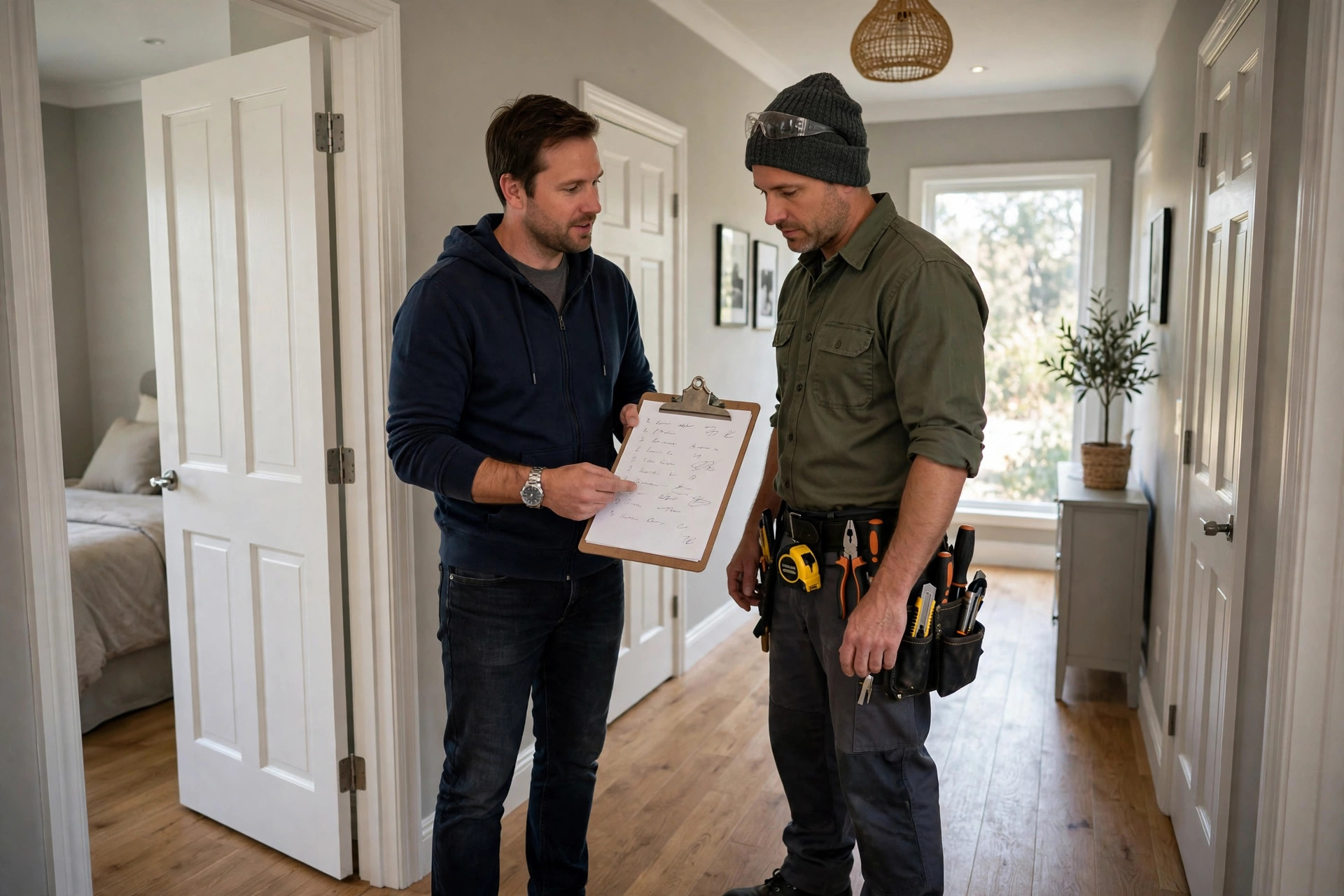
Handyman customers think in task lists, so a form that accepts several small jobs in one request matches how they buy.
DIY, freelancer, or agency: who should build it
Match the builder to your stage, not to your ambition. A solo handyman and a three-crew operation need different sites.
DIY website builder
Best when you are starting out and every dollar matters.
- You pick a template, add your pages, and write your own copy.
- Fine as a credible place to send referrals and a home for your reviews.
- Plan to upgrade within a year or two as the business grows.
- Biggest risk: the job-type pages never get built, so Google sends little traffic.
Freelancer build
Best for established solo handymen who want a professional lead flow.
- A single designer builds on a proven template, customized to your brand.
- Usually includes the gallery, review widgets, a task-list form, and basic SEO.
- Ask who writes the job-type pages; that is where freelancer builds vary most.
- Biggest risk: support depends on one person, so updates can wait on their schedule.
Custom agency build
Best for growing businesses that want the site to actively fill the week.
- Original design built around your job types, towns, and booking path.
- Job-type pages, town pages, gallery, reviews, and conversion copy all included.
- Usually comes with a care plan for updates, backups, and small changes.
- Biggest risk: agency prices for a template in disguise, so ask to see the design process.
No matter who builds it, keep the domain and the site files in your name. That ownership detail decides whether you can switch builders, move hosts, or sell the business without losing your online presence. It matters more than any design choice on the page. The same contract check shows up in every trade; our roofing website cost guide walks through what to look for.
Ongoing costs after the site launches
A website has running costs, but for a handyman they are smaller than one average job.
Hosting and the domain run $10 to $35 a month, or $120 to $420 a year. A care plan, covering software updates, backups, security checks, and small content tweaks, usually costs $40 to $150 a month. Buy the care plan. A hacked or broken site during your busiest stretch costs more in missed calls than a year of care ever will, and most handymen would rather be on a job than fixing a website.
Then budget for growth. Adding a new job-type page when you add a service ($100 to $250), adding town pages as you expand your area, and refreshing the gallery with new before-and-after shots each month are the expenses that compound. A site that grows a little every quarter keeps climbing in Google; a site frozen at launch slowly slides. Launch with the money pages, then reinvest a slice of what the site brings in. The gallery refresh is free if you keep the photo habit: snap before and after on every job and send the batch to whoever maintains the site.
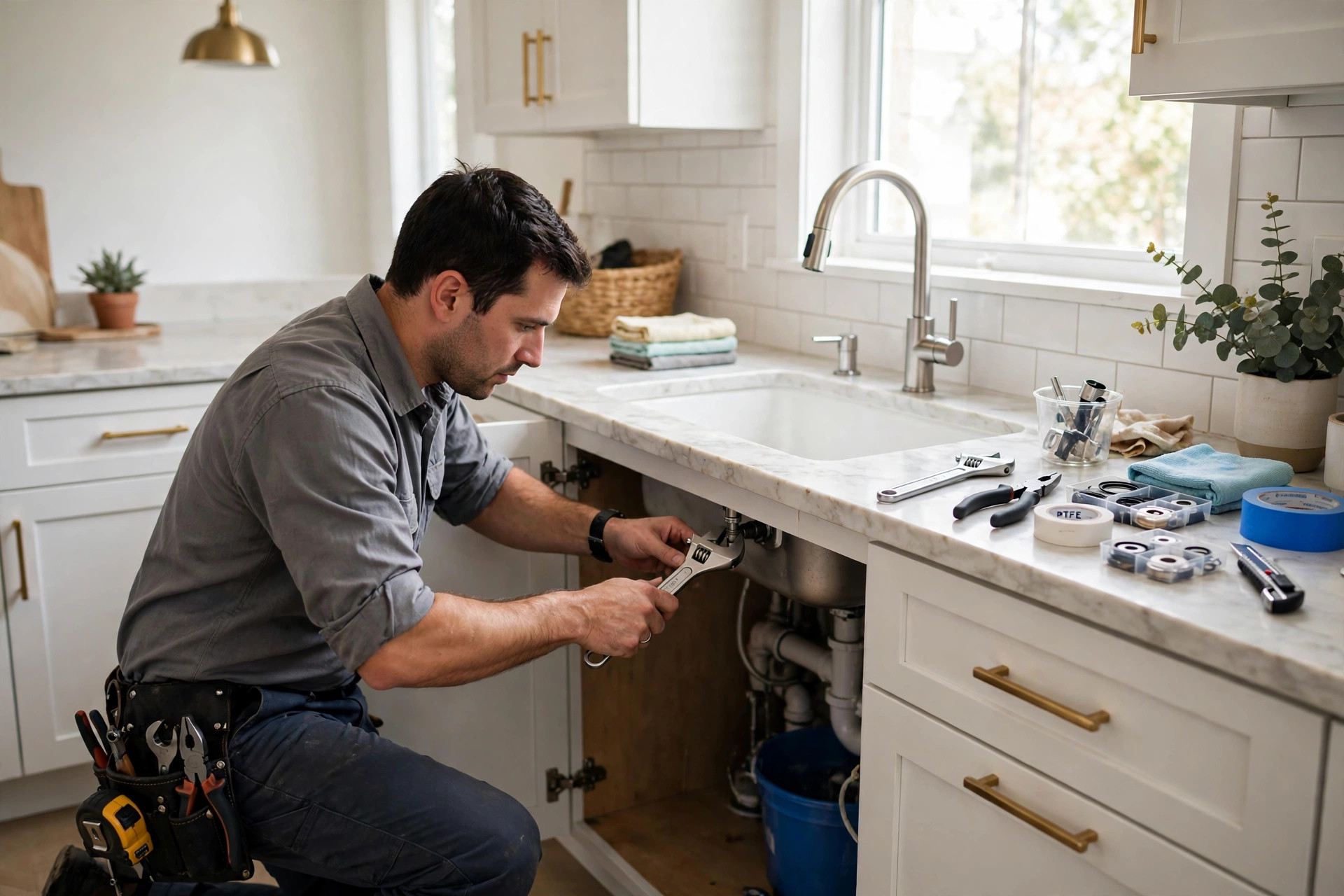
Small jobs booked through the site add up fast: three extra jobs a week is a six-figure swing over a year.
Red flags in a website quote
Bad website deals repeat the same patterns across every trade. Learn them once.
No page list. “Website: $2,800” with no page breakdown is a blank check. You should see every job-type page named, every town page counted, and the gallery and booking form listed. If the job-type pages are missing from the list, they are not included, and adding them later costs extra.
You do not own the site. Some builders host the site on their own platform with a monthly fee. Stop paying and the site is gone. Fine if you go in with open eyes; a trap if you thought you were buying a website.
Copywriting is entirely on you, with no help. This is how cheap quotes stay cheap. Writing fifteen job-type pages yourself takes weeks of evenings, and most owners stall out, which is how sites launch thin and stay thin.
Stock photos instead of your work. If the builder’s plan for your gallery is stock images of tools, walk away. A handyman gallery of stock photos destroys the exact trust the gallery is supposed to build. Your real work or nothing.
No mobile booking plan. If the quote never mentions tap-to-call, the phone layout, or the request form, the builder is designing for a desktop your customers do not use. Most handyman searches happen on phones, usually with a broken something in the background.
Guaranteed top Google rankings. Nobody can promise the number-one spot. A good builder talks about the pages and content that earn rankings; a bad one sells guarantees.
How booked jobs pay for the site
This is the math that turns a website from an expense into equipment. The average handyman job lands between $200 and $500 depending on your market and the work. Call it $350. A $3,000 website plus $75 a month for care needs just nine jobs to break even. Nine jobs. After that, every job the site brings in is profit on the asset, and the site keeps bringing them for years.
The schedule view makes it even clearer. Most handymen bill $75 to $125 an hour. Filling six empty hours a week, less than one day, at $90 an hour is $540 a week, or about $28,000 a year. The site does not need to double your business. It needs to fill the gaps: the slow Tuesdays, the week after a big job ends, the rainy stretch when outdoor work pauses. Those gaps are pure lost income right now, because an empty hour cannot be stored and sold later. A site that converts even a few searches a week into booked hours pays for itself fast, then keeps paying. The logic is identical in neighboring trades; our pest control website cost guide runs the same payback math on recurring plans.
How long a handyman website takes to build
A DIY template site can be live in a weekend if your copy and photos are ready. A freelancer build usually takes two to four weeks, with most of the time going to your feedback rounds and copy revisions. A custom agency build takes four to eight weeks: design, job-type page writing, gallery buildout, booking forms, and testing.
Your homework is usually the slow part. The builder needs your full job list, your price ranges, your service-area towns, your reviews, and your before-and-after photos. Most handymen can pull that together in a week of evenings if they start before signing. Do it after, and the project sits waiting on you. If you want the site live before the spring rush or the holiday honey-do season, say so on day one so the schedule is built around it.
One timing note: Google needs weeks to find and rank new pages. A site launched today reaches full strength in two to three months. Start before your busy season, not during it, so the pages are ranked when the searches peak.
Your rollout checklist
Work through these in order. Each one builds on the last.
- 1List your money pages. Write down every job type you do and every town you serve; those become your job-type pages and town pages.
- 2Pick your build tier. Match the builder to your stage: DIY under $700, freelancer to $1,500, agency to $4,500 for a schedule-filling site.
- 3Start the photo habit. Take before and after phone photos on every job starting today; aim for 30 pairs before launch.
- 4Demand a page list in the quote. Every job-type page named, every town page counted, copywriting responsibility in writing.
- 5Confirm you own everything. Domain, site files, and content in your name; collect all logins on handover day.
- 6Build the booking path first. Task-list form, tap-to-call buttons, and the phone layout get designed before anything decorative.
- 7Put proof everywhere. Gallery highlights on the homepage, reviews on every job-type page, real photos only.
- 8Test booking on your phone. Submit the request form from your own phone with one thumb; fix anything awkward before launch.
- 9Set up a care plan. Hosting, updates, backups, and a contact for small changes, so the site never goes stale or dark.
- 10Review monthly for 90 days. Track request forms, calls, and which job pages get traffic; build pages for the winners.
Frequently asked questions
How much does a basic handyman website cost?
A basic five-page template site costs $250 to $700 to set up, plus $20 to $50 a month for the builder platform. You get a credible online presence with a contact form, but not the job-type pages or gallery that actually bring in searches and bookings.
Can I build my own handyman website with a template?
Yes, and many solo handymen do for their first site. The trade-off is time and traffic: you write all the copy, build every job-type page yourself, and template sites rarely get the page structure that ranks for job plus town searches. Treat it as a starter, not the final site.
Why do handyman website quotes vary so much?
Because the product differs. A $600 quote is usually a template with your name on it; a $3,000 quote usually includes original design, copywriting, a dozen job-type pages, a gallery, and a booking form. Compare the page list and the writing responsibility, not just the price.
How much does a photo gallery cost to add?
Gallery layout and photo editing typically add $200 to $500 to a build. The photos themselves should be yours, before-and-after shots from real jobs, which cost nothing but the habit of taking them. Never pay for a stock-photo gallery.
Do I need a page for every type of job I do?
You need one for every job type you want calls for. Customers search for the specific job, “drywall repair” or “fence fix,” not for “handyman.” Start with your 10 to 15 most profitable job types and add the rest as the site earns.
How much is ongoing maintenance for a handyman website?
Plan on $40 to $200 a month: $10 to $35 for hosting and the domain, plus $40 to $150 for a care plan covering updates, backups, security, and small changes. Unmaintained sites go stale, slow, or hacked, usually at the worst moment.
Should my site take online bookings or just quote requests?
Start with a strong quote request form, especially one that accepts a task list of several small jobs. Full online booking with calendar sync suits multi-crew operations; most solo handymen book by call or text after the form comes in.
Will a new website help my Google rankings?
A well-built site helps a lot, through job-type pages, town pages, solid copy, fast loading, and reviews. Rankings build over two to three months after launch; the site gives you the structure, and the pages do the ranking work.
How long does a handyman website take to build?
A DIY template can go live in a weekend. A freelancer build takes two to four weeks. A custom agency build takes four to eight weeks. Your homework, job list, towns, photos, reviews, is usually the slowest part, so gather it before you sign.
What should I watch out for in cheap website offers?
Three things: you may not own the site (it vanishes if you stop the monthly fee), all copywriting may fall on you, and the quote may exclude the job-type pages that bring traffic. A cheap site that books nothing is the most expensive option.
Fill the gaps in your week with a site built to book jobs
Digital Hayder builds handyman websites that turn searches into scheduled work: job-type pages for everything you do, before-and-after galleries, task-list booking forms, and review widgets that prove the quality before you arrive. Tell us about your services and we will scope the build around them.
Contact Us