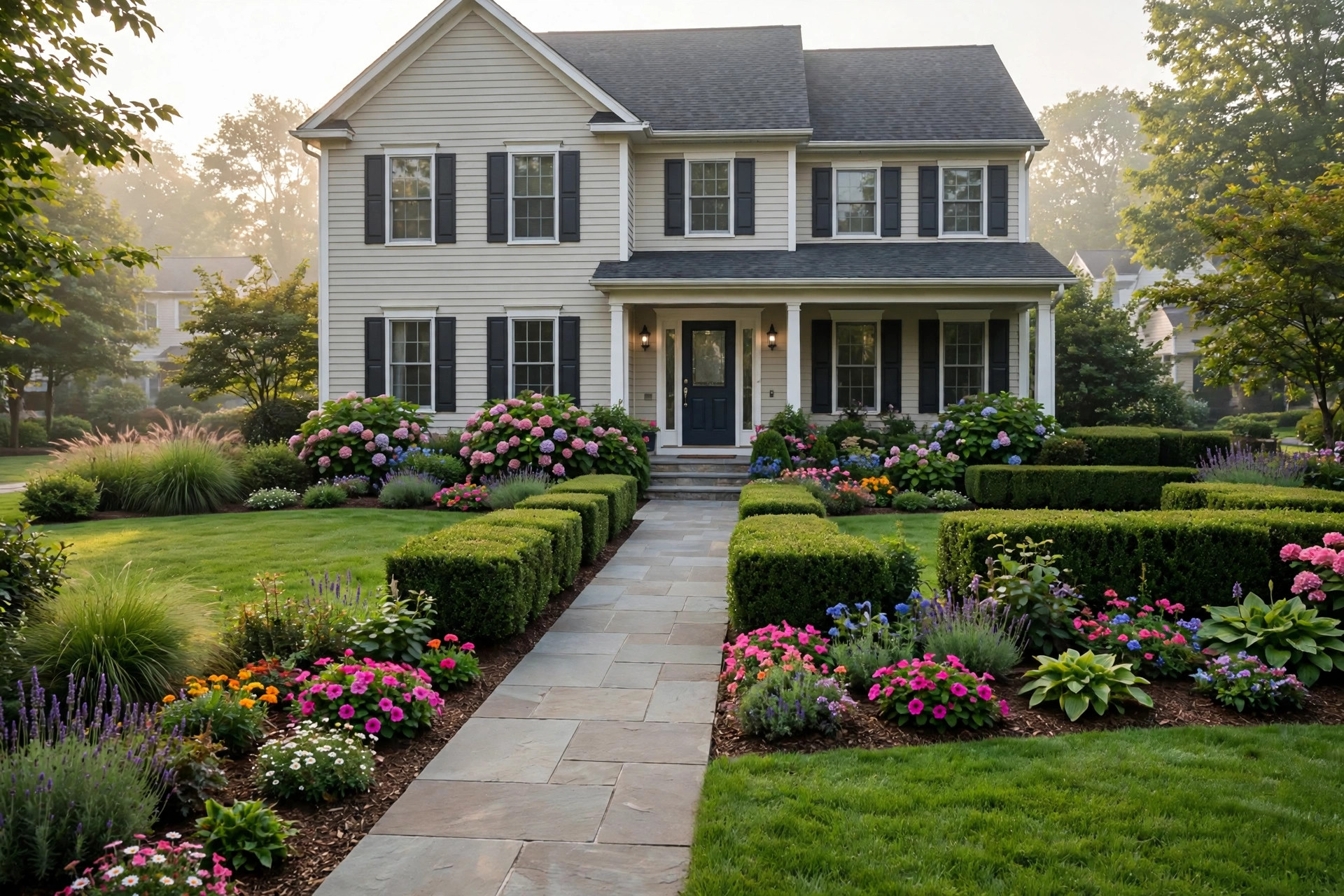
Ask five web designers what a landscaping website costs and you will get five different numbers, from a few hundred dollars to twenty thousand. None of them are lying; they are quoting different things. A one-page site built on a template is not the same product as a custom site with project galleries, service-area pages for every town you cover, and a quote form wired into your scheduling. This guide gives you the honest breakdown: what each price tier actually buys, what drives the cost up, what a landscaping company genuinely needs to win customers, and which line items on a proposal are upsells you can skip. No jargon, no sales pitch, just the numbers.
The quick answer
- DIY website builders: $100 to $500 a year for the platform and domain. Cheap, but you do all the work and the result often looks like it.
- Freelancer: $1,500 to $5,000 one time. The sweet spot for most small landscaping companies: custom design without agency overhead.
- Small agency: $4,000 to $10,000 one time. Better strategy, copywriting help, and local SEO groundwork built in.
- Premium custom: $10,000 and up. For larger companies with multiple crews, service areas, and serious growth targets.
- What actually drives cost: portfolio galleries, service-area pages, quote and booking forms, and ongoing maintenance.
- What you really need: fast loading, mobile-first design, your service area and services stated clearly, real project photos, reviews, and a quote form that works on a phone.
What a landscaping website has to do
Before the prices make sense, you need to know what you are buying. A landscaping website has one job: turn a searcher into a quote request. The homeowner searches “landscaping company near me,” taps your result, and in about fifteen seconds decides whether you look trustworthy enough to contact. Everything on the site serves that decision. Your photos prove you do good work. Your service area tells them you cover their town. Your reviews tell them other homeowners trust you. Your quote form makes contacting you take thirty seconds on a phone.
That is the whole job. It does not include a blog nobody reads, an animated intro video, or a twenty-page site. Most landscaping companies win or lose on six pages: home, services, portfolio or gallery, service areas, about, and contact or quote. Keep that in mind while reading the prices below, because every tier beyond the basics is judged by one question: does this help a homeowner pick up the phone. If not, it is decoration.
The hidden costs people forget
The build price is not the total price. Every website also carries running costs: the domain name (roughly $15 a year), hosting ($100 to $300 a year for decent shared or managed hosting), and either your time or a maintenance plan to keep it updated and secure. A cheap site that you never update slowly rots: plugins go stale, the design looks dated, and the quote form breaks without anyone noticing. Budget for the running costs in every tier, because a $2,000 site abandoned after a year was more expensive than a $500 site that gets maintained.
The four price tiers, honestly explained
Here is what the market actually charges, what you get at each level, and who each level fits. Prices vary by region and by designer, but these ranges hold across most of the market.
Tier 1: Do it yourself
A website builder like Wix, Squarespace, or WordPress.com, a template, your photos, and your evenings. You pay for the platform subscription and the domain, and you build everything yourself.
- What you get: a working site in a weekend, full control, no designer bills
- What you miss: professional design polish, real SEO setup, copy that sells, and speed optimization
- Best for: brand-new one-person operations testing the waters, where every dollar matters
- Watch out for: template sites that look identical to competitors, and quote forms that bury inquiries in a dashboard you never check
Tier 2: Freelance designer
An independent designer builds you a custom site, usually on WordPress, with a professional template or a light custom design. You supply the photos and the text, or pay a little extra for copy help.
- What you get: a site that looks like your business instead of a template, mobile-friendly design, basic SEO setup, and a quote form wired to your email
- What you miss: deep strategy, professional copywriting, and ongoing support unless you pay for it
- Best for: most small landscaping companies with one to three crews, the value sweet spot
- Watch out for: freelancers who disappear after launch; agree on a handover and a short support window in writing
Tier 3: Small agency
A small agency or studio handles design, copywriting, and local SEO as one project. You get a strategy conversation first: who your customers are, which services make you money, and which towns you want to rank in.
- What you get: custom design, written-for-you copy, portfolio galleries done right, service-area pages for local search, Google Business Profile alignment, and a launch checklist
- What you miss: nothing important at this size; this is the complete package for a growing company
- Best for: established companies ready to grow, or anyone competing in a crowded metro market
- Watch out for: agencies that bundle in monthly “SEO packages” at $500 a month with vague deliverables; buy the site, then judge SEO separately
Tier 4: Premium custom build
Fully custom design and development, advanced features, and often a brand refresh alongside the site. Built for companies where the website is a serious sales channel.
- What you get: unique design, complex quote configurators, CRM integration, multi-location structure, performance engineering, and a team that stays on after launch
- What you miss: nothing, but most landscaping companies will never need this much site
- Best for: large companies with multiple locations or crews, design-build firms selling high-ticket projects
- Watch out for: paying for complexity your customers will never use; a homeowner does not need a 3D garden planner to request a mowing quote
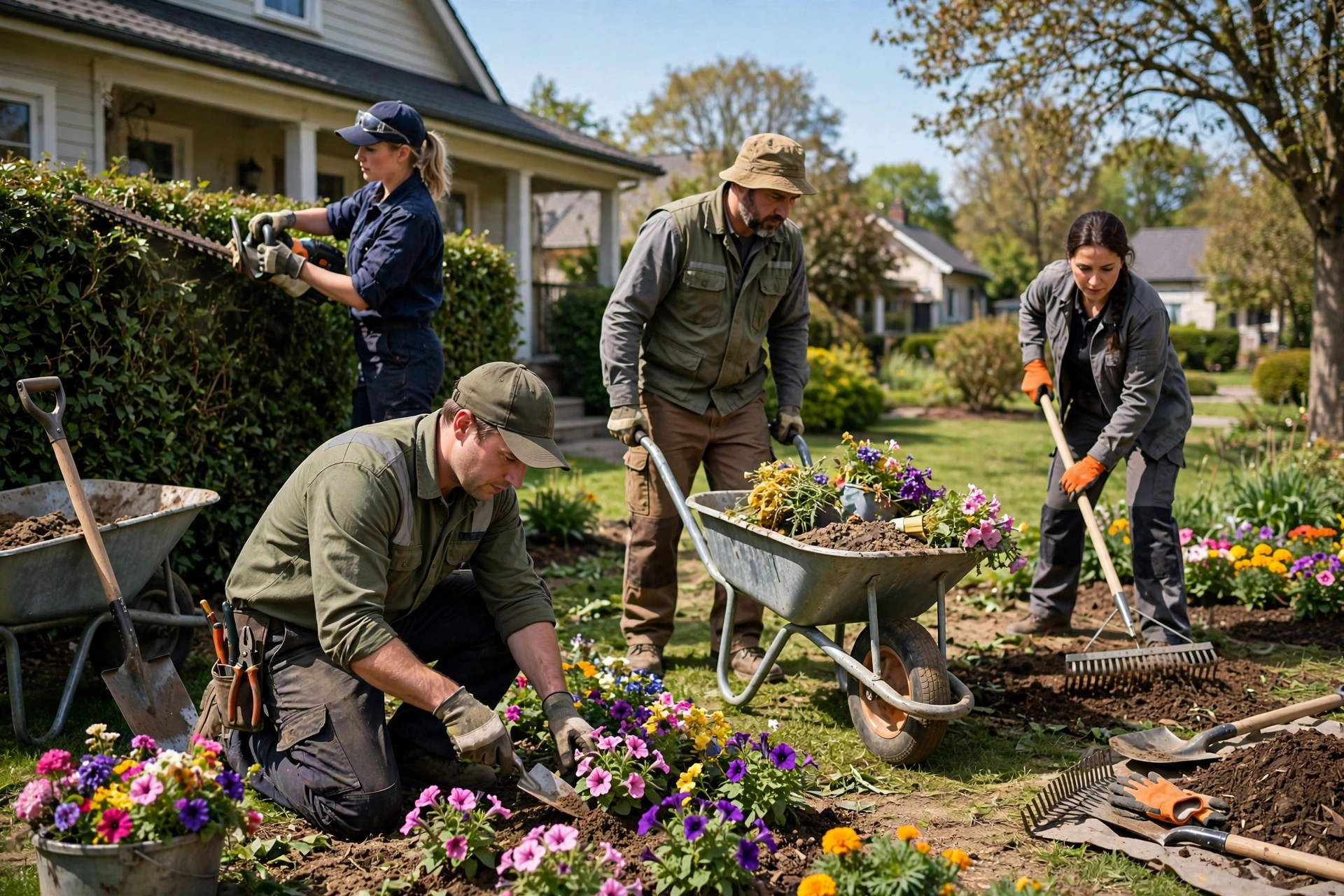
Real photos of real crews sell landscaping. Stock photos of strangers’ gardens do not.
What drives the price up (and what does not)
When a quote comes in higher than expected, it is usually one of these cost drivers. Understanding them lets you decide what is worth paying for and what to cut.
Portfolio galleries: worth every dollar
Landscaping is visual. A homeowner choosing between two companies picks the one whose past work they can see. A proper gallery, organized by project type (patios, plantings, lawn care, lighting), with before-and-after photos, is the highest-converting feature a landscaping site can have. It costs more because someone has to curate, crop, compress, and lay out dozens of photos so the page loads fast and looks professional. Pay for it. This is the rare feature that directly wins jobs.
Service-area pages: the local SEO engine
If you serve twelve towns, a single “we serve the metro area” line does not rank in any of them. A page per town, each with local photos, local reviews, and genuinely local content, is how landscaping companies show up in “landscaper near me” searches across their whole territory. Each page takes real writing time, which is why quotes climb with the number of towns. It is worth it if you actually want work from those towns. It is not worth paying for twenty town pages when you only work in five.
Quote forms and booking: keep it simple
A good quote form asks for name, phone, address, service needed, and a photo upload, then sends it to your phone or email instantly. That costs very little to build. What costs a lot is the fancy version: multi-step wizards, instant pricing calculators, calendar booking with crew scheduling. Those are impressive in a demo and mostly unused by homeowners, who would rather text you a photo of their yard. Pay for the simple form that works perfectly on a phone. Skip the wizard unless you have the office staff to run the system behind it.
Ongoing maintenance: the quiet line item
Someone has to update the software, renew the hosting, check the forms, and refresh the photos. Maintenance plans run $50 to $200 a month from freelancers and small agencies. It feels like a tax until the month your quote form breaks silently and you lose three weeks of inquiries. If you will not maintain the site yourself, pay for the plan. It is the cheapest insurance in the whole project.
| Feature | DIY | Freelancer | Small agency | Premium |
|---|---|---|---|---|
| Custom design | No, template | Light custom | Yes | Fully unique |
| Professional copywriting | You write it | Light editing | Included | Basics |
| Portfolio gallery | Basic grid | Good gallery | Curated, optimized | Advanced, filterable |
| Service-area pages | You build them | A few pages | Full coverage | Full coverage plus strategy |
| Quote form | Basic | Good, mobile-friendly | Optimized for conversion | CRM-integrated |
| Local SEO setup | Minimal | Basics | Solid foundation | Advanced |
| Ongoing support | You | Limited | Available | Dedicated |
| Typical timeline | Your weekends | 2 to 4 weeks | 4 to 8 weeks | 8 to 16 weeks |
What a landscaper actually needs versus the upsell
Here is the honest split. The needs list is short, and anything beyond it should justify itself against one question: will this bring in more quote requests than it costs.
You actually need this
A fast, mobile-first site, because most of your customers find you on a phone from the yard they want fixed. Clear service and service-area information on the homepage, so nobody wonders whether you do what they need where they live. Real photos of your work and your crews, because stock photography of gardens you did not build actively hurts trust. Reviews on the site, pulled from Google, because they are your proof. A simple quote form that works perfectly on a phone, because every extra field loses inquiries. And basic local SEO: correct business name, address, and phone everywhere, a claimed Google Business Profile, and pages that mention the towns you serve. That list wins customers. Everything else is optional.
You can probably skip this
A blog, unless someone will actually write useful local content monthly; a dead blog with three posts from two years ago hurts more than it helps. Animated hero videos and parallax effects, which slow the site on the phones your customers use. Live chat widgets on a site nobody monitors; an unanswered chat is worse than no chat. Multi-language versions unless you genuinely serve those customers. And the big one: the $500-a-month SEO retainer sold alongside the build, with deliverables like “ongoing optimization” that nobody can verify. Buy SEO separately, from someone who reports rankings, traffic, and quote requests in plain numbers. For a sense of how these costs compare in a neighboring trade, see our breakdown of how much a roofing website costs and how much a cleaning business website costs.

You are not buying pages. You are buying a machine that turns searches into quote requests.
How to choose without getting burned
Most bad website projects fail for the same three reasons: the scope was never written down, the content was nobody’s job, and nobody owned the site after launch. Fix all three before you sign anything.
Get the scope in writing
Every proposal should list the exact pages, the exact features, the number of design revisions, who writes the copy, who supplies the photos, and what happens after launch. “Website: $5,000” is not a scope; it is a wish. Compare proposals line by line. The cheapest quote is usually missing the copywriting, the photo work, or the SEO setup, which means you pay for them later or go without.
Own your content and your accounts
You supply the photos, and that is non-negotiable. Take before-and-after photos of every notable job starting now; in six months you will have a gallery no designer can fake. The domain, the hosting account, and the site admin login must be in your name, not the designer’s. Designers retire, freelancers disappear, agencies close. If your site lives in someone else’s account, you do not own your website; you rent it from a stranger.
Plan the handover before launch
Ask how you will update the site yourself: add photos, change prices, post a seasonal offer. A good build includes a short training session and a simple editing setup. Also agree on what happens when something breaks in month two. A 30 to 90 day support window after launch is standard; silence after the final invoice is a red flag. If your current site is already failing you, our checklist of signs you need a website redesign helps you decide whether to fix or rebuild.
Your decision checklist
- 1Define the site’s one job. Quote requests from homeowners in your service area. Every feature must serve that job.
- 2Pick your tier honestly. New solo operation: DIY. One to three crews: freelancer. Growing and competing: small agency. Multi-location: premium.
- 3Budget the running costs. Domain, hosting, and maintenance on top of the build price, every year.
- 4Start photographing your work now. Before-and-after shots of every good job. This is the content no money can buy later.
- 5Get three written proposals. Same scope description to each, compared line by line on pages, features, revisions, copy, and support.
- 6Keep the quote form simple. Name, phone, address, service, photo upload. Test it on your own phone before launch.
- 7Own everything. Domain, hosting, and admin logins in your name, in writing, before the final payment.
- 8Plan the first 90 days. Who updates the site, who answers the quote requests within the hour, and how you will measure whether it is working.
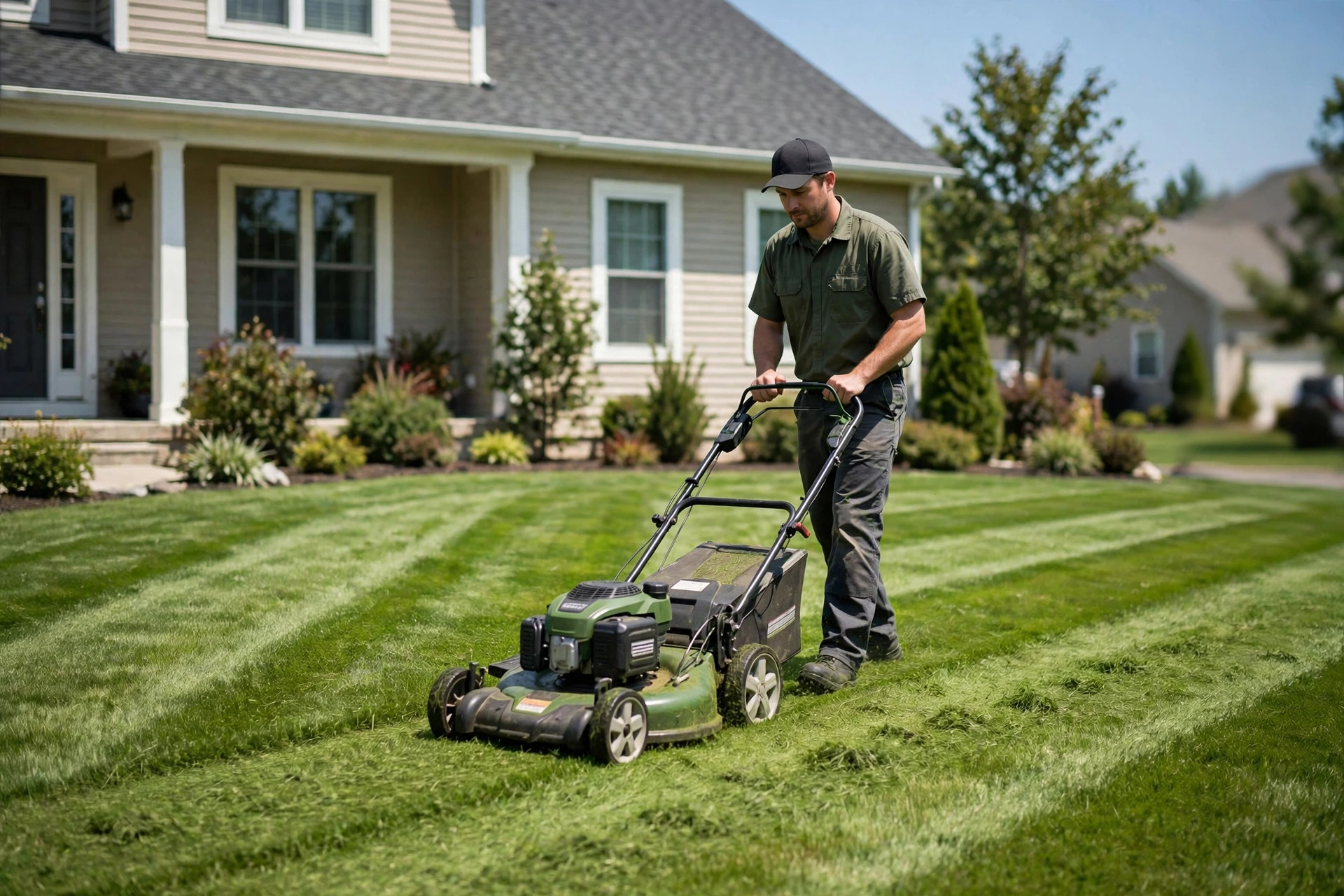
The right website turns a Saturday of good work into a Monday of new quote requests.
Frequently asked questions
How much does a website for a landscaping company cost?
Most small landscaping companies pay $1,500 to $5,000 for a freelancer-built site or $4,000 to $10,000 for a small agency build. DIY builders cost $100 to $500 a year, and premium custom builds run $10,000 and up. Add yearly domain, hosting, and maintenance costs on top of the build price.
What pages does a landscaping website need?
Six pages cover almost every company: home, services, portfolio or gallery, service areas, about, and contact or quote. Add one page per town you serve if you want to rank across your territory. Anything beyond that should earn its place by generating quote requests.
Is a DIY website enough for a landscaping business?
It can work for a brand-new solo operation where every dollar counts, but most growing companies outgrow it fast. Template sites look generic, the SEO setup is thin, and the quote form is often weak. The freelancer tier is the usual sweet spot for one to three crews.
How long does it take to build a landscaping website?
Expect 2 to 4 weeks with a freelancer, 4 to 8 weeks with a small agency, and 8 to 16 weeks for a premium custom build. The biggest delay is almost always content: photos and text the designer is waiting on you to supply. Start photographing your work now.
Should I pay for monthly SEO with my new website?
Not automatically. Buy the website first, then judge SEO as a separate purchase from someone who reports rankings, traffic, and quote requests in plain numbers. Be wary of vague monthly retainers bundled into the build with deliverables nobody can verify.
Get a website that wins landscaping jobs
Digital Hayder builds fast, mobile-first websites for landscaping companies: real project galleries, service-area pages that rank, and quote forms that work on a phone. Tell us about your company and we will give you an honest quote with the scope in writing.
Contact Us