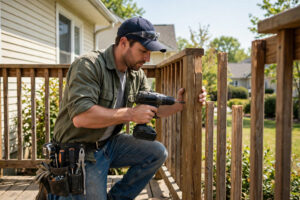
Two fence companies work the same streets. One has a website with a quote form, material galleries, and a page for every town it serves. The other has a Facebook page last updated two summers ago. When a homeowner’s fence blows down and they search on their phone, the first company gets the estimate request in sixty seconds. The second company never knew the job existed. That gap is worth tens of thousands of dollars a year, and it is decided by a website that costs less than one average fence job. This guide gives you the real price bands for a fencing company website, from DIY builders to freelancers to agencies, explains exactly what a fence company needs on the site (quote-request forms, material galleries, service-area pages, financing info), covers the ongoing costs after launch, and ends with what to look for in a web partner.
The quick answer
- DIY builders run $0 to $50 a month: fine for a brochure page, but weak on quote forms, galleries, and local SEO.
- Freelancers run $1,500 to $5,000: a solid custom site if you find a freelancer who understands contractor lead generation.
- Agencies run $5,000 to $15,000-plus: strategy, copywriting, galleries, and SEO built in. The right choice once you are past $500K in revenue.
- Fence sites need four things: a quote-request form on every page, galleries organized by material, service-area pages per town, and financing information.
- Ongoing costs run $50 to $500 a month: hosting, maintenance, and optional SEO or content work after launch.
- Pick a partner who has built for contractors: pretty design means nothing if the site does not generate estimate requests.
Real price bands: what a fencing company website costs
Website pricing for fence companies falls into three bands. The right one depends on your revenue, your growth goals, and how much of the work you are willing to do yourself.
| Option | Typical cost | What you get | Best for |
|---|---|---|---|
| DIY website builder | $0 to $50/month | Template site you build yourself, basic contact form, limited SEO control | Brand-new companies that need something live this week |
| Freelancer | $1,500 to $5,000 one-time | Custom design, proper quote forms, basic local SEO setup, your content loaded | Established companies doing $200K to $800K that need a real lead generator |
| Small agency | $5,000 to $15,000 one-time | Strategy, copywriting, material galleries, service-area pages, technical SEO, launch support | Companies past $500K scaling toward seven figures or adding commercial |
| Full-service agency | $15,000 to $30,000-plus | Everything above plus ongoing SEO, content, ad landing pages, and conversion optimization | Multi-crew operations competing in large metro markets |
Why the DIY band usually costs more than it saves
A DIY builder site looks cheap until you count what it does not do. Template contact forms ask for name, email, and message, which is not how fence buyers think. A fence buyer wants to say: I need 150 linear feet of cedar privacy fence in this town, and here are photos of my yard. Builders rarely support that kind of form well. Local SEO is the bigger loss: ranking for “fence installation [city]” requires service-area pages, proper structure, and speed, all of which are harder to control on a DIY platform. If the site brings in even two fewer jobs a year at a $7,000 average ticket, the “cheap” site cost you $14,000. Our contractor website design guide explains what a lead-generating contractor site actually requires.
The freelancer sweet spot
For most fencing companies, a good freelancer is the best value in the market. At $2,500 to $4,000 you can get a fast, mobile-first site with proper quote forms, material galleries, and service-area pages, built on WordPress or a similar platform you actually own. The risk is hiring a designer who builds pretty pages instead of lead machines. Vet freelancers by asking to see contractor sites they have built and asking what the quote-form conversion rate is. If they cannot answer, keep looking.
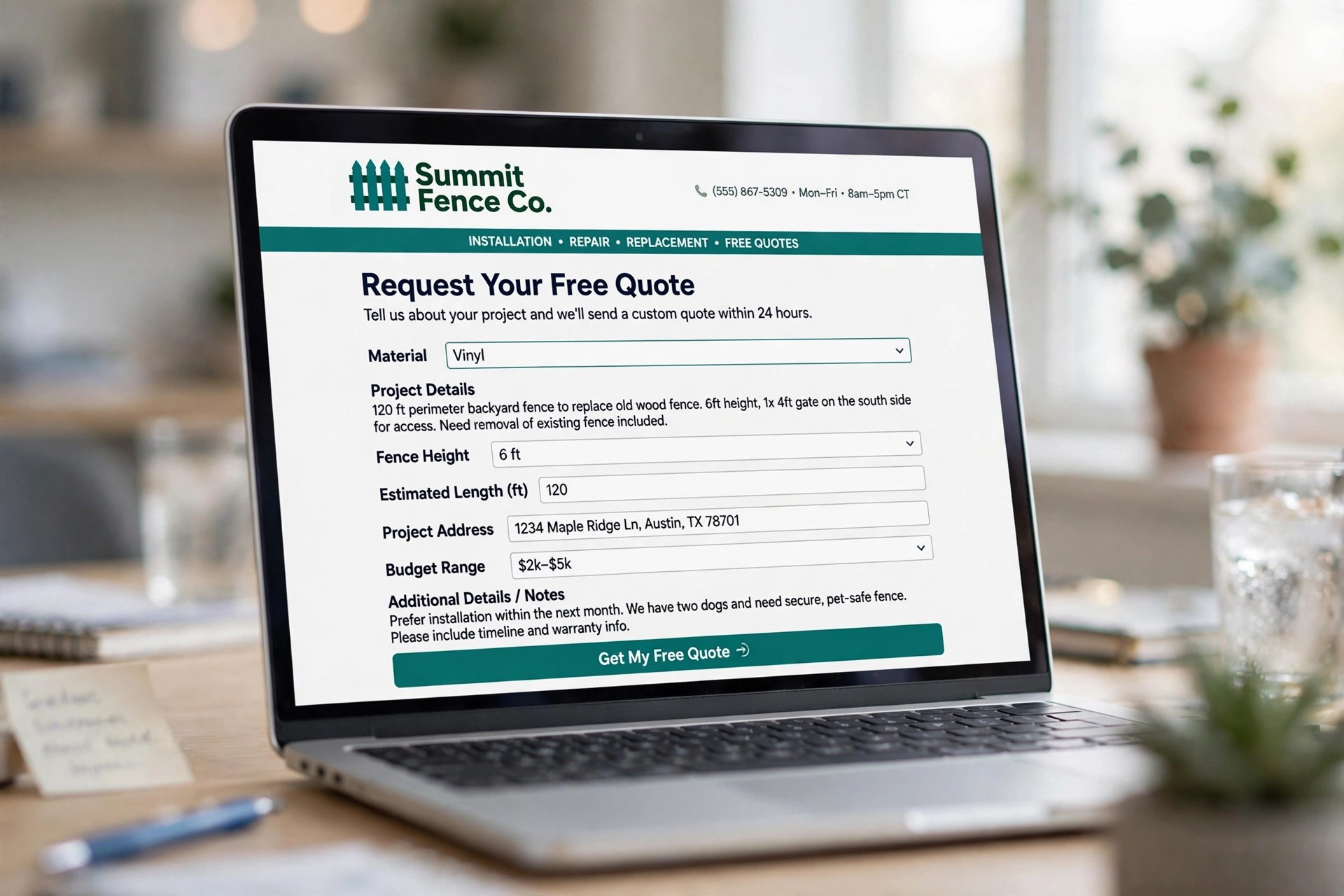
The quote form is the whole point of the site. It should ask about material, footage, and town, not just name and email.
What a fencing company website specifically needs
A fence company website is not a generic small-business site with different photos. Four elements decide whether it generates estimates.
1. Quote-request forms on every page
The form is the product. It should ask for the details an estimator needs to quote: material (wood, vinyl, chain-link, aluminum), approximate linear footage, the town or zip, whether it is repair or replacement, and a photo upload for the existing fence or yard. Every page of the site, galleries, service pages, the homepage, should carry the form or a prominent button leading to it. Mobile matters most: over 70 percent of fence searches happen on phones, often from the backyard where the old fence is leaning. If the form is painful on a phone, the lead goes to the competitor.
2. Material galleries
Buyers shop the material first and the company second. Give each material its own gallery page: wood, vinyl, chain-link, ornamental aluminum. Each page shows finished jobs, the options within the material (cedar versus pressure-treated, white versus tan vinyl), and a quote form specific to that material. These pages also rank: “vinyl fence installer [city]” is a high-intent search that a dedicated page can win.
3. Service-area pages
One page per town or city cluster you serve, each with local proof: photos from jobs in that town, the towns listed plainly, and local review snippets. This is how you rank for “fence company [town]” across your whole territory. Ten to twenty service-area pages is normal for a company covering a metro area. Each page needs unique content, not the same paragraph with the town name swapped, or it will not rank and may hurt you.
4. Financing information
A $9,000 fence is a considered purchase, and financing removes the biggest objection. A simple financing page explaining your options, monthly payment examples for typical job sizes, and the application link lifts close rates measurably. Even “0% for 12 months on approved credit” in the header changes the conversation from “can we afford it” to “which material.” If you do not offer financing yet, the page is still worth building as the reason to start.
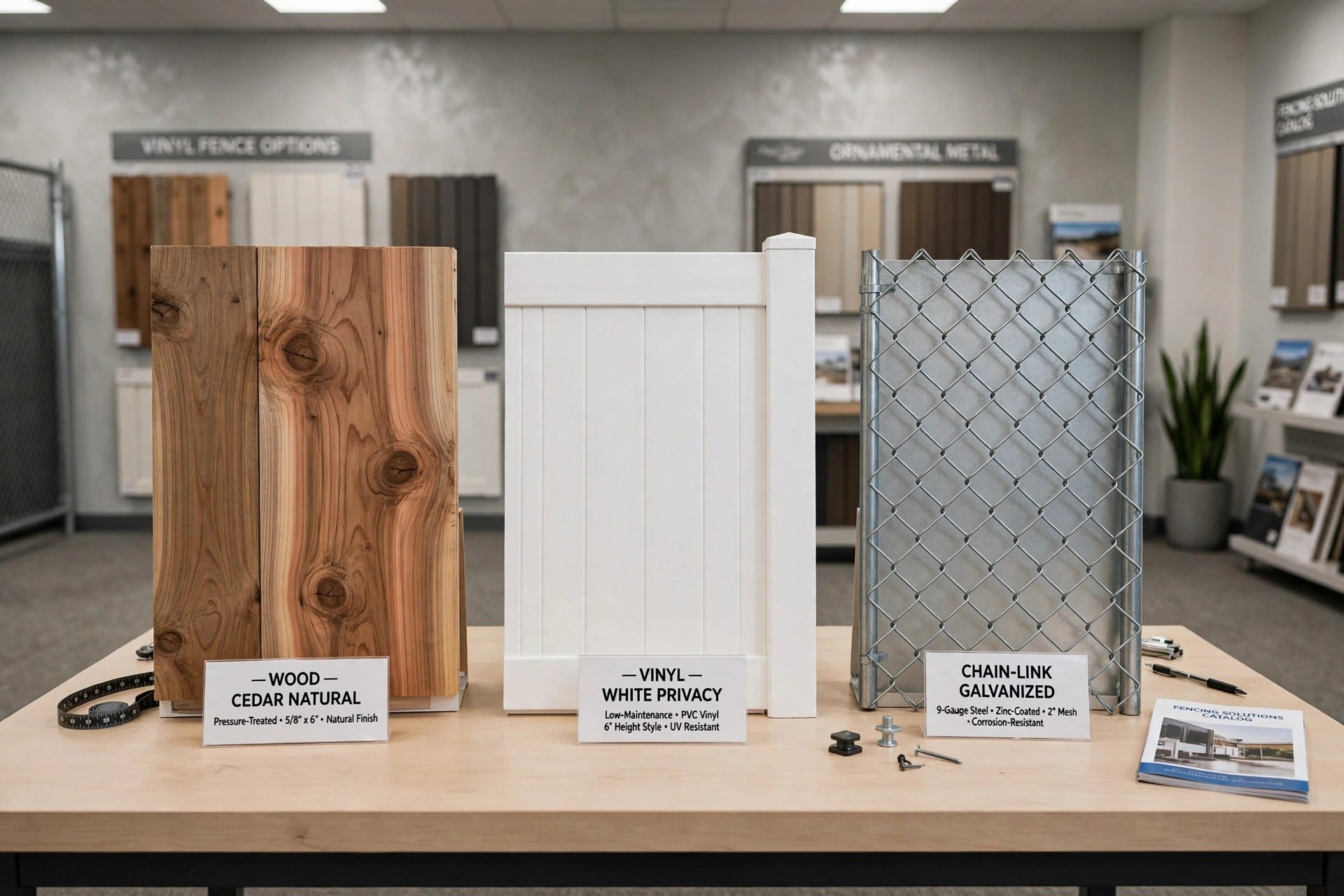
Material galleries mirror how buyers shop. Each material gets its own page, photos, and quote form.
The ongoing costs after launch
The launch price is not the total price. Budget for the running costs so the site keeps producing instead of slowly dying.
The essentials: $50 to $150 a month
Domain renewal runs about $15 a year. Good hosting for a contractor site runs $20 to $60 a month; cheap shared hosting is a false economy when the site loads slowly on phones. Maintenance, updates, backups, and security monitoring, runs $50 to $100 a month through most freelancers and agencies, or your own time if you are technical. Skip maintenance and the site eventually breaks or gets hacked, which costs far more than the monthly fee.
The growth layer: $300 to $2,000-plus a month
SEO and content are optional but powerful. At $500 to $1,500 a month, a decent provider keeps publishing service-area content, building local links, and managing your Google Business Profile alongside the site. Google Ads management typically runs $300 to $800 a month plus ad spend if you want paid traffic to the new quote forms. Review software for the install-day review texts runs $30 to $100 a month. Add these when the site is converting well and you want more volume, not before the fundamentals are right. If your current site is underperforming, our signs you need a website redesign checklist helps you decide between a refresh and a rebuild.
What to look for in a web partner
The partner matters more than the platform. A great partner on a simple platform beats a mediocre partner on the fanciest stack. Interview candidates with these questions.
Have you built websites for contractors?
Contractor sites have specific requirements: quote forms that capture job details, click-to-call on mobile, service-area pages, photo galleries that load fast, and review integration. A partner who has built for roofers, landscapers, or remodelers understands the pattern. Ask to see three live contractor sites and check them on your phone. If the quote form is buried or painful on mobile, walk away.
Who owns the site and the domain?
You should own the domain, the hosting account, and the site files outright, from day one. Some agencies build on proprietary platforms you can never leave, which means your website becomes a hostage. If the partner cannot clearly explain how you would take the site elsewhere, that is a no.
What happens after launch?
A launch without a plan is a billboard in the desert. Good partners offer a maintenance plan, a content plan for service-area pages, and reporting on the numbers that matter: estimate requests per month, not vanity traffic. Ask what the first 90 days after launch look like. Vague answers mean you will be on your own.
How do you measure success?
The only metric that matters is estimate requests from the website per month, tracked from the form and the click-to-call button. Traffic, rankings, and design awards are supporting actors. A partner who talks about leads first is a partner who understands your business. For a pricing comparison in a neighboring trade, see our breakdown of landscaping website costs.

Interview web partners on contractor experience, ownership, and how they measure estimate requests, not traffic.
Your rollout checklist
Whether you hire or DIY, run the project in this order.
- 1Pick your band. DIY if you are brand new, freelancer at $2,500 to $4,000 for most companies, agency past $500K in revenue.
- 2Demand ownership in writing. Domain, hosting, and site files in your name from day one. No proprietary lock-in.
- 3Spec the quote form first. Material, footage, town, repair versus replacement, photo upload. Mobile-friendly before anything else.
- 4Plan the material galleries. One page per material with finished-job photos, options, and a material-specific form.
- 5Map the service-area pages. One per town cluster with local photos and unique content. Ten to twenty for a metro area.
- 6Add the financing page. Options, monthly payment examples, and the application link. It lifts close rates.
- 7Budget the ongoing costs. $50 to $150 a month for hosting and maintenance minimum, more for SEO and ads when ready.
- 8Track estimate requests. Form submissions and click-to-call per month. That number decides whether the site is working.
Frequently asked questions
How much does a fencing company website cost?
DIY builders run $0 to $50 a month, freelancers charge $1,500 to $5,000 one-time, small agencies run $5,000 to $15,000, and full-service agencies start around $15,000. Most established fence companies land in the freelancer band at $2,500 to $4,000 for a proper lead-generating site.
What should a fencing company website include?
Four essentials: a quote-request form on every page that captures material, footage, and town; galleries organized by material; service-area pages for each town you serve; and a financing page with payment examples. Click-to-call on mobile is non-negotiable.
How much does it cost to maintain a fencing company website?
Budget $50 to $150 a month for hosting, domain, maintenance, updates, and security. Add $500 to $1,500 a month for SEO and content, and $300 to $800 a month for ad management plus ad spend, when you are ready to scale traffic.
Can I build my fencing company website myself?
You can, and DIY builders work for a basic brochure page. But template forms and limited SEO control usually cost you jobs: if the site brings in two fewer fence jobs a year at $7,000 each, the “free” site cost you $14,000. Most companies outgrow DIY within the first year.
How long does it take to build a fencing company website?
A freelancer typically needs 3 to 6 weeks for a proper site with galleries and service-area pages. Agencies run 6 to 12 weeks with strategy and copywriting included. The biggest delay is usually the company supplying photos and content, so gather those first.
Should a fencing company website have online booking?
Estimates, not bookings. Fence jobs need a site visit to measure and quote accurately, so the goal is a quote request, not a scheduled install. Make the quote form excellent and the phone number impossible to miss instead.
How do I know if my fencing website is working?
Track estimate requests per month from the form and the click-to-call button. A healthy site in an active market produces 5 to 15 requests a month. If you are below that after 90 days, the problem is usually the form, the mobile experience, or missing service-area pages.
Get a website that books fence estimates
Digital Hayder builds websites for fencing companies: quote forms that capture real job details, material galleries, service-area pages, and local SEO that ranks. Tell us about your company and we will scope the site around your service area and your growth goals.
Contact Us