A handyman business lives or dies on the schedule, not the skill. Plenty of great fixers do beautiful work and still sit idle on Tuesdays, because nobody taught them how to keep jobs coming in. The good news: handyman marketing is one of the cheapest games in home services. You do not need a big ad budget, a fancy brand, or a marketing degree. You need a system that turns every finished job into the next one, makes your name the first one a neighborhood thinks of, and keeps past customers calling you back instead of Googling someone new. This guide walks through the ideas that actually fill a handyman schedule: the repeat-customer engine, neighborhood tactics that cost almost nothing, realtor and property-manager partnerships, and review strategies that compound. Each idea comes with a realistic cost and effort rating, so you can start where you are.
The quick answer
- Repeat customers are the engine: a happy homeowner calls a handyman 2 to 4 times a year, so marketing to past customers beats chasing new ones on cost every time.
- Neighborhoods beat the internet: door hangers, yard signs, and Nextdoor posts win handyman jobs faster and cheaper than ads for most solo operators.
- Realtors and property managers feed steady work: one good referral relationship can mean several booked jobs a month with zero ad spend.
- Reviews compound: handymen with 50 or more recent five-star reviews get picked first on Google, and every job is a chance to ask.
- Budget is modest: most one-person shops keep a full schedule on $200 to $600 a month, plus a few hours of their own time.
- Start with what you have: past-customer follow-ups and review asks cost nothing and usually produce the first results within two weeks.
Why the handyman business runs on repeat customers
Most marketing advice is written for businesses that sell once. Handyman work is the opposite: it is a relationship business dressed up as a trade. A homeowner who trusts you with their drywall in March will call you about the deck boards in June, the door that sticks in September, and the holiday light hooks in November. That rhythm is your biggest marketing asset, and most handymen leave it on the table.
Think about the math. Say your average job ticket is $220 and a good customer gives you 2.5 jobs a year. That is $550 a year from one household, with no ad cost attached. A one-person operation with 120 active repeat customers has $66,000 of annual revenue sitting in its contact list before a single new customer arrives. New customers, by contrast, cost real money to win: ad clicks, lead platform fees, time spent quoting jobs you do not get. Estimates for home services commonly put new-customer acquisition at five to seven times the cost of getting a repeat job from someone who already trusts you. The shops with full schedules are not the ones with the cleverest ads. They are the ones whose past customers never think of calling anyone else.
This shapes every marketing choice below. Some ideas win new customers. Some keep old ones calling. The best ones do both. When you read the ranked list further down, notice how the cheapest, highest-return ideas all orbit one habit: stay in touch with people you have already served.
Build your repeat-customer engine first
Before spending a dollar on ads, build the machine that turns one job into many. It has four moving parts, and each one is simple.
Part one: the follow-up message. One week after every job, send a short text: “Hi, this is [Your Name] from [Business]. Just checking the repair is still holding up. Anything else around the house I can help with?” This one message does three jobs. It shows care, it catches warranty issues before they become complaints, and it reminds the customer you exist at exactly the moment they are most likely to remember the next thing that needs fixing. Handymen who send this message consistently report that a meaningful share of replies turn into another booked job within the month.
Part two: the maintenance reminder list. Keep a simple list of customers and the seasonal work their homes need. Gutters in fall, caulking and weather-stripping before winter, deck and fence checks in spring. Twice a year, message each past customer with a relevant reminder: “Spring is here. I am booking deck and fence repairs for April. Want me to take a look at yours?” You are not selling; you are reminding them of work they already know they need. This is the closest thing the trade has to recurring revenue.
Part three: the VIP list. Tag your best customers, the ones who book twice a year or more and pay on time, and treat them slightly better. Priority scheduling when they call. A small holiday card. First dibs on open slots. It costs almost nothing and it locks in the customers who matter most. Our guide to plumber marketing ideas covers a similar loyalty approach for plumbing shops, and the same logic fits handyman work even better because the jobs repeat more often.
Part four: the referral ask. Happy customers are your cheapest marketing channel, but they rarely refer unprompted. Ask directly, and make it easy: “If you know a neighbor who needs a handyman, I would love an introduction. Here is my card, and I will take good care of anyone you send.” Some owners add a thank-you incentive, like $25 off the next visit for every referral that books. You do not need a formal program. You need the habit of asking, every time, while the customer is happiest.
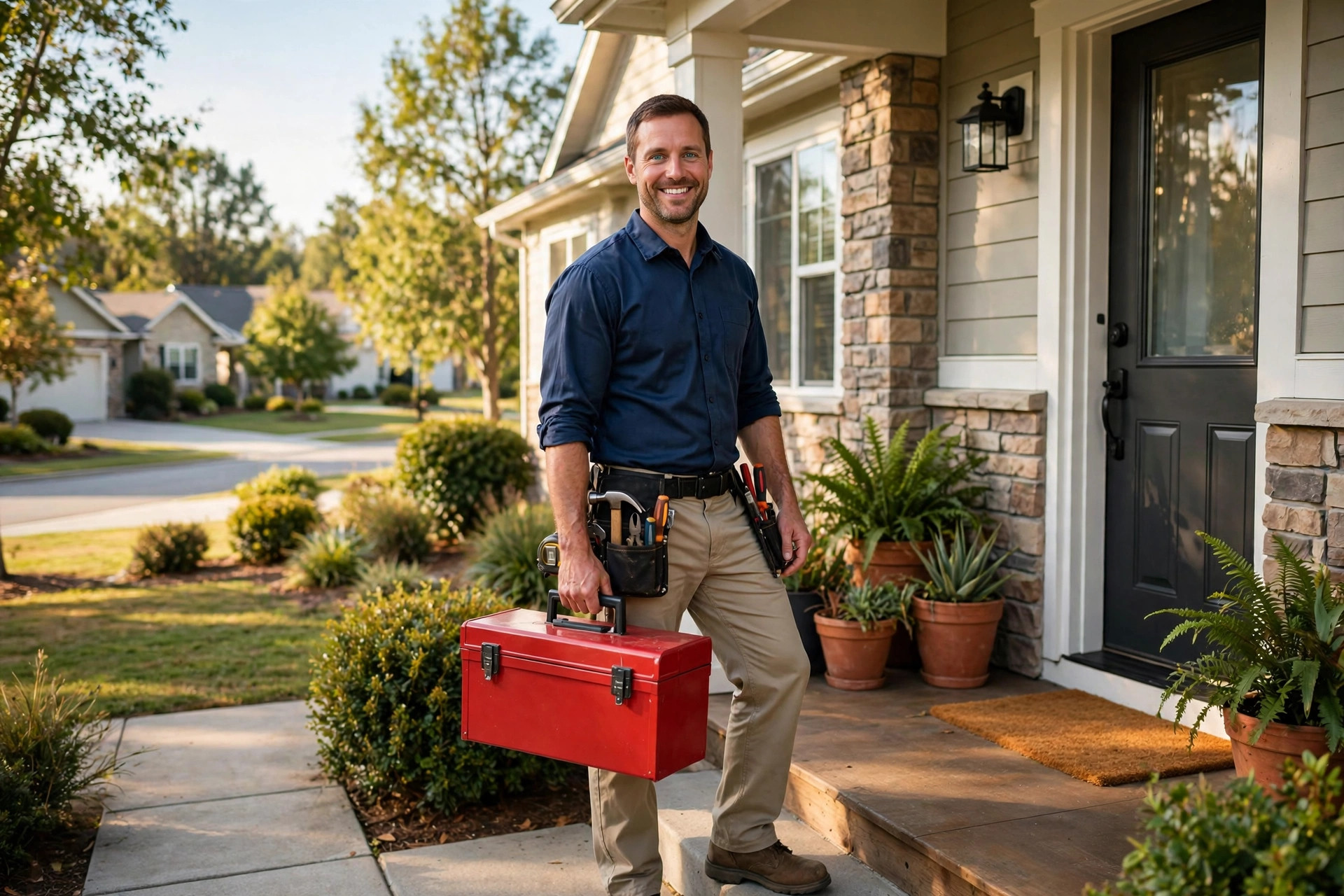
Every finished job is a marketing moment: the follow-up text you send this week decides whether this customer calls you back or Googles someone new.
Neighborhood domination tactics that cost almost nothing
Handyman work is local in a way most trades are not. The jobs are small, the customers pick whoever is closest and most trusted, and a street full of your yard signs does more than a thousand ad impressions. The goal is simple: make your name the obvious choice inside a tight circle of homes.
Door hangers on the street you are working. When you are at a job, hang door hangers on the 20 to 40 nearest houses: “Your neighbor at [address] had me out today for [type of work]. I am in the area this week and can stop by for a free look at anything on your list.” This works because it is specific, local, and timed. Printing costs a few cents per hanger. One extra job from a batch of 40 pays for thousands of hangers.
Yard signs at every job. A simple sign in the yard or on the truck while you work: “Handyman at work: [Your Business Name], [Phone].” Neighbors notice trucks and signs far more than they notice ads. Leave the sign up for the day, and ask the customer if you can leave a smaller one for a week after big jobs. Most happy customers say yes.
Nextdoor and local Facebook groups. These are the digital front porches. Post before-and-after photos of your work with a short story: what was broken, what you did, how long it took. Answer questions in the group when people ask for handyman recommendations, and ask happy customers to mention you by name in those same groups. A single well-placed Nextdoor recommendation routinely produces two or three calls, because the trust is baked in by the neighbor who posted it.
Your truck or van. If you drive a plain white van, you are driving past hundreds of potential customers a week in stealth mode. Clean lettering with your business name, phone number, and a short service list turns every mile into advertising. A full wrap is nice; clean magnetic signs or vinyl lettering for a few hundred dollars do the job. Park it visibly at jobs and at home.
The 5-around. After finishing a job, knock on the five nearest doors and introduce yourself: “I just finished a repair at your neighbor’s house. I am a local handyman and I wanted to introduce myself in case anything ever comes up.” Most people will not have work today. That is fine. You are planting a seed with a face attached, which is exactly how handyman reputations get built.
Realtor and property-manager partnerships
Some of the best handyman marketing never looks like marketing at all. It looks like relationships with people who control a steady flow of repair work.
Realtors. Every home sale creates a punch list: the repairs the inspector flagged, the touch-ups the seller promised, the small fixes the buyer wants done before move-in. Realtors need someone fast, reliable, and easy to reach for this work, and they hand it to whoever they trust most. Introduce yourself to the busiest agents in your area with a simple pitch: “I am a local handyman who specializes in pre-sale and move-in repairs. I respond the same day and I send photos of completed work.” Then prove it on the first referral. One agent who trusts you can send several jobs a month, and those jobs often lead to the new homeowner calling you for everything after.

One busy realtor who trusts your work can send several pre-sale and move-in jobs a month, and each one introduces you to a new homeowner.
Property managers. Managers of rental properties and small apartment buildings deal with a constant drip of small repairs: leaky faucets, broken blinds, lock changes between tenants, drywall patches. They want one reliable person, not a new search every time. Offer a simple arrangement: priority response, monthly invoicing, and photo documentation of every job. Landing two or three property managers can fill the slow weeks of your year with steady, predictable work.
How to start the conversation. Do not send a mass email. Visit offices in person with a one-page flyer: your services, your service area, your phone number, and three short customer quotes. Follow up two weeks later with a quick visit or call. The pitch is reliability, not price: these partners care more about “shows up when promised” than about saving ten dollars. Track every referral source in a simple spreadsheet so you know which relationships are producing and which need a check-in.
Fifteen handyman marketing ideas, ranked by cost and effort
Here is the full menu, from cheapest and fastest to bigger investments. Cost ratings are for a typical US market. Effort is your own time, not money.
| Idea | Cost | Effort | What it does |
|---|---|---|---|
| Follow-up text after every job | Free | Low | Turns one job into the next with a 2-minute message |
| Ask for a review at every job | Free | Low | Builds the five-star proof that wins Google searches |
| Referral ask to happy customers | Free | Low | Warm introductions that close at a high rate |
| Door hangers on the job street | $0.10 to $0.30 each | Medium | Turns one booked day into neighborhood awareness |
| Yard signs and truck lettering | $150 to $600 one time | Low | Passive visibility on every mile and every job |
| Nextdoor and local group posts | Free | Medium | Before-and-after stories that neighbors trust |
| Seasonal reminder messages | Free | Low | Recurring revenue from work customers already need |
| Google Business Profile optimization | Free | Medium | Shows up in “handyman near me” map searches |
| Simple website with quote form | $300 to $1,500 one time | Medium | A place for search traffic and referrals to land |
| Realtor introductions | $50 in flyers | Medium | Steady pre-sale and move-in repair work |
| Property-manager outreach | $50 in flyers | Medium | Recurring small repairs, monthly invoicing |
| Missed-call text-back | $30 to $100 a month | Low | Catches the calls you miss while on a job; see our guide to missed-call text-back for handyman services |
| Local SEO articles | Your time or $200+ a month | High | Ranks for “drywall repair [city]” type searches over time |
| Paid lead platforms | $20 to $80 per lead | Low | Fast jobs now, but expensive and shared with competitors |
| Google Ads | $500 to $1,500 a month | Medium | Top-of-search placement; works best once reviews are strong |
Notice the pattern: the top half of the list is free or nearly free, and it is also where most of your jobs will come from. Paid channels sit at the bottom for a reason. They have their place, but they work best as fuel on a fire you already built with reviews, referrals, and repeat customers. Our breakdown of electrician marketing ideas shows the same pattern for electrical shops: the free trust-building moves outperform paid ads for small operators.
Review velocity: turning every job into five-star proof
When a homeowner searches “handyman near me,” Google shows them a map pack of three businesses, and the one with the most recent five-star reviews gets the call. This is not a one-time project. It is a habit called review velocity: a steady stream of fresh reviews that tells Google and customers you are active, trusted, and current.
The ask. The best time to ask is at the job, right after the customer sees the finished work. “I am glad you are happy with it. Reviews are how small shops like mine get found. Would you mind leaving a quick Google review? I can text you the link right now.” Ask while the satisfaction is fresh, not in a follow-up email three days later when the feeling has faded.
The link. Make it effortless. Create a short link to your Google review page and text it on the spot. Every extra step loses people. Some owners put a QR code on their invoice or business card so customers can scan it before they leave the house.
The timing and the volume. Aim for a review from at least half of your jobs. Ten reviews a month from a busy solo operator is realistic, and within six months that is a profile with 50 to 60 fresh five-star reviews, which puts you ahead of most competitors in a local market. Do not buy reviews or offer discounts in exchange for them; Google removes fakes and customers can smell them. Real reviews from real jobs are the whole point.
The responses. Reply to every review, good and bad, within a day. Thank the happy customers by name. For the rare bad review, respond calmly and take it offline: “I am sorry the experience was not right. Please call me at [number] so I can make this right.” Future customers read your responses as closely as the reviews themselves.
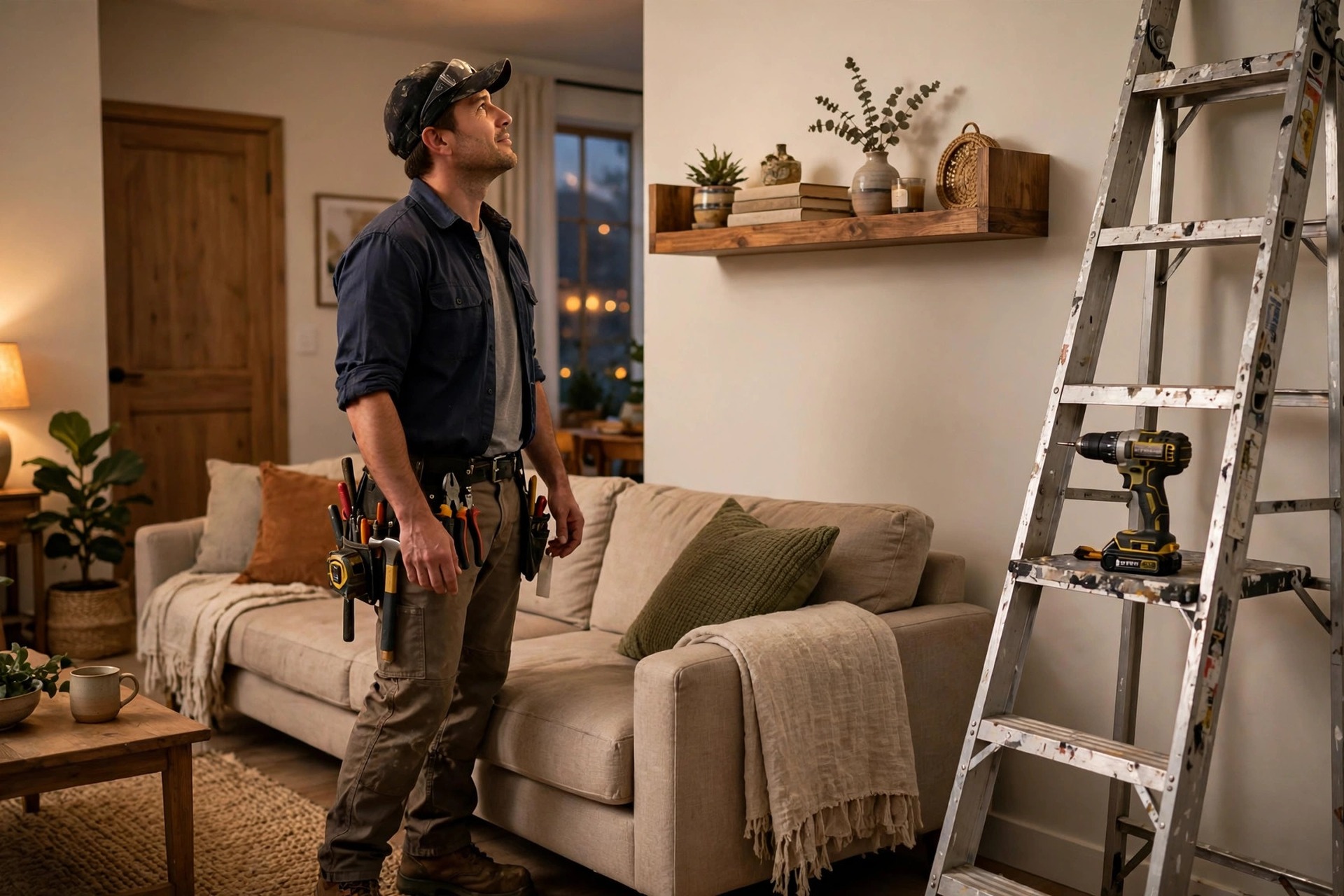
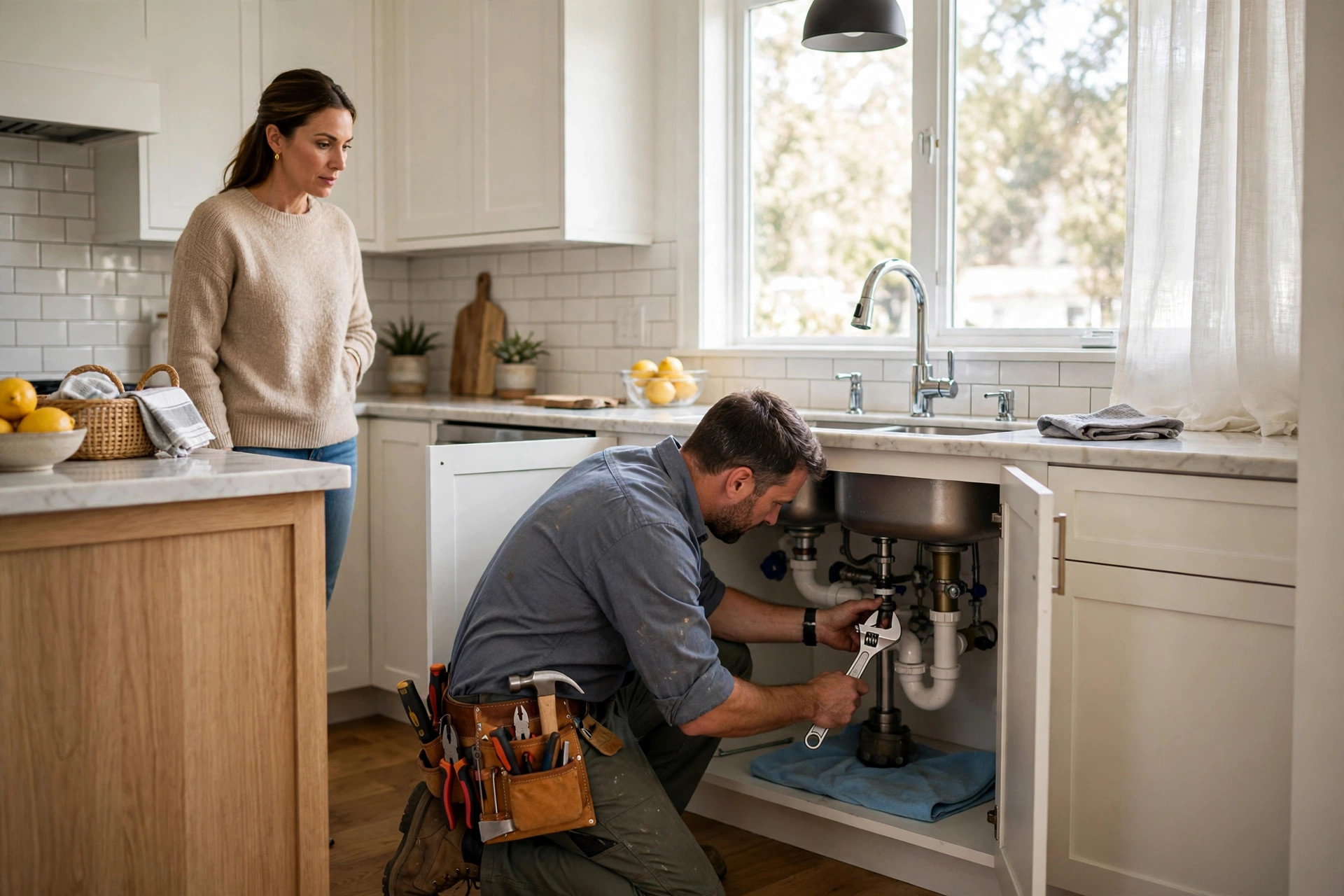
The moment a customer sees finished work is the moment to ask for a review, while the satisfaction is fresh.
How much to spend on marketing each month
Handyman marketing budgets are refreshingly small. A common rule is 5 to 10 percent of revenue, and for a solo operator grossing $8,000 to $12,000 a month, that is $400 to $1,200. Most shops with full schedules land in the lower half of that range because the free ideas above do the heavy lifting.
Here is how a sensible $500 monthly budget breaks down for a one-person shop that already has 30 or more reviews:
The steady schedule budget
For a solo handyman with solid reviews who wants a full calendar without burning cash.
- $50: printing, door hangers, flyers, and business cards
- $30 to $100: missed-call text-back or a simple CRM for follow-ups
- $100 to $200: truck and yard-sign visibility, amortized over the year
- $0 to $150: a small Google Ads test or a few paid leads in slow months
- Your time: 3 to 5 hours a week on follow-ups, reviews, group posts, and relationship visits
The growth budget
For a shop adding a second tech or expanding into a new service area.
- Everything in the steady budget, plus:
- $300 to $600: Google Ads aimed at high-value jobs like drywall, tile, and small remodels
- $200 to $400: a simple website refresh or local SEO content
- $100: a part-time helper or VA for follow-ups, review requests, and scheduling
The golden rule: never scale paid spend before the free engine is running. Ads amplify what already works. If your reviews are thin, your follow-up is nonexistent, and your Google profile is half empty, paid traffic just burns money on a funnel that leaks.
Mistakes that keep handyman schedules empty
Marketing only when the schedule is empty. This is the classic trap. You market hard in slow months, fill up, stop marketing, then starve again. Marketing is a weekly habit, not an emergency response. The follow-up texts, review asks, and group posts happen on full weeks too.
Competing on price. The cheapest handyman gets the worst customers: price shoppers who haggle, pay late, and never refer. Market on reliability instead. Show up on time, communicate clearly, send photos of finished work. Homeowners pay more for someone they trust in their home.
No Google Business Profile, or a half-finished one. This is your most important free listing. Fill every field: services, service area, hours, photos of real work. Post updates weekly. A bare profile with two reviews loses to a complete profile with forty, every time.
Ignoring missed calls. You are on a ladder with a drill running when the phone rings. That caller dials the next handyman in the results. An instant automatic text back catches a large share of these before they move on. For the full breakdown, see our guide to missed-call text-back for handyman services. The same safety net helps other trades too, as our piece on missed-call text-back for locksmiths explains.
Forgetting past customers. Every customer file that goes quiet is revenue you already paid to win, leaking away. The seasonal reminder and the one-week follow-up cost nothing. Skipping them is the most expensive marketing mistake in the trade.
No photos of your work. Handyman marketing is visual. Before-and-after photos are proof, and proof sells. Take photos at every job with the customer’s permission. They feed your Google profile, your social posts, your website, and your quote follow-ups.
Your rollout checklist
Work through these in order. Each one builds on the last.
- 1Claim and complete your Google Business Profile. Every field filled, real photos of your work, correct hours and service area. This is your most important free listing.
- 2Build your review link and QR code. Create a short link to your Google review page and a QR code for your invoice. You will use both at every job.
- 3Set up the one-week follow-up text. A simple template you send after every job. Start this week on your most recent jobs.
- 4Ask for reviews at every job. Ask in person when the customer is happy, text the link on the spot, and aim for a review on half your jobs.
- 5Order door hangers and yard signs. Keep a stack in the truck. Hang them on the job street, put the sign in the yard, letter the truck.
- 6Start the 5-around habit. After each job, knock on the five nearest doors and introduce yourself. Face to face beats every ad.
- 7Visit ten realtor offices and five property managers. One-page flyer, in person, follow up in two weeks. Track every referral source.
- 8Set up missed-call text-back. Stop losing the calls that come while you are on a ladder. The auto-text catches them in seconds.
- 9Launch seasonal reminders. Message past customers twice a year with relevant maintenance work. Start with the next season change.
- 10Review the numbers monthly. Jobs booked per past customer, reviews gained, referral sources producing. Double down on what works, cut what does not.
Frequently asked questions
What is the best marketing for a handyman business?
The highest-return moves are free: follow-up texts to past customers, review asks at every job, referral requests, and neighborhood visibility like door hangers and yard signs. These beat paid ads for most solo operators because handyman work is bought on trust and proximity, not on clever advertising.
How much should a handyman spend on marketing?
A common range is 5 to 10 percent of revenue. For a solo operator grossing $8,000 to $12,000 a month, most full schedules run on $400 to $600 a month, plus 3 to 5 hours a week of your own time. Spend more only after the free engine of follow-ups and reviews is running.
How do I get repeat customers as a handyman?
Send a follow-up text one week after every job, message past customers with seasonal maintenance reminders twice a year, and keep a VIP list of your best customers with priority scheduling. A happy homeowner needs a handyman 2 to 4 times a year; staying in touch is what makes you the one they call.
Do Google Ads work for handyman services?
They can, but they work best after your reviews are strong. Ads send traffic to your Google profile and website, and searchers pick the business with the most recent five-star reviews. Start with the free trust-building moves, then test ads with a modest budget aimed at higher-ticket jobs like drywall, tile, and small remodels.
How do I get more Google reviews for my handyman business?
Ask in person at the job, right after the customer sees the finished work, and text them the review link on the spot. Aim for a review from at least half your jobs. Reply to every review within a day. Ten new reviews a month puts you ahead of most local competitors within half a year.
Should I use paid lead platforms?
They deliver jobs fast but at $20 to $80 per lead, shared with competing handymen, which squeezes your margins. Use them to fill slow weeks, not as your main strategy. Build the repeat and referral engine first, so you are not renting customers at full price forever.
How do handymen get work from realtors?
Visit the busiest agents in your area in person with a one-page flyer focused on pre-sale and move-in repairs. Pitch same-day response and photo updates on completed work. Then deliver perfectly on the first referral. One agent who trusts you can send several jobs a month.
What should be on a handyman website?
Your service list, service area, real before-and-after photos, customer reviews, a simple quote request form, and a click-to-call phone number. Keep it to a few pages. Most handyman sites fail by being complicated; customers want to see proof and contact you in under a minute.
How important is social media for a handyman?
Less than the local platforms. Nextdoor and neighborhood Facebook groups produce real jobs because neighbors trust neighbors. A polished Instagram is optional. Post before-and-after photos where your actual customers are, answer recommendation requests, and skip the platforms that eat time without booking jobs.
How long until handyman marketing starts working?
The free moves show results fast: follow-up texts and review asks can produce bookings within two weeks. Realtor relationships typically take one to two months to produce steady referrals. Local SEO and review compounding build over three to six months. Treat marketing as a weekly habit and the results stack up instead of spiking and dying.
Want a full schedule without the marketing guesswork?
Digital Hayder builds marketing and automation systems for handyman businesses: review engines, follow-up campaigns, missed-call text-back, and websites that turn searches into booked jobs. Tell us about your shop and we will design the system around your schedule.
Contact Us