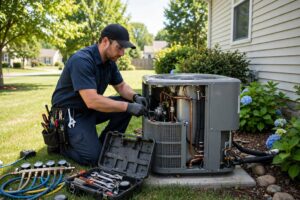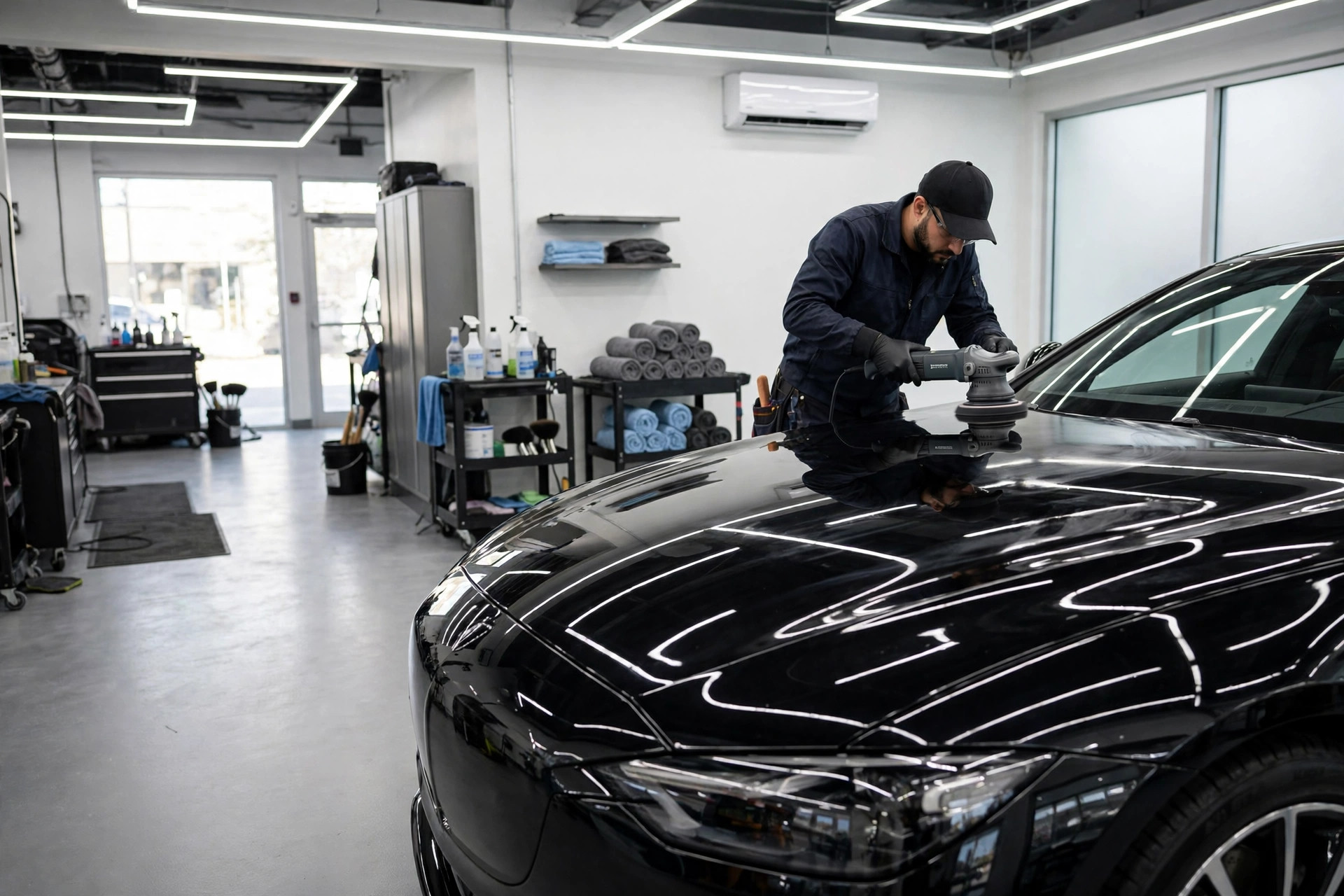
A great detail sells itself the moment the customer walks around the car. The problem is getting them to book in the first place. Most detailing shops rely on word of mouth and an Instagram page they update when they remember, then wonder why the bays sit empty on weekdays. The shops that stay booked treat marketing as a system: before and after content that stops the scroll, subscription wash plans that make revenue predictable, referral loops that turn every customer into a salesperson, and booking systems that answer when the shop is too busy to pick up. This guide covers the auto detailing marketing ideas that actually fill bays, with real pricing structures, cost and effort comparisons, and the money math on subscription plans.
The quick answer
- Post before and after content weekly: transformation photos and short videos are the single most persuasive marketing asset a detailer owns.
- Sell subscription wash plans: monthly plans turn one-time customers into recurring revenue and keep bays booked on slow weekdays.
- Build a two-sided referral loop: give the referrer and the friend a real reward, and make asking automatic at pickup.
- Partner with dealerships and fleets: recon work, loaner cars, and fleet washing deliver steady volume with zero ad spend.
- Collect reviews on Google constantly: the map pack decides most local detailing bookings, and review count plus recency wins it.
- Never miss a booking call: an AI chatbot or answering setup that books while you detail recovers the jobs you used to lose mid-job.
Why detailing is a marketing business that cleans cars
Detailing has the best product story in the auto world. A car rolls in dull, stained, and tired, and rolls out looking better than the day it was sold. No other trade produces a visual before and after this dramatic. Yet most detailers hide this story. Their social pages go quiet for weeks, their website has stock photos instead of real work, and their booking process is a phone number that rings out while they are elbow-deep in a headliner.
The numbers explain why marketing discipline matters here. A full interior and exterior detail runs $150 to $400, paint correction and ceramic coating run $500 to $2,000, and product costs stay a small fraction of the ticket. Margins are healthy, but demand is lumpy: Saturdays book out while Tuesdays sit empty, summer is packed while winter crawls. The detailing businesses that win are the ones that smooth the lumpiness with plans, partnerships, and consistent content, not the ones with the best polisher.
There is also a trust gap to close. Anyone can buy a vacuum and call themselves a detailer, and customers know it. Your marketing has to prove you are the real operation: a real shop or real mobile setup, real transformations, real reviews, real pricing published up front. Every idea below does at least one of two jobs: it proves the quality, or it makes booking effortless. Do both consistently and the bays fill.
Before and after content that sells itself
Your phone camera is your best salesperson. A single split photo of a filthy interior next to the same interior after a deep clean outsells any ad copy you could write, because the customer imagines their own car in the “after” frame. Make content creation part of every job, not an afterthought.
Build a repeatable process. Photograph every car from the same angles before you start: driver seat, back seat, trunk, floor mats, wheels, and one wide shot of the exterior. Repeat the exact same angles after. The matching angles make the transformation unmistakable. Film 15 to 30 second clips of the satisfying moments: the extraction pass pulling filth from a seat, the foam cannon covering a hood, the final wipe revealing gloss. Post three to five times a week across Instagram, TikTok, and Facebook, and pin the best transformations to the top of each profile.
Tag the location and the car type in every post: “Full interior detail, Honda Odyssey, family of four, two car seats.” That specificity does two things. It helps local search and discovery find you, and it lets the next parent of a minivan see themselves in the result. Ask permission once at booking with a line on the intake form, and nearly every customer agrees because they want to see the reveal too. Shops that post transformations consistently report that a third or more of new inquiries mention a specific post they saw.
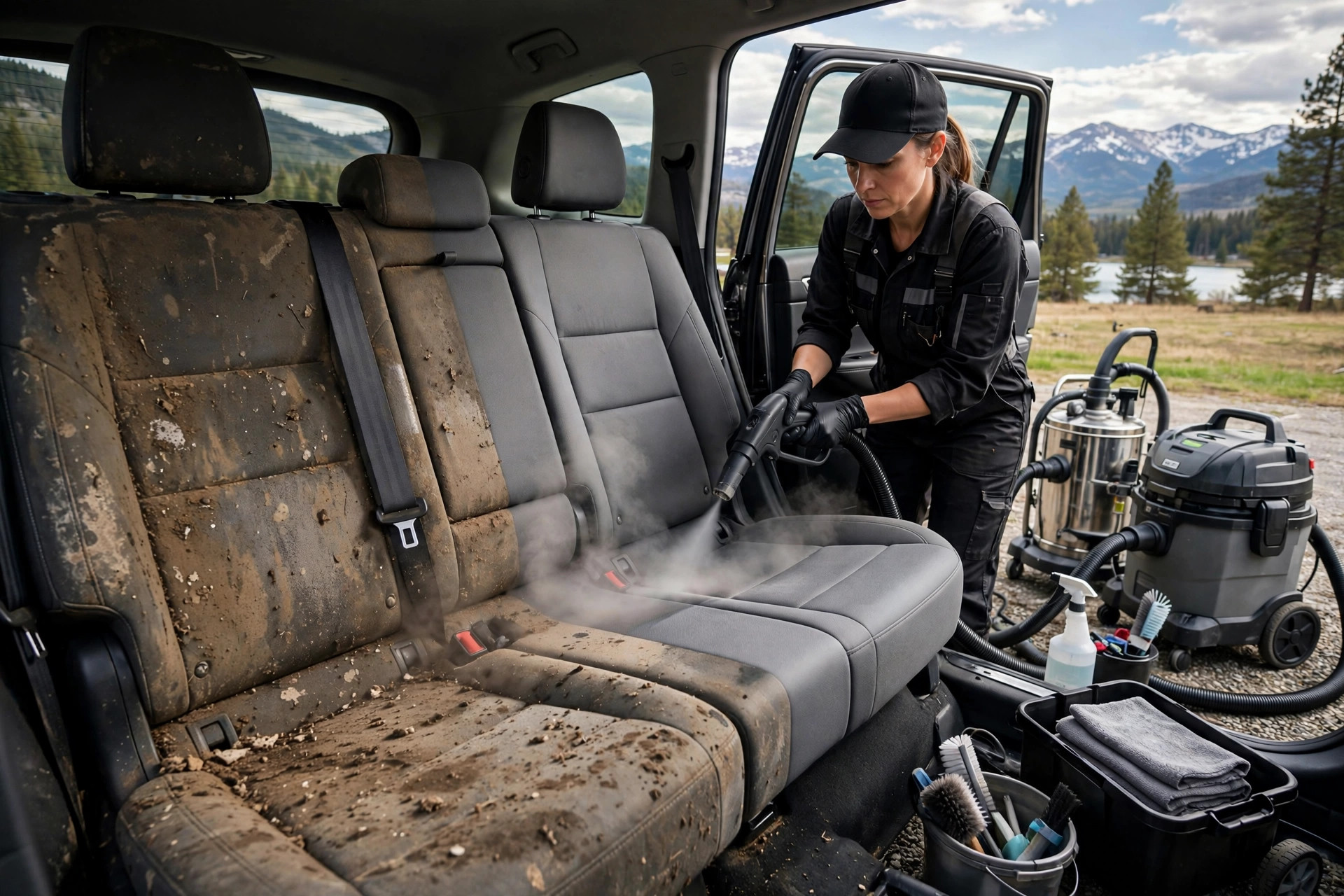
Matching before and after angles make the transformation unmistakable, and that proof books the next customer.
Subscription wash plans: the money math
One-time details are great revenue. Recurring plans are a great business. A subscription wash plan turns a $200 customer into a $129-a-month customer who stays for six months, visits on your slow days, and refers friends. It also stabilizes the schedule: members book in advance, fill weekday bays, and keep cash flowing through the slow season.
Design three tiers so every customer finds a fit. Keep the names simple and the included services crystal clear.
Monthly Maintenance
The entry plan for commuters who want a clean car without thinking about it.
- One exterior wash and interior tidy per month
- Vacuum, glass, dash wipe-down, tire shine
- Priority booking for extra services
- Pause or cancel anytime
Premium Care
The most popular plan for families, pet owners, and anyone who drives daily.
- Two full washes per month, interior and exterior
- Deep vacuum, shampoo spot treatment, leather conditioning
- 10 percent off paint correction and coatings
- Free pickup and delivery within 10 miles
Showroom
The enthusiast plan for drivers who want the car perfect all the time.
- Weekly hand wash and interior detail
- Monthly spray wax or sealant application
- Engine bay detail quarterly
- 20 percent off ceramic coating
Sell the plan at pickup, when the customer is staring at a perfect car and feeling the value. The script is one sentence: “We can keep it looking like this for $149 a month, two visits, and you skip the booking hassle.” Offer the first month at a founding-member price to the first 25 signups to create urgency. Bill on cards automatically, send a reminder text two days before each visit, and make pausing easy; a plan that is hard to leave is a plan nobody joins. The salon industry has used this model for years, and salon marketing ideas show how membership structures work across service businesses.
Referral loops that bring friends of customers
Detailing customers are proud of their cars and happy to show them off. That pride is a marketing channel if you give it a nudge. A referral loop rewards both sides: the existing customer gets a real credit, and the friend gets a real discount, so nobody feels like they are doing you a favor.
Keep it simple and automatic. At pickup, hand the customer two cards or send one text: “Love the car? Give this $25 credit to a friend. You get $25 off your next visit when they book.” The amounts need to be meaningful; a $5 coupon gets ignored, while $25 moves behavior. Put a QR code on the card that opens a pre-filled booking page with the credit applied, so the friend can act in ten seconds. Track referrals per customer and thank the top referrers personally; a short “You sent us three cars this month, thank you” text turns a customer into a promoter for life.
Layer in the review ask at the same moment. While the customer walks around the finished car, ask for the Google review, then hand the referral cards. The sequence matters: the review builds your public proof, the referral brings the next job. Shops running both loops often find that referrals and reviews together account for half of all new bookings within a year, at zero ad cost.
Dealership and fleet partnerships
The fastest way to fill empty weekday bays is someone else’s cars. Dealerships, used car lots, rental agencies, and local fleets all need vehicles cleaned on a schedule, and they would rather have one reliable detailer than a rotating cast of inconsistent ones.
Pitch dealerships on recon speed. Used car departments live on turnaround: every day a trade-in sits dirty is a day it is not on the lot for sale. Walk in with before and after photos of similar vehicles and a one-page offer: interior and exterior recon in 24 hours at a fixed per-vehicle rate, with pickup and delivery. Start with one independent lot, deliver flawlessly for a month, then ask for the introduction to the next store. Five lots sending two cars a week each is 40 details a month that arrive without you lifting a marketing finger.
Fleets are the bigger prize. Service companies, delivery operations, real estate teams, and medical transport all run branded vehicles that need to look sharp. Offer a weekly or biweekly wash schedule at a per-vehicle rate, billed monthly on one invoice. The sales cycle is longer because you are selling to a manager, but one 20-vehicle fleet contract can be worth more than all your walk-in business. Check that your insurance and invoicing look professional before you pitch, because fleet managers buy reliability first.
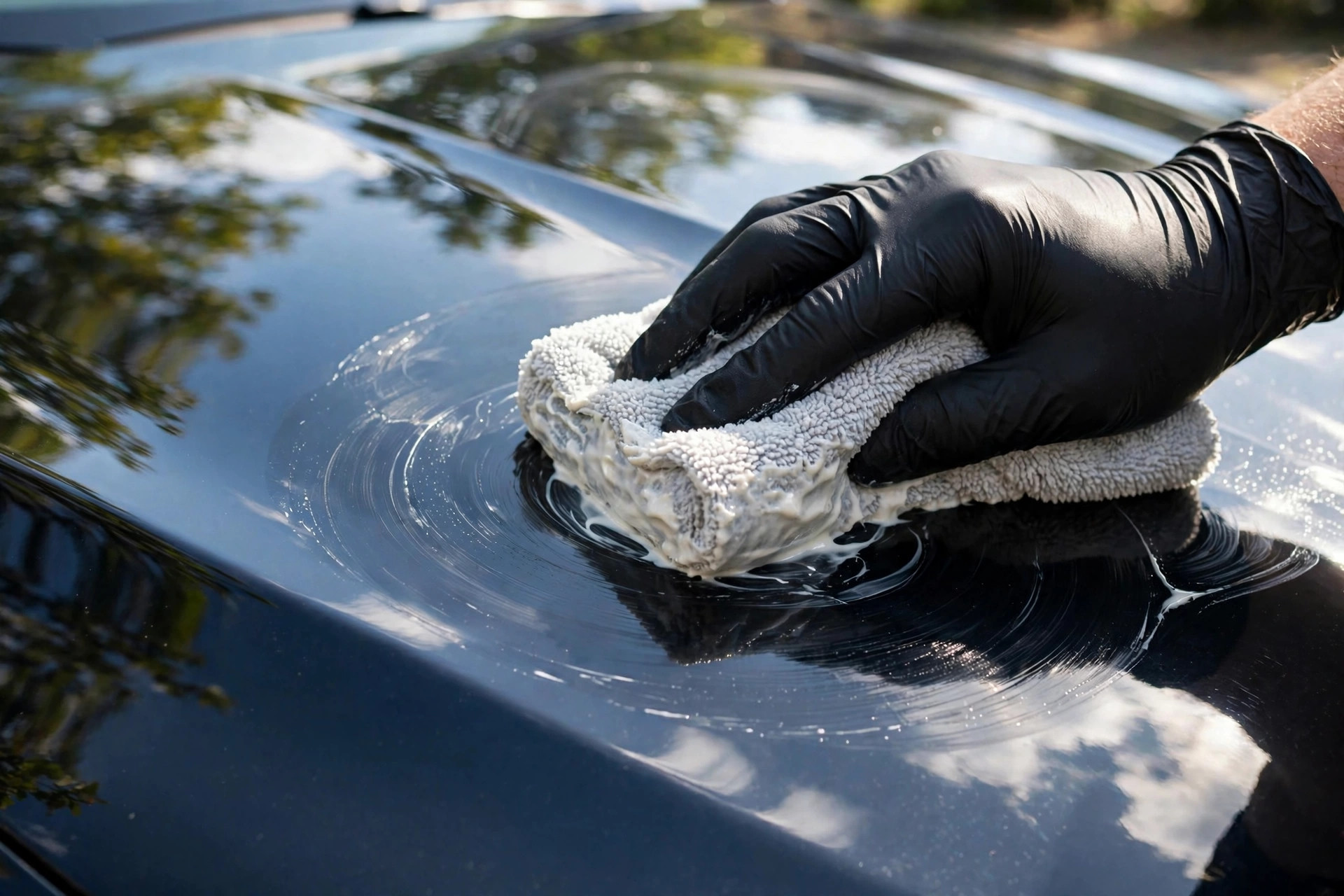
Fleet managers and dealerships buy reliability first, so professional process photos are your best pitch material.
Google reviews and local SEO for detailers
Most detailing bookings start with a phone and a map. The customer searches “car detailing near me” or “interior detail” plus their town, and the map pack decides. Winning it is not complicated, but it is a system.
Set the Google Business Profile category to Auto Detailing Service and add Car Wash and Auto Upholstery Cleaner as secondaries where they fit. List every service with prices: interior detail, exterior detail, full detail, paint correction, ceramic coating, engine bay, headlight restoration, pet hair removal. Upload new photos weekly: real cars, real transformations, the shop, the team at work. Profiles that stay fresh outrank profiles that went stale two years ago.
Reviews are the deciding factor. Ask every customer at pickup with the same discipline as the referral loop, and reply to every review within a day. Aim for 100 reviews at 4.8 or higher as the first milestone, then 300. When a competitor has 40 reviews and you have 250, you do not need to be cheaper; the decision is already made. Cleaning businesses run the same playbook, and the review tactics in cleaning business marketing ideas transfer directly to detailing.
On the website, build one page per service and one page per town: “Interior Car Detailing in Riverside”, “Ceramic Coating in Northside”. Each page gets real photos from that area, published prices, and a booking button. These pages catch the searches the map pack misses and feed the ad campaigns that target them.
Never lose a booking call
Detailers miss calls constantly, because the whole job is hands-on. The polisher is running, the vacuum is screaming, the steam machine is going, and the phone rings in the office. Every missed call is a $200 detail booking the next shop down the road. Call tracking in detailing shops regularly shows missed-call rates of 30 percent or higher during working hours, which is brutal for a business that lives on bookings.
The fix is an AI chatbot for auto detailing companies: a virtual receptionist on your website and messaging channels that answers instantly, quotes standard packages, checks the booking calendar, and takes the deposit while you are mid-detail. It handles the “How much for a full detail on an SUV?” questions that eat your afternoons, and it books the job before the shopper moves on. Pair it with a missed-call text-back on the phone line so ring-outs get an instant “Sorry we missed you, want to book a detail?” reply.
Take a deposit on every booking: $50 for a standard detail, $100 for correction and coating work. Deposits cut no-shows dramatically and they qualify the customer; someone willing to put down $50 is not price shopping five other shops. Send an automated reminder text the day before with the arrival time and address. The shops with the fullest bays are rarely the cheapest; they are the ones that answer first and confirm twice.
The marketing idea menu: cost and effort
Pick your first three from the menu below based on budget and free hours. Start with the free and cheap wins, then add paid channels once the booking system can handle the volume.
| Marketing idea | Typical cost | Effort | What it produces |
|---|---|---|---|
| Before and after content, 3 to 5 posts a week | Free | 30 minutes a day | Social proof that books a third or more of new inquiries |
| Google Business Profile optimization | Free | 4 to 6 hours setup, 1 hour a week | Map-pack visibility for “detailing near me” searches |
| Review engine at pickup | Free | 5 minutes per customer | Review count that wins the map-pack comparison |
| Two-sided referral loop | $50 in credits per pair | 1 hour setup, then automatic | Warm new bookings at zero ad cost |
| Subscription wash plans | Free to launch | Half a day to set up billing | Recurring monthly revenue and filled weekday bays |
| AI chatbot and booking system | $150 to $500 a month | A few hours setup | Instant quotes and bookings while you detail |
| Missed-call text-back | $30 to $150 a month | 1 hour setup | Recovers callers who rang out mid-job |
| Dealership recon partnerships | Free | One day of visits, then delivery | Steady per-vehicle volume with zero ad spend |
| Fleet washing contracts | Free to pitch | Weeks of sales cycle | Scheduled weekly revenue on one invoice |
| Google Ads for high-intent searches | $500 to $2,000 a month | Setup plus weekly tuning | Immediate bookings for “ceramic coating” and “interior detail” searches |
| Website with town and service pages | $1,000 to $4,000 one time | Two to four weeks | Higher conversion from every click and profile visit |
The free rows carry the business for most shops: content, reviews, referrals, plans, and partnerships. Paid ads and a strong website multiply what the free rows produce. Launch the free system first, then spend on ads only when the booking process is tight enough to convert the traffic.
Mistakes that keep bays empty
Discounting a premium image. Constant coupons train customers to wait for the next sale and attract the price shoppers who haggle over everything. Discount the first visit to win the customer, then sell the full-price plan.
No deposit on bookings. A booking without a deposit is a suggestion. The $50 deposit separates real appointments from maybes and funds the reminder system.
Posting randomly instead of consistently. Ten posts in a weekend followed by a month of silence does nothing. Three posts a week, every week, compounds.
Stock photos on the website. Customers can tell, and a stock photo of a sports car says nothing about your work on their minivan. Every image on the site should be your real work.
Ignoring mobile detailing demand. A large share of customers will pay extra for the detail to come to them. If you only do in-shop work, you hand that whole segment to a competitor.
Slow replies to messages. A quote request that waits four hours is a customer lost to the shop that answered in four minutes. Speed is the tiebreaker in every comparison.
One price list for everyone. SUVs, pet hair, and kid damage cost more to clean. Tiered pricing protects margins and stops the “but your website said $149” argument at pickup.
Never asking past customers back. A customer who loved the detail six months ago just needs a nudge: a text with their before and after photo and a one-tap rebooking link. The list is an asset; use it.
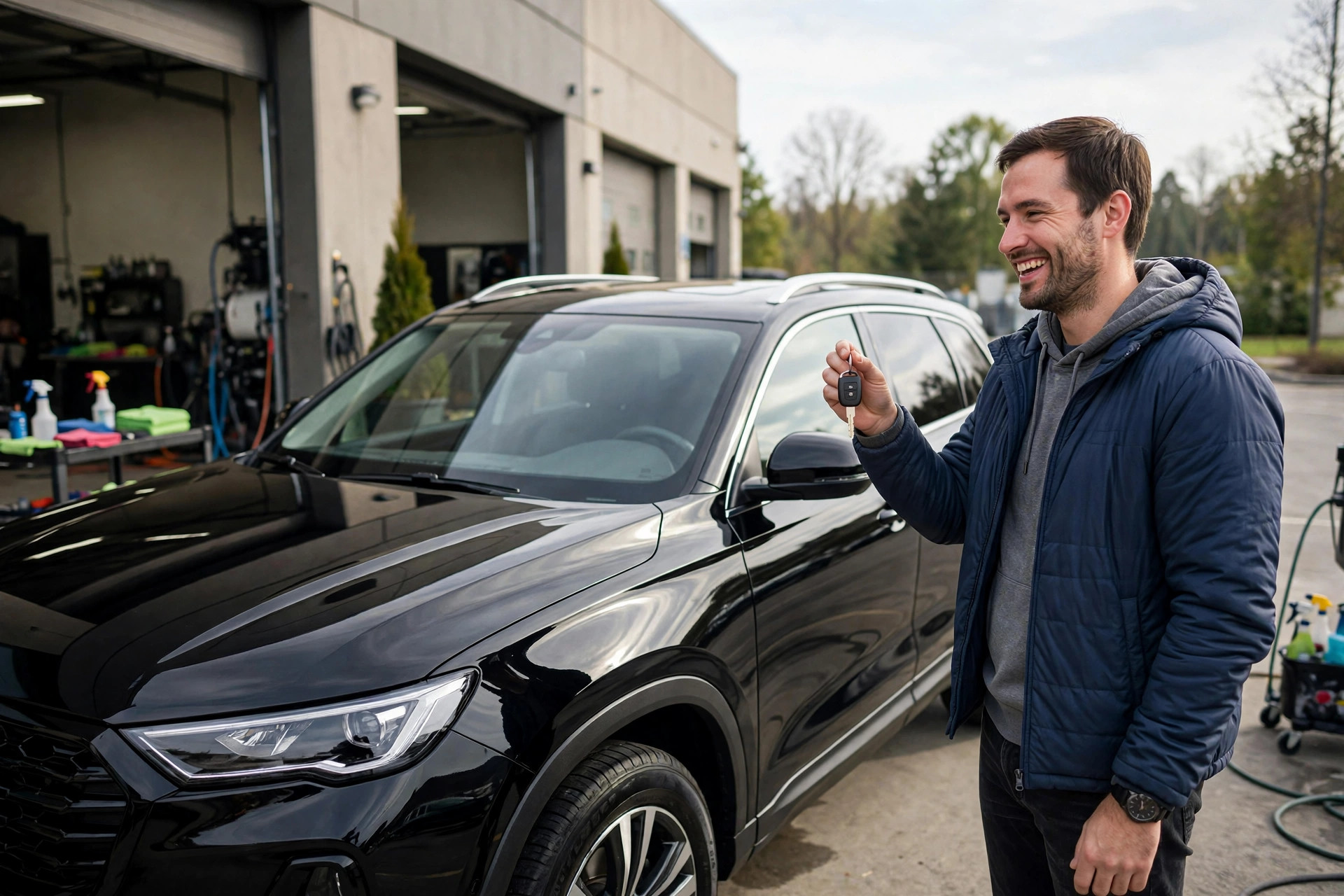
A customer staring at a perfect car is your best moment to sell the plan, ask for the review, and hand the referral cards.
Your rollout checklist
Work through these in order. Each one builds on the last.
- 1Set up the before and after process. Same angles before and after, permission line on the intake form, posting three to five times a week.
- 2Claim and complete the Google Business Profile. Detailing categories, priced services, fresh photos weekly, every town in the service area.
- 3Launch the review engine. Ask at pickup while the customer walks the car, text the link, reply to every review within a day.
- 4Fix the phone and booking. Missed-call text-back on the line and an AI chatbot that quotes and books while you detail.
- 5Publish honest pricing. Tiered packages by vehicle size and condition on the website, no surprises at pickup.
- 6Start the referral loop. Two-sided $25 credits, QR-coded cards or texts at pickup, personal thanks to top referrers.
- 7Launch the wash plans. Three tiers, card billing, founding-member pricing for the first 25, sell at pickup.
- 8Walk the dealership route. One-page recon offer, 24-hour turnaround promise, deliver flawlessly for a month.
- 9Pitch one fleet. Weekly wash schedule, per-vehicle rate, single monthly invoice, professional paperwork.
- 10Rebook the past list. Text past customers their before and after photos with a one-tap booking link, every quarter.
Frequently asked questions
How much should a detailing business spend on marketing?
Most booked-solid shops spend 5 to 8 percent of revenue, weighted toward content, reviews, and booking systems first, then Google Ads. The free channels (referrals, plans, partnerships) usually produce the first half of new business before ads add the second half.
What is a good price for a full detail?
In most US markets, $150 to $250 for a sedan and $200 to $400 for SUVs and trucks, with pet hair, stains, and heavy soiling as add-ons. Price by vehicle size and condition, publish the ranges, and let the plan tiers do the volume work.
Do subscription wash plans actually work for detailers?
Yes, and they are the single best stabilizer in the business. Members visit on schedule, fill weekday bays, and stay for months. The key is simple tiers, easy pausing, and selling at pickup when the value is visible.
Should I offer mobile detailing?
If your market supports it, yes. A large share of customers will pay a premium for the detail to come to their driveway or office. Mobile adds travel and setup time, so price it 20 to 30 percent above in-shop rates and run it on set service days.
How do I get before and after photos that convert?
Shoot the same angles before and after, use natural light, skip the filters, and show the worst areas: mats, seats, wheels. Permission on the intake form, posting three to five times a week, and tagging the car type and town.
What is the best way to get reviews for a detailing shop?
Ask at pickup while the customer walks around the finished car, when satisfaction peaks. Text the review link on the spot and reply to every review within a day. Shops that ask every customer collect several reviews a week without spending a dollar.
Should detailers run Google Ads?
Yes, for high-intent services with good margins: ceramic coating, paint correction, and full interior details. Bid on the service plus town searches, send clicks to the matching service page, and track cost per booked job. Skip broad “car wash” terms unless you sell volume washes.
How do I partner with a car dealership?
Pitch the used car manager on recon speed: 24-hour turnaround at a fixed per-vehicle rate, with pickup and delivery. Bring before and after photos of similar vehicles, start with one store, deliver flawlessly for a month, then ask for the next introduction.
What deposit should I take for bookings?
$50 for standard details and $100 for correction and coating work, taken at booking with a clear cancellation policy. Deposits cut no-shows sharply and qualify out the price shoppers before they cost you a bay.
How do I handle detailing no-shows?
Prevent them first: deposit at booking, automated text reminder the day before, and a confirmation reply request. When one still happens, the deposit covers the lost slot, and a short “we held the bay for you” message often rebooks them.
Fill your bays with booked work, not empty slots
Digital Hayder builds AI booking chatbots, review engines, and call-converting websites for auto detailing businesses: instant quotes, deposit-taking bookings, and before and after content systems. Tell us about your shop and we will design the marketing around it.
Contact Us