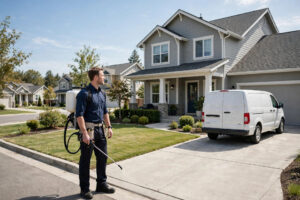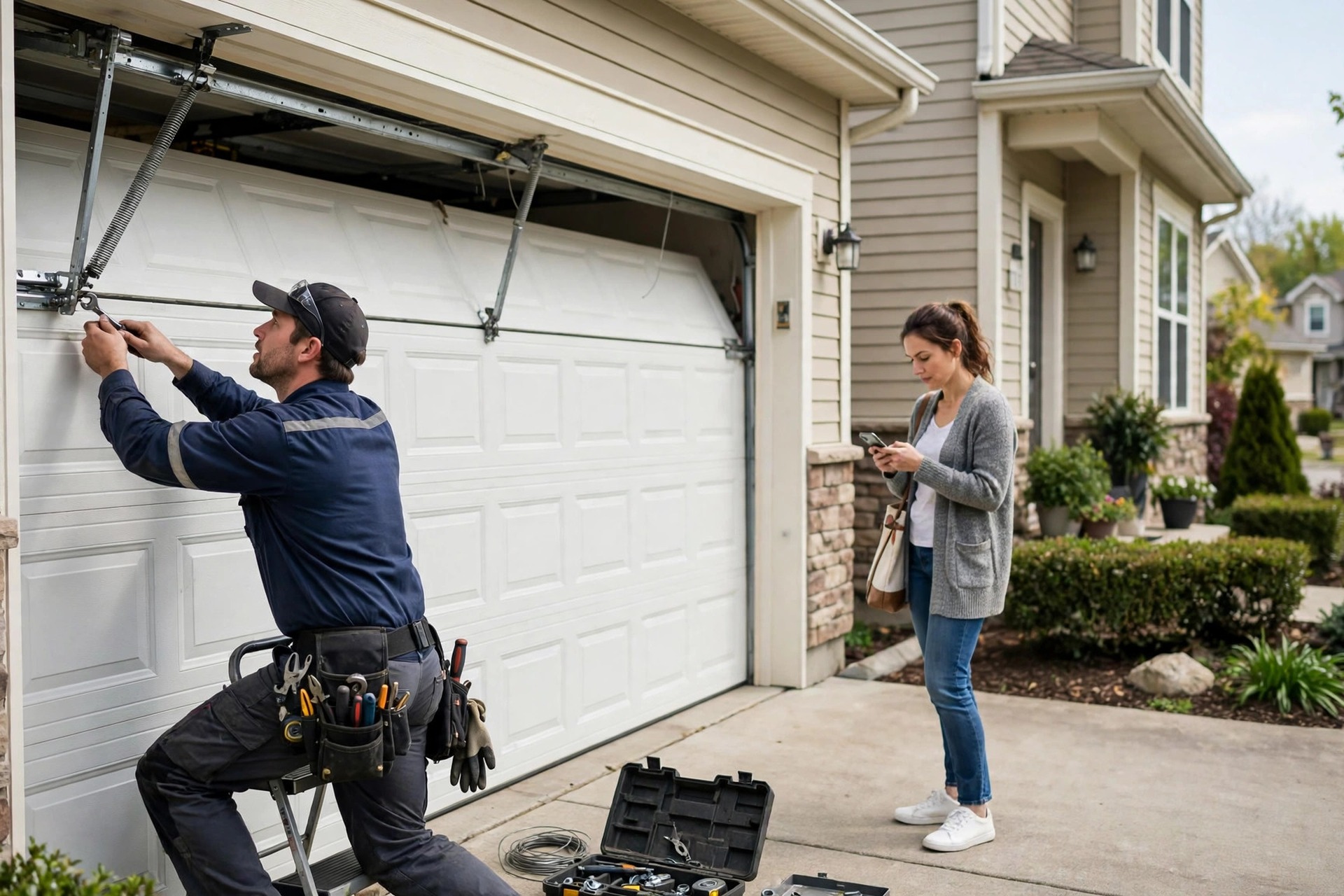
It is 6:45 in the morning. A homeowner hits the garage door remote, hears a loud bang, and the door drops halfway and stops. The car is trapped inside. She grabs her phone and searches “garage door repair near me.” The very first thing she sees is a row of local companies with photos, star ratings, and a small badge that says Google Guaranteed. She taps the first one and hits the call button. That row is Local Services Ads, and it now decides who gets most emergency garage door jobs in every covered market. This guide explains how Local Services Ads work for garage door companies, what you pay per lead, how to set up your profile so it actually ranks, the review strategy that decides your position, and how LSA compares with regular Google Ads.
The quick answer
- Pay per lead, not per click: you only pay when a customer calls, messages, or books, typically $20 to $45 per garage door lead.
- Built for emergency searches: LSA units sit above every other result on “garage door repair near me” searches, where most urgent jobs begin.
- Reviews decide your rank: star rating and review count drive which companies Google shows first, more than budget alone.
- Screening earns the badge: license, insurance, and background checks earn the Google Guaranteed badge that homeowners trust and tap.
- Speed wins the job: companies that answer LSA calls and messages within five minutes book a far larger share of the leads.
- The math works: with repair tickets averaging $300 and up, a handful of extra booked jobs each month covers the whole spend.
Why garage door searches are perfect for Local Services Ads
Garage door work is one of the most urgency-driven trades there is. A broken spring, a snapped cable, a dead opener, or a door stuck open is not a project a homeowner plans for next month. It is a problem that needs a person on site today, often within the hour. Most of these searches happen on a phone, at the moment of failure, and the homeowner picks from whatever appears at the top of the screen. That is exactly where Local Services Ads live.
The LSA unit looks different from a normal ad. Each company gets a photo, a star rating, a review count, hours, and the Google Guaranteed badge. For a homeowner choosing between strangers to let into their garage, that trust package matters more than ad copy. They are not reading landing pages at 6:45 AM. They are tapping the listing that looks safest and closest. Companies with the badge, a 4.8 rating, and 150 reviews win taps before price ever comes up.
Garage door jobs also fit the LSA model because the intent is crystal clear. Someone searching “garage door repair near me” or “broken garage door spring” is not browsing. They are buying. LSA only charges you when that person actually contacts you, so your budget goes toward conversations with buyers instead of clicks from researchers. Few other trades get this clean a match between ad format and customer behavior.
How Local Services Ads work for garage door companies
Local Services Ads are Google’s pay-per-lead ad format for local service businesses. Instead of bidding on keywords and paying for every click, you set a weekly budget and choose your service types and service area. When someone nearby searches for garage door help, Google shows your profile in the LSA unit. When that person calls you, sends you a message, or books through the listing, that counts as a lead and you are charged. If they just look and move on, you pay nothing.
Leads arrive in three ways: direct calls to the tracked number Google assigns you, messages sent through the LSA listing, and bookings made through the ad unit. Every lead lands in the LSA app with a recording or transcript, so you can see exactly what came in. Google reviews each lead, and you can dispute the ones that were never real opportunities: wrong service, spam, solicitors, callers outside your area, or someone asking about a job type you do not offer. Valid disputes come back as credits to your account.
LSA only runs in markets Google has opened for the garage door category, which now covers most major US metros. Getting in requires passing Google’s screening: business license verification where your state or city requires it, proof of general liability insurance, and background checks for the business owner and field technicians. Once approved, you earn the Google Guaranteed badge. If a customer booked through LSA is unhappy with the work, Google backs the job up to a set coverage amount, which is part of why homeowners trust the badge.
What garage door companies pay per lead
Lead costs vary by market and job type, but garage door LSAs are among the more affordable home-service categories. A competitive metro might run 30 to 50 percent higher than a smaller market, and costs rise when several companies chase the same ZIP codes. The table below shows the bands most garage door companies see.
| Lead type | Typical cost per lead | Why it prices this way |
|---|---|---|
| Emergency repair (spring, cable, stuck door) | $25 to $45 | Highest intent and highest competition; these searches convert best, so everyone wants them |
| Opener repair or installation | $20 to $35 | Strong volume and solid ticket size with slightly less urgency than a stuck door |
| Full door replacement | $35 to $60 | Big tickets justify the premium; fewer searches, but each one is worth thousands |
| Maintenance and tune-ups | $15 to $25 | Lower urgency and lower tickets; cheap leads that work well as fill-in jobs |
To turn those numbers into a budget, work backward from what you can handle. At an average $30 per lead, a $600 monthly budget buys about 20 leads. If you close 35 to 45 percent of them, that is 7 to 9 booked jobs. At a $325 average repair ticket, those jobs bring in roughly $2,300 to $2,900 against $600 of ad spend. Most one or two truck operations find their sweet spot between $1,000 and $2,500 a month. Larger companies running multiple crews often spend $3,000 to $5,000 a month and treat LSA as their main lead source.
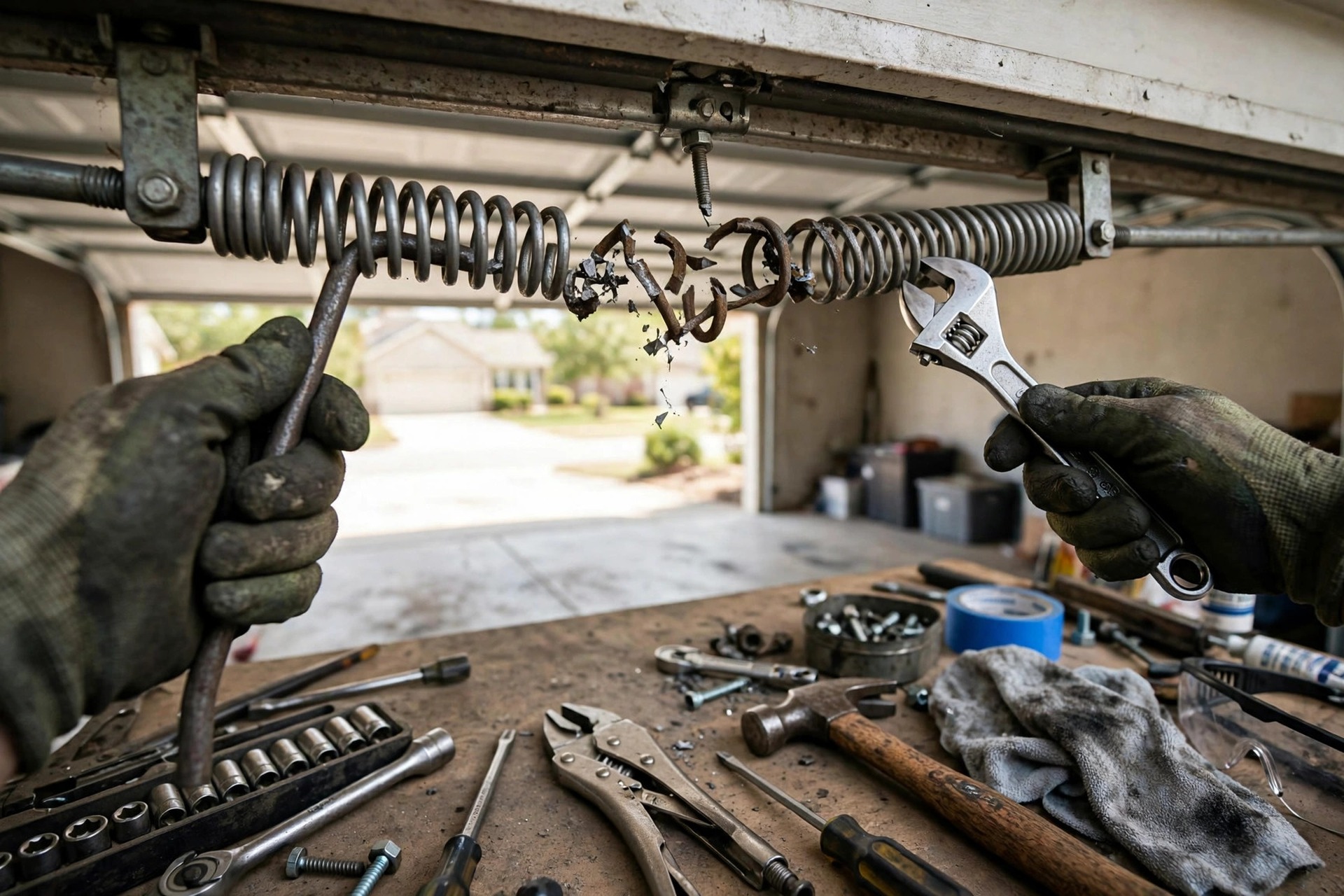
Emergency repairs carry the highest cost per lead because they convert the best; one snapped spring job can cover a week of ad spend.
Three budget levels that work
Test budget
About 20 leads a month at typical costs. Enough to prove the channel, learn your close rate, and see which ZIP codes produce the best jobs. Keep your service area tight and answer every lead fast.
Growth budget
About 50 leads a month. At a 40 percent close rate that is 20 booked jobs, which keeps one truck busy and adds a steady stream of reviews that lift your ranking over time.
Market leader budget
100 plus leads a month across a wider service area. This level makes LSA your primary lead engine and usually pairs with a dedicated person or system to answer every lead in minutes.
Setting up your LSA profile step by step
A strong LSA profile is built before you spend a dollar. Google ranks profiles on proximity, review strength, responsiveness, and profile completeness, so the setup work directly affects what you pay and how often you show.
Confirm coverage and create the account. Search Google’s LSA availability for your metro and the garage door category. If it is covered, create your Local Services Ads account with your exact legal business name, the phone number you want tracked, and your real service address. Name mismatches between LSA, your website, and your Google Business Profile slow down verification.
Pick precise service types. Choose only the work you actually do: garage door repair, garage door installation, garage door opener repair, opener installation, and maintenance. Adding service types you do not want just to get more leads brings wrong-fit callers you will pay for and then dispute. The same discipline applies across home trades; our breakdown of Local Services Ads for junk removal companies shows how tight service-type selection keeps lead quality high.
Draw a honest service area. Set your area by ZIP code, not by wishful thinking. Every ZIP you add increases competition and drive time. Start with the ZIPs you can reach within 30 to 45 minutes and expand only when leads there are consistently profitable.
Pass screening and earn the badge. Upload your business license, general liability insurance certificate, and any required trade credentials. The owner and each technician who visits homes complete background checks. This step takes one to three weeks for most companies, so start it the day you create the account. Without the Google Guaranteed badge, your profile shows below badged competitors.
Complete the profile. Add real photos of your techs, trucks, and finished jobs, not stock images. Write a short business description that names your services and your area in plain words. Set honest hours, and if you offer after-hours emergency service, say so explicitly, because those searches are your best leads. Link the profile to your Google Business Profile so reviews flow into your star rating.
Reviews: the factor that decides your ranking
Once screening is done, reviews are the biggest lever you control. Google’s LSA ranking weighs your star rating and review count heavily, alongside how close you are to the searcher and how fast you respond to leads. A 4.9 rating with 200 reviews will outrank a 4.2 with 30 reviews at a similar budget, which means every review you earn makes every future lead cheaper.
The system that works is simple and relentless: ask after every single job. The tech finishes the repair, shows the homeowner the working door, and says one line: “If you were happy with the work, a Google review helps us more than anything.” Then a text with the direct review link goes out within the hour, while the relief of a fixed door is fresh. Companies that ask every time collect two to five times more reviews than companies that ask when they remember.
Respond to every review, good and bad, within a day. Thank the happy customers by name and mention the service: “Glad we got that spring replaced for you, Mark.” For bad reviews, stay calm, take responsibility where it fits, and invite the person to call you directly. Homeowners read your replies as a preview of how you handle problems, and a gracious reply to a complaint can win more trust than a five-star review. Keep the engine running during slow months too, because a profile with fresh recent reviews outranks one whose newest review is six months old.
A review asked for at the door, within the hour, is worth ten reminders sent a week later.
Winning the first five minutes after a lead arrives
The fastest company usually gets the job. A homeowner with a stuck door calls two or three listings. Whoever answers first, sounds professional, and gives a clear arrival window wins. Industry data on home-service leads consistently shows that contact within five minutes converts dramatically better than contact after thirty, and garage door emergencies skew even faster because the customer is standing in front of a broken door.
Set up instant lead alerts so the LSA app notifies the right person the second a lead lands, not at the end of the day. During working hours that should be a dispatcher or the owner with the phone in hand. After hours, decide in advance who takes emergency calls and rotate it fairly, because the 9 PM spring replacement is often the most profitable job of the day.
Missed calls are the silent killer of LSA budgets. You paid for the lead whether you answered or not. Pair the ads with an automatic text-back so every missed call gets an instant message: “Sorry we missed you. This is Apex Garage Doors. Are you dealing with a broken spring or a door that will not open? Reply and we will call you right back.” Our guide to missed-call text-back for garage door companies lays out the exact setup. For companies that cannot staff the phones around the clock, an AI receptionist for garage door companies can answer, qualify, and book the job at 2 AM while the crew sleeps.
Local Services Ads vs Google Ads for garage door work
Many garage door companies ask whether LSA replaces Google Ads. They are different tools. LSA buys conversations with ready buyers at the top of the page. Google Ads buys clicks from anyone who searches, which includes researchers, DIYers, and competitors. Most growing companies run both, with LSA as the core and Google Ads filling specific gaps like brand defense and full door replacement campaigns. The mechanics are close cousins across trades; the same comparison for Local Services Ads for electricians shows how the trade-offs repeat in other home services.
| Factor | Local Services Ads | Google Ads (search) |
|---|---|---|
| What you pay for | Per lead: calls, messages, bookings | Per click, whether or not they contact you |
| Placement | Above all other results, with photo, rating, and badge | Below LSA, marked as a standard ad |
| Trust signals | Google Guaranteed badge, star rating, review count | Your ad copy and extensions only |
| Setup effort | Profile, screening, reviews; no keyword management | Keywords, negatives, ad copy, landing pages, ongoing tuning |
| Lead quality | Very high: every contact is a real person asking for service | Mixed: includes research clicks and accidental taps you still pay for |
| Wasted spend risk | Low; invalid leads can be disputed for credit | Higher; click fraud and junk clicks are your problem |
| Best for | Emergency repairs and steady job flow | Full replacements, brand defense, markets LSA does not cover |
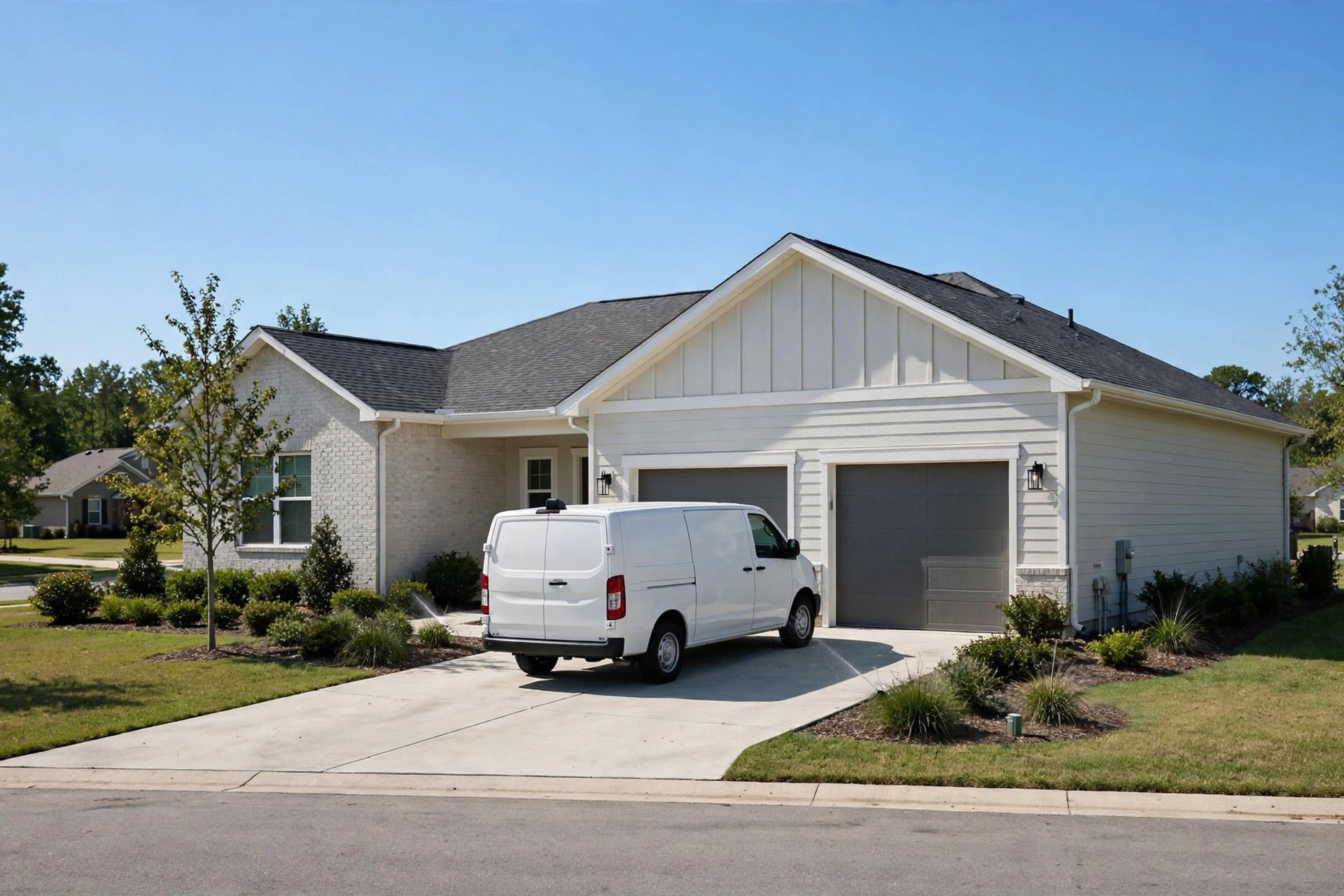
LSA leads go to the company that looks closest and most trusted; a clean branded van and real profile photos reinforce both.
Mistakes that burn through LSA budgets
Claiming a service area you cannot serve. Every extra ZIP adds competitors and drive time. Techs who spend ninety minutes driving to a $200 tune-up will tell you the lead was not worth it. Start tight and expand on proof.
Selecting service types you do not want. If you do not install openers, uncheck it. Wrong-fit leads cost the same as good ones until you dispute them, and disputing takes time you could spend on real jobs.
Never disputing invalid leads. Google will not find your bad leads for you. Review every lead weekly in the LSA app and dispute the spam, wrong-service, and out-of-area contacts. Companies that skip this routinely overpay by 10 to 20 percent.
Launching with five reviews. A thin review profile ranks below every established competitor, so your budget buys fewer impressions at higher effective cost. Build to at least 30 to 50 reviews before judging whether LSA works for you.
Letting leads sit. A lead answered in an hour converts at a fraction of one answered in five minutes. If you cannot answer live, the text-back and after-hours coverage are not optional extras; they are the difference between profit and waste.
Pausing every time it gets busy. Pausing kills your ranking momentum and review velocity. When the schedule is full, narrow the service area or shorten hours instead of turning the ads off, so the profile keeps its position.
Flying blind on job value. Track which LSA leads became which jobs and tickets. A $45 replacement lead that becomes a $2,800 door is your best lead; a $20 tune-up lead that no-shows is your worst. Budget toward the job types that pay, not just the cheapest leads.
Your rollout checklist
Work through these in order. Each one builds on the last.
- 1Confirm LSA coverage. Check that Google offers Local Services Ads for garage doors in your metro before planning spend.
- 2Gather screening documents. Business license, general liability insurance, and trade credentials, ready to upload on day one.
- 3Clean up your Google Business Profile. Exact name match, correct hours, real photos; this feeds your LSA rating.
- 4Pick exact service types. Only the work you do and want; uncheck everything else to protect lead quality.
- 5Set a tight service area. ZIP codes you can reach in 30 to 45 minutes; expand only on proof of profit.
- 6Complete background checks. Owner and every field tech; the Google Guaranteed badge depends on it.
- 7Finish the profile. Real photos of techs, trucks, and finished jobs, plus a plain-words description of services and area.
- 8Start the review engine. Ask after every job and text the review link within the hour; aim for 30 to 50 before judging results.
- 9Build the five-minute response system. Instant lead alerts, a clear owner for every hour, and text-back on every missed call.
- 10Audit leads weekly. Dispute invalid leads for credit, track which job types pay, and shift budget toward them.
Frequently asked questions
How much does a garage door company pay per lead on Local Services Ads?
Most garage door leads cost $20 to $45, with emergency repairs at $25 to $45, opener work at $20 to $35, full door replacements at $35 to $60, and tune-ups at $15 to $25. Costs run higher in competitive metros and lower in smaller markets.
What is the Google Guaranteed badge?
It is the trust badge Google gives LSA advertisers that pass license, insurance, and background screening. It tells homeowners Google has vetted the company and backs jobs booked through LSA up to a set coverage amount, which is why badged listings get tapped first.
Do I need a license to run Local Services Ads for garage doors?
Google requires the licenses your state or city requires for the work. Where no license exists for garage door work, you still need insurance and background checks. Requirements vary by market, so check your metro’s LSA signup page for the exact list.
What happens if I get a bad or spam lead?
You dispute it in the LSA app. Wrong service, spam, solicitors, and out-of-area callers are valid dispute reasons, and Google credits valid disputes back to your account. Review leads weekly, because undisputed bad leads are simply lost money.
How long does LSA approval take?
One to three weeks for most garage door companies. Document review is the fast part; background checks for the owner and technicians take the longest. Start screening the day you create the account so the badge arrives before your busy season.
Can I pause Local Services Ads whenever I want?
Yes, you can pause and change budgets anytime. But frequent pausing hurts your ranking momentum and review velocity. When you are fully booked, narrow the service area or shorten hours instead of turning ads off completely.
How many reviews do I need for LSA to work?
There is no official minimum, but profiles with 30 to 50 reviews and a 4.7-plus rating compete well in most markets. Below that, established competitors outrank you and your budget buys fewer impressions, so build reviews before judging performance.
Do Local Services Ads work for full door replacements, or just repairs?
Both. Replacement leads cost more, typically $35 to $60, but a single $2,400 door sale justifies the premium many times over. Select installation as a service type and make sure your profile photos show finished replacement work.
Should I run LSA and Google Ads at the same time?
Most growing companies do. LSA captures the urgent repair searches at the top of the page with pay-per-lead pricing. Google Ads covers what LSA misses: brand defense, replacement campaigns, and markets where LSA is not available yet.
What happens when my weekly budget runs out?
Your profile stops showing in the LSA unit until the next billing week. Because ranking depends partly on consistent presence and responsiveness, set a weekly budget you can sustain every week rather than one that runs dry by Thursday.
Turn emergency searches into booked repair jobs
Digital Hayder helps garage door companies win Local Services Ads: profile setup and screening, review engines that lift your ranking, and instant lead-response systems so no paid lead goes unanswered. Tell us about your market and we will build the plan around it.
Contact Us