
Above the ads, above the map pack, above every organic result on a roofing search sits a small row of listings with a green checkmark: the Google guaranteed roofer. Those are Local Services Ads, and they take the best position on the page because Google vouches for the businesses in them. For roofing owners, Local Services Ads for roofers are the closest thing to buying a signed roof: you pay per lead, not per click, the homeowner calls straight from the listing, and the badge does the trust work your website spends paragraphs trying to do. This guide explains exactly how LSA works for roofers, what a lead costs, the license and background check requirements, the review minimums that move your rank, how LSA compares with Google Ads, and the money math behind cost per signed roof.
The quick answer
- Top of the page placement: LSA listings sit above Google Ads and the map pack, with a Google guarantee badge that builds instant trust.
- Pay per lead, not per click: you are charged when a homeowner calls or messages, not when someone clicks and bounces.
- Roofing leads run $65 to $200 each: replacement leads cost more than repair leads, and big metros cost more than small towns.
- Verification is mandatory: expect license checks, insurance proof, and background checks on owners and key staff.
- Reviews drive your rank: more reviews and faster replies move you up the LSA list; silence moves you down.
- Cost per signed roof beats most ads: at typical close rates, LSA often delivers a signed replacement for under $600 in lead cost.
What Local Services Ads are and why roofers get the top slot
Local Services Ads are Google’s pay per lead advertising product for service businesses. They look different from regular ads: a business name, star rating, review count, phone number, hours, and a badge that reads Google guaranteed. They appear at the very top of search results for service queries, above traditional Google Ads, above the local map pack, above everything. On mobile, where most roofing searches happen, the LSA unit can fill the entire first screen.
Google built this placement for high trust trades, and roofing is one of the flagship categories. The logic is simple: a roof costs thousands of dollars, the homeowner cannot verify quality before buying, and scams are common after storms. Google’s answer is to pre verify the businesses in this slot and back them with a money back guarantee. That verification is why the placement exists and why homeowners treat it as a shortlist of safe choices.
The practical effect for a roofer is a listing that converts like a referral. The homeowner does not need to research you; Google already did. They see your rating, your review count, and the guarantee, then tap to call. Roofers in LSA consistently report higher call to booking rates from these leads than from regular search ads, because the trust objection, the biggest barrier in roofing, is partly solved before the phone rings.
How LSA works for roofers, step by step
Setting up LSA is a verification process first and an advertising process second. Here is the sequence.
Step 1: eligibility and sign up. Roofing is an eligible category in most US markets. You sign up through the Local Services Ads platform with your business details: legal name, service areas, hours, and the services you want leads for, such as roof installation, roof repair, and metal roofing.
Step 2: verification. Google checks your business license, your general liability insurance, and runs background checks on the business owner and, in many markets, on field staff who enter homes. This takes days to weeks. Incomplete paperwork is the main cause of delay, so gather everything before you start.
Step 3: profile build. You complete your LSA profile: business bio, photos, service types, service areas, and hours. This profile is what homeowners see when they tap your listing, so treat it like a mini website.
Step 4: budget and bidding. You set a weekly budget cap. Google then matches your business to relevant searches and charges you per lead. You do not pick keywords the way you do in Google Ads; you pick service types, and Google’s system matches intent.
Step 5: lead delivery. Leads arrive as phone calls to a tracked number or as messages through the LSA app. You answer, book the estimate, and mark the lead’s outcome in the app: booked, completed, or not a fit. Marking outcomes matters because it trains the system and because you can dispute bad leads.
Step 6: review and dispute. Each week, review your leads in the app. Leads that were spam, wrong numbers, wrong services, or outside your area can be disputed for credit. Roofers who dispute diligently recover a meaningful share of wasted spend.
The Google guarantee badge and what it means
The green checkmark is not decoration. Google guaranteed means Google has verified the business and will reimburse the customer, up to a set lifetime cap, if they are unhappy with work booked through LSA. For the homeowner, that removes the fear of hiring the wrong roofer. For you, it is the strongest trust signal available in paid search, stronger than any review count or award badge on your own site.
The guarantee also shapes caller behavior. Guaranteed listings get clicked and called at higher rates than identical listings without the badge. That is the whole point of the program from Google’s side: charge more per lead than a click would cost, and deliver leads that convert better. Your job is to make sure your operation converts them, because the badge gets you the call but your team still has to win the roof.
One caution: the guarantee applies to jobs booked through LSA. Make sure your team knows which calls came from the tracked LSA number so the guarantee terms, the follow up, and the review request all attach to the right job. Tagging LSA leads in your CRM from the first call keeps this clean.
License, insurance, and background check requirements
Verification is the price of the top slot, and roofing faces some of the strictest checks. Expect all of the following.
Business license. Google verifies that your business holds the licenses your state or locality requires for roofing work. Requirements vary widely: some states license roofers at the state level, others leave it to cities and counties. Know your jurisdiction’s rules before you apply, because a gap here stops the process cold.
Insurance. You will need to show active general liability insurance at the coverage levels Google requires for your market, and in many markets workers compensation coverage as well. Keep certificates current; lapsed insurance pauses your ads until you re verify.
Background checks. The business owner undergoes a background check, and Google may require checks on employees or contractors who perform the work in customers’ homes. Anyone with certain criminal history may disqualify the business. Run your own expectations honestly before you start: if an owner or key lead cannot pass, LSA is not available to you.
Ongoing monitoring. Verification is not one and done. Google re checks periodically, and complaints or lapsed documents can suspend the listing. Assign one person on your team to own LSA compliance: renewals, insurance updates, and background check renewals. The roofers who lose LSA access almost always lose it to paperwork, not performance.
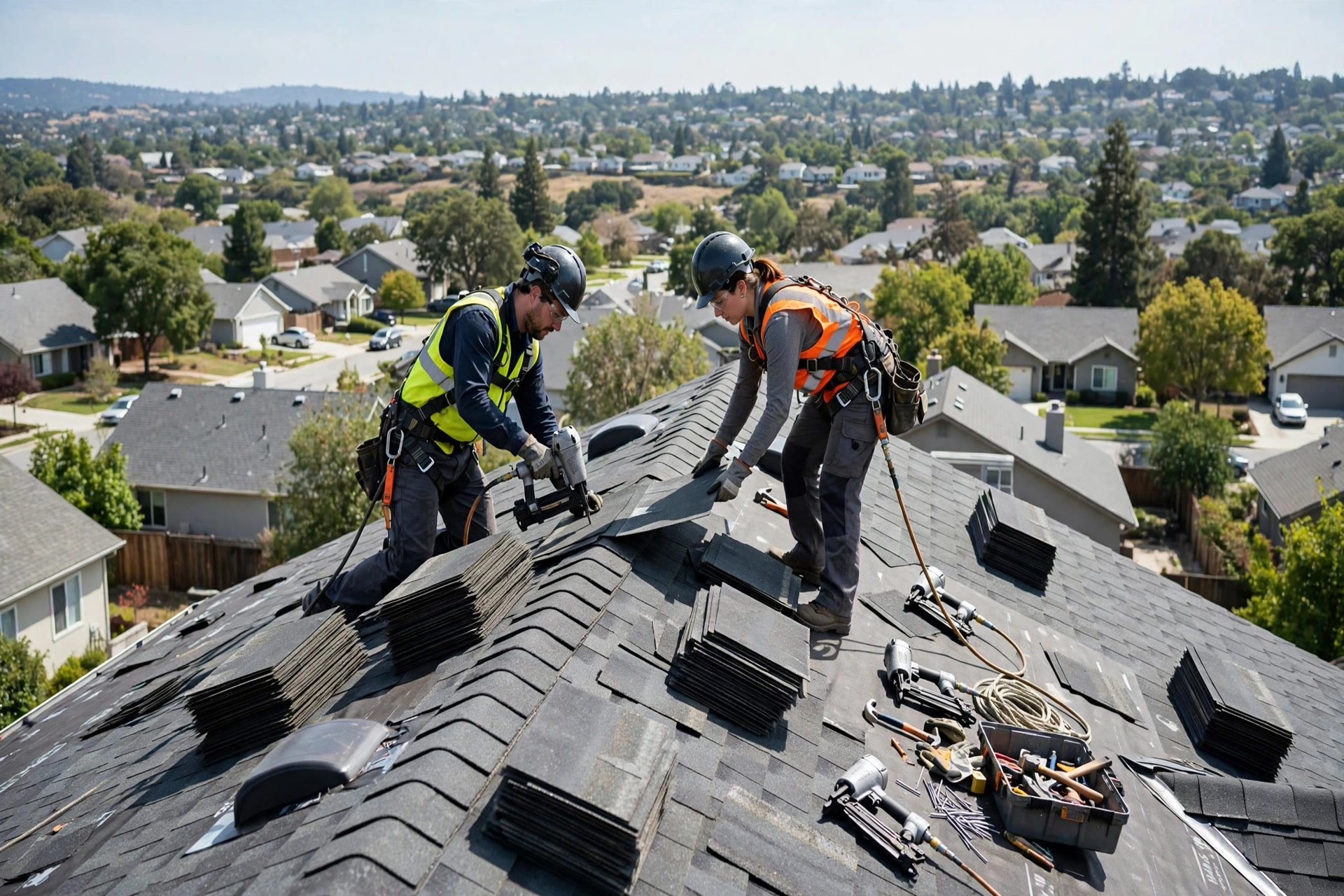
LSA puts verified roofers at the very top of search results, where most homeowners never scroll past.
What a roofing lead costs in LSA
LSA lead prices vary by service type and market. Roof replacement leads cost more than repair leads because the ticket is bigger and competition is fiercer. Big metros cost more than small towns because more roofers bid for the same calls. The ranges below reflect what roofers commonly report across US markets.
Roof repair leads
Leak repairs, missing shingles, flashing fixes, and minor storm damage. High volume, lower ticket, fastest to close.
- Best for filling the schedule between replacements
- Close rates run 40 to 60 percent with fast response
- Dispute aggressively: wrong service and spam cluster here
Roof replacement leads
Full tear offs and re roofs, the core profit driver for most residential roofers. Fewer leads, bigger tickets, longer sales cycles.
- Typical close rate 25 to 40 percent on qualified estimates
- Worth the premium: one signed job covers many leads
- Pair with fast estimate turnaround to protect close rates
Specialty roofing leads
Metal roofing, flat and low slope systems, skylights, and gutters. Less competition per lead, but smaller lead volume.
- Higher margins often offset the thinner volume
- List every specialty as its own service type for matching
- Great fit for roofers trying to move upmarket
A realistic monthly picture: a residential roofer spending $2,500 a month on LSA at an average $120 per lead gets about 20 leads. Close a third of them and that is 6 to 7 jobs. The math only works if you answer fast and track disputes, which brings us to the two levers that separate profitable LSA accounts from money pits.
Reviews: the minimums that move your rank
LSA ranking is not a pure auction. Google weighs your review count, your star rating, your responsiveness, and your proximity to the searcher. Reviews are the lever you control most directly, and LSA reviews live in a specific place: they are collected through the LSA platform, tied to jobs booked through LSA.
There is no published minimum, but the pattern across markets is consistent. Roofers with fewer than 20 LSA reviews struggle to hold top positions against competitors with 50 or more. Below a 4.5 star average, call volume drops noticeably. And recency matters: a profile whose newest review is six months old slides behind one with reviews from this month.
The system makes review collection straightforward. After each LSA job, Google can prompt the customer for a review automatically, but do not rely on that alone. Ask in person at job closeout, the same moment you ask for Google Business Profile reviews, and mention it by name: “You will get a quick review request from Google about our work through their service. It helps us a lot.” Our guide to getting more Google reviews for roofers covers scripts that work for both review surfaces at once.
Responsiveness counts too. Google tracks how quickly you answer LSA calls and messages, and slow response drags your rank. The target is simple: answer every LSA call live during business hours, and return missed ones within 15 minutes. Roofers who add missed-call text-back for roofers to the LSA number catch the after hours leads that would otherwise rank them down and convert them the next morning.
LSA vs Google Ads for roofers
Most roofers run, or consider running, both. They serve different jobs, and the comparison below shows where each one wins.
| Factor | Local Services Ads | Google Ads (search) |
|---|---|---|
| Page position | Very top, above all other results | Below LSA, above the map pack |
| Pricing model | Pay per lead: calls and messages | Pay per click, whether or not they call |
| Trust signal | Google guaranteed badge included | None built in; your ad copy and site must earn trust |
| Targeting control | Service types and areas; Google matches intent | Full keyword, audience, and schedule control |
| Verification burden | High: licenses, insurance, background checks | Low: no verification beyond ad policies |
| Typical roofing cost | $65 to $200 per lead | $30 to $80 per click; $150 to $400 per lead after conversion |
| Lead quality | High intent; caller chose a verified roofer | Mixed; depends on keyword discipline and landing page |
| Best use | Core lead flow for verified, review strong roofers | Storm surges, new markets, services LSA does not cover |
The smart setup for most established roofers is LSA as the base and Google Ads as the amplifier. LSA delivers the steady, high trust lead flow at a predictable cost per lead. Google Ads covers the gaps: service types LSA does not offer in your market, aggressive storm season pushes, and conquesting competitor searches. For the full paid search picture, see our breakdown of roofer Google Ads cost. And do not neglect the free side: an optimized Google Business Profile for roofers plus LSA means you own the top of the page twice.
Setting up and optimizing your LSA profile
Once verified, your LSA profile is a conversion page. Treat it with the same care as your website homepage.
Write the bio for a worried homeowner. Say what you do, where you do it, and how your process works, in plain words. “Family owned roofing company serving the north metro for 14 years. Free inspections, photo documented estimates, and we handle the insurance paperwork.” Skip slogans and superlatives; worried homeowners want specifics.
Upload real photos. Crews at work, finished roofs, trucks, the owner. The same gallery discipline from your Google Business Profile optimization applies here. Profiles with strong photos get tapped more often.
Set service types precisely. Select every service type you genuinely offer. Each one is a matching category; missing ones mean missed leads. Do not select services you cannot perform well, because bad reviews on mismatched jobs hurt more than the extra leads help.
Set honest service areas and hours. Match your real coverage and real availability. Leads outside your area waste your money and your dispute time. If you answer after hours, say so; if you do not, set hours that match reality and add text-back coverage.
Manage the budget weekly. Start with a modest weekly cap, watch lead flow and quality for two to three weeks, then scale what works. Raising the budget in a market where you already rank well buys more of the same good leads; raising it to chase rank you have not earned buys expensive lessons.
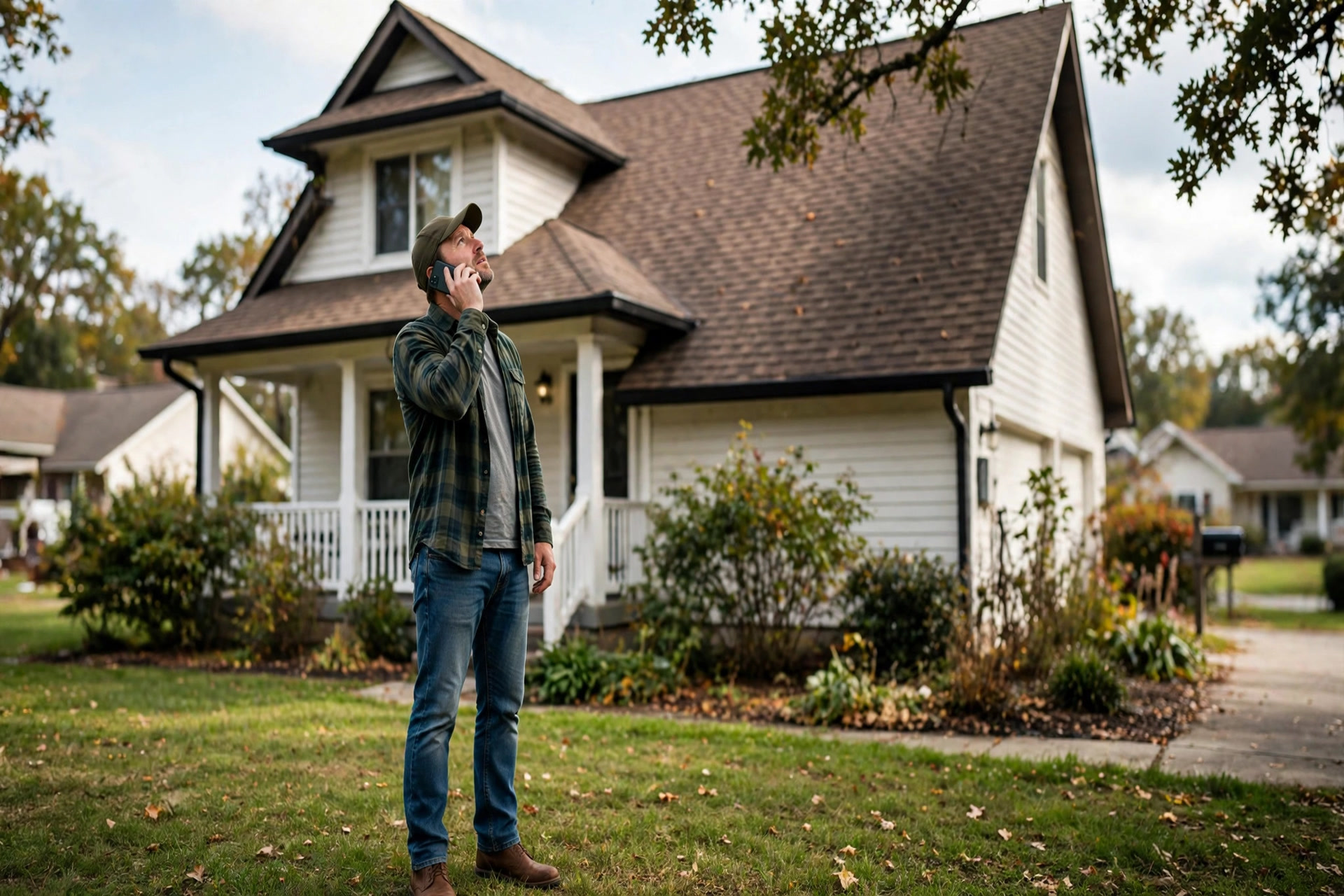
Most LSA leads arrive as phone calls. Answering live is the single biggest driver of close rates.
Disputing bad leads: the profit habit
Not every lead you are charged for deserves the charge. Google credits leads that meet its dispute criteria: spam or robocalls, wrong numbers, callers asking for services you do not offer, callers far outside your service area, and duplicate leads. Roofers commonly find 10 to 20 percent of their LSA leads are disputable.
Build the habit into your weekly routine. Every Monday, open the LSA app, review each lead from the prior week, and dispute the ones that qualify with a short factual note. Keep your own log: date, caller number, reason. Over a $3,000 monthly spend, recovering 15 percent is $450 back in your pocket every month, which is real money for fifteen minutes of admin work.
The dispute habit also improves your lead quality over time. Marking outcomes honestly, booked, completed, declined with reason, feeds Google’s matching system. Accounts that mark outcomes and dispute bad leads consistently report better match quality within a few months than accounts that ignore the app.
Common mistakes that burn LSA budgets
Letting paperwork lapse. Expired insurance or an unrenewed license pauses your ads without warning, often right before storm season. One person owns compliance.
Slow response times. A lead answered in 5 minutes converts at multiples of a lead answered in an hour. Staff the LSA number like it is your best salesperson, because it is.
Never disputing. Paying for spam calls and wrong numbers month after month is a voluntary tax. Dispute weekly.
Too wide a service area. Every town you add brings leads you cannot serve profitably. Start tight, expand only where close rates justify it.
Thin reviews. Running LSA with 8 reviews against competitors with 80 is bringing a knife to a gunfight. Build reviews before you scale spend.
No CRM tagging. If LSA leads blend into general calls, you cannot compute cost per signed roof, and you will misjudge the channel. Tag every lead at intake.
Treating LSA as set and forget. Budgets, service types, hours, and review pace all need monthly attention. Fifteen minutes a week keeps the account sharp.
Track every LSA lead to a signed job in your CRM. That paper trail is how you prove the channel pays.
Your rollout checklist
Work through these in order. Each one builds on the last.
- 1Confirm eligibility. Check that roofing LSA is live in your market and that your licenses meet the requirements.
- 2Gather verification documents. Business license, liability and workers comp certificates, and owner identification ready before you apply.
- 3Clear the background checks. Owner and field staff checks submitted; know the outcome before you plan spend.
- 4Build the profile. Bio written for worried homeowners, real photos uploaded, every true service type selected.
- 5Set tight service areas and hours. Real coverage, real availability; expand only when close rates justify it.
- 6Staff the phones. Live answer during hours, 15 minute callback standard, text-back coverage after hours.
- 7Launch with a test budget. Modest weekly cap for two to three weeks while you watch lead quality.
- 8Start the review engine. Ask every LSA customer for a review at closeout; target 20 plus reviews before scaling.
- 9Dispute weekly. Review every lead each Monday, dispute the bad ones, and log outcomes in the app.
- 10Track cost per signed roof. Tag every LSA lead in the CRM and review the true cost monthly before raising the budget.
Frequently asked questions
How much do Local Services Ads cost for roofers per month?
Most residential roofers spend $1,500 to $5,000 a month. Lead prices run $65 to $200 depending on service type and market, so a $3,000 budget buys roughly 15 to 40 leads. Start small, verify lead quality and close rates, then scale the budget that proves itself.
How long does LSA verification take for a roofing company?
Typically one to three weeks if your paperwork is complete: business license, insurance certificates, and background checks for the owner and relevant staff. Incomplete documents are the main delay. Gather everything before you apply to avoid stalling mid process.
Do I need a certain number of reviews to run LSA?
Google does not publish a hard minimum, but ranking reality does. Roofers with under 20 reviews struggle against competitors with 50 or more, and averages below 4.5 stars cost you calls. Build at least 20 strong reviews before scaling spend.
Can I dispute a bad LSA lead?
Yes. Spam calls, wrong numbers, requests for services you do not offer, callers outside your service area, and duplicates are all disputable for credit. Review leads weekly in the LSA app and dispute what qualifies. Most roofers recover 10 to 20 percent of spend this way.
Is LSA better than Google Ads for roofers?
For steady, high trust leads, usually yes: top placement, pay per lead, and the guarantee badge. Google Ads wins for control, storm season surges, and services LSA does not cover. Most established roofers run LSA as the base and Google Ads as the amplifier.
What happens if my insurance lapses during LSA?
Google pauses your ads until you provide current certificates and re verify. This can happen without much warning, so assign one person to track renewal dates for insurance, licenses, and background checks. Lapsed paperwork is the most common reason roofers lose LSA access.
Do LSA leads work for commercial roofing?
LSA is built mainly for residential services. Some markets include commercial service types, but volume is thin. Commercial roofers usually do better with Google Ads, LinkedIn outreach, and relationship driven sales, using LSA only if their market supports it.
Can I choose which searches trigger my LSA listing?
Not by keyword. You choose service types and service areas, and Google matches your business to relevant searches. Keep service types honest and areas tight; the matching quality depends on how accurately you describe what you do and where.
How fast should I answer an LSA lead?
Live, during business hours. Every minute of delay lowers close rates, and Google tracks responsiveness as a ranking factor. Set a 15 minute callback standard for missed calls and add text-back coverage after hours so no lead sits until morning.
Does the Google guarantee cost me anything extra?
No separate fee. The guarantee is part of the LSA program, funded by the per lead prices. Your obligation is to do good work and handle complaints well, because guarantee claims against you can affect your standing in the program.
Get the top spot on every roofing search
Digital Hayder sets up and manages Local Services Ads for roofing companies: verification paperwork, profile builds, review engines, weekly dispute management, and tracking that shows your true cost per signed roof. Tell us about your market and we will build the plan around it.
Contact Us