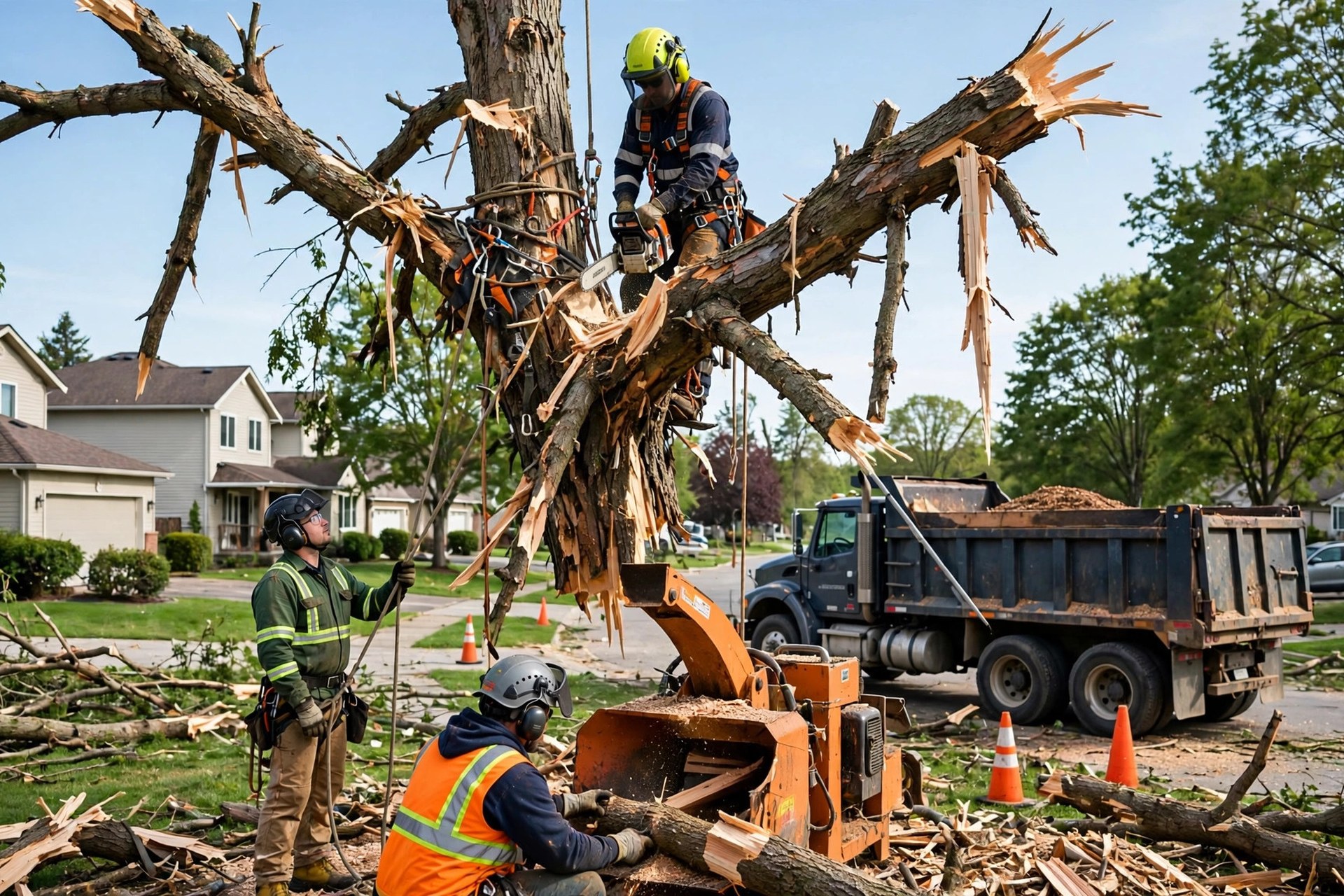
Storm season is the busiest and most profitable time of year for a tree service. When a storm tears through a neighborhood, hundreds of homeowners suddenly need the same thing: fallen trees removed, broken limbs cleared, blocked driveways opened. The companies that get found first and answer first win the work, often at premium emergency rates, while everyone else reads about the storm on the news. Most tree companies are invisible at exactly that moment. Their Google profile is half finished, their phone goes to voicemail while the crew is on a job, and they have no plan for the 48 hours after a big storm. This guide covers the tree service marketing ideas that actually bring storm season work: the door hanger playbook, Google Business Profile storm posts, referral deals with roofers, a review engine that keeps selling between storms, and the cost and effort rating for every idea so you know where to start.
The quick answer
- Storm season is the demand spike: homeowners buy in a panic and pay premium rates, so market before and during storms, not after them.
- Door hangers are the cheapest cost per job: a crew can drop hundreds the morning after a storm in the exact streets with damage.
- Google Business Profile storm posts win the search: fresh posts with real storm photos rank when homeowners search for help at dawn.
- Roofers send you work for free: trade partners see the same damage first and refer jobs both ways when the deal is simple.
- Reviews decide who gets picked: a stranger choosing in a panic picks the highest rated company, so build reviews between storms.
- One contract pays for the year: a single storm season removal job often covers an entire year of marketing spend.
Why storm season is the biggest marketing window a tree company gets
Most home services fight for attention all year. Tree service is different. Demand concentrates into a few explosive windows: the big windstorm in spring, the summer thunderstorm season, the early fall hurricane remnants. In those windows, demand is not just higher, it is urgent. A tree on a roof cannot wait for three quotes and a week of thinking. Homeowners call the first company that looks capable and picks up the phone. That urgency changes the marketing math completely.
First, price sensitivity drops. When a tree is blocking the driveway or leaning on the house, nobody is bargain hunting. They want someone today, and they will pay emergency rates for it. Storm work commonly bills 30 to 50 percent above normal rates, and customers rarely push back when the quote matches the urgency. Second, the buying process is short. There is no long research phase. The homeowner searches, skims the top results, checks the star rating, and calls. Your entire marketing job is to be visible in that search and to answer the call. Third, one storm creates weeks of follow-on work: the emergency removal today becomes the stump grinding next month and the neighbor’s preventive trimming the month after.
The companies that win storm season prepare for it like a season, not a surprise. They have door hangers printed before the first storm warning, their Google profile is already strong, their referral partners are already lined up, and their phones are covered even when every crew is booked solid. If you only do one thing after reading this guide, do this: build the storm playbook in the quiet weeks, so you can run it at full speed when the weather turns. The rest of this guide is that playbook, idea by idea.
The storm response playbook: what to do in the first 48 hours
When a storm hits, speed beats polish. Homeowners start calling within hours, and the companies that respond first lock up the best jobs. Your playbook should be written down and ready before the season, because you will not have time to invent it with branches across the road.
Hour 0 to 6: get visible and get ready. Post on your Google Business Profile that your crews are responding to storm damage in specific neighborhoods. Post the same update on your Facebook page and in local neighborhood groups, with photos of your trucks heading out. Turn on your after-hours call coverage: every missed call in the first 48 hours is a job going to a competitor. Our guide to missed-call text-back for tree service companies shows how to make sure no caller reaches voicemail and disappears.
Hour 6 to 24: go where the damage is. Drive the affected neighborhoods and note which streets took the worst of it. This scouting run does two jobs: it tells you where to send the door hanger crew, and it lets you quote fast when calls come in because you have already seen the area. Keep a camera or phone handy and photograph real damage and real cleanup. These photos become your best marketing material for the next two weeks.
Hour 24 to 48: blanket the damage zone. Send the hanger crew to every street with visible damage. Update your Google posts again with fresh photos of jobs in progress. Call your roofer and contractor partners and tell them your crews are in their area, so they can refer the tree work they see. Work extended hours if you can staff them: the company that answers at 8 PM on storm night wins jobs the 9-to-5 shops never hear about.
The whole playbook costs almost nothing beyond the hangers and the fuel. What it requires is preparation: hangers printed, posts templates drafted, partners briefed, and call coverage tested, all before the season starts. Do that prep once and you can run the playbook every time the wind howls.
Door hangers after storms: your cheapest cost per job
Door hangers are the single best marketing tool a tree company owns, and most companies use them wrong or not at all. The trick is timing and targeting. A hanger delivered on a random Tuesday in a quiet neighborhood is junk mail. The same hanger on the door of a house with a split oak in the front yard, the morning after the storm, is a lifeline. Hang where the damage is, when the need is fresh, and hangers outperform every other channel on cost per booked job.
Design the hanger for a 3-second read. Big headline at the top: “Storm Damage? We Remove Fallen Trees Today.” Your phone number in the largest type on the card. Three short bullet points: emergency removals, insurance claim photos provided, free on-site quotes. One photo of your crew at work. That is the whole card. Nobody reads the back of a door hanger during storm week, so put everything on the front. Print in full color on thick stock so it survives rain, and keep at least 2,000 on hand from spring through fall.
A two-person crew can hang 400 to 600 doors in a day in a dense suburb. At 10 to 15 cents per printed hanger, a full day of hanging costs under $100 in materials. Typical response rates run 1 to 3 percent of doors hung, and a meaningful share of those callers book, because you knocked on their door at the exact moment they needed you. Compare that with pay-per-click ads, where one click can cost $15 to $40 in storm week and many clicks never call. Hang first, advertise second.
One legal note: most suburbs allow door hangers, but some neighborhoods and HOAs restrict them, and a few cities require a solicitation permit. Check the rules for your main service areas before the season, not after a complaint. And train the crew: hangers go on doors, never in mailboxes, which is a federal offense.
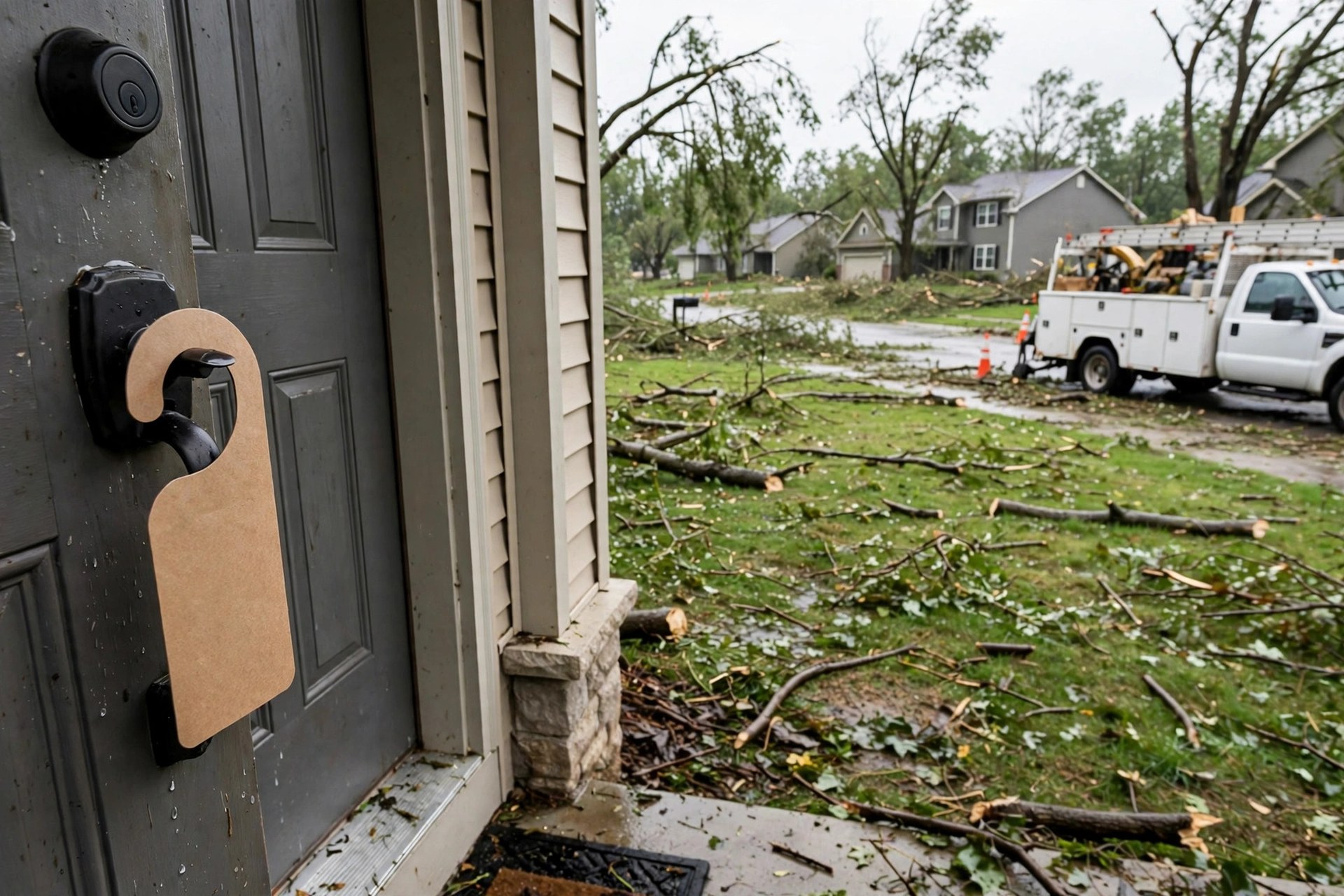
A door hanger on the right door the morning after a storm beats any ad: the need is fresh and the number is right there.
Google Business Profile storm posts that win the morning after search
When the storm passes, homeowners do one thing before they call anyone: they search. “Tree service near me,” “tree removal emergency,” “fallen tree removal.” Your Google Business Profile is what they see, and in storm week it needs to look alive. A profile with fresh posts, recent storm photos, and new reviews beats a nicer website every time, because the profile is right there in the search results.
Post within hours of the storm. The post should say exactly what you are doing and where: “Our crews are out in the Maple Grove and Riverside areas today clearing storm damage. Call for same-day fallen tree removal.” Add photos from the scouting run: real damage, real trucks, real cleanup. Google favors fresh, local, photo-rich posts, and so do panicked homeowners. Update the post every day or two through the cleanup window with new photos and new neighborhoods. When the wave passes, keep posting weekly through the season: trimming jobs, stump grinding, before-and-after shots. A profile that posts regularly outranks one that went quiet last year.
Check the basics too, because storms expose every gap. Service areas should cover the whole storm zone. Hours should show you open early and taking emergency calls. The services list should include storm damage cleanup, emergency tree removal, and fallen tree hauling, spelled the way customers search. Turn on messaging so people can text you from the profile, and answer fast. Add common questions to the Q and A section: Do you handle insurance claims? How fast can you get here? Do you grind the stump too? Every question you answer there is one less reason for a caller to move on to the next listing.
If your website also takes quote requests, connect it to the same fast response. Our breakdown of AI chatbots for tree service companies explains how to catch the quote requests that arrive at midnight when the crew is asleep and the storm is still fresh in the homeowner’s mind.

Storm week is won on the phone: the owner who answers fast and posts fast takes the jobs the slow shops never hear about.
Referral deals with roofers and other trade partners
Roofers are your best referral partners and most tree companies never ask them. Think about it: every storm that drops trees also damages roofs. The roofer is on the roof, sees the crushed gutter and the split limb over the garage, and the homeowner asks, “Do you know someone who can take that tree down?” If the roofer knows your name, you get the call. If not, the homeowner searches and picks whoever ranks. One partnership like this can send you a steady stream of the highest quality jobs in the business: warm referrals from a trusted contractor, already sold on using a pro.
Keep the deal dead simple. Roofers do not want paperwork. Offer a flat thank-you for every booked job they send: $50 to $100 per completed removal is typical, or a straight reciprocal deal where you send them every roof you spot with damage. The reciprocal version often works better because no money changes hands and both sides keep score in jobs, not dollars. Put it in a one-page agreement so expectations are clear, then make it easy: give them a stack of your cards, a dedicated number or text line so you know the lead came from them, and a promise to call their referral within the hour during storm week.
Do not stop at roofers. Insurance agents handle the claims for every fallen tree; introduce yourself before the season and leave cards. Property managers oversee dozens of trees across rental portfolios and hate emergency calls from tenants; a standing relationship with one manager can mean recurring work all year. Fence companies see the crushed fences after storms. Handyman services get the small cleanup jobs they cannot handle and pass the big removals up: many handyman services would rather refer tree work to a reliable crew than turn the customer away. HOA board members decide who maintains common-area trees. Each partner is one conversation and one follow-up lunch. Five solid partners can fill your slow weeks.
Roofers run the same storm playbook you do, and the smart ones protect their phones the same way. If a roofer partner keeps missing calls during storm week, point them toward the same call coverage thinking in our guide to roofing marketing ideas, which covers how roofers win the same storm window. Your referrals are only worth what your partners can answer.
Marketing idea categories: cost and effort ratings
Every idea in this guide works, but they do not cost the same or take the same effort. Use the table below to pick your starting lineup. If you are a two-crew company doing your own marketing, start with the low-cost, low-effort rows and add the rest as the revenue justifies it.
| Idea | Typical cost | Effort | Best for |
|---|---|---|---|
| Door hangers after storms | $0.10 to $0.20 per hanger | Low: crew hangs them between jobs | Immediate storm-week jobs at the lowest cost per booking |
| Google Business Profile posts | Free | Low: 15 minutes per post with phone photos | Winning the morning-after search in your service area |
| Roofer and trade referrals | $50 to $100 per booked job, or reciprocal | Low: a few conversations before the season | Warm, pre-sold jobs with almost no marketing spend |
| Review engine | Free, plus a small incentive budget | Medium: a process the crew follows on every job | Converting panicked strangers between and during storms |
| Yard signs on job sites | $10 to $25 per sign | Low: the crew places and collects them | Neighborhood visibility while you work the street |
| Neighborhood Facebook groups | Free | Medium: regular helpful presence, not spam | Storm-week credibility and year-round name recognition |
| Storm-season email or text list | $20 to $80 per month for software | Medium: building the list takes time | Past customers who need preventive trimming before the next storm |
| Website with fast quote requests | $100 to $400 per month managed | Low once built | Capturing midnight quote requests with photos |
| Paid Google ads during storms | $500 to $3,000 per storm week | Medium: needs daily management | Extra volume when crews have open capacity |
| Community cleanup sponsorship | $200 to $1,000 per event | Medium: showing up with equipment | Long-term reputation and local press coverage |
Notice the pattern: the four cheapest rows are also the four most effective during storm week. Paid ads have their place, but they are the amplifier, not the foundation. Build the foundation first: hangers ready, profile strong, partners briefed, reviews flowing. Then spend on ads only when you have crew capacity to absorb the calls.
The review engine that works between storms
Storm week is when reviews pay off, but storm week is not when you earn them. You earn them in the quiet months, one job at a time, with a process your crew actually follows. The reason is simple: a homeowner choosing in a panic does not read your website. They scan star ratings. The company with 180 reviews at 4.9 gets the call. The company with 12 reviews gets skipped, no matter how good its work is.
Ask at the right moment: right after the cleanup, while the crew is still on site and the homeowner is standing in their clean yard feeling relieved. That is the peak of goodwill, and it fades fast. The crew lead says one sentence: “If you were happy with the work, a quick Google review helps us a lot. I can text you the link right now.” Then send the link by text before the truck leaves. Reviews requested within the hour get completed; reviews requested three days later by email do not.
Make it easy and make it a habit. Put the review link in a QR code on the invoice and on the crew’s thank-you card. Track reviews per crew so you can praise the team that brings them in. Respond to every review within a day or two: thank the happy customers by name and answer the unhappy ones with calm specifics. A thoughtful owner response on a bad review often impresses future customers more than the review itself hurt. Aim for photo reviews when you can: a before-and-after of a storm cleanup with the homeowner’s words is worth ten plain five-star ratings.
Set a target and measure it. Fifty new reviews per season is a realistic goal for a busy two-crew company, and it compounds: each review makes the next storm week’s search results a little more yours. The companies dominating your local map pack did not get there by accident. They asked, every job, every time.
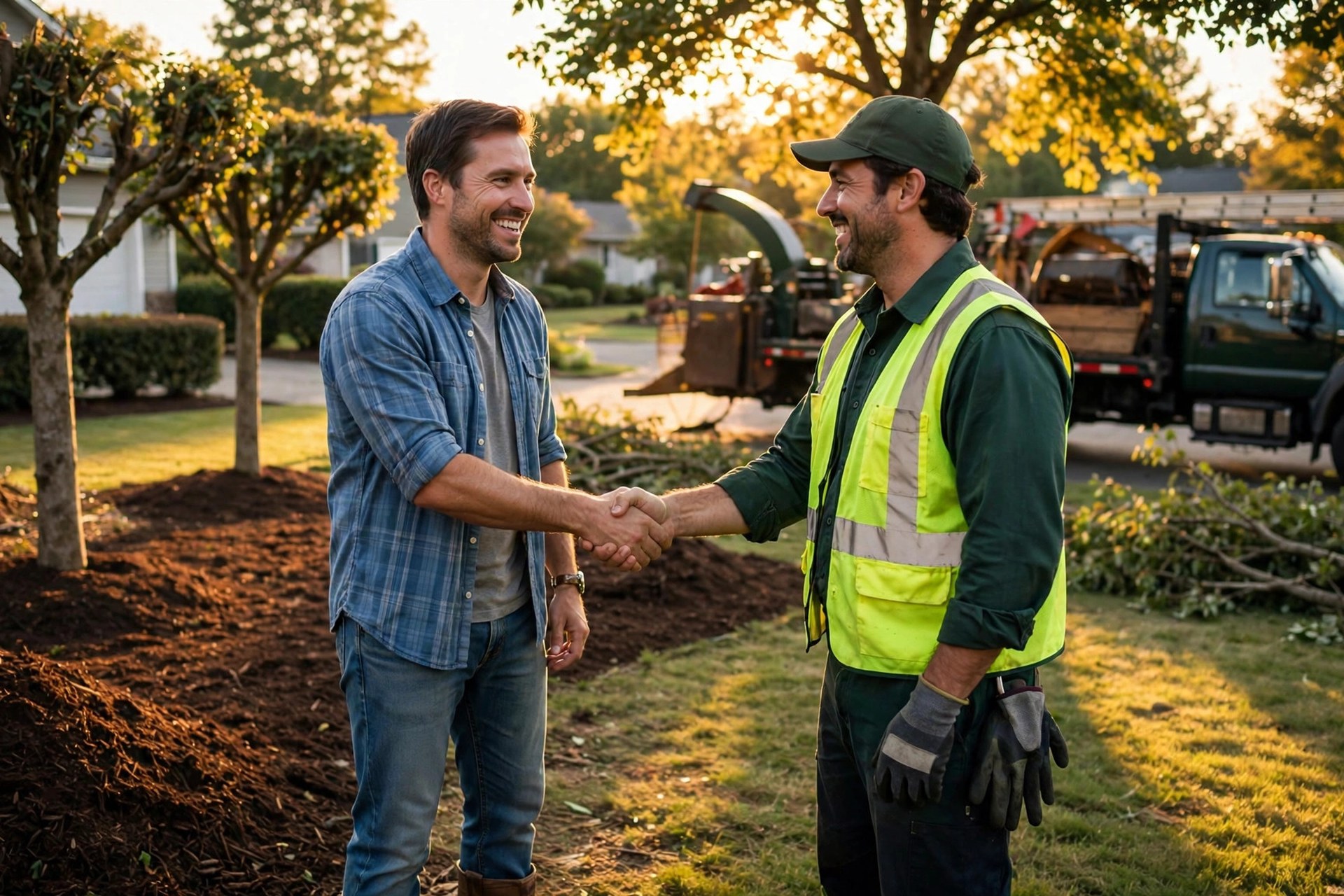
The handshake moment is the review moment: ask while the yard is clean and the relief is fresh, not three days later by email.
Storm season pricing: what to charge and how to quote fast
Marketing brings the calls; pricing and speed close them. Storm pricing is higher than normal pricing, and it should be: you are working long hours, in bad conditions, on short notice, with equipment wear and overtime to cover. Publish an internal storm rate sheet before the season so your estimators quote with confidence instead of guessing under pressure.
Quote fast and quote on site. The company that shows up today with a clear written quote beats the company that promises an estimate Thursday. Take photos of the damage for the customer’s insurance claim as part of every storm quote: it costs you nothing, it helps them enormously, and it positions you as the professional outfit. For insurance jobs, document everything: photos before, during, and after, plus a written scope. Adjusters approve clean documentation faster, and customers remember who made the claim easy.
| Storm job type | Typical price band | Notes |
|---|---|---|
| Emergency fallen tree removal | $1,500 to $5,000 | Depends on size, location, and access; crane work adds $1,000+ |
| Tree on house or structure | $2,500 to $8,000 | Coordinate with the roofer; document for insurance |
| Broken limb cleanup, no removal | $300 to $900 | Fast jobs that fill gaps between big removals |
| Preventive trimming (pre-storm) | $400 to $1,200 | Sell between storms; reduces the customer’s next emergency |
| Stump grinding after removal | $150 to $500 | Easy upsell quoted with every removal |
| Full property storm cleanup | $800 to $3,000 | Debris hauling plus minor trimming; price by the load |
Always quote the stump grinding with the removal. It is a 15-minute add-on for your grinder and a $150 to $500 line item the customer expects. And always leave the customer with a card and a reason to call before the next storm: “That maple over the garage should come down before fall. Call us in September and we will beat storm pricing.” Storm marketing does not end when the branches are gone; it plants the next job.
Mistakes that waste the storm season window
Waiting until the storm to market. Hangers take a week to print. Partner relationships take months. Google reviews take a season. Every part of this guide is pre-season work. The storm is the harvest, not the planting.
Sending every call to voicemail. Storm week call volume can triple. If your crews are working and nobody answers the phone, you are advertising for your competitors. Test your call coverage before the season.
Hanging the whole town instead of the damage zone. Blanket coverage wastes hangers and annoys people with no damage. Scout first, then hang where the need is visible.
Posting stock photos. Homeowners can smell a stock photo. Real photos of your trucks, your crew, and today’s damage build trust that polished marketing never will.
Quoting by phone without seeing the job. Storm damage hides surprises: root plates, hung limbs, power lines. A fast on-site quote closes more jobs and avoids the underpriced disasters.
Forgetting the follow-up. Every storm job is a future trimming customer, a future stump grinding customer, and a future review. Capture the contact details and the photos, then use them.
Ignoring the off-season. The companies that dominate storm week spent the quiet months collecting reviews, building the email list, and courting partners. Marketing in February decides who wins in July.
Your rollout checklist
Work through these in order. Each one builds on the last.
- 1Finish your Google Business Profile. Service areas, storm services listed, early emergency hours, messaging turned on, Q and A answered.
- 2Design and print 2,000 door hangers. Three-second headline, giant phone number, thick rain-proof stock, stored and ready.
- 3Write your storm rate sheet. Emergency pricing per job type, crane add-ons, stump grinding upsell, all approved before the season.
- 4Line up three trade partners. At least one roofer, one insurance agent, and one property manager or handyman service.
- 5Set up storm-week call coverage. Every call answered live or texted back within minutes, even at 8 PM.
- 6Build the review request flow. Text link sent on site, QR code on the invoice, crew trained on the one-sentence ask.
- 7Draft your storm post templates. Three fill-in-the-blank posts with photo slots, ready to publish within hours.
- 8Order yard signs. Ten to twenty signs the crew places on every job site and collects on the last day.
- 9Start the past-customer list. Collect phone numbers on every job for pre-storm trimming reminders next season.
- 10Run a practice week. Hang one neighborhood, post daily, time your quote speed, and fix the gaps before the real storm.
Frequently asked questions
How much should a tree service spend on marketing?
Most healthy tree companies spend 5 to 10 percent of revenue on marketing. During growth years, 10 percent is normal. The storm season ideas in this guide are cheap: $1,000 to $2,000 can fund hangers, signs, review software, and partner outreach for a full season. Spend more only when your crews have open capacity to absorb the extra calls.
Are door hangers legal in residential neighborhoods?
In most areas, yes, but rules vary. Some cities require a solicitation permit and some HOAs restrict them. Never place anything inside a mailbox; that is a federal offense. Check the rules for your main service areas before the season and keep a copy of any permit with the hanging crew.
How fast do I need to respond to a storm lead?
As fast as humanly possible. Data across home services consistently shows that the first company to respond wins most jobs, and storm callers are the most impatient buyers of all. Answer live during storm week, and make sure after-hours callers get a text back within minutes, not a voicemail.
Should I raise prices during storm season?
Charge your published emergency rates, which should be 30 to 50 percent above normal pricing to cover overtime, hazard, and short-notice scheduling. Write the rate sheet before the season. What you should not do is invent prices on the doorstep; panicked customers remember who treated them fairly and who did not.
Can I pay roofers for referrals?
Referral fees between contractors are common, but check your state rules first, since some states restrict fee arrangements in insurance-related work. Many companies prefer straight reciprocal referrals with no money changing hands, which avoids the question entirely and often builds stronger partnerships.
How often should I post on my Google Business Profile?
Weekly during the normal season and daily during storm cleanup weeks. Each post needs a real photo and a local detail, like the neighborhood your crew is in. A profile with fresh posts and recent reviews consistently outranks a neglected one in the local map results.
Do I need a website if my Google profile is strong?
Yes. The profile wins the first impression, but many customers click through to check you out, and the website is where midnight quote requests with photos land. It does not need to be fancy. Fast loading, clear phone number, storm services listed, and a simple quote form are enough.
What is the best way to get more Google reviews?
Ask in person right after the job while the crew is still on site, and text the review link before the truck leaves. Put a QR code on the invoice as backup. Respond to every review. Fifty new reviews per season is a realistic target for a busy two-crew company, and it compounds every year.
Should I run Google ads during storms?
Only if you have crew capacity and your foundation is built. Ads during storm week are expensive because every tree company bids at once. They work well as an amplifier on top of hangers, posts, and referrals, but they are a poor substitute for those free and cheap channels.
What should I market in the off-season?
Preventive trimming, stump grinding, and land clearing: the work customers postpone when nothing is urgent. Market it to your past-customer list with a simple message: trim now at normal rates, or pay emergency rates after the next storm. The off-season is also when you collect reviews and court partners.
Get your tree company storm season ready
Digital Hayder builds marketing systems for tree service companies: Google Business Profile management, storm week call coverage, review engines, and websites that capture midnight quote requests. Tell us about your service area and we will design the storm playbook around it.
Contact Us