Solar is one of the most expensive industries to advertise on Google. A single click on a high-intent keyword like “solar installation near me” can cost $50 to $90 or more, and in competitive metro markets some installers report paying over $100 for one click. That number scares a lot of owners off, and it should not. The click is expensive because the job is expensive: a residential solar install runs $15,000 to $25,000, so one closed job can pay for months of ad spend. What matters is not the cost per click. It is the cost per appointment, the cost per install, and whether your campaign structure keeps waste low enough for the math to work. This guide covers the full picture for solar companies on Google Ads: real cost-per-click bands by keyword type, what a healthy cost per lead and cost per appointment look like, how to size a monthly budget for your market, the campaign structure that keeps costs down, the mistakes that burn money, and how Google Ads compares to buying leads from resellers.
The quick answer
- Typical CPC: $40 to $90 or more for high-intent keywords like “solar installation near me”; research keywords run $10 to $30.
- Typical CPL: $150 to $400 per lead, depending on market competition and landing page quality.
- Starter budget: $3,000 to $5,000 a month in one metro market; competitive markets need $8,000 or more to get meaningful volume.
- Judge by cost per appointment: $250 to $600 per set appointment is the metric that predicts revenue, not clicks or raw leads.
- Biggest cost driver: national installers, lead aggregators, and financing companies all bidding on the same core keywords.
- Smart structure: Search for high intent, Performance Max for reach, and separate campaigns by keyword theme so budgets go where they convert.
What Google Ads actually costs for solar companies
Most “average CPC” figures you see for solar are misleading, because the average blends two completely different kinds of traffic. On one side are high-intent keywords: “solar installation near me,” “solar companies near me,” “get solar panels installed.” These searchers are close to buying, and every installer, national brand, and lead reseller wants them, which pushes clicks to $40 to $90 or more in busy markets. On the other side are research keywords: “how much do solar panels cost,” “solar panel savings calculator,” “are solar panels worth it.” These clicks run $10 to $30 and attract people months away from a decision. Both kinds have a role, but if you bid the same way on both, the research traffic eats your budget before the buyers ever see your ad. The rest of this guide separates the two so you can price each correctly.
The CPC band, keyword by keyword
Exact-match and phrase-match bids on the core buyer keywords are where the real money goes. “Solar installation near me” and “solar companies near me” are the priciest ad slots in the niche, commonly clearing $50 to $90 a click in competitive metros like Phoenix, San Diego, or Tampa, and $30 to $60 in mid-size markets. Brand-defense terms (your own company name) cost $2 to $8 and should always be covered, because competitors will bid on your name the moment you start running ads. Question-style keywords like “how much do solar panels cost” run $10 to $25 and convert best when they land on an educational page with a savings calculator, not a quote form. The cheapest useful traffic is often the most specific: “solar panel installation cost for a 2,000 sq ft home” or “solar tax credit explained” at $8 to $18 a click, where a genuinely helpful page can capture an email for cheap and nurture it into a quote later.
Why solar clicks cost so much
Three forces push solar CPCs to the top of the home-services charts. First, the ticket size: at $15,000 to $25,000 per install, an advertiser can afford to pay $400 for a lead and still print money, so the auction keeps rising until the least efficient bidder drops out. Second, the buyer set is crowded: you are bidding against local installers like yourself, national installation brands with deep ad budgets, lead aggregators who sell the same lead to four or five companies, and solar financing and lease companies that monetize the customer differently. Third, solar demand is seasonal and policy-driven, so when a tax credit deadline or a utility rate hike hits the news, every advertiser increases bids at the same time and CPCs spike for weeks. Understanding this matters because it tells you where your real advantage is: you cannot change the auction, but you can change your conversion rate, your speed to lead, and your follow-up, which all lower your effective cost per install.
Solar keyword cost benchmarks
Use this table as a starting budget reference, not a guarantee. Your actual CPCs depend on your metro, your ad rank, your quality score, and the time of year. The pattern to notice is the intent gradient: the closer the keyword is to “hire someone,” the more it costs.
| Keyword type | Example keywords | Typical CPC range | Intent level |
|---|---|---|---|
| Buyer keywords | “solar installation near me”, “solar companies near me” | $40 to $90+ | Ready to get quotes |
| Service keywords | “residential solar panel installation”, “solar roof installation” | $30 to $70 | Comparing providers |
| Brand terms | Your company name, “your company solar reviews” | $2 to $8 | Already knows you |
| Cost research | “how much do solar panels cost”, “solar installation cost” | $12 to $28 | Researching price |
| Informational | “are solar panels worth it”, “solar tax credit” | $8 to $18 | Early research |
| Competitor terms | Large national brand names | $25 to $60 | Shopping around |
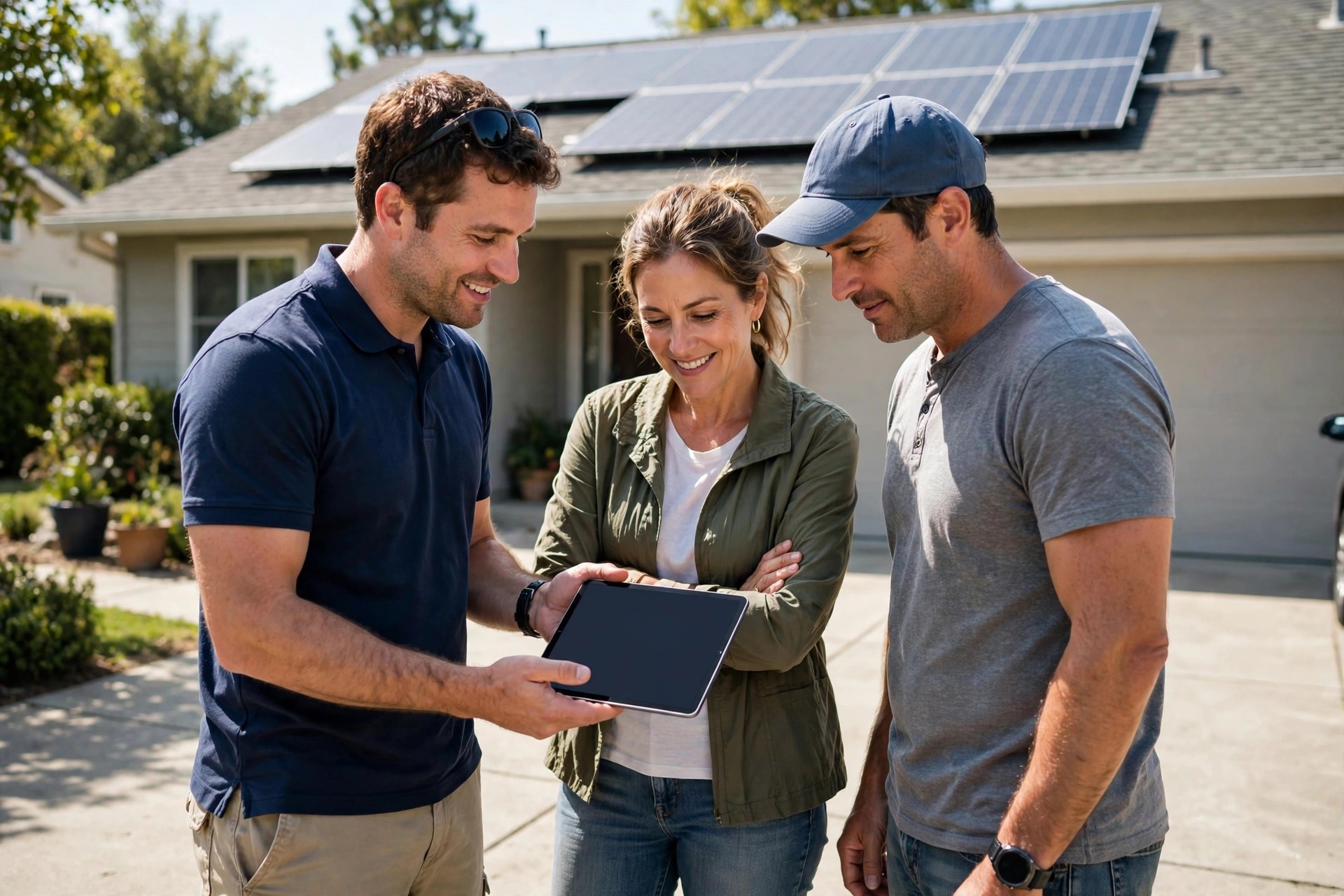
Expensive clicks turn profitable when they land on a page built to set appointments, not just collect emails.
Cost per lead and cost per appointment: the numbers that matter
Click cost is a distraction. Two solar companies can pay the same $60 a click and end up in completely different places: one converts 8 percent of clicks into leads and closes 1 in 12 leads, the other converts 15 percent and closes 1 in 6. The second company pays half the cost per install. Your cost per lead (CPL) and cost per appointment are the only cost metrics that predict revenue, and they depend far more on your landing page, your form length, your call answering, and your follow-up than on your bids. For a practical look at the follow-up side, see our guide to missed-call text-back for solar companies, because a slow phone response quietly doubles the effective CPL.
From click to lead to appointment: the funnel math
Here is what a realistic solar funnel looks like. Out of 1,000 clicks at an average $55 CPC, you spend $55,000. At a 10 percent landing-page conversion rate, that is 100 leads, or $550 a lead, which would be a disaster. At a 15 to 20 percent conversion rate on a well-built page with a savings calculator and a short form, that is 150 to 200 leads, or $275 to $365 a lead. Of those leads, expect 40 to 60 percent to actually book and show for a consultation appointment if your team calls within minutes, giving you 60 to 120 appointments at $460 to $900 each. Close 20 to 30 percent of real appointments and you land 12 to 36 installs. The swing factor at every step is operational: page quality, call speed, and appointment discipline. A company that answers in 5 minutes and runs a tight quote process can make the same click spend produce twice the installs of a company that calls back the next day.
What a healthy CPL looks like
For most local solar installers, a healthy cost per lead sits between $150 and $400, and a healthy cost per set appointment sits between $250 and $600. If your CPL is under $150, you are either in a low-competition market or your lead definition is too loose (a lot of “leads” that never pick up the phone). If it is over $500, something is broken upstream: wrong keywords, a generic landing page, or a form asking for too much. Track CPL by campaign and by keyword theme, not just account-wide, because a single broad campaign full of research keywords can hide the fact that your buyer keywords are printing appointments at $300 each. And always tie CPL back to cost per install: at $20,000 per job, a $6,000 cost per install with healthy margins is still a great business.
| Funnel stage | Healthy conversion rate | What 1,000 clicks produce |
|---|---|---|
| Click to lead | 12 to 20 percent | 120 to 200 leads |
| Lead to appointment set | 40 to 60 percent | 48 to 120 appointments set |
| Appointment set to showed | 60 to 75 percent | 29 to 90 real consultations |
| Consultation to install | 20 to 30 percent | 6 to 27 installs |
Monthly budget sizing for solar companies
Solar ads do not work on tiny budgets, because the click prices are too high to gather meaningful data. At $60 a click, a $1,500-a-month budget buys 25 clicks, which might produce 3 or 4 leads, not enough to judge anything. The minimum viable budget is the amount that buys at least 30 to 50 leads a month, so you can see patterns, test landing pages, and keep the sales team fed. In most markets that means starting around $3,000 to $5,000 a month, and in competitive metros $8,000 to $15,000 a month is normal for a company serious about growth.
Budget tiers by market and ambition
A small local installer in one metro or county should plan $3,000 to $5,000 a month. That buys 50 to 120 clicks a month at typical CPCs, enough to test one or two campaigns and learn which keyword themes produce appointments. Expect 10 to 25 leads a month at first, improving as the landing page and negatives list mature. A mid-size regional company covering two or three metros needs $8,000 to $20,000 a month, split across campaigns by market so strong markets do not starve weaker ones. Multi-location or statewide advertisers routinely run $25,000 to $75,000 a month, with dedicated budgets per campaign and a testing budget carved out for new keyword themes. Whatever the tier, ring-fence 10 percent for testing and never let the core buyer keywords run out of budget mid-day, because the cheapest hour of the day for solar clicks is often the evening when homeowners are home and browsing.
| Company profile | Monthly budget range | Expected monthly leads |
|---|---|---|
| Local installer, one market | $3,000 to $5,000 | 10 to 25 |
| Growing installer, two to three markets | $8,000 to $20,000 | 30 to 80 |
| Regional player, statewide presence | $25,000 to $75,000+ | 100 to 400+ |
Campaign structure that keeps solar costs down
Solar campaigns fail from the structure, not the bids. One big campaign with every keyword mixed together means the research traffic spends the budget and the buyer keywords starve, and the reporting hides it. Separate campaigns by intent, give each its own budget, and the account tells you exactly where appointments come from.
Search, Performance Max, and Local Services Ads
Google Search is the core: it captures people typing exactly what you sell, and it deserves the majority of the budget. Keep buyer keywords and research keywords in separate Search campaigns so the cheap research traffic never outspends the buyer terms. Performance Max works as a second layer for reach, showing your ads across YouTube, Display, and Discover to people researching solar, but it needs conversion tracking and a few weeks of learning before it produces anything useful; start it at 15 to 20 percent of budget. Local Services Ads, where available for solar, charge per lead instead of per click and often produce cheaper leads, but volume is limited and lead quality varies, so treat LSA as a supplement, not the engine. The accounts that waste the most money are the ones that put everything into one automated campaign type and never look at what the clicks actually did.
Match types, negatives, and geo targeting
Use phrase match and exact match for buyer keywords, and keep broad match confined to tightly themed campaigns with strong negative lists. Solar attracts expensive junk clicks: jobs (“solar installer jobs”), DIY (“install solar panels myself”), used equipment (“used solar panels for sale”), and freebie seekers (“free solar panels government”). A shared negative list blocking jobs, DIY, used, free, wholesale, and training terms saves hundreds a month. Geo-target tightly: target your real service area with presence-based targeting, not “interest in” targeting, or your ads will show to people three states away. Layer on ad scheduling so ads run when your team can answer the phone; a lead that comes in at midnight and waits until 9 AM is worth a fraction of one answered in five minutes. Zip-code bid adjustments let you push harder in the neighborhoods with the best roofs and the highest close rates.
Where solar ad budgets get burned
The most expensive mistake in solar advertising is sending $60 clicks to a homepage. A homepage tries to do everything, so it converts at 3 to 5 percent while a dedicated landing page with a savings calculator, one clear offer, and a short form converts at 12 to 20 percent. That difference alone can cut your CPL in half. The second-biggest burner is slow follow-up. Solar leads cool fast: industry data has consistently shown that calling within five minutes of a form fill produces dramatically higher contact rates than calling in thirty, and solar is no exception, because the homeowner is also filling out your competitors’ forms. The third is a form that asks for everything: address, roof age, electric bill, credit score, and a life story. Every extra field drops conversion. Ask for name, phone, and zip code, then let the sales process collect the rest. For more ways to fill the calendar beyond paid search, our solar company marketing ideas guide covers the organic and referral channels that compound over time.
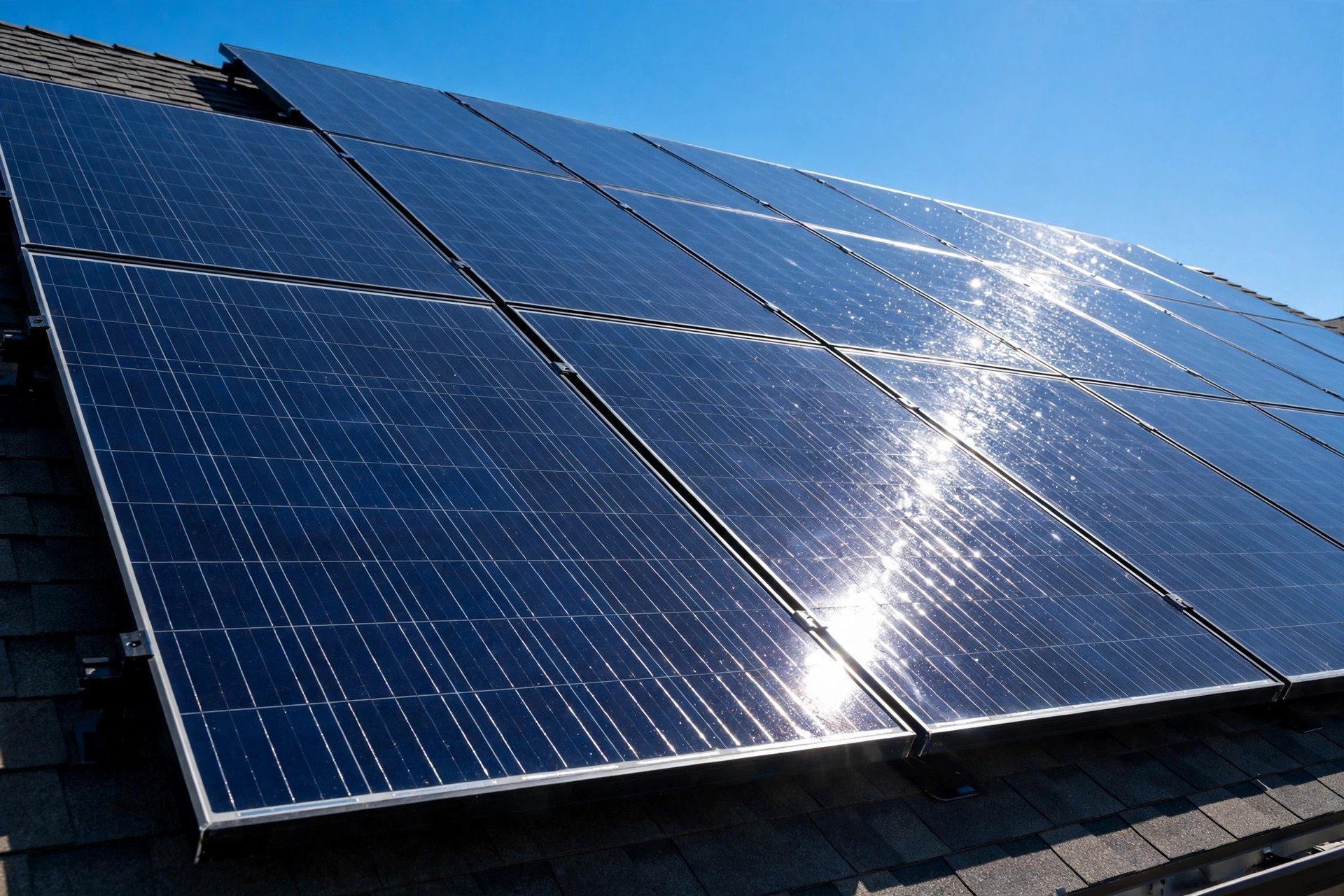
Buyer-intent keywords cost the most because the searcher is close to signing. Budget follows intent.
Google Ads vs other solar lead sources
Google Ads is rarely the cheapest lead on paper, and it does not have to be. It is usually the highest-intent, fastest-to-scale, and most controllable lead source. The comparison that matters is cost per install, not cost per lead, because lead sources differ wildly in quality. Aggregator leads look cheap at $50 to $150 until you learn the same lead went to four competitors and converts at a tenth the rate. Door knocking looks cheap until you count the labor. Referrals are the cheapest and best leads you will ever get, but you cannot scale them on demand the way you can scale an ad account.
| Lead source | Typical cost per lead | Typical lead quality | Scalability |
|---|---|---|---|
| Google Search Ads | $150 to $400 | High: they searched for you | Raise budget, more leads this week |
| Lead aggregators | $50 to $150 | Low to medium: shared with competitors | High, but quality drops with volume |
| Facebook/Instagram ads | $75 to $250 | Medium: interruptive, needs nurture | High, best for education content |
| Door knocking | $100 to $300 in labor | Medium to high: face to face | Limited by crew size |
| Referrals | $0 to $100 in rewards | Very high: trusted introduction | Slow, compounds over years |
| SEO and organic | $50 to $150 amortized | High: same intent as paid search | Slow, 6 to 12 months to build |
Tracking and attribution that keeps you honest
A solar ad account without call tracking is a guess, not a business tool. Most solar leads call rather than fill out forms, so if you only track form fills you will undercount your best campaigns and kill them by mistake. Set up call tracking with dynamic number insertion, record which keyword and campaign drove each call, and push the data back into Google Ads as conversions so the bidding learns from real appointments, not raw clicks.
Score leads, not just count them
Not all solar leads are equal. A homeowner with a $300 electric bill, a south-facing roof, and good credit is worth ten times a renter who clicked an ad by accident. Build a simple scoring rule with your sales team: qualified appointments, disqualified (renter, shaded roof, bad credit), and no-contact. Review the disqualified reasons monthly and feed them back into negatives and landing-page copy. If 20 percent of leads are renters, add renter-excluding language to the ad and page. This feedback loop is what separates a solar ad account that gets cheaper every quarter from one that gets more expensive. Pair it with an instant-response system so good leads never wait; an AI chatbot for solar companies can answer the midnight questions, capture the details, and book the consultation while the homeowner is still excited.

One closed install pays for months of ad spend. Track cost per install, not cost per click.
Timeline: what to expect in the first 90 days
Week one is setup: conversion tracking, call tracking, landing pages, negative lists, and geo targeting. Expect the first leads in week two, and expect them to be expensive, because Google’s learning period and your untested page have not found their rhythm yet. By week four you should see CPL settling as negatives accumulate and the page gets its first round of fixes. Months two and three are where the real gains come: A/B testing the headline and form, adding the keywords that actually produced appointments, cutting the themes that produced junk, and tightening the follow-up process with the sales team. A solar account is rarely profitable in month one and usually looks completely different by month three. Anyone promising instant results is selling you something; the honest version is that the data you buy in the first 60 days is what makes the next 12 months profitable.
Your rollout checklist
Work this list in order. Each step makes the next one cheaper.
- 1Install conversion and call tracking first. Track form fills and calls by keyword and campaign before spending a dollar, so every click teaches you something.
- 2Build a dedicated landing page. One offer, a savings calculator, a short form, and proof. Never send paid clicks to the homepage.
- 3Split campaigns by intent. Buyer keywords, research keywords, and brand terms each get their own campaign and budget.
- 4Load a shared negative list. Block jobs, DIY, used equipment, free, wholesale, and training terms from day one.
- 5Target your real service area. Use presence-based geo targeting and set zip-code bid adjustments for your best neighborhoods.
- 6Set ad scheduling around your team. Run ads hardest when someone can answer the phone within minutes.
- 7Cut the form to three fields. Name, phone, zip code. Collect the roof details during the call, not before it.
- 8Build a 5-minute response process. Auto-text plus a live call on every new lead, with after-hours coverage so midnight leads are not cold by morning.
- 9Score leads with your sales team. Qualified, disqualified, no-contact. Feed the disqualified reasons back into negatives and page copy monthly.
- 10Review by cost per appointment. Every two weeks, shift budget from keyword themes with high CPL to the themes producing set appointments.
Frequently asked questions
How much do Google Ads cost for a solar company?
Expect $40 to $90 or more per click on high-intent keywords like “solar installation near me,” $150 to $400 per lead, and a starting monthly budget of $3,000 to $5,000 in one metro market. The number that decides profitability is cost per install, which typically needs to stay under $4,000 to $6,000 for the math to work at average job values.
Why are solar Google Ads clicks so expensive?
Because the job is worth $15,000 to $25,000, advertisers can afford to pay a lot per click, and the auction includes national installers, lead aggregators, and financing companies. High CPCs are normal in solar; profitability comes from conversion rate and follow-up speed, not from finding cheap clicks.
What is a good cost per lead for solar?
Most local installers consider $150 to $400 per lead healthy. Under $150 usually means the lead definition is too loose, and over $500 points to a broken upstream step: wrong keywords, a weak landing page, or a form asking for too much.
How much should a solar company spend on Google Ads per month?
Start with $3,000 to $5,000 a month in a single metro, $8,000 to $20,000 for two or three markets, and $25,000 or more for regional or statewide coverage. Below $3,000 a month, click prices are too high to gather enough data to optimize.
Should solar companies use Performance Max or Search?
Use both, with Search as the core. Search captures people typing exactly what you sell and deserves most of the budget. Performance Max adds reach across YouTube, Display, and Discover at 15 to 20 percent of budget, but it needs solid conversion tracking and a learning period before it produces.
Are Google Ads better than buying solar leads from aggregators?
Aggregator leads look cheaper at $50 to $150 but are usually sold to four or five competitors, so they convert at a fraction of the rate. Google Ads leads cost $150 to $400 but come to you alone and convert far better. Compare cost per install, not cost per lead, and the gap usually favors ads.
What landing page works best for solar ads?
A dedicated page with a savings calculator, one clear offer, a short form (name, phone, zip code), real customer proof, and financing or tax-credit information. Sending paid clicks to a generic homepage typically converts at 3 to 5 percent versus 12 to 20 percent for a focused page.
How fast should a solar company follow up on ad leads?
Within five minutes. Solar shoppers fill out several companies’ forms in one sitting, and the first company to call usually gets the appointment. Use an instant auto-text plus a live call, with after-hours coverage for evening and weekend leads.
Do Local Services Ads work for solar companies?
Where available, they can produce cheaper per-lead costs than Search, but volume is limited and lead quality varies. Treat Local Services Ads as a supplement to a Search campaign, not the main engine.
How long until solar Google Ads become profitable?
Plan on 60 to 90 days. The first month buys data while Google learns and your landing page gets tested. Most accounts look completely different by month three, when negatives, winning keywords, and a tuned follow-up process are all in place.
Make every expensive click count
Digital Hayder runs Google Ads for solar companies: campaign structure by intent, landing pages that convert, call tracking that shows which keywords drive appointments, and follow-up automation so no $60 click waits until morning. Tell us about your market and we will build the plan around it.
Contact Us