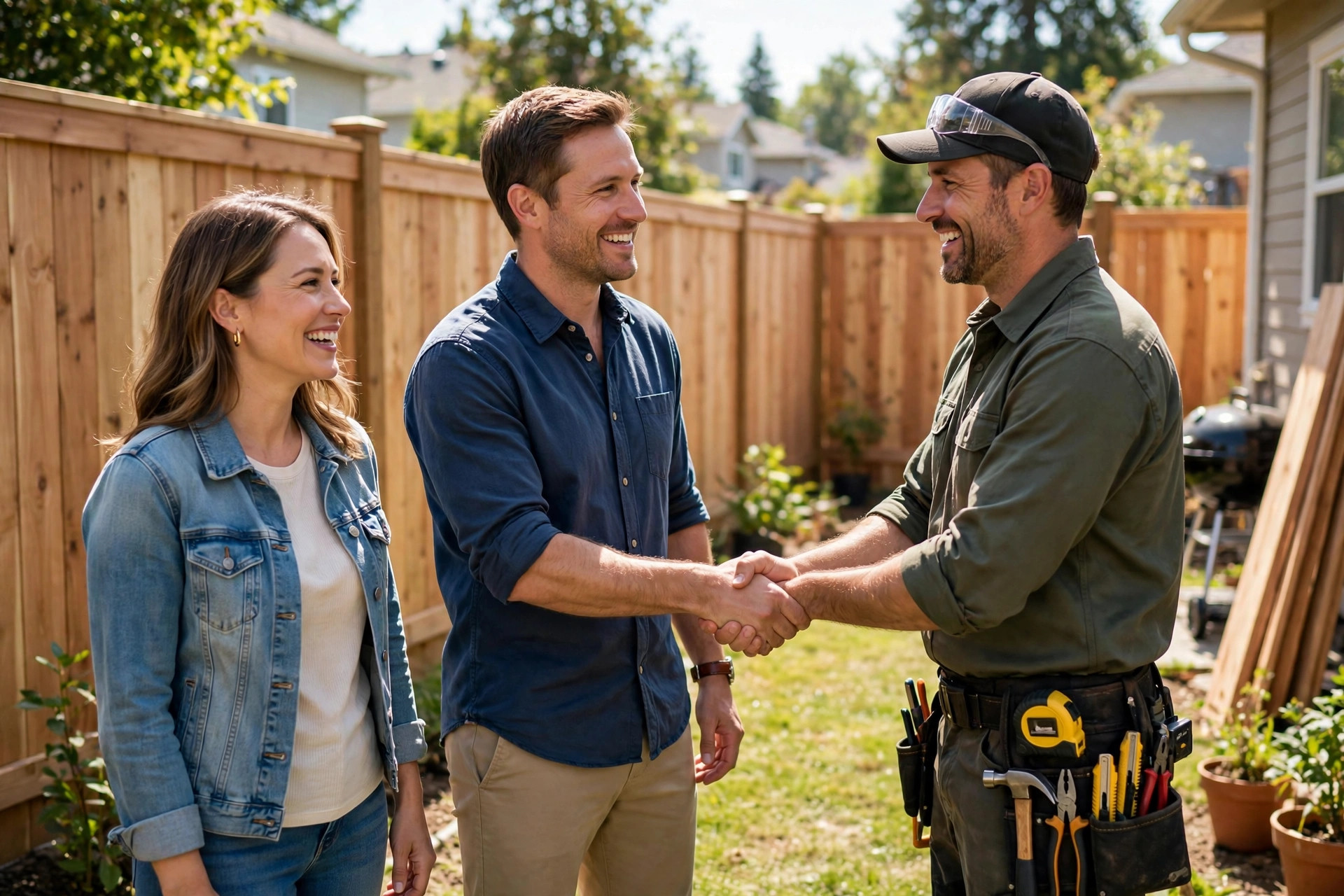
Picture the moment: the crew has packed up, the new cedar fence runs straight and clean down both property lines, and the homeowner is standing in the yard grinning at it. She keeps saying how much bigger the yard feels. That moment, the reveal, is the single most valuable minute in your marketing, and most fence companies let it pass without asking for the one thing that would multiply it: a Google review. A homeowner choosing between three fence companies reads reviews the way they would inspect the work itself, because a $7,000 fence is a trust purchase. The company with 120 recent reviews wins over the company with 14 old ones, even at a higher price. This guide covers the review system that actually works for fencing companies: asking at the walkthrough during the reveal, sending the text request with a before and after photo attached, making it a crew habit on every install, how reviews feed your map-pack visibility for high-ticket jobs, and response templates for the rare bad review.
The quick answer
- Ask at the reveal: the finished-fence walkthrough is the peak emotional moment. Ask for the review right there, in person.
- Text the link within the hour: send your direct Google review link by text with a before and after photo while the excitement is fresh.
- Make it a crew habit: the review ask belongs in the install checklist, owned by the crew lead on every job.
- Reviews drive the map pack: review count, recency, and rating are core local ranking signals for high-ticket fence searches.
- Respond to every review: replies signal an active, caring business to both Google and future customers.
- Bad reviews are manageable: a calm, specific public response often impresses readers more than the complaint hurts.
Why reviews decide fence jobs before you ever quote
A fence is not a commodity purchase. Nobody buys a $6,000 cedar privacy fence the way they buy a phone charger. Homeowners are inviting a crew onto their property for days, trusting them with property lines, neighbor relations, and HOA rules, and paying thousands for work they cannot easily undo. In that kind of purchase, social proof is the deciding factor. Study after study finds that the large majority of consumers read reviews before choosing a local business, and for high-ticket home services the number runs even higher. The practical effect: when a homeowner searches “fence company near me,” the map pack shows three businesses with star ratings attached. The 4.9-star company with 150 reviews gets the call. The 4.2-star company with 22 reviews does not, even if its work is just as good.
Reviews also compound. Google’s local ranking weighs review quantity, recency, and rating, which means the company that collects reviews steadily pulls away from the company that collects them sporadically. Two fence companies can do identical work, and the one with the review system will rank higher, get more calls, and close at higher prices, because trust lets you charge for it. Reviews are not a vanity project. For a fence company they are a ranking asset and a pricing asset at the same time.
The reveal: ask at the walkthrough
Timing is everything in review generation, and fencing has a perfect moment built into every job: the final walkthrough, when the homeowner sees the finished fence for the first time. They are delighted, relieved, and grateful, often all three at once. Asking then is not awkward. It is natural, because you are asking at the exact moment they are thinking about how happy they are.
The ask should come from the crew lead or the owner, face to face, with a simple script: “We are really proud of how this turned out. Most of our new customers find us through Google reviews from folks like you. Would you be willing to leave us one? I will text you the link, it takes about a minute.” Then send the text before you leave the property. Do not say “whenever you get a chance,” because chance never comes. The text goes out within the hour, while the fence is still the most exciting thing in their day. Companies that systematize this ask routinely collect reviews from a third or more of their jobs. Companies that leave it to memory collect almost none.
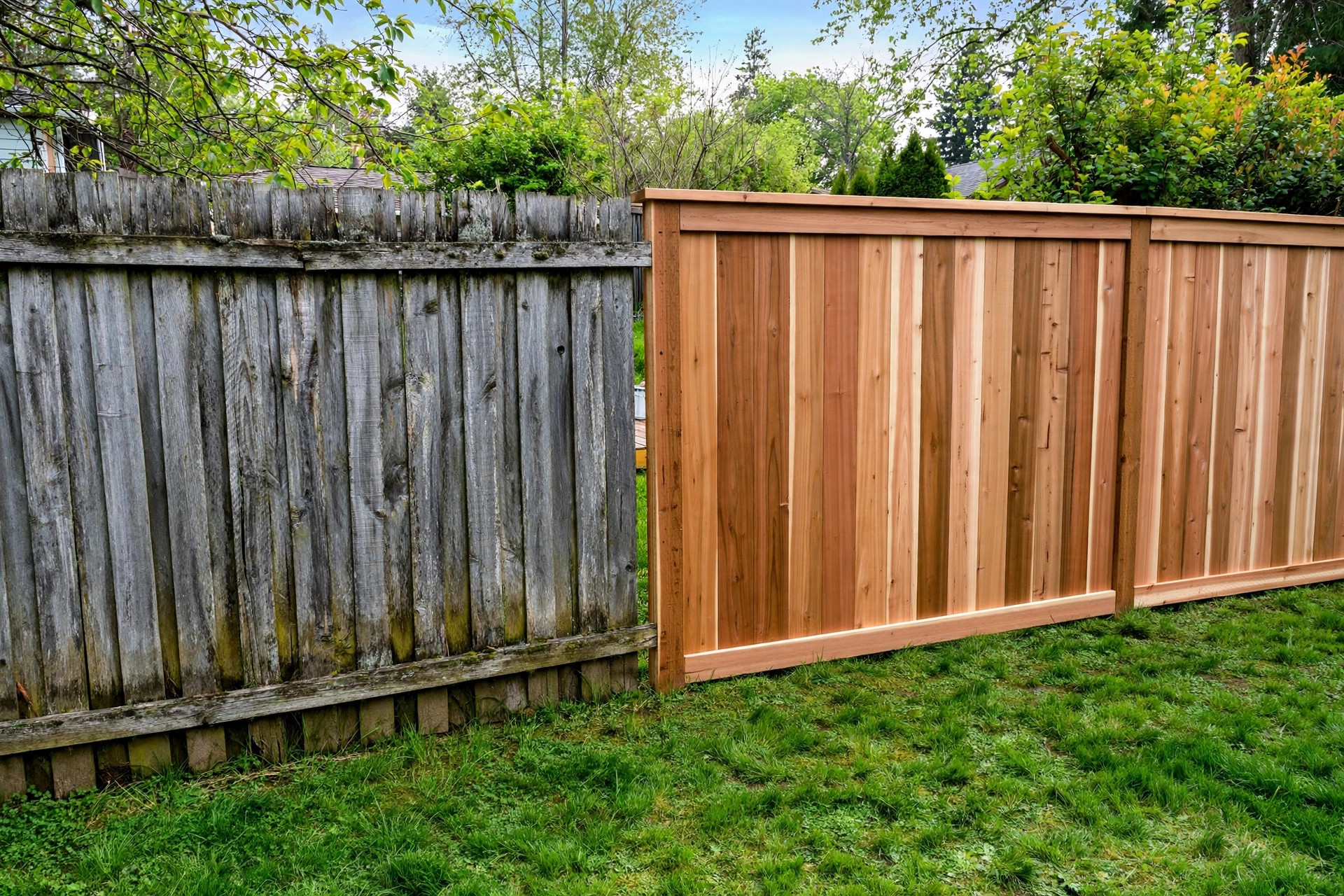
The before and after is your best marketing asset. Attach it to the review request text.
The text request with the before and after photo
The text itself matters as much as the timing. A bare link gets ignored. A personal message with a photo gets opened, smiled at, and acted on. The formula: thank them by name, attach the before and after photo your crew took, include the direct Google review link (not a link to your homepage, not a link to Google search, the one-tap review link from your Business Profile), and keep it short.
A template that works: “Hi [Name], this is [Crew Lead] from [Company]. Here is your fence before and after, it came out great. If you have a minute, a Google review from you helps our crew more than anything: [link]. Thank you again for trusting us with the yard.” The photo does heavy lifting here. It reminds them of the transformation, it gives them something to show the family, and it makes the review feel like completing the story rather than doing you a favor. Take before photos on every job as a matter of policy, because without the before shot the after shot loses half its power.
Make it a crew habit, not an office task
Review generation fails when it lives with “the office,” because the office was not there for the reveal. It has to live with the crew. Add the review ask to the job completion checklist, right after final cleanup and the walkthrough: photos taken, walkthrough done, review text sent. Make the crew lead the owner of the step and track it like any other job metric. Some companies tie a small bonus to review count per crew, which works, but even without incentives, visibility works: post the monthly review count per crew in the shop and let pride do the rest. The crews doing beautiful work deserve the public credit, and the habit takes thirty seconds once it is routine.
How reviews feed map-pack visibility for high-ticket jobs
When someone searches “cedar fence installation” or “fence company near me,” Google shows the map pack: three businesses, with ratings, review counts, and photos. For high-ticket searches, that pack is the entire shortlist. Ranking there depends on relevance, distance, and prominence, and reviews are the biggest lever you control inside prominence. More reviews, recent reviews, and detailed reviews that mention fences, materials, and neighborhoods all help.
Recency matters more than most contractors realize. A company with 200 reviews but nothing in the last six months looks dormant next to a company with 90 reviews and twelve from the last month. Google and customers both read freshness as “this business is active and trusted right now.” That is why the per-job habit beats the occasional review drive: it produces a steady stream that never goes stale. Also encourage detail naturally. When you text the request, you can add “mentioning the cedar fence or our crew by name helps other homeowners find us.” Reviews that name the service and the crew read as authentic and reinforce exactly the keywords you want to rank for. For the full local visibility playbook, see our Google Business Profile optimization for contractors guide.
| Ranking signal | Why it matters | How your system produces it |
|---|---|---|
| Review quantity | More reviews than nearby competitors signals prominence to Google | The per-job ask turns every install into a review opportunity |
| Review recency | Fresh reviews tell Google and customers the business is active right now | Steady installs produce a continuous stream, so the profile never goes stale |
| Star rating | The rating shows directly in the map pack and filters who gets the click | Asking at the peak satisfaction moment skews ratings upward, honestly earned |
| Review content | Mentions of fences, materials, and neighborhoods reinforce relevance | The text template nudges customers to mention the project and the crew |
| Owner responses | Replies signal an engaged business to both Google and readers | The 48-hour response rule keeps every single review answered |
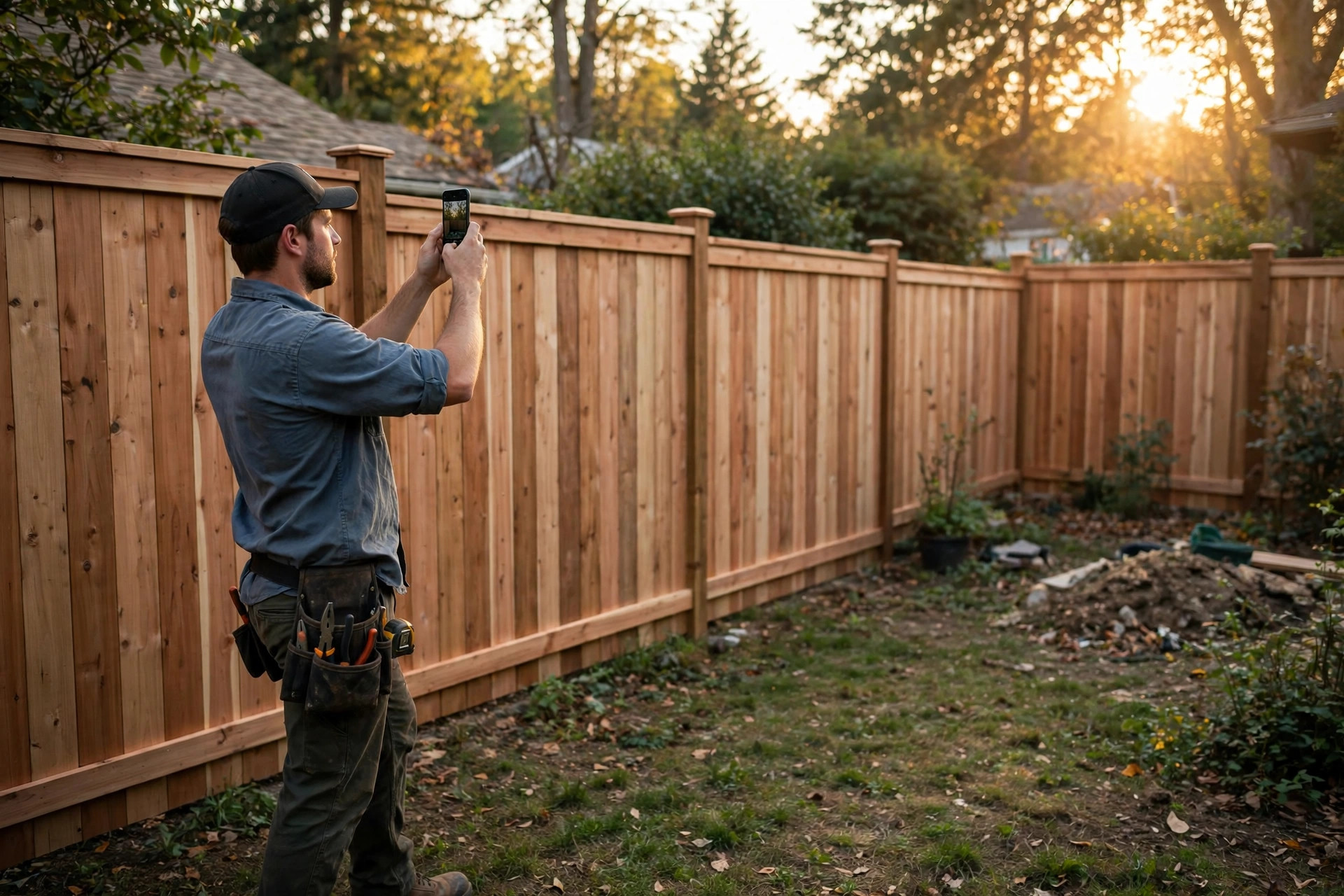
Photo documentation on every job feeds the review request, the portfolio, and the map-pack listing all at once.
Responding to reviews: the good and the rare bad one
Respond to every review, positive and negative, within a couple of days. Responses are public, and future customers read them as evidence of how you treat people. For positive reviews, be specific and human: thank them by name, mention the project (“glad the cedar turned out the way you pictured it”), and sign with your name. Specific responses show real engagement, and they subtly repeat your keywords for Google.
Bad reviews are rare for companies that do good work, but they happen: a miscommunication about the property line, a gate that needed adjusting, a neighbor dispute that was never really yours. The template is calm, specific, and offline-bound: “Thank you for the feedback, [Name]. We take this seriously. We adjusted the gate the same week you called, and I would like to make sure everything is right. Please call me directly at [number], [Your Name], Owner.” Never argue, never blame, never discuss money publicly. Readers of review pages consistently say a thoughtful owner response to a bad review increases their trust, because it shows what happens when something goes wrong. One handled complaint can sell more fences than ten five-star reviews. Our guide to responding to negative Google reviews walks through the exact approach.
Your rollout checklist
Start with the next job on the schedule.
- 1Get your direct review link. Copy the one-tap review link from your Google Business Profile and shorten it. This is the only link you ever send.
- 2Mandate before photos on every job. Crew takes before shots on arrival. No before photo, no after photo pairing later.
- 3Script the walkthrough ask. Crew lead asks in person at the reveal, then sends the text before leaving the property.
- 4Write the text template. Thank by name, attach the before and after photo, include the direct link, keep it under a minute of effort.
- 5Add it to the job completion checklist. Photos, walkthrough, review text sent. The crew lead owns it like any other step.
- 6Set a 48-hour backup nudge. If no review appears, one polite follow-up text. Then stop. Never badger.
- 7Respond to every review within days. Specific, human replies to positives; calm, offline-bound replies to negatives.
- 8Track reviews per crew monthly. Post the numbers in the shop. Celebrate the crews whose work earns public praise.
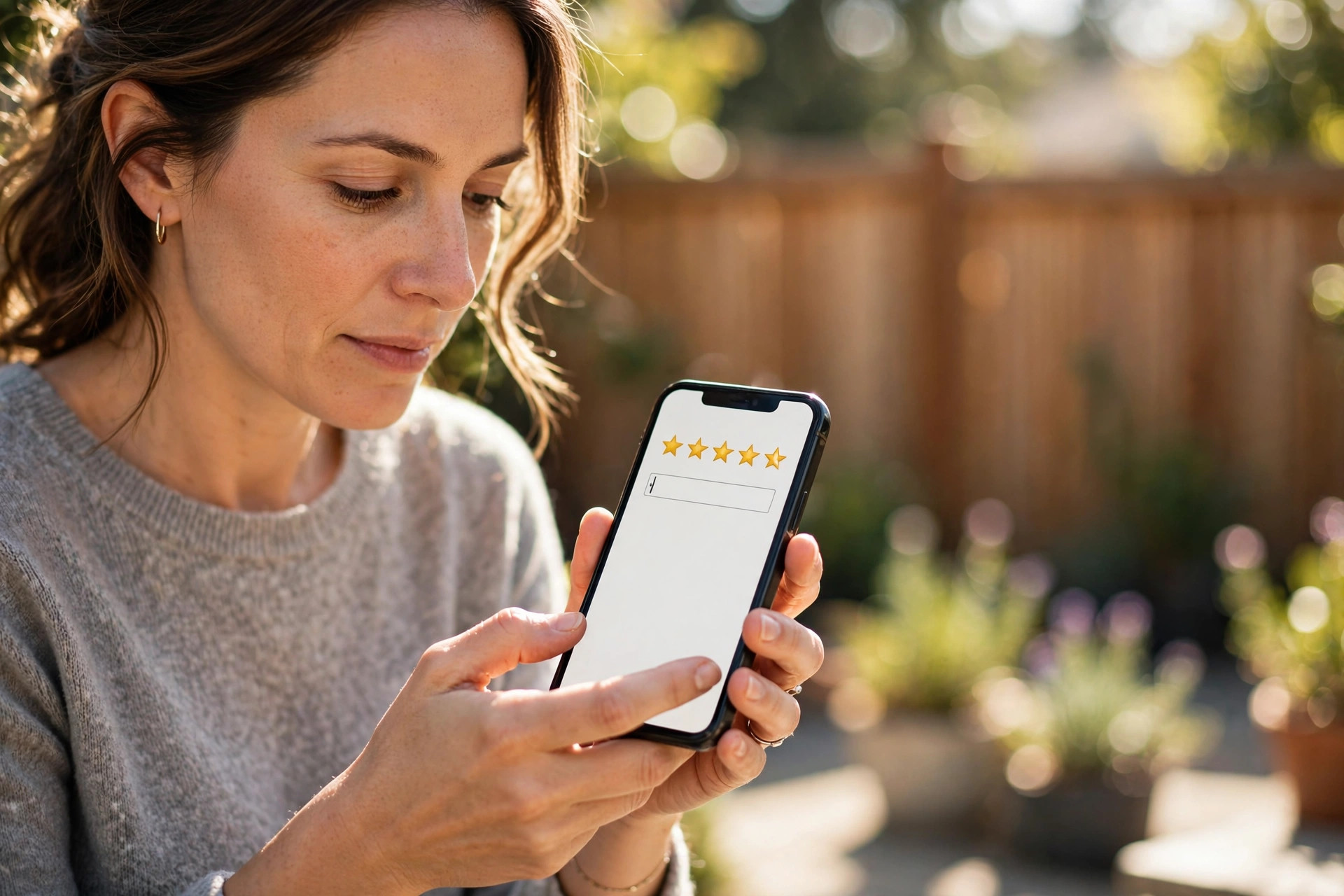
One minute of effort from a happy homeowner becomes the trust signal that wins your next ten jobs.
Frequently asked questions
When is the best time to ask a fencing customer for a review?
At the final walkthrough, the moment they see the finished fence. That is the peak of their satisfaction. Ask in person, then text the direct review link before you leave the property, while the excitement is fresh.
Should I offer incentives for reviews?
No. Google prohibits review gating and paid reviews, and incentives produce generic reviews that help less. Earn reviews with great work and a well-timed ask. A small crew bonus tied to review count is fine, since it rewards the team, not the reviewer.
How many reviews does a fence company need?
There is no magic number, but in most markets the map-pack leaders have 100 or more with a steady flow of recent ones. What matters most is the trend: a company adding 4 to 8 reviews a month will pass a stagnant competitor within a year.
What should the review request text say?
Thank them by name, attach the before and after photo, and include your one-tap Google review link. Keep it short and personal, from the crew lead or owner, and send it within an hour of the walkthrough.
How do I respond to a bad review?
Reply calmly and publicly within a couple of days: thank them, show you take it seriously, mention what you already did to fix it, and invite them to call you directly. Never argue or assign blame in public. Future customers judge you by the response, not just the complaint.
Do reviews really affect Google Maps rankings?
Yes. Review quantity, recency, rating, and keyword-rich content are core signals in local ranking. For high-ticket searches like fence installation, the map pack is the shortlist, and reviews are the most controllable factor in getting there.
What if a customer never leaves the review?
Send one polite follow-up text after 48 hours, then let it go. Chasing annoys people and can backfire. Focus the energy on making the ask a habit on every job, so the volume comes from consistency, not pressure.
Turn every finished fence into your next ten jobs
Digital Hayder builds review systems for fencing companies: walkthrough scripts, automated text requests with before and after photos, crew checklists, and response templates that protect your reputation. Tell us about your company and we will set up the system around your crews, your jobs, and your market.
Contact Us