The forms are stripped, the control joints are crisp, the new driveway is curing in the morning sun, and the homeowner keeps walking out to look at it. That driveway will sit in front of their house for thirty years, and every neighbor who walks past will ask who poured it. Right now, in that moment of pride, is when a Google review takes sixty seconds to earn. An hour later the moment is gone, and a week later the homeowner has forgotten your company name. Concrete contractors face a peculiar review problem: the work is spectacular but infrequent. A residential crew might pour a few driveways and patios a month, and commercial jobs stretch for weeks with one client at the end. Fewer jobs means fewer chances to ask, which makes every single ask count double. This guide covers the review system built for how concrete work actually happens: asking right after the final walkthrough while the concrete looks new, texting the direct review link within the hour, systematizing the ask per crew, responding the right way, using reviews to support commercial bids, and what to do about review droughts between big jobs.
The quick answer
- Ask at the final walkthrough: while the driveway or patio looks brand new is the peak moment. Ask in person, every time.
- Text the link within the hour: the direct Google review link by text, with a photo of the finished work, before the excitement fades.
- Systematize per crew: the review ask goes on the job completion checklist, owned by the foreman on every pour.
- Respond to everything: specific replies to positives, calm professional replies to negatives, all within a few days.
- Reviews support commercial bids: general contractors and property managers check your profile before awarding work.
- Bridge the droughts: long commercial jobs need a mid-project and post-project ask plan so months never pass without a review.
Why reviews hit different for concrete contractors
Concrete is a high-trust, high-ticket trade with a long memory. A residential driveway or patio runs $5,000 to $15,000. A commercial slab or parking lot runs far higher. Homeowners know that bad concrete cannot be patched pretty, it gets torn out and repoured, so they research contractors the way they would research a surgeon. Review count, rating, and recency on your Google Business Profile are the first things they check, and the map pack is where the comparison happens. The contractor with 90 recent reviews beats the contractor with 18, at equal or higher prices.
The commercial side raises the stakes further. General contractors, developers, and property managers awarding flatwork routinely check a concrete contractor’s online reputation before the bid even gets read. A thin or stale review profile reads as a small or unreliable operation, no matter how good your work is. Reviews are your pre-qualification package, working while you sleep. And because concrete jobs are few and large, each review carries unusual weight: ten great reviews from $10,000 jobs tell a stronger story than a hundred reviews from $80 service calls.
Ask at the final walkthrough, while it looks new
Fresh concrete has a short window of maximum beauty. The day the forms come off and the surface is clean, the work looks its absolute best, and the homeowner is at peak satisfaction. That is the moment. Build the ask into the final walkthrough itself: walk the slab together, point out the details you are proud of (the joint layout, the finish, the drainage slope), and then ask directly.
The script is simple and honest: “This came out really clean. Most of our work comes from neighbors who find our Google reviews. Would you leave us one? I will text you the link right now, it takes about a minute.” Ask in person, then send the text before you leave the site. The in-person ask gets the commitment. The immediate text captures it before life intervenes. Crews that do this on every residential job typically convert a third or more of customers into reviews. Crews that “mention it sometime” convert almost none. For the broader local visibility picture, pair this with our Google Business Profile optimization for contractors guide.
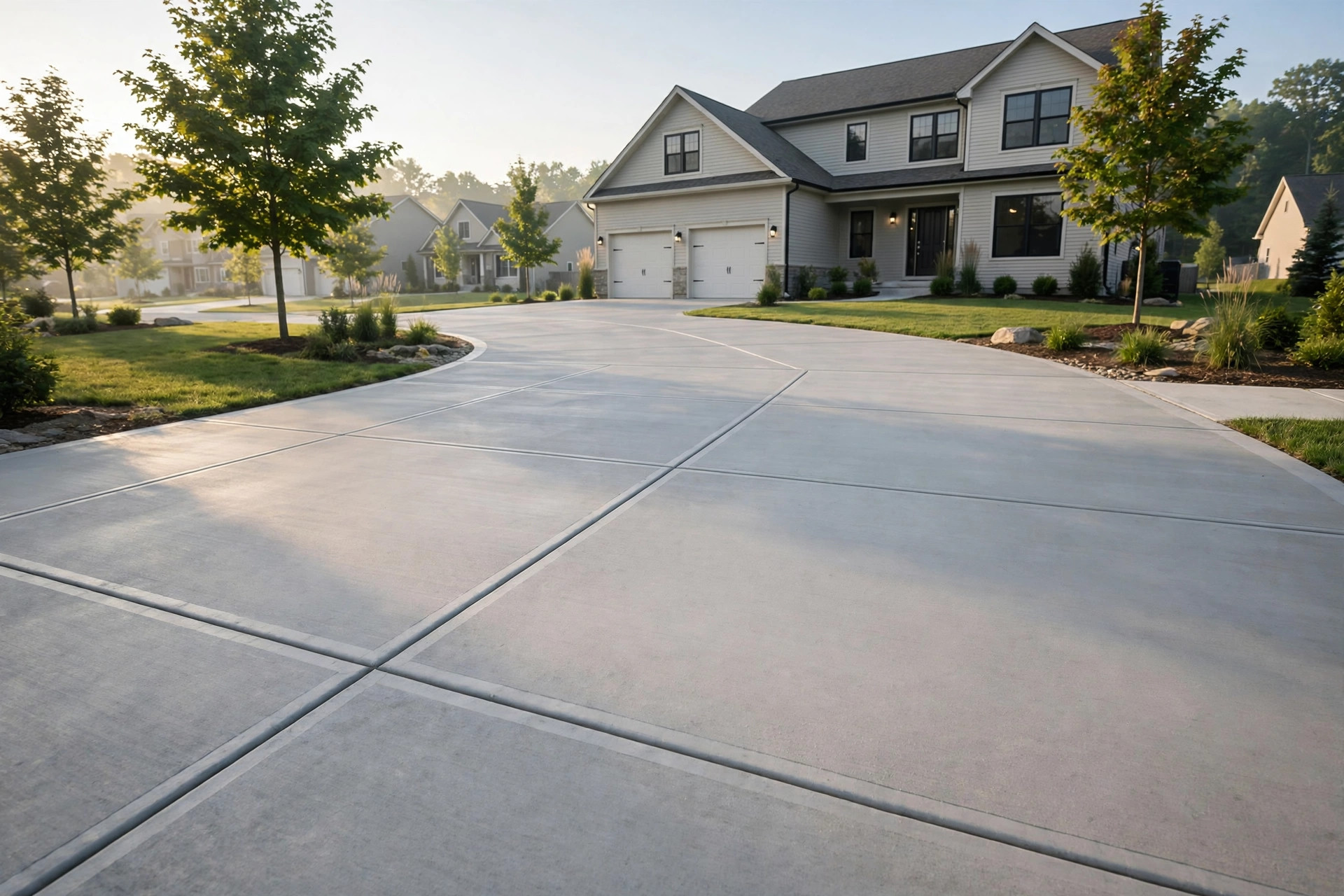
Fresh concrete looks its best on day one. That is the day to ask, with a photo of the finished work attached.
The text request: link, photo, and perfect timing
Send the text within the hour of the walkthrough. The message should be personal, short, and visual: thank them by name, attach your best photo of the finished pour, and include the one-tap Google review link from your Business Profile. Never send a link to your homepage or a general Google search. Every extra tap loses reviewers.
A template that works for concrete: “Hi [Name], this is [Foreman] from [Company]. Your [driveway/patio] is curing nicely, here is how it looked this morning. If you have a minute, a Google review helps our crew more than anything: [link]. Thanks for trusting us with the project.” The photo matters enormously for concrete because the visual transformation is dramatic: cracked old slab versus crisp new work. Take before photos at every job as policy. For decorative work like stamped or stained concrete, the photo practically writes the review for them, because homeowners love showing off a patio that looks like stone.
Systematize it per crew
Review collection dies when it depends on memory, so it goes on the job completion checklist next to final cleanup and the walkthrough: before photos taken, walkthrough completed, review text sent. The foreman owns it. Track reviews per crew monthly and post the numbers where the crews see them. A little friendly competition between crews does more than any memo. If you run both residential and commercial crews, set expectations separately: residential crews should produce reviews steadily, while commercial foremen get a different playbook for long jobs, covered below.
Response best practices
Respond to every review within a few days, positive or negative. Your responses are public sales copy that future customers read closely. For positive reviews, be specific: thank them by name, mention the project (“glad the stamped patio turned out the way you pictured it for the summer”), and sign with your name. Specific responses prove a real person is paying attention, and they naturally repeat the service keywords that help local ranking.
For negative reviews, stay calm, brief, and offline-bound. Concrete complaints are usually about scheduling, price surprises from change orders, or finish details. A good response: “Thank you for the feedback, [Name]. We stand behind our work and I want to make this right. Please call me directly at [number] so we can walk the slab together, [Your Name], Owner.” Never argue technical details in public, never blame the customer, and never discuss money. Readers consistently report that a professional owner response to a complaint increases their confidence, because it shows how problems get handled. See our guide to responding to negative Google reviews for the full approach.
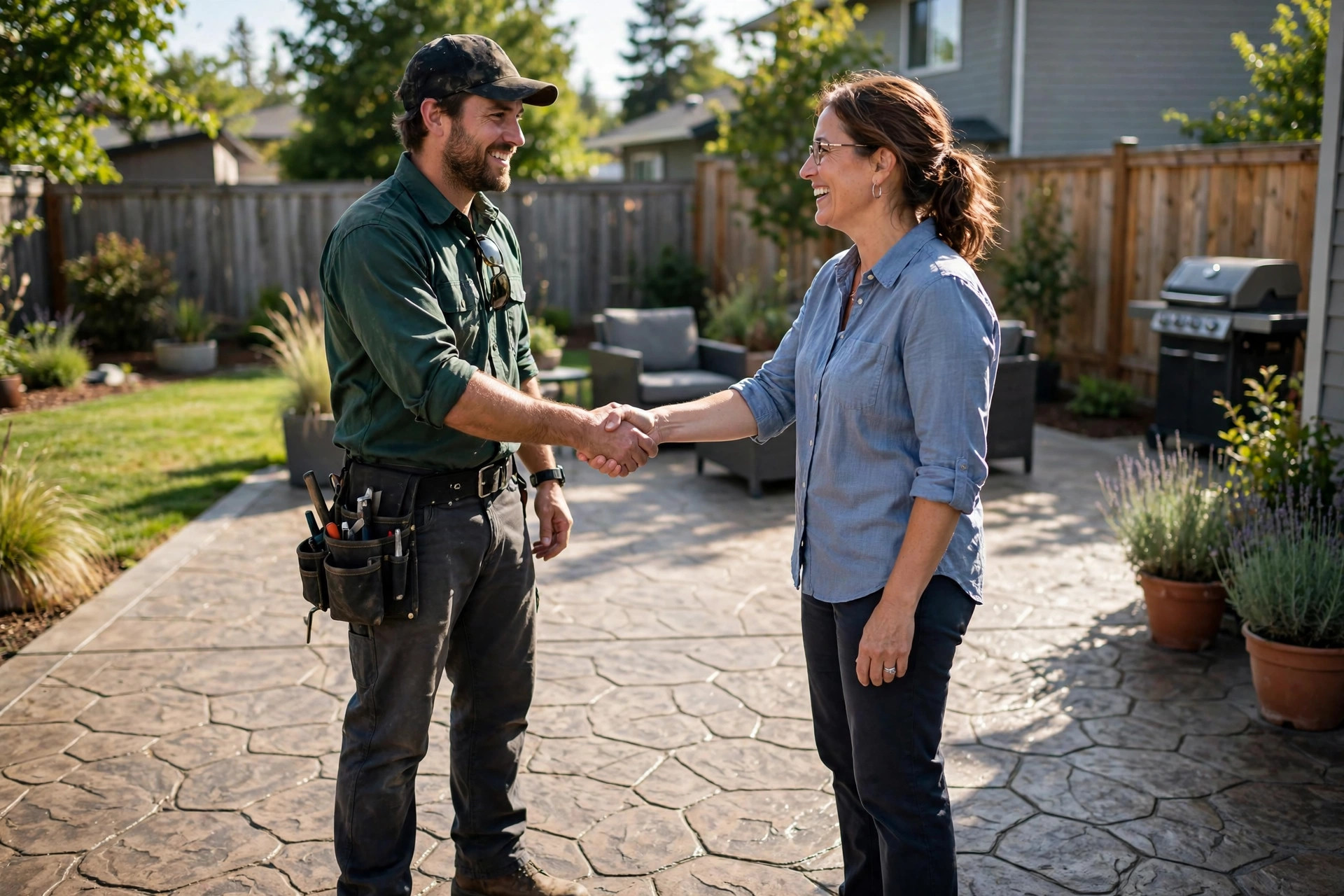
The walkthrough is the handshake moment. The review ask belongs right beside it.
How reviews support commercial bids
Residential reviews win homeowners. Commercial reviews, and a strong overall profile, win bids. When a general contractor is choosing between concrete subs for a retail slab or a parking lot, your Google profile is part of the vetting, alongside your insurance certs and references. A profile with dozens of recent reviews describing on-time, spec-accurate work reads as a safe pair of hands. A profile with eleven reviews from three years ago reads as a risk.
You cannot ask a GC for a Google review the same way you ask a homeowner, but you can ask. At project closeout, the project manager or superintendent who is happy with your work will often leave one if asked directly and given the link. Frame it around the crew: “Our guys worked hard to hit your schedule. A quick Google review mentioning the project helps us keep winning work like this.” Also ask your residential-savvy commercial clients, like property managers and HOA boards, who are comfortable leaving public reviews. Even a few commercial-flavored reviews (“poured our 40,000 square foot warehouse slab on schedule”) transform how your profile reads to the next bidder.
Surviving review droughts between big jobs
The structural problem for concrete contractors is the gap: a six-week commercial pour produces exactly one review opportunity at the end, and a slow winter produces none. A profile that goes four months without a review looks dormant to Google and to customers. The fix is a drought plan with three parts.
First, ask at project milestones on long jobs, not just at the end. When the slab is poured and the GC is happy, that is a review moment, even if punch list work remains. Second, mine your supplier and partner relationships: the decorative concrete supplier whose product you showcase, the outdoor contractor who refers you work, and the realtor who recommends you to buyers can all leave legitimate reviews of working with you. Third, keep a small backlog of past happy customers you never asked. A polite text months later, “Hi [Name], hope the driveway is holding up great. If you have a minute, a Google review from last spring’s project would mean a lot: [link],” recovers reviews you left on the table. Drip two or three of these a month during slow periods and the drought disappears.
| Job type | When to ask | Who to ask |
|---|---|---|
| Residential driveway or patio | Final walkthrough, text within the hour | The homeowner, in person from the foreman |
| Decorative or stamped work | Final walkthrough, with the finished-work photo attached | The homeowner, the photo does half the selling |
| Commercial flatwork | At the slab pour milestone and again at closeout | The project manager or superintendent |
| Long multi-week projects | At each major milestone, not just at the end | Whoever is happiest with progress that week |
| Past jobs never asked | Slow months, two or three texts per month | Homeowners from the past year, with a photo reminder |
Your rollout checklist
Start with the next pour on the schedule.
- 1Get your direct review link. Copy the one-tap review link from your Google Business Profile. This is the only link you ever send.
- 2Mandate before photos on every job. Foreman takes before shots on arrival. The transformation photo is your best review-request asset.
- 3Script the walkthrough ask. Foreman asks in person at the final walkthrough, then sends the text before leaving the site.
- 4Write the text template. Thank by name, attach the finished-work photo, include the direct link. Under a minute of customer effort.
- 5Put it on the job checklist. Before photos, walkthrough, review text sent. The foreman owns it on every pour.
- 6Build the commercial ask. At project closeout, ask the GC or project manager directly, framed around the crew and the schedule you hit.
- 7Run the drought plan. Milestone asks on long jobs, partner reviews, and a slow drip of texts to past happy customers in quiet months.
- 8Respond to every review within days. Specific replies to positives, calm offline-bound replies to negatives, tracked monthly per crew.

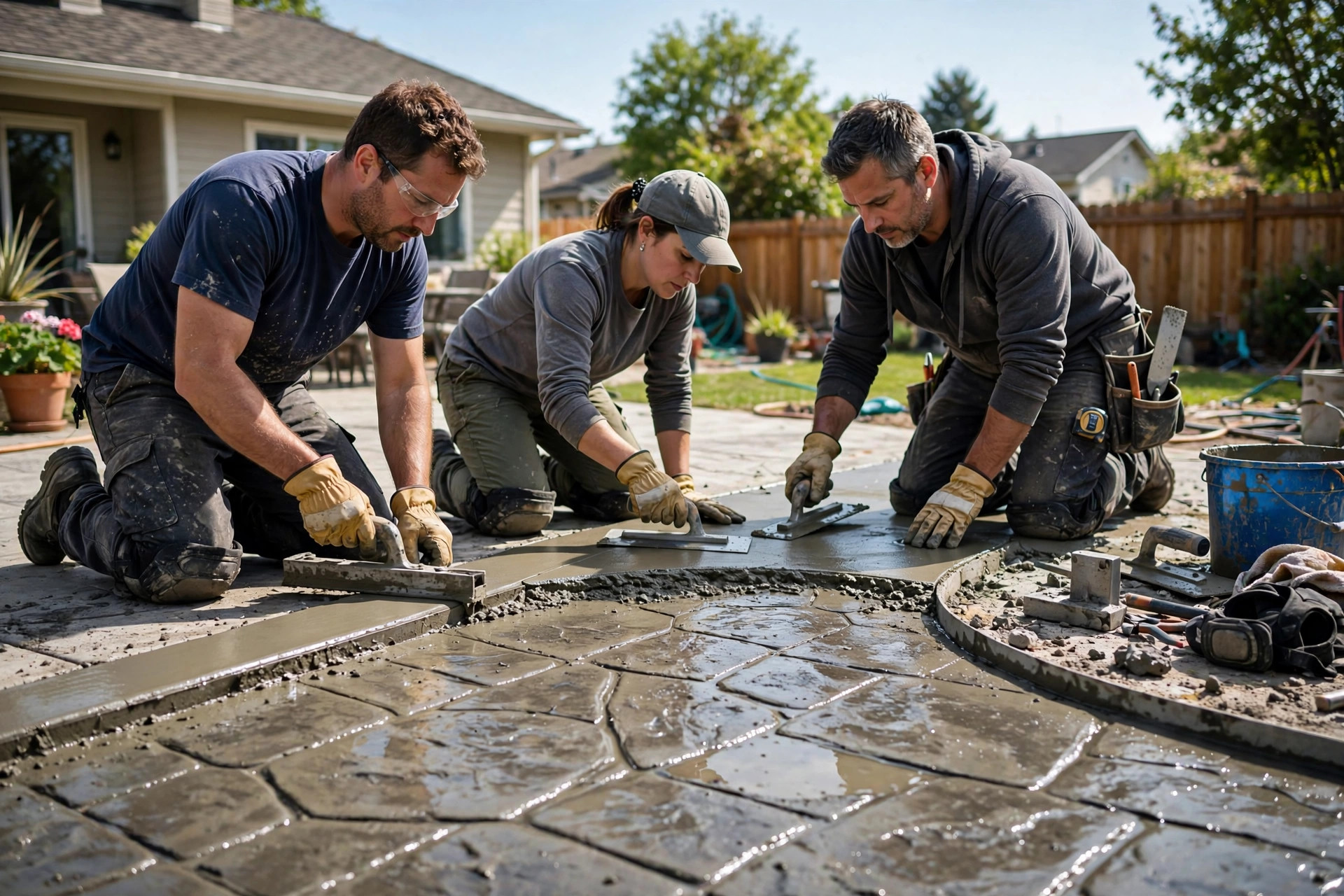
The last sweep before the walkthrough is the last chance to make the work, and the review ask, perfect.
Frequently asked questions
When should a concrete contractor ask for a review?
At the final walkthrough, while the work looks brand new. Ask in person, then text the direct Google review link within the hour with a photo of the finished pour. For long commercial jobs, also ask at major milestones like the slab pour.
How do we get reviews during slow months with few jobs?
Run the drought plan: ask at milestones on long jobs, request reviews from suppliers and referral partners, and text a few past happy customers each month that you never asked. Two or three a month keeps the profile fresh.
Can we ask general contractors for Google reviews?
Yes. At project closeout, ask the project manager or superintendent directly and give them the link. Frame it around your crew’s performance on schedule and quality. Even a few commercial reviews transform how your profile reads to the next bidder.
Should we offer discounts for reviews?
No. Google prohibits incentivized reviews, and they produce generic write-ups that help less. Earn reviews with great work and a well-timed ask. Crew bonuses tied to review count are fine, since they reward your team rather than paying the reviewer.
How many reviews does a concrete contractor need?
In most markets the leaders have 80 to 150 with a steady stream of recent ones. Because concrete jobs are large, each review carries more weight than in high-volume trades, so consistency matters more than raw count.
What is the best response to a negative review?
Reply within a few days: thank them, show you take it seriously, avoid technical arguments and money talk in public, and invite them to call you directly. Future customers judge you more by the response than by the complaint.
Do reviews really help win commercial bids?
Yes. General contractors and property managers check online reputation during vetting. A strong, recent review profile signals reliability before they ever read your bid, and it costs nothing to build beyond the habit.
Turn every pour into your next bid advantage
Digital Hayder builds review systems for concrete contractors: walkthrough scripts, automated text requests with finished-work photos, per-crew checklists, commercial closeout asks, and drought-proofing for slow months. Tell us about your crews and we will set up the system around your jobs, residential and commercial.
Contact Us