A couple buying their first home opens Google and searches for an agent in the neighborhood they are moving to. Two listings appear side by side. One shows 212 reviews full of street names, school mentions, and stories about bidding wars won. The other shows 11 reviews, the newest one eight months old. The couple will never compare commission splits or marketing plans. They will pick the agent who looks like they already know their future neighborhood inside out, and that decision is made entirely on the review profile. For a real estate agent, Google reviews are not a nice extra. They are the audition every buyer and seller watches before they ever call you. This guide shows how to build that profile transaction by transaction: the closing-day ask, follow-ups that mention the actual home and neighborhood, review links placed everywhere your clients already look, and responses that turn your review page into a showcase of local expertise.
The quick answer
- Why it matters: research on local consumer behavior keeps finding that close to 9 in 10 people read online reviews before choosing a local business, and Google is where most of that reading happens.
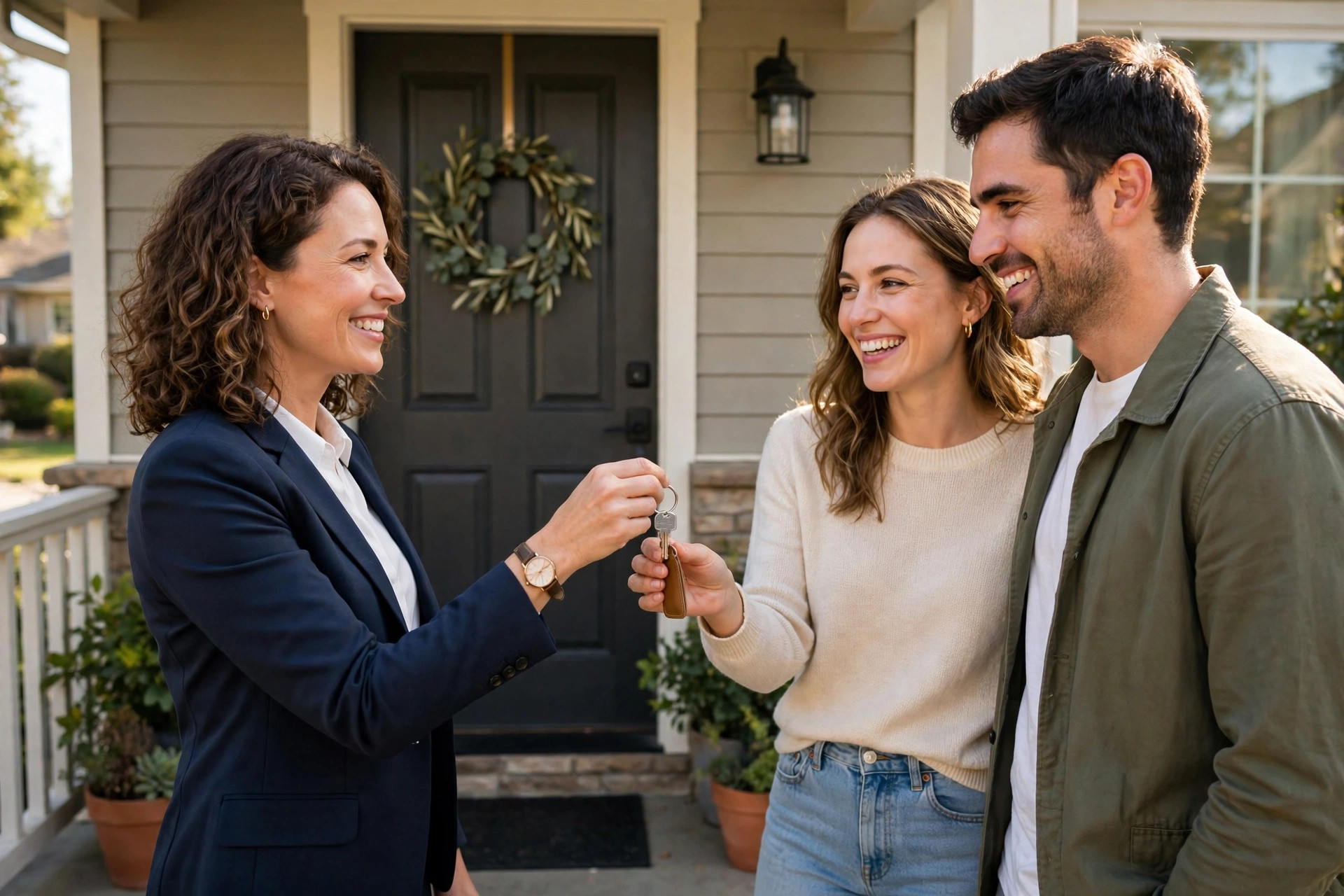
- The single highest-converting moment is closing day, when the client is holding the keys and feeling grateful. Ask in person, on the spot, every time.
- The benchmark to aim for: 100 or more Google reviews, a 4.8 star average or better, and at least 2 to 4 fresh reviews every month.
- Personalize every follow-up by naming the property, the street, or the neighborhood. Generic requests get ignored; specific ones get answered.
- Respond to every review within 48 hours in a way that shows future buyers you know the area: name the neighborhood, the win, the detail.
- Never buy, fake, or filter reviews. Google removes them, profiles get suspended, and one exposed shortcut costs more trust than a hundred honest reviews build.
Why reviews decide which agent gets the call
Real estate is a referral business, but referrals now get verified online before they convert. A past client tells a friend “use my agent,” and the friend’s next move is to Google your name. If the profile that comes up is thin, the referral cools. If it is full of recent, detailed reviews that sound like real transactions, the referral books a call. The same thing happens with cold searches. Buyers and sellers moving to a new area search for agents by neighborhood, and your review count, rating, and recency are visible before a single word of your website loads. In a business where one transaction pays thousands in commission, each tap on your profile carries enormous value.
Reviews also shape how Google ranks you. Local rankings weigh prominence signals, and review count, average rating, review recency, and the pace of new reviews all feed into how prominent your profile looks. An agent with 40 reviews from two years ago can rank below a competitor with 150 recent ones even when both serve the same area. The reviews themselves act as content too: when clients mention neighborhoods, schools, and property types, your profile starts matching the exact phrases future clients type into search.
What buyers and sellers actually read in your profile
Searchers scan your profile in seconds, and they read four things. First, the total count. An agent with 200 reviews reads as established; one with 9 reads as a gamble, no matter how good the headshot is. Second, recency. Reviews from the past few weeks tell a buyer you are actively closing deals right now. A profile whose newest review is from last spring raises a quiet doubt about whether you are still in the business. Third, the words inside the reviews. Clients look for proof you have handled their situation: first-time buyers, relocations, bidding wars, tough negotiations, a sale above asking. A review that says “she got us the house on Elm Street after three lost bids” sells the next bidding-war client better than any slogan on your website. Fourth, your responses. An agent who replies to reviews by name, mentioning the neighborhood and the story, looks like a local expert who cares. Silence looks like indifference.
The honest benchmark for a real estate agent
Set real targets and measure against them. As working benchmarks, aim for at least 100 Google reviews before you treat your profile as strong, a 4.8 star average or higher, 2 to 4 new reviews landing every month, and a 100 percent response rate with replies posted within two days. Agents are more seasonal than most local businesses, so expect slower months and faster ones, and plan your asks around your closing calendar. Check the top agents in your farm area, note the strongest profile, and set your count target above it. If the dominant agent in your zip code has 180 reviews, your goal is 250.
The closing-day ask: your highest-converting moment
No other moment in the transaction matches closing day. The client has the keys, the stress is over, and they are grateful to the person who got them through it. That gratitude is the fuel of reviews, and it is strongest in person, in the room, on the day. The mistake most agents make is waiting. They plan to send a nice email next week, and next week the client is buried in moving boxes and the feeling has faded. Ask on closing day, every time, before you leave the room.
How to ask without sounding awkward
The ask works when it is short, honest, and gives the client a reason. Try this: “Most of my new clients find me through Google reviews, so they matter a lot to my business. If you were happy with how this went, a quick review would mean the world to me. I can text you the link right now so it takes thirty seconds.” Three things make this work. It explains why reviews matter to you, which gives the client a reason beyond politeness. It promises the link, which removes the “I would not know how” objection. And it happens while they are holding the keys. Practice the exact wording until it sounds like you, not a script. The agents who feel awkward asking are imagining rejection, but clients who just bought a home are almost always glad to help; they simply never think of it on their own.
Ask buyers and sellers the same way, and ask on every closing, not only the smooth ones. The difficult transaction you rescued often produces the most detailed, most convincing review, because the client felt the difference you made. If a closing genuinely went badly and the client is upset, read the room and skip the ask, then follow the recovery steps later in this guide instead.

Ask on closing day while the keys are still in their hand. Gratitude is strongest in person.
Turn the first month into a review stream
The closing-day ask captures the clients who act immediately. A second wave of reviews comes from clients who needed a nudge after the move settled. Plan for both. Your post-close communication should carry the review request three or four times in the first month, each time in a different form, so it feels like a natural part of your follow-up instead of repeated begging.
Personalized follow-ups that name the home and the neighborhood
Generic review requests get deleted. Specific ones get answered, because the client feels seen. Three days after closing, send a short text or email that references the actual property: “Hope the first nights in the Maple Street house are going well. When you have a quiet minute, a Google review about your experience would help me enormously. Here is the direct link.” A week or two later, a handwritten note or a short video message works the same way: mention the neighborhood, the thing you remember about their search, the win you shared. “Still thinking about how we beat four other offers on that Elm Street place” turns a request into a shared memory, and shared memories get reviews.
This personalization habit also improves the reviews you receive. When your follow-up mentions the street, the neighborhood, or the situation, clients echo those details in their reviews. Those details are exactly what future buyers search for, and they are what make your profile read like proof of local expertise instead of a pile of generic five-star notes. The same principle works across local service businesses; our guide on getting more Google reviews for a dental practice shows how naming the specific service in the ask produces reviews that sell the next identical job.
QR codes in closing gifts
Closing gifts are opened, photographed, and remembered, which makes them the best physical carrier for a review request. Put a small, well-designed card in the gift box or basket: a thank you on one side, a large QR code on the other that opens your Google review page directly. One scan should land on the review screen with your business already selected, no searching, no extra taps. Test the code on both an iPhone and an Android before you print a batch.
Keep the card classy. It should look like part of a thoughtful gift, not a coupon flyer. A short line like “Your review helps other families find their way home” ties the ask to something bigger than your marketing. Some agents handwrite the clients’ names and the property address on the card, which lifts response because it feels personal rather than mass-produced. Print enough for a quarter of closings at a time so you never run out during a busy month.
Put your review link everywhere clients already look
Every request channel you control should carry one direct review link. Google generates it in your business profile settings under the option to share your review form. Shorten it with your own domain if you can, so it looks trustworthy in texts and emails. Then place it in every client touchpoint.
| Where the link lives | What to do | Why it works |
|---|---|---|
| Email signature | Add “Enjoyed working together? Leave me a Google review” with the direct link under your contact details | Every email you send for months after closing carries a quiet, repeated ask |
| Post-close email sequence | Include the link in your day-3 check-in and your 30-day “how is the house” email | Timed asks catch clients at two different peaks of satisfaction |
| Closing gift card | Large QR code opening the review page directly, tested on iPhone and Android | One scan removes every step between gratitude and the review screen |
| Text follow-ups | Send the link by text on closing day after the verbal ask, and once more a week later if no review appears | Texts get opened; the second nudge catches clients who meant to do it and forgot |
| Social media and website | Pin a post with the link and add a reviews page that embeds your best Google reviews | Public proof plus a one-click path for happy clients who follow you |
| Annual check-in | In your yearly “happy home anniversary” message, include the link for clients who never reviewed | A warm yearly touchpoint revives old asks without any pressure |
The post-close email sequence that does the asking for you
Write a short sequence once and let it run for every transaction. Day 3: a check-in text or email asking how the move is going, with the review link. Day 14: a useful message, like local service recommendations or a home maintenance tip for the season, ending with a soft ask. Day 30: a “one month in your new home” note with the direct link again. Each message should be genuinely useful first and carry the ask second, so clients read them instead of unsubscribing. Pair this with your broader follow-up; our guide to email marketing for real estate agents shows how these sequences keep past clients sending referrals for years.
Set a follow-up limit and respect it. One reminder a few days after an unanswered ask is a reminder. A third or fourth message is pressure, and pressured clients either ignore you or leave shorter, less enthusiastic reviews. Automate the sequence in your CRM so it fires on every closing without you remembering, and stop the sequence automatically the moment a review appears.
Respond to reviews like a local expert, not a receptionist
Your responses are read by future buyers and sellers far more than by the reviewers themselves. Every reply is a small advertisement for your local knowledge, and agents waste this by posting identical “thank you so much” replies fifty times. Write each response as if a buyer choosing between you and a competitor is reading it, because they are.
The five-star response that shows you know the area
Thank them by name, reference the specific transaction, and name the neighborhood. “Thank you, Maria. Getting your family into that Maple Street home, two blocks from the elementary school you wanted, was a highlight of my year. Enjoy every minute of it.” A buyer reading that learns three things: you know the streets, you listen to what families want, and your clients remember you fondly. Vary the wording on every response so your profile reads like a real person wrote it.
The four-star response
Thank them and gently address the missing star. “Thanks for the review, James. I am glad the sale on Oak Avenue went through smoothly. If anything about the process could have been better, I would love to hear it so I can improve.” Many four-star reviews hide a small frustration, a delay, a communication gap. Acknowledging it shows future clients you take feedback seriously, and some reviewers raise their rating after a thoughtful reply.
The bad review playbook for agents
Bad reviews hit agents hard because transactions are emotional and public. Reply within 48 hours, stay calm, and never argue facts in public. Acknowledge the frustration, take responsibility for the experience even when you disagree with the account, and move it offline: “I am sorry this was your experience, and I take that seriously. Please call me directly at [number] so I can understand what happened and make it right.” Never discuss commissions, contract details, or the other party in a public reply. After you resolve it privately, update your response briefly. A composed, professional reply to a harsh review impresses readers more than a dozen five-star notes. For the harder cases, including unfair and fake reviews, our playbook on how to respond to negative Google reviews walks through each scenario.
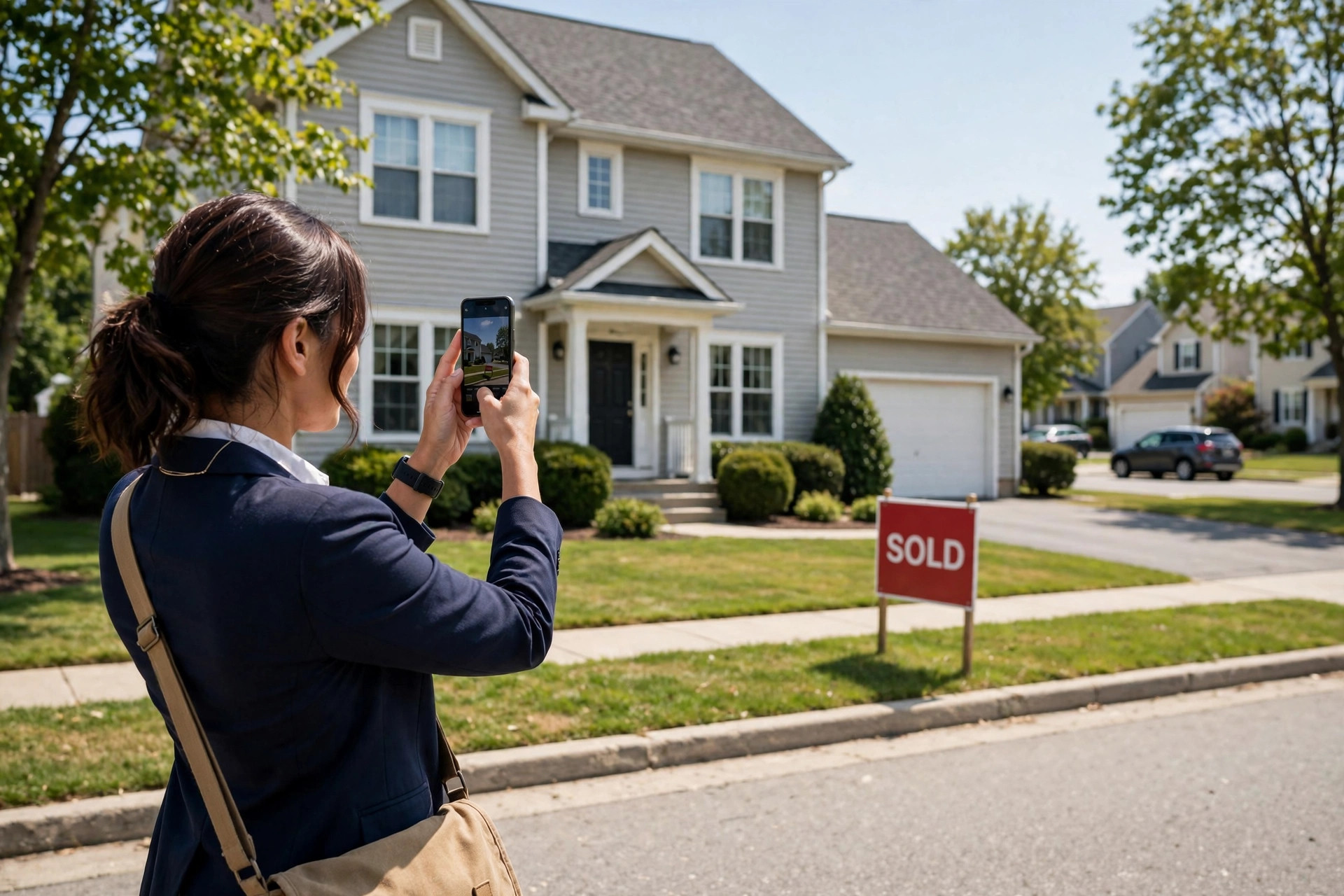
The closing-day photo is content and a review prompt in one. Send it with your link the same day.
Turn happy clients into a review habit, not a one-time push
Review generation works best as a permanent habit inside your transaction process, not as a campaign you run when your profile looks thin. Write it into your closing checklist the same way you wrote the final walkthrough: verbal ask done, link texted, gift card packed, day-3 follow-up scheduled. When your assistant or transaction coordinator owns the follow-up steps, the system survives your busiest months, which are exactly when you most need the reviews compounding.
Repurpose your best reviews everywhere. Put neighborhood-specific reviews on the matching pages of your website: the Elm Street story on your Elm Street area page, the first-time-buyer story on your buyer guide page. Quote short reviews in your listing presentations to sellers. When the same words appear on Google, on your site, and in your listing appointment, prospects start believing them before they meet you.
What can get you in trouble
A few rules are absolute, and breaking them can erase everything this guide builds. Never offer gifts, discounts, or closing credits in exchange for reviews. Never ask only the happy clients and skip the unhappy ones, a practice called review gating, which Google prohibits. Never write reviews for your own business or ask family and team members to post them. These look like shortcuts, and Google’s systems, your competitors, and your clients all notice patterns. Reviews get removed, profiles get suspended, and regulators have fined businesses for fake and paid review schemes. The honest system in this guide is slower for about a month and faster forever after.
Your 30-day implementation checklist
Do this in order. By day 30 you will have a review system that runs inside every transaction.
- 1Get your direct review link. Generate it in your Google Business Profile, shorten it with your domain or a clean short link, and test it on two phones.
- 2Write your closing-day script. Three sentences: why reviews matter to you, the promise of the link, the in-person ask. Practice until it sounds natural.
- 3Design the closing gift card. Thank you on one side, large QR code opening the review page on the other. Test the scan on iPhone and Android, then print a quarter’s worth.
- 4Add the link to your email signature. One quiet line under your contact details that rides along on every email for months.
- 5Build the post-close sequence. Day 3 check-in, day 14 useful message, day 30 “one month in” note, each carrying the link. Automate it in your CRM and stop it when a review lands.
- 6Set your targets. Check the strongest agent profiles in your farm area, set your count goal above them, and aim for 2 to 4 new reviews per month.
- 7Clear the response backlog. Reply to every existing review, newest first, naming the neighborhood and the story in each reply.
- 8Track review pace monthly. Log total reviews, average rating, and new reviews that month. When the number stalls, the ask stopped happening inside your closings.

Every reply is read by future buyers. Write each one like a local expert, not a receptionist.
Frequently asked questions
How many Google reviews does a real estate agent need?
Aim for at least 100 before you treat your profile as strong, then set your target above the strongest agent in your farm area. Just as important is recency: 2 to 4 new reviews per month keeps your profile looking active and helps it rank in local results.
When is the best time to ask a client for a review?
On closing day, in person, while the client is holding the keys. That is the peak of gratitude and the moment most likely to produce a review. Follow up with a texted link the same day and a personalized check-in a few days later for clients who did not act immediately.
Can I offer a closing gift in exchange for a review?
You can give closing gifts, but you cannot tie them to reviews. Offering anything of value in exchange for a review violates Google’s policies and can get reviews removed or your profile suspended. Give the gift freely and include the review card as a separate, no-strings ask.
How should I respond to a negative review as an agent?
Reply within 48 hours, stay calm, acknowledge the frustration without arguing facts in public, and move the conversation offline with your direct phone number. Never discuss commissions or contract details publicly. See our guide to responding to negative Google reviews for the harder cases.
Should I ask for reviews from both buyers and sellers?
Yes, every closing, both sides. Buyer reviews tend to mention neighborhoods, schools, and the search experience, which attracts future buyers. Seller reviews mention pricing strategy, marketing, and negotiation, which attract future sellers. You need both kinds on your profile.
Do QR codes on closing gifts actually work?
Yes, when the code opens your direct Google review page with one scan. The card works because it removes every step between the client’s good feeling and the review screen. Handwriting the client’s name and property address on the card makes it feel personal and lifts response rates.
Turn every closing into your next client
Digital Hayder helps real estate agents build review systems, follow-up automation, and websites that convert the traffic your reviews bring: post-close email sequences, missed-call text back, and a profile that wins the tap. Tell us your farm area and we will map the fastest path to more five-star reviews.
Contact Us