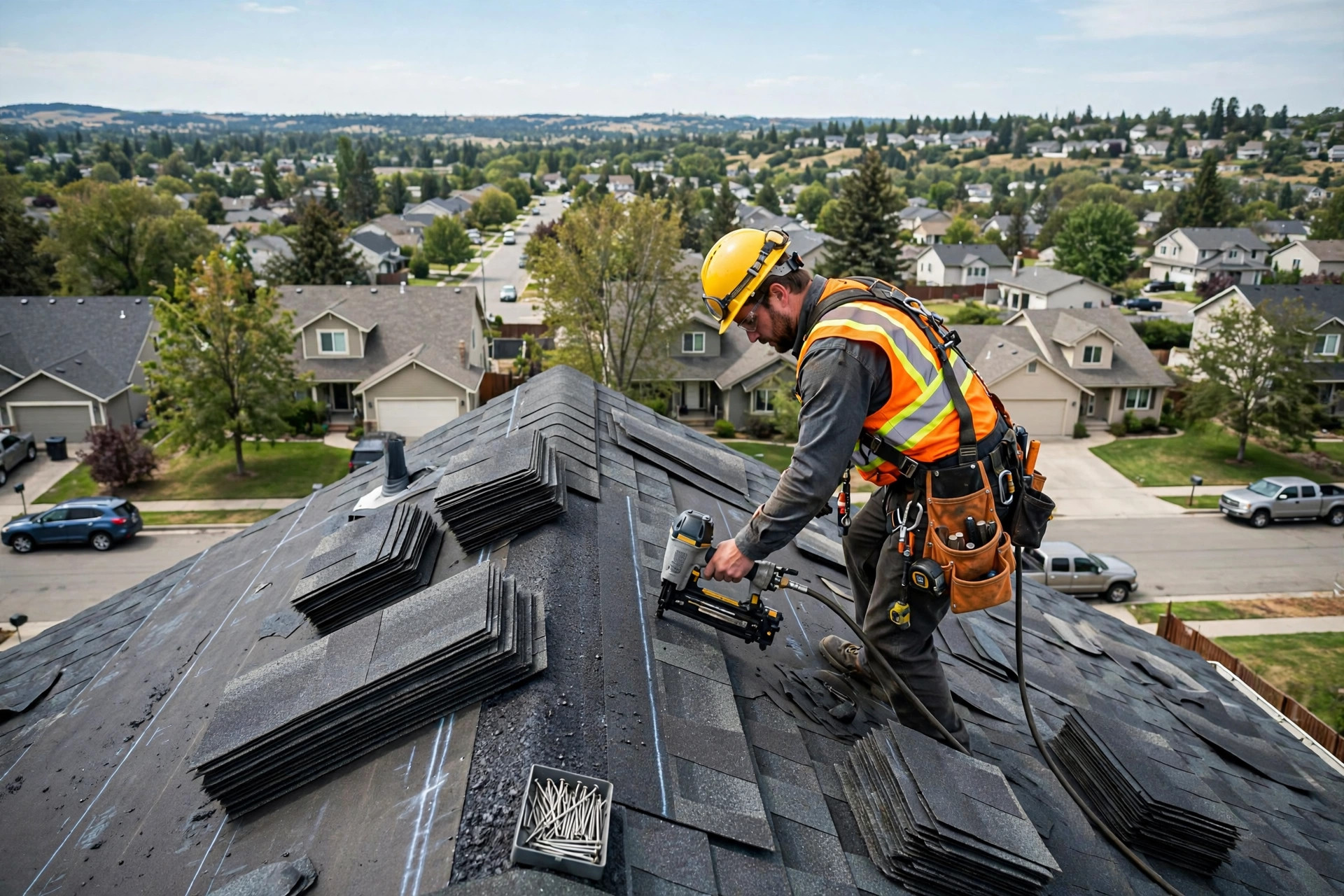
A hailstorm rolls through your metro area on a Friday night. By Saturday morning, every roofing company in town has raised its Google Ads bids, and the cost per click on “roof repair near me” has jumped while you were sleeping. Roofing is one of the most expensive trades to advertise on Google, and also one of the most profitable when the math works: a single roof replacement runs $10,000 to $20,000 or more, so even pricey leads pay for themselves when the follow-up is tight. The problem is that most roofers run Google Ads without knowing what clicks should cost, what drives the cost up, or when a different ad product would serve them better. This guide lays out real CPC bands for roofing keywords, what pushes costs up, realistic monthly budgets by market size, when Local Services Ads beat search ads, and the follow-up-speed math that ultimately decides your ROI.
The quick answer
- Expect expensive clicks: roofing CPCs typically run $10 to $35 per click, with emergency and replacement keywords at the top end.
- Cost per lead is the real number: most roofers pay $75 to $250 per lead from search ads, depending on market and campaign quality.
- Storm season inflates everything: competition spikes after hail and wind events, so budgets and bids need a storm plan.
- Broad match wastes money: tight keyword control and negative keywords are the difference between profit and a burned budget.
- Local Services Ads often win for roofers: pay-per-lead pricing and the Google Guarantee badge beat search ads for many shops.
- Follow-up decides ROI: a $150 lead answered in five minutes can be profitable; the same lead answered tomorrow is usually a loss.
Real CPC bands for roofing keywords
Roofing keywords sit near the top of home-services pricing because the ticket is huge and every competitor knows it. Costs vary by market, but the bands below reflect what roofers commonly see in US metros. Treat them as planning ranges, not quotes: your exact CPC depends on competition, quality score, and timing.
| Keyword type | Example searches | Typical CPC band | Why it costs that |
|---|---|---|---|
| Emergency repair | “emergency roof repair near me” | $20 to $35 | Highest intent, urgent need, every roofer bids on it |
| Roof replacement | “roof replacement cost” | $15 to $30 | $10K+ ticket justifies aggressive bidding |
| Storm and hail damage | “hail damage roof repair” | $15 to $30 | Spikes hard after weather events |
| General repair | “roof leak repair” | $10 to $22 | Strong intent, slightly less competition than emergency |
| Metal roofing | “metal roof installation” | $12 to $25 | Premium ticket, specialist competition |
| Informational | “how long does a roof last” | $3 to $8 | Researchers, not buyers; cheap but rarely converts |
Emergency repair vs replacement: different economics
Emergency keywords cost the most per click but convert fastest: the homeowner has water coming in and needs someone today. Replacement keywords cost slightly less but the sales cycle is longer, with inspections, insurance, and financing in the mix. Budget for both, but measure them separately. Emergency campaigns should be judged on cost per booked job within days. Replacement campaigns should be judged on cost per inspection booked, with close rates tracked over weeks. Mixing the two in one campaign hides which one is actually making money.
What drives your cost up
Two roofers in the same city can pay wildly different CPCs for the same keyword. The difference is almost never luck. It is campaign structure, timing, and match discipline.
Storm-season competition
After hail, wind, or hurricane events, every roofer in the affected area floods into Google Ads at once. CPCs can double in days, and the auction rewards whoever raises bids fastest. The roofers who win storm season plan for it: a separate storm campaign with its own budget that sits paused until weather hits, pre-written storm creative, and a landing page for storm damage inspections ready to go live. Turning on a prepared campaign in hours beats building one in a panic while competitors eat the demand. Also watch the calendar: spring storm season and late-summer hurricane season are the predictable spikes in most markets.
Broad match waste
The single biggest budget killer is loose keyword matching. Broad match on “roof repair” will happily spend your money on “roof repair DIY,” “roof repair cost calculator,” and “roofing jobs near me.” Use phrase and exact match for your money keywords, and build a real negative keyword list: DIY, jobs, salary, wholesale, free, pictures, and every irrelevant term your search-term report reveals. Review the search-term report weekly in the first two months. Most wasted spend hides in queries you never intended to bid on, and a disciplined negative list is often worth more than a bigger budget.

The search-term report tells you where the money really went. Read it weekly.
Weak landing pages and quality scores
Google charges more per click when your ad and landing page look irrelevant. A generic homepage as the ad destination raises CPCs across the board. Each campaign needs a dedicated page: emergency keywords land on an emergency page with a phone number above the fold and a “we answer 24/7” promise; replacement keywords land on a replacement page with financing info, warranty details, and an inspection booking form. Relevant pages lift quality scores, which directly lowers what you pay per click. For what a proper page costs to build, see our guide to roofing website costs.
Realistic monthly budgets by market size
Budget follows competition. A small market needs less spend to own the auction; a big metro needs real money to show up at all. The ranges below assume well-structured campaigns with dedicated landing pages.
| Market size | Example | Typical monthly ad spend | What it buys |
|---|---|---|---|
| Small market | Under 200K metro population | $1,500 to $3,000 | Strong presence on core repair and replacement keywords |
| Mid-size market | 200K to 1M metro population | $3,000 to $7,000 | Coverage across repair, replacement, and storm keywords |
| Large metro | 1M+ metro population | $7,000 to $15,000+ | Competitive presence; storm campaigns need extra headroom |
Start smaller than you think, then scale what works
If you are new to Google Ads, start at the low end of your band with one tight campaign, like emergency repair, and prove the cost per booked job before expanding. Add 20 to 30 percent to the budget as a storm reserve during storm season so you can scale bids when demand spikes instead of watching competitors take it. And remember the management cost: either your time or an agency fee of roughly 10 to 20 percent of spend. An unmanaged account in roofing bleeds money fast enough that the management fee usually pays for itself.
When Local Services Ads beat search ads for roofers
Google’s Local Services Ads (LSAs) run above regular search ads with a Google Guarantee badge, and you pay per lead instead of per click. For many roofing companies, they outperform traditional search ads on the metric that matters: cost per booked job.
The case for LSAs
You pay only when a real customer contacts you, not when someone clicks and bounces. The Google Guarantee badge borrows Google’s trust, which matters enormously in a trade with a storm-chaser reputation problem. And the format favors fast responders: LSAs reward businesses that answer quickly and keep their profile complete with reviews, hours, and service types. Roofers with strong review counts often find LSAs deliver leads at $50 to $150 each, well under search-ad cost per lead in competitive markets. The catch is control: you cannot choose keywords or write ad copy, and lead quality varies. Run both, measure cost per booked job for each, and shift budget to the winner. Many shops end up with LSAs handling the steady flow and search ads covering storm surges and specialty services.
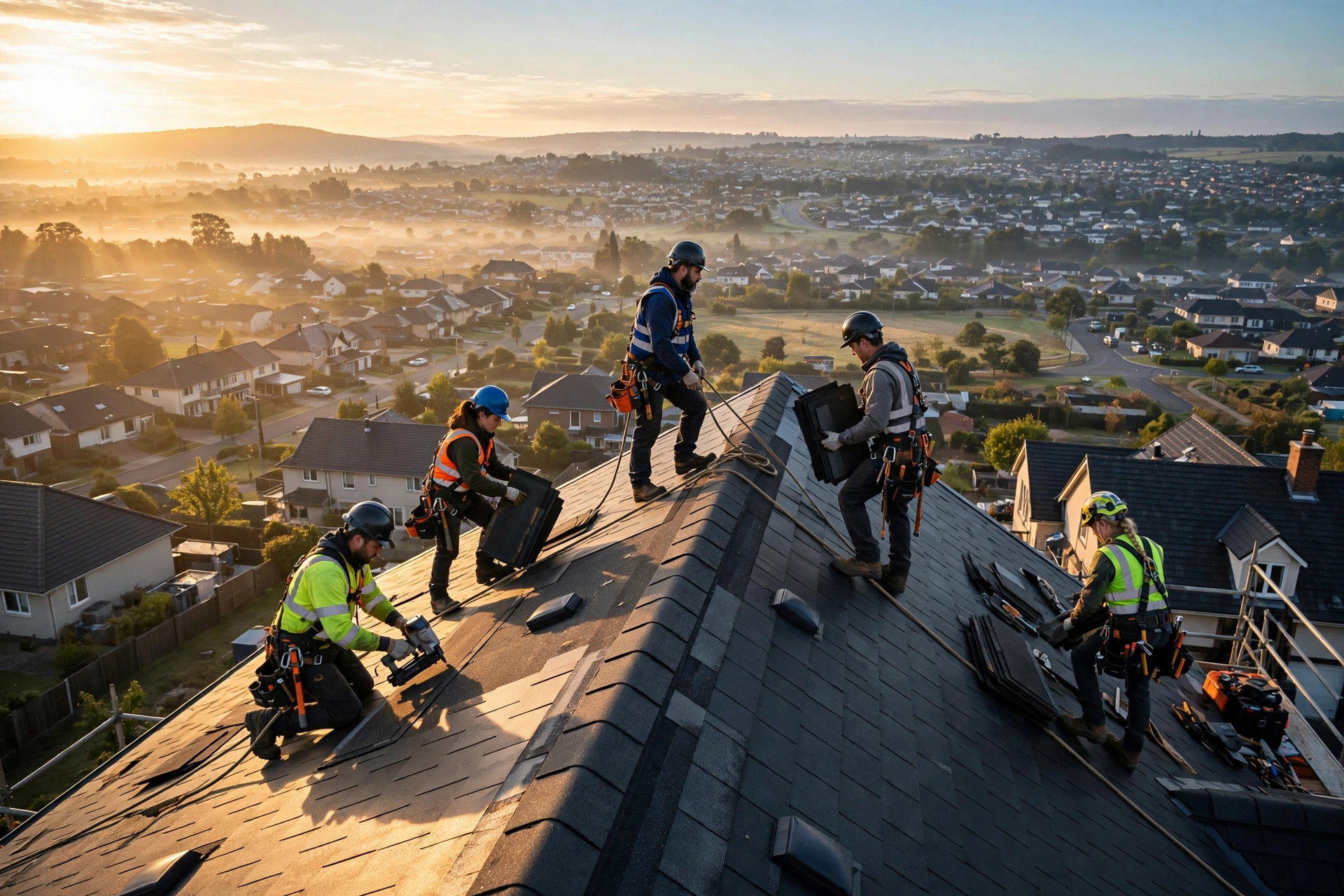
Storm season doubles the auction overnight. The prepared campaign wins the surge.
The follow-up-speed math that decides ROI
Here is the uncomfortable truth about roofer Google Ads: most of the ROI is decided after the click. Lead response research consistently shows that contacting a new lead within five minutes converts dramatically better than waiting an hour, and roofing leads are perishable: the homeowner with a leak is calling three roofers, and the first credible responder usually gets the inspection.
Build the response system before raising the budget
Instant lead alerts to the owner’s phone, an automated text within seconds of the form fill, and after-hours coverage through an AI chatbot for roofing companies or an answering service. Test the whole chain with a fake lead before you trust it. Every dollar of ad spend above a broken follow-up system is a donation to Google. Fix the phone first, then scale the budget.
Your rollout checklist
Structure first, budget second, follow-up always.
- 1Split campaigns by intent. Emergency repair, replacement, and storm damage each get their own campaign, budget, and landing page.
- 2Lock down match types. Phrase and exact match on money keywords; build the negative keyword list before launch, not after the waste.
- 3Build dedicated landing pages. One per campaign with a phone number above the fold and a single clear action. No homepage dumping.
- 4Set up conversion tracking properly. Track calls and form fills as conversions, and import booked jobs if your CRM allows it.
- 5Launch Local Services Ads in parallel. Complete the profile, gather the reviews, and compare cost per booked job against search ads.
- 6Prepare the storm campaign. Paused campaign, storm creative, and a damage-inspection landing page ready to activate within hours.
- 7Install the five-minute response system. Instant alerts, automated first text, and after-hours coverage. Test with a fake lead.
- 8Review search terms weekly. Add negatives relentlessly for the first two months, then shift budget to the best cost per booked job.
One replacement job pays for a lot of clicks. The math works when the follow-up does.
Frequently asked questions
How much does Google Ads cost for a roofing company?
Most roofers spend $1,500 to $15,000+ per month depending on market size, with cost per click of $10 to $35 and cost per lead of $75 to $250. A single roof replacement at $10,000+ means even expensive leads are profitable when follow-up is fast.
What is a good cost per lead for roofers?
$75 to $150 per lead is solid in most markets; $150 to $250 can still be profitable given the ticket size. Judge by cost per booked job and cost per closed job, not cost per lead alone, since lead quality varies widely.
Are Local Services Ads better than Google Ads for roofers?
Often yes for steady lead flow: pay-per-lead pricing, the Google Guarantee badge, and lower effective cost per lead in many markets. Search ads still win for storm surges and specialty services. Run both and shift budget to whichever books jobs cheaper.
Why are my roofing Google Ads so expensive?
The usual causes: broad match keywords burning budget on irrelevant searches, no negative keyword list, a generic homepage as the landing page hurting quality scores, and storm-season competition spiking the auction. Fix match types and landing pages before raising bids.
How much should a roofer budget for Google Ads in a small market?
$1,500 to $3,000 a month is usually enough to own the core keywords in a smaller metro. Start with one tight campaign, prove the cost per booked job, then expand into replacement and storm keywords.
Do Google Ads work during storm season?
Yes, demand surges, but so do CPCs as every roofer bids at once. Keep a paused storm campaign with its own budget and creative ready to activate within hours, plus a storm damage inspection landing page. Speed of activation beats size of budget.
How quickly should I follow up on a roofing lead?
Within five minutes. Roofing shoppers call multiple companies, and the first credible responder usually wins the inspection. Use instant alerts and an automated first text so the promise holds nights and weekends too.
Make every click count
Digital Hayder builds Google Ads systems for roofing companies: tight campaign structure, storm-ready campaigns, Local Services Ads management, and the five-minute follow-up system that turns clicks into booked jobs. Tell us about your market and we will map the budget to your goals.
Contact Us