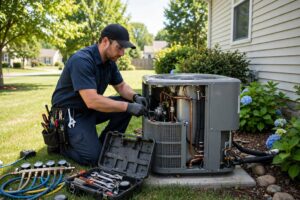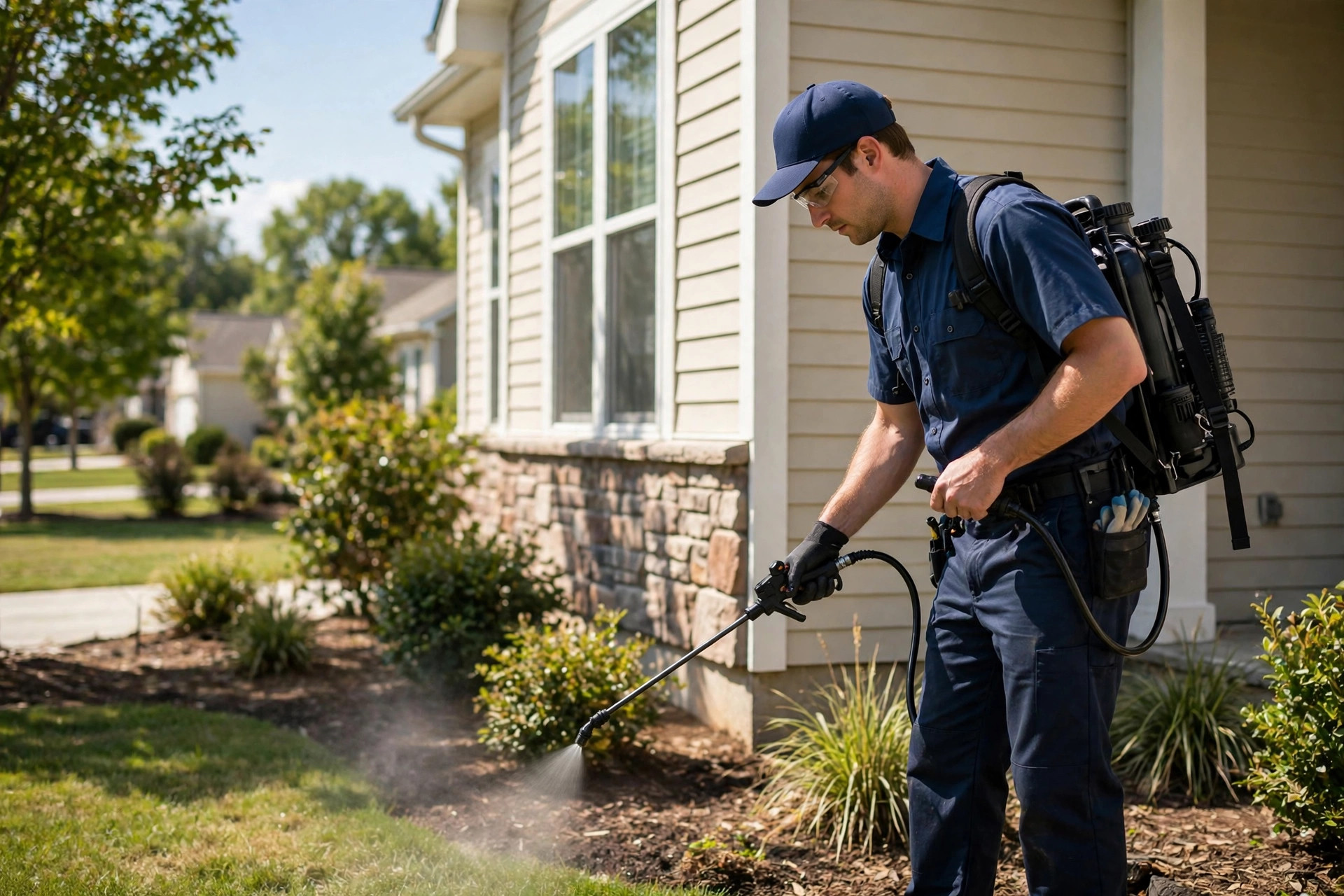
A homeowner finds ants in the kitchen on a Tuesday morning. By Tuesday night they have a quote from whichever pest control company looked most trusted on Google. That decision takes about ten seconds: the searcher compares star ratings and review counts in the map results, and the company with 400 recent reviews beats the one with 60, almost regardless of price. Pest control is an urgency business, and urgency makes people trust the crowd. The companies winning those taps are not running complicated marketing. They have a review system built into the service visit itself: the technician asks while still on-site, a text with the direct review link arrives within two hours, the invoice carries a QR code, and every review gets a response that names the service for search visibility. This guide shows pest control companies how to build that system, including the steady-velocity rule that keeps your profile ranking month after month.
The quick answer
- Why it matters: pest control buyers choose fast and trust the crowd, so review count and recency decide who gets the urgent call.
- The golden ask moment: while the technician is still on-site, right after the treatment, when the customer’s relief is at its highest.
- The two-hour text: an automated text with the direct review link, sent within two hours of the visit, catches customers before the feeling fades.
- QR codes on invoices give every customer a one-scan path to the review screen, including the ones the tech never sees.
- Respond with service names: mention the specific service in your replies for search visibility, without stuffing keywords.
- Steady velocity beats bursts: a few new reviews every week, all year, outranks and out-trusts a burst of thirty once a year.
Why reviews decide who gets the urgent call
Pest control purchases are driven by discomfort. Nobody browses pest control companies for fun. They call because there are ants in the kitchen, wasps under the eaves, or something scratching in the attic at 2am. That urgency compresses the whole buying decision into minutes, and when people decide fast, they lean on the strongest trust signal available: what other customers say. Studies of local consumer behavior keep finding that most people read reviews before choosing a local business, and in emergency-style services the review profile effectively is the sales pitch.
The map results make this brutally simple. Google shows the top three pest control companies with star ratings and review counts attached. The searcher does not visit three websites and compare treatment plans. They tap the listing that looks safest, which means the most reviews, the freshest reviews, and a rating the owner visibly takes seriously. A company with 350 reviews at 4.8 will take the call over a company with 70 reviews at 4.9, because volume signals experience and recency signals the company is still doing good work right now.
What the searcher scans in ten seconds
Four things decide the tap. First, the total count: a triple-digit number reads as an established company, a double-digit number reads as a gamble. Second, the recency: reviews from this month say the crews are still performing; reviews that stop last year raise doubts. Third, the words: searchers look for their pest in the reviews, whether that is ants, roaches, wasps, rodents, or termites, and a review that says “got rid of our wasp nest the same day” sells the next wasp job. Fourth, your responses. An owner who answers reviews looks accountable. Silence looks like nobody is home, which is a bad look for a company you invite into your house.
The benchmark for a pest control company
As working targets, aim for at least 200 Google reviews before you consider your profile strong, because the top pest control companies in most markets run into the hundreds, a 4.7 star average or higher, and 4 to 8 new reviews every week. Check the top three companies in your service area and set your count target above the strongest one. If the market leader has 600 reviews, your goal is 700. Pest control is also a review-platform business beyond Google: keep the same system feeding your other profiles, but put Google first, because that is where the map tap happens.
The golden ask: while the technician is still on-site
The highest point of customer satisfaction in pest control is the moment the treatment is done and the technician is explaining what was found and what was treated. The wasps are gone. The ants are handled. The attic is quiet. The customer’s relief is at its peak, and the technician is standing right there, a real person who just solved a real problem. That is when the review gets asked for. Not in an email the next day. Not at renewal. Right there, on-site, while the relief is fresh.
The script is short and honest: “I am glad we got this taken care of for you. We are a local company and Google reviews are how new customers find us and trust us. Would you be open to leaving us a quick review? I will have the office text you the link in a bit.” It explains why the review matters, which gives the customer a reason, and it sets up the text, which removes the friction. Train every technician to say it on every completed visit, not just the dramatic ones. A routine quarterly service is still a satisfied customer, and quarterly customers are the ones who leave the steady stream of reviews that powers the whole system.
Technicians who resist the ask usually imagine rejection. The reality is that relieved customers are glad to be asked; they simply never think of it on their own. Build the ask into the service close-out, right after the findings explanation: explain what was done, ask for the review, hand over the invoice. When it is a step in the process, it happens on every visit. Role-play it in a team meeting until it sounds natural, and track which techs generate reviews so you can coach the ones who do not.

Relief is highest the minute the treatment ends. The on-site ask captures it.
The two-hour text with the direct review link
The on-site ask creates the intention. The text delivers the follow-through. Within two hours of the visit, the customer gets an automated text: “Hi [Name], this is [Company]. Thanks for trusting us with your [service, e.g. ant treatment] today. If you were happy with the visit, a quick Google review would really help our local team: [link].” Three lines. The link opens the Google review screen directly, with your business already selected. One tap, and the customer is writing.
Two hours is the window because the feeling is still warm but the technician is gone, so the customer has the privacy to write honestly. Same-day is good. Next-day is acceptable. Three days later is a cold ask. Your scheduling or CRM software should trigger the text automatically when the job is marked complete, so it fires on every visit without anyone remembering. Send one reminder two to three days later if no review appears, then stop. A second nudge is a reminder; a third is pestering, and it is the customers who were about to leave a good review who get annoyed by the fourth text.
Consent keeps this clean. The customer gave you their number for service updates, and a review request after a visit is a normal part of that relationship, but include your company name and opt-out instructions on the first text, and honor opt-outs automatically. Never text review requests to numbers that opted out, and keep the texts inside normal hours.
QR codes on invoices and leave-behinds
Not every customer gets the on-site ask. Some are not home during the service. Some get the exterior treatment while they are at work. The invoice catches them all. Put a QR code on every invoice, paper or digital, that opens your Google review page directly, with a short line: “Happy with our work? Scan to leave us a Google review.” The customers who never meet the technician still get a one-scan path to the review screen.
The same code belongs on any leave-behind: the door hanger after an exterior service, the service summary card, the fridge magnet. Test the scan on iPhone and Android before printing, and test it monthly, because a code that opens a broken page is worse than no code. Keep the design clean and simple. The invoice is a business document, not a flyer, so the QR code should sit quietly at the bottom, not shout from the top. A few companies add the technician’s first name next to the code, which lifts response rates because it feels personal.
| Collection point | When it fires | Who it catches | Key to making it work |
|---|---|---|---|
| Technician on-site ask | Right after treatment, during the findings walkthrough | Customers who need a personal nudge | Script it into the close-out on every visit |
| Two-hour text | Automatically after the job is marked complete | Everyone, while the feeling is warm | Direct review link, three lines, no survey |
| QR code on invoice | With every invoice, paper or digital | Customers not home during service | Test the scan monthly on both phone types |
| Two-day reminder text | Two to three days later if no review | Customers who meant to and forgot | One reminder only, then stop |
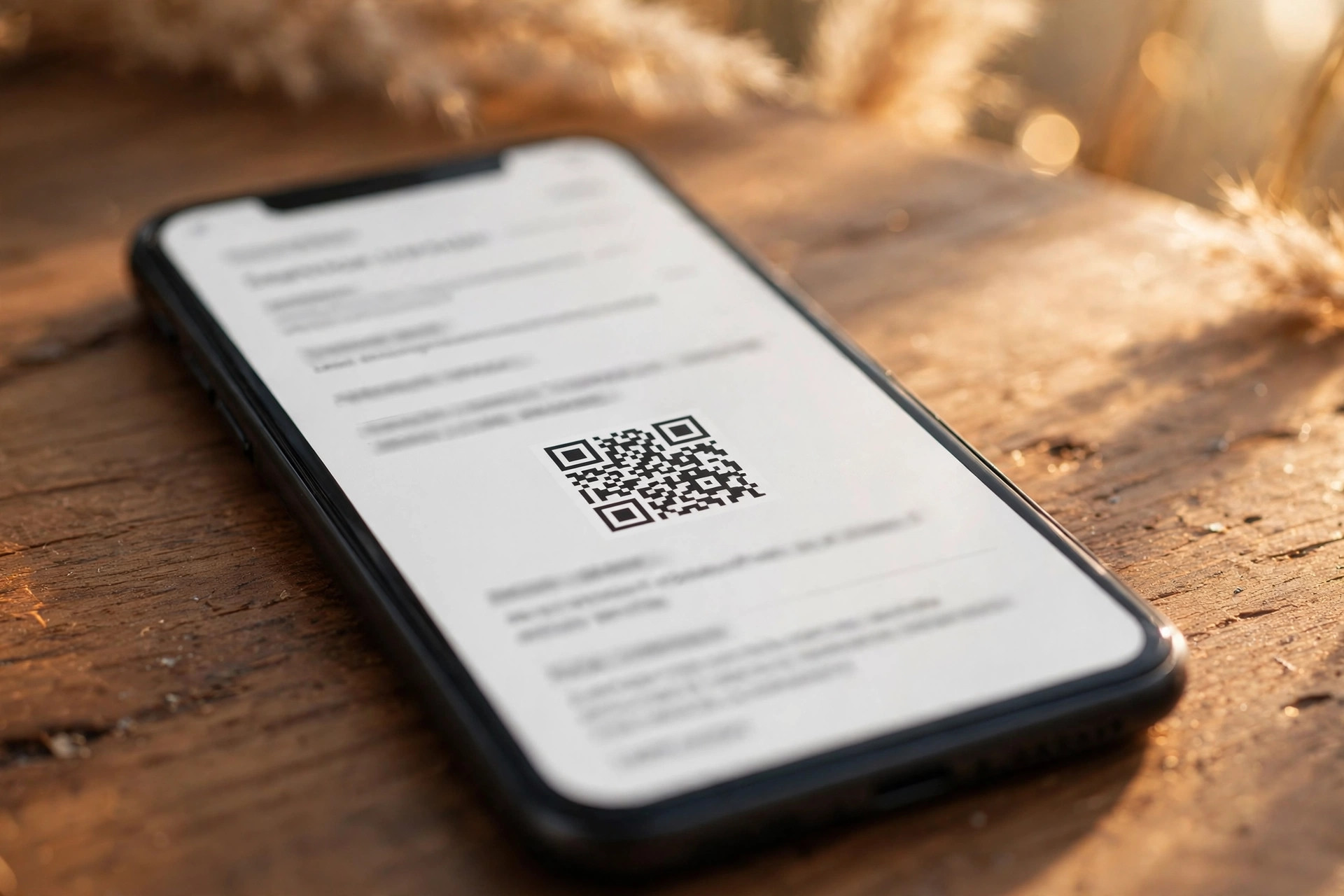
One scan from the invoice to the review screen. Every extra step is a review you never get.
Response templates that mention services for SEO
Respond to every review within 24 hours, including the five-star ones. Future customers read your responses as closely as the reviews, and Google’s local ranking considers how active and engaged a business profile looks. The pest control twist is to name the specific service naturally in your replies. When a reviewer mentions ants and you reply mentioning your ant control service, the review page gains keyword-rich content that matches what the next searcher is typing. Do this naturally, once per response, never stuffed.
Five-star, mentions a pest: “Thank you, [Name]! We are glad our ant treatment took care of the problem. If they ever come back, you know where to find us.”
Five-star, general: “Thanks, [Name]! We appreciate you trusting our team with your home. We look forward to seeing you at your next quarterly service.”
Four-star: “Thank you, [Name]. We are glad the wasp nest removal went well. If anything about the visit could have been better, I would like to hear it so we can fix it before your next service.”
Vary the wording so your profile does not read like a robot wrote it. Name the service when the reviewer named it, keep it general when they did not, and always thank them by name. The goal of the response is not to convince the reviewer; it is to show the next hundred readers what kind of company you run.
The bad review playbook for pest control
Bad reviews happen to every pest control company: a wasp nest that needed a second visit, ants that came back after rain, a scheduling mix-up. The response is a fixed process. Reply within 24 hours. Acknowledge the problem without arguing. Move it offline with a direct number: “I am sorry about this, [Name]. That is not the result we promise. I am the owner, call me directly at [number] and we will make it right, including a free re-treatment if that is what it takes.” Then call them, fix it, and update the response once resolved. Never discuss prices publicly, never blame the customer, and never respond angry. A calm owner response to a harsh review impresses readers more than twenty five-star reviews. Our detailed playbook on how to respond to negative Google reviews covers the harder cases, including unfair and fake reviews.
The steady-velocity rule: a few every week beats a burst
This is the rule that separates companies with strong profiles from companies with spiky ones. Google’s local ranking rewards review velocity: how often new reviews arrive. A company that collects 4 to 8 reviews every single week looks active, current, and trustworthy to both the algorithm and the searcher. A company that collects 40 reviews in one week after a big push, then nothing for three months, looks like it ran a campaign, and searchers notice the gap in dates.
Steady velocity is also protection. A single bad review hurts less when ten fresh five-star reviews sit above it. A company with a burst-and-drought pattern has no cushion; one bad review during a drought defines the whole profile. The system in this guide produces steady velocity by design: the technician asks on every visit, the text fires on every job, and the visits never stop, so the reviews never stop. Treat review count like revenue and track it weekly: total reviews, average rating, and new reviews that week. When the number stalls, the ask stopped happening, and you fix it that week.
Never try to shortcut velocity with bursts of your own making. Do not ask the whole customer list at once after months of silence. Do not run a “review week” contest. Sudden spikes look unnatural to Google’s systems and to anyone reading the dates. The honest drip of a few reviews a week, earned from real visits, is both safer and more convincing. For the profile side of the equation, see our guide to Google Business Profile optimization for contractors, which covers how velocity feeds local rankings.
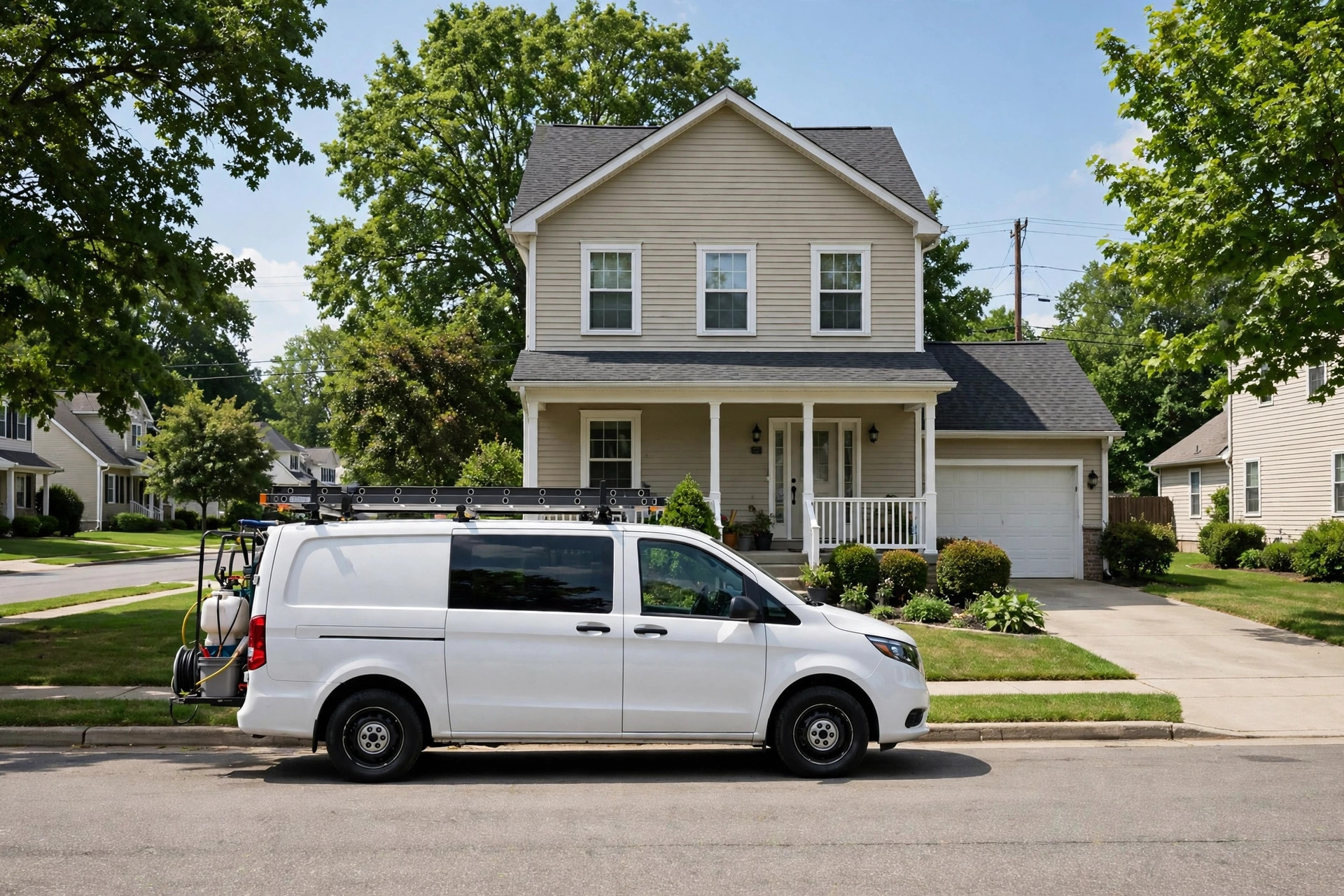
Every visit is a review opportunity. The system makes sure none of them are wasted.
The review math for a pest control company
Pest control runs on recurring contracts, which makes each review unusually valuable. Say your average quarterly plan is worth $400 a year per customer. If a stronger review profile wins you just 3 extra customers a month, that is 36 new customers a year, or $14,400 in annual recurring revenue, from a system that costs a texting platform and printed invoices. And those customers renew: at a typical retention rate, a large share of that revenue repeats next year with no new marketing cost.
One-call jobs add to the same math. A wasp nest removal or a one-time rodent treatment might be a $200 to $400 ticket, and urgent callers choose almost entirely on the review profile. Every review that names a specific pest sells the next identical job, which is why the service names in your responses matter. The companies that dominate a market’s map results are usually the ones that figured out reviews are a system, not a hope. An AI chatbot on your website can capture the visitors your reviews bring and turn them into booked visits around the clock.
What can get you in trouble
A few rules are absolute. Never offer discounts, free services, or account credits in exchange for reviews; Google removes paid reviews and can suspend the profile. Never ask only happy customers while skipping the unhappy ones, a practice called review gating, which Google prohibits. Never write reviews for your own company or ask staff and family to do it. And never fake a burst: sudden spikes of reviews from unusual sources get filtered or removed, and the pattern can trigger a closer look at your whole profile. The honest system in this guide is slower for about three weeks and faster forever after.
Your 30-day implementation checklist
Do this in order. By day 30 your company should be collecting reviews from every visit without anyone thinking about it.
- 1Get your direct Google review link. Generate it in your Business Profile, shorten it with a clean link, and test it on iPhone and Android.
- 2Write the technician ask script. Three sentences: glad it is handled, reviews help a local company, the office will text the link. Practice it in a team meeting.
- 3Write the two-hour text. Thank you, name the service, review ask, direct link. Save it as the automatic template in your scheduling software.
- 4Connect the automation. Trigger on job complete, text within two hours, one reminder two days later, stop on review or opt-out.
- 5Add the QR code to invoices. Paper and digital, plus door hangers and leave-behind cards. Test every scan before printing.
- 6Write your response templates. Five-star, four-star, and negative, naming the service naturally. No two replies identical.
- 7Clear the response backlog. Answer every existing review within the week, newest first.
- 8Start the weekly metric. Total reviews, average rating, new reviews that week. Put it on the same sheet as jobs and revenue.
Frequently asked questions
When should my technicians ask for a review?
While still on-site, right after the treatment and the findings walkthrough, when the customer’s relief is highest. Script it into the service close-out so it happens on every visit, not just the dramatic ones.
How fast should the follow-up text go out?
Within two hours of the visit, triggered automatically when the job is marked complete. Same-day is good, next-day is acceptable, three days later is a cold ask. Send one reminder two to three days later if there is no review, then stop.
Should my responses mention the specific pest or service?
Yes, naturally. When the reviewer names the pest, naming it back in your reply adds keyword-rich content that matches what the next searcher types. Mention it once per response and never stuff keywords; it should read like a human wrote it.
Is it better to get a lot of reviews at once or a few every week?
A few every week, always. Steady velocity looks active and trustworthy to both Google and searchers, and it cushions the profile against the occasional bad review. Bursts look like campaigns and leave long gaps that raise doubts.
Is it okay to offer a discount for a Google review?
No. Paid reviews violate Google’s policies and can get reviews removed or your profile suspended. Review gating, asking only happy customers, is also against the rules. Ask every customer the same way.
What if the customer was not home during the service?
That is what the invoice QR code and the two-hour text are for. The customer still gets a one-scan path to the review screen and a well-timed text, even when the technician never meets them. See how missed call text back for plumbers handles similar field-service follow-up.
Turn every service visit into your next customer
Digital Hayder helps pest control companies build review systems, reputation automation, and AI follow-up that run on their own: on-site ask scripts, two-hour texts, QR-coded invoices, and response management that names your services. Tell us about your company and we will map the fastest path to a review profile that wins the urgent call.
Contact Us