Montessori Preschool vs Daycare: Which Is Better for Your Child in 2026?
Choosing between Montessori preschool and traditional daycare is one of the most important decisions you'll make for your child's early development. With so many options available, it's easy to feel overwhelmed. But don't worry,we're here to help you understand the key differences and make an informed choice that aligns with your child's unique needs and your family's values.
Recent research has shed new light on how these two approaches impact children's development, academic achievement, and social skills. Let's dive into what the latest studies reveal about Montessori preschool versus daycare, and how you can determine which option might be best for your family.
Understanding the Core Approaches
The Montessori Method: Child-Led Learning
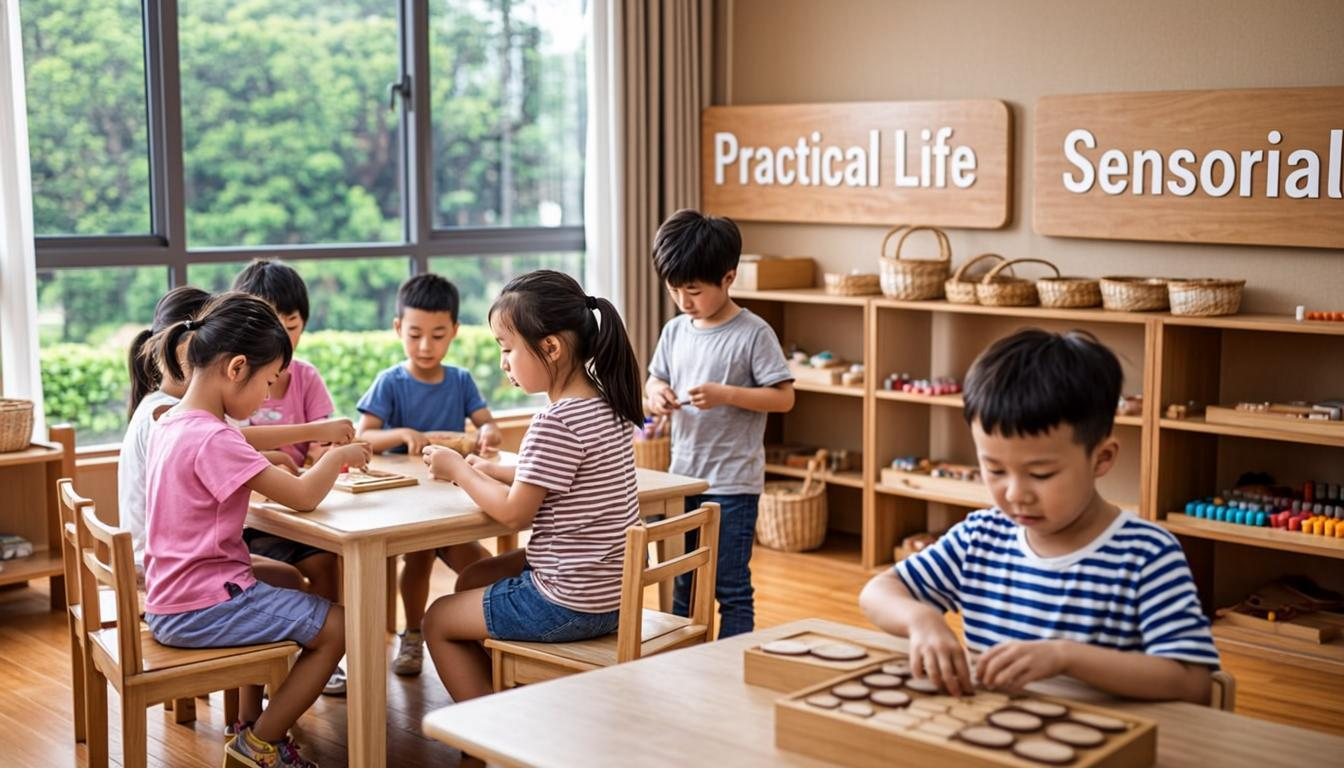
Montessori education, developed by Dr. Maria Montessori over a century ago, is based on the principle that children learn best in a prepared environment that supports their natural development. In a Montessori classroom, you'll find mixed-age groups, specialized learning materials, and teachers who serve as guides rather than instructors.
The Montessori approach emphasizes independence, freedom within limits, and respect for a child's natural psychological development. Children choose their activities and work at their own pace, which fosters intrinsic motivation and a love of learning.
Traditional Daycare: Structured Care and Supervision
Traditional daycare centers typically focus on providing safe care while parents work. They often follow a more structured schedule with group activities, playtime, and basic educational elements. Daycare staff oversee children's safety and well-being while providing age-appropriate stimulation.
While quality daycare centers incorporate educational components, their primary function is childcare rather than a specific educational philosophy. Activities are usually teacher-directed and designed to meet developmental milestones rather than follow a particular pedagogical approach.
Academic Outcomes: What the Research Shows
Montessori's Impact on Academic Achievement
Recent findings from a national randomized controlled trial reveal that children who attend public Montessori preschool demonstrate significantly better reading abilities compared to their peers in traditional programs [1]. The study, conducted by researchers at the University of Virginia, found that Montessori students showed particular strengths in literacy development.
What's particularly striking is that these academic benefits appear without the intensive focus on direct instruction that characterizes many traditional preschool programs. The Montessori method's emphasis on hands-on learning and self-directed exploration seems to naturally foster academic skills.
Long-Term Benefits of Montessori Education
A longitudinal efficacy study of the Montessori preschool model found that children who attended Montessori programs showed stronger kindergarten readiness skills [3]. These advantages weren't limited to academic areas,children also demonstrated better social-emotional development, which research shows is crucial for long-term success.
The study tracked children from preschool through kindergarten, finding that Montessori students maintained their advantages over time. This suggests that the benefits of Montessori education aren't just short-term boosts but foundations for ongoing educational achievement.
Social and Emotional Development
Building Independence and Self-Regulation
One of the most significant differences between Montessori and daycare is the approach to social and emotional development. Montessori environments are specifically designed to foster independence, self-discipline, and conflict resolution skills.
Children in Montessori classrooms learn to manage their time, make choices, and work through challenges with minimal adult intervention. This builds self-regulation skills that research shows predict later success in school and life.
Social Dynamics in Different Settings
Traditional daycare settings often emphasize group activities and socialization through play. While this certainly provides valuable social experiences, the social learning in Montessori environments differs in both quality and depth.
Montessori's mixed-age classrooms create unique social dynamics where younger children learn from older ones, and older children develop leadership skills by helping younger peers. This mirrors natural family and community structures more closely than same-age groupings typically found in daycare settings.
Cost Considerations for Families
Upfront Costs vs. Long-Term Value
When comparing Montessori preschool and daycare, cost is often a primary concern. Montessori programs typically have higher tuition than traditional daycare centers due to specialized materials, teacher training requirements, and lower student-teacher ratios.
However, recent research reveals a surprising finding: three years of public Montessori from ages 3 to 6 actually cost districts $13,127 less per child than traditional preschool programs [1]. This counterintuitive result stems from Montessori's efficiency and effectiveness in promoting independent learning.
Return on Educational Investment
While the initial investment in Montessori may be higher, many families find the long-term benefits justify the cost. Children who attend Montessori often transition more smoothly to elementary school, potentially reducing the need for additional educational interventions later.
The social and emotional skills developed in Montessori environments can also lead to fewer behavioral issues in elementary school, which translates to fewer disruptions and more productive learning time for all students.
Making the Right Choice for Your Family
Assessing Your Child's Needs and Temperament
Every child is unique, and what works brilliantly for one might not be the best fit for another. Consider your child's personality, learning style, and needs when evaluating these options.
Is your child naturally curious and self-motivated? Do they thrive with structure and clear expectations? Do they need significant social interaction or do they prefer more independent play? These questions can help guide your decision between Montessori and traditional daycare.
Practical Considerations: Scheduling, Location, and Availability
Beyond educational philosophy, practical factors often matters in the decision-making process. Consider your family's schedule, the location of programs near your home or work, and availability of spots at quality centers.
Don't underestimate the importance of logistics,convenient hours and a manageable commute can significantly reduce family stress. Many parents find that a hybrid approach, such as Montessori for part of the week and daycare for other days, can provide both educational benefits and convenient scheduling.
Montessori vs Daycare: At a Glance
| Feature | Montessori Preschool | Traditional Daycare |
|---|---|---|
| Educational Philosophy | Child-led learning, self-directed activity | Structured activities, teacher-directed learning |
| Learning Environment | Prepared environment with specialized materials | General play areas with educational toys |
| Age Groups | Typically mixed ages (3-6, 6-9, etc.) | Usually grouped by age (toddlers, preschoolers, etc.) |
| Teacher Role | Guide and observer | Instructor and caregiver |
| Academic Focus | Holistic development including practical life, sensorial, math, language, cultural studies | Age-appropriate activities with emphasis on socialization and basic skills |
| Student-Teacher Ratio | Lower ratios (often 1:15 or better) | Varies widely, often higher ratios (1:8 to 1:12) |
| Cost | Generally higher tuition | Generally more affordable |
| Research Support | Strong evidence of academic and social benefits [1][2][3] | Limited long-term outcome studies |
Key Takeaways
- Montessori preschools have been shown to produce better academic outcomes, particularly in reading ability, compared to traditional daycare programs [1][2].
- Longitudinal studies confirm that Montessori students demonstrate stronger kindergarten readiness skills and maintain advantages over time [3].
- The Montessori approach uniquely fosters independence and self-regulation through its child-led learning environment and mixed-age classrooms.
- Despite higher initial costs, public Montessori programs can actually save money in the long run due to their efficiency and effectiveness [1].
- When choosing between options, consider your child's individual needs, learning style, and temperament, not just the educational philosophy.
- Practical factors like scheduling, location, and availability often play as significant a role as educational considerations in the final decision.
Conclusion
The choice between Montessori preschool and traditional daycare isn't about which is universally "better",it's about which approach aligns best with your child's unique needs and your family's values and circumstances.
Recent research provides compelling evidence that Montessori education delivers significant academic and social-emotional benefits [1][2][3]. However, quality daycare programs can also provide excellent care and foundational learning experiences, especially when they incorporate elements of child-centered approaches.
As you consider your options, visit potential programs, observe the environments, and speak with educators. Trust your observations and your knowledge of your child to guide your decision. Remember that the best early childhood experience is one that nurtures your child's natural curiosity, supports their development, and makes them feel safe and valued.
Ready to explore Montessori options in your area? Schedule visits to local programs and ask about their approach to child development and learning. Your child's educational journey begins with this important first step.