Landscaping has a season problem that most trades never face. Demand explodes in spring, stays hot through early summer, then fades into fall cleanups and a quiet winter. Every landscaper knows the feeling: phones ringing off the hook in April, then the scramble to keep crews busy in October. The companies that stay full all season do not just do better work. They market on a calendar, they turn every job into visible proof, and they pack their routes so tight that marketing one neighborhood feeds the next job. This guide lays out landscaping marketing ideas built around how this business actually works: seasonal timing, before and after proof, route density, and the commercial accounts that smooth out the slow months.
The quick answer
- Market on a calendar: pre-season marketing in late winter fills the spring schedule before competitors wake up.
- Your best ad is a finished yard: before and after photos and short videos sell landscaping better than any copy.
- Pack your routes: door hangers and yard signs around active jobs win the whole street and cut drive time.
- Digital that pays: a complete Google Business Profile, local service pages on your website, and Facebook ads aimed at homeowners in your service area.
- Commercial accounts smooth the seasons: HOAs, property managers, and offices buy year-round maintenance contracts.
- Referrals are your cheapest leads: a simple neighbor-referral reward turns every happy customer into a salesperson.
The landscaping marketing calendar
The biggest mistake landscapers make is marketing when they feel slow. By the time you feel slow, the season is already decided. Smart companies market one season ahead: they sell spring cleanups in winter, they sell fall work in summer, and they sell next year’s contracts in fall. Run your marketing on this calendar and you stop chasing the season and start staying ahead of it.
| Season | What customers are thinking | What to market |
|---|---|---|
| Late winter (pre-season) | Yards look rough, spring feels close | Spring cleanup packages, early-bird mowing contracts, design consultations |
| Spring (peak) | Everything needs doing at once | Mowing routes, mulch and bed installs, planting, hardscaping quotes |
| Summer | Lawns are growing, patios get used | Recurring mowing, irrigation fixes, lighting, outdoor living upsells |
| Fall | Leaves, winter prep, planning ahead | Fall cleanups, aeration and overseeding, next-year contract renewals |
| Winter (off-season) | Nobody thinks about yards | Snow removal if offered, early-bird spring offers, commercial contract renewals |
The pre-season window is the highest-return marketing of the year. In late winter, competition for attention is low and homeowners are starting to look at their yards. A Facebook ad offering spring cleanup booking, an email to last year’s customers with an early-bird mowing discount, and a round of door hangers in your best neighborhoods can fill April and May before your competitors have printed their flyers. The companies that wait until the grass is growing are fighting for leftovers.
Win the visual game: before and after proof
Landscaping is the most visual trade in home services. Nobody needs to be convinced that a transformed yard is beautiful; they can see it. Your marketing should be built on proof, not promises. Take before and after photos on every significant job: the overgrown bed next to the planted one, the patchy lawn next to the striped one, the muddy corner next to the new patio. Same angle, same light if you can manage it. These pairs are your entire marketing department.
Put them everywhere customers decide: your Google Business Profile (which accepts photos and rewards active profiles), your website’s project gallery organized by service, and short before-and-after videos on Facebook and Instagram. A 15-second clip of a yard transforming, set to music, gets shared by homeowners in a way no ad ever does. Ask every happy customer for a review with a photo attached, because a five-star review with a photo of a beautiful yard sells the next ten jobs. Cost: free beyond your phone. Effort: a few minutes per job, plus an hour a week to post the best ones.
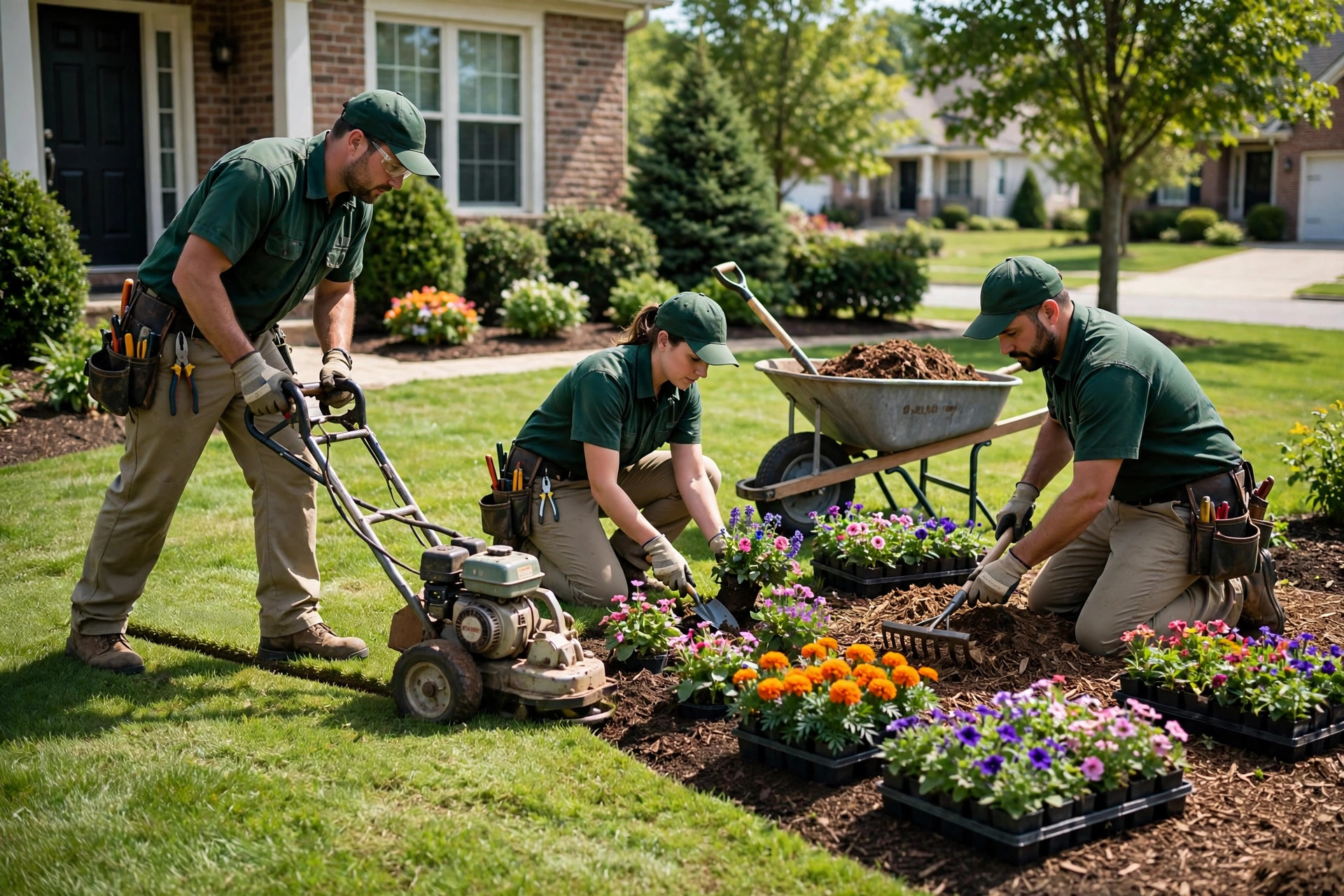
Film the work while it happens. A yard mid-transformation is content your competitors are not making.
Route density: market one neighborhood at a time
The most profitable landscapers do not spread jobs across the whole county. They pack them into tight routes, because every minute of drive time between jobs is money burned. Route density is a marketing strategy: instead of advertising everywhere, you concentrate your field marketing on the streets where you already work, so each job produces the next one.
The 10-house rule
After every job, hit the ten houses on each side and across the street with a door hanger. Not a generic flyer: a hanger that says you just finished work at their neighbor’s address (with permission), shows a before and after photo, and offers a free estimate. This converts far better than cold advertising because the proof is parked in their neighbor’s yard. Homeowners can literally walk over and look at your work. Cost: pennies per hanger. Effort: ten minutes after each job.
Yard signs that stay up
A yard sign staked in a freshly finished lawn is the oldest landscaping ad in the world, and it still works. Ask every customer if you can leave a sign for two weeks. Most say yes when the yard looks great and they are proud of it. Use a clean sign: your name, your phone number, one service line like “Weekly Mowing” or “Landscape Design.” Rotate signs through your active jobs so every neighborhood you work in sees your name for weeks at a time. Cost: a few dollars per sign, reusable for years. Effort: placing and collecting them.
Own the street, then the subdivision
When you land two or three customers in one neighborhood, go deeper instead of wider. Offer a “street discount” for neighbors who sign up for recurring service on the same mowing day, which is honest because it genuinely saves you drive time. Sponsor the neighborhood’s yard-of-the-month contest or the HOA newsletter. Over a season, one subdivision can fill a whole crew’s week, and a full route in one area is worth more than scattered jobs across three towns.
Digital marketing that pays for landscapers
Field tactics win streets. Digital wins the searches. Most landscaping customers still start with Google, and the companies that show up there get the calls.
Google Business Profile: your digital yard sign
Your profile is what appears in the map results for “landscaper near me” and “lawn care near me,” and it is free. Fill it completely: lawn care and landscaping categories, every service listed separately (mowing, mulch, planting, hardscaping, cleanups), your real service area, and dozens of photos of finished yards. Post weekly with a before and after photo and a short caption. Collect reviews on every job, because review count and recency are major ranking factors in the map pack. Our contractor guide to Google Business Profile optimization walks through the full setup. Cost: free. Effort: an afternoon to build, an hour a week to maintain.
Local SEO: one page per service per area
Your website should have a dedicated page for each main service in each town you serve: “lawn care in [town],” “landscape design in [town],” and so on. Each page gets real content: what the service includes, photos of local work, pricing guidance, and reviews from customers in that town. This is how you rank for the searches that matter instead of hoping your homepage does it all. Add a quote form that is short and mobile-friendly, because most of these searches happen on phones. A chatbot on the site that answers common questions and captures the lead’s info works after hours when you are still on the mower; see how an AI chatbot for home services websites handles that. Cost: your time or a web project. Effort: ongoing, one page at a time.
Facebook and Instagram ads aimed at homeowners
Facebook ads work well for landscaping because the product is visual and the targeting is geographic. Run before and after photos and short videos to homeowners in your service zip codes, with offers matched to the season: spring cleanup booking in late winter, mowing routes in spring, fall cleanup in late summer. Keep the ad area tight, a 10 to 15 mile radius around your densest routes, so every lead you buy is one you can serve profitably. Start with a few hundred a month, track cost per booked estimate, and scale what works. Cost: $300 to $1,500 a month typical. Effort: a few hours a month to manage, or hire it out.
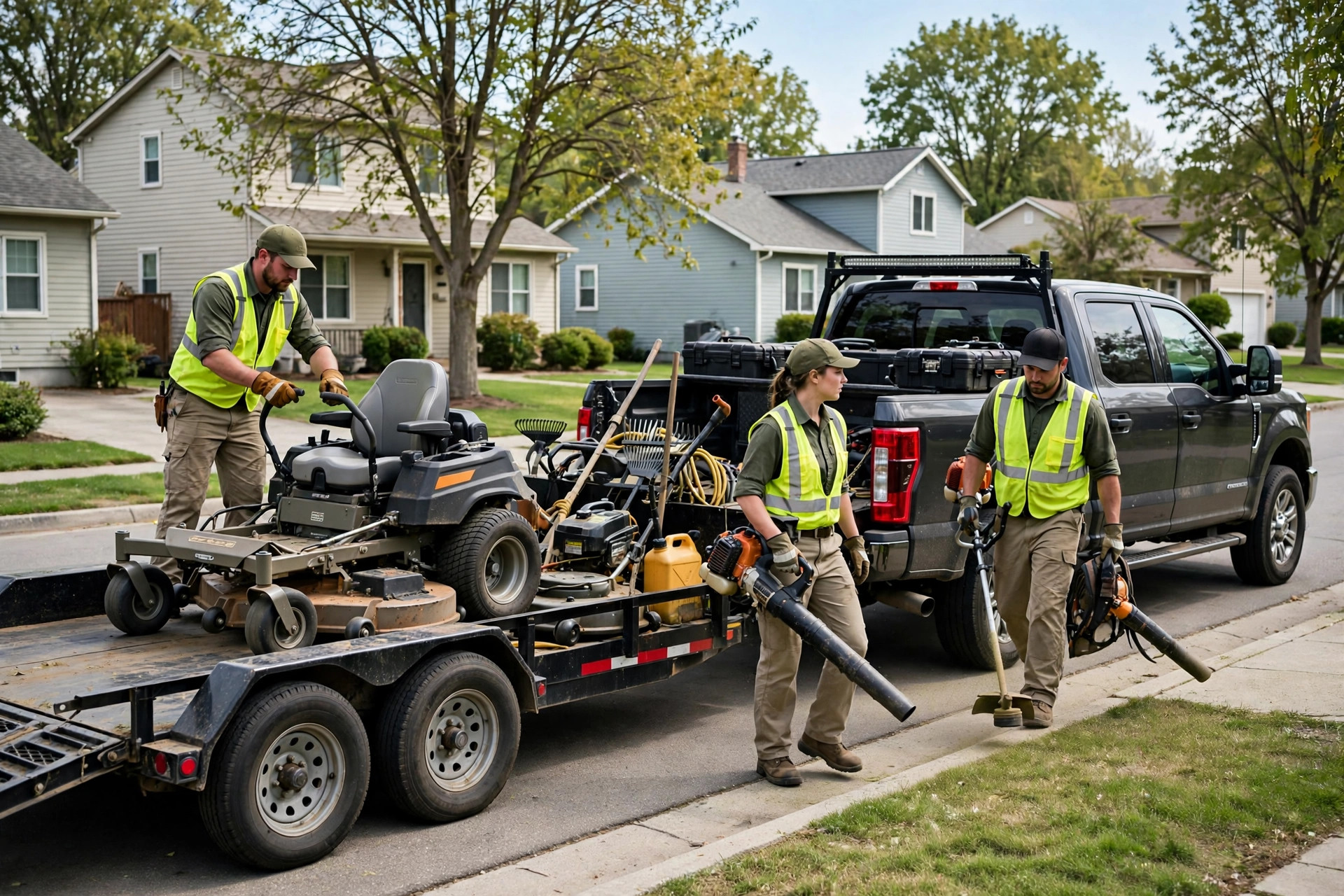
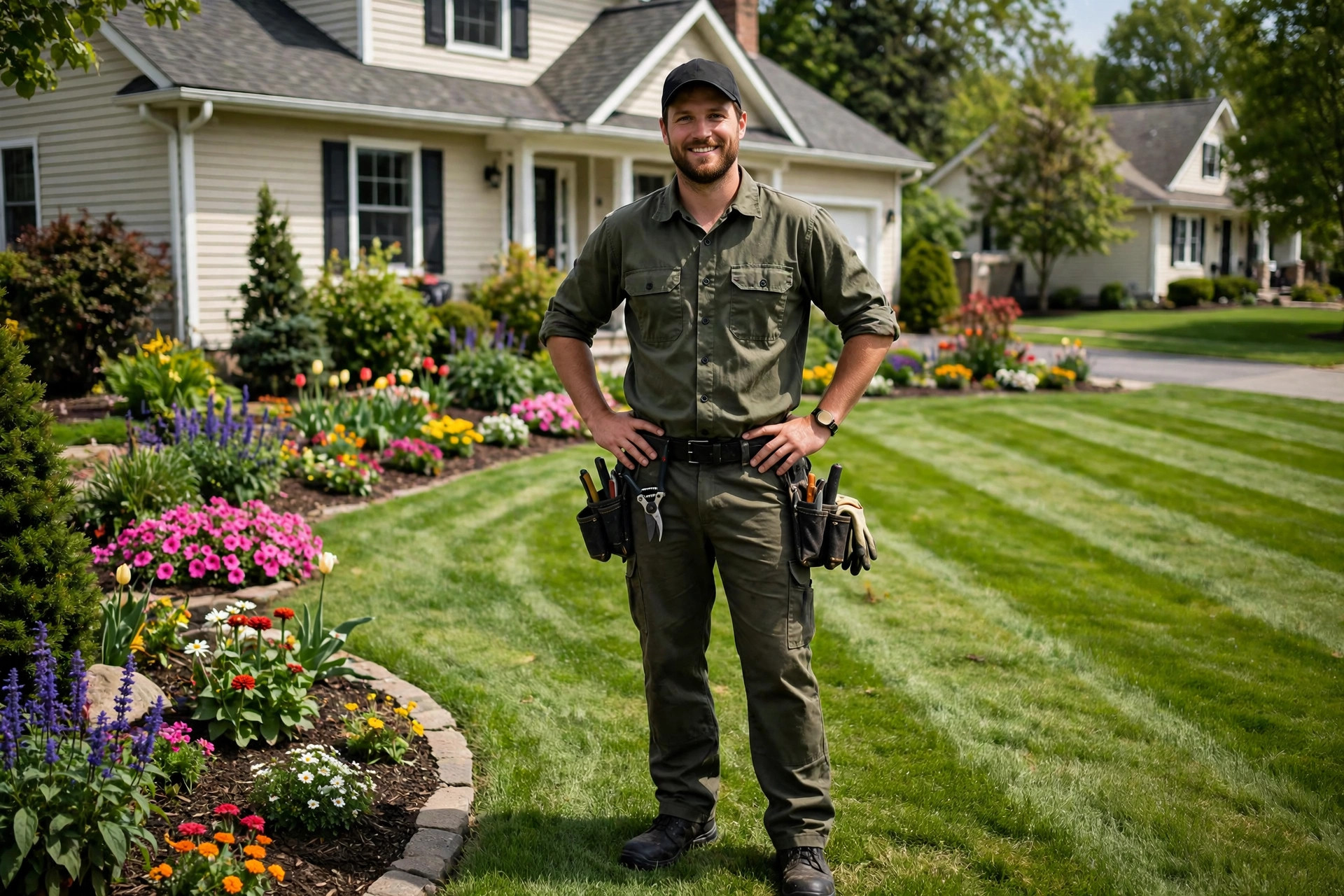
Your truck on the street is advertising. The door hangers you leave behind turn it into booked estimates.
Commercial accounts: the revenue backbone
Residential work is seasonal and price-sensitive. Commercial work, HOAs, apartment complexes, office parks, retail centers, restaurants with patios, is contracted, recurring, and far less seasonal. One HOA maintenance contract can equal twenty residential mowing customers in revenue, with one invoice and one relationship to manage.
Winning commercial accounts is a different game from residential marketing. It runs on relationships and proposals, not ads. Build a simple one-page capability sheet: services, service area, insurance and licensing proof, and photos of commercial-looking work. Then work the list: property management companies, HOA boards, facility managers, general contractors. Call, visit, and follow up, because commercial decisions take weeks and the follow-up is where most landscapers quit. Bid in fall for next year’s contracts, when budgets are being set. Start with small properties to build references, then use those references to bid bigger. Cost: mostly your time. Effort: steady outreach, especially in the off-season when residential slows down.
A referral program that runs itself
Referrals are the cheapest leads in landscaping, because a referred customer already trusts you before you arrive. Most landscapers get referrals by accident. Build a program so you get them on purpose. The structure is simple: after a job is done and the customer is happy, ask directly for the names of two neighbors who might want an estimate, or offer a reward (a free mow, a gift card, account credit) for every neighbor who books. Make the ask part of the job close-out, the same way you ask for a review.
The neighbor angle is what makes this work in landscaping. Yards are public. When you transform one yard on a street, every neighbor sees it daily. A referral card left with the customer (“Give this to a neighbor, you both get $50 off your next service”) turns that visibility into introductions. Track referrals and pay the rewards fast, because a slow reward kills the program. Over a few seasons, a working referral program can produce a third or more of your new residential customers. Cost: the reward value only, paid on booked work. Effort: asking on every job and tracking the names.
Never miss the spring rush calls
Peak season has a cruel irony: the busiest weeks, when the most new customers are calling, are exactly when you are least able to answer, because you are on the mower from dawn to dark. Every call that goes to voicemail during the spring rush is a customer who calls your competitor next. An AI phone agent for home services answers every call, books the estimate, and takes the details, even at 7pm when you are still on a job. Pair it with a missed-call text back so anyone you could not reach gets an instant message instead of silence. In a seasonal business, the companies that answer win the season. Cost: a modest monthly fee, less than one lost design job. Effort: an hour or two to set up.
The full playbook: cost and effort for every idea
| Marketing idea | Cost | Effort | Best for |
|---|---|---|---|
| Pre-season email to past customers | Free to $30/month | One afternoon per season | Filling spring before competitors wake up |
| Before and after photos and video | Free | Minutes per job | Proof that sells on every channel |
| Google Business Profile build-out | Free | One afternoon, then 1 hr/week | Winning “near me” searches |
| Review requests on every job | Near free | 5 min/day | Map ranking and trust |
| Door hangers around active jobs | Pennies each | 10 min/job | Winning the immediate street |
| Yard signs at finished jobs | A few dollars each, reusable | Placing and collecting | Two weeks of free neighborhood ads |
| Neighbor referral program | Reward paid on booked work | Asking on every job | Cheapest residential leads |
| Local SEO service pages | Time or a web project | Ongoing, one page at a time | Ranking for each town you serve |
| Facebook and Instagram ads | $300 to $1,500/month | A few hrs/month | Seasonal offers to local homeowners |
| Commercial account outreach | Mostly your time | Steady, especially off-season | Year-round contract revenue |
| AI phone answering and missed-call text back | Modest monthly fee | 1 to 2 hrs setup | Catching peak-season calls |
Your pre-spring countdown checklist
Start this eight weeks before your season opens. By opening day, your schedule should already be filling.
- 1Email last year’s customers. Early-bird spring cleanup and mowing contract offers, with a booking link. This is your cheapest revenue.
- 2Launch pre-season Facebook ads. Before and after photos, tight geographic radius, spring cleanup booking as the offer.
- 3Refresh your Google Business Profile. New photos of last season’s best work, updated services and hours, and a pre-season post.
- 4Print door hangers and yard signs. Stock up before the rush so crews can deploy them on every job.
- 5Set up call coverage. Test your answering system and missed-call texts before the phones start ringing.
- 6Train crews on the close-out. Photos taken, review asked, referral asked, hangers left on the ten nearest houses.
- 7Renew and chase commercial contracts. Confirm this year’s accounts and bid next year’s while budgets are being set.
- 8Publish two local service pages. Pick your two best towns and build the pages that will rank by mid-season.
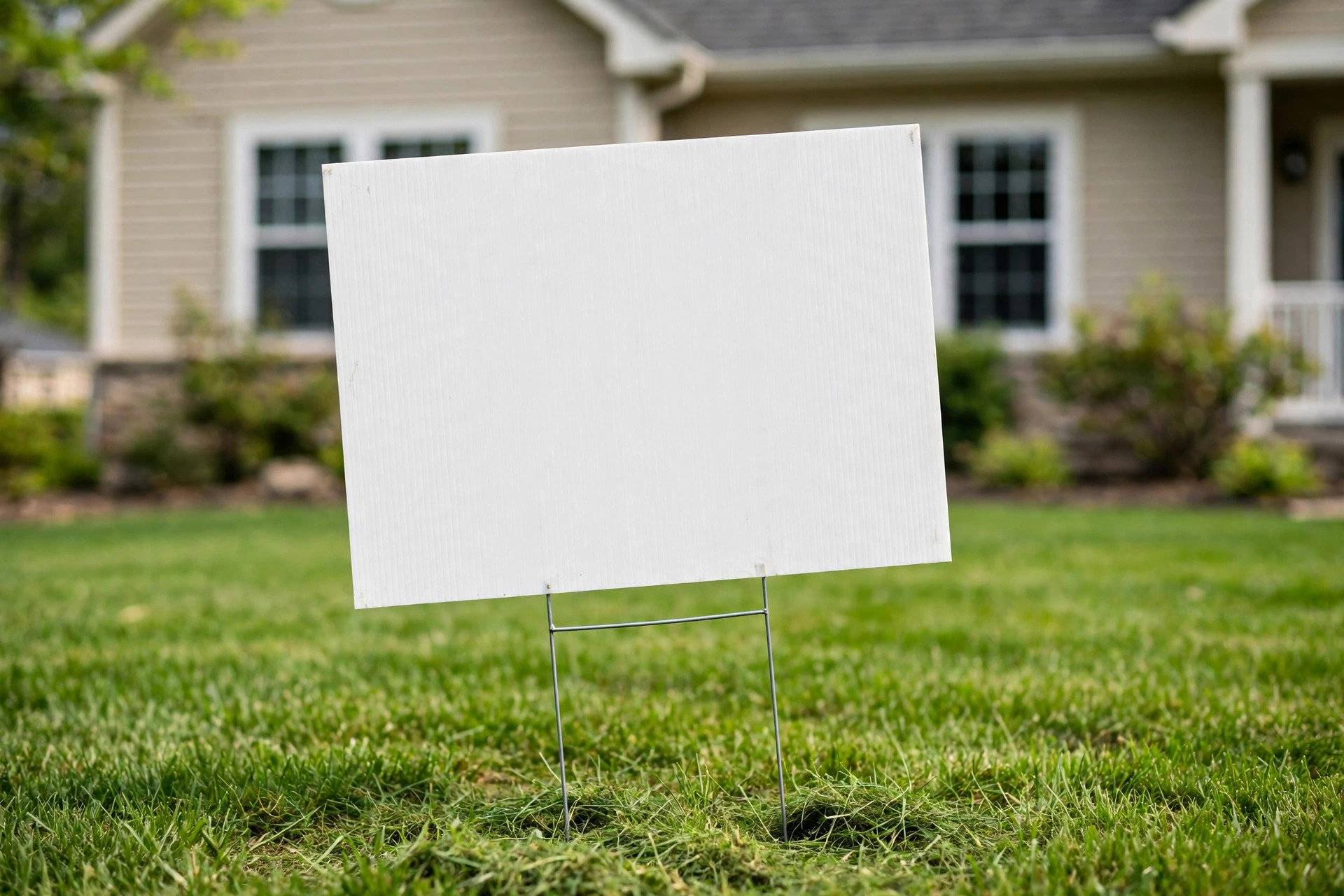
Two weeks in a proud customer’s yard beats two weeks of paid ads in the same neighborhood.
Frequently asked questions
When should landscapers start marketing for spring?
Eight weeks before your season opens, at minimum. Email past customers and launch pre-season ads in late winter, when competition for attention is low and homeowners are starting to look at their yards. Companies that wait until the grass is growing fight for leftovers.
What is the best advertising for a landscaping business?
Before and after photos and videos, distributed everywhere: your Google Business Profile, your website gallery, and Facebook and Instagram ads aimed at your service area. Landscaping is visual, so proof outperforms promises. Pair it with door hangers around active jobs for neighborhood-level wins.
How do landscapers get commercial accounts?
Through relationships and proposals, not ads. Build a one-page capability sheet with insurance proof and photos, then work property managers, HOA boards, and facility managers with calls, visits, and follow-up. Bid in fall for next year’s contracts when budgets are being set.
How much should a landscaping company spend on marketing?
Many healthy companies spend 5 to 10 percent of revenue, but start with the free systems: profile, reviews, photos, door hangers, and referrals. Add Facebook ads at a few hundred a month once you can track cost per booked estimate. Commercial outreach costs mainly your time.
Do yard signs and door hangers still work for landscapers?
Yes, because landscaping is visible and local. A sign in a finished yard and a hanger on the neighbor’s door convert well because the proof is right there on the street. They are also among the cheapest tactics available, at pennies to a few dollars per impression.
How do I keep my schedule full in the off-season?
Three moves: commercial maintenance contracts that run year-round, fall cleanup and next-year renewal campaigns booked before winter, and off-season services like snow removal or holiday lighting if they fit your market. Use the slow months for the commercial outreach you skip during the rush.
Fill next season’s schedule before it starts
Digital Hayder builds marketing systems for landscaping companies: Google Business Profile optimization, local SEO, Facebook ads, review engines, and AI call answering that catches every peak-season inquiry. Tell us your service area and we will map the fastest path to packed routes.
Contact Us