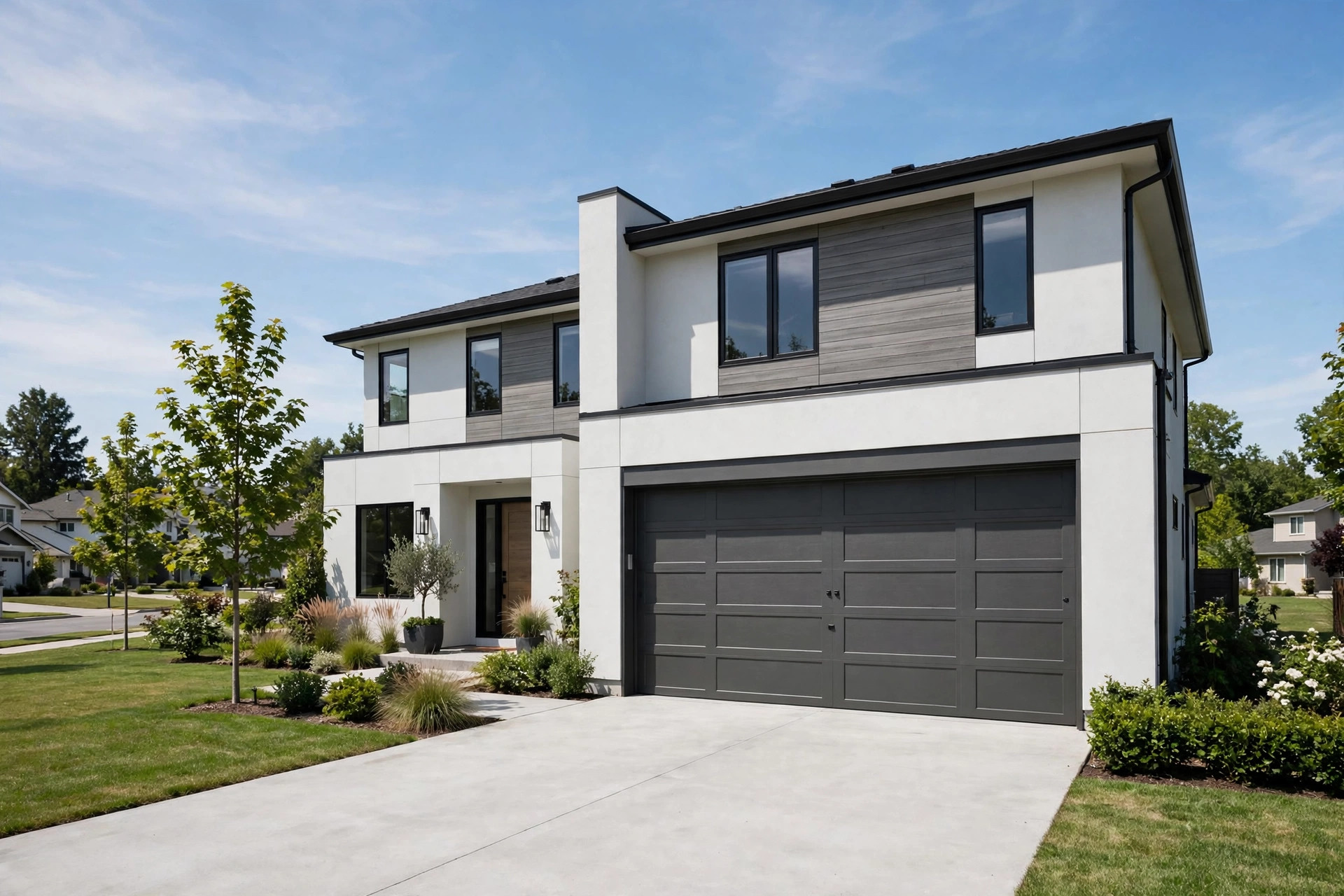
It is 10:40 at night and the garage door just jammed halfway down. The car is inside, the house is exposed, and the homeowner is standing in the driveway in a robe holding a phone. She is not browsing. She is not comparing design portfolios. She types “emergency garage door repair near me” and calls the first company whose site loads fast, shows a phone number she can tap, and says they do same-day service. That call is worth $250 to $600, and it goes to whichever site removes the friction first. This is what a garage door company website is for. Yes, it should show beautiful doors for the replacement shoppers, but its real job is catching the panicked caller at 10:40pm and the researcher comparing door styles on Sunday afternoon. This guide gives you the honest price bands for getting that site built, the garage-door-specific features it must have, what a cheap template site quietly costs you in missed emergency calls, and how to judge a web partner without needing to become a web expert yourself.
The quick answer
- The real price bands: DIY builders run $20 to $80 a month; freelancers charge $1,200 to $5,000; agencies charge $4,000 to $15,000 for a full build.
- What garage door sites must have: tap-to-call emergency CTAs on every page, same-day service pages, and product galleries organized by door style.
- The hidden cost of cheap: a slow template site with a buried phone number loses emergency calls to the competitor whose site loads in two seconds with the number on top.
- The ongoing costs: hosting and maintenance run $50 to $250 a month; local SEO and ads on top of that are what bring the calls.
- Vendor-neutral rule: judge every option by the same test: can a panicked homeowner call you in under ten seconds on a phone at night.
- What to look for: trade experience, conversion thinking before design talk, and full ownership of your domain, site, and content.
The honest price bands
Garage door websites cost less than pool builder websites and more than a Facebook page, which surprises nobody. The bands below are what companies in this trade actually pay. Judge each option against the 10:40pm test: a panicked homeowner on a phone, at night, needing to call you in under ten seconds.
DIY builders: $20 to $80 a month
Wix, Squarespace, and similar platforms get you a live site in a weekend. The trade-off is speed, SEO, and conversion detail. DIY sites tend to load slowly once you add the photo galleries a door company needs, and the phone number often ends up in the header where it is small and hard to tap on a phone. DIY is a reasonable placeholder for a brand-new company. Once you are running real call volume, the site is either helping or hurting, and a DIY site usually hurts on the emergency calls that pay the best.
Freelancers: $1,200 to $5,000 one time
A solid freelancer delivers a fast multi-page site with proper click-to-call buttons, service pages, and basic local SEO. This band is the sweet spot for many single-location garage door companies. The risk, as always with freelancers, is continuity: make sure you get admin access, the login credentials, and documentation from day one, because the person who built it may not be reachable in two years when something breaks.
Agencies: $4,000 to $15,000 or more
Agencies add copywriting, conversion strategy, and SEO from the start. The upper end buys professional photography direction, individual service-area pages, and content that ranks for “garage door repair [town]” across your market. Multi-location companies and those competing in large metros usually need this level. Monthly care plans of $150 to $500 are common. Read the contract: confirm you own the domain, the site, and the content if you leave, and get a defined list of what the monthly fee covers.
| Build option | Typical cost | What you get | The honest trade-off |
|---|---|---|---|
| DIY builder | $20 to $80 per month | A live site fast, templates, basic contact form | Slow load times, weak SEO, phone number hard to tap, looks small |
| Freelancer | $1,200 to $5,000 one time | Fast custom site, click-to-call, service pages, basic local SEO | Continuity risk; demand admin access and documentation |
| Small agency or studio | $4,000 to $8,000 one time | Design plus copywriting, conversion-focused, local SEO foundation | Higher upfront cost; check the monthly care terms |
| Full-service agency | $8,000 to $15,000 or more | Strategy, photography, service-area pages, SEO built in | Premium price; confirm ownership of everything |
| Ongoing care plan | $50 to $500 per month | Hosting, updates, backups, small changes | Make sure the included work is spelled out, not vague |
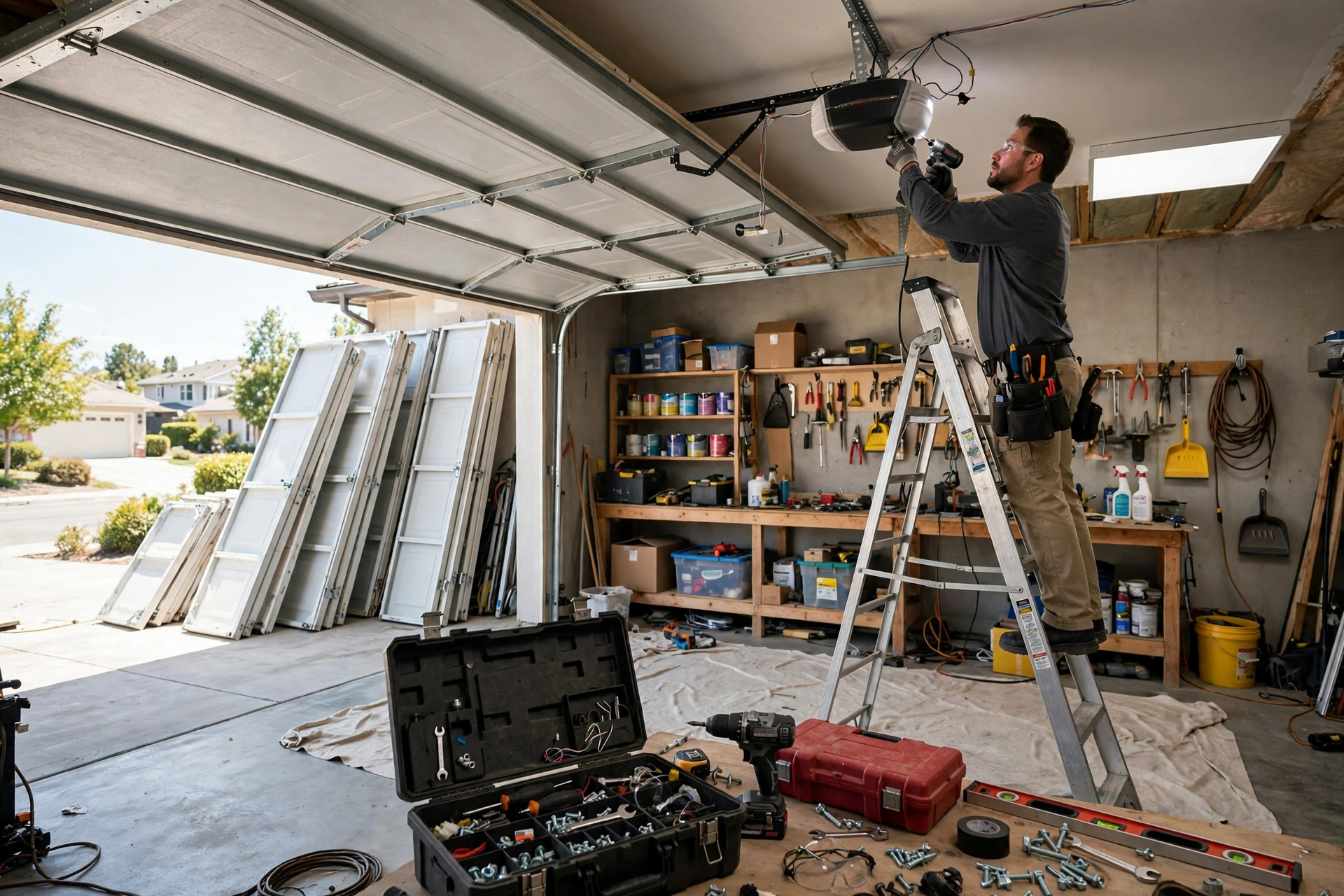
Service pages should show the real work. Customers trust photos of actual installs.
Garage-door-specific needs
A garage door site is not a generic contractor site with different photos. The buying behavior is specific: half your customers are in a hurry and half are researching a purchase they will live with for twenty years. The site has to serve both at once. Compare with how other trades price their sites in our plumbing website cost guide.
Emergency call CTAs on every page
The phone number must be visible, tappable, and large on every page, especially on mobile. A sticky call button that follows the scroll on phones is the single highest-converting element on a garage door site. Pair it with the words that match the search: “24/7 emergency garage door repair” and “same-day service.” Do not make the panicked customer hunt. The competitor’s number is one back-button away, and at 10:40pm nobody is patient. If you run after-hours calls, an AI phone agent for home services or missed-call text-back setup makes sure the calls the site generates actually get answered.
Same-day service pages
Build dedicated pages for each core service: emergency repair, spring replacement, opener installation, new door installation, and commercial doors. Each page should say what the service includes, show realistic price ranges, and repeat the same-day promise with the call button nearby. These pages also rank. “Garage door spring replacement [town]” is a search with urgent intent, and the company with the dedicated page beats the company whose services are all crammed on one page. One page per service per real service area is the structure that wins local search in this trade.
Product galleries organized by door style
The replacement shopper is buying looks. Organize the gallery the way they think: by style (carriage house, modern glass, traditional raised panel), by material (steel, wood, composite), and by color. Each door gets multiple installed photos, not catalog renders. Shoppers distrust stock photography in this trade because every home looks different. Before and after pairs of real installs in real neighborhoods sell the project. Add a simple visualizer or style quiz if the budget allows, but real photos of real homes matter more than any tool.
What a cheap template site costs in missed emergency calls
This is the math nobody shows you when selling a $499 website. Emergency garage door calls are high-intent, low-shopping, and time-sensitive. Industry experience across home services keeps finding the same pattern: most customers contact the first business that responds, and in an emergency the effect is extreme. Now run the numbers on a slow template site. If your site loads in six seconds instead of two, a meaningful share of mobile visitors leave before it finishes. If the phone number is small text in the header instead of a sticky tap-to-call button, another share gives up and hits back. If there is no same-day service page, Google sends the “emergency garage door repair near me” searcher to the competitor who has one.
Say the site loses you just three emergency calls a month that a fast, conversion-built site would have captured. At $350 average ticket, that is $1,050 a month, or $12,600 a year, walking to competitors. The $499 template did not save you money. It cost you twelve thousand dollars a year in the highest-margin calls in your business, quietly, with no line item to point at. Vendor-neutral does not mean all options are equal. It means judging them by the same honest test: speed, the tap-to-call button, and the service pages, measured on a phone, at night, by someone in a hurry.
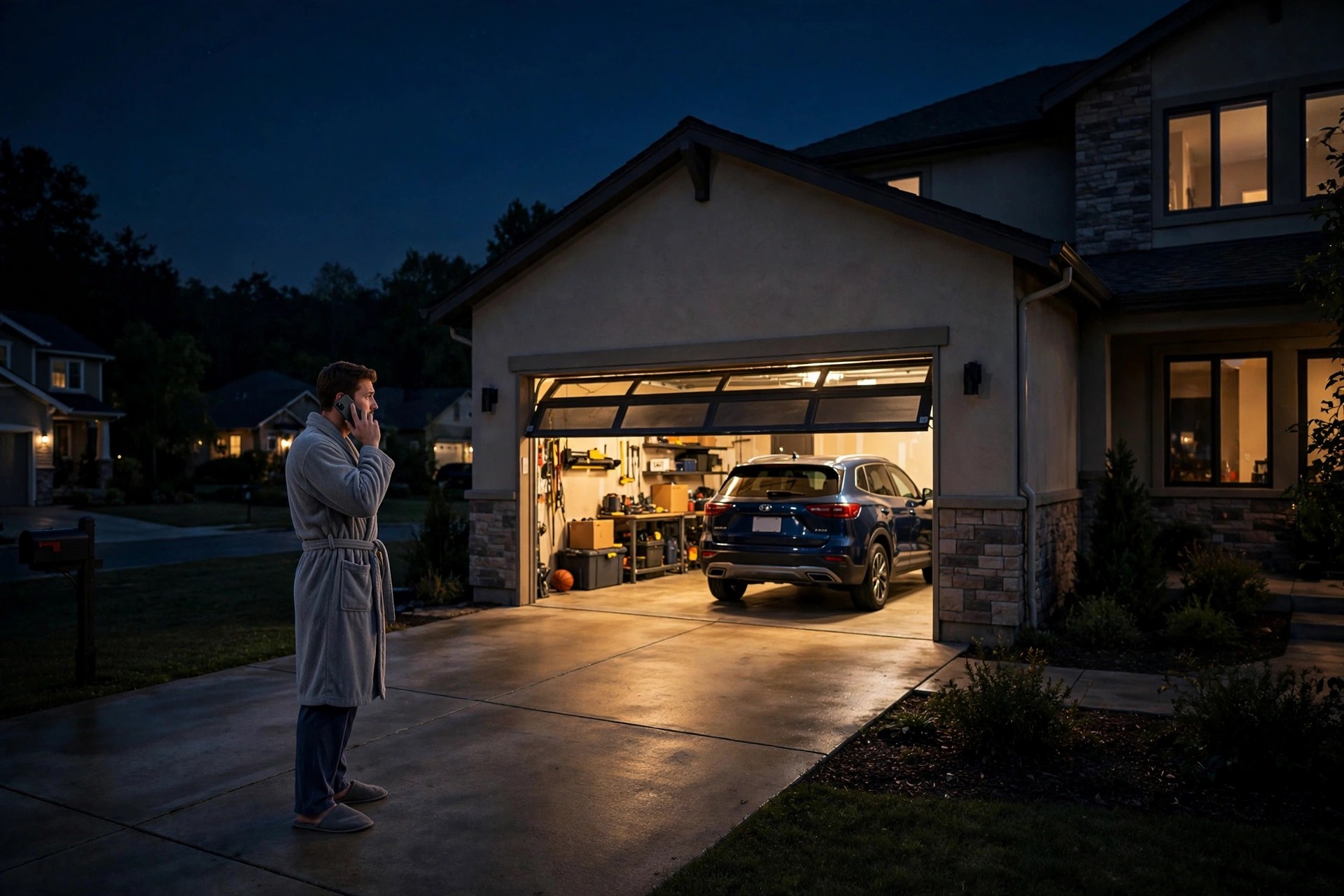
The emergency caller decides in seconds. Speed and a tappable number win the call.
The costs after launch
Budget the running costs before you approve the build, or the site slowly decays into the template you were trying to escape.
Hosting, maintenance, and updates
Expect $50 to $250 a month for hosting, security updates, backups, and small changes. A hacked or broken site does not just look bad; it stops ranking and stops converting. A care plan with a defined task list is worth it. A vague monthly fee with no list is not.
Marketing that brings the calls
The site converts traffic; it does not create it. Most garage door companies spend $800 to $2,500 a month on local SEO, Google Business Profile management, review generation, and Google Ads for emergency keywords. Emergency keywords are expensive per click, which is exactly why the site must convert: every click that bounces on a slow page is money burned. Track calls from the site with call tracking numbers so you know what the site earns, not just how many people visit.
Your rollout checklist
Use this to evaluate any quote, from any vendor, on equal terms.
- 1Run the 10:40pm test. On your phone, at night, can a stranger find your number and tap to call in under ten seconds.
- 2Check the speed. The homepage must load in under three seconds on a phone. Ask every vendor for the target number in writing.
- 3Demand the sticky call button. A tap-to-call button that follows the scroll on mobile, on every page, no exceptions.
- 4Map the service pages. Emergency repair, springs, openers, new doors, commercial. One page each, with price ranges and the call button.
- 5Organize the gallery by style. Real installed photos sorted by style and material, no stock renders as the main event.
- 6Confirm ownership. Domain, site files, and content are yours, with admin access from day one, in writing.
- 7Budget launch plus running. Build price plus care plan plus a marketing budget, approved together.
- 8Track calls, not visits. Call tracking on the site so every vendor is judged by booked jobs, not traffic.
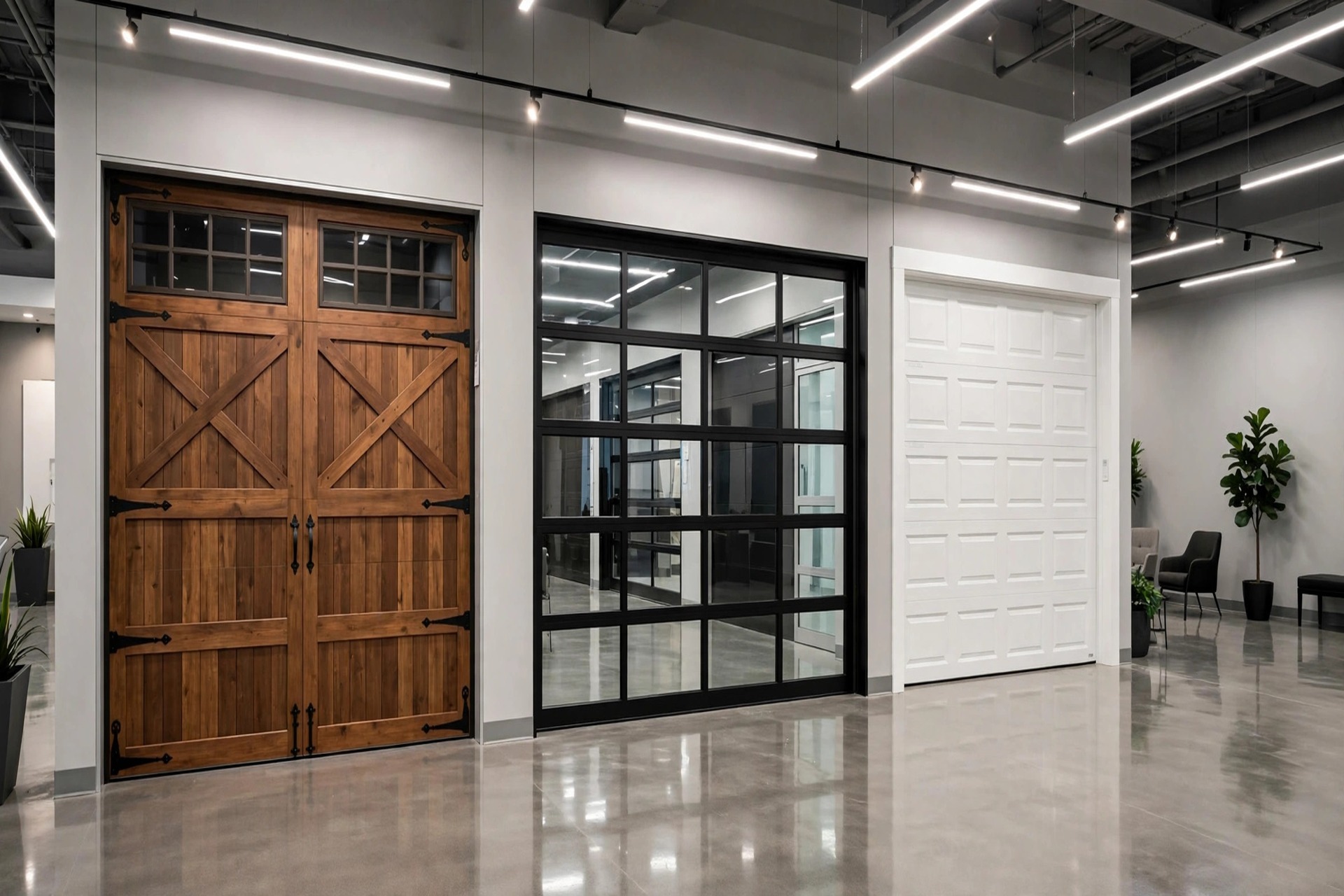
Replacement shoppers buy on looks. The gallery should show real doors on real homes.
Frequently asked questions
How much does a garage door company website cost?
DIY builders run $20 to $80 a month, freelancers charge $1,200 to $5,000, and agencies charge $4,000 to $15,000 or more. Most single-location companies land in the $2,500 to $8,000 range for a fast, conversion-focused build, plus $50 to $250 a month for hosting and maintenance.
What is the most important feature on a garage door website?
A large, tappable phone number on every page, ideally as a sticky call button on mobile. Emergency callers decide in seconds, and the site that makes calling effortless wins the job.
Can a template site work for a garage door company?
As a temporary placeholder, yes. As a long-term asset, templates usually fail the 10:40pm test: slow load times, buried phone numbers, and no dedicated service pages for the searches that bring emergency calls. The missed calls cost more than the template saved.
How fast should the site load?
Under three seconds on a mobile connection. Every extra second loses a share of visitors, and emergency searchers are the least patient visitors on the internet. Get the speed target in writing from whoever builds the site.
Do I need separate pages for each service?
Yes. Emergency repair, spring replacement, opener installation, new door installation, and commercial doors each deserve their own page with price ranges and a call button. These pages rank for urgent searches and convert far better than one catch-all services page.
Should the site show prices?
Show realistic price ranges for common jobs, like spring replacement and opener installation. Ranges build trust and filter out shoppers whose budgets do not fit, which saves your office time on the phone.
What are the ongoing costs?
Hosting, updates, and backups run $50 to $250 a month. Marketing, local SEO and ads for emergency keywords, typically runs $800 to $2,500 a month. The site must convert that paid traffic, so speed and the call button directly affect your ad ROI.
Get a website that wins the 10:40pm call
Digital Hayder builds fast, conversion-focused websites for garage door companies: sticky tap-to-call buttons, same-day service pages, style galleries, and local SEO that puts you first when the door jams at night. Tell us about your market and we will show you what your site should be earning.
Contact Us