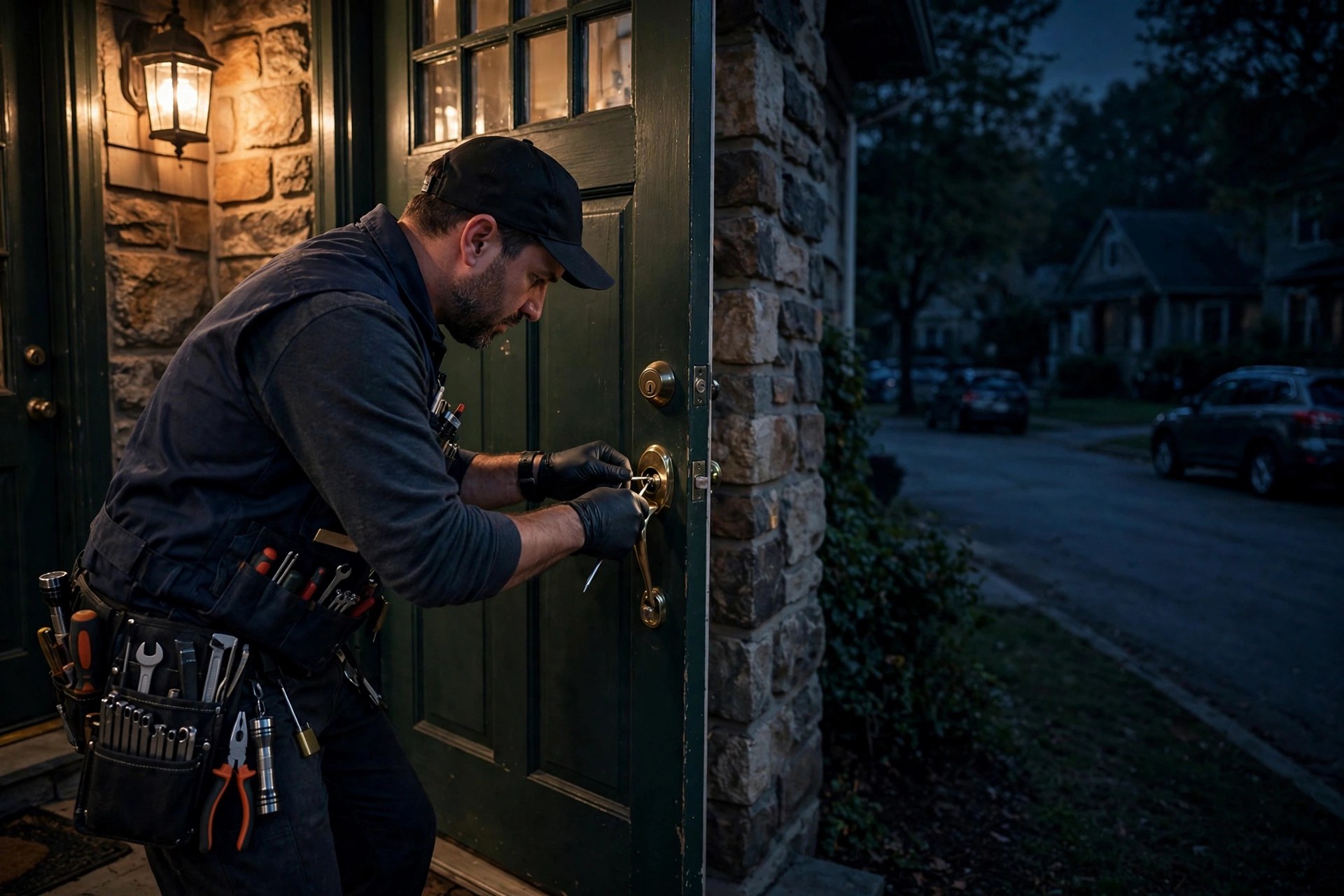
It is 2:14 AM. A driver is locked out of his car in a grocery store parking lot, phone battery at 12 percent. He searches for a locksmith, opens the first website, and finds a phone number that rings to voicemail and a form that promises a call back in the morning. He opens the second website. A chatbot answers instantly: it confirms his location is in the service area, quotes the emergency lockout range, and says a technician can be there in 25 minutes. He taps to confirm. That $140 lockout job, plus the rekey he books for his new apartment the next week, goes to the company that answered at 2 AM. Locksmith work is emergency-driven, and the emergencies do not keep office hours. This guide covers the AI chatbot for locksmiths: instant answers to the 2 AM inquiry, service-area checks, honest price ranges for lockouts versus rekeys, call-back capture when the owner is on another job, multilingual support for metro areas, the quote-to-dispatch handoff, and flat-monthly versus per-lead pricing.
The quick answer
- Answers the 2 AM lockout: instant response with service-area check and arrival estimate, while the caller is still on your site.
- Honest price ranges up front: lockout vs. rekey vs. key replacement ranges that build trust and filter price shoppers.
- Call-back capture: when every tech is on a job, the chatbot takes the details and queues the callback in priority order.
- Multilingual for metro areas: Spanish and other common local languages handled automatically, no bilingual staff needed.
- Quote-to-dispatch handoff: confirmed jobs go straight to dispatch with location, lock type, and quoted range.
- Pricing models compared: flat monthly $150 to $400 vs. $15 to $45 per lead, with the math on which wins.
Locksmith leads are perishable
Most trades sell to planners. Locksmiths sell to people in distress. A locked-out customer is standing outside, cold, late, or worried about a child inside. They do not comparison shop for a week. They call down the Google results until someone answers. Industry data on emergency services has shown that the overwhelming majority of callers who reach voicemail simply call the next listing. Every unanswered 2 AM inquiry is not a delayed sale. It is a sale that happened for someone else ten minutes later.
The chatbot changes the outcome of that moment. It answers in seconds, confirms coverage, gives the price range, and dispatches or queues the job. The customer who was about to bounce stays, because someone, something, responded. For a one or two-person locksmith operation, that instant response is the difference between owning the night shift and losing it to whoever picks up.
The 2 AM inquiry, handled in under a minute
The emergency flow should be ruthlessly short. A locked-out customer will not answer twelve questions. Three questions, then action: What is locked, home, car, or business? Where are you, address or cross streets for the service-area check? What is your phone number for the technician? That is enough to quote the range, give an arrival estimate, and dispatch. Everything else can wait.
The service-area check is the critical step most locksmith sites skip. Nothing frustrates a customer more than a quote followed by “sorry, we do not cover that area.” The chatbot should confirm coverage from the ZIP or address before quoting, using your defined service zones. If the customer is outside the area, it should say so immediately and, if you have referral partners, offer one. Honesty at 2 AM earns the review even when you cannot take the job.
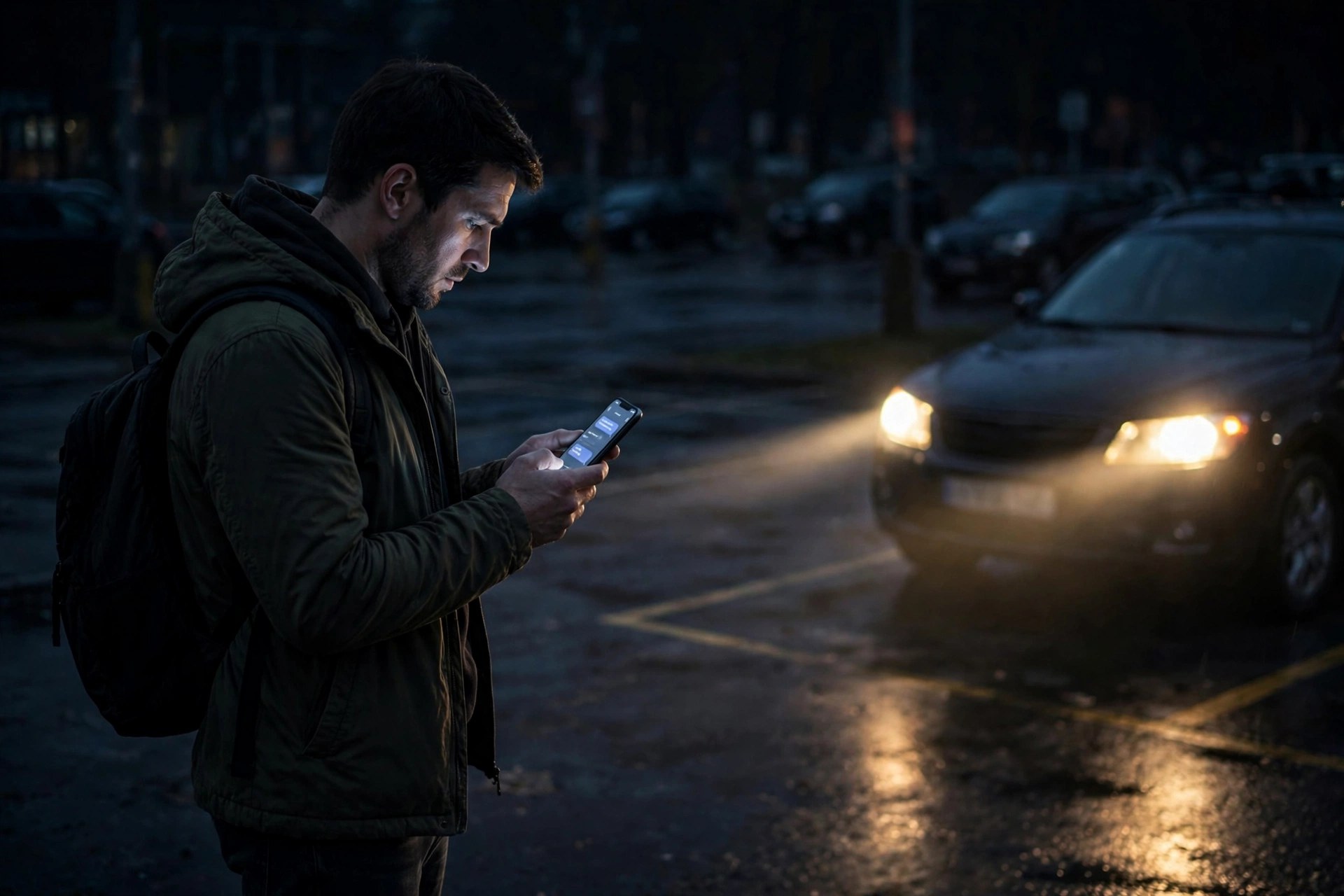
The locked-out customer decides in seconds. The chatbot answers before they open the next listing.
Price ranges that build trust instead of arguments
Locksmith pricing has a trust problem, and every owner knows it. Scam operators quote $25 on the phone and charge $300 at the door, which makes honest locksmiths look guilty by association. A chatbot that states clear ranges up front is a trust weapon: it proves you are the honest shop before the technician arrives.
Load your real ranges for every common service, split by standard hours and nights or weekends. The chatbot should state the range, explain what moves a job within it, and promise the technician confirms the exact price before starting work. That last line is what closes the anxious caller.
| Service | Standard hours | Nights and weekends | What changes the price |
|---|---|---|---|
| Home lockout | $75 to $120 | $120 to $180 | Lock type, time of arrival, distance |
| Car lockout | $75 to $130 | $120 to $190 | Key type, transponder, vehicle make |
| Rekey (per visit) | $75 to $150 | $120 to $200 | Number of locks, high-security cylinders |
| Lock replacement | $100 to $250 | $150 to $300 | Hardware grade, smart lock vs. standard |
| Car key replacement | $120 to $300 | $180 to $400 | Transponder programming, key fob vs. blade |
Lockouts vs. rekeys vs. scheduled work
The chatbot should route by urgency automatically. Lockouts get the emergency flow: location check, range, arrival estimate, dispatch. Rekeys and lock changes are scheduled work: the chatbot collects the details, how many locks, what type, and books a daytime appointment, often at a lower price point that wins the job. Key replacements branch by vehicle: year, make, and model determine whether it is a simple cut or a programmed transponder key, and the chatbot should set that expectation before the technician rolls.
Call-back capture when every tech is busy
Sometimes nobody can answer, not even the chatbot’s dispatch button, because every technician is already on a job. This is where most locksmiths lose the lead entirely. The chatbot should switch to priority capture mode: take the service needed, the location, and the callback number, then tell the customer exactly what happens next. “All our techs are on calls right now. You are second in the queue and we will call you within 20 minutes.” The queue order, the timestamp, and the full details go to the owner’s phone as a text so nothing is lost.
The follow-through is what makes this work. The callback has to happen when promised, which means the queue alert needs to be loud and the owner needs a one-tap way to call back from the notification. A chatbot that captures and a human who calls back in 15 minutes beats a voicemail every time.
Multilingual support for metro areas
In most metro areas, a meaningful share of locksmith customers prefer Spanish, and in many markets there are sizable communities speaking other languages. Hiring bilingual dispatchers for the night shift is not realistic for a small shop. A chatbot that handles the emergency flow in Spanish, and other common local languages, captures jobs that currently bounce off an English-only site.
Keep it practical: the chatbot should detect or ask the preferred language at the start of the emergency flow, run the full lockout sequence in that language, and flag the language preference on the dispatch so the technician knows what to expect. You do not need twenty languages. You need the two or three your market actually speaks, done well.
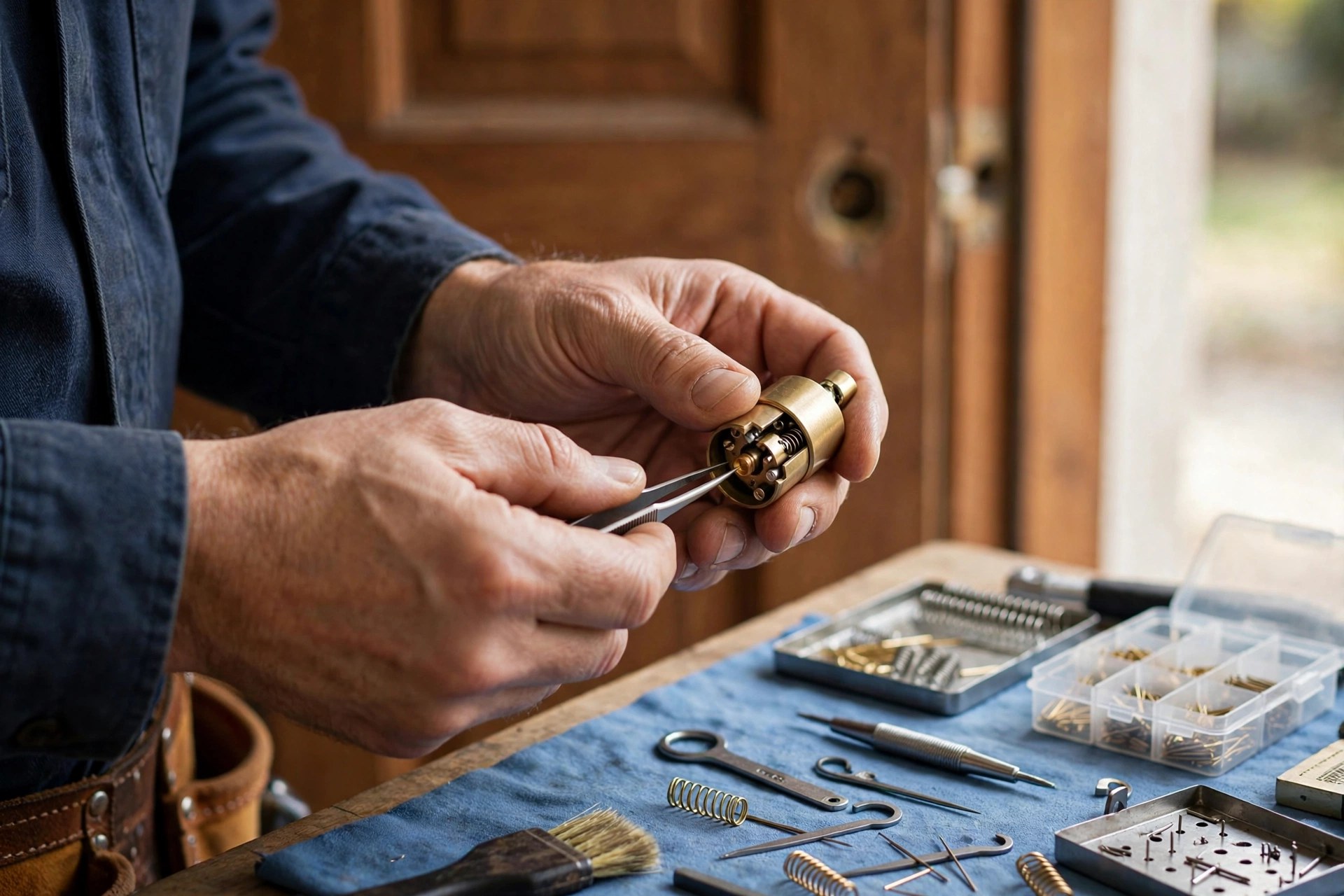
Rekeys and lock changes are scheduled daytime work the chatbot books at a lower price point that wins the job.
The quote-to-dispatch handoff
When a customer confirms an emergency job in the chat, the handoff to dispatch should be instant and complete. The technician gets a text with everything: service type, exact location, customer name and phone, lock or vehicle details, the quoted range, and the language flag. No re-asking the customer questions they already answered. That handoff is the moment the chatbot earns its keep, because a smooth arrival is what turns a $140 lockout into a five-star review and a future rekey customer.
For scheduled work, the handoff is a booked appointment in the calendar with the job summary attached. For the owner-operator, the morning starts with a clean list: today’s rekeys, today’s lock installs, and last night’s captured emergencies already quoted and queued. If you are also evaluating phone coverage, our guide to how to choose an AI receptionist covers the voice side of the same problem.
Flat-monthly vs. per-lead pricing
Locksmith chatbots are commonly sold two ways, and the right choice depends on volume. Flat monthly plans run $150 to $400 a month for the platform, the emergency flow, dispatch integration, and maintenance. Per-lead plans charge $15 to $45 for each qualified lead the chatbot produces, with no or low monthly fee.
The math decides it. A locksmith doing 60 emergency calls a month from the website will pay far more per-lead than flat. A shop just starting out, getting a handful of web inquiries a month, may prefer per-lead until volume justifies the flat plan. Watch the definition of a qualified lead in per-lead contracts: a wrong-number or out-of-area chat should never count. Get the definition in writing, and make sure the monthly plan includes the dispatch texts and multilingual support rather than charging them as add-ons.
Your rollout checklist
Two weeks is enough for a focused locksmith build, because the emergency flow is short by design.
- 1Build the emergency flow first. Three questions: what is locked, where are you, what is your number. Then quote, arrival estimate, dispatch.
- 2Load your service zones. ZIP-based coverage check before any quote, with an honest out-of-area message and referral option.
- 3Load real price ranges. Every service, standard vs. night and weekend rates, plus what moves a job within the range.
- 4Build the scheduled-work branch. Rekeys, lock changes, and key replacements get detail collection and daytime appointment booking.
- 5Set up priority call-back capture. Queue order, timestamps, and full details texted to the owner when every tech is busy.
- 6Enable multilingual support. The two or three languages your market actually speaks, with the language flag on every dispatch.
- 7Connect quote-to-dispatch. Confirmed jobs text the technician the full details instantly; scheduled work books into the calendar.
- 8Test the 2 AM scenario. Mock chats as a locked-out driver, a locked-out homeowner, and an out-of-area caller before launch.
The van does not need to be everywhere. The chatbot just needs to answer everywhere, instantly.
Frequently asked questions
How much does a chatbot cost a locksmith?
Flat plans run $150 to $400 a month plus $1,000 to $2,500 setup. Per-lead plans charge $15 to $45 per qualified lead. High-volume shops save with flat monthly; new shops may prefer per-lead until volume grows.
Can a chatbot handle a 2 AM lockout?
Yes, that is its best use. It confirms the service area, quotes the emergency range, takes the location and phone number, and dispatches the job or queues the callback, all in under a minute while the caller is still on your site.
How does it check my service area?
You define your coverage zones by ZIP code or radius. The chatbot checks the customer’s location before quoting and gives an honest out-of-area message, optionally with a referral, so nobody gets a quote you cannot honor.
Can it work in Spanish?
Yes. It can run the full emergency flow in Spanish and other common local languages, and it flags the language preference on the dispatch so the technician knows what to expect on arrival.
What happens when all my techs are busy?
The chatbot switches to priority capture: it takes the service details, location, and callback number, tells the customer their queue position and expected callback time, and texts the full details to the owner immediately.
Does it replace my dispatch process?
It feeds your dispatch process. Confirmed emergency jobs go straight to the technician by text with the full details. You keep whatever dispatch method you use; the chatbot just makes sure no job enters it incomplete or late.
How do I know per-lead billing is fair?
Get the definition of a qualified lead in writing before you sign. Wrong numbers, out-of-area chats, and spam should never count. If the provider cannot define it clearly, choose a flat monthly plan instead.
Catch every lockout lead, even at 2 AM
Digital Hayder builds AI chatbots for locksmiths: instant emergency response, service-area checks, honest price ranges, multilingual support, and quote-to-dispatch handoff. Tell us about your locksmith business and we will design the chatbot around your services and coverage area.
Contact Us