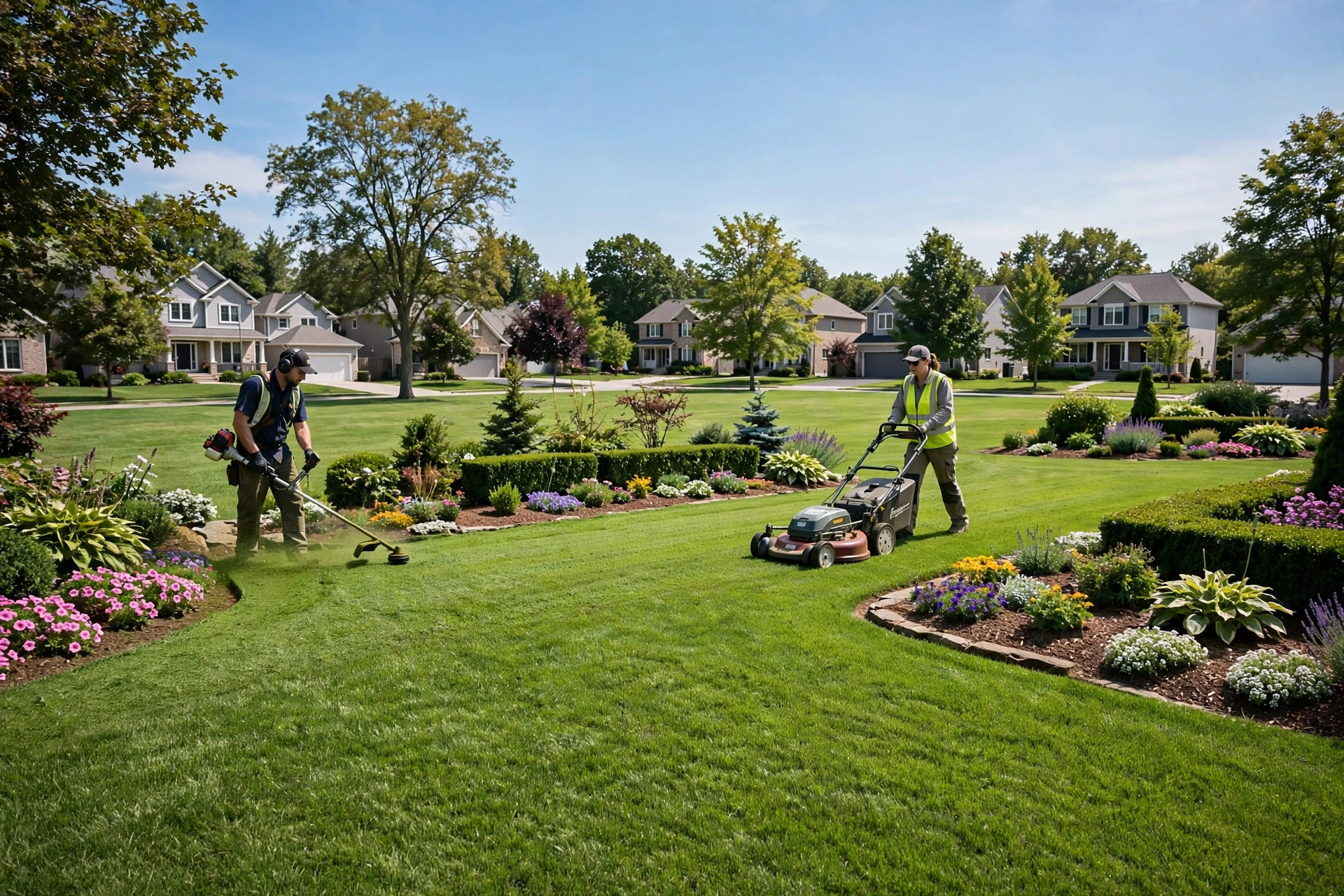
It is Saturday morning and a homeowner is staring at his front yard, which has not been mowed in five weeks. His in-laws arrive next weekend, the bushes are swallowing the walkway, and the mulch beds are more weed than mulch. He searches for a landscaper near him. Your company’s website says “Call for a free estimate” with a phone number nobody answers on weekends. He does not call. The company ranked below you has an AI chatbot that opens right away: “What are you looking to get done?” He types “mowing and cleanup.” The bot asks about lawn size, how often he wants service, whether the mulch beds need attention, and asks for two quick photos of the yard. Two minutes later he has a ballpark quote, a site visit booked for Tuesday at 4pm, and a text confirmation. Your crew is the better crew. It does not matter, because his yard is now on someone else’s Tuesday schedule. This is the landscaping sale in miniature: the estimate is everything, and the company that gives it first usually gets the job. This guide shows how an AI chatbot for landscaping companies runs the estimate flow, from guided quoting to photo requests to booked site visits, and what it costs.
The quick answer
- The core job: turn “how much does this cost” into a quoted range, a photo-backed estimate request, and a site visit on the calendar, at any hour.
- Guided quoting: the chatbot asks about lawn size, service frequency, and add-ons like mulch and cleanup, then gives a realistic price range.
- Photo requests: two or three photos of the property let you quote accurately and arrive at the site visit already informed.
- Site visit booking: visits land on the real crew calendar with the property details and photos attached, so the estimator walks in prepared.
- Seasonal training: the bot knows spring cleanups, summer mowing, fall leaf removal, and winter services, plus storm-season surge handling.
- What it costs: about $150 to $500 per month for most landscaping companies, with quoting and photo flows in the mid to upper part of that range.
The estimate is the whole sale in landscaping
Landscaping buyers behave differently from most service buyers. They rarely call ready to hire; they arrive with a vague project and one question, “how much will this cost,” and they ask it of three companies at once. Studies of local consumer behavior keep finding that most customers contact the first business that responds, and in landscaping the response that matters is the estimate. The company that gives a fast, concrete number earns the site visit. The company that says “call us Monday” earns nothing.
The timing works against most landscapers. Quote requests spike on weekends and evenings, exactly when crews are off and the office phone is unanswered. Meanwhile the owner is on a mower or at a job site during the day, so even weekday inquiries sit for hours. An AI chatbot that runs the estimate flow around the clock closes this gap completely: it answers the pricing question, collects the quoting details, and books the site visit while competitors are still planning to call back. The voice side of this matters too; our AI phone agent for home services guide covers live call handling for the callers the chatbot never sees.
How the chatbot runs the estimate flow
The estimate flow is the heart of the system. It has three stages, and each one is designed to feel like talking to a knowledgeable estimator, not filling out a form.
Guided quoting: lawn size, frequency, and add-ons
Most homeowners cannot describe their project in estimator terms, so the chatbot asks the questions your estimator would ask. How big is the lawn: small yard, average suburban lot, or acreage. How often do they want service: weekly, biweekly, or one-time cleanup. Then the add-ons that grow the ticket: mulch bed refresh, hedge trimming, leaf removal, fertilization, and seasonal color. Each answer narrows the price range the bot gives. “Weekly mowing for an average lot in our service area runs $45 to $65 per visit, and adding the mulch beds this spring would be a one-time $300 to $500 depending on the bed size” is an answer that keeps the conversation alive. “Call for pricing” ends it. The ranges are trained from your real pricing and locked, with an on-site confirmation disclaimer, so the bot never invents a number.
Photo requests that make quotes accurate
Photos are the chatbot’s superpower in landscaping. After the guided questions, the bot asks for two or three quick photos: the front yard, the specific problem area, and anything unusual like a slope or a fence gate the crew needs to know about. A thirty-second photo tells you more than ten minutes of description: the lawn’s actual size, the weed situation, the bed edges, the access points. Photos also protect your pricing. When the site visit confirms what the photos showed, your quote stands on evidence. Train the bot to ask for photos at the right moment, after the homeowner is engaged but before the quote range, and to explain why: “A quick photo helps us give you an accurate range instead of guessing.”
Booking the site visit on the real calendar
The flow ends where the sale begins: a site visit on the estimator’s calendar. The chatbot offers real visit slots, confirms the address and the best contact number, and attaches everything collected so far: the service details, the price range discussed, and the photos. The estimator arrives knowing the lawn size, the add-ons discussed, and what the property looks like. That preparation shows in the visit, and it shortens the sales cycle. If the homeowner cannot make any offered slot, the bot takes their details and flags them for a callback, and the follow-up sequence nudges them if they go quiet. No estimate request should ever end with “we will be in touch” and no date.
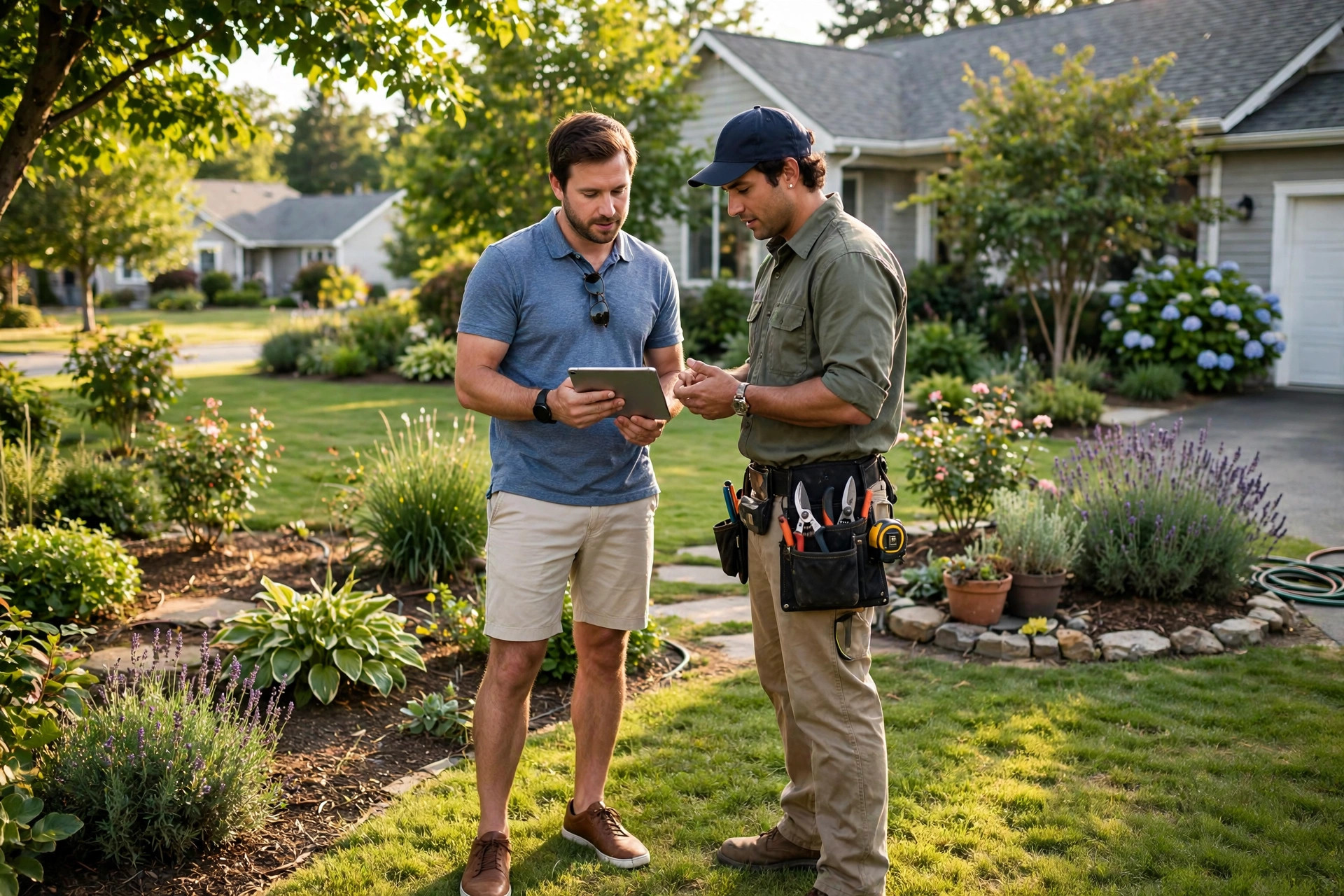
Guided quoting turns a vague “how much” into a site visit on the calendar, with photos and details attached.
Training the bot for seasons and storm spikes
Landscaping is a seasonal business, and the chatbot has to know what season it is. In spring, it leads with cleanups, mulch, and new mowing contracts. In summer, it focuses on recurring mowing and hedge work. In fall, leaf removal and final cuts. In winter, it pivots to whatever your off-season offers: snow services, holiday lighting, or early-bird spring bookings. This seasonal awareness is trained into the conversation openers and the service suggestions, and it should be reviewed each quarter. A bot still pushing spring cleanups in October looks broken, even if everything else works.
Storm season is the stress test. After a big storm, quote requests for fallen branches, debris cleanup, and damaged trees spike for a few days, and every landscaper in the area gets buried. The chatbot absorbs the surge: it answers every inquiry instantly, triages by urgency (hanging limbs and blocked driveways first), collects photos, and books assessments in priority order. Without it, the surge goes to voicemail and the jobs go to whoever answered. With it, you work through an orderly queue instead of a missed-call pile. The same surge logic applies to snow season if you offer it: the bot books plowing assessments while you are out plowing.
Buyer guide: what the system costs and what to expect
Landscaping chatbots sit in the middle of the trade range: more complex than a basic lead form because of the guided quoting and photo flows, simpler than trades with emergency dispatch. Working ranges below.
| Cost component | Typical range | Notes |
|---|---|---|
| Monthly platform, basic | About $150 to $300 per month | Lead capture, service FAQ, estimate-request forms, email alerts |
| Monthly platform, with quoting | About $300 to $500 per month | Guided quoting flows, photo collection, site-visit booking, CRM sync, follow-up sequences |
| One-time setup | About $500 to $1,500 once | Pricing and service training, quoting logic, calendar connection, seasonal content |
| Service-area mapping | Included to about $300 once | Zip-code or radius rules so the bot only books visits you can actually serve |
| Managed service via an agency | About $500 to $1,000 per month | Setup, seasonal content updates, transcript review, and reporting handled for you |
What to check before you sign
Three things matter most in the evaluation. First, the quoting logic must be yours: your price ranges, your add-ons, your service-area rules, editable by you without calling the vendor. Second, the photos must land where your estimator sees them, attached to the booking in your calendar or CRM, not buried in a chat transcript nobody opens. Third, the seasonal content must be easy to update. If changing the spring cleanup pricing requires a support ticket, you will stop updating it, and the bot will slowly go stale. The same website principles apply here; our AI chatbot for home services websites guide covers the integration side in more detail.
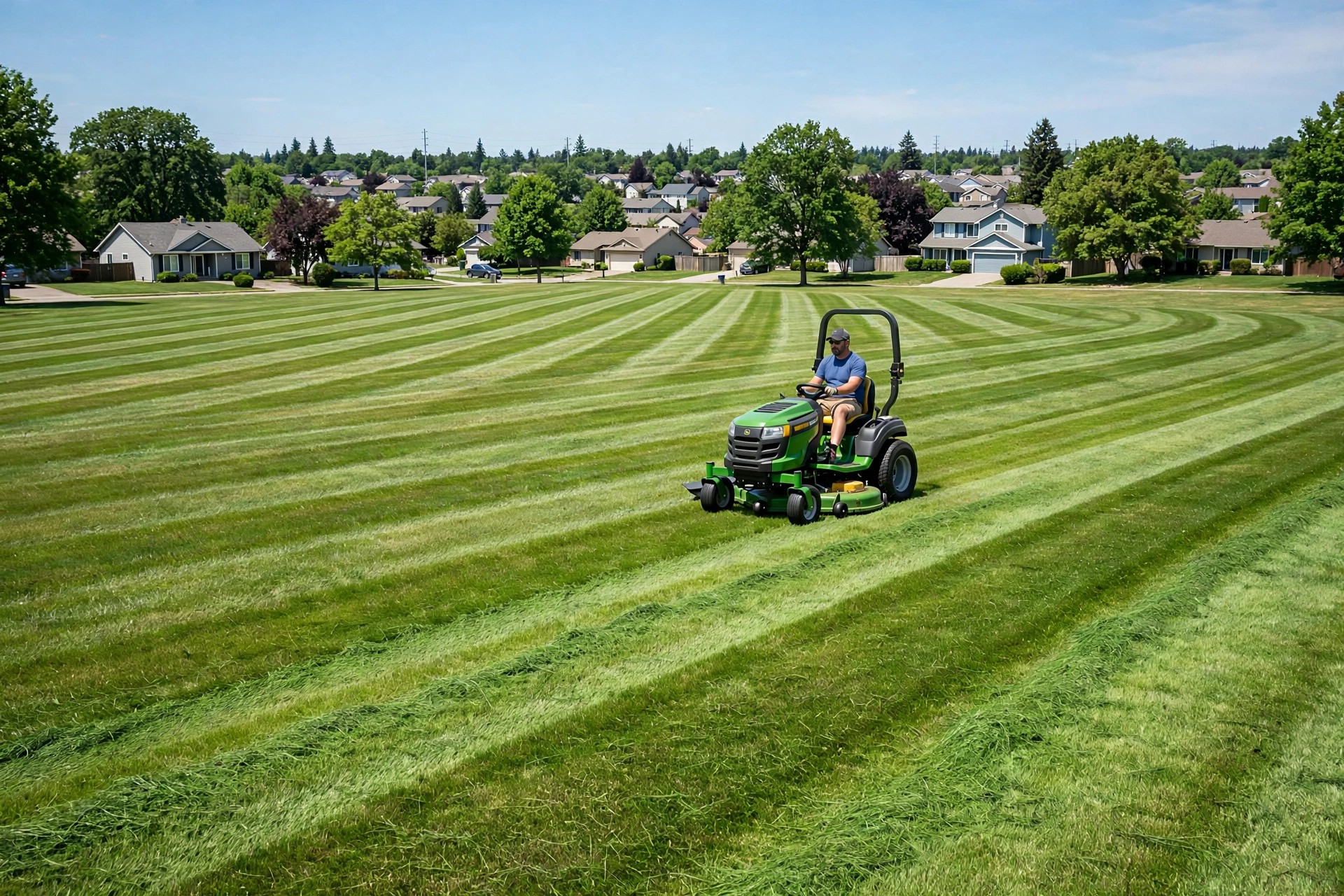
Lawn size, frequency, and add-ons: the chatbot collects the quoting details before the estimator ever visits.
Your rollout checklist
Roll this out in order. The pricing and quoting logic gets locked before anything else, because every conversation runs on it.
- 1Document your pricing ranges. Per-visit mowing by lot size, cleanup pricing, mulch per yard or per bed, hedge trimming, and every add-on, each with the on-site confirmation disclaimer.
- 2Build the guided quoting flow. Lawn size, service frequency, and add-on questions in estimator order, each answer narrowing the range the bot gives.
- 3Set the photo request step. Two or three photos at the right moment in the flow, with a plain explanation of why they help, landing attached to the booking.
- 4Define the service area. Zip codes or a radius rule the bot enforces, with a polite out-of-area message and a referral option instead of a dead end.
- 5Connect the site-visit calendar. Real estimator slots, property details and photos attached to each booking, and automatic updates when your team moves a visit.
- 6Train the seasonal content. Current-season services lead the conversation, off-season services are available but not pushed, and storm-surge triage rules are ready before storm season.
- 7Build the follow-up sequences. Instant confirmation, a nudge for unfinished estimate flows, and a check-in for quotes that went quiet after the site visit.
- 8Review transcripts weekly for a month. Tighten the quoting answers and the photo prompts from real conversations, then move to a monthly review with a seasonal content refresh each quarter.
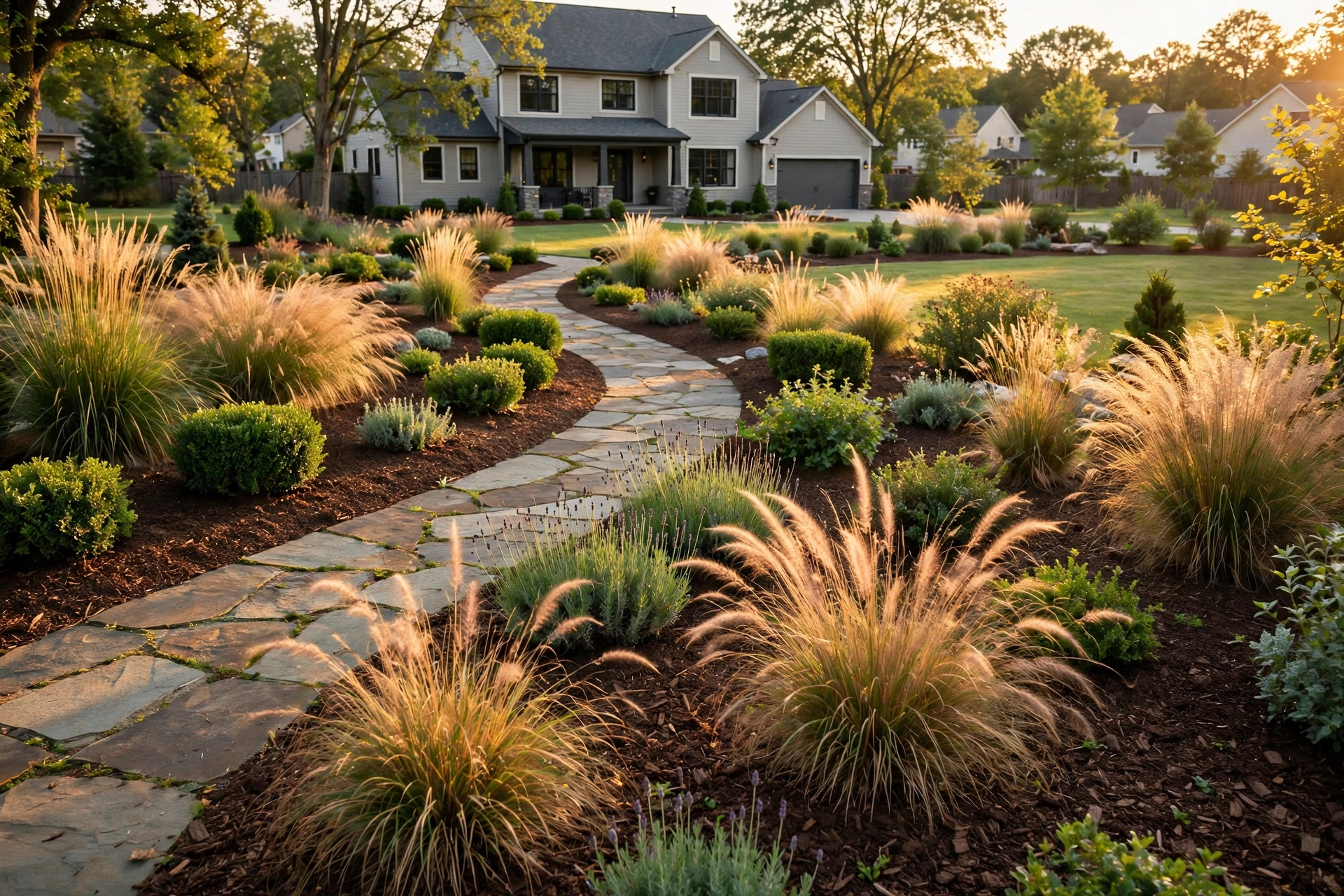
The chatbot asks about seasonal services like mulch, cleanup, and planting too, growing the average ticket.
Frequently asked questions
Can a chatbot really quote landscaping work accurately?
It gives a realistic range, not a final price, and that is exactly what the homeowner wants at this stage. The guided questions and photos narrow the range enough to keep the conversation alive, and the site visit confirms the final number. The range is trained from your real pricing and locked, so the bot never invents figures.
Will homeowners actually send photos of their yard?
Most will, if you ask at the right moment and explain why. After the homeowner is engaged in the quoting flow, a request like “a quick photo helps us give you an accurate range instead of guessing” gets answered far more often than a photo demand on the first screen. Two or three photos is the sweet spot.
What happens outside our service area?
The bot enforces your service-area rules and gives out-of-area visitors a polite answer instead of a dead end: the boundary, and ideally a referral option. This keeps your estimator’s calendar free of visits you would never take.
How does it handle the storm-season surge?
It answers every inquiry instantly, triages by urgency with your rules, collects photos, and books assessments in priority order. Instead of a missed-call pile after a storm, you get an orderly queue with the urgent jobs first and full context attached to each one.
Do we need to update it every season?
Yes, but it is a short review, not a rebuild. Each quarter, update the service openers, pricing for seasonal work, and any new offerings. The storm-surge rules should be checked before storm season. A bot pushing last season’s services looks broken, so put the review on the calendar.
How is this different from an online quote form?
A form collects details and waits for your callback. The chatbot holds a conversation: it asks follow-up questions like your estimator would, gives a price range in the moment, requests photos, and books the site visit into a real slot. The difference is measured in booked visits, not submitted forms. For visibility that feeds the chatbot more traffic, see our Google Business Profile optimization guide for contractors.
Quote every inquiry, even on Saturday night
Digital Hayder builds AI chatbots for landscaping companies that run the full estimate flow: guided quoting, photo collection, site-visit booking, and seasonal content, all around the clock. Tell us about your services and pricing and we will build the quoting logic around them.
Contact Us