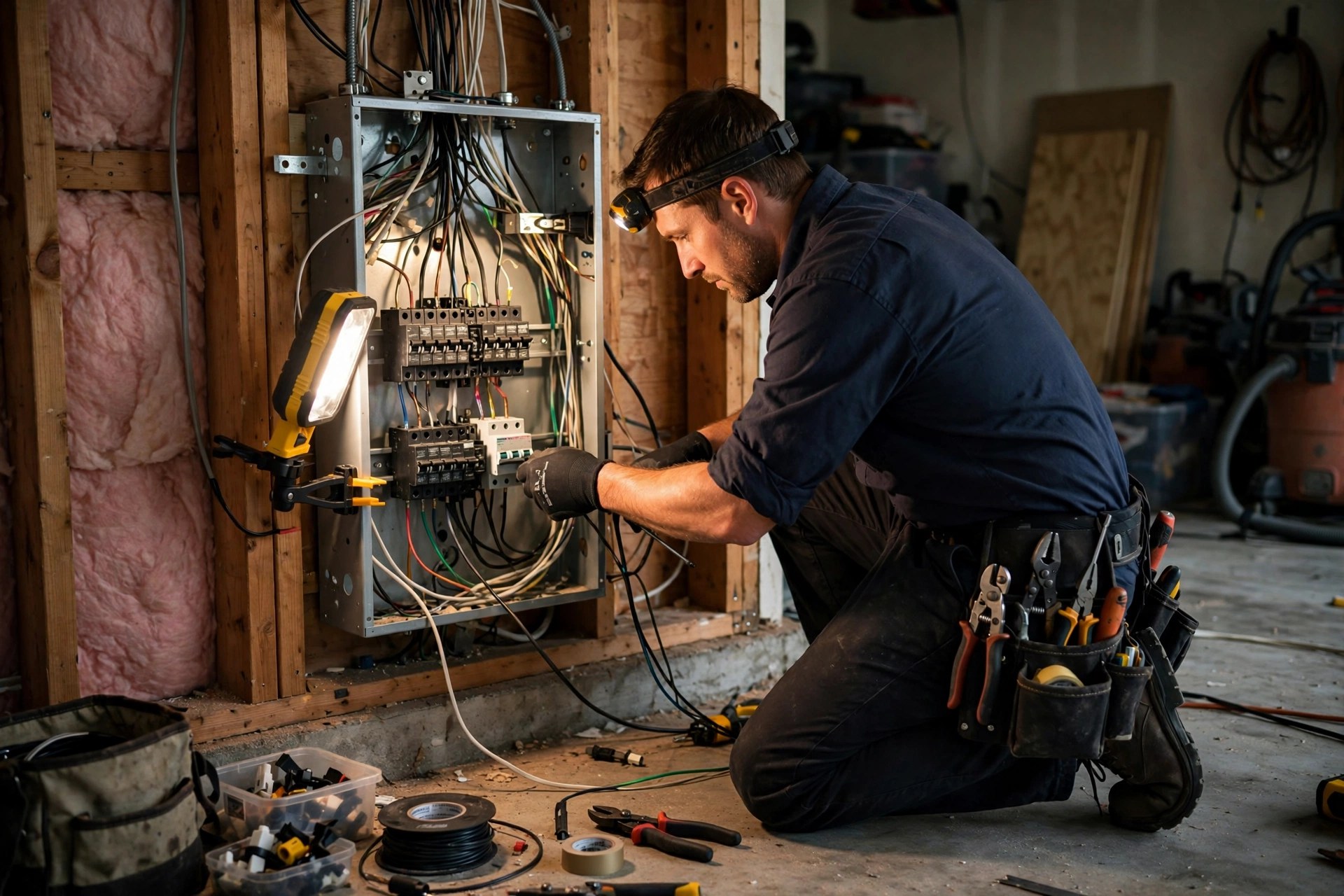
The electrician is in an attic, tracing a fault in 100-degree heat, with both hands on a junction box. His phone lights up in his tool bag: a website inquiry from a homeowner whose panel keeps tripping. He will not see it for three hours. By then she has called the company that answered her chat in thirty seconds, confirmed they handle panel upgrades, and booked a service call for tomorrow morning. Electricians miss calls from the job site because the job site is exactly where they have to be: in attics, crawl spaces, and panel rooms where phones stay in the truck. This guide covers the AI chatbot for electrical companies: how it qualifies the request, collects photos and property details, books the service call, follows up on open quotes, what it costs, and how it connects to the scheduling tools electricians already use.
The quick answer
- Qualifies by job type: panel upgrade, rewiring, troubleshooting, or install, each with its own question path.
- Photos and property details: panel photos, property age, and symptoms collected before the truck rolls.
- Service calls booked live: real open slots in the chat, confirmed by text, synced to the scheduling tool.
- Follows up on open quotes: automatic check-ins recover the panel upgrades and rewires that stall after the estimate.
- Scheduling integrations: bookings land in the tools the office already uses, with the job summary attached.
- Typical cost: $150 to $450 a month plus setup, usually covered by a single booked service call.
Electricians lose work they never hear about
Electrical work has a cruel availability problem. The owner is usually the lead tech, which means the best person to talk to a customer is the person least able to pick up the phone. The phone rings while they are under a house. The contact form fills up while they are on a ladder. And electrical customers are impatient for good reason: a tripping breaker, a dead outlet, or a panel that smells hot feels urgent even when it is not an emergency. Lead response research has shown for years that the first company to respond wins a disproportionate share of jobs, and in electrical, “first” is often measured in minutes, not hours.
The chatbot answers from the job site without interrupting the job. It qualifies the request, collects the details the tech needs to price it, and books the service call into the real schedule. The electrician stays in the attic. The next job gets booked anyway.
Qualifying the request by job type
Electrical inquiries split into very different jobs, and the questions that matter change completely between them. The chatbot should identify the job type in the first two questions, then branch.
Panel upgrades
Ask for the current amperage if known, the age of the home, and what is driving the upgrade: tripping breakers, a new EV charger, a renovation, or insurance requirements. Ask for a photo of the panel with the door open. Panel photos tell the estimator the brand, the available space, and whether it is one of the problematic panels that should be replaced on sight. Panel upgrades are high-value jobs, often $1,500 to $3,000, so this branch deserves the most careful qualification.
Rewiring
Ask for the age of the home, whether it is a full or partial rewire, the square footage, and any known issues like knob-and-tube or aluminum wiring. Rewires are the biggest residential jobs in electrical, $4,000 to $15,000 or more, and they are almost never quoted without a site visit. The chatbot should qualify, collect photos of the panel and problem areas, and book the estimate quickly rather than trying to price it in chat.
Troubleshooting and repairs
Ask what is happening in the customer’s own words: outlets dead, lights flickering, breaker tripping, burning smell. A burning smell or sparking gets flagged as urgent and routed to the soonest slot or an emergency callback. For standard troubleshooting, the chatbot collects the symptoms, the rooms affected, and the property details, then books a diagnostic visit. Honest triage here builds enormous trust: telling a customer their issue sounds like a simple breaker problem, and quoting the diagnostic fee up front, wins the call.
Installations
EV chargers, ceiling fans, recessed lighting, new circuits, generators. Ask what is being installed, the property details, and whether the panel has capacity, which the panel photo usually answers. These are the bread-and-butter scheduled jobs, and the chatbot should book them as efficiently as possible with clear price ranges stated up front.

Job-type qualification in the first two questions keeps panel upgrades, rewires, and repairs on separate paths.
Photos and property details that price the job
In electrical, a photo of the panel is worth a phone call. The chatbot should request it as a standard step for panel upgrades, rewires, and EV charger installs: panel with the door open, plus the meter if accessible. For troubleshooting, it should ask for photos of the problem area and a description of the symptoms. Property details matter too: age of the home, square footage, and whether the customer owns or rents, since landlords approve differently than owners.
Collect the address or ZIP early for the service-area check. Electrical licensing is jurisdictional, and nothing wastes time like quoting a job two counties outside the license area. The chatbot should confirm coverage before the conversation goes deep.
| Job type | What the chatbot asks | Typical price band | Booked as |
|---|---|---|---|
| Panel upgrade | Amperage, home age, reason, panel photo | $1,500 to $3,000 | Estimate visit |
| EV charger install | Charger type, panel capacity, garage distance from panel | $600 to $1,500 | Scheduled install |
| Troubleshooting visit | Symptoms, rooms affected, urgency flags | $150 to $400 diagnostic | Service call |
| Ceiling fan or fixture | Fixture type, ceiling height, existing wiring | $150 to $350 | Scheduled install |
| Full or partial rewire | Home age, wiring type, square footage | $4,000 to $15,000+ | Estimate visit |
Booking the service call into the real schedule
Every branch of the chatbot should end at the calendar. Once the job type is identified and the details collected, the chatbot offers two or three real open slots: “We have a diagnostic visit tomorrow between 8 and 10, or Thursday afternoon. Which works for you?” The booking carries the full job summary so the tech arrives knowing the symptoms, the property details, and the photos. Confirmation goes out by text immediately, with a reminder the day before.
The integration matters more than the interface. The booking must land in the scheduling tool the office actually uses, whether that is a field service platform, a shared calendar, or the CRM. Double entry kills adoption: if the office has to retype chatbot bookings, they will stop trusting the system within a month.
Following up on open quotes
Electrical estimates have a long tail. A panel upgrade quote sits on the kitchen counter for two weeks while the homeowner gets a second bid and checks with the spouse. A rewire quote stalls while they arrange financing. Most shops quote and wait, which means most open quotes die quietly. The chatbot platform should trigger follow-up automatically: a check-in three days after the estimate, a helpful nudge at ten days answering the common objections, and a final call at three weeks noting that material prices and scheduling availability change.
The follow-up should reference the actual job: “Just checking in on the panel upgrade quote from last Tuesday. We have install slots opening next week if you would like to lock one in.” Specific beats generic every time. Tracked honestly, quote follow-up is often the highest-return feature of the whole system, because it converts work you already paid to estimate. If calls are also slipping through, our guide to missed-call text-back for electricians covers the voice safety net.
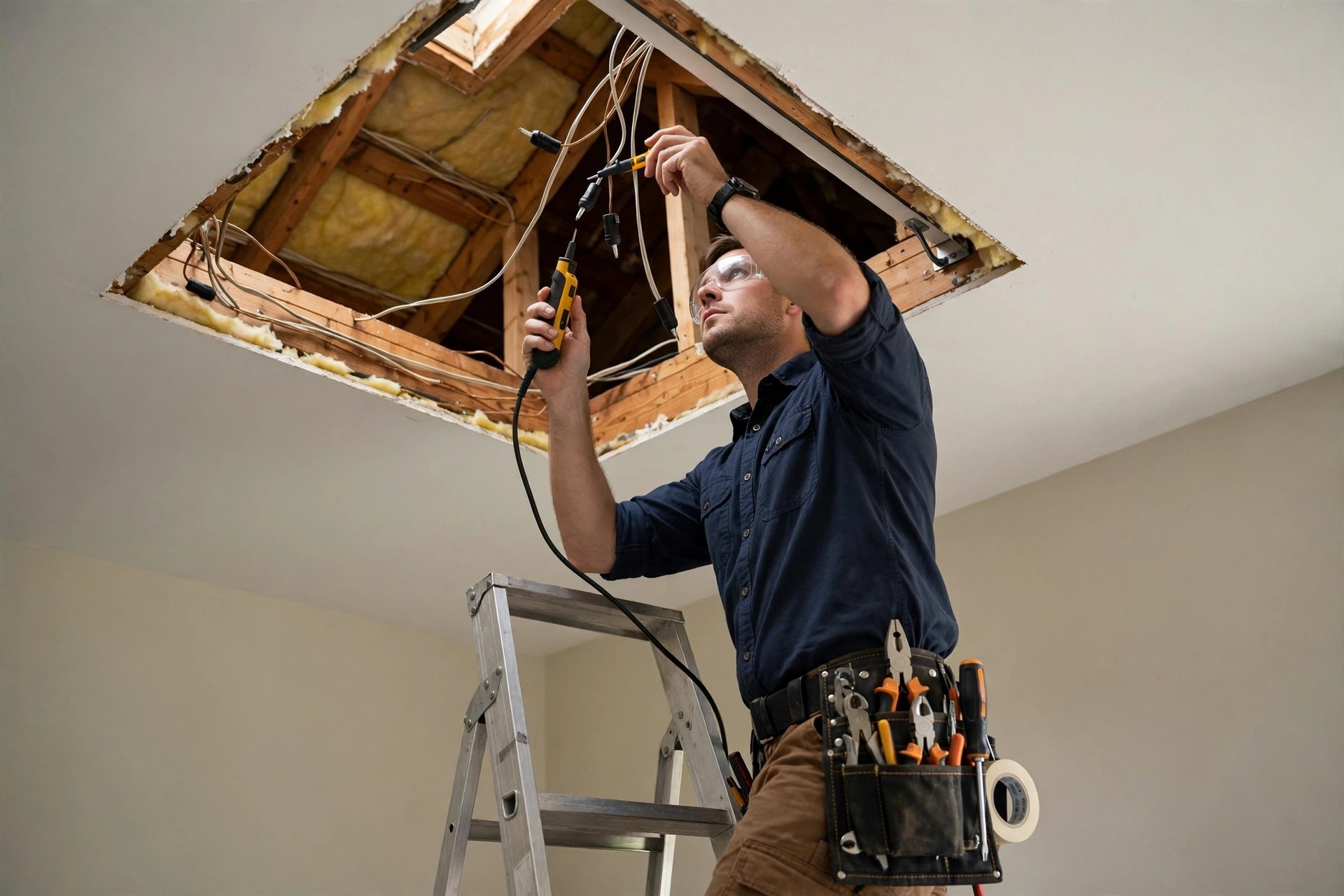
Symptom details collected in the chat let the tech arrive with the right parts and a head start.
What it costs and what to watch for
Setup runs $1,000 to $3,000 for the build: the four job-type branches, the photo collection steps, the scheduling integration, and loading your pricing and service area. Monthly runs $150 to $450 for the platform, maintenance, and retraining. For electrical, the integration quality is worth paying for: a chatbot wired into the real schedule and CRM pays back far faster than a standalone widget that emails the office.
Watch for per-lead pricing that looks cheap but scales badly, SMS fees buried in the fine print, and rebuild charges when you add services like generators or smart home work. A flat monthly plan with the integrations included is the cleanest structure for a shop doing steady residential work.
Your rollout checklist
Three weeks from kickoff to live, with the troubleshooting branch tested hardest since it carries the urgency flags.
- 1Branch by job type first. Panel upgrades, rewiring, troubleshooting, and installations each get their own question path and booking logic.
- 2Make the panel photo standard. Request it for upgrades, rewires, and EV chargers; it tells the estimator more than ten questions.
- 3Build the urgency flags. Burning smell, sparking, and sparking outlets route to the soonest slot or an emergency callback automatically.
- 4Load honest price bands. Every job type gets a real range plus the factors that move a job up or down.
- 5Connect the scheduling tool. Bookings land in the real schedule with the full job summary; no double entry, no separate inbox.
- 6Turn on quote follow-up. Automatic check-ins at 3, 10, and 21 days referencing the actual job quoted.
- 7Set the service-area check. Confirm coverage by ZIP before deep qualification, with an honest out-of-area message.
- 8Test every branch. Mock chats for panel upgrades, rewires, urgent troubleshooting, and EV chargers before launch; review transcripts monthly.
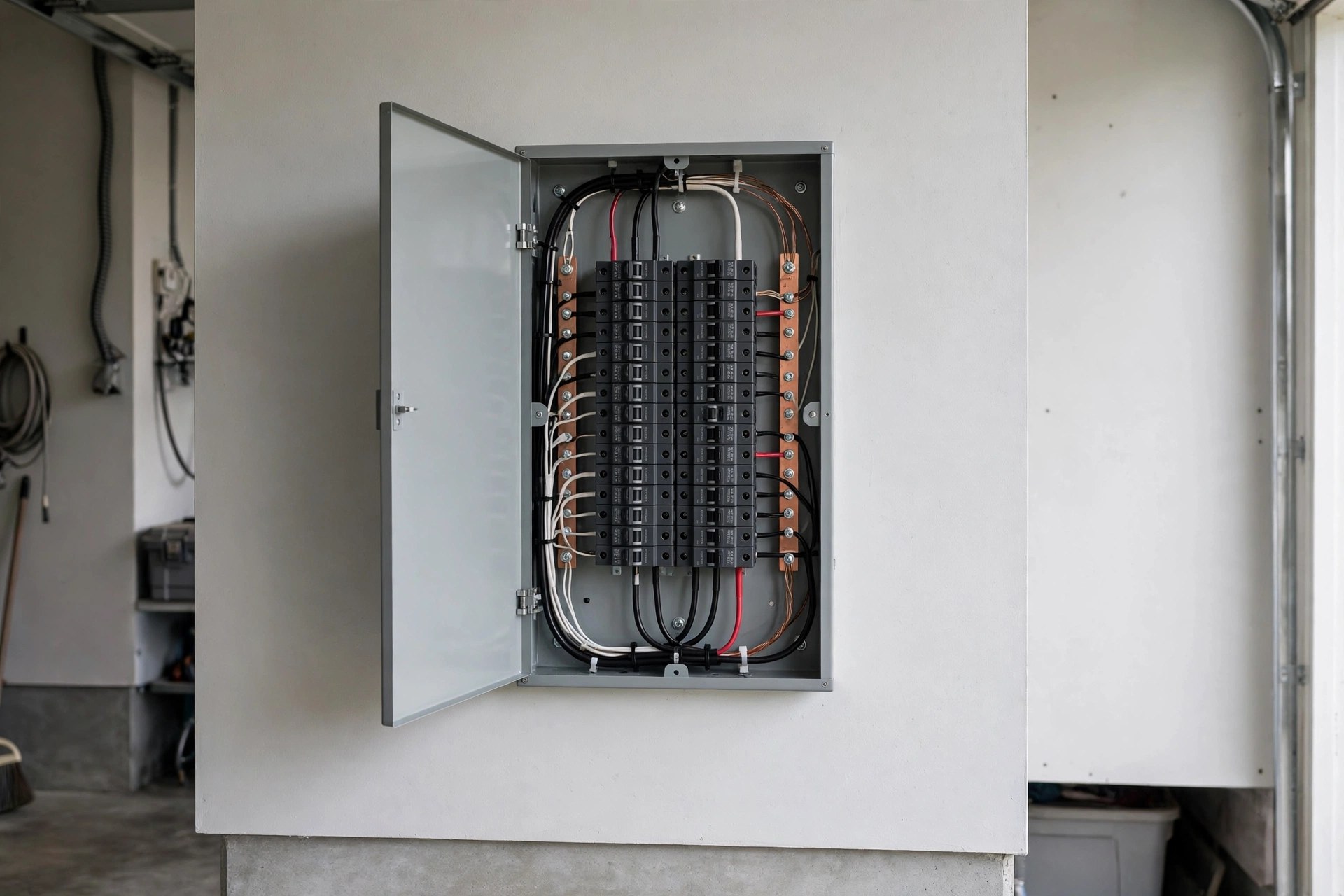
A panel photo in the chat tells the estimator the brand, capacity, and condition before the visit.
Frequently asked questions
How much does a chatbot cost an electrical company?
Expect $1,000 to $3,000 for setup and $150 to $450 a month. For most electrical shops, one booked service call or panel upgrade a month covers the cost several times over.
Can it tell a panel upgrade from a simple repair?
Yes. The qualification flow branches by job type in the first two questions, so panel upgrades, rewiring, troubleshooting, and installations each get the right questions, the right price ranges, and the right booking path.
What photos should it collect?
A photo of the electrical panel with the door open for upgrades, rewires, and EV chargers; photos of the problem area for troubleshooting; and property details like home age and square footage. The panel photo alone often tells the estimator what the visit will involve.
Does it handle electrical emergencies?
It triages them. Burning smells, sparking, and sparking outlets get flagged as urgent and routed to the soonest available slot or an emergency callback. It does not replace emergency judgment; it makes sure urgent callers reach a human fast.
Will it work with my scheduling software?
Most chatbot platforms integrate with common field service software, shared calendars, and CRMs. Confirm your specific scheduling tool is supported before signing, because the integration is what makes the system trustworthy.
How does the quote follow-up work?
After an estimate goes out, the system sends automatic check-ins at 3, 10, and 21 days, each referencing the actual job quoted. It recovers the panel upgrades and rewires that stall after the estimate instead of letting them die quietly.
How long does setup take?
About three weeks: building the four job-type branches, loading your pricing and service area, connecting the scheduling tool, testing with mock conversations, and launching.
Quote requests answered around the clock
Digital Hayder builds AI chatbots for electrical companies: job-type qualification, panel photo collection, service call booking, quote follow-up, and scheduling integrations. Tell us about your electrical business and we will design the chatbot around your services and pricing.
Contact Us