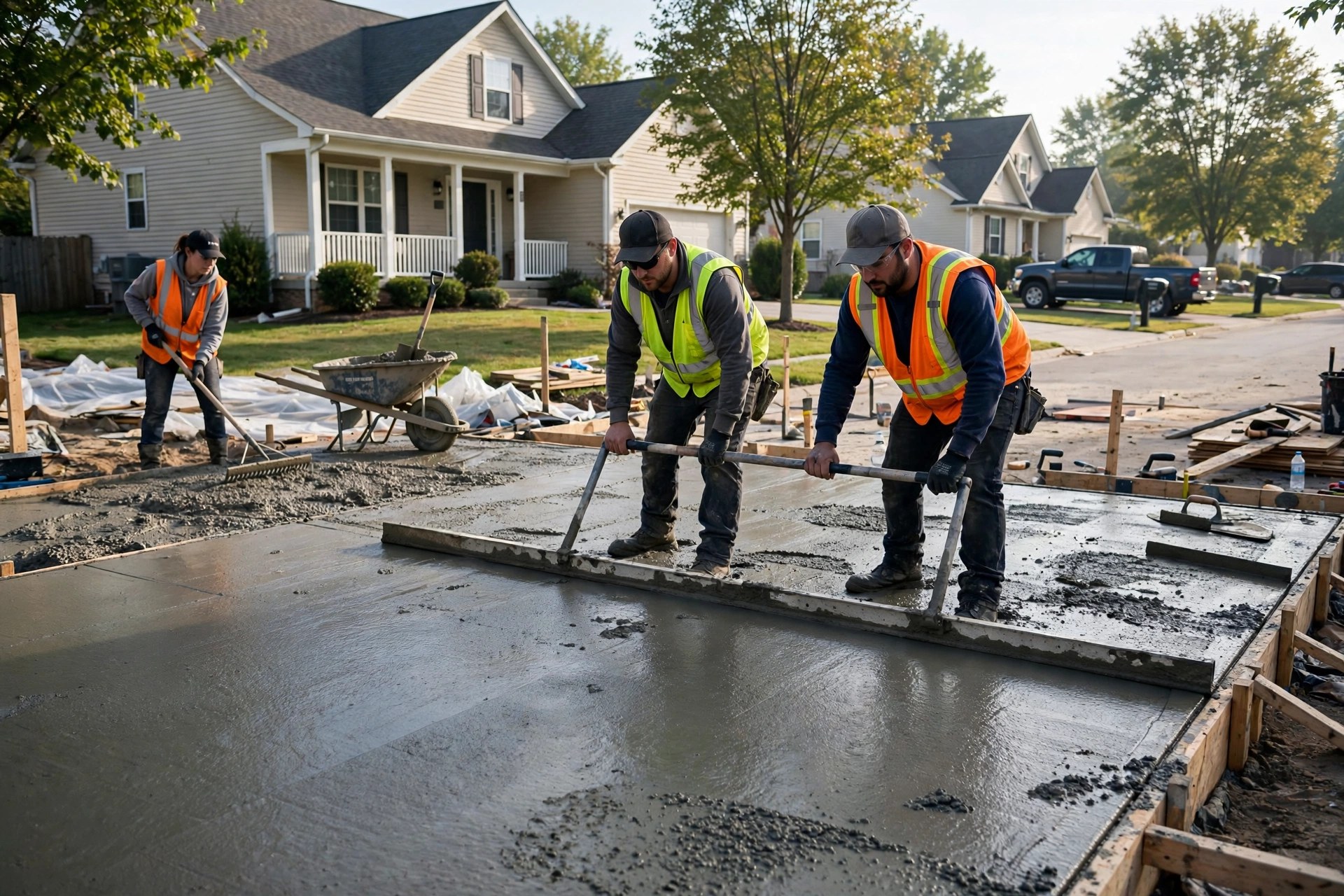
A homeowner watches his cracked driveway get worse every winter and finally decides to replace it this spring. He contacts three concrete contractors through their websites. The first responds the next morning with a few questions and a site visit slot. The second replies four days later. The third never replies. The first contractor gets the job, a $9,000 driveway replacement, before the others even pick up the phone. Concrete work runs on estimates: driveways, patios, slabs, and decorative jobs are all measured, priced per square foot, and sold at the kitchen table. The contractor who answers first, asks the right questions, and books the site visit fastest wins. This guide shows how an AI chatbot for concrete contractors turns website visitors into real jobs: the guided estimate flow for every job type, photo collection for existing conditions, site visit booking straight into the schedule, training on square-footage pricing, handling the spring rush, and what a small crew should expect to pay.
The quick answer
- Estimate flow is the hook: the chatbot guides each visitor through driveways, patios, slabs, or decorative work with the right questions for each.
- Photos of existing conditions: cracked concrete photos let the estimator know if it is a replacement, a repair, or a full tear-out.
- Site visits booked live: it offers real open slots and locks the visit while the homeowner is motivated.
- Trained on square-footage pricing: it answers ballpark questions from your real $/sq ft bands and hands off firm quotes to you.
- Built for the spring rush: it absorbs the seasonal spike in inquiries without extra staff or missed requests.
- Small-crew pricing: expect $150 to $450 a month plus setup, usually recovered by a single booked job.
Why concrete estimates stall without fast follow-up
Concrete is a considered purchase. A driveway replacement costs several thousand dollars, the homeowner compares multiple bids, and the decision takes days or weeks. But the window to make the shortlist is measured in minutes. Sales research has consistently shown that the first contractor to respond has an outsized chance of winning the job, and that leads contacted within five minutes convert far better than leads contacted even an hour later. The problem is structural: concrete crews pour, finish, and form all day. The phone rings while the crew is knee-deep in a slab, and the contact form waits until the owner is back at the desk, which might be 8 PM or next Tuesday.
A chatbot closes that gap. It answers in seconds, runs the homeowner through a proper estimate flow, collects the details and photos the estimator needs, and books the site visit before the homeowner opens a competitor’s site. It does not pour concrete. It makes sure the crew’s phone calls, and the jobs behind them, stop slipping away.
The guided estimate flow for every job type
Not all concrete jobs are the same, and a chatbot that asks one-size-fits-all questions wastes everyone’s time. The flow should branch by job type immediately, then ask the questions that actually change the estimate for that type.
Driveways
Start with replacement versus new: is there an existing driveway to tear out, or is this fresh ground? Tear-out adds significant cost and time. Ask for approximate dimensions or the number of cars it parks, whether it is single or double width, and whether drainage or grading issues exist. Photos of cracks, heaving, or spalling tell the estimator whether a repair might be possible or if replacement is the only honest answer. Ask about the timeline, because driveway season books out fast and availability questions are the most common reason homeowners hesitate.
Patios and outdoor living
Ask about the intended use: seating, outdoor kitchen, fire pit, or pool deck. Use drives thickness, reinforcement, and finish choices. Ask whether they want standard broom finish or decorative work like stamped, stained, or exposed aggregate, because decorative options can double the price. Photos of the yard and the house exterior help the estimator suggest a style that matches the home.
Slabs and foundations
These are the most technical jobs: garage slabs, shed pads, shed foundations, additions. The chatbot should ask for dimensions, access conditions for trucks and pumps, soil or grade notes if known, and whether permits or inspections are involved. This is also where the handoff rules matter most. The chatbot should qualify and collect, then book a site visit quickly, because slab jobs are almost never quoted without eyes on the ground.
Decorative and specialty work
Stamped patios, stained floors, overlays, and resurfacing carry the highest margins and the most questions. The chatbot should ask what look they want, show or describe finish options, and be honest about the maintenance each finish needs. Decorative work is also where the photo request matters most: a photo of the existing surface tells the estimator whether an overlay is possible or if the base is too far gone.
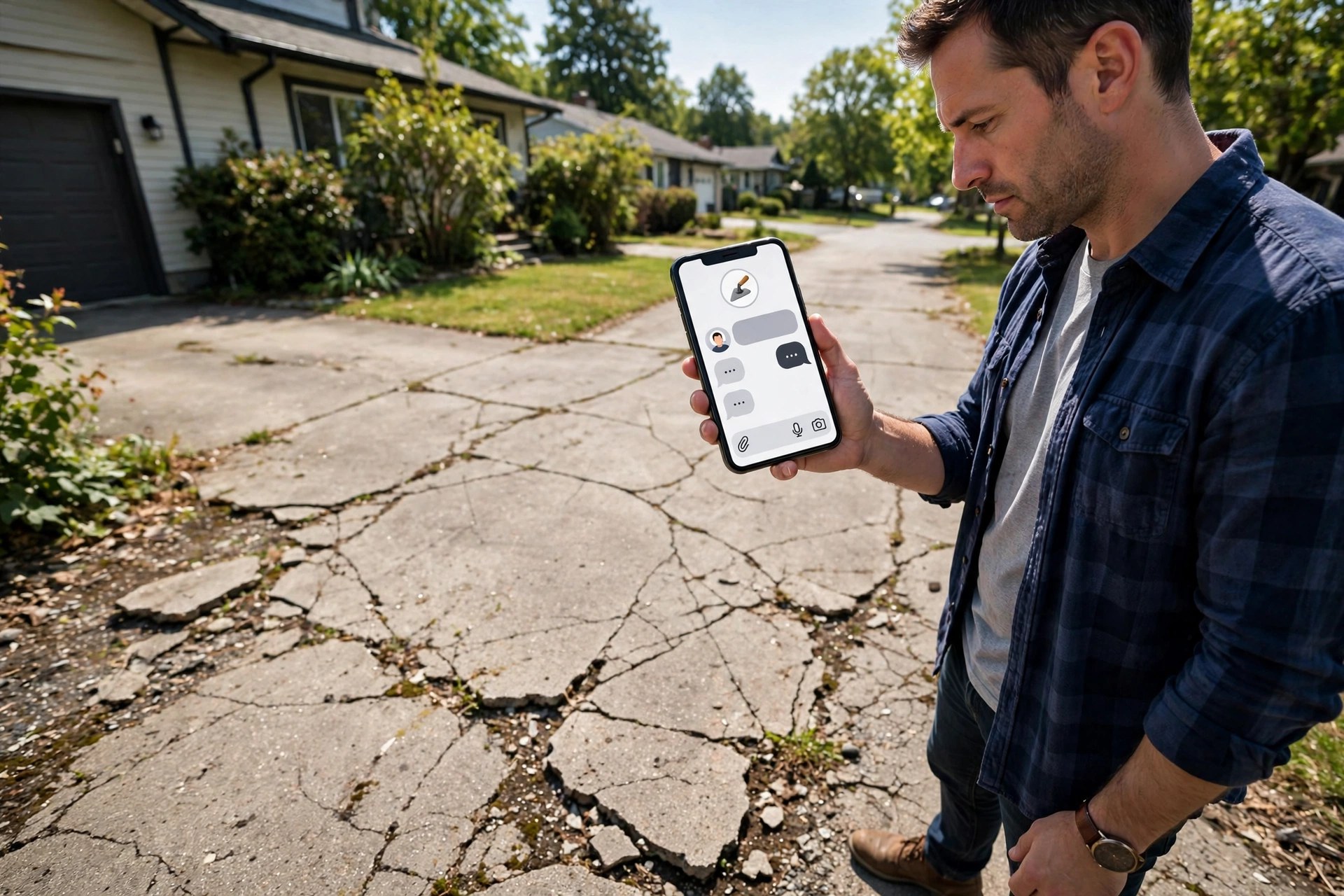
A guided flow turns a vague “how much for a driveway” into a qualified estimate request with photos and dimensions.
Photo requests that reveal existing conditions
In concrete, the existing conditions decide the job. A driveway that needs resurfacing is a $3,000 job. The same driveway with a failed base is a $9,000 tear-out. The chatbot should request photos as a standard step, not an optional extra: a wide shot of the full area, close-ups of cracks and damage, and a shot showing access for trucks and equipment. It should explain why: “These help us tell you whether repair or replacement makes sense, and they make your site visit much more productive.” Homeowners who send photos are qualifying themselves as serious buyers, and estimators who review them before the visit can quote with confidence instead of discovering surprises on site.
Booking the site visit into the real schedule
Every estimate flow should end at the calendar. Once the chatbot has the job type, dimensions or photos, and contact details, it should offer two or three real open slots for a site visit. The booking needs the job summary attached so the estimator knows what they are walking into: “Driveway replacement, approx. 600 sq ft, tear-out needed, photos received.” Confirmation goes out by text immediately, with a reminder the evening before and the morning of the visit. Site visits are expensive: drive time, fuel, and an estimator’s hour. A chatbot that books qualified visits with photos attached protects that investment far better than a form that says “we will call you.”
For guidance on the safety net behind the chatbot, see our guide to missed-call text-back for contractors, which covers catching the calls that still slip through during pour days.
Surviving the spring rush
Concrete has one of the sharpest seasonal spikes in the trades. When the weather breaks, months of pent-up demand hit at once: driveways that suffered through winter, patios planned all winter, builders starting foundations. Inquiry volume can triple for six to eight weeks. Most small crews cannot hire and train office staff for a spike that short, so requests pile up and response times collapse exactly when the best jobs of the year are being decided.
The chatbot absorbs the spike. It answers every inquiry instantly, runs the full qualification flow, and books site visits into whatever capacity the crew actually has. When the schedule fills, the chatbot should be honest: “Our next site visit opening is three weeks out. Want to lock it in?” An honest wait is far better than silence. Homeowners will wait three weeks for a good contractor. They will not wait three days for a response. Train the chatbot on seasonal availability rules before the rush, and review the transcripts weekly during it to catch new questions the spike produces.
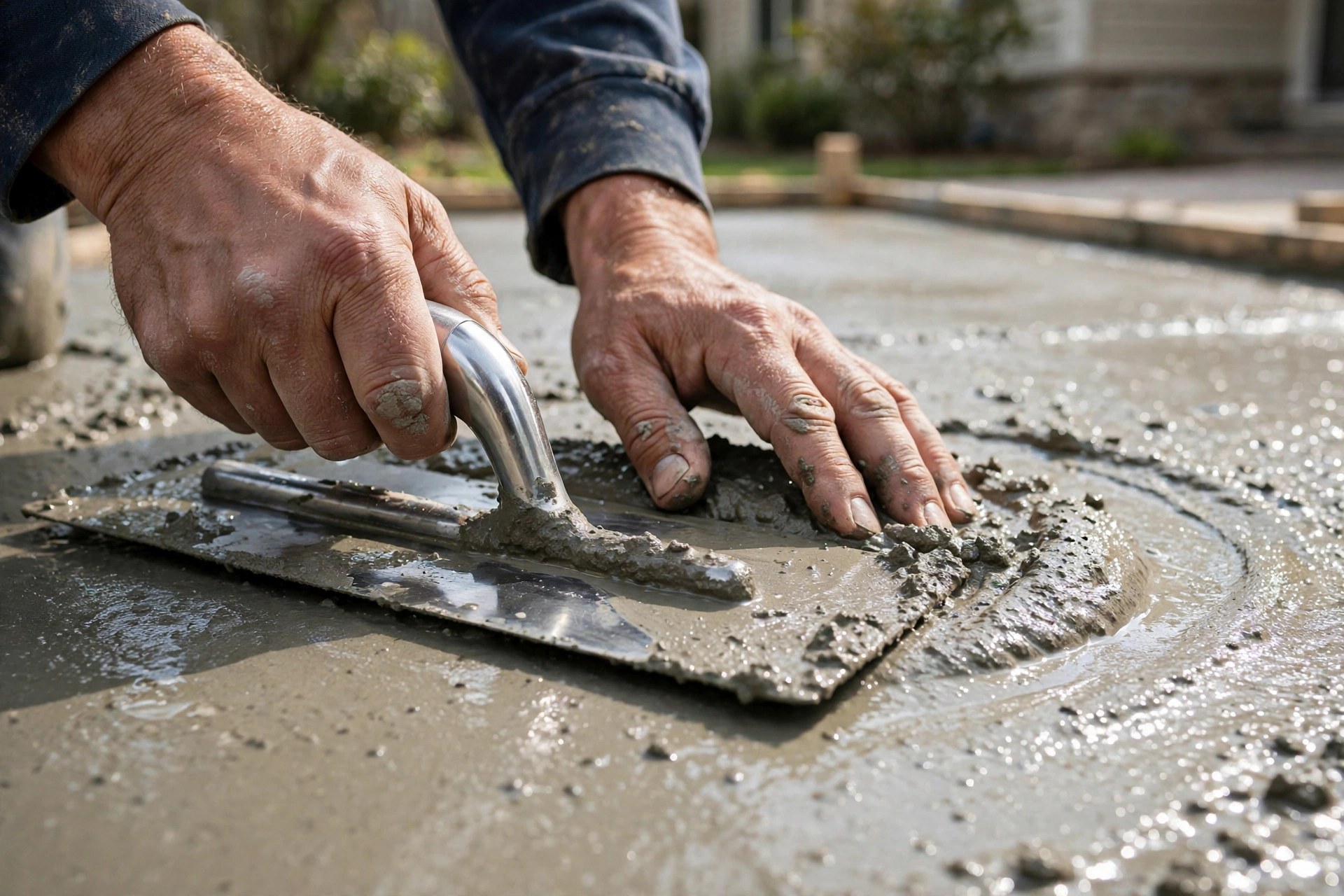
The chatbot handles the estimate flow so the crew can stay focused on the pour.
Training the chatbot on your services and square-footage pricing
Concrete pricing is square-footage pricing, and the chatbot needs your real numbers. Load every service you offer with its honest price band per square foot, the typical total for a standard job, and the factors that push a job above or below the band: tear-out, access, reinforcement, decorative finishes, permits. The chatbot should quote ranges, never firm prices, and it should explain what moves a job within the range. “A standard broom-finish driveway runs $6 to $10 per square foot installed, so a 600 sq ft driveway is typically $3,600 to $6,000 before tear-out, which usually adds $1,000 to $2,500.”
| Service | Typical price per sq ft | Typical residential job | What changes the price |
|---|---|---|---|
| Driveway replacement | $6 to $12 | $4,000 to $9,000 | Tear-out, thickness, reinforcement, access |
| Patio (broom finish) | $6 to $10 | $2,500 to $6,000 | Size, grade work, steps or seat walls |
| Stamped or decorative | $12 to $25 | $5,000 to $15,000 | Pattern complexity, coloring, sealer |
| Garage or shed slab | $5 to $10 | $2,000 to $6,000 | Thickness, footings, pump access |
| Concrete repair or overlay | $3 to $8 | $1,000 to $4,000 | Condition of existing concrete |
What a chatbot costs a small concrete crew
For a small crew, chatbot pricing breaks into setup and monthly. Setup runs $1,000 to $3,000 for the build: the estimate flow for your job types, the photo collection step, the calendar and CRM connections, and loading your pricing and service area. Monthly runs $150 to $450, covering hosting, maintenance, and retraining as your prices and availability change. Per-lead pricing exists, usually $20 to $60 per qualified lead, but it punishes you during the spring rush when volume is highest. A flat monthly plan is the cleaner deal for concrete.
The comparison that matters is cost per booked site visit. If your current marketing brings site visits at $150 to $300 each through ads, a chatbot that converts more of your existing traffic into visits at a flat monthly fee drives that cost down fast. The math below runs conservative on purpose.
Your rollout checklist
Give it three weeks, and have it live before the spring inquiries start, not during them.
- 1Branch the flow by job type. Driveways, patios, slabs, and decorative work each get their own question path with their own qualification details.
- 2Load square-footage price bands. Every service gets an honest $/sq ft range plus the factors that move a job up or down.
- 3Make photo collection standard. Wide shot, damage close-ups, and access photos requested in every estimate flow.
- 4Connect the real schedule. Site visit bookings land in the crew’s actual calendar with the full job summary attached.
- 5Set seasonal availability rules. Train the chatbot on realistic lead times before the spring rush, and update them as the book fills.
- 6Define the handoff. Slabs, structural questions, and firm quotes go straight to a human site visit, not chatbot guesses.
- 7Test every branch. Run mock chats for driveways, patios, slabs, and decorative work before launch, and fix every weak answer.
- 8Review transcripts in season. Weekly during the rush, monthly after: tighten questions and update pricing as jobs teach you.
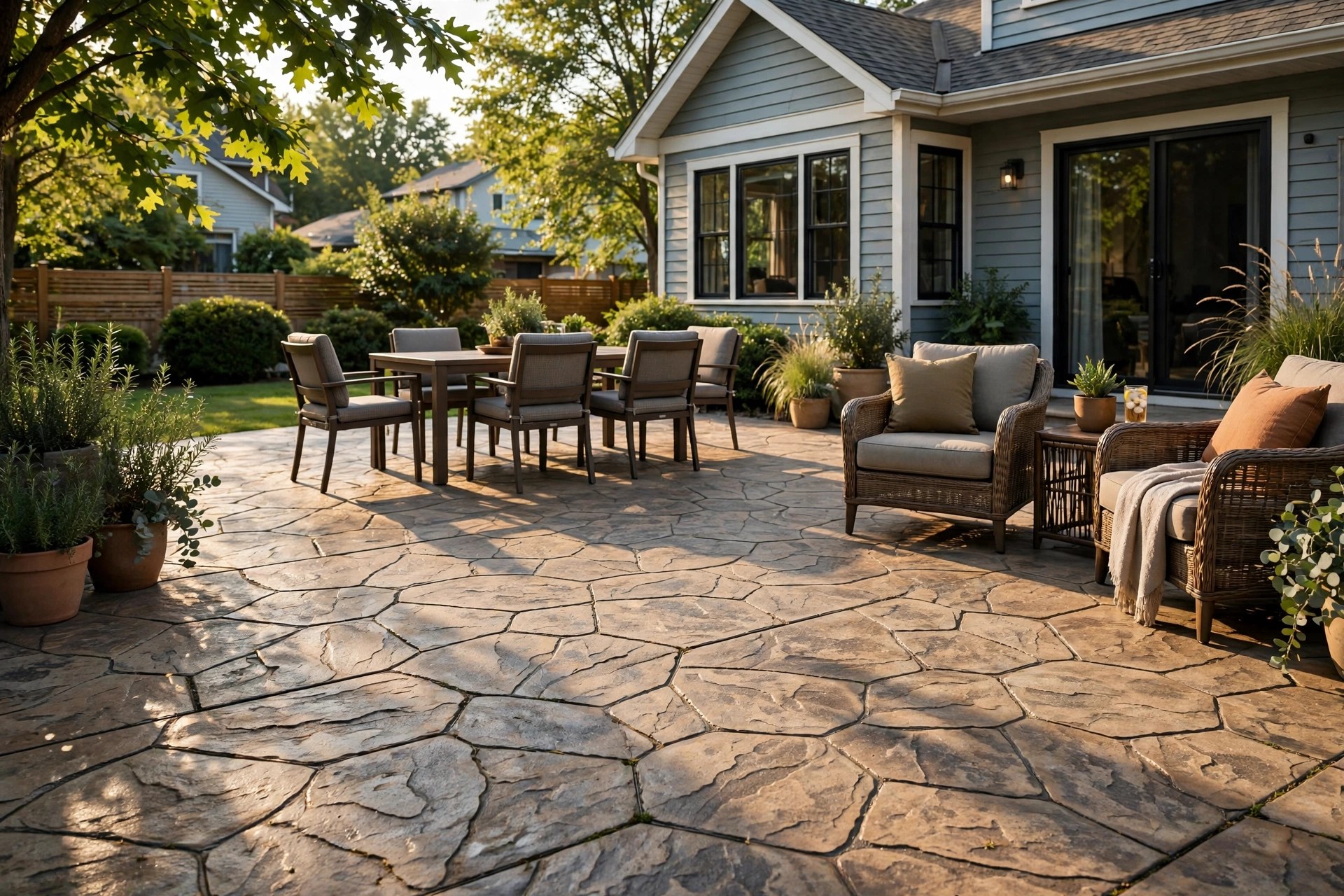
Decorative work carries the best margins, and it is where photo-backed qualification pays off most.
Frequently asked questions
How much does a chatbot cost a concrete contractor?
Plan on $1,000 to $3,000 for setup and $150 to $450 a month. Per-lead pricing at $20 to $60 per lead is available but gets expensive during the spring rush. A flat monthly plan is usually the better deal for a small crew.
Can a chatbot quote a driveway or patio?
It gives ballpark ranges from your square-footage pricing and explains what moves a job up or down. Firm quotes happen at the site visit. The chatbot’s job is to qualify the request, collect photos and dimensions, and book that visit.
What questions should it ask for a concrete job?
Job type first, then the details that change the estimate: replacement versus new, dimensions or area size, existing conditions, access for trucks, decorative versus standard finish, and timeline. Photos of the existing concrete are a standard step.
How does it handle the spring rush?
It answers every inquiry instantly no matter how many arrive at once, runs the full qualification flow, and books site visits into your actual capacity. When the book fills, it is honest about lead times instead of leaving requests unanswered.
Does it work with my scheduling software?
Most chatbot platforms connect to common calendars and contractor CRMs with a simple integration. Confirm your specific scheduling tool is supported before you sign, especially for trade-specific software.
Will homeowners actually send photos to a chatbot?
Yes, when the request is specific and the reason is explained. “Send a wide shot of the driveway and a close-up of the cracks so we can tell whether repair or replacement makes sense” gets photos. A generic “upload photos” does not.
How long until it is live on my site?
Two to three weeks for a full build with all four job-type flows, pricing loaded, and calendar connected. Get it live before the spring season starts so the rush inquiries hit a finished system.
Turn website visitors into booked site visits
Digital Hayder builds AI chatbots for concrete contractors: guided estimate flows for driveways, patios, slabs, and decorative work, photo collection, site visit booking, and spring-rush ready capacity. Tell us about your crew and we will design the chatbot around your services and pricing.
Contact Us