Most irrigation companies do almost no marketing and still stay busy, because spring does the selling for them. Homeowners wake up to a brown lawn, remember the sprinkler system they ignored all winter, and call whoever answers first. That is also why most irrigation companies stay small: they ride the spring rush, coast through summer, and go quiet in winter while the customers they worked so hard to win drift away. The companies that break past that cycle market differently. They start selling spring in February, they turn one-time startup visits into yearly maintenance contracts, they get realtors and property managers sending them work every month, and they collect reviews and before-and-after photos on every single job. This guide lays out the full playbook: spring startup campaigns, maintenance contract marketing, partnership strategies, a review engine, visual proof, an idea bank rated by cost and effort, and the math that shows why one maintenance contract is the most valuable sale in the business.
The quick answer
- Spring is the whole year: 60 to 70 percent of residential inquiries land in an 8 to 10 week startup window, so the companies that start marketing in late winter capture the rush.
- Contracts beat one-off jobs: a maintenance contract at $300 to $500 a year locks a customer in for years and keeps revenue coming in the slow months.
- Realtors and property managers multiply you: one solid partnership can send dozens of startups, repairs, and inspections every year with zero ad spend.
- Before-and-after photos close deals: irrigation results are visual, and proof of a brown lawn turning green sells harder than any promise.
- Reviews decide who gets the call: a steady stream of fresh Google reviews is what puts you at the top of the map pack in your service area.
- Track cost per booked job: the idea table below rates every tactic by cost and effort, so you only spend where the math works.
Why irrigation marketing is its own game
Irrigation is a seasonal, forgettable service, and that combination shapes everything about how you market it. A homeowner thinks about their sprinkler system maybe four times a year: when it needs a spring startup, when a head breaks in July, when the lawn looks patchy, and when it is time to winterize. The rest of the year the system is invisible, which means your company is invisible too. If you do not reappear in front of past customers right before each of those moments, someone else will get the call.
The ticket ladder matters too. A spring startup runs $100 to $175. A repair visit runs $150 to $400. A full system install runs $3,000 to $8,000 or more. A yearly maintenance contract runs $300 to $500. The big money is in installs and contracts, but the volume is in startups and repairs. Smart marketing feeds both: the small jobs fill the schedule and pay the crew, and every small job is a chance to sell the bigger ones. The companies that only chase installs starve in April. The companies that only chase startups stay small forever.
Then there is the competition picture, which is good news for you. Most irrigation companies are two-to-five-truck operations with a website from a decade ago, a Google Business Profile they claimed once and forgot, and marketing that consists of truck lettering and word of mouth. That means a modest, consistent marketing effort puts you ahead of 90 percent of your market fast. You do not need to outspend anyone. You need to show up earlier in spring, ask for the review, take the photo, and stay in touch through winter. This is the same seasonal rhythm that shapes HVAC marketing ideas, and the trades that master it grow while their competitors hibernate.
Own the spring startup rush
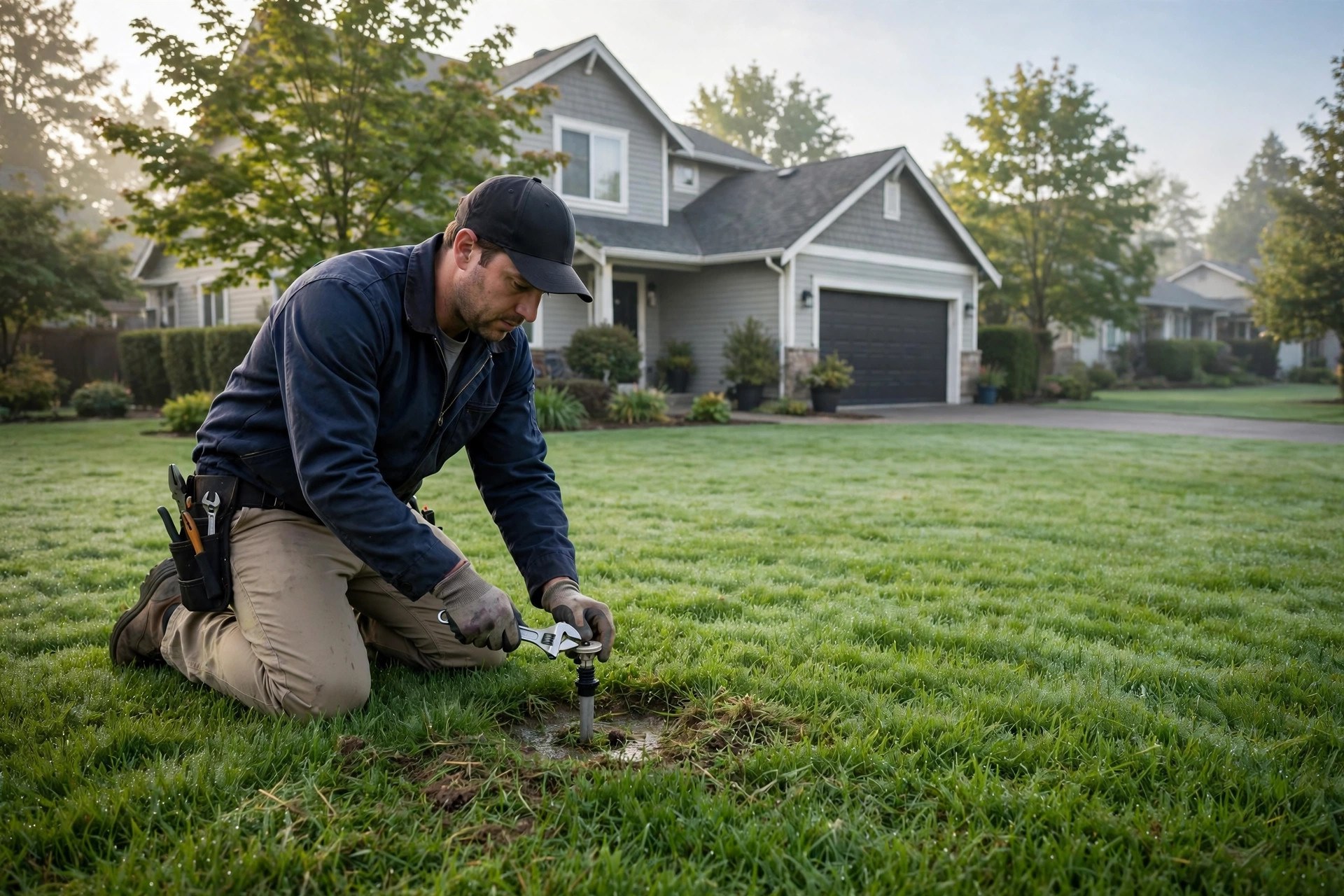
The spring startup season is the single biggest revenue event of your year, and the mistake most companies make is marketing when it starts. By then it is too late: schedules are already filling, and the homeowners who plan ahead booked with whoever reached them first. Real spring marketing starts six to eight weeks before the first startup visit, while the ground is still frozen.
Start with the list you already own. Email and text every past customer with a simple message: spring startup scheduling is open, early bookings get priority slots and a small early-bird discount, and replying takes one tap. Past customers are your cheapest spring revenue, and most irrigation companies never message them at all. A list of 500 past customers at a 20 percent booking rate is 100 startups on the calendar before you spend a dollar on ads.
Next, hit the neighborhoods. Door hangers in your best zip codes two weeks before startup season work because the message is perfectly timed: everyone is looking at their lawn and thinking about the sprinklers. Keep the hanger brutally simple, one offer, one phone number, one QR code to book. Add yard signs on every job during April and May, because your trucks are already in the right driveways. Post on your Google Business Profile weekly through the season: startup slots open, what a startup includes, the areas you serve. These posts are free and they show up when people search.
Run this as a campaign with a calendar, not a scramble. The table below is a proven eight-week run-up that any owner can follow.
| Timing | Action | Channel | Goal |
|---|---|---|---|
| 8 weeks out | Message every past customer: startup scheduling is open | Email and text | Fill the first two weeks of the schedule |
| 6 weeks out | Announce early-bird pricing with a clear deadline | Email, text, social posts | Create urgency before competitors wake up |
| 4 weeks out | Drop door hangers in top 5 zip codes | Door hangers | Win new-customer startups in target areas |
| 3 weeks out | Start weekly Google Business Profile posts | Google Business Profile | Capture map searches as season heats up |
| 2 weeks out | Launch paid search for startup keywords | Google Ads | Catch high-intent searchers ready to book |
| Launch week | Yard signs on every job; ask every customer for a review | Jobsites | Turn visibility into social proof |
| Weeks 2 to 4 | Follow up unbooked past customers once more | Text | Recover the ones who meant to book |
| Mid-season | Shift messaging to repairs and mid-season tune-ups | All channels | Keep the calendar full after startups peak |
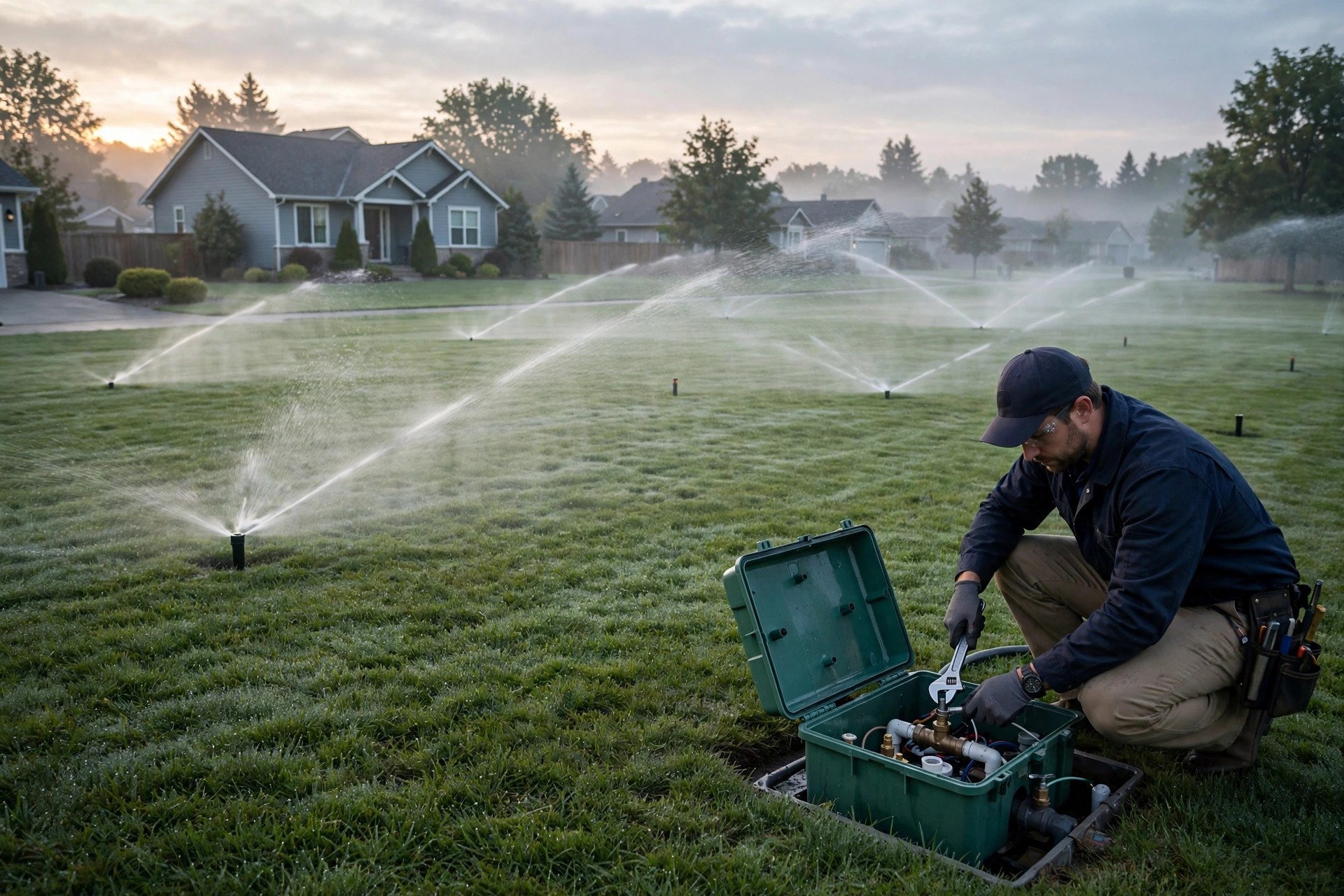
Spring startup season fills the calendar in weeks, but only for the companies that started marketing two months earlier.
Sell maintenance contracts, not single visits
The spring startup is not the sale. It is the sales call for the sale that matters: the yearly maintenance contract. A customer who buys one startup might call you next spring or might call anyone. A customer on a contract is yours. They get automatic scheduling, priority service, and a small discount on repairs, and you get predictable recurring revenue that smooths out the seasons.
Structure the contract around the three visits every system needs: spring startup, a mid-summer check, and fall winterization. Price it at $349 to $499 a year for a typical residential system, which is less than buying the three visits separately. That discount is the pitch: “You are going to need all three visits anyway. The contract saves you money and you never have to remember to call.” Add the two things that cost you nothing but feel valuable: priority scheduling during the busy season and 10 percent off any repair during the contract year.
The pitch has to happen in person, at the end of the startup visit, while the technician is standing in the yard with the homeowner. Train every tech to say it the same way: “Your system is in good shape. We do a three-visit yearly plan, startup, summer check, and winterization, for $399. It saves you about $80 versus booking each one, and you get priority scheduling in spring when everyone is calling. Want me to set that up?” That thirty-second script, delivered at 500 startup visits, is worth more than any ad campaign you will ever run. Put a simple one-page contract form on a clipboard in every truck and a digital version in your booking system so the yes can be captured on the spot.
Market the contract all year, not just in spring. In summer, pitch it as the tune-up plan that keeps the system efficient during the heat. In fall, pitch it at every winterization as next year’s plan with the winterization already included. In winter, email contract holders a thank-you and a reminder that their spring visit is already reserved. The contract is the thread that keeps the customer tied to you through all four seasons.

The maintenance contract pitch takes thirty seconds at the end of a startup visit and is the highest-value sale in the business.
Partner with realtors and property managers
Realtors and property managers are the two referral sources that can change an irrigation company’s year, because they control work you cannot reach with ads. A realtor needs a sprinkler inspection before listing a home with a system, a fast repair when the buyer’s inspection flags one, and a winterization certificate at closing. A property manager needs all of that across dozens of properties, on a schedule, with invoices that do not create paperwork headaches. Win five realtors and two managers and you have a pipeline that never sleeps.
The pitch is simple: you make their problem disappear. Offer a dedicated phone number or text line that gets answered during business hours, a 48-hour turnaround on inspections and repairs, flat pricing they can quote to clients without calling you first, and a one-page written report with photos for every inspection. For property managers, add monthly batch invoicing and a seasonal service calendar that covers every property without them chasing you. These are operational promises, not marketing claims, and they are exactly what these partners cannot get from a one-truck operator who only answers between jobs.
Go get them the old-fashioned way. Pick ten real estate offices a week and walk in with a short intro kit: a one-page sheet with your inspection price, your turnaround promise, and your direct number, plus a few before-and-after photos. Offer a fifteen-minute lunch-and-learn for the office on what to look for in a sprinkler inspection, which positions you as the expert and gets you in front of twenty agents at once. For property managers, call the office, ask who handles maintenance vendors, and offer to take over the irrigation headaches on a trial property. This kind of partnership selling is a staple of trade marketing, and the referral playbook in our plumber marketing ideas guide transfers directly to irrigation.
Track every partner. A simple spreadsheet with the partner name, the date of first contact, and every job they sent is enough. When a realtor sends you three jobs, take them to coffee and ask what would make them send ten. Partnerships grow when you treat the partner like a customer, because to your business, that is exactly what they are.
Build a review engine that feeds itself
In irrigation, the Google review is the ad. When a homeowner searches for sprinkler repair, they see the map pack, and the map pack is won by rating, review count, and review freshness. A company with 180 reviews at 4.8 stars will beat a company with 22 reviews at 5.0 stars nearly every time, because volume signals a real, active business. Most irrigation companies have fewer than 30 reviews. Getting to 100 puts you ahead of almost everyone in your market.
The engine has three parts: the ask, the link, and the follow-through. The ask happens in person, right after the job, while the homeowner is happy. The technician says: “If everything looks good, a quick Google review really helps our small business. I can text you the link right now.” That script works because it is specific, it names the platform, and it removes every step. The link arrives by text within minutes, while the goodwill is fresh. The follow-through is you responding to every single review, good and bad, within 48 hours. Responses show future customers that a real person runs the business, and they give Google fresh activity on your profile.
Build review moments into the job flow, not into your memory. Print a small card with a QR code that goes to your review link and put a stack in every truck. Add an automated text two hours after every completed job with the same link. Set a weekly habit: every Monday, check the review count and respond to anything new. During spring startup season, when you are doing ten visits a day, this system can add 30 to 50 reviews in a single month. That burst of fresh reviews is also what pushes your profile up the map rankings right when search volume peaks.
Do not buy reviews, do not offer discounts for reviews, and do not review-gate by only asking happy customers. Ask everyone, every time. A real profile with a few honest four-star reviews converts better than a suspicious wall of five-stars, and a single policy violation can get your profile suspended during the season you need it most.
Show before-and-after proof everywhere
Irrigation sells a visible result: a brown, patchy lawn that turns green and even. Nobody can argue with that photo, and nobody remembers a paragraph about “quality service.” Before-and-after proof is the closest thing irrigation marketing has to a cheat code, because the transformation is dramatic, fast, and completely believable. The companies that win use it in every channel they own.
Set a photo protocol for every tech. Before touching the system, take one wide photo of the problem area from a fixed spot. After the repair or the install, take the same shot from the same spot. Mark the job with the date so you can come back in two or three weeks for the real payoff shot: the lawn transformed. The two-week follow-up photo is the one that stops thumbs on social media and wins the click on Google. Store these in a shared album organized by job type: repairs, installs, startups, drainage fixes.
Then distribute them relentlessly. Upload the best sets to your Google Business Profile photos every week during the season; profiles with strong photo galleries get measurably more calls. Build a gallery page on your website organized by problem, brown lawn, broken heads, poor coverage, and put a booking button under every set. Post the transformations on Facebook and neighborhood groups with a one-line caption naming the neighborhood, because local proof travels: people hire the company that fixed their neighbor’s lawn. Print the ten best transformations as a flip book for the truck, so technicians can show proof during estimates. The visual-proof approach is a proven closer across the trades, and our roofing marketing ideas guide shows how roofers use the same tactic to sell five-figure jobs.
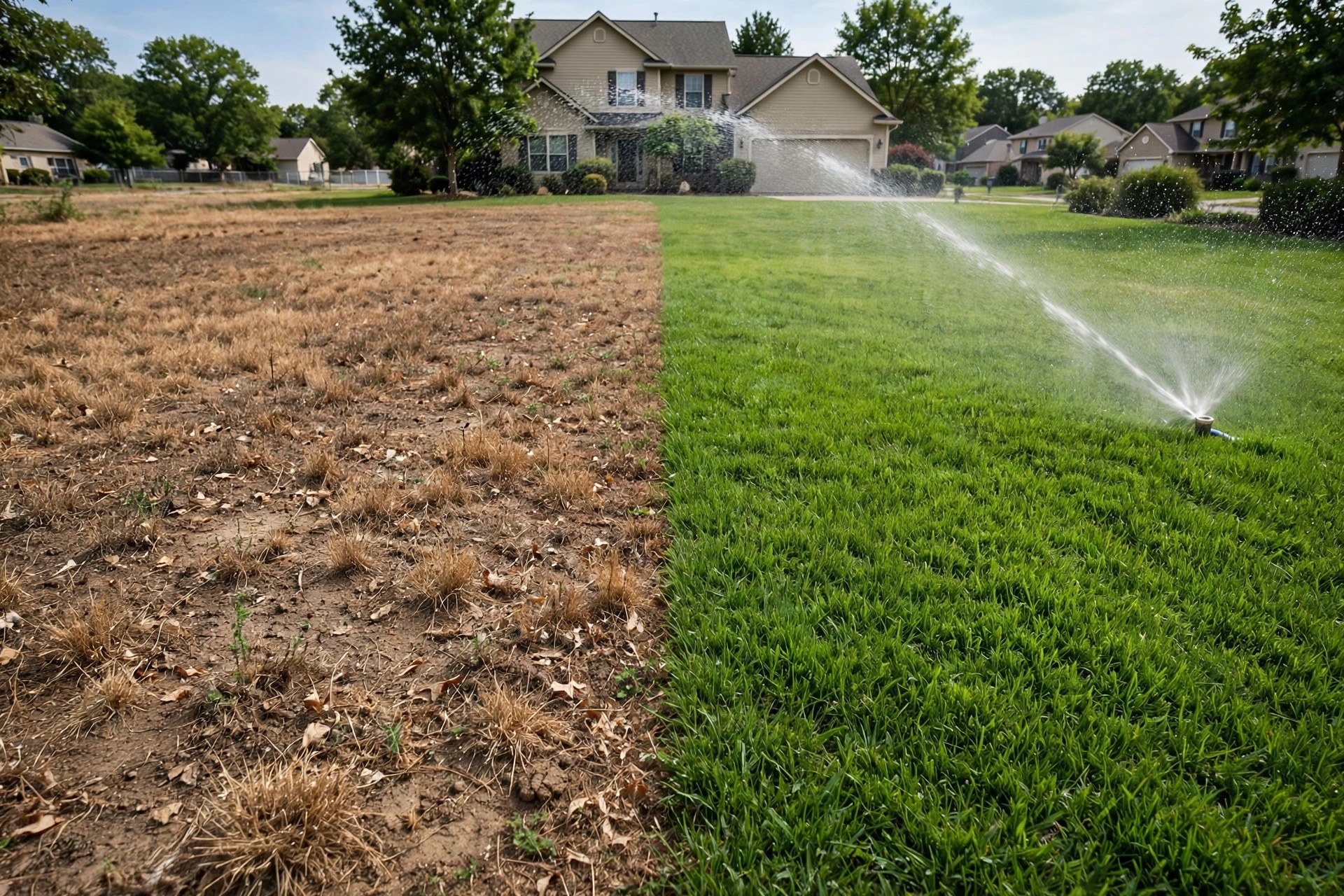
Nothing sells irrigation like the visual proof of a brown lawn turning green. Photograph every transformation from the same spot.
The irrigation marketing idea bank
Not every idea fits every company, so the table below rates each tactic on cost and effort alongside when it pays off. Cost is rated Free, $ (under $200 a month), $$ ($200 to $1,000 a month), or $$$ (over $1,000 a month). Effort is Low, Medium, or High. Start with the free and low-effort wins, add one paid channel at a time, and only keep what books jobs you can measure.
| Idea | Cost | Effort | Payoff timing | Best for |
|---|---|---|---|---|
| Google Business Profile optimization and weekly posts | Free | Low | 2 to 4 weeks | Every company, start here |
| Review engine: ask, text the link, respond to all | Free | Low | 1 to 3 months | Beating competitors in the map pack |
| Spring email and text campaign to past customers | $ | Low | Days | Filling the startup calendar fast |
| Maintenance contract pitch at every startup visit | Free | Low | Immediate | Recurring revenue all year |
| Door hangers in target zip codes before spring | $ | Medium | 1 to 3 weeks | New-customer startups in chosen areas |
| Yard signs on every job during season | $ | Low | Immediate | Neighborhood-level visibility |
| Realtor partnership outreach, 10 offices a week | Free | Medium | 1 to 3 months | Inspection and repair referrals |
| Property manager vendor pitch | Free | Medium | 2 to 4 months | Multi-property recurring work |
| Before-and-after gallery on the website | $ | Medium | 1 to 2 months | Converting website visitors |
| Customer referral program, $25 credit per referral | $ | Low | Ongoing | Word of mouth on autopilot |
| Neighborhood Facebook groups and Nextdoor posts | Free | Medium | 1 to 4 weeks | Local trust and quick wins |
| Short videos of startups and transformations | Free | Medium | 1 to 3 months | Social proof that gets shared |
| Vehicle wraps or clean truck lettering | $$ | Low | Ongoing | Brand presence in every driveway |
| Google Local Services Ads | $$ | Low | Days | High-intent leads during season |
| Google Ads for startup and repair keywords | $$$ | Medium | Days | Scaling past organic reach |
| Community sponsorship, youth sports or HOA events | $$ | Medium | 3 to 6 months | Long-term local brand building |
The pattern in the table is the whole strategy: free and cheap tactics build the foundation, partnerships multiply it, and paid ads scale what already works. A company doing the free rows well will outgrow a company spending $2,000 a month on ads with no reviews, no photos, and no follow-up system. Spend in that order and every dollar works harder.
What this should cost you
Marketing budgets for irrigation companies fall into three natural tiers. Pick the one that matches where you are, run it for a full season, and move up when the booked work justifies it. The cardinal rule: never add a paid channel until the free foundation, reviews, photos, Google profile, past-customer list, is working.
DIY foundation
Your time plus a few basic tools. This tier alone can double a small company if it is done consistently.
- Google Business Profile fully built out with weekly posts
- Review engine: QR cards, text links, responses to every review
- Email and text campaigns to past customers each season
- Before-and-after photos on every job, posted to Google and social
- Door hangers and yard signs during spring
Growth engine
Add paid reach and systems on top of the foundation. This is where most three-to-six-truck companies land.
- Everything in the DIY tier, running on schedule
- Google Local Services Ads during the season
- A simple CRM with automated texts for bookings, reminders, and review requests
- Realtor and property manager outreach as a weekly habit
- Website gallery and short transformation videos
Market leader
Full-funnel marketing run by specialists while you run the crews. For companies pushing past $1M in revenue.
- Everything in the growth tier, professionally managed
- Google Ads for startup, repair, and install keywords year-round
- Retargeting for website visitors who did not book
- Video content and community sponsorships for brand dominance
- Monthly reporting on cost per booked job by channel
Mistakes that burn the budget
Marketing only in April. By the time you start, the planners have booked and the planners are your best customers. Start in February and you choose your schedule. Start in April and you take what is left.
No follow-up on estimates. Install estimates go cold in 48 hours. A same-day thank-you text, a next-day check-in, and a one-week follow-up with the before-and-after photos of a similar job will double your close rate. Most companies send the estimate and never call again.
Generic ads that say nothing. “Quality irrigation services at fair prices” could be any company in any trade. Say the specific thing: “Spring startups from $129, booked this week,” or “We fix brown spots other companies walk past.” Specific beats generic every time.
Paying for leads with no review foundation. Ads send people to your Google profile. If the profile has 14 reviews and no photos, the click is wasted. Build the profile first, then buy the traffic.
Ignoring winter. Winter is when you email the list, publish the gallery, sign the contracts for next spring, and line up realtor partnerships. Companies that go dark in December start every March from zero.
No tracking. Ask every caller how they found you and log it. If you do not know your cost per booked job by channel, you are guessing, and guessing is how $2,000 a month disappears into ads that never worked.
Letting techs skip the pitch. The maintenance contract pitch dies when techs feel awkward making it. Train the script, role-play it once, and pay a small bonus per contract signed. The awkwardness lasts a week. The revenue lasts years.
Your rollout checklist
Work through these in order. Each one builds on the last.
- 1Claim and complete your Google Business Profile. Every service, every area, photos, hours, and the booking link, done before anything else.
- 2Set up the review engine. QR cards in every truck, a text link sent after every job, and a promise to respond to every review.
- 3Build your past-customer list. Export every customer into one email and text list, cleaned and ready for the spring campaign.
- 4Write the spring campaign. The eight-week timeline from this guide, scheduled and ready to launch in late winter.
- 5Create the maintenance contract. One page, three visits, the price, and the pitch script every tech will use.
- 6Train the techs. The contract pitch, the review ask, and the photo protocol, role-played once until it feels natural.
- 7Start the photo library. Before-and-after shots from the same spot on every job, filed by job type.
- 8Launch realtor outreach. Ten offices a week with the intro kit, tracked in a simple spreadsheet.
- 9Add one paid channel. Local Services Ads or door hangers first, measured by cost per booked job.
- 10Review the numbers monthly. Jobs booked by channel, contracts signed, review count, and what to change next month.
Frequently asked questions
When should an irrigation company start marketing for spring?
Six to eight weeks before the first startup visit, which usually means February in most markets. Message past customers first, then add door hangers, Google posts, and paid ads as the season approaches. Companies that start in April compete for leftovers.
How much should an irrigation company spend on marketing?
A working rule is 5 to 10 percent of revenue. A $400,000 company spends $20,000 to $40,000 a year, heavily weighted toward spring. Start with the free foundation in this guide, then add paid channels only when the free ones are running well.
What is a fair price for a yearly irrigation maintenance contract?
Most residential contracts run $349 to $499 a year for three visits: spring startup, mid-summer check, and fall winterization. Price it below the cost of the three visits bought separately, and add priority scheduling and a small repair discount to make it an easy yes.
How do irrigation companies get more Google reviews?
Ask in person right after the job, text the review link within minutes, and respond to every review within two days. Put a QR code card in every truck and send an automated text after each completed job. During spring season this system can add dozens of reviews in a month.
Are door hangers still worth it for irrigation companies?
Yes, when timed right. Dropped two to three weeks before startup season in your best zip codes, door hangers reach homeowners at the exact moment they are thinking about their sprinklers. Keep the offer to one line, one phone number, and one QR code.
How can an irrigation company get work from realtors?
Offer what agents need: fast sprinkler inspections with a written photo report, 48-hour repair turnaround, and flat pricing they can quote. Visit ten offices a week with a one-page intro kit and offer a short lunch-and-learn on what to look for in an inspection.
What should an irrigation company post on social media?
Before-and-after transformations, short videos of startups and repairs, seasonal reminders, and customer thank-yous. One transformation photo with the neighborhood named will outperform a month of generic posts. Post consistently through the season and go quiet in winter without guilt.
Do Google Ads work for irrigation companies?
They work best during the season for high-intent searches like spring startup and sprinkler repair near me. Start with Google Local Services Ads, which charge per lead, then add search ads once your reviews and photos are strong enough to convert the clicks.
How do you market irrigation services in winter?
Email your list with helpful content, publish your before-and-after gallery, sign maintenance contracts for next spring, and build realtor and property manager partnerships. Winter marketing is planting work: it does not book jobs now, but it decides how full March is.
What is the most profitable marketing for an irrigation company?
The maintenance contract pitch at the end of every startup visit. It costs nothing, converts at the moment of highest trust, and turns a one-time customer into years of recurring revenue plus extra repair work. No ad channel comes close on return.
Turn spring startups into year-round revenue
Digital Hayder builds marketing systems for irrigation companies: spring campaign calendars, review engines that run on autopilot, realtor partnership outreach, and booking systems that turn one-time visits into maintenance contracts. Tell us about your company and we will map the plan to your market.
Contact Us