A pressure washing business lives or dies on what strangers say about it online. Homeowners searching “pressure washing near me” see three companies in the local map pack, and they tap the one with the most stars and the most reviews. Price barely enters the decision. This guide shows pressure washing owners how to turn every finished job into fresh Google reviews: the exact moment to ask, the scripts your crew should use, the photo request that doubles your conversion rate, the follow-up system that catches everyone your crew misses, and what to do with commercial clients. No tricks, no paid reviews, just a simple process your team can run on every job.
The quick answer
- Ask at the reveal: walk the customer through the finished work while the “wow” is fresh, then ask for the review on the spot.
- Reviews decide the map pack: star count and review volume are what move you into the top three local results, ahead of competitors with fewer reviews.
- Crews do the asking: the tech who did the work gets two to three times more reviews than a text sent later, so train and script the crew first.
- Photo reviews convert better: sending a before and after photo with the request link often doubles how many customers actually post.
- Follow up three times: the same day, the next day, and one week later. Almost every review comes from one of those three touches.
- It costs very little: a review tool runs $50 to $150 a month, and a steady review engine typically pays for itself within the first few booked jobs.
Why Google reviews run the pressure washing market
Pressure washing is a high-trust, low-information purchase. The customer cannot judge your work until it is done, they hand over their house keys or driveway to a stranger with a machine that can damage siding, wood, and concrete if used wrong, and most of them have been burned before by a cheap operator who left zebra stripes on the concrete. So they do what every homeowner does now: they check Google. BrightLocal’s annual consumer research consistently finds that the great majority of consumers read online reviews for local businesses before choosing, and Google is the site they trust most for those reviews.
Google rewards this behavior directly. The local map pack ranks pressure washing companies partly on review quantity, review recency, and average rating. A company with 180 fresh reviews at 4.9 stars outranks a company with 30 stale reviews at 4.7 stars almost every time, even if the second company does better work. That ranking is worth money. The top three spots capture the bulk of calls from “pressure washing near me” searches, and those searchers are buyers with intent: they need the driveway cleaned before the house listing goes live, or the patio cleaned before the party. Reviews are not vanity. They are placement in the single channel that brings most new customers.
There is a second, quieter effect: price resistance. When two companies quote $400 and $550 for a house wash, the cheaper one usually wins unless the expensive one has clearly better proof. A wall of recent five-star reviews with photos of clean driveways is that proof. Owners who collect reviews systematically report that they stop losing jobs to cheaper competitors, because the reviews answer the customer’s real question: will this company show up and do good work? If you already run chat and messaging with customers, our guide to AI chatbots for pressure washing companies shows how review requests fit into the same conversation thread.
The moment to ask: right after the clean reveal
Pressure washing has a review advantage that most service businesses do not have: a dramatic visual reveal. The customer watches you finish, you walk them around the property, and they see a driveway that looks brand new. That moment, roughly five minutes after the final rinse, is when you ask. Waiting even 24 hours cuts the conversion rate sharply, because the emotion fades and life gets in the way.
Build the reveal into every job as a formal step. When the crew finishes, they do a final walkthrough with the customer before packing up the hoses. They point at the concrete, the siding, the patio, and name what changed: the oil stains are gone, the algae line on the north wall is gone, the patio furniture area is clean. This walkthrough does three jobs at once: it catches anything that needs a touch-up before you leave, it makes the customer consciously register the transformation, and it creates the natural opening for the review ask. Never ask before the walkthrough, because the customer has not yet decided they are happy.
The crew should carry the review link on their phone, not on a card the customer will lose. A printed card with a QR code is a fine backup, and many companies stick one on the truck door, but the primary move is the tech pulling out their own phone and saying the script. The customer taps, leaves the stars, and it is done in 60 seconds while standing in the clean driveway. If the customer is not home when you finish, the reveal happens by text: send the before and after photos with a message that recreates the moment, then the review link. The same sequence works for commercial jobs; the walkthrough happens with the property manager, and the timing rule is identical.
What your crew should say: word-for-word scripts
Crews do not ask for reviews because they feel awkward, not because they disagree with the idea. Scripts remove the awkwardness. Print these, train on them, and role-play until the crew can say them naturally. The golden rule: name the tech, make it personal, and never offer anything in exchange for a good review, since Google removes reviews tied to incentives.
The on-site ask after the walkthrough. “This looks great, right? Would you mind leaving us a quick Google review while we pack up? It takes about a minute and it really helps a local business like ours.” Then hold out the phone with the review link open. Silence while they type is fine. Thank them: “That is really kind of you, thanks.”
If the customer hesitates. “No pressure at all. If it is easier, I can text you the link and you can do it tonight.” Many people who balk at doing it on the spot will do it from the couch. Make sure that text goes out before you drive away.
When the customer is delighted and chatty. “You are exactly the kind of customer we love. Would you be comfortable if I took a quick photo of the driveway for our reviews page?” This is the photo permission ask, and it pairs with the review request: people who say yes to the photo almost always leave the review too.
The renter or the neighbor. Sometimes the person home is not the decision-maker. “Could you pass this to your landlord? We cleaned the whole front of the house today.” Leave the QR card. And if a neighbor comes over to look, that is a lead, not an interruption: get their name, give them the card, and follow up the next day.
The commercial version for the property manager. “Everything on the contract list is done. Would you leave a review about this project on our Google page? We would also be glad to send a short summary email you can forward to the board.” Property managers care about looking good to their own bosses, so frame the review as documentation of a job well done.
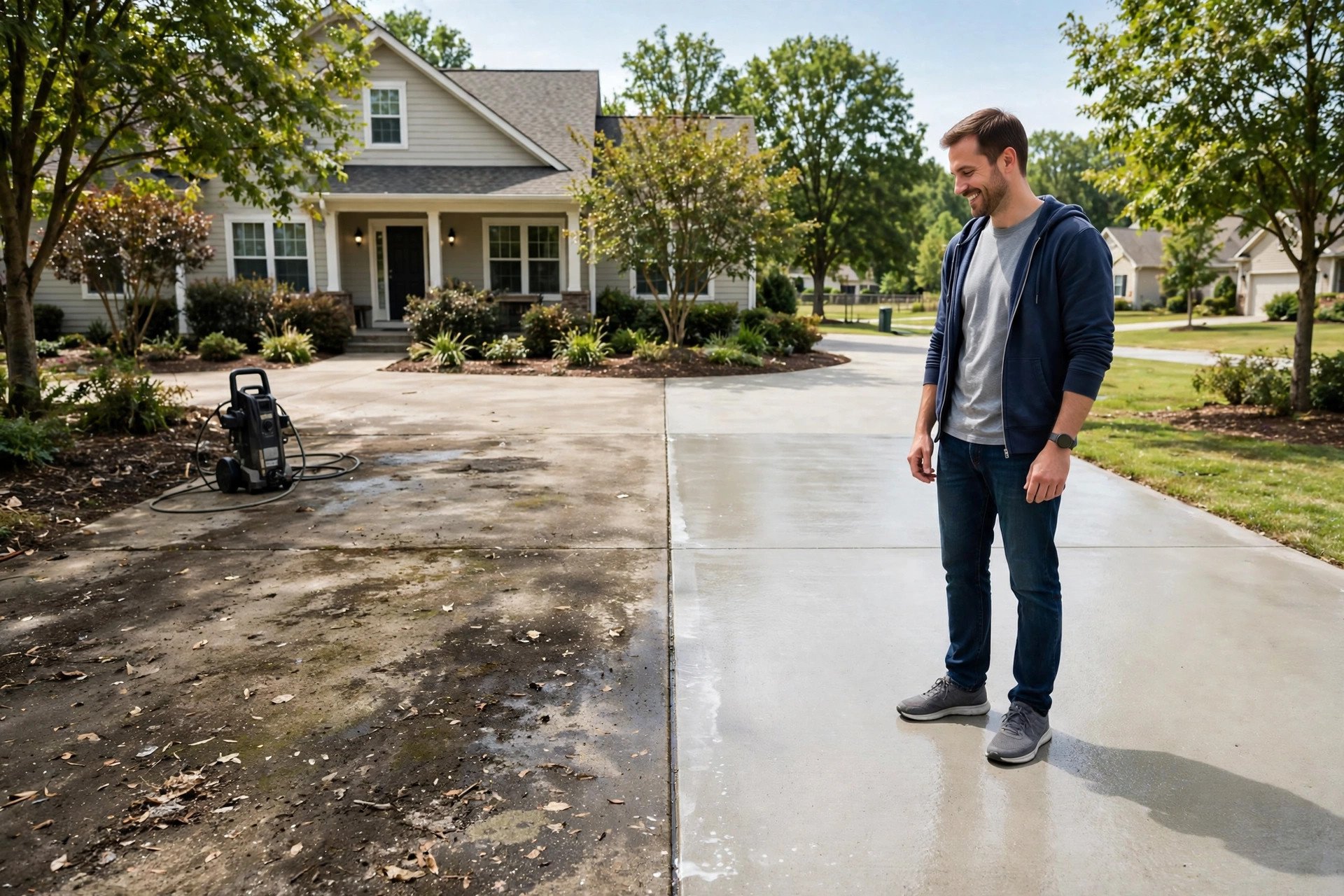
The walkthrough after the final rinse is the best moment to ask. The customer is looking at the result while the wow is fresh.
Photo review requests that double your conversion
A plain review link converts some customers. A review link plus before and after photos converts far more. The photos do the emotional work: the customer sees the dirty driveway next to the clean one, remembers the reveal moment, and writes a longer review because the pictures remind them what to say. Longer reviews with photos also rank better and convince more searchers.
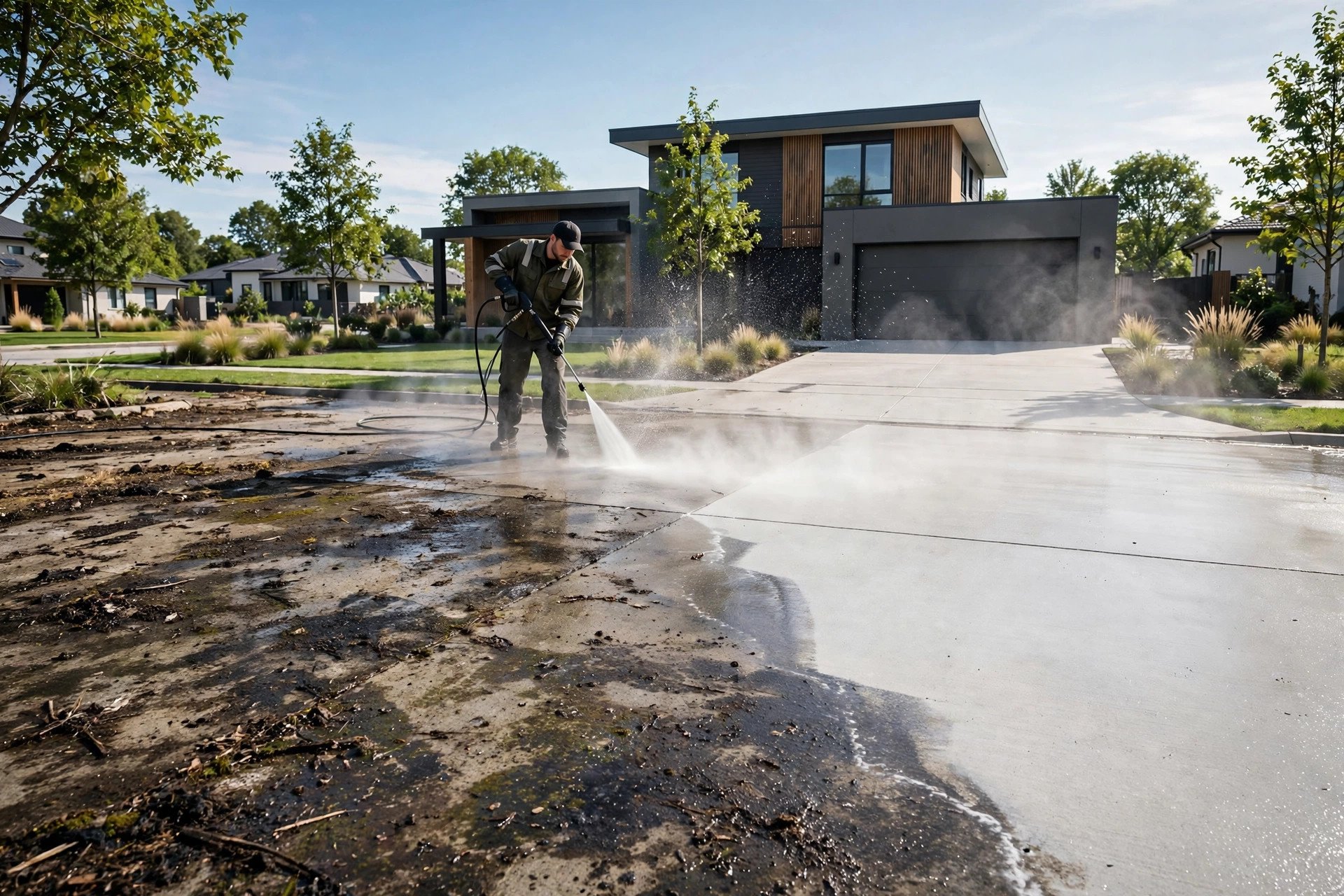
Make the photos part of the crew’s standard process, not an extra. Before starting any job, the tech takes two photos: the dirtiest section of driveway, the worst algae patch on the siding. After finishing, they take the same two shots from the same angle. Same angle matters; it is what makes the comparison dramatic. Store them in the job record under the customer name so the office can find them later.
The follow-up text should lead with the photos, not the link. “Hi Lisa, this is Mike from ClearJet. Here is the before and after of your driveway today, quite the difference. Would you mind posting a quick Google review? Here is the link, and feel free to attach these photos.” Customers routinely attach the photos you sent them, which means your review section fills up with proof. One warning: always get permission before posting a customer’s photos on your website or ads, even though Google reviews themselves are fine to highlight.
Video works even better for commercial work. A 15-second walkthrough video of a cleaned parking garage or building facade, texted to the property manager with the review link, gets opened nearly every time. Property managers forward these videos to their boards, and that forwarding is free advertising to the exact audience that hires pressure washing companies for buildings.
The follow-up sequence that catches everyone the crew missed
Even a good crew gets reviews from only 30 to 40 percent of happy customers on site. The rest need follow-up. A simple three-touch sequence over one week catches most of them without annoying anyone. The key is that every message includes the direct review link, and every message has a reason to exist beyond “leave us a review.”
| Touch | Timing | Message | Purpose |
|---|---|---|---|
| 1 | Same day, after the crew leaves | “Hi {name}, this is {tech} from {company}. Thanks for having us out today. Quick link if you have a minute to share how the wash went: {link}” | Catches the customers who said “I will do it tonight” on site. |
| 2 | Next day, morning | “Morning {name}, here are your before and after photos from yesterday. If the driveway looks as good to you as it does to us, a Google review would mean a lot: {link}” | The photos trigger the memory and give them something to attach. |
| 3 | One week later | “Hi {name}, quick check-in: how is the driveway holding up? If you have 60 seconds, this review link helps our small team more than anything: {link}” | The check-in shows care, and the ask rides along naturally. |
Send these from a local number or your business messaging line, not a short code, so replies come back to you. Track who clicked and who reviewed, and stop the sequence the moment a review posts; nothing sours goodwill faster than a fourth text asking for something they already did. Assign this follow-up to one person or one tool, never to “whoever gets around to it,” because that means nobody. For companies comparing advertising channels while they build reviews, our breakdown of Google Ads costs for pressure washing companies helps you weigh paid clicks against the free traffic reviews bring.
Review tools compared: which system fits your company
Doing this by hand works until you pass about 30 jobs a month. After that, the follow-up texts slip and the review flow dries up. A review tool automates the sequence, tracks who reviewed, and shows you which crew member’s jobs produce the most reviews. Prices below are typical US market bands.
| Tool type | Typical cost | Best for | Watch out for |
|---|---|---|---|
| Simple SMS review tool | $50 to $100 per month | Owner-operators and 1 to 2 truck companies doing under 60 jobs a month | Check it connects to your booking or CRM so texts fire automatically |
| Reputation platform | $100 to $300 per month | Companies with multiple crews that need per-tech tracking and review monitoring across Google, Facebook, and Yelp | Some lock you into annual contracts; start monthly |
| CRM with review automation built in | $100 to $300 per month | Companies that want booking, follow-up, and reviews in one system instead of three tools | Review features may be basic; confirm the link and sequence options before committing |
| DIY with your phone and spreadsheet | Free | Brand-new companies with under 15 jobs a month where the owner texts everyone personally | Breaks as soon as you get busy; plan the upgrade before you need it |
The single most important feature is automatic triggering: the follow-up texts should fire when the job is marked complete in your system, not when someone remembers. The second most important is a dashboard that shows reviews by technician, because what gets measured gets asked for. Tie a small monthly bonus to it: $5 per review for the tech whose name is mentioned, paid monthly. The bonus costs less than one job and it turns the whole crew into review collectors.
Getting reviews from commercial clients
Commercial pressure washing, storefronts, apartment complexes, parking garages, restaurants, pays more per job and the clients buy again every year. Their reviews carry extra weight because they mention the project type: “cleaned our 200-space garage,” “washes our restaurant patio monthly.” Google shows those words in the review snippets, and future commercial searchers scan for exactly them.
The process differs from residential in three ways. First, the ask goes to a specific person: the property manager, the facilities contact, the restaurant owner. Get their direct mobile number on the work order, because a generic info@ email address will never produce a review. Second, the follow-up should include documentation: the completion photos, the checklist of areas washed, and the review link in one package. Managers forward that package internally, and the review often gets written while they are forwarding. Third, ask for a slightly different kind of review: “Would you mention what kind of property this was and how the schedule worked around your tenants?” Specific reviews about commercial work attract more commercial work.
Do not chase every commercial contact for a review every month. One review per client per year is plenty, timed after the biggest job of their contract. If you wash a restaurant’s patio monthly, ask after the first deep clean of the year, when the transformation is biggest. And treat the Google review as part of the account review: mention at the annual contract renewal that their review helped you land two similar buildings nearby. Clients who feel like partners review again.
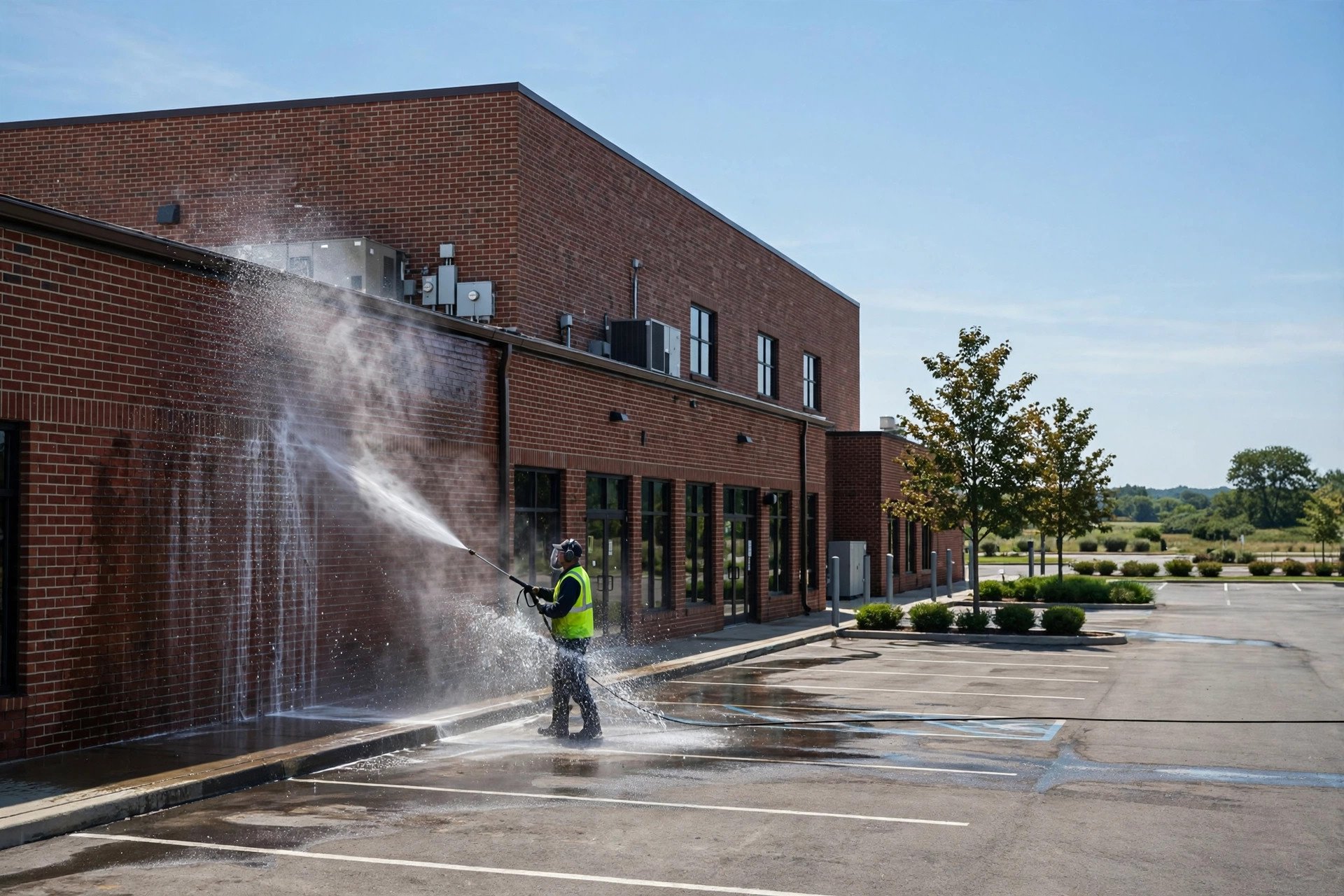
Commercial reviews mention the project type, so they attract the exact clients you want: managers of buildings, garages, and restaurants.
How to respond to reviews, good and bad
Reviews are a conversation, and Google shows your replies next to them. Reply to every review, not just the bad ones. A reply to a five-star review takes 30 seconds and it shows future customers that a real human runs the company. Personalize each reply with the customer’s name and one detail from their review: “Thanks, Tom, glad the oil stains finally came out of the driveway.” Copy-paste replies are obvious and they waste the opportunity.
Bad reviews need a calm, specific response within 24 hours. The template: acknowledge, take responsibility for their experience, move it offline. “Hi Sarah, I am sorry the gate area did not meet your expectations. This is Dan, the owner, and I want to make it right. Please call me directly at this number so I can schedule a return visit.” Never argue about facts in the reply, never mention pricing disputes, and never name the technician who did the job. Future customers judge you by how you handle the complaint, not by the complaint itself, and a graceful reply to a one-star review can win more business than the review costs.
There is a class of reviews that needs special handling: fake or competitor reviews. Flag them in your Google Business Profile, and respond once with a factual line: “We have no record of this job at our company. Please contact us with your work order number so we can investigate.” Most fake reviews get removed when you flag them and can show you never did business with the reviewer. For legitimate one- and two-star reviews, the owner should also do a private follow-up by phone. A fixed problem often becomes an updated four-star review with a note that the company made it right, which is more convincing than a perfect record.
Mistakes that slow your review count
Only the owner asks. If reviews depend on you being on the job, you will never get enough. Every tech asks on every job, and the dashboard tracks it per person.
Asking by email only. Email review requests get buried. Text messages get opened within minutes. Send the review link by text, every time, even if you also email an invoice.
The link goes to your profile, not the review form. A generic link to your business listing makes customers hunt for the review button. Generate the direct “write a review” link from your Google Business Profile and use that everywhere.
Offering discounts for reviews. “Leave us five stars for $10 off” violates Google’s policy and gets reviews removed, sometimes with a penalty on your listing. Thank customers, never pay them.
No process for the customer’s reply. Some customers reply to your text with a problem instead of a review. If nobody reads the replies, you miss the complaint and the review. Route review-text replies to a person who checks them daily.
Giving up after one ask. Most reviews come from the second or third touch, not the first. The one-week follow-up is where the biggest share of reviews arrive.
Ignoring the reviews you already have. Unanswered reviews, especially old ones, signal an absent owner. Block 15 minutes a week to reply to everything new.
The review pages competitors never build
Google reviews are the foundation, but a few companies pull ahead by building review assets that competitors never bother with. First, a reviews page on your website that embeds your Google reviews and your best before and after photos side by side. When a customer compares you against two competitors, this page closes the deal. Second, video testimonials: ask your three happiest commercial clients for a 60-second phone video about the work. Two of three will say yes. Third, neighborhood-specific review mentions: when reviews say “cleaned our driveway in Oakwood Hills,” you rank better for “pressure washing Oakwood Hills” and neighbors feel the social proof directly.
Share new five-star reviews on your social pages and in local community groups where self-promotion is allowed. A review posted in a neighborhood Facebook group does double duty: it is a review and an ad. Ask permission first, keep it to one share per great review, and never post your own reviews without attribution. The pattern here is simple: every review is raw material, and companies that reuse it across their website, social pages, and follow-up messages get far more mileage than companies that let it sit on Google. Tree service companies face the same trust problem at higher ticket prices; the same reuse playbook works there, as our guide to getting more Google reviews for tree service companies shows.
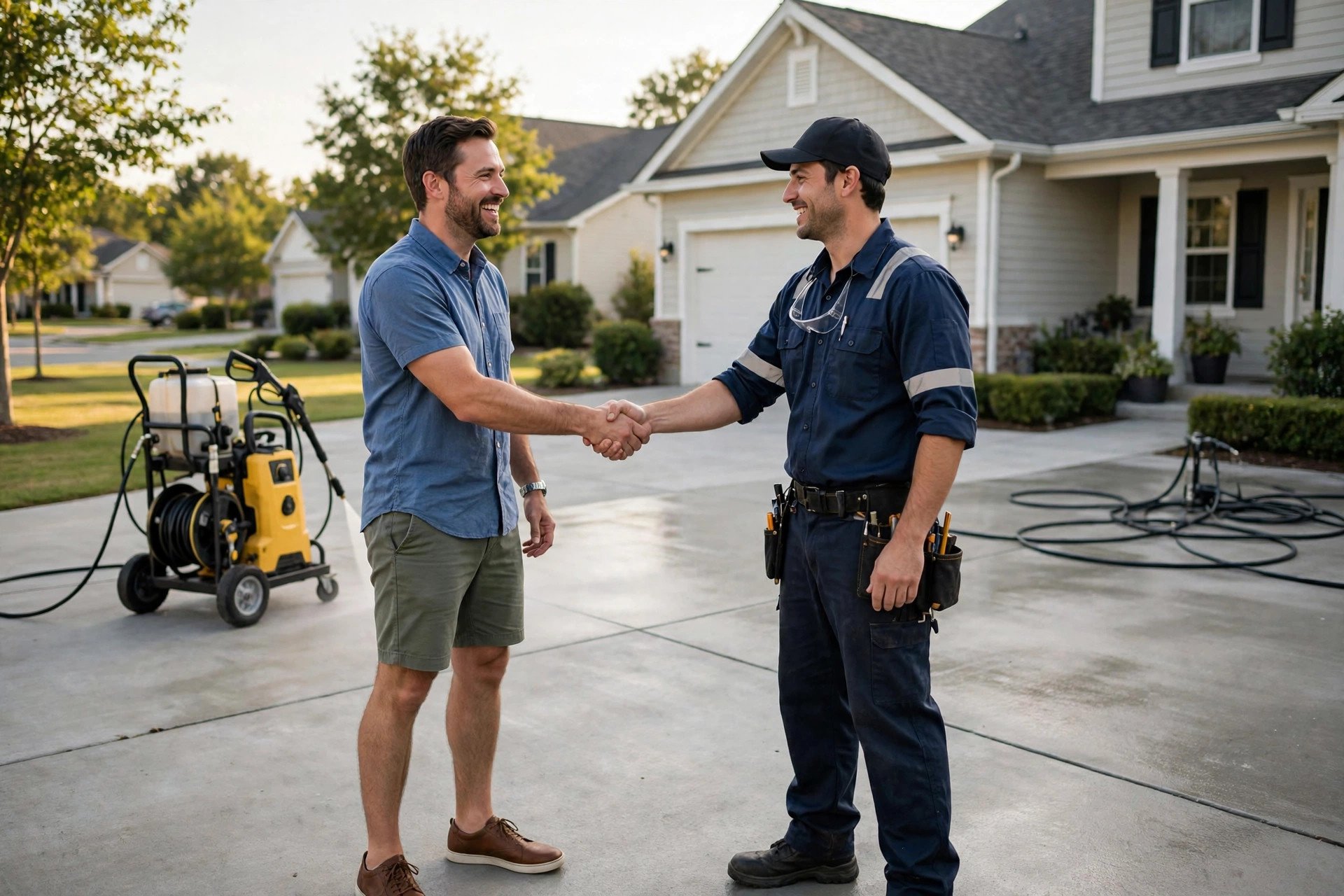
A handshake at the end of a great job is worth more than any ad. Capture that goodwill as a review before the crew packs up.
How reviews connect to your other marketing
Reviews do not live in isolation. They feed every other channel a pressure washing company runs. Your website’s booking pages convert better when they show fresh reviews near the quote form. Your paid ads cost less per lead when the ad’s landing page shows proof, which is one reason companies compare Google Ads costs against the free traffic that a strong review profile generates. Your door hangers and yard signs work harder when they carry your star rating and review count. Even your truck lettering can show “4.9 stars from 200+ reviews,” turning every drive through a neighborhood into a trust signal.
The compounding part is that reviews make your other marketing cheaper. A company with 200 reviews and a 4.9 rating converts a higher share of every click, call, and door knock into a booked job. That means the same ad spend produces more jobs, or you can spend less and book the same number. Many owners discover that a disciplined review system is the highest-ROI marketing they run, measured in jobs per dollar, because the main cost is crew habit, not media spend. Other home service trades run the same playbook: cleaning companies, for example, collect reviews with nearly identical timing, as covered in our guide to getting more Google reviews for cleaning companies.
Your rollout checklist
Work through these in order. Each one builds on the last.
- 1Claim and complete your Google Business Profile. Correct hours, service area, services list, and 20 or more real job photos before you ask for a single review.
- 2Generate your direct review link. Use the “write a review” link from your profile, shorten it, and save it where every tech can reach it in two taps.
- 3Print QR code cards. Backup cards for the truck and the invoice folder, for the customers who prefer to scan rather than tap.
- 4Write the crew scripts. The on-site ask, the hesitation fallback, the photo permission ask, and the commercial version.
- 5Train every tech. Role-play the walkthrough and the ask until it sounds natural, and explain why reviews matter to their bonus.
- 6Set up the three-touch follow-up. Same day, next day with photos, one week later, all by text, all stopping when a review posts.
- 7Launch the per-tech leaderboard. Track reviews by technician and pay the monthly bonus; publish the standings in the crew chat.
- 8Start the reply routine. Fifteen minutes a week replying to every new review, good or bad, with a personal detail in each reply.
- 9Add reviews to your website. A reviews page with embedded Google reviews and before and after photos next to the quote form.
- 10Review the numbers monthly. Reviews per tech, review-to-job ratio, average rating, map pack position, and estimate requests from Google.
Frequently asked questions
How many Google reviews does a pressure washing company need?
Enough to beat the companies ranked above you locally. In most markets that means 100 to 200 reviews at 4.8 stars or better. The count matters less than the gap: if the top three competitors have 80 reviews each, you need 100 or more to stand out. Keep collecting after you pass them, because they are collecting too.
When is the best time to ask for a review?
Right after the final walkthrough, while the customer is looking at the clean result. Ask in person with the review link open on your phone. For customers who are not home, send before and after photos by text within an hour of finishing, with the review link in the same message.
Should I offer a discount for a Google review?
No. Google’s policy prohibits reviews in exchange for incentives, and paid reviews can be removed along with penalties to your listing. Thank customers warmly, make the review easy with a direct link, and reward your crew for asking, not the customer for reviewing.
What do I say to a customer who is unhappy?
Fix the work first, ask for the review later. Say: “Let us make this right today, and if the re-clean meets your standards, a review would mean a lot.” Never pressure an unhappy customer. A fixed problem that becomes a four-star review with a note about great service recovery convinces more buyers than a bought five-star review.
How do I get reviews from commercial clients?
Ask the specific person who manages the property, not a generic email. Send completion photos and a short project summary with the review link in one package, and ask them to mention the property type in the review. One review per client per year, timed after their biggest job, is enough.
How should I respond to a bad review?
Within 24 hours, calmly and briefly. Acknowledge their experience, take responsibility without arguing facts, and move the conversation to a phone call with your direct number. Never name the technician or mention pricing. Future customers judge you on the reply, and a graceful response often wins them over.
Can I remove a fake review?
You cannot remove it yourself, but you can flag it in your Google Business Profile as a conflict of interest or fake engagement. Respond once with a factual line noting you have no record of the job. Google removes reviews it finds violate its policies, which often takes days to weeks.
How long until reviews improve my Google ranking?
Most companies see movement within two to three months of steady collection, 15 to 25 new reviews a month. The effect compounds: higher rank brings more jobs, more jobs bring more reviews. Treat it as a six-month project to move into the top three, then maintain the pace.
Should every tech ask, or just the crew lead?
Every tech who worked the job. Customers bond with the person they watched work, and per-tech tracking with a small bonus turns the whole crew into askers. Train everyone on the same script and track reviews by name.
Do reviews really let me charge more?
Yes, within reason. Reviews are proof that reduces the customer’s fear of hiring wrong, which is the main reason they pick the cheapest quote. Companies with 200+ recent five-star reviews consistently report winning jobs at 10 to 20 percent above the cheapest competitor, because the reviews answer the trust question the price cannot.
Turn every finished job into new jobs
Digital Hayder builds review and follow-up systems for pressure washing companies: automatic review requests after every job, per-tech tracking, and the messaging setup that keeps the reviews coming. Tell us about your crews and we will design the system around them.
Contact Us