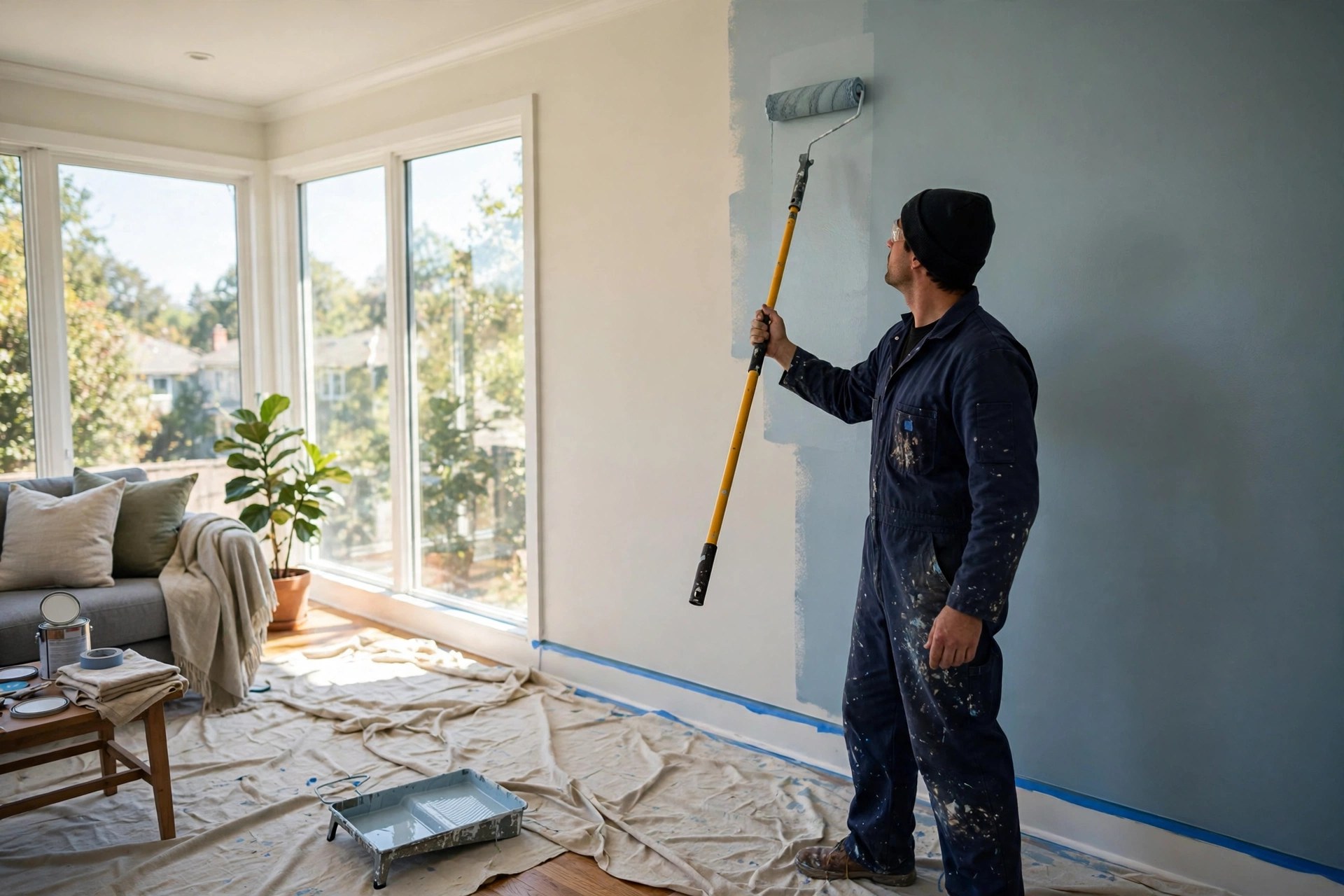
Your best painter is twenty feet up on a ladder, cutting in a second-story eave. His phone buzzes in his pocket: a website inquiry. By the time he climbs down, wipes his hands, and calls back two hours later, the homeowner has already booked an estimate with the company that answered in two minutes. Painters miss website inquiries because the work happens on ladders, on scaffolds, and inside empty houses with the ringer off. The inquiries do not wait. This guide covers the AI chatbot for painting companies: how it handles the classic questions, collects photos for remote estimates, books walk-throughs while the prospect is hot, captures after-hours leads, connects to the CRM, and what a painting business should expect to pay.
The quick answer
- Answers the classics instantly: interior vs. exterior, square footage, prep work, paint quality, and timeline, at 11 PM or 11 AM.
- Photos for remote estimates: room and exterior photos let you quote small jobs without a visit and arrive prepared for big ones.
- Walk-throughs booked live: real open slots offered in the chat, confirmed by text, with reminders that cut no-shows.
- After-hours capture: evening and weekend browsers get answers and a booked estimate instead of a voicemail.
- CRM connected: every conversation lands in the pipeline with the job details attached, ready for follow-up.
- Typical cost: $150 to $450 a month plus setup, usually paid for by one extra interior job.
Painters miss inquiries while the brushes are moving
Painting is one of the worst trades for phone availability. The crew is on ladders, in respirators, with wet hands and loud equipment running. The owner is often painting alongside the crew, which means the person who would answer the inquiry is the same person with a roller in hand. Meanwhile the buyer is sitting at home comparing painters, and speed of response is doing the selling. Research on lead response has shown again and again that the first company to respond wins the job far more often than the cheapest or the most reviewed. In painting, where jobs are won on trust and professionalism, a two-hour response delay reads as disorganization.
The chatbot answers while the brushes move. It handles the repetitive questions that eat an estimator’s day, collects the photos and measurements that make a remote estimate possible, and books the walk-through into the real schedule. The painter keeps painting. The business keeps selling.
The classic questions, answered without the phone tag
Painting inquiries are remarkably predictable. Almost every conversation starts with the same handful of questions, which is exactly why they are perfect for a chatbot. The bot should answer each one from your real numbers and process, then steer toward the estimate.
| Question | How the chatbot answers | Where it leads |
|---|---|---|
| How much to paint my house? | Honest ranges: interiors $2 to $6 per sq ft of floor area; full exteriors typically $2,500 to $7,000 depending on size and stories | Collects room count or home size, then books a walk-through |
| Interior or exterior? | Confirms both are offered, asks which rooms or which sides of the house | Branches the flow: room list for interior, siding type and stories for exterior |
| Do you do the prep work? | Yes: patching, caulking, sanding, priming, and masking are standard in every quote | Sets expectations that prep is included, not extra |
| What paint do you use? | Your actual preferred brands and lines, and why you chose them | Positions quality, defuses the cheap-bid comparison |
| How long will it take? | Typical timelines: a few rooms take 2 to 3 days; a full exterior takes 4 to 7 days | Moves to timeline and scheduling availability |
| Do I need to move furniture? | Crew handles the big pieces and protects floors; small items and valuables should be cleared | Lowers the friction of saying yes to the estimate |
Interior vs. exterior branching
Once the chatbot knows which it is, the questions should change. Interior jobs need: which rooms, approximate sizes, wall condition, whether ceilings and trim are included, and the current wall color versus the planned color, because dark-to-light changes the coat count. Exterior jobs need: siding type, number of stories, approximate square footage of the home, condition of existing paint, and whether there is wood rot or repair work. Getting this right in the chat means the estimator can quote confidently, and sometimes quote remotely for smaller jobs.
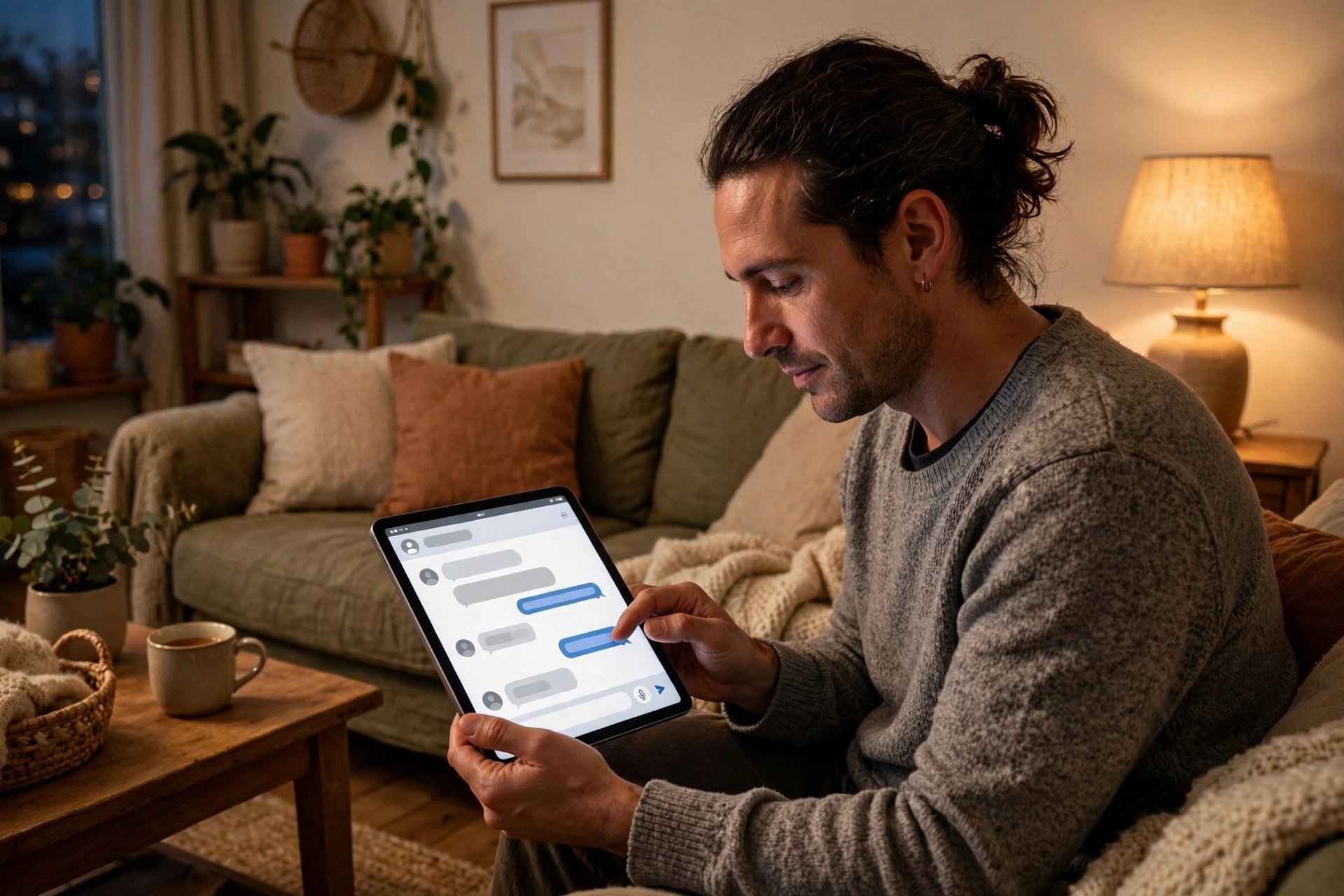
The chatbot runs the intake while the crew is on ladders, so no inquiry waits for a callback.
Photo collection for remote estimates
Painting is one of the few trades where remote estimates genuinely work, at least for smaller jobs. A one-room repaint, a bedroom refresh, or a single accent wall can be quoted from photos with surprising accuracy. The chatbot should request photos as a standard step: each room from two angles, close-ups of any damage or repairs needed, and for exteriors, all four sides of the house plus close-ups of peeling or problem areas.
The payoff is twofold. Small jobs get quoted the same day, which wins them before competitors schedule a visit. Large jobs get better estimates, because the estimator has seen the rooms before walking in and can prepare questions instead of discovering surprises. Train the chatbot to explain the why: “Photos let us give you a tighter number, and for smaller rooms we can often quote without a visit.” Homeowners send photos when they understand the benefit.
Booking the walk-through while they are engaged
For full interiors and exteriors, the walk-through is the sale. The chatbot should offer it at the peak of engagement, right after answering the questions and collecting photos: “Want a firm number? We have walk-through slots Thursday between 9 and 11, or Saturday morning. Which works for you?” The booking lands in the real calendar with the full job summary: rooms or exterior details, photos attached, paint preferences, timeline. Confirmation goes out by text, with a reminder the evening before.
No-shows are expensive in painting because the estimator’s time is the scarcest resource in the business. The reminder texts alone typically cut no-shows noticeably. The one-tap reschedule link saves the appointment instead of losing it when plans change.
After-hours lead capture
Painting research happens in the evening. Homeowners walk their house after dinner, notice the scuffed hallway and the peeling trim, and start comparing painters on the couch. A chatbot that answers at 9 PM captures the homeowner at the exact moment of motivation. It should answer the pricing questions honestly, collect the room list and photos, and book the walk-through for the next open slot. By morning, the office has a qualified, photo-backed estimate request waiting instead of a cold form submission to call back.
Weekend capture matters too. Saturday morning is prime time for exterior painting research, when homeowners are outside looking at their own siding. The chatbot covers the weekend exactly like a weekday evening: answers, qualification, photos, booking. For more on the safety net behind the chatbot, our guide to AI chatbot vs. live chat for small business explains why automated intake outperforms a part-time chat operator.
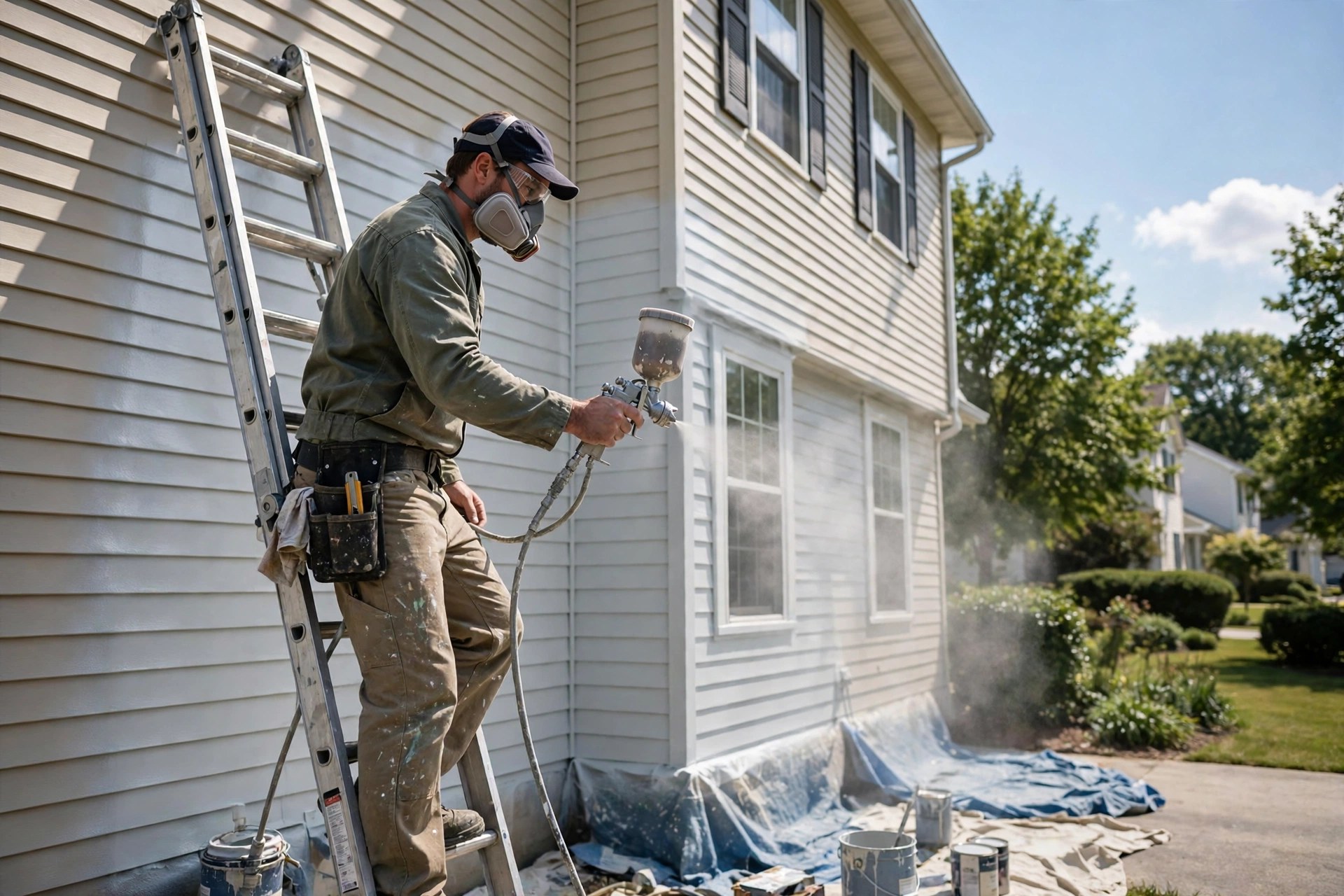
Exterior jobs are researched on weekends. The chatbot captures Saturday browsers like a weekday inquiry.
CRM integrations that make follow-up automatic
A chatbot that does not connect to the CRM is a fancy contact form. Every conversation should create or update a contact record with the full context: interior or exterior, rooms or siding details, photos, timeline, and the booked walk-through. From there the CRM automations take over: the estimate follow-up sequence when a quote goes unaccepted, the review request after the job is done, and the reactivation campaign for past customers when the season turns.
Integration also means the office sees everything in one place. When the owner checks the pipeline in the morning, each chatbot lead shows the conversation summary, the photos, and the scheduled visit. No retyping, no lost sticky notes, no “I think someone called about an exterior.” The follow-up discipline that wins painting jobs, polite persistence on open quotes, becomes automatic instead of aspirational.
What a chatbot costs a painting business
The pricing shape is familiar across the trades: $1,000 to $3,000 for setup, covering the interior and exterior flows, the photo collection step, CRM and calendar connections, and loading your pricing and service area. Then $150 to $450 a month for the platform, maintenance, and retraining. SMS costs for confirmations and reminders are usually included or a few dozen dollars a month.
Painting has a pricing advantage most trades lack: the remote estimate. A chatbot that quotes one-room and two-room jobs the same day wins work that competitors lose to scheduling delays. Those small jobs are also the cheapest to fulfill, which makes the return math unusually friendly, as the callout shows.
Your rollout checklist
Two to three weeks from kickoff to live, with the interior and exterior flows tested separately.
- 1Build the two branches. Interior flow: rooms, sizes, condition, ceilings and trim, color change. Exterior flow: siding, stories, home size, existing paint condition.
- 2Load honest price ranges. Your real interior per-sq-ft band, your real exterior job range, and the factors that move a quote up or down.
- 3Enable remote estimates. Define which job sizes the chatbot can quote from photos and which always get a walk-through.
- 4Connect the CRM and calendar. Every conversation becomes a contact record with photos and job details; bookings land in the real schedule.
- 5Turn on confirmations and reminders. Text confirmation at booking, reminder the evening before and the morning of each walk-through.
- 6Write the paint-quality answers. Your actual brands and lines, why you use them, and what prep is standard in every quote.
- 7Test with real conversations. Twenty mock chats covering interior, exterior, small remote jobs, and after-hours browsers before launch.
- 8Review transcripts monthly. Tighten the questions, update pricing, and add answers for the questions real visitors keep asking.
The finished room sells itself. The chatbot makes sure the inquiry behind it never waits for a callback.
Frequently asked questions
How much does a chatbot cost a painting company?
Expect $1,000 to $3,000 for setup and $150 to $450 a month for the platform. For most painting businesses, one extra interior job a month covers the cost many times over.
Can a chatbot really quote a paint job?
For small interior jobs, yes: photos plus room details are often enough for a same-day remote quote. For full interiors and exteriors, the chatbot gives honest ranges and books the walk-through where the firm quote happens.
What questions should the painting chatbot ask?
Interior or exterior first, then the branch: rooms and sizes or siding and stories, wall and paint condition, color change plans, timeline, and photos. Every flow ends at the calendar with a walk-through or remote quote.
Does it connect to my CRM?
It should. Every conversation becomes a contact record with the job details and photos attached, so your estimate follow-up, review requests, and reactivation campaigns run from real data instead of manual entry.
What about after-hours inquiries?
That is the main win. Evening and weekend browsers get instant answers, photo collection, and a booked walk-through instead of a contact form that waits until morning. Painting research peaks exactly when offices are closed.
Will it work on my existing website?
Yes. Most chatbot platforms install with a small code snippet on any website. If you are considering a site upgrade at the same time, see our guide on how much a painting company website costs for realistic budgets.
How long does setup take?
Two to three weeks: building the interior and exterior flows, loading your pricing and paint details, connecting the CRM and calendar, testing with mock conversations, and launching.
Book estimates while the crew paints
Digital Hayder builds AI chatbots for painting companies: interior and exterior intake flows, photo collection for remote estimates, walk-through booking, and CRM integration that keeps every lead in the pipeline. Tell us about your painting business and we will design the chatbot around your services and pricing.
Contact Us