A pool company owner sits at the kitchen table with three quotes on a laptop screen. One says $499 for a website. One says $4,500. One says $12,000 plus a monthly fee. All three promise a beautiful site that brings in customers. The owner sells $80,000 pool builds and $400-a-month service routes, and the website is supposed to feed both, but nobody will explain what the price difference actually buys. So the owner picks the middle quote, or the cheapest, and hopes. This is the most common way pool companies buy websites, and it is why so many pool sites look fine and convert nothing. A pool company website is not a brochure. It is a quote machine, a service-area filter, a financing explainer, and a gallery that sells $80,000 projects to people who have never bought one before. This guide lays out the real price bands, what pool companies specifically need on the site, what it costs to run after launch, and what to look for in a web partner.
The quick answer
- The real price bands: DIY builders run $20 to $80 a month; freelancers charge $1,500 to $6,000; agencies charge $5,000 to $20,000 or more for a full build.
- What pool sites must have: qualifying quote forms, clear service areas, financing pages, and before and after galleries. Without these, the site is decoration.
- The ongoing costs: hosting and maintenance run $50 to $300 a month; marketing on top of the site is what actually brings the leads.
- The expensive mistake: paying for design without conversion. A beautiful site with a weak quote form loses five-figure projects quietly.
- The cheap mistake: a template site with no local SEO, no speed work, and no quote qualification fills your inbox with unqualified leads.
- What to look for: a partner who has built for trades, talks about quote volume before talking about colors, and gives you ownership of the site and domain.
The real price bands for a pool company website
Website pricing looks chaotic until you sort it by who builds it. The bands below reflect what pool companies actually pay, and the honest trade-offs of each. Prices assume a real business site with multiple pages, not a single landing page.
DIY builders: $20 to $80 a month
Platforms like Wix, Squarespace, or GoDaddy let you build the site yourself for a monthly fee. The trade-off is your time and your skill. A pool site needs strong galleries, quote forms, and local SEO, and DIY builds usually fall short on all three because the owner runs out of evenings. DIY makes sense as a temporary placeholder while the business is new, not as the long-term home of an $80,000 product. If your site is DIY and you are already doing real revenue, the site is costing you projects every month.
Freelancers: $1,500 to $6,000 one time
A good freelancer builds a custom-looking multi-page site in this range. You get real design, proper quote forms, and basic SEO setup. The risk is continuity: freelancers disappear, get busy, or move on, and then nobody updates the site. Vet for trade experience specifically. A freelancer who has built for contractors understands quote qualification and service-area pages. One who mostly builds restaurant sites will give you a beautiful site that treats a pool build like a dinner reservation.
Agencies: $5,000 to $20,000 or more
Agencies bring a team: design, copywriting, development, and SEO. At the upper end you get conversion strategy, professional photography direction, financing page content, and local SEO built in from day one. The monthly fee some agencies charge, often $200 to $600, covers hosting, updates, and ongoing SEO. The trade-off is cost and sometimes lock-in: read the contract and make sure you own the domain, the site files, and the content if you leave. For a pool builder doing seven figures, an agency build usually pays for itself with one or two extra projects a year.
| Build option | Typical cost | What you get | The honest trade-off |
|---|---|---|---|
| DIY builder | $20 to $80 per month | A live site fast, templates, basic forms | Weak galleries, weak SEO, costs your evenings, looks small for big-ticket sales |
| Freelancer | $1,500 to $6,000 one time | Custom design, proper quote forms, basic SEO | Continuity risk if they disappear; vet for trade experience |
| Small agency or studio | $5,000 to $10,000 one time | Design plus copywriting, conversion-focused, local SEO foundation | Higher upfront cost; check what monthly care includes |
| Full-service agency | $10,000 to $20,000 or more | Strategy, photography direction, financing content, SEO built in | Premium price; confirm you own everything if you leave |
| Ongoing care plan | $50 to $600 per month | Hosting, updates, backups, small changes, sometimes SEO | Make sure the monthly work is defined, not vague promises |

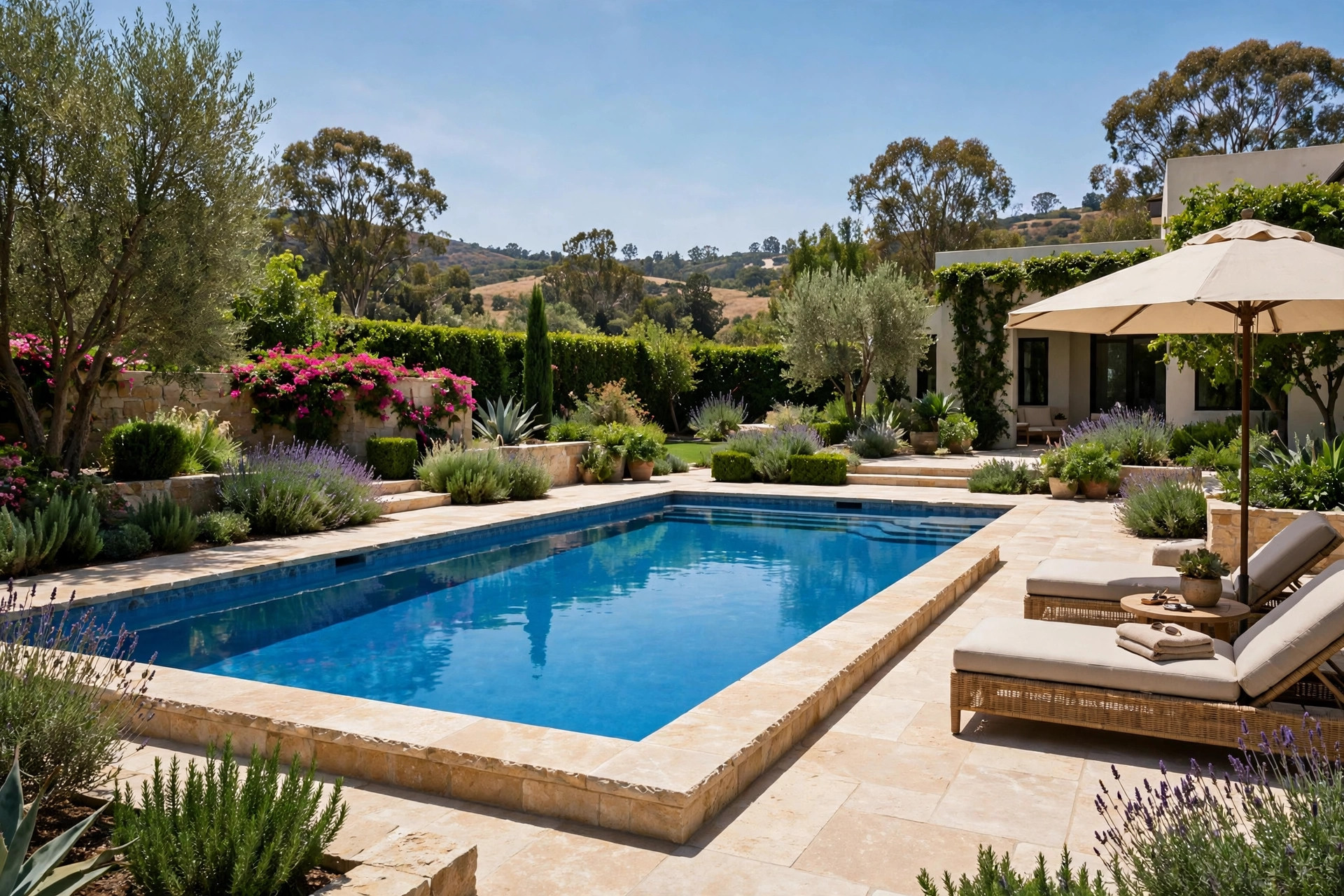
Shoppers compare pool builders on their phones first. The site has to sell the project before the visit.
What a pool company website must actually do
Pool shoppers are buying something they have never bought before, at a price that scares them. Your website has four jobs: prove you are real, show what the finished product looks like, explain how paying works, and make asking for a quote easy. Miss any of the four and the shopper moves to the next builder. Compare this with other trades in our plumbing website cost guide and our roofing website cost guide to see how the requirements shift by trade.
Quote forms that qualify
The quote form is the most valuable element on the site. It should ask for the project type (new build, remodel, equipment, service), the property address or zip, the timeline, and a budget range. Budget range is the field most builders skip and most need: it filters the $15,000 above-ground inquiries from the $80,000 custom build prospects before anyone drives out for a quote. Every form submission should trigger an instant confirmation and an internal alert, because pool shoppers contact multiple builders and the first responder usually wins the visit. Slow follow-up on a web lead is the same as not having the form.
Service areas and financing pages
Service-area pages do double duty. They tell shoppers you actually serve their town, and they give Google the location signals that rank you for “pool builder near me” searches in each town. Build one page per real service area with local project photos, not one page listing twenty towns. Financing pages are the other must-have. Most shoppers do not know pool financing exists, and the monthly payment number is what makes an $80,000 project feel possible. A financing page with realistic payment examples and links to your lending partners answers the question shoppers are afraid to ask and keeps them on your site instead of going back to Google.
Before and after galleries that sell
The gallery is your showroom, and it should be treated like one. Organize by project type: new builds, remodels, outdoor living. Each project gets multiple photos, the town name, and a short description of what was done. Before and after pairs are the strongest format because they show transformation, which is what the shopper is buying. Invest in decent photography. Phone photos of finished pools at golden hour beat professional photos of nothing. Update the gallery quarterly. A gallery whose newest project is three years old tells the shopper you might not be building much anymore.
What it costs after launch
The build price is the down payment. Running the site costs money every month, and marketing the site costs more. Budget for both before you sign anything.
Hosting, maintenance, and updates
Expect $50 to $300 a month for hosting, security updates, backups, and small content changes. WordPress sites need regular updates. Ignored sites get hacked, and a hacked pool site ranks for nothing and scares every visitor. A care plan with a defined list of included work, updates, backups, uptime monitoring, and a set number of content changes, is worth it for most builders. What is not worth it is a vague $400 monthly fee with no list of what the agency actually does.
Marketing: the site is the foundation, not the traffic
A website without traffic is a showroom in the desert. The ongoing marketing budget is what brings the shoppers: local SEO, Google Business Profile management, review generation, and possibly Google Ads during the building season. Many pool builders spend $1,000 to $3,000 a month on marketing once the site is live. The site’s job is to convert that traffic into quote requests. When you evaluate the build price, evaluate it against this: a site that converts 5 percent of visitors into quotes instead of 2 percent is worth more than any design upgrade, because it multiplies every marketing dollar you spend after launch.
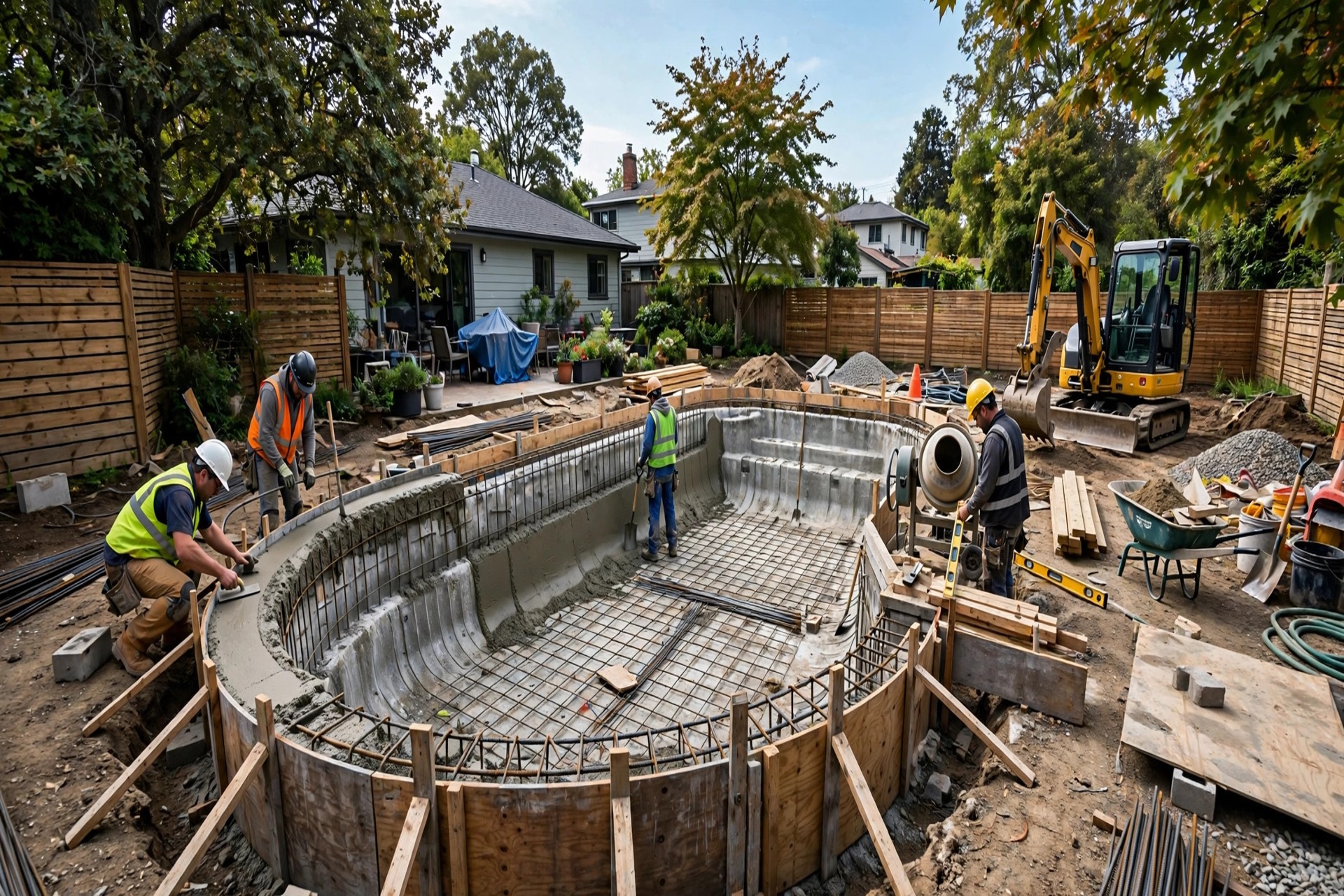
Real project photos, updated often, are the content that sells big-ticket builds.
What to look for in a web partner
Choose the partner by the questions they ask, not the portfolio they show. A good partner asks about your quote volume, your close rate, your average project value, and where your best leads come from. A weak partner asks about your favorite colors. Look for trade experience, because pool-specific needs like financing pages and project galleries are not obvious to generalists. Ask who writes the copy: if the answer is you, budget your own time honestly. Ask what happens if you leave: you should own the domain, the site, and all content, with admin access from day one. And ask how they measure success: the answer should be quote requests and booked consultations, not traffic or design awards. A partner who talks about conversion before aesthetics will build you a site that pays for itself.
Your rollout checklist
Use this to buy well, whether you hire a freelancer or an agency.
- 1Define the site’s one job. Booked consultations for builds and qualified quote requests for service. Everything on the site serves that.
- 2Gather your proof assets. Twenty or more finished-project photos, three before and after pairs, and two customer testimonials before the build starts.
- 3Map the service areas. List every town you truly serve. Each one gets its own page with local photos.
- 4Design the quote form first. Project type, address or zip, timeline, budget range. The form is the site’s engine.
- 5Write the financing page. Realistic monthly payment examples and your lending partners, in plain language.
- 6Confirm ownership in writing. Domain, site files, and content are yours, with admin access from day one.
- 7Budget the after-launch costs. Care plan plus a marketing budget, approved before the site goes live.
- 8Measure quotes, not traffic. Set up quote-request tracking so you know what the site earns, not just how many people visit.

The finished product is the dream the shopper is buying. The gallery should sell it.
Frequently asked questions
How much does a pool company website cost?
DIY builders run $20 to $80 a month, freelancers charge $1,500 to $6,000, and agencies charge $5,000 to $20,000 or more. Most established pool builders land in the $5,000 to $12,000 range for a conversion-focused build, plus $50 to $300 a month for hosting and maintenance.
Can I just use a template site for my pool company?
A template works as a placeholder, but it usually lacks the quote qualification, service-area pages, financing content, and gallery structure that sell high-ticket projects. If you are selling $50,000 builds, a template site undersells you to every shopper who compares you with a competitor.
What pages does a pool company website need?
At minimum: a homepage that sells the consultation, service pages for builds, remodels, and service or repair, one page per service-area town, a financing page, a project gallery organized by type, an about page with real team photos, and a quote form on every page.
How long does it take to build?
A freelancer typically needs four to eight weeks; an agency needs eight to twelve. The usual delay is content: photos, testimonials, and service-area lists from you. Gather those before the build starts and the timeline holds.
Should the quote form ask for budget?
Yes. A budget-range field filters shoppers before anyone drives out for a quote, which saves your sales team hours every week. Frame it as helping: “Rough budget range, so we bring the right options.”
Do I need professional photography?
You need good photos, which is not quite the same thing. Recent phone photos of real finished pools at good light beat stock photos every time. If your gallery is thin, one professional shoot of your three best projects is money well spent.
What are the ongoing costs after the site launches?
Hosting, updates, and backups run $50 to $300 a month. Marketing on top, local SEO and possibly ads, often runs $1,000 to $3,000 a month. Budget both before you approve the build.
Get a website that sells pool projects
Digital Hayder builds conversion-focused websites for pool companies: qualifying quote forms, service-area pages, financing content, and galleries that sell the project before the visit. Tell us about your builds and we will show you what your site should be earning.
Contact Us