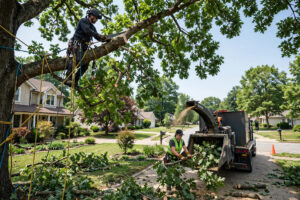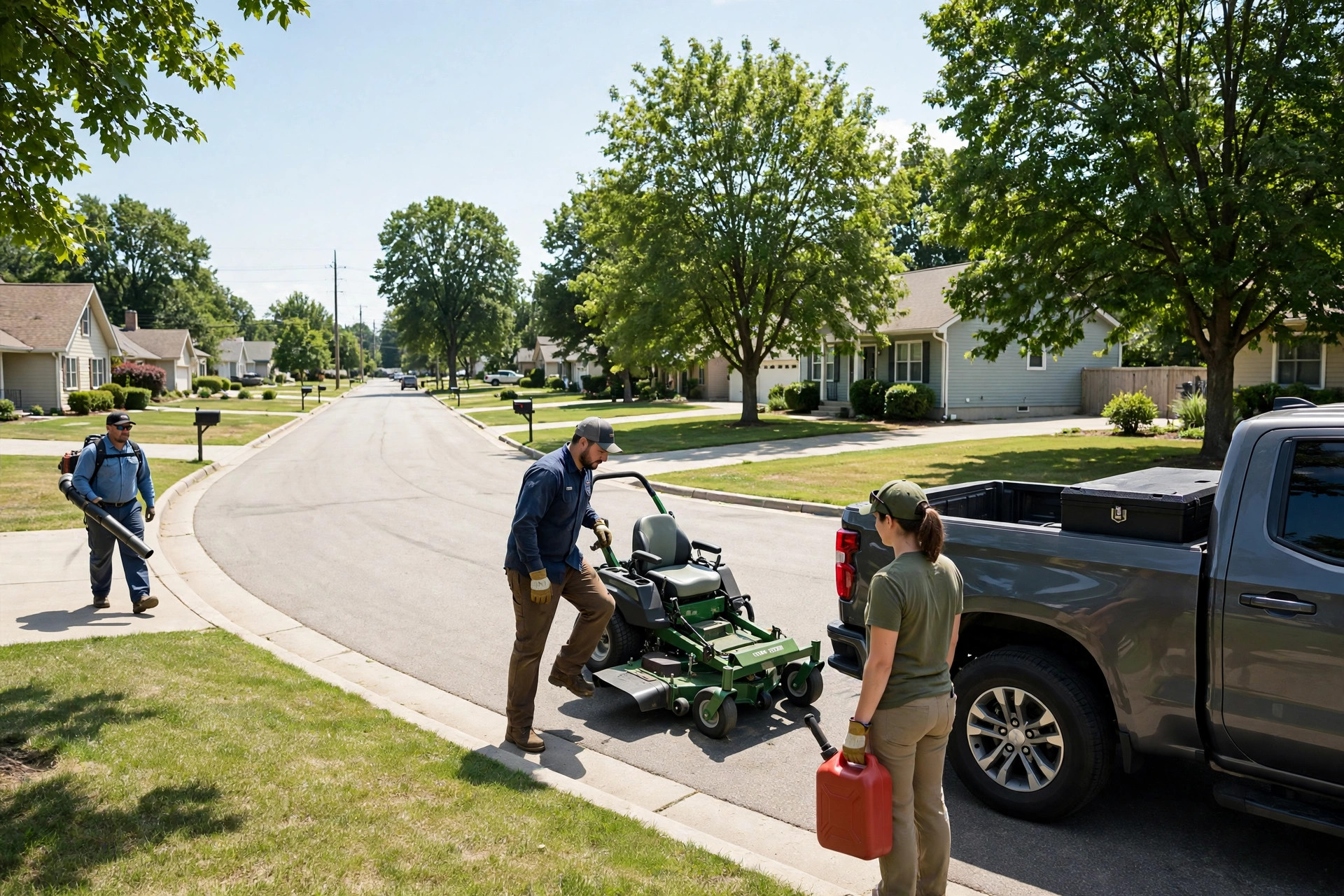
It is 11am on a Tuesday and you are on the zero-turn, halfway through a two-acre mow, with the engine roaring and ear protection on. Your phone is in the truck, ringing. It is a homeowner three streets over whose yard has gone wild and who wants a quote this week. The call goes to voicemail. You finish the mow at noon, see the missed call, and plan to call back after the next job. By then the homeowner has already called the next landscaper on the list, whose AI receptionist answered on the first ring, took the property details, and booked a site visit for Thursday. Your callback at 4pm goes to their voicemail, because they already have an estimator coming. This is the daily reality of the landscaping business: the work that earns the money makes it physically impossible to answer the phone, and the calls you miss are estimate requests with a short shelf life. An AI receptionist for landscaping companies answers every call like your best office manager would: it takes the estimate request, captures the property details, books the site visit, and follows up on the quotes that go quiet. This guide shows how it works from the field, how it handles seasonal spikes, and what it costs.
The quick answer
- The core job: answer every call on the first ring while the crew is on mowers and job sites, and turn callers into booked site visits.
- Estimate requests: the receptionist takes the caller’s details, asks the right quoting questions, and gives a realistic price range from your rates.
- Photos and property details: callers get a text link to send yard photos, so your estimator arrives already informed.
- Site visit booking: visits land on the real crew calendar with the address, details, and photos attached.
- Quote follow-up: unbooked quotes get automatic check-ins, recovering jobs that went quiet after the estimate.
- What it costs: about $200 to $600 per month for most landscaping companies, with per-minute options for lighter call volumes.
The mower problem: why landscapers miss their best calls
Landscaping has the worst phone-answering conditions of any trade. The owner is on equipment, the crew is spread across job sites, and the office is often a truck cab. Hands are gloved, engines are loud, and stopping to take a call costs real production time. So the phone rings in the truck, the call goes to voicemail, and the callback happens hours later, if it happens at all. Studies of local consumer behavior keep finding that most customers contact the first business that responds, and a homeowner requesting a landscaping quote is usually calling two or three companies in a row. The first one that answers like a professional gets the site visit.
Evening and weekend calls make it worse. Quote requests spike when homeowners are home looking at their yards, which is exactly when no landscaper is answering. And every missed call during storm season is a cleanup job going to whoever picked up. An AI receptionist solves the structural problem, not just the symptom: it answers on the first ring every time, handles the estimate conversation by voice, and puts the site visit on the calendar while you are still on the mower. The chat side of the same system is covered in our guide to the AI chatbot for home services websites, which handles the website visitors while the receptionist handles the callers.
What the AI receptionist does from the field
Every call follows the same field-tested flow: greet like the company, qualify the job, capture the details, and book the visit. Here is how each step works.
Takes the estimate request like your best office manager
The receptionist answers with your company greeting and treats the call as an estimate request from the first sentence. It asks what the caller needs done, where the property is, and whether they are the homeowner, then moves into the quoting questions your estimator would ask: lawn size, service frequency for recurring work, and the add-ons that matter, like mulch, hedges, and cleanup. Callers get a realistic price range trained from your actual rates, with the on-site confirmation stated plainly. The tone is professional and unhurried, which matters: a caller who feels taken seriously books the visit, while a caller who feels rushed calls the next company.
Captures photos and property details by text
During the call, the receptionist sends the caller a text link to upload two or three photos of the property: the yard, the problem area, and any access details like gates or slopes. Photos taken on the caller’s phone take thirty seconds and tell your estimator more than ten minutes of description. The photos land attached to the booking in your calendar or CRM, so the estimator sees them before the visit. The receptionist also captures the details that prevent wasted trips: the property address, the best callback number, gate codes, and whether there are dogs on the property. Every one of these is a small thing that ruins a site visit when it is missing.
Books the site visit on the real crew calendar
The call ends with a site visit on the calendar, not a promise to call back. The receptionist offers real estimator slots, confirms the address and contact details, and sends a text confirmation the moment the visit is booked. The estimator’s calendar entry carries everything: the service details discussed, the price range given, the photos, and the property notes. If the caller cannot make any offered slot, the receptionist takes their details and flags them for a callback instead of letting them leave. A follow-up text goes out the day before the visit with a one-tap reschedule link, because a missed site visit wastes the most expensive hour in the business: the estimator’s.
Follows up on quotes that go quiet
The estimate went out, the homeowner said “we will think about it,” and then silence. This is where landscaping companies lose a large share of quoted work, not to competitors but to inertia. The receptionist runs a short follow-up sequence on unbooked quotes: a check-in text a few days after the estimate, a second touch with a seasonal nudge (“our spring schedule is filling”), and then it stops. Two or three polite touches recover a meaningful share of quiet quotes without annoying anyone. Your team sees every follow-up in the system, so when the homeowner does call back, nobody asks “which quote was this again.” The same follow-up discipline works in every field trade; our AI answering service for HVAC companies guide shows how another outdoor trade runs it.
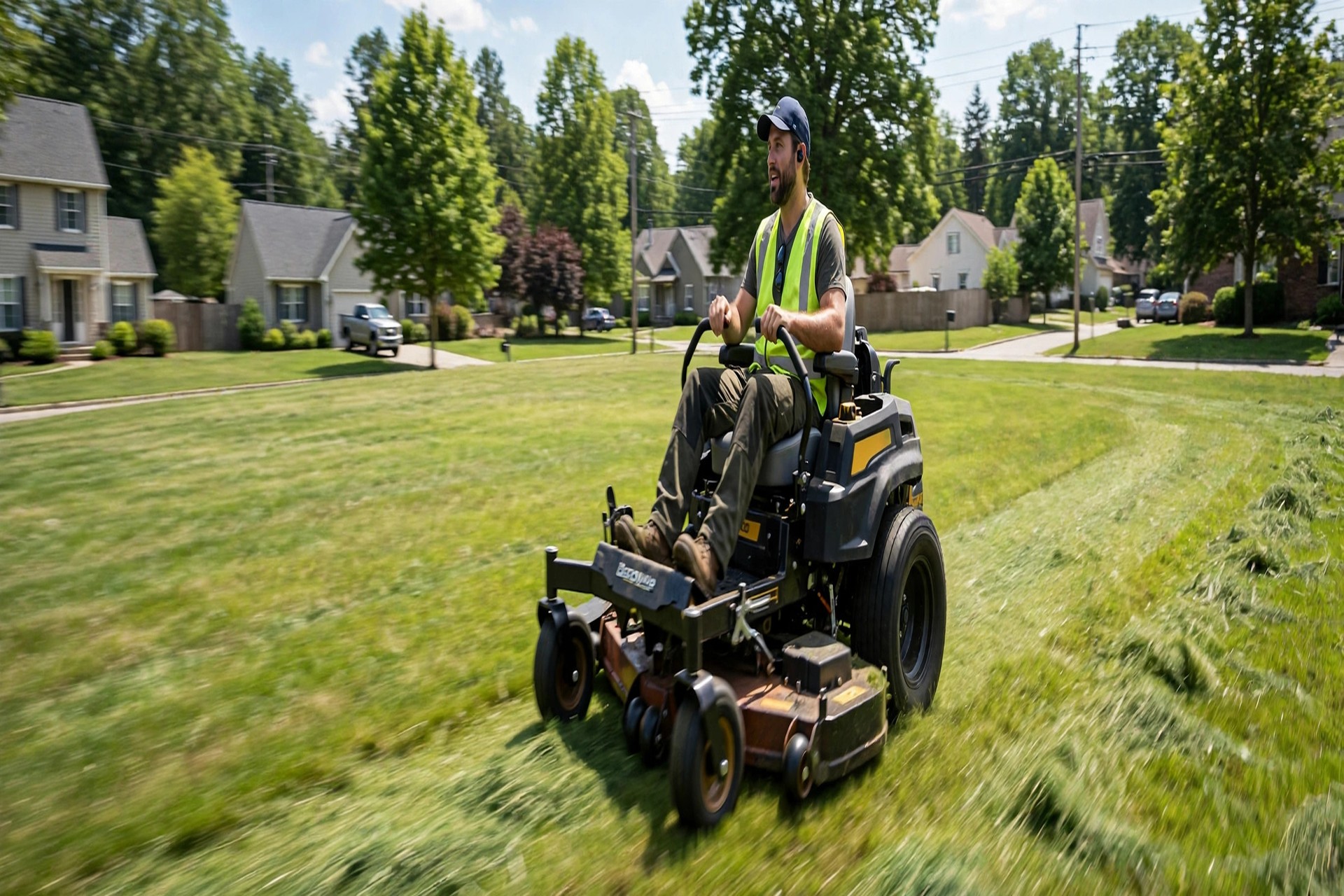
Nobody answers the phone from a mower. The AI receptionist answers it for them, on the first ring.
Seasonal spikes and storm overflow
Landscaping demand comes in waves, and the phone system has to survive the peaks. Spring is the biggest: cleanups, mulch, and new mowing contracts all hit at once, and every company in town is quoting at the same time. The receptionist absorbs the spring rush by answering every call instantly, running the estimate flow, and booking site visits in priority order, while your estimators work through an orderly calendar instead of a voicemail pile.
Storm season is the harder test. After a big storm, requests for fallen branches, debris cleanup, and damaged trees spike for a few days, and the callers are stressed and urgent. The receptionist triages by your rules: hanging limbs and blocked driveways first, routine cleanup after. It collects photos, books assessments in priority order, and keeps every caller informed instead of sending them to voicemail. If you offer snow services, the same logic covers the first blizzard: the receptionist books plowing assessments while the trucks are out plowing. Overflow during these surges is not a luxury feature. It is the difference between capturing the storm work and watching it go to whoever answered. The broader voice strategy is covered in our AI phone agent for home services guide.
Pricing breakdown for landscaping companies
Landscaping receptionists price like other trade voice systems: flat plans for steady volume, per-minute for lighter or seasonal swings. Working ranges below.
| Cost component | Typical range | Notes |
|---|---|---|
| Monthly platform, flat | About $250 to $600 per month | Unlimited or high-volume calls, estimate flows, photo capture, calendar booking, quote follow-up |
| Monthly platform, per-minute | About $0.15 to $0.40 per minute | Low or no base fee; good for small crews with light call volume |
| One-time setup | About $500 to $1,500 once | Call flows, pricing and service training, calendar connection, seasonal content |
| Storm-surge overflow | Included to about $150 per month more | Extra concurrent-call capacity and urgency triage for peak weeks |
| Managed service via an agency | About $500 to $1,000 per month | Setup, seasonal updates, call review, and reporting handled for you |
Flat or per-minute: which fits a landscaper
Most landscaping companies have spiky call volume: quiet winters, slammed springs, storm surges in between. Per-minute pricing fits the quiet months, while flat plans win during the busy season. The practical move is to start per-minute, measure two months of real volume including one busy stretch, and then pick the model the numbers favor. Many vendors let you switch plans, so you are not locked into the first guess. Whatever you pick, confirm the concurrent-call limit: a plan that handles one call at a time is useless during a storm surge when five homeowners call at once.

Missed calls used to mean lost quotes. Now every caller gets an answer and a booked visit.
Your rollout checklist
Roll this out in order. The estimate flow gets tested before anything else, because it is the call type that pays for the system.
- 1Write the estimate call flow. Greeting, qualifying questions, quoting questions, price ranges, and the site-visit close, in the order your best office manager would run them.
- 2Train your pricing and services. Mowing rates by lot size, cleanup pricing, mulch and add-on ranges, each with the on-site confirmation disclaimer, locked against improvisation.
- 3Set up the photo capture texts. A text link sent during the call, two or three photos requested, landing attached to the booking where your estimator sees them.
- 4Connect the site-visit calendar. Real estimator slots with property details, photos, and notes attached, and automatic updates when your team moves a visit.
- 5Define the service area and triage rules. Zip-code or radius enforcement, plus urgency rules for storm calls: hazards first, routine cleanup after.
- 6Build the quote follow-up sequence. A check-in a few days after the estimate and a seasonal second touch, logged in the system for full visibility.
- 7Confirm concurrent-call capacity. The plan must handle several simultaneous calls during spring rush and storm surges, not one at a time.
- 8Review call recordings weekly for a month. Tighten the quoting answers and escalation triggers from real calls, then move to monthly reviews with a seasonal content refresh each quarter.
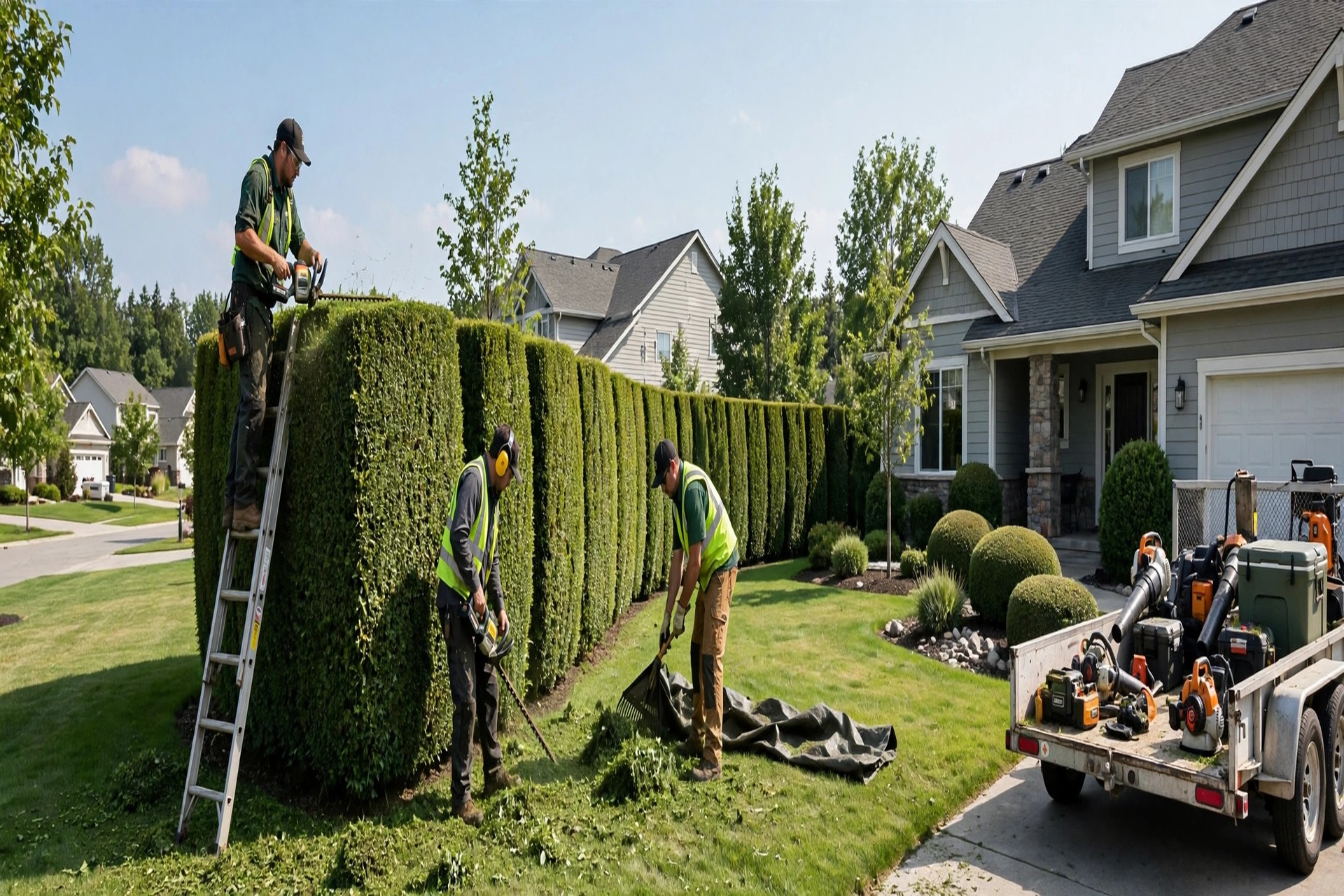
Site visits booked from calls go straight onto the crew schedule with property details and photos attached.
Frequently asked questions
Can an AI really handle a landscaping estimate call?
Yes, for the quoting conversation. It asks the same questions your estimator asks, gives a price range from your real rates, collects photos, and books the site visit. The final quote still happens on site with your eyes on the property. The AI’s job is making sure the site visit happens instead of the caller moving on.
What if the caller has a complicated project?
The receptionist handles what it can and escalates the rest. Multi-phase landscape designs, drainage problems, and anything outside the trained services get routed to you with the full call details and photos attached, so your callback starts informed instead of cold.
Will older homeowners trust talking to an AI?
They trust being answered and helped. The receptionist speaks naturally, follows landscaping logic, and never rushes. Callers who ask for a person get transferred without friction. Most callers care about getting their estimate moving, not about who is on the line.
How does it handle calls during a storm surge?
It answers every call, triages by your urgency rules, collects photos, and books assessments in priority order. With enough concurrent-call capacity, five simultaneous storm calls all get handled instead of four hitting voicemail. Set this up before storm season, not during it.
What happens to calls outside our service area?
The receptionist enforces your service-area rules and gives out-of-area callers a polite answer with a referral option instead of a dead end. Your estimator’s calendar stays free of visits you would never take.
Do we still need someone answering the phone?
For the complex and high-value conversations, yes. The receptionist handles the standard estimate flow so your time goes to the site visits, the designs, and the callbacks that need your judgment. Most owners find the phone stops being a source of stress and starts being a source of booked work.
Never miss another call from the field
Digital Hayder builds AI receptionists for landscaping companies that answer every call on the first ring, run the estimate conversation, capture photos and property details, book site visits, and follow up on quiet quotes. Tell us about your services and we will train the receptionist on your rates and your routes.
Contact Us